
Alabama one of few statehouses to feature memorials to historical women
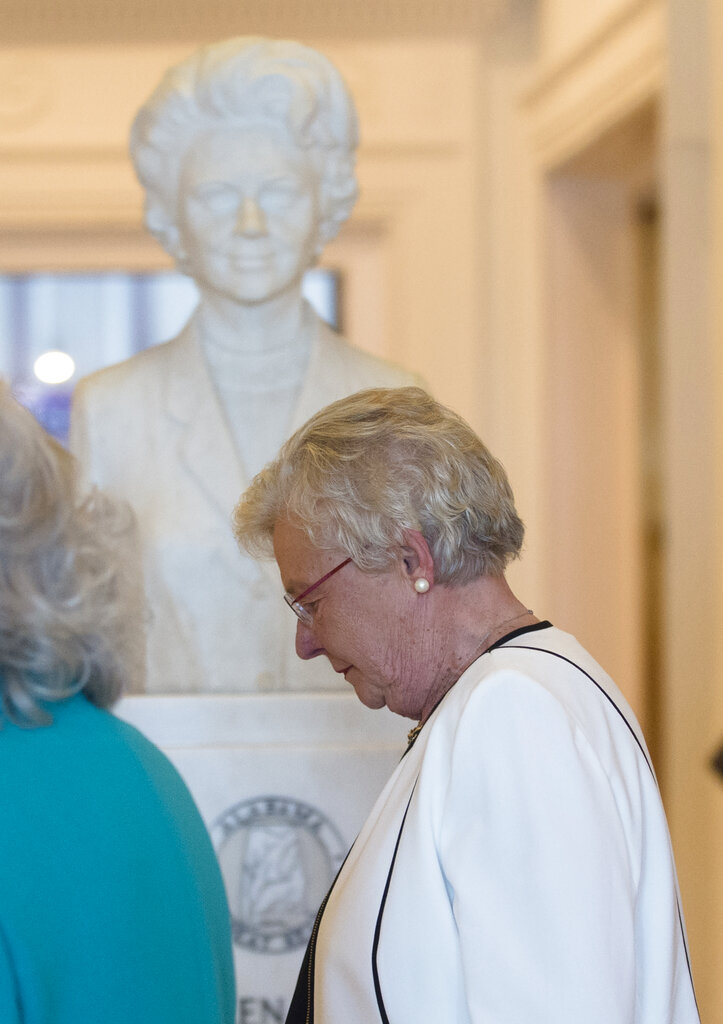
Few states have a memorial to honor women in their state house.
Donald Trump looking to Sarah Huckabee Sanders in tough moments
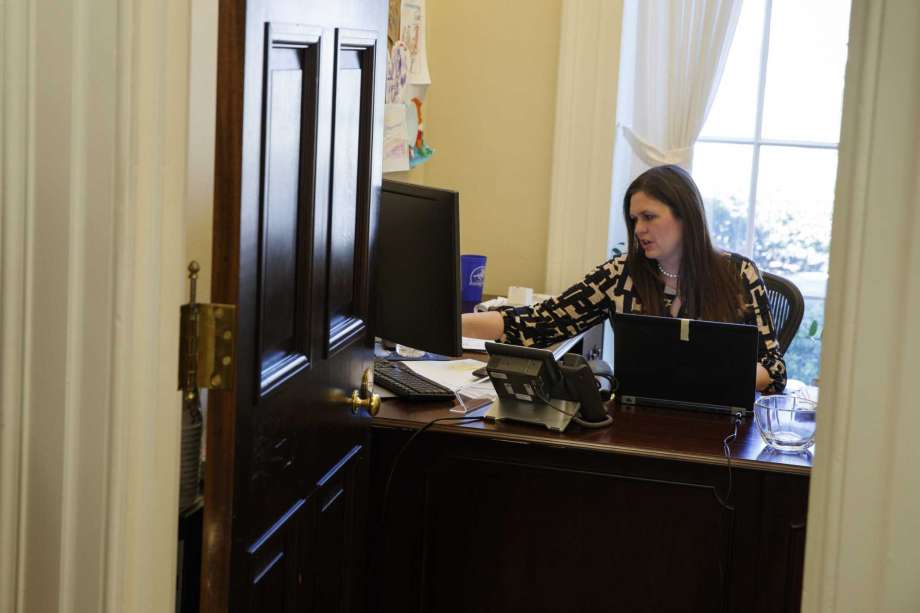
Faced with aggressive on-air questioning about the president’s wiretapping claims, Sarah Huckabee Sanders didn’t flinch, she went folksy. Speaking to George Stephanopoulos on “Good Morning America,” she pulled out a version of an old line from President Lyndon Johnson: “If the president walked across the Potomac, the media would be reporting that he could not swim.” The 34-year-old spokeswoman for President Donald Trump was schooled in hardscrabble politics — and down-home rhetoric — from a young age by her father, former Arkansas Gov. Mike Huckabee. Her way with a zinger — and her unshakable loyalty to an often unpredictable boss — are big reasons why the deputy press secretary is a rising star in Trump’s orbit. In recent weeks, Sanders has taken on a notably more prominent role in selling Trump’s agenda, including on television and at White House press briefings. As White House press secretary Sean Spicer’s public profile has fluctuated in recent weeks amid criticism of his performance, Sanders has increasingly become a chief defender of Trump in some of his toughest moments. Sanders’ rise has fueled speculation that she’s becoming the president’s favored articulator, a notion she disputes. “It’s hard for any one person to maintain a schedule of being the singular face all day every day,” she said. She argued that more than one press aide spoke for President Barack Obama. “When Eric Schultz went on TV did anybody say Josh Earnest is getting fired?” Sanders asked. “Was that story ever written?” Spicer echoed that message: “My goal is to use other key folks in the administration and the White House to do the shows.” Indeed, speaking on behalf of this president is a challenging and consuming job. Trump often presents his own thoughts directly on Twitter in the early hours of the morning and is known to closely follow his surrogates on television, assessing their performances. He has been happy with Sanders’ advocacy, said Kellyanne Conway, a counselor to the president. “She understands America. She understands the president. And she understands how to connect the two,” said Conway, who noted that Sanders had appeared on television throughout the campaign as well. “The president has a great deal of trust in Sarah.” On some days recently Sanders has been the administration’s messenger of choice, even when news outlets aren’t thrilled. Last Sunday, NBC’s Chuck Todd said on-air that “Meet the Press” had sought a “senior administration official or a Cabinet secretary,” but that the “White House offered a deputy press secretary. And so we declined.” Sanders credits her larger-than-life dad with helping her learn how to deliver a message. Huckabee, a frequent political commentator, has long been famed for his pithy rhetoric. The two speak most mornings before 6 a.m. “I’ll call and say, ‘What do you think if I say this?’ He’ll say, ‘That’s really good. You might try to say it a little bit more like X,’” she said. On advocating for the unconventional Trump, Sanders admits that even in the press office, they don’t always get a heads up before Trump tweets. But she says part of Trump’s appeal is that he “directly communicates with the American people on a regular basis.” Arkansas-raised, Sanders moved her young family to Washington to be part of the administration. She is married to a Republican consultant and they have three young children. She joined the Trump campaign not long after her father’s second presidential bid — which she managed — fizzled out in the 2016 Iowa caucuses. She said she was drawn to Trump’s message of economic populism and his outsider attitude. “One of the big things my dad was running on was changing Washington, breaking that cycle,” Sanders said. “I felt like the outsider component was important and I thought he had the ability to actually win and defeat Hillary.” She also said she was drawn to the Trump family’s close involvement in the campaign, “having kind of been in the same scenario for my dad’s campaign.” Being part of an effort to defeat Hillary Clinton had extra significance for Sanders, whose father entered the Arkansas governor’s mansion just a few years after Bill Clinton exited and who shared advisers and friends in the state. Sanders said at times it was difficult to be aggressive, but she “so disagreed” with Hillary Clinton’s policies, that she kept on. Sanders entered politics young, helping with her father’s campaigns as a child and then working her way up the ranks until she had the top job in 2016. In 2007, she moved to Iowa to run her father’s operation in the leadoff caucus state, where he was the surprise winner. She has also served in the Education Department under President George W. Bush and worked on a number of Senate and presidential campaigns. Mike Huckabee said his daughter was always a natural. “When most kids at 7 or 8 are jumping rope, she’s sitting at the kitchen table listening to Dick Morris doing cross tabs on statewide polls,” said Huckabee, referring to the adviser-turned-adversary to President Bill Clinton. Those Arkansas ties continue to hold strong. Sanders has consulted with friends from the state about her new role, including Mack McLarty, the former Clinton chief of staff, who she said counseled her to appreciate the “historic opportunity” to work in the White House. Her rising profile has come with ups and downs. Sanders says she is turning off social media alerts because she has been flooded with criticism. For now, she has not been treated to a portrayal on “Saturday Night Live” — like Spicer and Conway. But her dad says that if that comes next, she should roll with it. “One of the great honors of life is to be parodied,” Huckabee said. “It’s kind of an indication that you’ve arrived at a place of real power.” Republished with permission of The Associated Press.
Darryl Paulson: Candidate’s running mate rarely affects outcome of presidential election
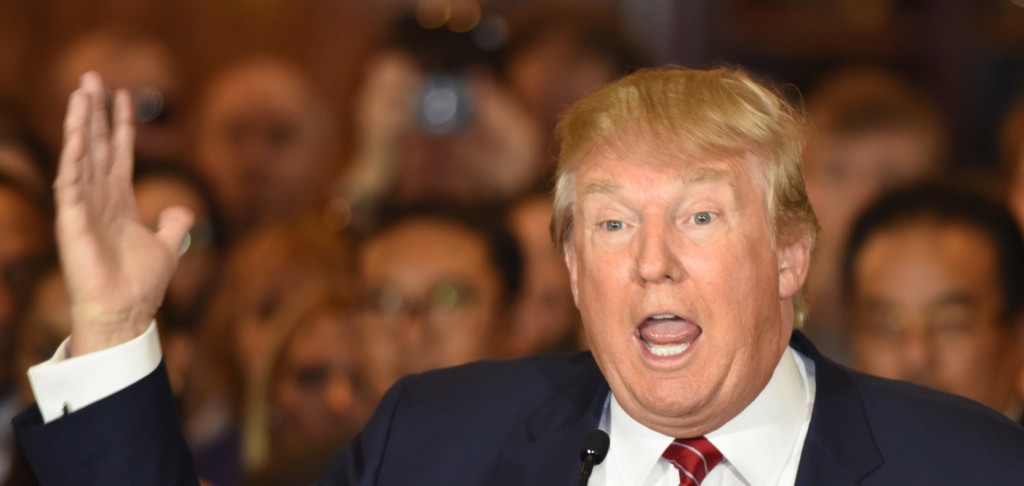
The national conventions are less than three months away and, as the nomination phase comes to a close, attention will gravitate toward potential vice presidential candidates. Let’s focus on the factors that have been used in selecting vice presidents. Most conventional wisdom is wrong. To begin with, most people and many presidential candidates select a vice president who they believe will help them win the election. Few vice presidents have had any effect on the election results. Jack Kemp did not help carry his home state for Bob Dole and Paul Ryan did not win Wisconsin for Mitt Romney. On the Democratic side, Sen. Lloyd Bentsen was not able to carry Texas for Michael Dukakis, nor did John Edwards help the Democrats win South Carolina or other southern states. One of the few times a vice president actually helped a president carry a state was in 1960 when John F. Kennedy picked Sen. Lyndon Johnson as his running mate. If Kennedy had not won Texas, Richard Nixon would have won the presidency. In like fashion, vice presidents are sometimes selected to provide regional balance, although there is no evidence that this helps. When Bill Clinton of Arkansas picked fellow southerner Al Gore as his vice president, many thought this unbalanced regional ticket was crazy. When the Clinton-Gore team captured the electoral vote of four southern states, something that Democrats had been unable to do in recent presidential elections, Clinton’s choice looked like genius. In addition to regional balance, vice presidents are sometimes selected to provide ideological balance. With increased polarization in recent years, this is becoming a less important factor. In 1976, Ronald Reagan announced Sen. Richard Schweiker of Pennsylvania as his vice presidential choice prior to the convention. Reagan hoped to alleviate the fears of some that he was too conservative and needed a moderate to balance the ticket. More importantly, Reagan hoped that picking Schweiker would convince some Pennsylvania delegates to support his candidacy over incumbent Gerald Ford. The pick of Schweiker did not help Reagan and Ford went on to win the nomination. Many Democrats in 2016 see Hillary Clinton as too conservative and too establishment and have urged her to choose a progressive as vice president. In addition to Bernie Sanders, other progressive names being floated are Sen. Sherrod Brown of Ohio and Sen. Elizabeth Warren of Massachusetts. A vice president is sometimes selected to stimulate participation by a particular group. Walter Mondale selected Geraldine Ferraro to get more women to vote. That pick didn’t provide much help. Mondale won only his home state of Minnesota and the District of Columbia against Reagan. Vice presidents have been picked to add gravitas to the ticket. Concerns about Reagan’s limited government experience led him to pick George Herbert Walker Bush as his vice president. Bush had been a member of Congress, the U.S. ambassador to the United Nations and to China, head of the Republican National Committee and head of the CIA prior to his selection. Bush’s son, George W., picked Dick Cheney as his vice president to add heft to his ticket. Cheney had served as Chief-of-Staff to Ford, been a member of the House, and served as Secretary of Defense for George W’s father. In fact, Cheney headed George W’s vice presidential selection team and concluded he was the best candidate. Do any of these factors help a presidential candidate win? The answer is no. A study by two political scientists, Bernard Grofman and Reuben Kline, analyzed 11 presidential elections between 1968 and 2008 and found the net effect of a vice president was 1 percent at most. If Clinton is the Democratic nominee, she may pick a progressive or choose someone like Secretary of Housing and Urban Development Julian Castro. Although not well known, Castro’s youth and Hispanic background might help stimulate Hispanic turnout. If Trump is the GOP nominee, it is easier to put together a list of people he would not select than those he would. There is little chance that “lying Ted,” “little Marco,” or “low energy Bush” would want to join forces with Trump. Gov. Scott Walker of Wisconsin is one possibility since he dropped out of the nomination race early before Trump had the opportunity to insult him. Chris Christie is another option because he was the first major candidate to endorse Trump after Christie withdrew. Another option is Florida Gov. Rick Scott. Florida is a “must win” state and Scott endorsed Trump as a “businessman outsider who will shake up the status quo in Washington.” Although most of the factors in the vice presidential selection process have been shown to have little impact, there are two general rules that no president should ignore. First, pick someone you feel comfortable working with. Second, and most important, pick someone who is ready to be president. Nothing else matters. *** Darryl Paulson is Professor Emeritus of Government at USF St. Petersburg.
