
Amid continued lack of answers from ALDOT, residents request records from Army Corps for Baldwin County bridge
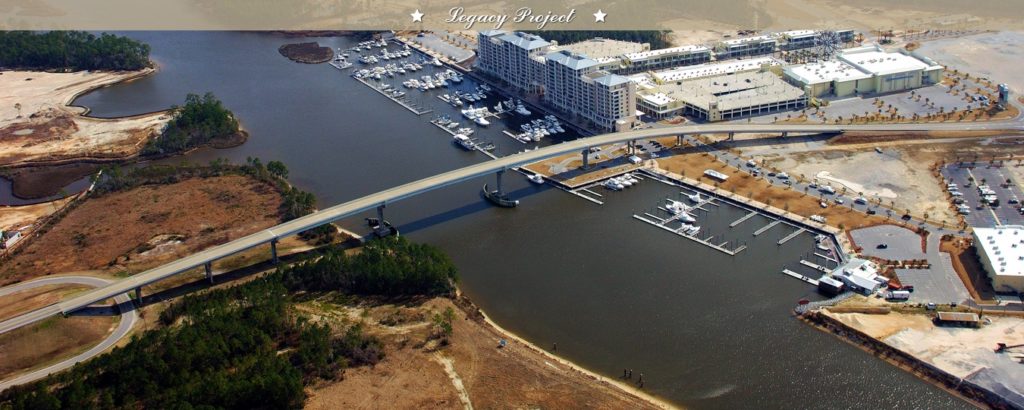
Having grown tired of waiting for the Alabama Department of Transportation (ALDOT) to give them answers about a proposed new bridge in Baldwin County, a group of locals have taken matters into their own hands on their quest for more information. On Thursday, 6 local residents sent the U.S. Army Corps of Engineers (USACE) Mobile District office a Freedom of Information Act (FOIA) request to “obtain access and review the permit application and records and studies, and comments, and other correspondence and documents in the file: SAM-206-00913-LET (The new permit application for the ICW bridge and road project).” According to the FOIA document, the signers “are making this request on behalf of residents, property owners, homeowners, tourists, a citizens’ group specifically formed based on interest in the project, and others including local public officials who correspond with residents and citizens through a Facebook page.“ At issue is a $87 million state-funded, competing bridge to the Foley Beach Express — a proposed connector from SR-180 to Foley Beach Express Bridge over the Intracoastal Waterway that will run between Orange Beach and Gulf Shores, Ala. Opponents of the bridge insist it is a waste of taxpayer funds that will be diverting much-needed state resources away from other critical state infrastructure projects while not addressing the true transportation and infrastructure needs of the community while proponents say they’re tired of paying tolls and believe the new bridge will solve traffic problems. Last week news broke that ALDOT has scheduled the first project-specific public hearing for the bridge on Nov. 15. ALDOT has invited anyone in the Southwest Region (Mobile area) interested in the new bridge to the hearing at the Gulf Shores Activity Center. There, they will get a chance to ask questions, make comments, and may review project information and exhibits on display. But some local residents don’t have much faith in what they consider the long-overdue ALDOT hearing, which is why they’ve turned to the USACE FOIA. “Myself and many other members of the Gulf Shores and Orange Beach community feel it is necessary to be allowed access to the permit plans, records and studies associated with the ICW bridge project,” said Joe Emerson, the founder of the Facebook group dedicated to stopping what he dubbed “End The #Bridge2Nowhere. “Multiple requests were made by the public to the USACE in May of this year asking for a public hearing about the LET request and we haven’t even been granted as much as an answer.” Emerson continued, “The state and local officials that are endorsing this project would have the taxpayers believe that this project is good for local and state interests when in fact in is quite to the contrary. If the project is so beneficial, then why can we not be granted access to public information about this project in a timely manner?” The FOIA requestors are asking that the fees be waived for their request as “the project is being funded with our tax dollars, and because this is public information.” “When the State Auditor, journalists and the tax-paying public are denied timely access to public information surrounding the ICW Bridge and Roadway project, there are few assumptions to be made besides the one suggesting there are faults and problems with the plans at their core,” Emerson concluded. Read the USACE FOIA request below:
Alabama port looks to add to its $22.4 billion economic impact with expansions
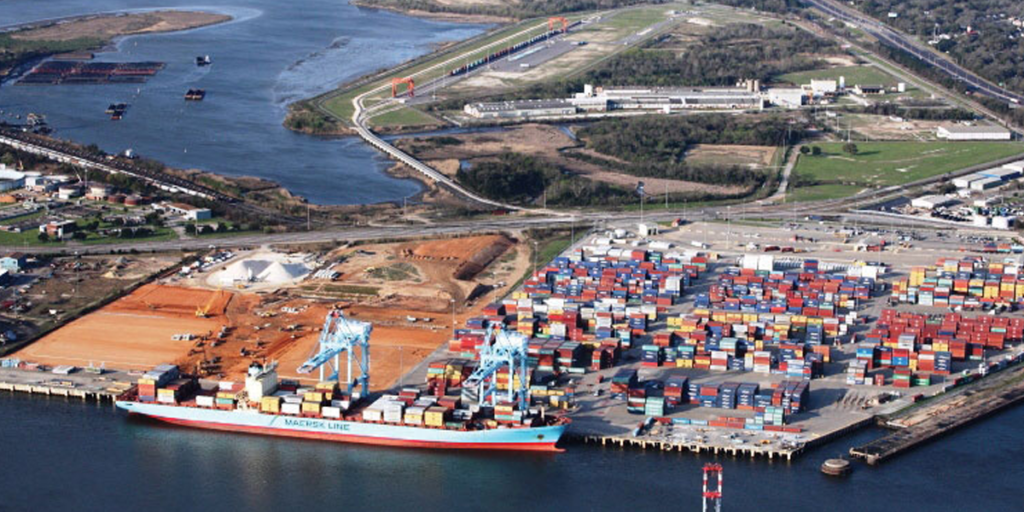
The Alabama State Port Authority is one of the largest economic engines for the state and wants to build on its $22.4 billion economic impact. The 4,000 acres that make up the state docks have multiple complexes that handle everything from auto parts to coal and from poultry to pine. But the port could be doing more, according to Jimmy Lyons, director and CEO of the Port Authority. Alabama port moving forward with growth plans from Alabama NewsCenter on Vimeo. “We’ve got a couple of exciting projects going on right now,” Lyons said. “We’re in the midst of doing a second expansion to our container terminal, actually our third phase. We finished phase two last year and realized that’s not enough, so we’re going to phase three right away. We’re on schedule to have that work all completed by the end of ’19.” The start of 2019 should see construction begin on a new $60 million automobile roll-on, roll-off terminal, a major move to support automotive logistics in a state where automotive manufacturing is a major industry. Another major event will take place Aug. 14 when Walmart officially opens its $135 million import distribution center in Mobile. In addition to creating 550 full-time jobs, that 2.5 million-square-foot facility will generate something the port desperately needs: empty shipping containers. Lyons told the Economic Development Association of Alabama at its 2018 Summer Conference this week that the state struggles to find enough shipping containers to meet the demand. With Walmart bringing in 50,000 containers per year when fully operational, that will help provide more empty cargo containers for exporters. That will reduce costs for exporters who pay to bring in empty containers; it will also help Alabama’s port retain business that now goes to other ports when containers aren’t available, Lyons said. The Army Corps of Engineers is seeking comments now on a $388 million plan to enlarge the port’s Mobile Ship Channel. A deeper and wider channel will clear the way for the port to accommodate larger ships that are already starting to come through the expanded Panama Canal, Lyons said. A deeper channel also allows ships to carry more weight, making the port more efficient for importers and exporters, he said. According to an economic impact study from the University of Alabama’s Center for Business and Economic Research, the port is responsible for 134,608 direct and indirect jobs in the state with a direct and indirect tax impact of $486.9 million. In 2017, the port handled 28.7 million tons of goods and 318,889 shipping containers. Republished with the permission of the Alabama Newscenter.
Alabama, Florida lawmakers urge Congress to act on ailing Apalachicola river basin

U.S. Sens. Jeff Sessions and Richard Shelby joined with Florida counterparts Marco Rubio and Bill Nelson urged a Senate budget panel to take on what they called “ongoing mismanagement” of the Apalachicola-Chattahoochee-Flint (ACF) and Alabama-Coosa-Tallapoosa (ACT) River Basins on the part of the U.S. Army Corps of Engineers on Wednesday. The senators asked the Senate Appropriations Subcommittee on Energy and Water Development to include language related to the ACF in the Fiscal Year 2016-2017 budget in a letter addressed to the committee. The document already includes language regarding the ACT. “In light of the Corps’ September 30, 2015, release of the Draft Environmental Impact Statement” related to the basement, the senators wrote, “Congressional action is needed given the current proposal would continue to severely restrict water flows for downstream users. “The ACF’s water supply is the lifeblood for many Alabama and Florida communities, and supports multiple industrial and domestic uses. For example, both Florida and Alabama rely on the ACF for navigation and the production of hydroelectric power that supplies efficient, low-cost energy for many throughout the region. In addition, Alabama and Florida depend on the ACF for irrigation and agricultural purposes, flood control, and water quality. Without a reliable and consistent freshwater flow from the ACF, entire communities and their respective economies are left to the decisions and priorities of those upstream,” they wrote. They lawmakers said the river accounts for $200 million in economic impact annually on the region, and directly employs some 85 percent of the local workforce there. Recent ecological and water management mishaps have caused severe damage to basin, and to the surrounding economy. “Because of each state’s vital need to ensure that the ACT and ACF River Basins are properly managed with each of their interests appropriately considered, we urge the Subcommittee to include language in any omnibus appropriations vehicle that ensures that management of both of these critical basins are not left to the whims of an unaccountable federal bureaucracy, but instead is properly determined and agreed upon by each state’s governor,” the bipartisan group of senators concluded. See the full text of the letter here, courtesy of Rubio’s congressional office.
AL congressional delegation disagrees with new EPA Clean Water Rule
The U.S. Environmental Protection Agency rolled out a new plan Wednesday to expand the Clean Water Act to include more bodies of water. According to EPA, the 297-page “Waters of the United Sates” (WOTUS) rule ensures that waters protected under the existing Clean Water Act are “more precisely defined, more predictably determined, and easier for businesses and industry to understand,” as two Supreme Court rulings in 2001 and 2006 have left the current scope of the law uncertain. “Today’s rule marks the beginning of a new era in the history of the Clean Water Act,” Assistant Secretary for the Army Jo-Ellen Darcy said. “This rule responds to the public’s demand for greater clarity, consistency, and predictability when making jurisdictional determinations.” However, that’s not the way the Alabama delegation and critics across the country see it, calling it a massive federal government power grab. “For decades, water quality regulation has been primarily the responsibility of state governments, but this rule would significantly shift that responsibility to the federal government,” U.S. Rep. Bradley Byrne told Alabama Today. “This rule would have an especially harmful impact on our farmers and foresters, who could face new compliance requirements and costs.” U.S. Rep. Gary Palmer also expressed his disdain for the rule. “This expansive rule would allow the EPA to place onerous regulations on almost any body of water. While the EPA claimed to listen to the extensive public outcry over this proposal by making cosmetic changes, the rule is still well beyond EPA’s rightful authority,” Palmer said in a statement issued Wednesday evening. U.S. Rep. Mike Rogers joins in the disapproval. According to the congressman’s press secretary, “Congressman Rogers was extremely disappointed the overreaching EPA chose to go forward with the ‘Definition of “Waters of the United States” Under the Clean Water Act,’ despite House passage of H.R. 1732, which Congressman Rogers strongly supported. This rule includes EPA control of puddles and ditches and could hurt family farms and landowners.” H.R. 1732, the Regulatory Integrity Protection Act designed to block the implementation of the new EPA rule, was voted on in the U.S. House of Representatives this month with support of all of Alabama’s representatives excluding Rep. Terri Sewell who did not vote. It passed the House on May 11 by a vote of 261-155. The bill was received in the Senate on May 13, but has yet to be considered. But there’s hope for the legislation, as Alabama’s House members aren’t the only ones concerned with the new EPA Clean Water rule. U.S. Sen. Richard Shelby told Alabama Today that he thinks the EPA is overreaching. “The EPA’s final rule redefining ‘waters of the United States’ is yet another example of the Obama Administration’s overreach. The rule will place thousands of streams, creeks, wetlands, ponds, and ditches throughout the country under the control of Washington bureaucrats instead of private property owners. I have supported legislation in the Senate to prohibit this harmful rule, and I will continue to fight against it as well as other burdensome rules and regulations from the EPA.” U.S. Sen. Jeff Sessions joined seven of his Republican colleagues on the Environment and Public Works (EPW) Committee last April sent a letter to President Barack Obama regarding the then proposed WOTUS rule. “The scope of CWA jurisdiction is one of the most important regulatory issues facing landowners, businesses, and municipalities today,” the senators wrote. “The proposed ‘Waters of the U.S.’ rule will exponentially impede economic recovery and is a significant step in the wrong direction. Mr. President, the decision to move forward would be a clear breach of your promise to cut through red tape.”
Martha Roby: Blocking Harmful, Nonsense Regulations
Did you know that federal water regulators have been trying to greatly expand their reach into private lands by seeking to make small ponds, puddles and ditches subject to strict federal regulations? If you’re a farmer or a forester, you probably know exactly what I’m talking about. But, many Americans might not be aware of this federal government scheme to erode property rights and encroach private lands. Since its enactment in the 1970s, the Clean Water Act’s scope of authority to regulate waterways has been limited to “navigable waters,” which are labeled “Waters of the United States.” Smaller, non-navigable, more remote waters have always been the jurisdiction of state and local governments. But now, the Environmental Protection Agency (EPA) and the Army Corps of Engineers have proposed a new rule redefining “Waters of the United States” to include all manner of small areas where water collects, or could collect, such as ditches, puddles and even decorative ponds. Obviously, we all want to ensure rules are followed to keep our waters clean. And, farmers naturally want to maintain a clean environment in order to continue being good stewards of their land. But, this new rule could require many Alabama landowners to obtain a federal permit for everyday farming operations, forcing them to spend thousands to come into compliance with aggressive regulations – all when the waters on or near their land aren’t navigable and the public water supply is not remotely threatened. Not surprisingly, this proposal has been met with strong opposition from Republicans and Democrats alike. This past week, the House passed H.R. 1732, the Regulatory Integrity Protection Act, which blocks the proposed rule from going into effect. The bill instructs the EPA and the Corps to abandon their current proposed rule and start the rule making process over, seeking input from those who would be affected: state and local governments, farmers and private landowners, among others. The Senate is expected to consider similar legislation as well, and the support there is also bi-partisan. This is good news for Alabama farmers, foresters and really property rights in general. I’ve heard from countless individuals in Alabama who are under threat of being aggressively and unnecessarily penalized by federal water regulators under this rule. Trying to expand the definition of navigable waters to include puddles and ditches has never made sense. It reeks of a radical environmental agenda being forced on Americans, and Congress is right to take steps to stop it. ### Martha Roby represents Alabama’s 2nd Congressional District. She is currently serving her third term.
Alabama challenges federal water rules
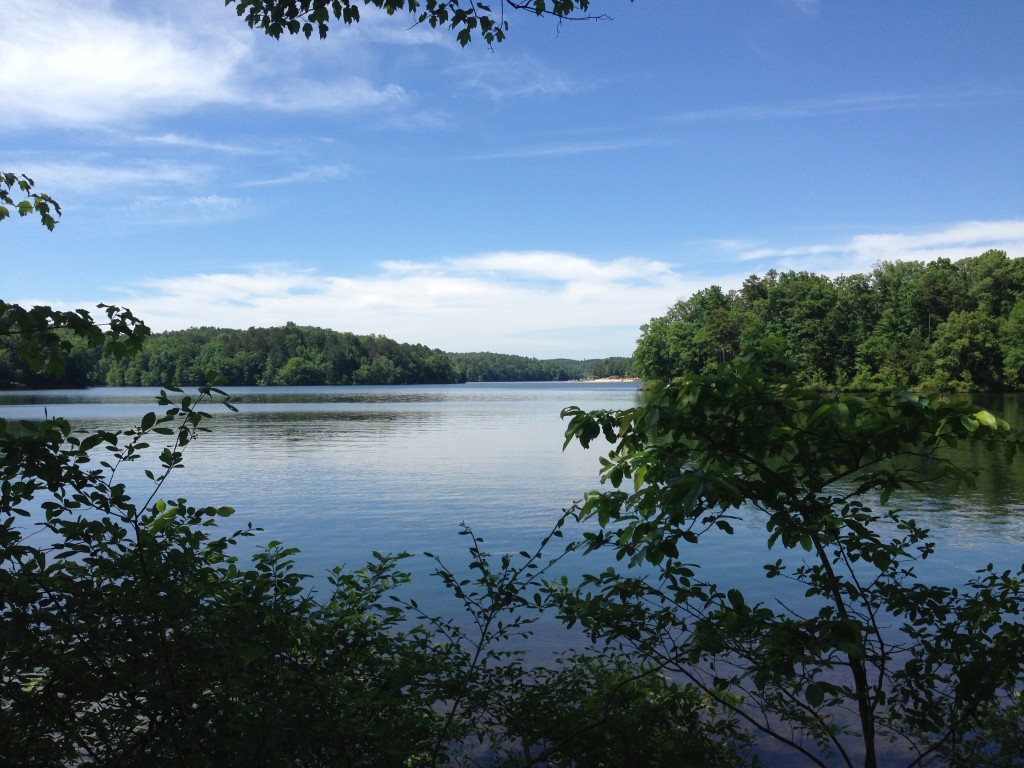
The state of Alabama — under the auspices of Gov. Robert Bentley, who announced the move Thursday — is suing the U.S. Army Corps of Engineers, saying that its operating manual governing the Corps’ stewardship of the Alabama-Coosa-Tallapoosa River Basin is inadequate to meet the needs of Alabamians. In a 30-page complaint — available in full here — counsel for the governor’s office alleges the feds “failed to adequately address valid comments and objections made by Alabama and other stakeholder commenters in response to the draft versions” of the manual with regard to the Allatoona Project, a water project spanning much of eastern Alabama and managed by the Corps of Engineers. “The flow of water through the ACT Basin is vital to the economy and environment of Alabama,” Bentley said in a statement Friday. “This manual will decrease the quality of water in our State, which will hurt our citizens. It will also adversely impact the flow of water into our State. It prioritizes water recreation on lakes in Georgia at the expense of hydroelectric power generation in Alabama, which will hurt jobs and the economy. Therefore, on behalf of Alabama, I am requesting that the federal government adopt a lawful manual that respects Alabama’s interests.” The complaints calls for the federal government to “set aside” the manual — i.e. disregard it — as well as to revise other federal documents relating to the ecologically sensitive river basin, pay the state’s court filing and attorney’s fees, and to “award other relief as the Court may deem just and proper to protect Alabama’s interests.” The move is supported by several regional groups affiliated with the U.S. Chamber of Commerce, including the influential Business Council of Alabama, which applauded the move on Friday. “The lawsuit alleges that the new manual allows the federal government to diminish the quality of water in Alabama to the detriment of all Alabama citizens and to allow the unlawful hold of water at a Georgia dam for the purposes of promoting recreation there rather than releasing the water so it can generate hydroelectric power in Alabama and serve other important purposes the law requires,” the BCA said. “In taking these drastic steps, the federal government has failed to issue an accurate environmental-impact statement that discloses the substantial harm its actions will cause to the Alabama environment, the lawsuit alleges.” The suit is proceeding in the U.S. District Court for the District of Columbia.
