
Steve Flowers: Handicapping the ‘great show’ Senate Special Election

The decisive move by newly minted Governor, Kay Ivey, to declare a Special Election for the Jeff Sessions’ Senate Seat this year rather than next year changes the entire complexion of who will sit in that coveted seat. It also redefines the landscape of an ever changing and pivotal Alabama political scene. This next year will be an adventure as we elect a Senator and concurrently the 2018 Governor’s Race will begin its evolution. We have already seen the downfall of a sitting governor this year and by Sept. 26, we will see the election of a new junior U.S. Senator. There is an assumption that only a Republican can win statewide office in Alabama and winning the GOP primary is tantamount to election. The decision by Governor Ivey was the right decision. Most folks would assume that “forthwith” means this year rather than next year. It was also a wise political move by Ms. Ivey if she wants to run for a full term. Ivey’s calling for the Special Election for Sessions’ seat immediately, could be the death knell for Luther Strange. By December, he may go from being the newest and tallest member of the U.S. Senate to the shortest serving senator in Alabama history. His defeat could be very inglorious and humiliating. With the election being this year, it will be the only show in town. It will be a spectacle. Every politician who is in any office can run without risking his or her current posts. In other words, everyone has a free shot. Therefore, it will be a free-for-all. Everyone will run against poor Big Luther and the Bentley taint. They will use their campaign resources to give you the unmitigated details of how Luther got put in that seat by ole Bentley. You will be told so many times that Bentley and Luther got together in a backroom with Rebekah and brokered a deal to sell Luther the Senate seat in return for Luther not prosecuting Bentley and Rebekah that you will know the story by heart. Luther will be as tarnished and feathered as ole Bentley. In about two weeks, when the Washington PAC’s see the polling that reveals Luther is in trouble, his campaign resources will be less than he expected and he may not be able to defend against the onslaught of negative ads. The question becomes, who will be the early frontrunners? Roy Moore enters as the favorite. His evangelical base becomes crystallized in a large field. It will probably reserve him a place in the Sept. 26 run-off. Who will be the other candidate in the runoff? It may very well not be Luther Strange. The U.S. Senate is a select club. A cursory look around the chamber reveals very wealthy people or celebrities. Senate seats are bought by wealthy individuals in a good many cases. We have some people in Alabama who could very easily buy the Senate seat. The short period of time that exists to raise money for an Aug. 15 election even further enhances the advantage for someone who can self-finance and write a big check. The name on most lists is the “Yella Fella,” Jimmy Rane. He would sell. He is a natural salesman. Folks close to Yella Fella get the feeling that he does not want to go to Washington at this time in his life. However, he is adamant and determined that Luther Strange will not remain in the seat. Therefore, he may bankroll another candidate through a super PAC. Rumor has it that he will get behind Del Marsh. Marsh has his own money also. However, he needs more money because he is totally unknown to Alabama voters. I will keep you posted on the developments. I do not know how many of these folks will join the fray but this is how I will handicap the horses at this time. Jimmy Rane and Roy Moore are one and two. Other possibilities are Congressman Robert Aderholt, Congressman Bradley Byrne, Luther Strange, Secretary of State John Merrill, Congressman Mo Brooks, State Auditor Jim Ziegler, State Sen. Del Marsh, Trump Trumpeter Perry Hooper Jr., State Sen. Slade Blackwell, State Sen. Trip Pittman, ADECA Director Jim Byard, State Senator Arthur Orr, and State Rep. Ed Henry. It will be a great show. See you next week. ••• Steve Flowers is Alabama’s leading political columnist. His weekly column appears in over 60 Alabama newspapers. He served 16 years in the state Legislature. Steve may be reached at www.steveflowers.us.
Del Marsh, Arthur Orr seek accountability for higher education spending

Facing a perennial budget shortfall, the Alabama Legislature is forced to consider how to best spend each and every hard-earned taxpayer-dollar each year. Which is exactly why Anniston-Republican Sen. Del Marsh and Decatur-Republican Sen. Arthur Orr submitted a plan in the Alabama Legislature that seeks to establish greater accountability for the state’s higher education spending by creating the Alabama Community College Council on Outcome-Based Funding. The council would be tasked with rethinking the current postsecondary funding model and create a plan to shift to outcome-based funding for Alabama’s community colleges. Like many state across the country, Alabama currently allocates funds on the basis of enrollment, which by-and-large ensures equitable distribution of per-student spending across institutions. Essentially, dollars follow students high school to higher education. But the current system doesn’t always take in account whether or not students complete their college courses, transfer to other institutions, or even graduate. Which is why Marsh and Orr are hoping to change the system to one where dollars don’t simply follow students, but rather they follow successful students, by shifting the funding to what educators call an outcome-based or performance-based system. Switching to an outcome-based system, endeavors to ensure taxpayer investments yield the best possible returns as they incentivize not only college access, but also college completion “The goal here is to bring more accountability to taxpayer dollars that are spent by higher education institutions,” Orr remarked. “The Legislature appropriates over $1.5 billion annually to Alabama’s colleges and universities, and we need a mechanism for rewarding those institutions that are providing great value to Alabama’s students.” According to the plan set forth — Senate Joint Resolution 85 — an advisory council will develop a specific outcome-based funding model for the allocation of Education Trust Fund appropriations to publicly-supported community and technical colleges in Alabama. “Making government more accountable to the taxpayers is a top priority of the Alabama Legislature,” Marsh said. “We are committed to making any changes necessary in order to achieve that goal.” Alabama isn’t the only state looking to make a change. Across the country, other budget-strapped states have been forced to carefully consider how their limited dollars are spent on higher education. Currently, thirty-two states — including neighbor-states Florida, Georgia, and Tennessee — now use, or are in the process of transitioning to performance-based formulas to determine higher education spending. “Historically, many colleges have received state funding based on how many full-time equivalent students are enrolled at the beginning of the semester,” said the National Conference of State Legislatures. This model provides incentives for colleges to enroll students and thus provide access to postsecondary education, but this model does not necessarily provide incentives for institutions to help students successfully complete degree programs. Many states are reconsidering the enrollment-based funding model and instead are aligning funding models with state goals and priorities.” Pending what the advisory council puts together, Alabama could be poised to join them soon. A shift in process could not only help the state’s ongoing budget crisis, but also bolster state’s higher education graduation rate. Only 23.5 percent of Alabamians between the ages of 25 and 64 have an associate’s degree or better. In comparison, 40.4 percent of Americans in the same demographic do, according to the U.S. Census Bureau’s 2011-2015 data. “This process is in line with our vision of providing all Alabamians with an affordable pathway to succeed through quality education and training,” said Jimmy Baker, Chancellor of the Alabama Community College System. “We look forward to working with the Legislature to create a funding model that ensures we are accountable with every dollar provided to us and shows the successes of our students.” According to SJR85, “the advisory council shall report its findings, conclusions, and recommendations to the Governor, the Chair of the House Ways and Means Education Committee, and the Chair of the Senate Finance and Taxation Education Committee not later than January 1, 2018” to be considered during the 2018 Legislative Session.
Steve Flowers: BP oil spill money, a missed opportunity for Alabama’s natural resources
We have unbelievable natural resources in Alabama starting with the Tennessee Valley and transcending to the beautiful white sands at Gulf Shores. Many of our natural resources have been exploited over the years. The prime example would be the exploitation of our rich vaults of iron ore discovered in Jefferson County in the early 20th Century. It created the city of Birmingham, the Steel City of the South. U.S. Steel swept in and bought the entire region and used cheap labor in the mines and steel mills and kept poor whites and blacks in poverty wages and shantytowns. They owed their soul to the company store. Finally, they organized into labor unions. The United Steel Workers Union Local in Birmingham became the largest in the nation. Alabama also became the most unionized state in the south. The TVA workers and Reynolds Aluminum workers in the Tennessee Valley were all unionized. The tire workers in Gadsden, Opelika, and Tuscaloosa were unionized. The federal workers around Ft. Rucker in the Wiregrass were union. The largest employer in Mobile was the docks. The dockworkers were unionized. When you combine these locales with the steelworkers in Birmingham, we were a pretty unionized state. In the course of our recent history, we have been more prudent with our natural resources. The prime example of that would be during the late 1970s when we sold the oil rights in Mobile Bay to Exxon Mobil. We got a fair price, and we put the entire corpus aside and preserved the money into a trust called the Heritage Trust Fund. Governor Fob James deserves credit for this accomplishment. It is the crowning achievement of his two terms as governor. It is quite a legacy. Not all governors leave a legacy. Ole Fob has one. Not as much can be said for our most recent governors. Don Siegelman, Bob Riley, and Robert Bentley cannot point to any accomplishment that will distinguish their time as governor. Jim Folsom Jr., who only served two years as governor, can lay claim to having lured and landed Mercedes, which has been the crucible that has catapulted us into the second leading automaker in the nation. Governor Bentley was given a golden opportunity to garner a place in history with the one-time BP oil spill money. Granted, it was not as much money as the Exxon Mobil oil rights nor did we get as good a settlement as could have been garnered. We will only see $693 million of the $1 billion settlement because we bailed out and sold out to get our money up front. Compared to Louisiana and Florida, it was not a good settlement. Essentially this one-time windfall will be squandered. The BP money was appropriated in a special session last September. The Legislature spent the entire BP oil settlement proceeds with a compromise bill that divided the money between state debt repayments, roads for Baldwin and Mobile counties and Medicaid. The allocation was $400 million for paying off state debts, $120 million for highway projects in Baldwin and Mobile counties, and a total of $120 million to Medicaid over the next two years. There had been a contentious battle over the funds for Baldwin and Mobile going back to last year’s regular session. Lawmakers from the coastal counties fought diligently for the road money because their counties received the brunt of the 2010 oil spill. Lawmakers from North Alabama felt that the BP settlement should compensate all Alabamians equally. Sen. Arthur Orr (R-Decatur), who chairs the Education Budget Committee in the Senate, led the fight for North Alabama and Sen. Trip Pittman (R-Baldwin), who chairs the Senate General Fund Committee, spearheaded the battle for Baldwin/Mobile. Senators compromised the final day of the special session. The money from BP is spent. The only thing to show for it will be some highway to the beach. They ought to at least name it the BP Expressway. It would be the only legacy from the windfall. See you next week. ___ Steve Flowers is Alabama’s leading political columnist. His weekly column appears in over 60 Alabama newspapers. He served 16 years in the state legislature. Steve may be reached at www.steveflowers.us.
Arthur Orr’s ‘drugged driving’ bill stalls in Alabama Senate committee

While Alabama lawmakers debate how to create safer roads, one Alabama state senator believes it can be achieved by taking a stronger stance on “drugged” driving. Decatur-Republican state Senator Arthur Orr filed Senate Bill 180 on Valentine’s Day, which seeks to strengthen DUI law in the Yellowhammer State. The bill would expand the DUI standard to include several additional drugs, involve greater punishment for repeat offenders, and ultimately make it easier for a drivers’ license to be revoked. Through his bill, Orr wants to increase penalties for repeat “drugged driving” offenders and extend a “lookback period” from five years to ten, which would give courts the ability to use past misdemeanor and felony DUI convictions to add severity to future sentencing. On Wednesday, Orr’s bill stalled as his colleagues on the Senate Transportation and Energy Committee questioned whether or not looking back 10 years was looking back too far. They also questioned the list of drugs named in the bill. Orr moved to table his bill. In 2015, the Washington Post reported on a study from the Governors Highway Safety Association, which found that “drugs were found in the systems of almost 40 percent of fatally injured drivers who were tested for them. That rivals the number of drivers who died with alcohol in their system.” And “the number of dead drivers who tested positive for drugs has increased from 29 percent in 2005 to 39.9 percent in 2013, the report said, citing federal crash data.” Below are the drugs and amounts that would qualify for penalty until Orr’s bill: There is a 6 blood concentration of the following substances that is equal 7 to or greater than: 90 ng/mL of Alprazola 200 ng/mL of Amphetamin 10,000 ng/mL of Butalbita 10,000 ng/mL of Carisoprodol or meprobama 70 ng/mL of Clonazepam 20 ng/mL of Cocaine 5 ng/mL of Delta-9-tetrahydrocannabinol (THC) 500 ng/mL of Diazepam or nordiazepam 60 ng/mL of Hydrocodone 100 ng/mL of Lorazepam 250 ng/mL of Methadon 10 ng/mL of Methamphetamine 100 ng/mL of Morphine 100 ng/mL of Oxycodone 800 ng/mL of Tramadol 50 ng/mL of Zolpidem
Robert Bentley signs bill to cut business ties with Israel boycotters

Score another victory for the pro-Israel lobby, this time in the Alabama statehouse. Gov. Robert Bentley has given final approval to a law banning firms that boycott Israel from doing business with Alabama state and local governments. SB81, sponsored by Republican Sen. Arthur Orr, restricts any public entity in the state from entering into a contract with firm participating in the Boycott, Divestment and Sanctions movement, or BDS as it’s commonly known. Several major companies, trade unions, academic institutions around the world are refusing to engage in commerce with Israel over what they call human rights violations against the Jewish state’s Palestinian neighbors. But pro-Israel forces are fighting back around the nation, saying BDS boycotters unfairly target Israel and are motivated by hatred and anti-Semitism. Josh Block of the Israel Project for instance, a 501(c)(3) advocacy group based in Jerusalem and Washington, D.C., applauded the move by Bentley and state lawmakers. “BDS is discrimination cloaked in the language of human rights, but at its core, the effort to single out Israel is anti-Semitism, plain and simple,” said Block, TIP’s CEO. “I congratulate the people of Alabama, their legislators and their governor, for seeing through this dangerous ruse and standing strongly with the Jewish state against misguided efforts to attack and delegitimize America’s closest ally in the Middle East,” said Block. In enacting the new law, Alabama joins eight other states which have formally cut ties with BDS participants. The Florida Legislature passed a similar bill in March. That bill, like Alabama’s new law, sailed through the legislative process. Alabama senators passed the bill 30-0, while the House approved its version by a 84-5 vote. Arizona, Colorado, Georgia, Illinois, Indiana, South Carolina and Iowa also have anti-boycott laws on the books. In a release, the Israel Project said the bill “takes square aim at hateful efforts to single out Israel by preventing Alabama from entering into contracts with business entities unless they certify that they are not and will not engage in boycotts.” Critics of the anti-BDS movement say the laws are an undue incursion into private firms’ freedom of speech,
BP settlement could be dead in Alabama Senate … Here’s what happened
Hidden among the customary grapples over state budgets this Legislative Session has been another battle between two groups that used to work together on most priorities. It isn’t Republican versus Democrat, or liberal versus conservative. It isn’t even, like we see so often in DC, a tussle between the executive and legislative branches. No, this year a fight has broken out between the coast and the interior, and it might send $640 million in BP Settlement funds into purgatory until the stalemate ends. With approximately 24 hours before this year’s Regular Session concludes, the fate of a $640 million compromise between the Gulf Coast delegation from Mobile and Baldwin counties, and other lawmakers who want a piece of the pie, hangs precariously. The Senate Ways and Means General Fund Committee was scheduled to take a vote Tuesday on the House’s version of how to spend a bond issue taken out against future BP settlement funds. Members representing central and north Alabama, led most vocally by Decatur Republican Sen. Arthur Orr, argue the decline in revenue due to the 2010 Deepwater Horizon oil spill negatively affected the entire state. The substitute bill Orr backed would have appropriated $191 million for road projects spread around the state, with a double portion going to coastal counties, and $450 million for repaying a “rainy day fund” raided in the wake of the oil spill, freeing up other funds to be used to shore up Medicaid for the fiscal year. This move rankled coastal representatives, one of whom, Republican Sen. Tripp Pittman, who makes his home in Baldwin County, also happens to be chair of the committee hearing the bill. Pittman unceremoniously ended the committee meeting Tuesday before the bill received a vote. Fellow coastal delegate Sen. Bill Hightower said the region isn’t close to being where it needs to be. “We’re not made whole,” Hightower said. “We won’t know the full implications of the oil spill for 25 years.” But if the committee doesn’t approve some grand compromise before midnight Tuesday, the state will only get BP settlement funds as scheduled by a federal judge — a relatively paltry $50 million per year, instead of the fiscal shot in the arm legislators say they so desperately need.
Alabama legislative preview: May 3 — May 4, 2016
Two days. That’s all Alabama’s state lawmakers have to complete their legislative priorities for the year. Some bills will end up languishing in the annals of Alabama history, while others will get their day on the governor’s desk. The entire session has been covered in the grey cloud of scandal, between accusations of Gov. Robert Bentley‘s infidelity, and the impending ethics trial of Speaker Mike Hubbard, but legislators stayed on track … mostly. Some much-debated bills like the gas tax are dead for good this year, while others, like payday lending reform and industrial hemp legalization, are walking a blade-thin line to final passage. Here is what legislators have on their plate for the final two days of the 2016 Regular Session. Here is what legislators have on their plate for the final two days of the 2016 Regular Session. House — Convenes Tuesday at 1 p.m. SB372 creates a new provision in Alabama’s controversial “chemical endangerment of a child” law, allowing the consumption of controlled substances under the “good faith” supervision of a physician. The chemical endangerment law came under fire last fall after a searing investigation by AL.com and ProPublica. Sponsored by Sen. Clyde Chambliss (R-Montgomery) in the Senate and Rep. April Weaver (R-Alabaster) in the House. SB91 regulates Payday Lenders, restricting the interest rates and fees they may charge. The bill being considered in the House Tuesday is a watered-down version of one passed by the Senate in early April. Should it pass the House it would have to be reconsidered by the Senate in the waning hours of the Session on Wednesday. Sponsored by Sen. Arthur Orr (R-Decatur) in the Senate and Rep. Danny Garrett (R-Trussville) in the House. SB268 Currently, an inmate’s eligibility for Medicaid is terminated once they are incarcerated. SB268, already passed by the Senate, would change that termination to a suspension. The bill’s sponsors argue this will help reformed convicts land back on their feet when their sentences are complete. Sponsored by Sen. Cam Ward (R-Alabaster) in the Senate and Rep. Chris England (D-Tuscaloosa) in the House. SB347 which would give the Department of Agriculture and Industries the authority to study, regulate, and tax industrial hemp, and reclassify the plant as separate from marijuana. Similar bills have been passed previously in both the House and Senate, but because they weren’t identical they must be considered again. Sponsored by Sen. Paul Bussman (R-Cullman) in the Senate, and Rep. Ken Johnson (R-Moulton) in the House. Senate — Convenes Tuesday at 1 p.m. HB204 reorders the names appearing on primary ballots in presidential election years to present elected official positions first, and delegates to the national convention last. Currently, the delegates come directly after the presidential candidates themselves, an arrangement found to be confusing for many primary voters, as they had to sift through a litany of names they didn’t recognize to find the candidates for federal and state offices. Sponsored by Rep. Randy Wood (R-Saks) HB393 is the House version of the industrial hemp bill described above. HB433 prohibits a sexually exploited child from being “adjudicated, delinquent or convicted of a crime of prostitution.” Essentially, the bill protects children who are victims of sexual crimes or trafficking from being convicted of prostitution. The bill’s sponsor is a longtime advocate for harsher penalties for sex traffickers, and has fought to protect the victims of the deplorable practice. Sponsored by Rep. Jack Williams (R-Vestavia Hills) HB98 allows qualifying retirees from the U.S. Military to obtain concealed weapons permits from their county’s sheriff at no cost to them. The Sheriff may revoke the permit if cause is found. Sponsored by Rep. David Standridge (R-Hayden)
Bill to regulate payday lenders inches closer to final passage

As the clock winds down on the Alabama Legislature’s 2016 Regular Session, a bill to regulate payday lenders which started with a great deal of momentum is now inching itself toward the finish line, despite broad support from both sides of the aisle in Montgomery. SB91, sponsored in the Alabama Senate by powerful senator and committee chairman Arthur Orr (R-Decatur), and carried in the House by Sophomore member David Faulkner (R-Mountain Brook) would cap maximum annual interest on payday loans at 180 percent, down from current interest rates of 456 percent per year. The bill passed the Alabama Senate nearly unanimously, garnering merely a single No vote. While supporters of the bill believe they have the votes in the House, the bill is meeting some resistance on its way to final passage. At a roundtable discussion held on April 18th by the Junior League of Birmingham, Rep. Faulkner said his primary goal is to get the bill, which he admits isn’t perfect but is a step in the right direction, out of committee and out of the House without any changes. The bill did not receive a vote after a lengthy public hearing during last week’s Financial Services Committee meeting, during which members heard from advocates on both sides of the issue. The reform being championed by two Republicans is somewhat of an anomaly, as such changes have frequently been carried by Democrats in other states. But Faulkner told Alabama Today it was a no brainer for him as soon as the lenders’ tactics were explained to him. “When the issue was explained to me by a member of my church I just knew it was the right thing to do,” said Faulkner. “I see these places all over the place, I’ve heard the stories, once I learned more about it, I felt like this was usury, and that the State of Alabama is wrong for having a system in place that really allowed people to be preyed upon. I’m a less government, small government conservative, but I don’t believe when the government put in place a system that allows people to be preyed upon, I felt like that was wrong.” A database created by the Alabama Department of Banking found Alabamians took out 462,209 loans over a 10-week period. A total of $146 million was borrowed, or an average of about $14 million each week. A coalition of activists from across the state have fought for years to bring this reform to the table. The Alliance for Responsible Lending in Alabama (ARLA) has members from the Arise Citizens’ Policy Project, Alabama Appleseed, the Alabama State Conference of the NAACP, the Alabama Citizens’ Action Program, the Southern Poverty Law Center, and the Federation of Republican Women. The group argues it has the deck stacked against them, with a well-funded special interest bolstering the bill’s opposition. A report by AL.com’s Kyle Whitmire found during the 2014 election cycle lenders gave more than $475,000, including $37.835 to House Speaker Mike Hubbard (R-Auburn) and thousands more to other influential members of the House and Senate. While opponents of reform say such loans are sometimes necessary to help low-income families through tough times, ARLA policy analyst Stephen Stetson wrote in an op-ed last month that what can appear to be a helping hand for those in need can be an “anchor” holding them in a cycle of poverty. “We all want a world where people can get the kinds of credit they need. But that requires putting some brakes on a system that all too often acts as an engine for poverty, handing out extremely high-cost loans to desperate folks who may treat them as a lifeline. Too often, those ‘lifelines’ instead end up as anchors, dragging people into financial quicksand.” With only two weeks left in the session, the bill’s advocates have precious few days to shepherd it through the rest of the legislative process and onto the governor’s desk.
Senate committee approves 4 percent teacher raise for Alabama teachers, education budget

An Alabama Senate committee has approved a 4 percent pay raise for most public school teachers, administrators and employees. The Senate Finance and Taxation Education Trust Fund Committee approved a $6.327 billion Education Trust Fund budget, a 5 percent increase over this year, which funds pay raises for teachers and provides additional money to hire new educators and fund transportation. The House unanimously approved the budget early last month. The budget provides for a wide-array of increases for state education, including $14.5 million to Alabama’s top-ranking Pre-K program — a bump from the House-approved $14 million. Further, the budget will fully fund the Public Education Employees Health Insurance Plan (PEEHIP) and bump the funding for teacher supplies from $373.79 to $405.05 per unit, and technology from $63.79 per unit to $169.34 per unit. The Committee also approved a proposal that dictates teachers and employees making less than $75,000 a year would see a four percent pay raise, while those above would see a two percent raise, making this the first take-home pay increase in years for Alabama public school teachers. The committee adopted an amendment offered by Senate budget chairman Arthur Orr (R-Decatur), that included principals and assistant principals in the pay raise. “Principals are the backbone of the schools, and make the trains run on time and we need to attract good leaders to our individual schools,” Orr said. The budget now moves to the full Alabama Senate, where it is expected to be considered as early as Wednesday.
Stephen Stetson: A good first step toward payday lending reform in Alabama
We’re calling for payday lending reform in Alabama, and we’re not alone. For years, reform of high-cost lending has been the goal of the Alliance for Responsible Lending in Alabama (ARLA), an incredibly wide-ranging coalition of activists and advocates. The groups pushing for reform span the spectrum, including Arise Citizens’ Policy Project, Alabama Appleseed, the Alabama State Conference of the NAACP, the Alabama Citizens’ Action Program, the Southern Poverty Law Center and the Federation of Republican Women. ARLA is a coalition staggering in its breadth and ideological diversity – and its members are excited to see the Alabama Legislature considering reforms that would lower costs for hundreds of thousands of payday borrowers now coping with interest rates of up to 456 percent a year. Let’s be clear: SB91, sponsored by Sen. Arthur Orr (R-Decatur) doesn’t give reform advocates everything they want. In an ideal world, lawmakers would cap interest rates on payday loans at 36 percent a year and allow more borrowers to be served by banks and credit unions (and family and friends), while making good plans and decisions about monthly budgeting. Sadly, that approach simply doesn’t seem politically possible right now in Alabama. Orr’s approach would do a whole lot of good for a whole lot of people, though. The bill, which the Senate is expected to consider in April, would enable the payday loan industry to stay in Alabama, while putting some common-sense rules in place to govern the loans. SB91 models reforms made in Colorado in 2010. The bill would cut interest rates, give payday borrowers at least six months to repay, and allow them to pay down the loan principal in installments. These would be meaningful changes. Under current Alabama law, payday loans are usually for two weeks and must be repaid in full, with no requirement for lenders to allow installment payments. In Colorado, extending the loans’ length and allowing installment payments has given borrowers a shot to reduce their debt without it eating up huge chunks of every paycheck. Fewer people are pulled into a ceaseless churn of short-term loan after short-term loan. Again, SB91 wouldn’t solve every problem related to consumer debt, and it wouldn’t eliminate the payday loan industry in Alabama. It’s a compromise proposal that would curb some of the worst excesses of an industry built on loans that leave far too many people trapped in debt. It would help keep some folks out of bankruptcy court, and it would allow more reasonable lending approaches to flourish. We all want a world where people can get the kinds of credit they need. But that requires putting some brakes on a system that all too often acts as an engine for poverty, handing out extremely high-cost loans to desperate folks who may treat them as a lifeline. Too often, those “lifelines” instead end up as anchors, dragging people into financial quicksand. A growing number of Alabamians now agree: The time has come to give payday borrowers some relief. SB91 would be a real and substantial step in the right direction for Alabama consumers. • • • Stephen Stetson is a policy analyst for Arise Citizens’ Policy Project, a nonprofit, nonpartisan coalition of 150 congregations and organizations promoting public policies to improve the lives of low-income Alabamians. Email: stephen@alarise.org.
Alabama legislative preview: March 21 – March 25, 2016
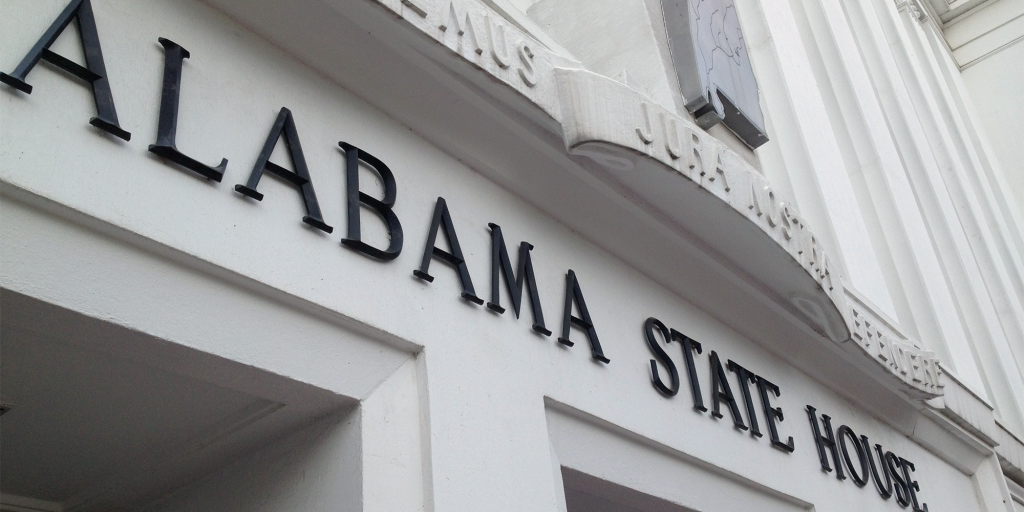
The Alabama House of Representatives will convene at 1 p.m. Tuesday, and the Senate an hour later, as state lawmakers gather for the 17th day of the regular session. This week, the Senate will take up SB89 from Sen. Arthur Orr (R-Decatur), which would require Alabama public school students to pass a civics test as a requirement for graduation. Orr’s legislation has been on the agenda for a while, but has likely been stalled due to a focus on more contentious issues. The body is also slated to take up SB148 from Sen. Jim McClendon (R-Springville), which would require all vehicle passengers to wear a safety belt, and SB114 from Sen. Paul Sanford (R-Huntsville), which would regulate fantasy contests and “exempt fantasy contests from certain criminal penalties associated with gambling activity.” The bill would increase spending by the Attorney General’s office, which would be responsible for overseeing such activities, by $1 million in the first year. Also on the Senate’s agenda this week are SB14 from Sen. Gerald Allen (R-Tuscaloosa), which would allow citizens to carry a firearm in their vehicle without a permit, and SB205 from Sanford, which would bar the Alabama Department of Human Resources from renewing health center licenses for an “abortion clinic or reproductive health center” within 2,000 feet of a school. In the House, lawmakers will take up HB46 from Rep. Alan Boothe (R-Troy), which would allow Alabama spirit makers to sell fifths for off-premise consumption. The body is also slated to debate HB13 from Rep. Alan Harper (R-Northport), which would allow citizens to vote on whether or not to allow a lottery in the state – the legislation provides no details on how proceeds from such an operation would be used, which is likely why it hasn’t been discussed thus far. HB218 from Rep. Dickie Drake (R-Leeds) is also on the agenda and would require that all elementary school students be instructed in cursive writing before the end of their third grade year. HB244 from Rep. Connie Rowe (R-Jasper) will also be taken up this week – the bill prohibits law enforcement from requiring victims of a sexual offense to take a polygraph examination. Committee hearings get underway Tuesday, though the vast majority take place on Wednesday, beginning with the Senate Judiciary Committee, which will take up SB237 from Sen. Quinton Ross (D-Montgomery). Ross’s legislation would make it unlawful for employers to request information regarding arrests and convictions on employment applications. The committee will also take up Sanford’s SB115, the Senate version of “Leni’s Law” from Rep. Mike Ball (R-Madison), which would decriminalize possession of the marijuana-based medicine cannibidiol. The Senate Committee on Constitution, Ethics and Elections will debate SB360 from Sen. Tom Whatley (R-Auburn), which would require voters to register as a Democrat or Republican before voting in a primary. Voters who do not will not be allowed to vote on party candidates, only on ballot measures and nonpartisan issues. The House Committee on Agriculture and Forestry will take up HB393 from Rep. Ken Johnson (R-Moulton), which would allow for the growing of industrial hemp in the state for use in a variety of products. The House Committee on Mobile County Legislation will mull over HB248 from Rep. Napoleon Bracy (D-Mobile), which would establish a $10.10 minimum wage in Mobile County. At the close of business this week, legislators will adjourn for spring break.
Four members of Robert Bentley staff get $73,000 raises despite lawmaker disapproval

Some legislators are criticizing Gov. Robert Bentley for raising salaries of his Cabinet members and staff, some by double-digit percentage increases. The sponsor of 2015 legislation that allowed the raises by abolishing old Cabinet salary caps called the size of the raises “indefensible” and said they were not what lawmakers had in mind when they approved the bill. “It’s outrageous,” Sen. Arthur Orr, R-Decatur, said in an interview Although many Cabinet members are making more money this year, four received raises of about $70,000, according to state pay records. The salaries of Alabama Department of Economic and Community Affairs Director Jim Byard, Alcoholic Beverage Control Board Administrator Mac Gipson, Revenue Commissioner Julie Magee and Insurance Commissioner Jim Ridling increased from $91,014 to about $164,000. The pay increases were first reported Monday by the blog Inside Alabama Politics. The law abolished old salary caps — largely considered outdated— and said Cabinet salaries should fall under a pay scale established by the Alabama Department of Personnel. The pay scale was created in August. Bentley, in a statement, said he would make “no apology” for the raises, saying they will help recruit and retain highly qualified people to run vital agencies. “This legislation was long overdue, and allows state government to be competitive with the private sector in getting highly qualified people to run important state agencies that provide vital services to our citizens. I make no apology for the salary increase for my Cabinet and staff. I appreciate their outstanding service to the people of our state,” Bentley said. Orr said lawmakers envisioned incremental increases at the lower end of the newly created pay scale. “It’s outrageous how high and how out of kilter we are now,” Orr said. For years it was not uncommon for governors to use personnel gymnastics to get around the salary cap for people who would supervise the largest state agencies. The acting director of transportation, for example, had been paid through the Alabama Law Enforcement Agency payroll. Republished with permission of The Associated Press
