
Association of County Commissions of Alabama supports Amendment 2
The Association of County Commissions of Alabama (ACCA) is urging voters to vote to ratify Amendment Two to the State Constitution. Under the Alabama Constitution of 1901, local governments are largely prohibited from giving a “thing of value” to a public or private entity. Amendment 2 would authorize the state, a county, or a municipality to grant federal award funds or any other source of funding designated for broadband infrastructure by state law to any public or private entity for the purpose of providing or expanding broadband infrastructure. A “Yes” vote on Amendment 2 would allow local governments to work in unison with the state and use American Rescue Plan (ARPA) funds for broadband expansion. The ACCA encourages Alabamians to vote YES on Amendment 2 on the General Election ballot on November 8, 2022. Over the past several years, Alabama leaders have worked to expand essential broadband services across the largely rural state of Alabama. The COVID-19 global pandemic that closed schools and businesses and forced patients to visit their doctors online thru telemedicine has only heightened the necessity for internet access and made it glaringly evident that Alabama still has much ground to cover to effectively reach the underserved areas of our state. The ACCA said that considering the enormity of this feat, it is important that local leaders join the state in putting forth a concerted, collaborative effort to expand broadband services. Broadband providers are often hesitant to install broadband infrastructure in rural areas because of low subscription rates from consumers. Broadband expansion usually involves governmental entities providing incentives to these providers to install the requisite infrastructure in rural areas. It is, arguably, presently illegal for a local or county government to offer these incentives to a business or corporation. Amendment 2 would change that so that local governments can partner with the state government in incentivizing cable and other companies to extend broadband lines even into areas of the state where it is not commercially viable at this time in order to serve those residents that live there. The Alabama Constitution of 1901 is the longest in the world and is currently the oldest state constitution. It is frequently amended by the legislature, and voters are asked to ratify those amendments, including this year’s Amendment Two. To connect with the author of this story, or to comment, email brandonmreporter@gmail.com.
Enjoying leftovers: Sheriffs feed inmates, keep extra cash
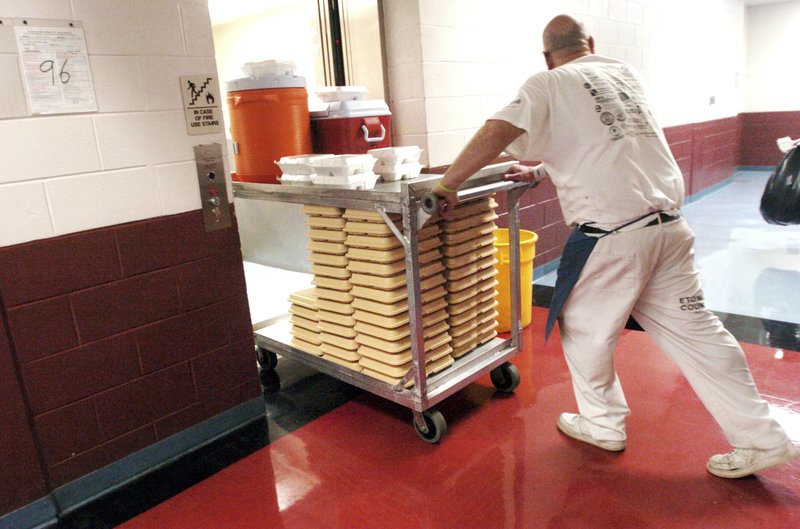
In Alabama, the less sheriffs spend on feeding inmates, the more money they get to put in their pockets. For decades, sheriffs have made extra money – sometimes hundreds of thousands of dollars – under a Depression-era system by feeding prisoners for only pennies per meal. Critics say the meals can be unhealthy, and a lawsuit against dozens of sheriffs combined with media reports about the practice threaten to end the one-of-a-kind system. Legislators this year approved potential changes that would prevent sheriffs in two counties from keeping the excess money — including one where a former sheriff was jailed after feeding prisoners corndogs while pocketing more than $200,000 — and wider change is possible. “I think everyone agrees that something needs to be done,” said Sonny Brasfield, executive director of the Association of County Commissions of Alabama. Republican Sen. Arthur Orr said he is working on a bill to abolish the practice. “This law is from the 1930s. Times change. It’s time we move on into the 21st century,” said Orr. Back when chain gangs were common in the late 1920s, Alabama passed a law that gave sheriffs $1.75 a day from the state to feed each prisoner, and sheriffs got to pocket anything that was left over. Jails in most of Alabama’s 67 counties remain on the system generations later. Sheriffs also get small payments from the state per jail. Some also receive payments from cities and the federal government for holding prisoners, further boosting income. Add up all the money and a dash of frugality, like purchasing low-cost grub and accepting donated food, and sheriffs can wind up with large profits from jailhouse kitchens. Attorney Aaron Littman, who helped sue earlier this year trying to find out how much sheriffs are making off jail food, said lawyers regularly hear complaints about poor living conditions and lousy food in jails. “It’s no way to run government,” said Littman, of the Atlanta-based Southern Center for Human Rights. Alabama is the only state with such a setup, he said. Littman questions the legality of sheriffs pocketing the money. The Southern Center, which advocates for change in the criminal justice system, sued with the nonprofit Alabama Appleseed for Law and Justice in January to make 49 sheriffs release information that would show how much they are making off jail food. Sheriffs have refused, arguing in court that the numbers are personal and private. Some of the amounts have been revealed. Monroe County Sheriff Tom Tate collected “excess” jail feeding funds of $110,458 over three years ending in 2016 — a tidy amount for a south Alabama county with only 22,000 residents and a median family income estimated at $42,335 annually by the Census Bureau, according to an accounting turned over to a plaintiff’s lawyer. In mid-sized Etowah County, where the jail holds 900 people on average, Sheriff Todd Entrekin recently released tax forms showing he made a profit of $672,392 from the jail kitchen in 2015 and 2016. Entrekin made the documents public during a news conference where he denied malnourishing prisoners and denied news reports linking food profits and a beach condominium he and his wife purchased for $740,000 last year. “Nobody here is underfed. Nobody here is mistreated. I will say it’s not the Ritz, so you won’t be treated like a king. You will be treated like someone who has broken the law, which means you won’t get your choice about what or when you eat,” Entrekin told reporters. Last year, a federal judge held Morgan County Sheriff Ana Franklin in contempt and fined her $1,000 because she took $160,000 from a jail food account. She used to make a personal car loan that later failed, court documents showed. The judge ruled Franklin’s actions violated an agreement reached by former Morgan County Sheriff Greg Bartlett, who was briefly held in his own jail in 2009 after a federal judge held him in contempt for feeding skimpy meals to boost his profit, which Bartlett said was $212,000 over three years. Bartlett went in with another sheriff to purchase a truckload of corndogs for $1,000 and fed them to prisoners for weeks, evidence showed. Franklin argued she wasn’t bound by Bartlett’s agreement, but a court disagreed. Sheriffs in Morgan and neighboring Cullman County in coming years would be required to spend any excess food money on police needs under proposed constitutional amendments approved this year by lawmakers, but voters still must OK the measures. It’s unclear how much is at stake since they, like most other sheriffs, haven’t publicly released detailed information about their operations. Sheriffs’ responses to the suit seeking financial information have been coordinated in part by the Alabama Sheriff’s Association, where longtime executive director Bobby Timmons did not return a message seeking comment. Republished with the permission of the Associated Press.
Ronda M. Walker: Ethics in leadership
“Neither the wisest constitution nor the wisest laws will secure the liberty and happiness of a people whose manners are universally corrupt.” -Samuel Adams If it isn’t illegal, then it isn’t unethical. That is the mentality many elected officials have adopted in our state and nation. Politicians wheel and deal in the gray area between right and wrong, craftily balancing on the line of legitimacy, careful not to slip a foot into the land of illegality. They carelessly push the limits of right and wrong with virtually no regard for what is actually right and wrong. When it becomes our goal as public officials to simply avoid activity classified as a criminal offense against public law, and we ignore our moral obligation to hold ourselves to a different, more stringent standard, we erode the public trust and become a significant threat to the stability of our democracy. Unfortunately, recent comments by our Governor demonstrate this skewed mindset that many have used as justification for their actions. I literally sat with my mouth agape as I read a quote from Alabama Governor Robert Bentley’s recent press conference. We have all heard the audio recordings of intimate conversations between the Governor and another woman who is not his wife. We have heard the allusions from the Governor himself to a physical relationship between he and a woman that is not his wife. Yet, he stood at a microphone recently at a crowded press conference and actually said the words, “I’ve done nothing – absolutely nothing – that is illegal or unethical.” Every fiber of my moral being was offended at the words he spoke. While the illegal portion of his statement is still being investigated, unless the audio recordings are one day proven false, the unethical portion of his actions has been splayed across the Internet and national news enough for everyone to know he has most certainly acted unethically, immorally, and without regard for the sanctity of the office he holds. The fact that he can say with a straight face that he has not acted unethically reveals the semantic game public officials often play to justify their questionable actions. When leaders decide to parse the meaning of criminal and ethical behavior when deciding on a particular action we lose our virtue, our freedom, and our greatness. Character matters, a great society cannot remain so without a common sense of decency, especially amongst leadership. We need leadership that holds truth inviolable. We need leaders that value honesty, integrity, loyalty, and respect for others above all else. That is ethical behavior. Ethical behavior is not about obeying man’s law, ethical behavior is about being a better person. About having a moral standard that governs everything you do. Doing the right thing even when no one is watching, doing the right thing even when you think no one is listening. If I know my neighbor is elderly, ailing, and struggling to care for his wife who has progressing Alzheimer’s and I do nothing to help meet their basic needs I have not violated state or federal law. If I fail to show my children physical love and affection I have not violated state or federal law. If I lie to my husband and engage in an extramarital affair I have not violated state or federal law. But in each case I have most certainly violated the basic moral and ethical standards of conduct that distinguish right and wrong in human action. I have revealed my character as self-serving and weak. And I have failed in my moral obligation as a neighbor, mother, and wife. Unfortunately, many elected officials do a quick-footed dance through questionable areas of personal activity with their biggest concern being the avoidance of prosecution. When public officials become more concerned about violating the law than violating the public trust they no longer serve the public, but themselves. We are too great a people to accept such disingenuous leadership. But unfortunately we have accepted it for generations. There are numerous examples of both local and national leaders, from all political parties, who have acted in ways unbecoming and who, instead of being chastised by the electorate have been given a pass. Seriously, some have even gone to jail for criminal offenses and enjoyed a baffling political comeback so perhaps I should not be so surprised that we turn a blind eye to infidelity. I was sworn in to the Montgomery County Commission in February 2014. Immediately after being sworn in I was told I must participate in a mandatory training program coordinated by the Association of County Commissions of Alabama (ACCA) intended to educate new Commissioners on their role and responsibility. The first class I took was entitled “Ethics for Public Officials.” This class was facilitated by staff from the ACCA, the Alabama Ethics Commission, and a local attorney. One of the topics of discussion was the differentiation between an act being unethical and an act being in violation of the law. Unfortunately, this is a distinction elected officials insist upon using as their standard for decision-making. Is what I am about to do illegal, or simply unsavory? A portion of the Ethics training was led by Sonny Brasfield, Executive Director of the Association of County Commissions of Alabama. As someone who has worked in and around Alabama politics for years, and has conducted numerous ethics training courses, I consider Mr. Brasfield an expert in this area. And because he summed up the truth so clearly and succinctly, I am going to quote Mr. Brasfield’s introduction to the discussion on ethics: “The Alabama Ethics Law is a criminal statute, which outlines behaviors that are legally permissible as well as those behaviors that are illegal. The illegal behaviors, if prosecuted, will result in fines, imprisonment or both. Following the Alabama Ethics Law does not mean that a public official or employee is acting in an ethical manner. In fact, there is no question that an individual can participate in unethical
State launched electronic database to clear confusion, post docs for Ala. homeowners’ associations

Designed to provided transparency for homeowners’ associations across the state, the Alabama Office of the Secretary of State announced the activation of a new electronic database Monday. The database is a direct result of 2015’s Alabama Homeowners’ Association Act, which Gov. Robert Bentley signed into law requiring the Secretary of State to implement and maintain an electronic database with which homeowner’s associations must file certain association documents. Organized by association name, the database is accessible by the public through the Secretary of State’s website and provides the capability to search and retrieve association filings. “This new electronic database will allow Alabama citizens to access certain documents related to Homeowners’ Associations,” said Alabama Secretary of State John Merrill. “By providing a searchable database the public will have the capability to retrieve documents relating to association filings. I want to commend Representative McCutcheon for his leadership in the passage of this bill.” According to the Association of County Commissions of Alabama website, the Alabama Homeowners’ Association Act “was conceived after numerous complaints from new homeowners, who had no knowledge that their homeownership bound them to all the covenants and fees imposed by the homeowner’s association.” The link to access the database can be found here.
House committee advances proposed gas tax increase to fund road, bridge construction

A proposed gasoline tax increase to pay for road and bridge construction cleared its first hurdle in the Alabama Legislature on Thursday. The House Transportation, Utilities and Infrastructure Committee approved the bill, sending it to the full House of Representatives for a vote that could come in early April. The proposal would raise the gasoline tax by 6 cents per gallon, a figure that the bill’s sponsor, Rep. Mac McCutcheon, said would bring Alabama’s fuel tax in line with neighboring states. The tax would then be adjusted every four years to equal the average tax in Alabama’s four border states. McCutcheon, R-Capshaw, said there is a critical need for infrastructure improvements in the state. “We cannot continue in our state to allow the infrastructure to deplete because we are afraid to address this issue, as tough as it is,” McCutcheon said. McCutcheon said the state hasn’t raised gas taxes in more than 25 years, while the cost of road and bridge construction has increased. The adjustments every four years would assure there is some “growth” in the tax, although lawmakers could reject the increase by passing a joint resolution, he said. The tax would end in 2027, unless lawmakers vote to renew it. The committee-passed bill also would place an annual fee on vehicles that run solely on alternative fuels, $100 for each private passenger and $150 for commercial vehicles. The committee approved an amendment to the original bill that exempted hybrids from the annual fee. The proposed gas tax increase comes as many lawmakers say there’s no appetite among legislators for tax increases. McCutcheon said it was an investment in Alabama’s future. Rep. Will Ainsworth, R-Guntersville, cast the only no vote against the bill in committee “I’m just not in favor of the hardworking people in Alabama having to pay any more in taxes,” Ainsworth said after the committee. “I think there is a legitimate argument that there needs to be something done to obviously fix the infrastructure in the state. My position is there are other things we could do in reforming government to come up with the funding,” Ainsworth said. A slightly different gas tax bill was introduced in last year’s special session but never got a floor vote. “Tying it to the southeast average has really helped us in terms of members looking at it and understanding that we are not asking for something outlandish,” said Sonny Brasfield, executive director, Association of County Commissions of Alabama. While the bill moved quickly out of committee Thursday, proponents said they do not expect a floor vote until after lawmakers return from their spring break, now scheduled for March 28. Republished with permission of the Associated Press.
Vote delayed on controversial gun bill

In a committee room filled to the brim with law enforcement officers from across the state, the Senate Judiciary Committee met today to take up a controversial bill from Sen. Gerald Allen (R-Tuscaloosa), which would allow Alabamians to carry a firearm in their vehicle without a concealed carry permit. Before taking up Allen’s bill, the committee renewed discussion on SB67, which would set an interest rate cap of 10 percent on lawsuit lending. The vast majority of opposition centered around Democrats’ insistence that the bill should also address payday lending, which has wreaked havoc on low-income Alabamians. Despite that, the bill garnered a favorable report by a 7 to 4 margin. The next bill up for debate was SB108, which would increase the age of youthful offenders to 23 or 25, depending on the situation, and allow judges the discretion to expunge youthful offender records. The only opposition to the bill came from Sen. Larry Stutts (R-Franklin), who saw no need to increase the age threshold for youthful offenders. “A regular criminal conviction is a lifetime sentence,” said Sen. Hank Sanders (D-Selma) in opposition to Stutts’ statements. “It follows you in getting work, it follows you in voting, it’s a lifetime conviction.” The bill gained a favorable report, as did SB69, which provides standing committees with the right to subpoena documents from state agencies and their contractors. A brief public hearing was held for SB114, a bill sponsored by Rep. Paul Sanford (R-Huntsville) to regulate “fantasy contests” and provide regulations therein and give oversight of the contests to the Attorney General’s Consumer Affairs Division. Joe Godfrey, Executive Director of the Alabama Citizen’s Action Program (ALCAP), and Eric Johnston, an anti-gaming lawyer in the state, both spoke in opposition to the allowance of such games in Alabama. “The argument is that this is not gambling, this is just a game of skill,” Godfrey said. “This is gambling and we need to not legalize this type of gambling in Alabama.” Sen. Vivian Figures (D-Democrat) seemed to chastise the duo for their opposition to the games, even asking Godfrey if he was opposed to church bingo. “The thing about this is that people can already play this in Alabama but Alabama is not getting any money from it,” Figures said. “To me, this bill is about putting it in place so we can reap some of the benefits. God gave all of us free will, so it’s up to us individually to choose.” The bill received a favorable report by a 10 to 2 margin. Next on the agenda was the main event in the eyes of those in attendance, the public hearing for Allen’s guns bill. “If you are for this bill, then you support the Second Amendment,” Allen said before turning discussion over to the public. “If you are not for this bill, then you support gun control.” At that, the over-sized crowd launched into boos and moans. “I sure do support gun control,” Figures shouted out over the hiss of the crowd. Bobby Timmons of the Alabama Sheriffs Association and Barry Cleveland of the Alabama Gun Rights Network both rose to oppose the measure, as well as Lee County Sheriff Jay Jones and Demopolis Police Chief Tommy Reese. “The only thing we’re saying is every time we turn around an officer is being killed just because he’s wearing a badge,” Timmons said. “What is a life worth?” Cleveland opposed the bill on the grounds that it allowed citizens to carry “long guns,” such as an AR15, in vehicles. He noted that if the legislation only allowed for pistols he would be in support of it. Both officers noted the precarious situation law enforcement would be in if every car stopped might be carrying a weapon, with Reese even recounting a time he was fired at by a fleeing offender. “Stand with all of the officers around this state,” Reese said. “Please stand with us, don’t take this from the sheriffs.” Two proponents also spoke up – Eddie Fulmer, president of the gun rights group Bama Carry, and Sonny Brasfield, executive director of the Association of County Commissions of Alabama (ACCA). “The right we want instated is the one taken away from us by your predecessors,” Fulmer said to the committee. “I’m asking you to do what we elected you for and stand with the people.” Once the public hearing was over, Figures called out Fulmer for what she said were “threatening” statements. In response, the crowd offered up a cry of support. Figures continued saying “bring it on,” which brought all of the officers to their feet to give her a standing ovation. “We don’t pay you what you deserve,” Figures said, thanking the officers in attendance. The committee did not move for a vote on the bill and will likely take it up again next week.
Despite SCOTUS ruling, some Alabama counties give gay marriage licenses, others refuse

Nearly one-third of Alabama counties on Monday were not issuing marriage licenses to gay couples, or had shut down marriage license operations altogether, despite Friday’s landmark U.S Supreme Court ruling that same-sex couples have a fundamental right to marry. An Associated Press telephone survey of counties on Monday found that at least 32 of the state’s 67 counties were issuing the licenses to gay couples. However, at least 22 counties were not issuing the licenses, with many of those shutting down marriage license operations altogether as probate judges said they needed time to sort out the ruling. Rep. Patricia Todd, the state’s only openly gay lawmaker and the head of the Human Rights Campaign-Alabama, said the probate judges need to accept that the issue was settled with the U.S Supreme Court ruling that made gay marriage the law of the land. “It’s perplexing to me that they are not able to do their job,” Todd said. “Unfortunately, I think it’s probably going to continue until one gets sued and thousands of taxpayer dollars are spent on a lawsuit they are going to lose.” In March, in response to a request from two conservative groups, the Alabama Supreme Court ordered probate judges not to issue licenses to gay couples. On Monday, the court issued an order that noted a 25-day rehearing period for the landmark marriage ruling and asked the judges and the conservative groups to file motions “addressing the effect of the Supreme Court’s decision” on the March injunction by July 6. At least two probate judges pointed to the order from the state’s highest court to explain why they were not issuing same-sex marriage licenses. Randolph County Probate Judge George Diamond said he is waiting for the end of a 25-day appeal period before he begins issuing same-sex marriage licenses. Diamond said the county could begin sooner if it receives a directive from the state’s high court. “Right now my attorneys are telling us to hold off and see what this appeal is,” he said. Marion County Probate Judge Rocky Ridings said the county is not issuing same-sex marriage licenses after receiving the Alabama Supreme Court’s order. Alabama Supreme Court Chief Justice Roy Moore, who recused himself from the Alabama marriage case because of his past statements, did not participate in Monday’s order. He did issue a separate statement, however, saying that “in no way does the order instruct probate judges of this State as to whether or not they should comply with the U.S. Supreme Court’s ruling.” Susan Watson, executive director of the American Civil Liberties Union of Alabama, said probate judges could face court sanctions if they issue marriage licenses to heterosexual couples but refuse to give them to gay couples. “There is no justification for delaying or obstructing the clear message of the Supreme Court of the United States — marriage equality must begin in Alabama, and probate judges who stand in the way of that legal imperative risk exposing themselves to legal consequences,” Human Rights Campaign Legal Director Sarah Warbelow said in a prepared statement. Some counties began granting the licenses to gay couples on Friday. More counties followed suit Monday after the Association of County Commissions of Alabama sent a memo advising probate judges to follow the U.S. Supreme Court ruling. “We are going to issue a license to every couple that qualifies under the law,” Monroe County Probate Judge Greg Norris said. “We’re going to follow the law.” Shelby County began issuing same-sex marriage licenses on Monday, after delaying on Friday so that Probate Judge James Fuhrmeister could review the U.S. Supreme Court’s decision. The delays won praise from some same-sex-marriage opponents. “Thank God that we have probate judges who stand for that which is right to keep their counties out of the principle of marrying that which God says cannot be married,” John Killian, pastor at Maytown Baptist Church, told a news conference in front of the Alabama Supreme Court building. State law says that probate judges “may” issue marriage licenses, meaning they aren’t required to issue them. Several judges have cited that provision as they ponder what to do. “I expect, in those counties, voters will get tired of having to drive to other counties to get marriage licenses,” Watson said. “That’s just ridiculous. It’s a hassle for everyone.” Republished with permission of The Associated Press.
Alabama resumes gay marriage licenses, but not everywhere
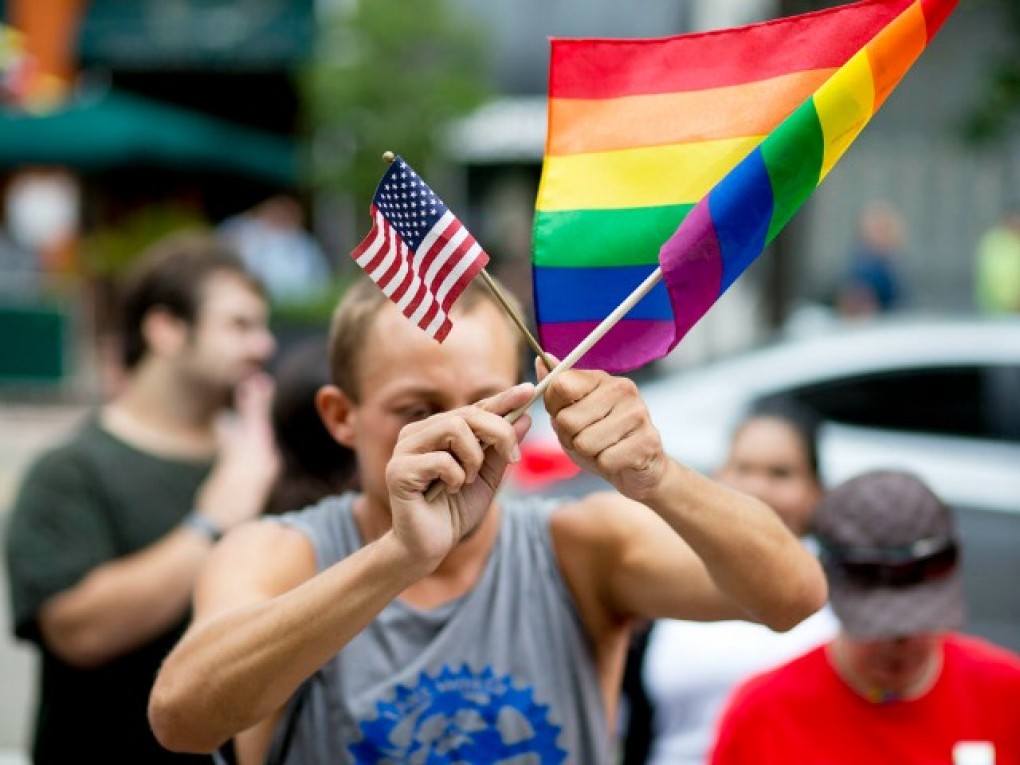
Jessica Dent and Carolee Taylor exchanged vows in front of a flowing fountain in downtown Montgomery within hours of a U.S. Supreme Court decision that legalized gay marriage nationwide. “Never thought it would happen in our lifetime,” Taylor, 39, said, admitting she was so nervous and excited this morning that she repeatedly smudged her toenail polish. A couple for more than 13 years, they said they didn’t want to wait a day longer to be married. “We waited so long. When it came through, I can’t think of a better way to celebrate, the decision and our love,” Dent, 40, said. The ruling allowed same-sex weddings to resume in the conservative Deep South state, one of 14 states where gay couples could not marry, and one that had fought against legalized same-sex marriage until the last moment. Couples began marrying in some Alabama counties Friday, but in other counties they had to wait as officials resisted, or tried to figure out what to do next. A few blocks away from Dent and Taylor’s wedding, Alabama Chief Justice Roy Moore said he was “saddened for the future of our country.” “They’ve just disregarded everything that precedent holds, and they’ve destroyed the foundation of our country, which is family,” Moore said of the ruling. Earlier this year, Moore told probate judges they were not bound by a federal judge’s ruling overturning Alabama’s ban on gay marriage. And he noted Friday that an Alabama Supreme Court order from March directing judges to refuse to issue gay-marriage licenses has not been lifted. He stopped short of calling for direct resistance, but said states can fight the ruling, as they have decisions allowing slavery or abortion. “The states can do something about this. They’ve done something about things like Dred Scott and Plessy versus Ferguson. There’s been an uproar continually about Roe versus Wade in 1973. This is a religious battle that is just beginning,” Moore said. In Birmingham, Jefferson County Probate Judge Sherri Friday said issuing same-sex marriage licenses was just “business as usual.” “It seems like such a big story, but when you get to the mechanics of it, it’s just that now same-sex couples can marry just like everybody else,” Friday said. Joseph Baker and Joshua Garrard got a marriage license in Jefferson County while still trying to decide if their last name would be Baker-Garrard or Garrard-Baker. “It’s very refreshing to know that now the government sees us as equals,” Baker said. The couple came to Jefferson County after getting turned away in Shelby. Shelby County Probate Judge Jim Fuhrmeister was unavailable for comment Friday afternoon. A clerk said he would not begin issuing same-sex marriage licenses until he has had time to review the Supreme Court’s decision. But Pike County Probate County Judge Wes Allen said he was “saddened” by the Supreme Court’s decision and said he wouldn’t issue marriage licenses to anyone, gay or straight. Allen cited a section of Alabama law that says counties “may” issue marriage licenses rather than requiring them to do so outright. Alabama spent much the first half of 2015 in a fight over gay marriage. A judge ruled the state’s ban on same-sex marriage unconstitutional. About 500 same-sex couples were married until the Alabama Supreme Court stepped in and directly ordered probate judges to stop issuing the licenses. The Association of County Commissions of Alabama, which has provided legal guidance and liability coverage to judges during a twisting legal fight over gay marriage, sent probate judges a memo suggesting that judges take applications but not issue the licenses on Friday as lawyers review the ruling. “We’ve just suggested for this one afternoon, as remarkable as this one afternoon is, we don’t see any harm in doing all due diligence before moving forward,” said Sonny Brasfield, executive director of the group. Brasfield said he presumes that their advice on Monday will be to issue licenses. Top elected officials in Alabama criticized the high court’s decision, but acknowledged it was law. “I have always believed in the Biblical definition of marriage as being between one man and one woman,” Alabama Gov. Robert Bentley said in a written statement. Alabama Attorney General Luther Strange said the court “overturned centuries of tradition and the will of the citizens of a majority of the states.” However, Strange said the court had the final say absent a change to the U.S. Constitution. State Rep. Patricia Todd, the state’s only openly gay lawmaker, cheered the ruling and said she hoped state probate judges would immediately begin granting marriage licenses to gay couples. “I’m ecstatic. I’m not shocked, I felt they would give a very strong clear opinion which leaves nothing to chance, which they did. I’m just tickled to death. It validates all of these marriages. Now we’ve got to figure out if probate judges in Alabama will cause any stink, which is a possibility, of course,” Todd said. Republished with permission of The Associated Press.
