
Democratic Establishment Fears of a Bernie Sanders Win Continue to Grow
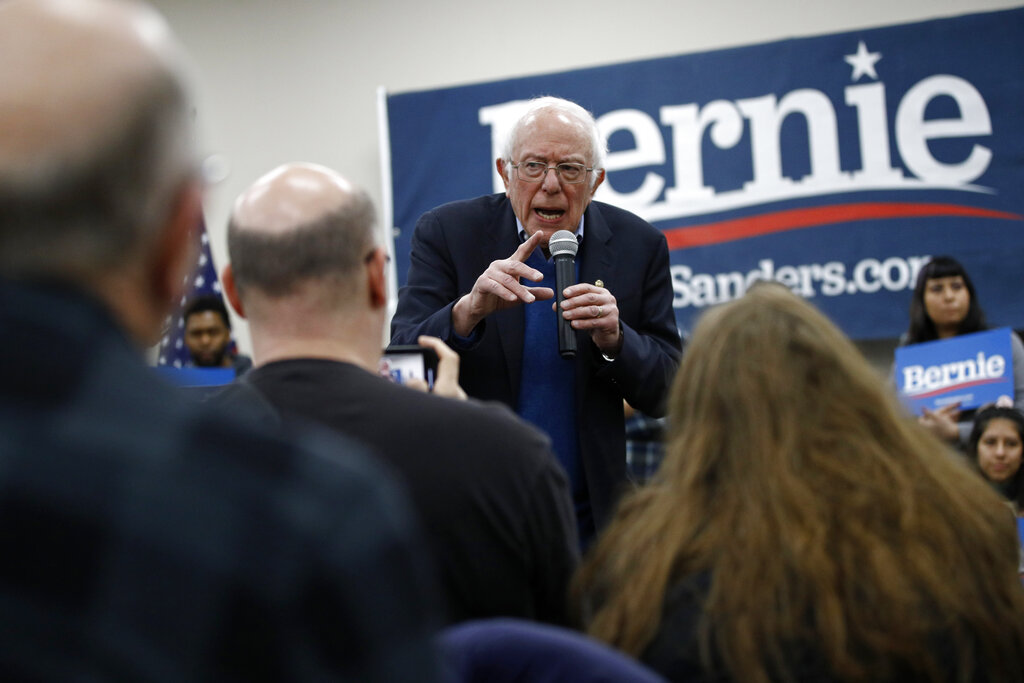
Democrats think Sanders would struggle to defeat Donald Trump
Elusive Quest for Momentum is On as Democrats Dash to Iowa

No candidate is a clear leader as the Iowa caucuses draw near.
No sign of Donald Trump’s replacement for obamacare

As a candidate for the White House, Donald Trump repeatedly promised that he would “immediately” replace President Barack Obama’s health care law with a plan of his own that would provide “insurance for everybody.” Back then, Trump made it sound that his plan — “much less expensive and much better” than the Affordable Care Act — was imminent. And he put drug companies on notice that their pricing power no longer would be “politically protected.” Nearly three years after taking office, Americans still are waiting for Trump’s big health insurance reveal. Prescription drug prices have edged lower, but with major legislation stuck in Congress it’s unclear if that relief is the start of a trend or merely a blip. Meantime the uninsured rate has gone up on Trump’s watch, rising in 2018 for the first time in nearly a decade to 8.5 percent of the population, or 27.5 million people, according to the Census Bureau. “Every time Trump utters the words ACA or Obamacare, he ends up frightening more people,” said Andy Slavitt, who served as acting administrator of the Centers for Medicare and Medicaid Services during the Obama administration. He’s “deepening their fear of what they have to lose.” White House officials argue that the president is improving the health care system in other ways, without dismantling private health care. White House spokesman Judd Deere noted Trump’s signing of the “Right-to-Try” act that allows some patients facing life-threatening diseases to access unapproved treatment, revamping the U.S. kidney donation system and the FDA approving more generic drugs as key improvements. Trump has also launched a drive to end the HIV/AIDS epidemic. “The president’s policies are improving the American health care system for everyone, not just those in the individual market,” Deere said. But as Trump gears up for his reelection campaign, the lack of a health care plan is an issue that Democrats believe they can use against him. Particularly since he’s still seeking to overturn “Obamacare” in court. This month, a federal appeals court struck down the ACA’s individual mandate, the requirement that Americans carry health insurance, but sidestepped a ruling on the law’s overall constitutionality. The attorneys general of Texas and 18 other Republican-led states filed the underlying lawsuit, which was defended by Democrats and the U.S. House. Texas argued that due to the unlawfulness of the individual mandate, “Obamacare” must be entirely scrapped. Trump welcomed the ruling as a major victory. Texas v. United States appears destined to be taken up by the Supreme Court, potentially teeing up a constitutional showdown before the 2020 presidential election. In a letter Monday to Democratic lawmakers, House Speaker Nancy Pelosi singled out the court case. “The Trump administration continues to firmly support the recent ruling in the 5th Circuit, which they hope will move them one step closer to obliterating every protection and benefit of the Affordable Care Act,” Pelosi wrote, urging Democrats to keep health care front and center in 2020. Accused of trying to dismantle his predecessor’s health care law with no provision for millions who depend on it, Trump and senior administration officials have periodically teased that a plan was just around the corner. In August, the administrator of the Centers for Medicare and Medicaid Services, Seema Verma, said officials were “actively engaged in conversations and working on things,” while Trump adviser Kellyanne Conway suggested that same month an announcement was on the horizon. In June, Trump told ABC News that he’d roll out his “phenomenal health care plan” in a couple of months, and that it would be a central part of his reelection pitch. The country is still waiting. Meantime Trump officials say the administration has made strides by championing transparency on hospital prices, pursuing a range of actions to curb prescription drug costs, and expanding lower-cost health insurance alternatives for small businesses and individuals. One of Trump’s small business options — association health plans — is tied up in court. And taken together, the administration’s health insurance options are modest when compared with Trump’s original goal of rolling back the ACA. Since Trump has not come through on his promise of a big plan, internecine skirmishes among 2020 Democratic presidential hopefuls have largely driven the health care debate in recent months. Bernie Sanders and Elizabeth Warren are leading the push among liberals for a “Medicare for All” plan that would effectively end private health insurance while more moderate candidates, like Joe Biden, Pete Buttigieg and Amy Klobuchar, advocate for what they contend is a more attainable expansion of Medicare. Brad Woodhouse, a former Democratic National Committee official and executive director of the Obamacare advocacy group Protect Our Care, said it is important for Democrats to “put down the knives they’ve been wielding against one another on health care.” “Instead turn their attention to this president and Republicans who are trying to take it away,” Woodhouse counseled. Some Democratic hopefuls appear to be doing just that. During a campaign stop in Memphis, Tennessee. this month, former New York Mayor Michael Bloomberg called out Trump on health care, saying the president is “determined to throw Americans off the boat, without giving them a lifeline.” Polling suggests Trump’s failure to follow through on his promise to deliver a revamped health care system could be a drag on his reelection effort. Voters have consistently named health care as one of their highest concerns in polling. And more narrowly, a recent Gallup-West Health poll found that 66 percent of adults believe the Trump administration has made little or no progress curtailing prescription drug costs. Prescription drug prices did drop 1 percent in 2018, according to nonpartisan experts at U.S. Health and Human Services. That was the first such price drop in 45 years, driven by declines for generic drugs, which account for nearly 9 out of 10 prescriptions dispensed. Prices continued to rise for brand-name drugs, although at a more moderate pace. Trump’s broadsides against the pharmaceutical industry might well have helped check prices, though drug companies have
Iowa swung fiercely to Donald Trump. Will it swing back in 2020?
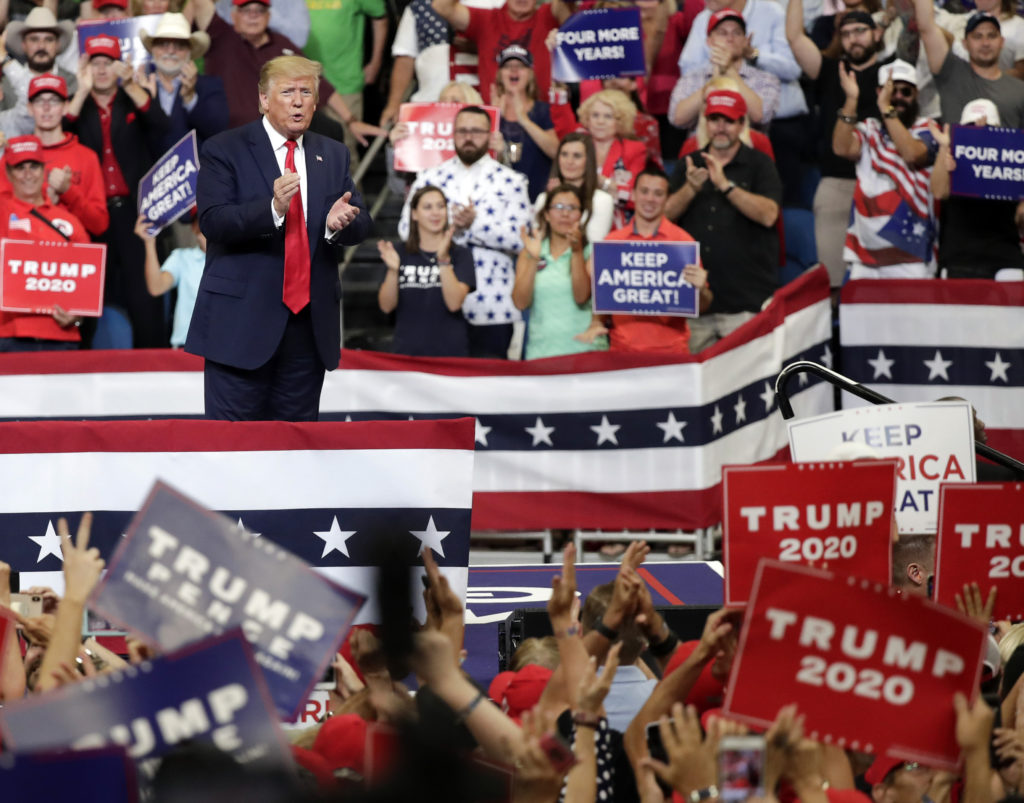
Few states have changed politically with the head-snapping speed of Iowa. Heading into 2020, the question is whether it’s going to change again. In 2008, its voters propelled Barack Obama to the White House, as an overwhelmingly white state validated the candidacy of the first black president. A year later, Iowa’s Supreme Court sanctioned same-sex marriage, adding a voice of Midwestern sensibility to a national shift in public sentiment. In 2012, Iowa backed Obama again. All that change proved too much, too fast, and it came as the Great Recession punished agricultural areas, shook the foundations of rural life and stoked a roiling sense of grievance. By 2016, Donald Trump easily defeated Hillary Clinton in Iowa. Republicans were in control of the governor’s mansion and state legislature and held all but one U.S. House seat. For the first time since 1980, both U.S. Senate seats were in GOP hands. What happened? Voters were slow to embrace Obama’s signature health care law. The recession depleted college-educated voters as a share of the rural population, and Republicans successfully painted Democrats’ as the party of coastal elites. Those forces combined for a swift Republican resurgence and helped create a wide lane for Trump. The self-proclaimed billionaire populist ended up carrying Iowa by a larger percentage of the vote than in Texas, winning 93 of Iowa’s 99 counties, including places like working-class Dubuque and Wapello counties, where no Republican since Dwight D. Eisenhower had won. But now, as Democrats turn their focus to Iowa’s kickoff caucuses that begin the process of selecting Trump’s challenger, could the state be showing furtive signs of swinging back? Caucus turnout will provide some early measures of Democratic enthusiasm, and of what kind of candidate Iowa’s Democratic voters — who have a good record of picking the Democratic nominee — believe has the best chance against Trump. If Iowa’s rightward swing has stalled, it could be a foreboding sign for Trump in other upper Midwestern states he carried by much smaller margins and would need to win again. “They’ve gone too far to the right and there is the slow movement back,” Tom Vilsack, the only two-term Democratic governor in the past 50 years, said of Republicans. “This is an actual correction.” Iowans unseated two Republican U.S. House members — and nearly a third — in 2018 during midterm elections where more Iowa voters in the aggregate chose a Democrat for federal office for the first time in a decade. In doing so, Iowans sent the state’s first Democratic women to Congress: Cindy Axne, who dominated Des Moines and its suburbs, and Abby Finkenauer, who won in several working-class counties Trump carried. Democrats won 14 of the 31 Iowa counties that Trump won in 2016 but Obama won in 2008, though Trump’s return to the ballot in 2020 could change all that. “We won a number of legislative challenge races against incumbent Republicans,” veteran Iowa Democratic campaign consultant Jeff Link said. “I think that leaves little question Iowa is up for grabs next year.” There’s more going on in Iowa that simply a merely cyclical swing. Iowa’s metropolitan areas, some of the fastest growing in the country over the past two decades, have given birth to a new political front where Democrats saw gains in 2018. The once-GOP-leaning suburbs and exurbs, especially to the north and west of Des Moines and the corridor linking Cedar Rapids and the University of Iowa in Iowa City, swelled with college-educated adults in the past decade, giving rise to a new class of rising Democratic leaders. “I don’t believe it was temporary,” Iowa State University economist David Swenson said of Democrats’ 2018 gains in suburban Des Moines and Cedar Rapids. “I think it is the inexorable outcome of demographic and educational shifts that have been going on.” The Democratic caucuses will provide a test of how broad the change may be. “I think it would be folly to say Iowa is not a competitive state,” said John Stineman, a veteran Iowa GOP campaign operative and political data analyst who is unaffiliated with the Trump campaign but has advised presidential and congressional campaigns over the past 25 years. “I believe Iowa is a swing state in 2020.” For now, that is not a widely held view, as Iowa has shown signs of losing its swing state status. In the 1980s, it gave rise to a populist movement in rural areas from the left, the ascent of the religious right as a political force and the start of an enduring rural-urban balance embodied by Republican Sen. Chuck Grassley and Democratic Sen. Tom Harkin. Now, after a decade-long Republican trend, there are signs of shifting alliances in people like Jenny O’Toole. The 48-year-old insurance industry employee from suburban Cedar Rapids stood on the edge of the scrum surrounding former Vice President Joe Biden last spring, trying to get a glimpse as he shook hands and posed for pictures. “I was a Republican. Not any more,” O’Toole said. “I’m socially liberal, but economically conservative. That’s what I’m looking for.” O’Toole is among those current and new former Republicans who dot Democratic presidential events, from Iowa farm hubs to working-class river towns to booming suburbs. Janet Cosgrove, a 75-year-old Episcopal minister from Atlantic, in western Iowa, and Judy Hoakison, a 65-year-old farmer from rural southwest Iowa, are Republicans who caught Mayor Pete Buttigieg’s recent trip. If such voters are a quiet warning to Trump in Iowa, similar symptoms in Wisconsin and Michigan, where Democrats also made 2018 gains, could be even more problematic. Vilsack has seen the stage change dramatically. After 30 years of Republican dominance in Iowa’s governor’s mansion, he was elected in 1998 as a former small-city mayor and pragmatic state senator. An era of partisan balance in Iowa took hold, punctuated by Democratic presidential nominee Al Gore’s 4,144-vote victory in Iowa in 2000, and George W. Bush’s 10,059-vote re-election in 2004. After the 2006 national wave swept Democrats into total Statehouse control for the
John Roberts will tap his inner umpire in impeachment trial
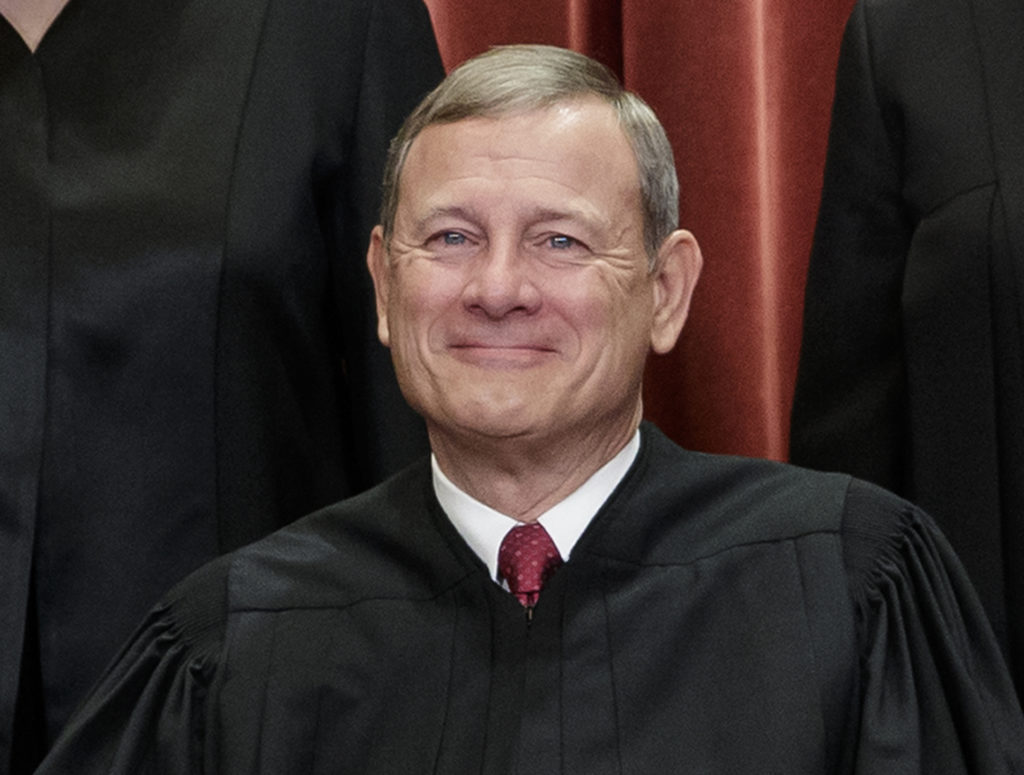
America’s last prolonged look at Chief Justice John Roberts came 14 years ago, when he told senators during his Supreme Court confirmation hearing that judges should be like baseball umpires, impartially calling balls and strikes. “Nobody ever went to a ballgame to see the umpire,” Roberts said. His hair grayer, the 64-year-old Roberts will return to the public eye as he makes the short trip from the Supreme Court to the Senate to preside over President Donald Trump’s impeachment trial. He will be in the national spotlight, but will strive to be like that umpire — doing his best to avoid the partisan mire. “He’s going to look the part, he’s going to play the part and he’s the last person who wants the part,” said Carter Phillips, who has argued 88 Supreme Court cases, 43 of them in front of Roberts. He has a ready model he can follow: Chief Justice William Rehnquist, who never became the center of attention when he presided over President Bill Clinton’s Senate trial. As Roberts moves from the camera-free, relative anonymity of the Supreme Court to the glare of television lights in the Senate, he will have the chance to demonstrate by example what he has preached relentlessly in recent years: Judges are not politicians. He has stuck to his mantra even as he and his fellow, Republican appointees hold a firm 5-4 conservative majority on the Supreme Court. Roberts has a solidly conservative voting record on the court, with a couple of notable exceptions that include sustaining President Barack Obama’s health care law. Trump has been among Roberts’ critics, blasting the chief justice for his health care votes. While Roberts ignored those remarks, at least publicly, he clashed with the president last year when Trump lashed out at an “Obama judge” who ruled against the president’s migrant asylum policy. It’s not as though there isn’t plenty of controversy brewing in his regular place of work. Before the end of June, the justices are expected to decide cases involving guns, abortion, subpoenas for Trump financial records, workplace protections for LGBT people and the fate of an Obama-era program that shields young immigrants from deportation. It’s possible the court will be asked to hear yet another case on the health care law before the term ends. The high court has moved to the right with the addition of two Trump appointees, Justices Neil Gorsuch and Brett Kavanaugh, a development that has made Roberts the justice closest to its ideological center and most able to decide how far the court will move to the right, or left, in any case that otherwise divides liberals and conservatives. In the Senate, though, the chief justice’s powers are limited because any ruling he makes can be overridden by a majority vote. He is not likely to put himself in the position of inviting reversal, said Paul M.Collins Jr., a political scientist and director of legal studies at the University of Massachusetts, Amherst. “Any controversial rulings in support of either party will threaten the viewpoint that the court should be above politics. Democrats would perceive any ruling for Republicans as partisan and if he ruled against the president, Republicans would allege he is holding a grudge,” Collins said. The Senate’s impeachment rules allow Roberts to put questions to a Senate vote, without first ruling himself. Rehnquist looked back on his role in the Clinton trial with a smile. “I did nothing in particular and I did it very well,” Rehnquist recalled two years after the trial, borrowing a line from a Gilbert and Sullivan operetta. Like Rehnquist, Roberts has virtually no experience running a trial, as opposed to the appellate proceedings at the Supreme Court. “I would be shocked if he suddenly becomes a very rigid jurist with respect to technical evidentiary rules,” Phillips said. The mechanics of the trial are not yet clear. Rehnquist had his top aide at the court, James Duff, and at least one law clerk on hand. He regularly consulted with the Senate parliamentarian before announcing rulings. Roberts runs a more flexible Supreme Court than Rehnquist, who would cut off lawyers mid-sentence when the red light came on to show their time was up. Whenever Roberts appears in public, inside the courtroom or elsewhere, he exudes a calm confidence that comes at least in part from preparation. As a leading Supreme Court advocate earlier in his career, Roberts would practice for high court arguments with his main points on five index cards. He rehearsed so that he could make those points in any order and be ready to answer 1,000 questions, even if he might only face 80 to 100 queries during a typical 30-minute argument, he told author Bryan Garner in an interview early in his tenure as chief justice. He also has a quick wit that he has used to settle confusing situations. When the lights dimmed and then went out during arguments in 2016, Roberts quipped, “I knew we should have paid that bill.” Soon after he became chief justice, a light bulb exploded in the courtroom, startling the crowd, justices and court police included. Roberts helped restore calm by calling the incident “a trick they play on new chief justices all the time.” By Mark Sherman Associated Press. Republished with the Permission of the Associated Press.
Joe Biden’s new endorsement reflects battle for latino support
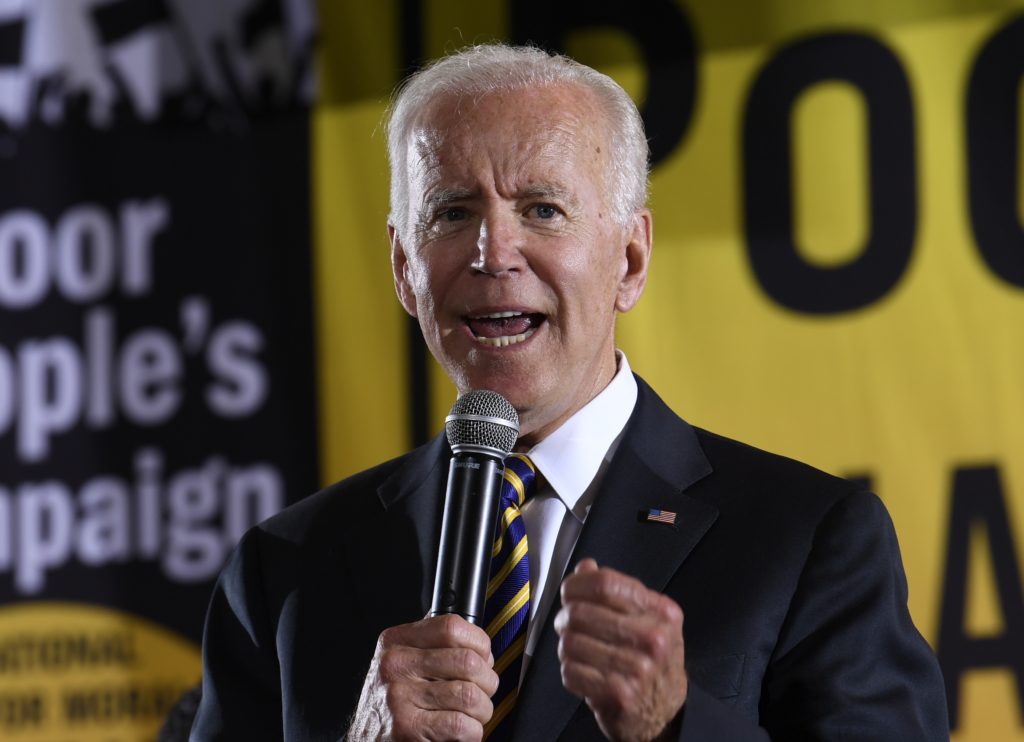
Joe Biden’s presidential bid got a boost Monday from one of the leading Latinos in Congress, with the chairman of the Hispanic Caucus’ political arm endorsing the former vice president as Democrats’ best hope to defeat President Donald Trump. “People realize it’s a matter of life and death for certain communities,” Rep. Tony Cárdenas, Democrat-California, told The Associated Press in an interview, explaining the necessity of halting Trump’s populist nationalism, hard-line immigration policies and xenophobic rhetoric that the California congressman called cruel. Cárdenas’ is the chairman of Bold PAC, the political arm of the Congressional Hispanic Caucus. His announcement follows presidential candidate Bernie Sanders’ weekend of mass rallies with Rep. Alexandria Ocasio-Cortez, a freshman congresswoman from New York who has become a face of the progressive movement and a key supporter for the Vermont senator’s second White House bid. The dueling surrogates highlight a fierce battle for the Hispanic vote between Sanders and Biden, whose campaigns each see the two candidates as the leading contenders. Biden leads the field among Democratic voters who are non-white, a group that includes Democratic voters who are Hispanic, with Sanders not far behind, according to national polling. Another top national contender, Sen. Elizabeth Warren, draws less support from non-white voters. There are few recent national polls with a sufficient sample of Hispanic Democratic voters to analyze them independently. The dynamics also demonstrate the starkly different approaches that Biden and Sanders take to the larger campaign. Biden is capitalizing on his 36-year Senate career and two terms as Barack Obama’s vice president to corral Democratic power players across the party’s various demographic slices. Cárdenas joins four other Hispanic caucus members who’ve already backed Biden, a show of establishment support in contrast to some Latino activists who’ve battered Biden over the Obama administration’s deportation record. Sanders, true to his long Capitol Hill tenure as an outsider and democratic socialist, eschews the establishment with promises of a political revolution, just as he did when he finished as runner-up for Democrats’ 2016 nomination. Together, it’s an argument on politics and policy at the crux of Democrats’ 2020 nominating fight. Sanders and his supporters like Ocasio-Cortez argue that existing political structures cannot help working-class Americans, immigrants or anyone else. That argument, they insist, can draw enough new, irregular voters to defeat Trump in November. “We need to be honest here,” retorted Texas Rep. Vicente Gonzalez, a Biden supporter whose congressional district includes part of the U.S.-Mexico border. “If Joe Biden loses the primary, Democrats will lose in 2020.” It’s impossible for polling almost a year ahead of a general election to affirm that view, but the contention echoes Biden’s consistent arguments about Electoral College math. Texas Rep. Filemon Vela, also a border-district congressman who backs Biden, was not so absolute. But he said Biden is best positioned for a general election on immigration because of his plans to roll back Trump’s immigration restrictions and boost the asylum process, while stopping short of decriminalizing all border crossings. Sanders supports making all border crossings civil offenses, rather than criminal, a position first pushed by the lone Hispanic presidential candidate and former Obama housing secretary Julian Castro. “In some swing states, that might not go over well,” Vela said, even as he, Gonzalez and Cárdenas said the distinction is more important to political pundits than to Hispanic voters. Said Cárdenas: “There is activist language and there are litmus tests; and there are hard-working people around the country who just want fairness.” He added another key plank of Biden’s case: that meaningful change, from reversing Trump’s migrant family separation policy to expanding health care coverage, requires not only winning in November but then achieving some semblance of consensus in Congress. Hispanic voters are a rapidly growing portion of the U.S. population and electorate, though they have consistently had lower election-participation rates than African Americans and non-Hispanic whites. At the least, Hispanics will play key roles in the Nevada caucus (third in the Democratic nominating process) and the Texas and California primaries, the two largest sources of delegates on the March 3 Super Tuesday slate. Sanders leads Biden among younger voters generally, according to national polling, and Biden aides say that could carry over to Hispanics. The variable is seemingly on display when comparing Biden’s campaign crowds with those like Ocasio-Cortez drew this weekend in California and Nevada. Immigrants-rights advocates picketed outside Biden’s Philadelphia campaign headquarters shortly after its opening. Castro used Democratic debates to challenge Biden on why he didn’t stop more deportations when he was vice president. Last month, members of the Movimiento Cosecha, which describes itself as an immigrant-led group pushing for “permanent, protection and respect” for immigrants, confronted Biden during a campaign event in South Carolina. One of them, Carlos Rojas, asked Biden to answer for deportations under Obama and to commit to an outright moratorium on all deportations — a position Sanders supports. Biden declined. After Rojas pressed him, Biden said, “You should vote for Trump.” Gonzalez called it “ridiculous” to question Biden’s commitment to immigrants, but said the skepticism demonstrates that the Latino community vote is not monolithic, with a range of national origins and philosophical differences. Vela agreed, adding that Sanders’ rallies and Ocasio-Cortez’s social media following shouldn’t obscure Biden’s standing among the “traditionalist Democrats” he said constitute the majority of Hispanic voters. Vela recalled an unplanned campaign stop he made recently with Biden at Mi Tierra, an iconic restaurant in San Antonio, Texas, after a campaign event with several hundred people. “He went table to table,” Vela said, “people getting up, ‘Joe Biden is here’ and ‘There’s Joe Biden.’ The response was overwhelming.” By Bill Barrow Associated Press Republished with the Permission of the Associated Press.
Mayor Randall Woodfin backing Joe Biden for president
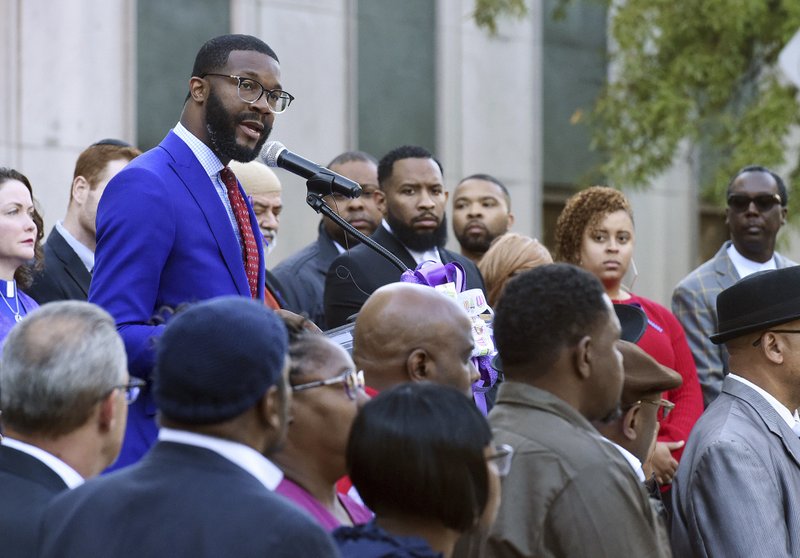
The mayor of Alabama’s largest city is endorsing Joe Biden for the 2020 Democratic Party presidential nomination just weeks after the vice president met with a group of Southern black mayors representing millions of voters in key early primary states. In an exclusive interview with The Associated Press on Sunday, Birmingham Mayor Randall Woodfin said he left that Atlanta meeting in November convinced that Biden is the best choice to defeat President Donald Trump and lead the country. “I think he would view mayors as his partners in the campaign and he would view us as partners in the White House,” Woodfin said. “That’s important to me.” Woodfin’s endorsement, which he is expected to announce on Monday, is the latest amid a scramble among the 2020 candidates to shore up support with mayors. Late 2020 entry Michael Bloomberg — the former mayor of New York whose philanthropy has supported mayors across the country with training and millions of dollars in funding for city initiatives — has secured the backing of eight mayors since entering the field last month, including black mayors in Southern cities with large black populations whose voters could factor into the primary contest. Philadelphia Mayor Jim Kenney endorsed Massachusetts Sen. Elizabeth Warren in October. Pete Buttigieg is the current mayor of South Bend, Indiana, New Jersey Sen. Cory Booker is former mayor of Newark, New Jersey. Vermont Sen. Bernie Sanders is former mayor of Burlington, and ex-Housing and Urban Development Secretary Julian Castro is former mayor of San Antonio. Woodfin said the role of mayors as candidates and proxies for candidates this cycle is notable. “As mayors as executives, we have to deal with issues every single day,” Woodfin said. “Regardless of the size of their city, it’s important to to take their candidacies seriously.” Mayors — and particularly black mayors across the South — could play a major role on the early calendar. Alabama is a Super Tuesday state and is one of four Southern states on the ballot March 3, including North Carolina, Tennessee and Virginia. All have significant black populations. “We can acknowledge that 72 hours after South Carolina is Super Tuesday,” Woodfin said. “Since 1992, whoever wins South Carolina wins a majority of the Southern states. Embedded in that math is people. Black women … are the base of the party, and we must respect that.” Woodfin represents a city with a metro area population of 1.3 million that is 74 percent African American. He was among four black Southern mayors who issued an open letter earlier this year to 2020 Democratic hopefuls seeking their support, calling on them to address priorities including affordable housing, climate change, health care and criminal justice. One of the letter’s signers, Mayor Steve Benjamin of Columbia, South Carolina, was among Bloomberg’s early endorsers. Specifically, Woodfin pointed to Biden’s work on infrastructure under President Barack Obama and his continued support for the Affordable Care Act as reasons for his endorsement. Alabama is among the states that did not expand Medicaid, and Woodfin’s city has the country’s fourth-largest public hospital and a 29 percent poverty rate. Woodfin added that next year’s U.S. Senate race — with embattled Democrat Doug Jones fighting for reelection — and the 2020 fight in legislatures over redistricting could all be helped by a Biden candidacy. “You need somebody at the top of the ticket who can help down ballot candidates and expand the map nationwide,” Woodfin said. “From all the evidence I’ve seen, Vice President Biden gives us the best chance to do that.” Still, Woodfin said it will be important for Democratic mayors to come together after a hard-fought primary to galvanize the electorate in their respective cities to defeat their common enemy. “Speaking with one voice behind one candidate is going to be important,” Woodfin said. “When you think about the different mayors who have endorsed, we all agreed with us writing that letter, that didn’t mean all of us would endorse the same candidate. When the primary’s over, I expect all of us to come together. As mayors, we’re all still in this together. Haines has covered race and politics for The Associated Press since 2015. Follow her work on Twitter at https://www.twitter.com/emarvelous. Catch up on the 2020 election campaign with AP experts on our weekly politics podcast, “Ground Game.” Republished with the Permission of the Associated Press.
U.S. feels the heat as Donald Trump pulls out of global climate pact

President Donald Trump is aiming to make the annual U.N.-sponsored climate talks underway in Madrid the last ones for full participation by the United States, which is the world’s No. 1 economy and the second-biggest carbon emitter. Trump dismisses climate change and he thumbed his nose at previous climate talks by twice sending White House delegations to promote climate-degrading coal. He is due to complete the U.S. withdrawal from the landmark Paris global climate accord on Nov. 4, 2020, the day after next year’s U.S. presidential election. If Trump loses that election, the next president could put the brakes on the withdrawal. House Speaker Nancy Pelosi, Democrat-California, and other political and business leaders, scientists and activists are traveling to Spain this week and next to drive home a counter message: U.S. cities, states and businesses representing a sizable chunk of the U.S. population and economy are committed to a global effort to slash emissions. “We’re still in it,” Pelosi told reporters at the talks, where she appeared with 14 other congressional Democrats on Monday to call climate change a growing threat to public health, economy and national security in the U.S.. Her comments were echoed by Mandela Barnes, Wisconsin’s lieutenant governor. “Regardless of whether or not we have the support of the nation’s highest office or not, this work is going to get done,” Barnes said. This year’s conference is expected to focus on fine-tuning the rules for reducing fossil fuel emissions by the roughly 200 signatories of the Paris agreement. It comes ahead of a big push at next year’s climate summit for more ambitious emissions-cutting targets. Experts say the United States’ repeated about-faces on the threat of climate change likely have done lasting damage. Even before Trump repudiated the deal backed by President Barack Obama, George W. Bush’s administration renounced the landmark Kyoto emissions protocol, negotiated in the late 1990s during Bill Clinton’s presidency, said Nigel Purvis, a State Department climate negotiator under Clinton and Bush. “The international community has concluded the United States is an unreliable partner,” Purvis said. Although the United States served formal notice last month that it intends to become the first country to withdraw from the Paris accord, it technically remains a participant until next Nov. 4. Marcia Bernicat, a senior State Department official, is leading the official U.S. delegation. The administration is taking part to ensure a level playing field that protects U.S. interests,” the State Department said in a statement. Advocates of the Paris accord say the U.S. withdrawal will leave American businesses to compete internationally under carbon-cutting rules set by other countries. Behind the scenes, U.S. diplomats have played a helpful role despite the planned U.S. withdrawal, pushing for transparency and solid rules as countries commit to specific targets for cutting emissions, delegates from other nations say privately. Publicly, Trump has catered to his base at the yearly talks. That includes dispatching a team to the 2017 and 2018 climate meetings to stage side events promoting coal-fired power production, one of the main sources of climate-wrecking emissions. His administration stood by fossil fuels “unapologetically,” White House energy envoy Wells Griffith said at the U.S. pro-fossil fuel event at last year’s talks in Poland. That drew chants from the audience of “Shame on you!” Griffith, who helped broker a coal deal in Ukraine, apparently refused a request by House impeachment investigators to discuss administration actions there. A woman who answered the phone at Griffith”s office Tuesday said no one there would say whether he planned to appear this year’s climate negotiations. Secretary of State Mike Pompeo last month repeated Trump’s argument that the Paris accord was an economic burden for the United States. Pompeo said technological innovation and the free market have made for continued U.S. declines in climate-changing emissions. It’s true U.S. carbon emissions are still falling under Trump, according to a study by Global Carbon Project, a group of international scientists who track emissions. The United States saw emissions drop 1.7 percent from 2018 to 2019, the same decline as in the European Union, even as China led in a 0.6 percent rise in emissions globally over the last year, the study said. U.S. experts say the drop in U.S. fossil fuel emissions is due in part to the decline of coal-fired power plants, losers in marketplace competition against cheaper natural gas and renewable sources despite Trump’s 2016 campaign pledges to save coal. The 2018 midterm elections, which gave Democrats control of the House, showed that embracing top-down government action to cut fossil fuel emissions can be part of a winning platform, at least in some parts of the country. In August 2017, 46 percent of Americans opposed U.S. withdrawal from the international agreement, while 29 percent supported it, according to a poll by The Associated Press-NORC Center and the Energy Policy Institute at the University of Chicago. This August, another AP-NORC poll found nearly two-thirds of Americans said the federal government should bear a lot of responsibility for combating climate change. “We hope … this is only a temporary farewell” for the U.S., German Foreign Minister Heiko Maas said last month at a diplomatic conference. Regardless, he said, other governments can’t count on Americans sorting out a lasting climate policy anytime soon. Ultimately, said Carla Frisch, a former energy policy expert at the Department of Energy under three U.S. administrations, U.S. climate action demands U.S. climate regulation, making cutting emissions the law and policy of the land. “We have to be all in,” Frisch said. “We also need the federal government, to get where we need to go.”” By Ellen Knickmeyer Associated Press Associated Press writers Frank Jordans in Berlin, and Seth Borenstein and Hannah Fingerhut in Washington contributed to this report. Republished with the Permission of the Associated Press.
Gun background checks are on pace to break record in 2019

Background checks on gun purchases in the U.S. are climbing toward a record high this year, reflecting what the industry says is a rush by people to buy weapons in reaction to the Democratic presidential candidates’ calls for tighter restrictions. By the end of November, more than 25.4 million background checks — generally seen as a strong indicator of gun sales — had been conducted by the FBI, putting 2019 on pace to break the record of 27.5 million set in 2016, the last full year President Barack Obama was in the White House. On Black Friday alone, the FBI ran 202,465 checks. Some analysts question how accurately the background check figures translate into gun sales, since some states run checks on applications for concealed-carry permits, too, and some purchases involve multiple firearms. But the numbers remain the most reliable method of tracking the industry. In the years since President Donald Trump took office, the industry has struggled through what has been referred to as the Trump Slump, a falloff in sales that reflected little worry among gun owners about gun control efforts. But with the 2020 presidential election less than a year out and virtually every Democratic candidate offering proposals to restrict access to firearms, fears appear to be driving up sales again. “The Trump Slump is real, but the politics of guns has changed a little bit over the last year,” said Adam Winkler, a professor at the University of California, Los Angeles, School of Law and an expert on gun rights and politics. “As we’re coming up upon another presidential election, Donald Trump is vulnerable, and the Democratic presidential contenders are falling all over themselves to propose more aggressive gun reforms than their opponents.” Trump has been viewed as one of the most gun-friendly presidents in modern history and has boasted of strong support from the National Rifle Association. He has addressed every one of its annual conventions since the 2016 campaign, and the powerful gun lobby pumped about $30 million into efforts to elect him. Still, hopes of expanded gun rights under Trump’s watch haven’t materialized. Legislation that would make it easier to buy silencers stalled in Congress. In addition, Trump pushed through a ban on bump stocks, which allow semiautomatic rifles to mimic machine-gun fire. The gunman who killed 58 people in Las Vegas in 2017 in the deadliest mass shooting in modern U.S. history used such a device. The industry has been going through one of its toughest periods, with some gunmakers, such as Remington Arms, filing for bankruptcy. More recently, Smith & Wesson’s parent company, American Outdoor Brands, announced plans to spin off its firearms unit, and Colt said it would suspend production of AR-15 rifles. Amid some high-profile mass shootings in recent years, especially the Parkland school attack in Florida that left 17 people dead, gun control advocates have gained some momentum. The crowded field of Democrats running for the White House has offered a variety of proposals to curtail gun rights. Former Texas Rep. Beto O’Rourke, whose state has seen repeated mass shootings this past year, went so far as to push for a mandatory buyback program for Arizona and Arkansas style rifles before dropping out of the race, stoking gun owners’ fears when he declared during a debate, “Hell, yes, we’re going to take your AR-15, your AK-47.” The gun industry says the figures from the National Instant Criminal Background Check System reflect the Second Amendment politics of the White House race. “Americans are choosing to invest their hard-earned dollars in their ability to exercise their rights and buy the firearms they want before gun control politicians attempt to regulate away that ability,” said Mark Oliva, spokesman for the National Shooting Sports Foundation, which represents the gun industry. Still, some experts took issue with the figures and said it is premature to declare the Trump Slump is over. “These numbers cannot be taken be taken at face value,” said Jurgen Brauer, a retired business professor and now chief economist at Small Arms Analytics, which consults on the firearms industry. Brauer said the numbers are increasingly skewed by states such as Kentucky that also run background checks when they issue or renew a permit to carry a concealed firearm. In October, for example, the state ran more than 280,000 checks through the NICS system for permits. “That number has been rising over time as increasingly states check with some frequency on their existing permits,” Brauer said. The NICS system was created after passage of the Brady Bill, which mandated background checks to buy a firearm. Convicted felons, domestic abusers and people who have been involuntarily committed to a mental institution are among those who cannot legally purchase a weapon. In 1999, the first full year the system was used, just over 9 million background checks were conducted. It was near the end of Democrat Bill Clinton’s second term and in the midst of a 10-year ban on assault rifles that expired in 2004. Background checks declined under President George W. Bush but picked up again in 2006 and have mostly risen since then, except for 2014 and 2017. In 2018, there were 26.18 million background checks. “Gunmakers are promoting the idea that you should buy these guns now because they may be banned in the future,” Winkler said. This story has been corrected to delete the number of seconds per background check on Black Friday. By Lisa Marie Pane Associated Press. Republished with the Permission of the Associated Press.
7 questions heading into the 2020 democratic debate
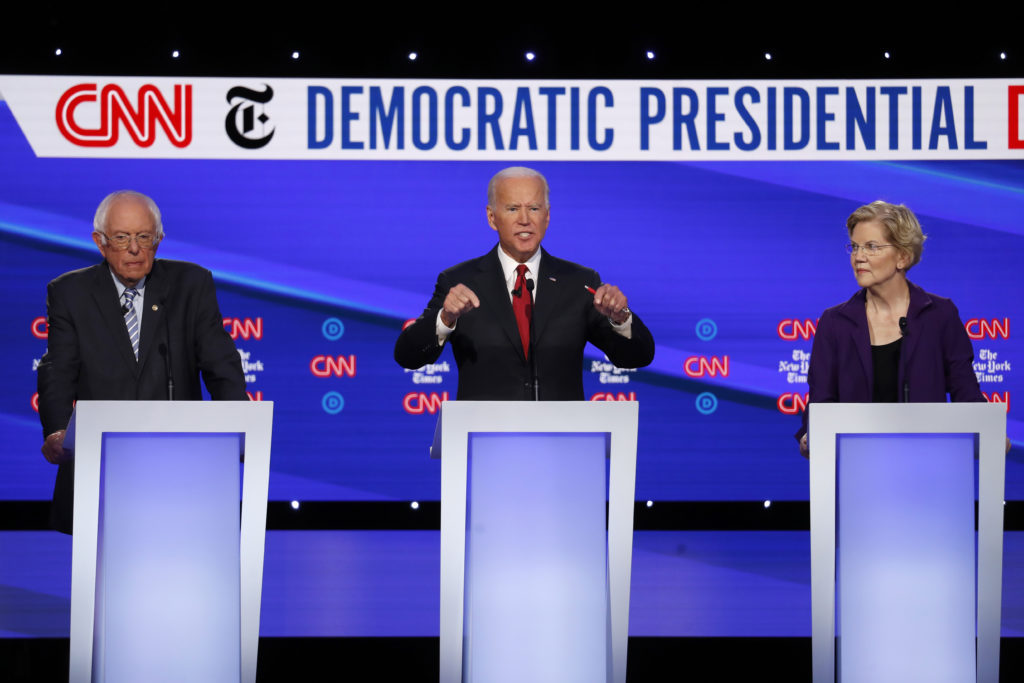
New uncertainty hangs over the Democratic presidential primary as 10 candidates meet on the debate stage once again. No longer is there a clear front-runner. The fight for African American voters is raging. And there are growing concerns that impeachment may become a distraction from the primary. Those issues and more will play out Wednesday night when the Democratic Party’s top 10 face off in Atlanta just 75 days before primary voting begins. Seven big questions heading into the debate, to be carried on MSNBC: WHO IS THE FRONT-RUNNER? Turbulent polling across the early voting states has created a murky picture of the top tier of the 2020 class. As much as Joe Biden is still a front-runner, so are Elizabeth Warren, Pete Buttigieg and Bernie Sanders. The question is who gets the front-runner treatment in Wednesday’s debate. Warren was under near-constant attack last month as a new leader. Will Warren continue to face the heat, or will the ascendant Buttigieg or weakening Biden take more hits? HOW WILL OBAMA PLAY? Former President Barack Obama, the most popular Democrat in America, inserted himself into the 2020 primary in recent days by warning candidates against moving too far to the left. His comments create a challenge for Warren and Sanders and an opening for moderates Buttigieg, Biden and Amy Klobuchar to attack. At the same time, Obama’s involvement offers a powerful reminder of the massive role African Americans will play in the presidential nomination process. As we know, all candidates not named Biden have serious work to do when it comes to winning over the black vote. Race and Obama’s legacy could play a major role in shaping the action. WHAT SAY YOU, IMPEACHMENT JURY? They have all come out in favor of impeachment — some more aggressively than others — but it’s noteworthy that five of the 10 Democrats onstage will serve as jurors in the Senate impeachment trial should the House vote to impeach President Donald Trump. It’s a complicated topic for Democrats. Some senators worry that a prospective impeachment trial will interfere with their ability to court voters early next year. Others fear that impeachment could hurt their party’s more vulnerable candidates in down-ballot elections next year. Either way, what the prospective jurors do or don’t say on the debate stage could be relevant if and when the Senate holds an impeachment trial, which is increasingly likely. WILL THEY BASH THE BILLIONAIRES? Never before has wealth been under such aggressive attack in a presidential primary election. And with one billionaire onstage and another likely to join the field in the coming days, the billionaire bashing could reach new heights. Tom Steyer has largely gone under the radar, but the even wealthier Michael Bloomberg has generated tremendous buzz as he steps toward a run of his own. Of the two, only Steyer will be onstage, but expect Bloomberg’s shadow in particular to generate passionate arguments about wealth and the role of money in politics. WILL SOMEONE STAND UP FOR THE ESTABLISHMENT? Biden continues to be the favorite of many establishment Democrats, but his underwhelming candidacy has created an opening for another pragmatic-minded Democrat to step up. That’s why former Massachusetts Gov. Deval Patrick and Bloomberg are moving into the race. Buttigieg stepped aggressively into the establishment lane in the last debate, but many donors and elected officials remain skeptical of the 37-year-old small-city mayor’s chances. The opportunity is there for lower-tier candidates including Kamala Harris, Klobuchar and Steyer. DOES SHE HAVE A PLAN FOR THAT? No single issue has dominated the initial Democratic primary debates more than health care, and it’s safe to assume that will be the case again Wednesday night. And no one has more riding on that specific debate than Warren, who hurt herself last month by stumbling through questions about the cost of her single-payer health care plan. Given that policy specifics make up the backbone of her candidacy, she can’t afford another underwhelming performance on the defining policy debate of the primary season. Expect the policy-minded senator to have a new strategy this time around. CAN THEY SAVE THEMSELVES? New Jersey Sen. Cory Booker, Hawaii Rep. Tulsi Gabbard, businessman Andrew Yang and Steyer are under enormous pressure to break out given their status as the only candidates onstage who haven’t yet qualified for the December debate. They likely won’t have the same number of opportunities to speak as their higher-polling rivals, but these are dire times for the underdogs. They need to do something if they expect to stay relevant in the 2020 conversation. By Steve Peoples AP National Political Writer. Catch up on the 2020 election campaign with AP experts on our weekly politics podcast, “Ground Game.” Republished with the permission of the Associated Press.
Bradley Byrne: The facts about Ukraine
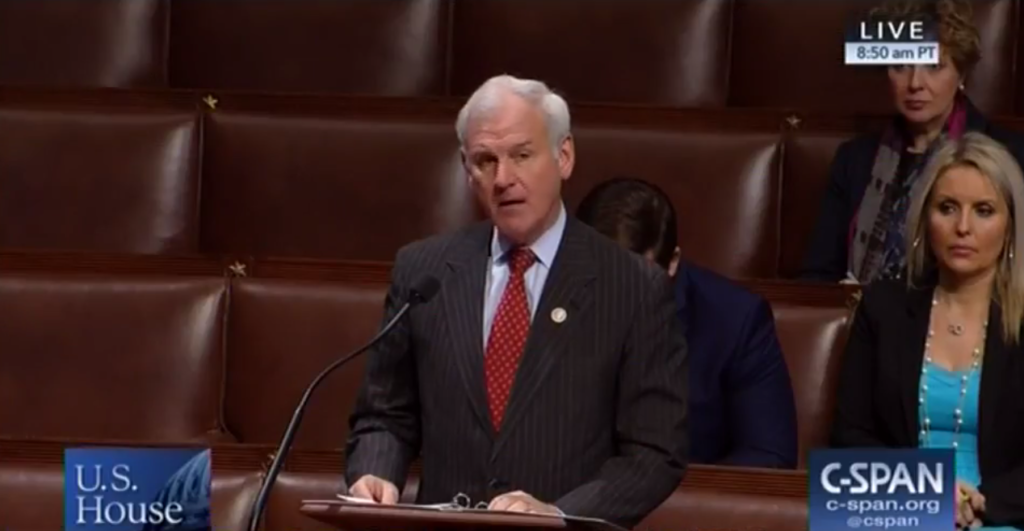
With all the allegations being made against President Donald Trump, it’s important to examine some background and facts. First, let’s talk about what has been going on in Ukraine since the fall of the Soviet Union. Ukraine is one of the most corrupt countries on earth. Like many former Soviet countries, oligarchs control almost all the political power. Corruption is so rampant that many American business people refuse to operate there. For nearly 30 years, Republican and Democrat Presidents have pressured Ukraine to reform without much success. Part of that outreach was aimed at preventing Russia from gaining influence there. But five years ago, Russia invaded Ukraine, and the two countries have been at war ever since. After the invasion, President Barack Obama rightly began providing them non-lethal aide. But to maintain goodwill with the Russians, he would not sell them weapons. Now let’s move to 2016. During the 2016 campaign, President Trump ran on a deep skepticism of foreign aid. Partly as a result, senior members of the Ukrainian government took Secretary Hillary Clinton’s side. After his victory, Ukrainian officials scrambled to make amends with President Trump. Despite President Trump’s understandable skepticism towards Ukraine, he pursued policies towards Ukraine that began leading to progress. He began selling real weapons to Ukraine to help them fight the Russians, with enormous positive effects. However, a few individuals in the Administration tried to convince President Trump he should forget Ukraine’s past and immediately embrace its new President. They began, in their own words, working to change President Trump’s mind. It was office gossip among a handful of these individuals that led to the impeachment investigation. The drama started with the “whistleblower” (who lacked firsthand knowledge of what he reportedly blew the whistle on) alleging that President Trump made “demands” on President Zelensky on a phone call. He alleged President Trump threatened to withhold security assistance to Ukraine for political favors. But despite this allegation, President Zelensky has publicly, clearly, and repeatedly denied any demands were ever made on him. And the Justice Department reviewed this allegation and declined to pursue a criminal investigation. Further, President Trump released the transcript, and it showed that neither person said one word about the hold on that call! You would think that if President Trump were trying to use the aid for extortion, he would have at least mentioned it. President Zelensky did not mention the funds either because he did not know they were on hold and, as the transcript confirms, President Trump never told him! If that is the case, this would be a very strange quid pro quo indeed. Let’s use common sense here. With President Trump’s clear skepticism of foreign aid and Ukraine’s reputation for corruption, is it surprising his Administration would want to review millions in aid to a new Ukrainian President and parliament? In contradiction to the bureaucratic gossip fueling this latest Democrat impeachment fantasy, not one person has testified that they had any direct knowledge that President Trump ordered aid held in exchange for a political favor. Witnesses have speculated about the reason for the hold, but when pressed, they’ve all said some version of “I don’t know.” Despite this sham process, we have no evidence that President Trump ordered any kind of quid pro quo. The Ukrainians got the aid money, within days of even finding out it was on hold, and they got the meetings with President Trump and the Vice President that they wanted. There is no impeachable offense here, but most Democrats know that. This is all about defeating President Trump in the 2020 election, but I think their efforts will backfire as the American people learn the truth. Armed with the facts, I won’t quit fighting against this sham impeachment scheme.
APNewsBreak: Pete Buttigieg hopes to name 1st female VA secretary
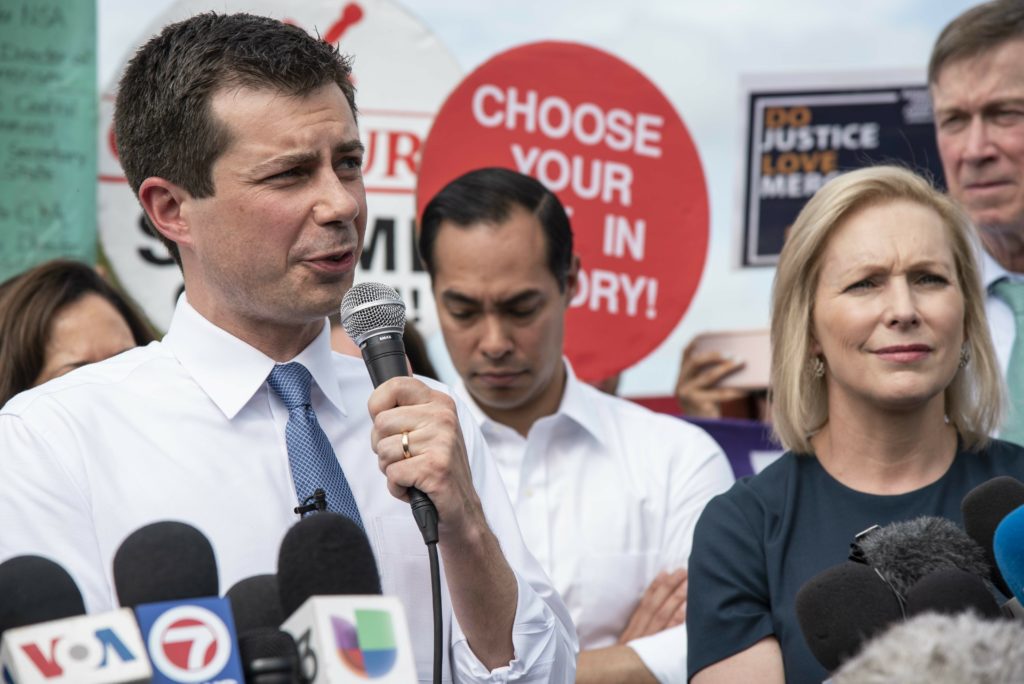
Democratic presidential candidate Pete Buttigieg says if elected he’d like to name a woman to lead the Department of Veterans Affairs for the first time as 2020 hopefuls take aim at President Donald Trump’s record on stemming military suicide and helping female vets. On Veterans Day, several candidates rolled out proposals to meet the needs of America’s 20 million former service members. Buttigieg, the 37-year-old mayor of South Bend, Indiana, said female veterans and service members have been neglected, including on concerns about sexual harassment and women’s health. Women are the military’s fastest-growing subgroup. “I think leadership plays a huge role so absolutely I’d seek to name a woman to lead VA,” Buttigieg, a former Navy intelligence officer, said in an interview with The Associated Press. His comments went a step beyond his 21-page wide-ranging plan released on Monday.“The president has let veterans down,” Buttigieg said. Of the Cabinet and Cabinet-level roles, four have never been held by a woman: Veterans Affairs, Defense, Treasury and White House chief of staff. Buttigieg says he’d take a close look at appointing a female defense secretary as well. Former Vice President Joe Biden’s campaign said he would seek to build on current gains for vets that were started under the Obama-Biden administration, such as stemming homelessness and improving mental health care. “Joe has a long record of support for veterans and our military families,” press secretary Jamal Brown said. “Bringing down the high rate of suicide among our military and veterans will be a top priority for a Biden administration.” In a dig at Trump, Vermont Sen. Bernie Sanders released a video on Monday highlighting his role in working with the late Republican Sen. John McCain, a decorated war hero, to pass legislation that included the Veterans Choice program in 2014. Trump routinely takes credit for being the first to enact the Choice program, ignoring the fact that it was signed into law by President Barack Obama. What Trump got done was an expansion of the program achieved by McCain and Sanders. That expanded program, one of Trump’s signature accomplishments, seeks to steer more veterans over the next decade to private-sector doctors outside the VA. Sanders, a former chairman of the Senate Veterans Affairs Committee who voted against Trump’s plan, says the expanded program goes too far in its investments in the private sector, rather than core VA health care , which many veterans view as better suited to treat battlefield injuries such as post-traumatic stress disorder. Sanders joins Buttigieg and Massachusetts Sen. Elizabeth Warren in urging increases in doctor pay to attract top VA candidates and fill 49,000 VA positions that have sat vacant as the Trump administration promoted private health care options. Sanders said he would fill those vacancies in his first year as president and provide at least $62 billion in new funding to repair and modernize VA facilities to provide cutting-edge care. “We will not dismantle or privatize the VA. We will expand and improve the VA,” Sanders said Monday. Buttigieg told the AP that he would look at rolling back some of the Trump administration’s rules expanding Choice. All the Democratic candidates who have articulated veterans’ plans call for added funding and training for suicide prevention. Buttigieg specifically proposes a new 24/7 VA “concierge” service aimed at guiding at-risk vets into mental health care. Currently, about 20 veterans die by suicide each day, a rate basically unchanged during the Trump administration. Trump earlier this year directed a Cabinet-level task force to develop a broader roadmap for veterans’ suicide prevention, due out next spring. Buttigieg, like Warren, would seek to improve responses to sexual assault in the military by shifting prosecution from military commanders to independent prosecutors. He also wants to put particular focus on stemming homelessness among women vets, many of whom may have experienced sexual trauma. He pointed to his seven-month deployment in Afghanistan in 2014 and watching the impact a female general had “culturally” on the NATO-led International Security Assistance Force. “When a leadership body is more gender diverse, it makes better decisions. So I would absolutely be looking at that,” Buttigieg told the AP. He’s previously pledged to appoint women to at least 50 percent of his Cabinet positions. While veterans overall have strongly backed Trump throughout his presidency, views vary widely by party, gender and age, according to AP VoteCast, a survey of 2018 midterm voters. In particular, younger veterans and women generally were more skeptical of Trump, who received multiple draft deferments to avoid going to Vietnam. A study released by the VA earlier this year found 1 in 4 women veterans using VA health care reported inappropriate comments by male veterans on VA grounds, raising concerns they may delay or miss their treatments. The VA also has rebuffed efforts by Iraq and Afghanistan Veterans of America and other groups to change the VA motto, which some vets believe is outdated and excludes women. That motto refers to the VA’s mission to fulfill a promise of President Abraham Lincoln “to care for him who shall have borne the battle, and for his widow, and his orphan.” Buttigieg said he would direct his VA secretary to change that motto to “fairly represent the diversity of service members and veterans.” Currently, about 10 percent of the nation’s veterans are female. In the U.S. military forces, about 17 percent of those enlisted are women, up from about 2 percent in 1973. By Hope Yen Associated Press HOPE YEN. Republished with the permission of the Associated Press.
