
Hillary Clinton says ‘love triumphed’ in gay marriage ruling
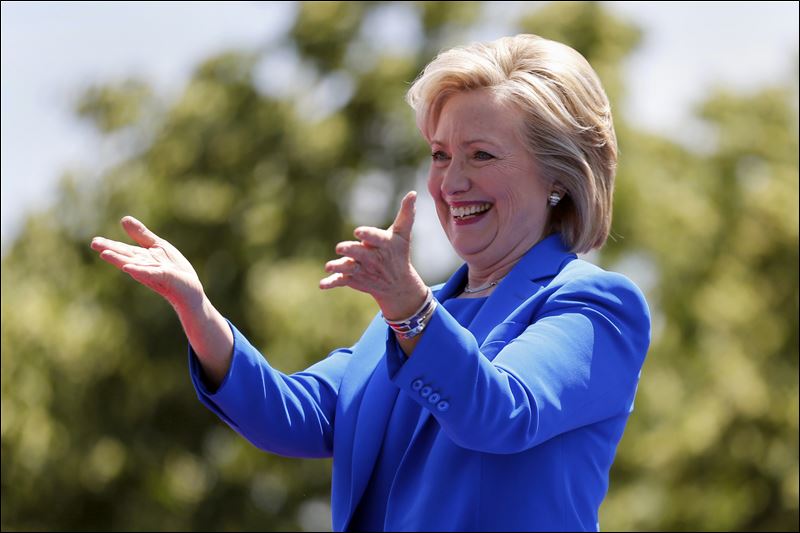
Democratic presidential candidate Hillary Rodham Clinton on Friday praised the Supreme Court’s ruling declaring same-sex couples have a right to marry and suggested that her Republican opponents were being left behind by history. In one of her most partisan speeches since announcing her presidential campaign, Clinton criticized the field of more than a dozen Republican candidates for opposing gay marriage, gun control, immigration reform and women’s reproductive rights. “We can sum up the message from the court and the American people in just two words: Move on,” she said in a fiery speech to Democratic activists gathered in Northern Virginia for a party fundraiser. Casting herself as a fighter for struggling Americans, Clinton pledged to advocate for all those facing economic discrimination and prejudice. “I’m on the side for everyone who’s ever been knocked down but refused to be knocked out,” she told the cheering audience. “I will always stand my ground so you and my country can gain ground.” Clinton equated the gay marriage decision with the decision striking down bans on interracial marriage, saying that “love triumphed in the highest court.” She vowed to fight discrimination against lesbian, gay, bisexual, and transgender people, and accused Republicans of being “determined to lead us right back into the past.” “Instead of trying to turn back the clock, they should be joining us in saying no, no to discrimination once and for all,” she said. Clinton was making the first stop of her presidential campaign in Virginia, a state likely to be closely contested in the general election. President Barack Obama won the state in 2008, the first time a Democratic presidential candidate had captured its electoral votes in decades, and again in 2012. Clinton’s political tactics in the state will likely mirror Obama’s winning strategy: increase the number of black and minority voters at the polls while capturing a sufficient share of the white vote in suburban Washington, D.C. Her personal connections may give her an additional advantage. She took the stage alongside Gov. Terry McAuliffe, her longtime friend and fundraiser, who won office in 2013. His fundraising efforts helped bankroll the campaigns of both Clinton and her husband, former President Bill Clinton. After they left the White House, McAuliffe used his personal wealth to help the couple get a mortgage on their house in Chappaqua, New York. McAuliffe’s gubernatorial campaign was run by a young operative, Robby Mook, who now is working as Clinton’s campaign manager. “This is personal for me,” McAuliffe told the crowd at the fundraiser. “I’ve known Hillary for decades. We’ve worked hard together. We’ve played hard together.” He added: “She’s a lot more fun than Bill Clinton is and I love him, too.”
Alabama politicians react to Supreme Court upholding Obamacare tax subsidies
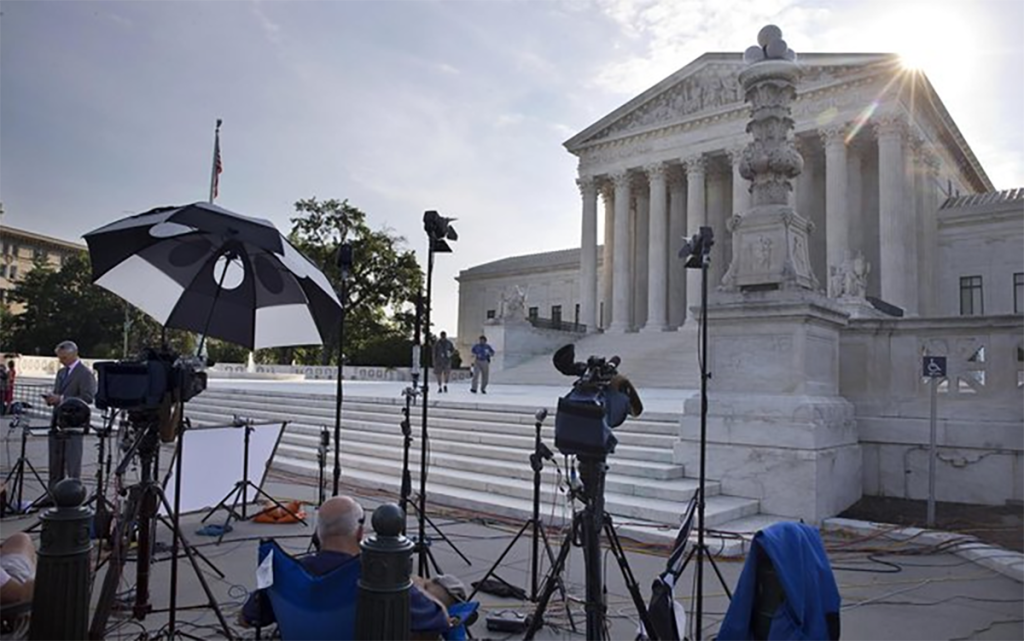
The Supreme Court on Thursday upheld the nationwide tax subsidies under President Barack Obama’s health care overhaul, in a ruling that preserves health insurance for millions of Americans. The Supreme Court ruled in a 6-3 decision on King v. Burwell that the 8.7 million Americans living in states without state based Obamacare exchanges are eligible to receive federal healthcare subsidies. The opinion was written by Chief Justice John Roberts, who also wrote the Obamacare opinion in 2012 upholding the individual mandate in the Affordable Care Act. Here is a compilation of reactions from Alabama’s elected officials and politicians: Gov. Robert Bentley: Today’s decision by the United States Supreme Court is disappointing. As the law is clearly written, subsidies do not apply to states that did not establish a state-based health insurance exchange. With today’s decision, the Supreme Court became an activist court by rewriting the law, clearly overstepping the role of the Judicial Branch to interpret the law. The Supreme Court had an opportunity to repair what I, as a physician, have always believed, that the Affordable Care Act is deeply flawed and does little to help improve the health of our citizens. As a physician and Governor of one of the 34 states that did not establish a state-based healthcare exchange, I agree with Justice Scalia in his dissent that States are clearly not the federal government and that definition of a state shouldn’t be rewritten for the purpose of this law. I believe the ACA is, at its core, enormously expensive for families and businesses and does little to address the health care issues we face in our state and nation. U.S. Sen. Richard Shelby: Today’s Supreme Court decision does not change the fact that Obamacare is an unworkable, deeply flawed, and damaging law. The problems with Obamacare go far beyond the issue debated in King v. Burwell and continue to harm American families and small businesses. Obamacare’s long list of broken promises has already caused Americans to struggle with higher premiums, to lose their preferred health insurance and doctors, and to be left with fewer choices. Despite this ruling, I remain committed to working with my colleagues to put an end to the negative impacts of this disastrous law. U.S Rep. Bradley Byrne (AL-01): Today’s ruling does not change the fact that Obamacare is an unworkable law that is hurting far too many families across Southwest Alabama and the United States. I will continue to push for a full repeal of the law and work toward patient-centered health care solutions that aren’t run by the federal government. U.S. Rep. Martha Roby (AL-02): So many people across the nation and throughout Alabama have been negatively affected by this law. Under Obamacare, many lost the health plans they liked. Many were forced to go to different doctors, to say nothing of the doctors who stopped practicing altogether. Premiums skyrocketed, and many middle class families are now impacted by new taxes, fees and penalties. I have repeatedly voted to repeal Obamacare and replace it with patient-centered health care that isn’t run by the government. This ruling does not change my commitment to working to replace the president’s health care law with policies that make sense. It does show how important it is for us to elect a president who will uphold the rule of law and appoint Supreme Court justices who will do the same. U.S. Rep. Robert Aderholt (AL-04): I am extremely disappointed with the Supreme Court’s decision today concerning Obamacare subsidies. The Supreme Court continues to see gray when it comes to the black letter of the law as written in Obamacare’s base text in the Affordable Care Act. If you look at the way the Democrats actually wrote the law, it seems to be very clear that subsidies were not available for those in the federal exchanges. This was not a typo. The language was written as it was written. U.S. Rep. Gary Palmer (AL-06): I’ve long been an advocate for repealing this unworkable and unaffordable law. Today’s decision by SCOTUS makes it even more imperative that Congress work to fully repeal it. As far as the opinion is concerned, I agree with Justice Scalia when he writes in dissent: The Court holds that when the Patient Protection and Affordable Care Act says “Exchange established by the State” it means “Exchange established by the State or the Federal Government.” That is of course quite absurd, and the Court’s 21 pages of explanation make it no less so …. This Court, however, concludes that this limitation would prevent the rest of the Act from working as well as hoped. So it rewrites the law to make tax credits available everywhere. We should start calling this law SCOTUScare. U.S. Rep. Terri Sewell (AL-07): Millions of Americans can finally breathe a sigh of relief. An estimated 6.4 million Americans will be able to keep their health insurance, including 17,000 people in my district! Chairman Terry Lathan, Alabama Republican Party: The nightmare continues for America with the United States Supreme Court upholding parts of the wildly unpopular Affordable Care Act, also known as Obamacare. This destructive legislation forced upon Americans pertaining to their health care and health insurance is an abomination and a plight on our nation. America is the most loving country in the world and our citizens should have access to superb health care, but this legislation is an albatross of government intervention and bureaucracy. It has little to do with care and mostly to do with more legislative strangleholds and controlling our daily lives. No American should be forced to sign up or buy health insurance that is not their choice. This alone is enough to remind us all how important the elections of 2016 will be to America. We must reverse this course, starting by removing Democrats from the White House all the way down to our county courthouses. Let us never forget the words of Barack Obama when he and the Democrats forced their will on all of America: ‘If you like your doctor, you can keep your doctor. If you like your health care plan, you
U.S. Supreme Court upholds nationwide health care law tax subsidies
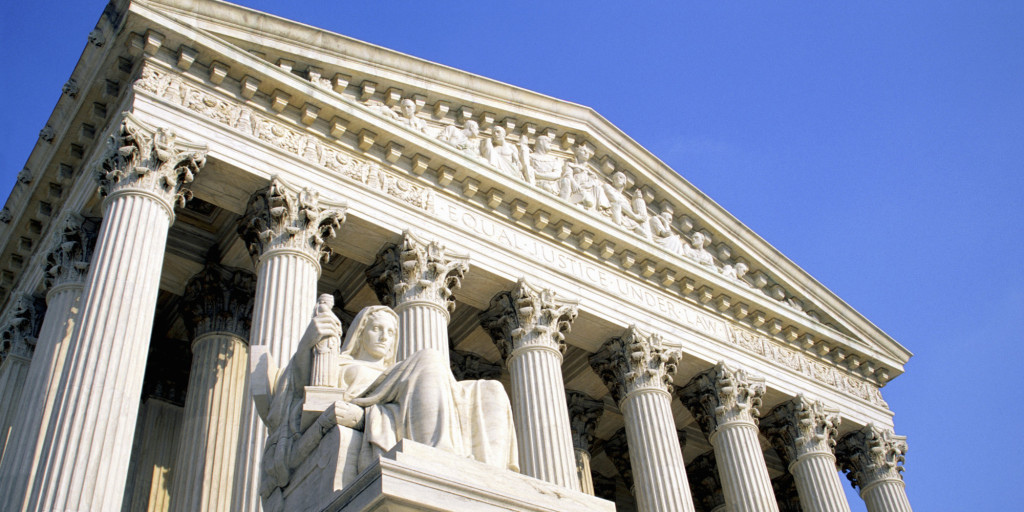
The U.S. Supreme Court on Thursday upheld the nationwide tax subsidies under President Barack Obama‘s health care overhaul, in a ruling that preserves health insurance for millions of Americans. The justices said in a 6-3 ruling that the subsidies that 8.7 million people currently receive to make insurance affordable do not depend on where they live, under the 2010 health care law. The outcome is the second major victory for Obama in politically charged Supreme Court tests of his most significant domestic achievement. It came the same day the court gave the administration an unexpected victory by preserving a key tool the administration uses to fight housing bias. Chief Justice John Roberts again voted with his liberal colleagues in support of the law. Roberts also was the key vote to uphold the law in 2012. Justice Anthony Kennedy, a dissenter in 2012, was part of the majority on Thursday. “Congress passed the Affordable Care Act to improve health insurance markets, not to destroy them,” Roberts wrote in the majority opinion. In a dissent he summarized from the bench, Justice Antonin Scalia said, “We should start calling this law SCOTUScare.” Using the acronym for the Supreme Court, Scalia said his colleagues have twice stepped in to save the law from what Scalia considered worthy challenges. Justices Samuel Alito and Clarence Thomas joined the dissent, as they did in 2012. Nationally, 10.2 million people have signed up for health insurance under the Obama health overhaul. That includes the 8.7 million people who are receiving an average subsidy of $272 a month to help pay their insurance premiums. Of those receiving subsidies, 6.4 million people were at risk of losing that aid because they live in states that did not set up their own health insurance exchanges. The challenge devised by die-hard opponents of the law, often derided by critics as “Obamacare,” relied on four words — “established by the state” — in the more than 900-page law. The law’s opponents argued that the vast majority of people who now get help paying for their insurance premiums are ineligible for their federal tax credits. That’s because about three dozen states opted against creating their own health insurance marketplaces, or exchanges, and instead rely on the federal healthcare.gov to help people find coverage if they don’t get insurance through their jobs or the government. In the challengers’ view, the phrase “established by the state” demonstrated that subsidies were to be available only available to people in states that set up their own exchanges. Those words cannot refer to exchanges established by the Health and Human Services Department, which oversees healthcare.gov, the opponents argued. The administration, congressional Democrats and 22 states responded that it would make no sense to construct the law the way its opponents suggested. The idea behind the law’s structure was to decrease the number of uninsured. The law prevents insurers from denying coverage because of “pre-existing” health conditions. It requires almost everyone to be insured and provides financial help to consumers who otherwise would spend too much of their paycheck on their premiums. The point of the last piece, the subsidies, is to keep enough people in the pool of insured to avoid triggering a so-called death spiral of declining enrollment, a growing proportion of less healthy people and premium increases by insurers. Several portions of the law indicate that consumers can claim tax credits no matter where they live. No member of Congress said that subsidies would be limited, and several states said in a separate brief to the court that they had no inkling they had to set up their own exchange for their residents to get tax credits. The 2012 case took place in the midst of Obama’s re-election campaign, when he touted the largest expansion of the social safety net since the advent of Medicare nearly a half-century earlier. But at the time, the benefits of the Affordable Care Act were mostly in the future. Many of its provisions had yet to take effect. In 2015, the landscape has changed, although the partisan and ideological divisions remain for a law that passed Congress in 2010 with no Republican votes. The case is King v. Burwell, 14-114. Republished with permission of The Associated Press.
White House: Action needed now to slow climate change

Failure to act on climate change could cause an estimated 57,000 deaths a year in the United States from poor air quality by 2100, the Obama administration argued in a report released Monday that warns of dire effects of global warming. The report says inaction on climate change could cost billions of dollars a year in damage from rising sea levels, increased wildfires and drought, as well as higher costs for electricity to cool homes and businesses in hotter temperatures. The Environmental Protection Agency report argues that action now on climate could save billions in avoided costs for maintenance and repairs on roads and bridges made vulnerable by global warming and save the lives of an estimated 12,000 people in 49 U.S. cities who could die from extreme temperatures in 2100. The report comes as Republicans in Congress seek to undo the administration’s environmental policies, including an expected plan by the EPA to target coal-fired power plants, and days after Pope Francis issued a stern warning about global warming’s consequences, especially for the poor and underdeveloped nations. The National Oceanic and Atmospheric Administration said last month was the hottest May around the globe in 136 years of global records. A global health commission organized by the prestigious British medical journal Lancet recommended on Monday that substituting cleaner energy worldwide for coal will reduce air pollution and give Earth a better chance at avoiding dangerous climate change. The panel said hundreds of thousands of lives each year are at stake and global warming “threatens to undermine the last half century of gains in development and global health.” The White House report is part of a weeklong effort to emphasize climate change to mark the two-year anniversary of a “climate action plan” announced by President Barack Obama. While the most severe effects of global warming would not be felt for decades, the Obama administration said decisions about climate change need to be made now. “Decisions are not going to wait 50 years,” EPA Administrator Gina McCarthy told reporters at a White House briefing. “They are today’s decisions.” McCarthy called the report “a wake-up call for some who may not be aware” of the potential damages of climate change. Obama, in an interview out Monday with comedian Marc Maron for his popular podcast, said he was acting on his own on power plants and other environmental regulations because the GOP-controlled Congress has blocked more comprehensive efforts. “We’ll get that stuff done,” Obama said, adding that “it would be a lot better, it would be a lot more helpful, if we had some cooperation from Congress, and if I didn’t have the chairman of the energy and environment committee in the Senate holding up a snowball as if that was proof that climate change wasn’t happening, that would be useful.” Obama’s comments referred to Sen. James Inhofe, R-Okla., chairman of the Senate Environment and Public Works Committee, who tossed a snowball in the Senate chamber in February to demonstrate his claim that global warming is a hoax. The EPA report says actions to slow climate change could save about $3.1 billion in expected costs from sea-level rise and storm surge in 2100, while the power sector could save as much as $34 billion by 2050 in avoided costs for additional electricity for air conditioning and other uses. An estimated $3 billion in avoided damages from poor water quality could be saved by 2100, the report said. Actions begun in the next few years could reduce droughts by at least 40 percent by 2100 and save an estimated 6 million to 8 million acres from being burned by wildfires, the report said. It said meaningful actions also could prevent the loss of about one-third of U.S. supplies of oysters, scallops and clams by 2100, as well as 35 percent of Hawaiian coral reefs. Failure to act could lead to summers in Illinois to “feel like Louisiana” today, McCarthy said, while South Dakota summers may be as hot as those in Arkansas. The Republican-controlled House is expected to vote this week on a bill to scale back the plan on coal-fired power plants, the centerpiece of Obama’s second-term push to confront climate change. The bill would allow states to opt out of the plan if the governor determines it would cause significant rate hikes for electricity or harm reliability of service in the state. The bill also would delay the rule until all court challenges are completed. The House also is expected to take up a separate spending bill that would bar the EPA from enforcing the power plant rules, cut the agency’s budget and attack other prominent EPA regulations on air and water pollution. Obama has managed to thwart GOP efforts in the past, but Republicans are renewing their efforts now that they control the Senate as well as the House. Republished with permission of The Associated Press.
Martha Roby: Putting patients first
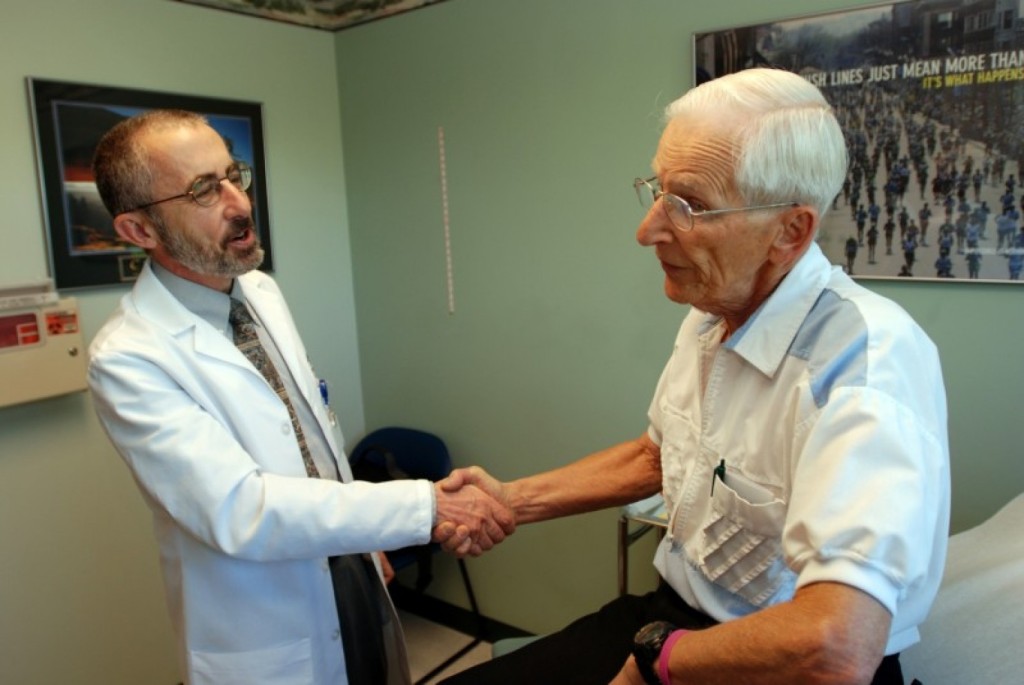
Remember these promises from President Barack Obama about his healthcare law? “If you like your health care plan, you can keep your health care plan…” “If you like your doctor you will be able to keep your doctor…” “We’ll lower premiums…” “No family making less than $250,000 a year will see any form of tax increases.” To many, they are unforgettable because they turned out to be untrue. Under Obamacare, many in Alabama and throughout the country did lose the health plans they liked. Many were forced to go to different doctors, to say nothing of the doctors who stopped practicing altogether. Premiums skyrocketed, and yes, many middle class families are impacted by new taxes, fees and penalties. One of those taxes, the Medical Device Tax, makes lifesaving equipment like pacemakers, artificial joints and MRI machines and subject to a 2.3 percent tax. The United States has always been a leader in medical innovation and treatment, but this tax on medical devices threatens to stifle that. Not only is our medical community harmed by the effects of this tax, but patients across Alabama and the United States are negatively impacted as well. That’s why this week the House of Representatives passed H.R. 160, which repeals Obamacare’s Medical Device Tax. The bill, which I co-sponsored, passed with a strong, bi-partisan vote of 280-140. It is now on its way to the Senate, which I hope will pass it expeditiously. Next week, we will take up another bill, H.R. 1190, to eliminate IPAB, or the Independent Payment Advisory Board. IPAB is an unelected, unaccountable panel with authority to slash Medicare payments. We must continue to push for sensible health care reform in place of costly, ill-advised provisions under Obamacare. Of course, I staunchly oppose the President’s health care law and have voted multiple times to repeal, replace or dismantle the law. Individual Americans and their doctors should determine which health care options best meet their needs, not federal government bureaucrats and politicians. Soon, the Supreme Court will rule in the pivotal King v. Burwell case, which could expose yet another broken promise of Obamacare and cause thousands in Alabama to lose affordable coverage. My colleagues in the House and I are carefully following this case and discussing legislation that will be needed to deal with the aftermath. I will keep you updated on any developments. More to come over the next few weeks. Martha Roby represents Alabama’s 2nd Congressional District. She is currently serving her third term.
EPA proposes tougher mileage standards for trucks

The Obama administration on Friday proposed tougher mileage standards for medium and heavy-duty trucks, the latest move by President Barack Obama in his second-term drive to reduce pollution blamed for global warming. The Environmental Protection Agency issued new rules that would lower carbon dioxide emissions from trucks and vans by 24 percent by 2027. It would cut fuel costs by about $170 billion and reduce oil consumption by up to 1.8 billion barrels over the lifetime of vehicles sold under the rule. The long-expected rules come one day after Pope Francis issued a teaching document calling for the world to take action to slow climate change. Transportation Secretary Anthony Foxx said in a statement that the new rules would help the environment and the economy, as trucks use less fuel and shipping costs go down. He called the rules “good news all around.” Gina McCarthy, chief of the Environmental Protection Agency, said the rules would deliver “big time” on Obama’s call to cut carbon pollution. “With emission reductions weighing in at 1 billion tons, this proposal will save consumers, businesses and truck owners money,” McCarthy said. At the same time, the rules will “spur technology innovation and job-growth, while protecting Americans’ health and our environment over the long haul,” she said. Medium and heavy-duty vehicles account for about 20 percent of greenhouse gas emissions and oil use in the U.S. transportation sector, but comprise only 5 percent of vehicles on the road. The proposed standards would cover model years 2021-2027 and apply to semi-trucks, large pickup trucks and vans, and all types and sizes of buses and work trucks, officials said. Once completed, the rules are expected to lower carbon dioxide emissions by about 1 billion metric tons. The rule builds on fuel efficiency and carbon pollution standards already in place for model years 2014-2018. Those rules are expected to reduce greenhouse gas emissions by 270 million metric tons and save vehicle owners more than $50 billion in fuel costs, compared to previous standards. The rules will be open to public comment for at least two months and would be completed next year. Republished with permission of The Associated Press.
Marco Rubio’s “Obama problem,” Jeb Bush “dynasty” could be issues in primary, insiders say

Lack of national experience could be a factor in the GOP presidential primary for Marco Rubio, particularly in light of seven years of President Barack Obama, a first-term senator when he began his campaign for the White House. So says the POLITICO Caucus, a weekly bipartisan analysis by a panel of political operatives and activists in the early primary states of Iowa and New Hampshire. The comparison between Florida’s junior U.S. senator and Obama doesn’t end there: Both men have superior speaking skills and a captivating personal narrative. Each has a similar experience; moving from the state House to the U.S. Senate, and mounting a presidential campaign before completing his first term. National experience might develop as an issue in 2016: A poll found 61 percent of Republicans, as well as 63 percent of Democrats, saying experience – or the lack of it – could be a problem. In Iowa, the topic is slightly more significant: 63 percent of Iowa Republican voters surveyed say it is an issue, as does 57 percent of New Hampshire Republicans. “He’ll have to offer more than one really great speech because voters are looking for more than inspiration,” one anonymous Iowa Republican told pollsters. “We’ve had plenty of that with Obama. Voters are looking for accomplishment and experience as well.” POLITICO reports another unidentified New Hampshire Republican said, “Every election selects the candidate that corrects the perceived deficiencies of the current occupant of the White House. After seven years of an eloquent, one-term senator, the GOP is going to look for something different.” “Without a doubt, when push comes to shove later this year, Rubio will be faced with being too young without enough experience,” said another. The experience critique can also be leveled against fellow candidates Ted Cruz and Rand Paul, but insiders say Rubio is the bigger threat to presumptive frontrunners Jeb Bush and Hillary Clinton. In the 2008 election cycle, Republicans — and Clinton — regularly pointed out the “experience” argument against Obama. That led a New Hampshire GOP voter to wonder why an entirely “valid critique” of Obama does not apply in these cases. “We can’t out-Obama Obama,” another Iowa Republican said, according to the POLITICO Caucus. “There is only one shot for a flash-in-the-pan candidate like that. And, by the way, it hasn’t turned out so well.” Experience may be an obstacle, insiders said, but not insurmountable. Rubio is a former Florida House speaker with foreign policy experience through his seat on the Senate Foreign Relations Committee. “Rubio’s relative lack of federal experience is fair game for his rivals, but he had significantly more state legislative experience than Obama,” one Iowa voter said. “The only way the experience question hurts him is if he comes across as inexperienced. So far, that hasn’t been an issue.” On the other hand, a fresh face, even without a wealth of experience, could be an asset for many primary voters. Although Bush and Clinton made visits to early primary states this week, much of the attention was on the “dynasty” talk inherent in a Bush-Clinton race. But for POLITICO Caucus insiders, the challenge is bigger for Bush than Clinton: That was the overwhelming view of Republicans (97 percent) and Democrats (92 percent). “Passing a presidency from father to son, like an inheritance is not the same as a wife building her own career and running based on her own accomplishments,” a Democratic insider from New Hampshire said. “It’s actually insulting to compare the two scenarios. Hillary has faced more challenges from being married to Bill Clinton and from being a wife. “Lots of sexism at play. On the other hand, the Bushes have a tradition of entitlement in their family.” Gender differences aside, respondents also expressed concern over having three presidents from the same family. According to one New Hampshire Republican, if it came down to families of Bill Clinton and George W. Bush, Clinton would win. “It’s on Jeb’s team to not allow that to happen,” the insider added. “President Bush 43’s numbers have bounced back since he left office in 2009, but they’re still not at President Clinton’s level.” But the issue is a challenge for both, even though it may hurt Bush a little more. “It’s very bad for both of them,” one Democrat said. “Many people really want another choice. But in Bush’s case, there really are alternatives.” More insights from the POLITICO Caucus, as well as a list of participants, is available here.
U.S. House revives Obama’s trade agenda, struggle moves to Senate

The House dramatically rescued President Barack Obama‘s trade agenda from near oblivion Thursday, and supporters urged the Senate to finish the job and give him a signature achievement in his final years in office. The turnabout gave a much-needed lift to a president recently rebuffed by his own party after years of fighting Republicans. In one of the strangest twists of his presidency, most fellow Democrats oppose Obama on trade, forcing him to rely heavily on Republicans to ease the path for possibly far-reaching trade accords in Asia and elsewhere. The president needs comparatively small numbers of Democrats in both chambers. His supporters were encouraged by Thursday’s events. Setting up votes early next week, Senate Majority Leader Mitch McConnell, R-Ky., alluded to the bill’s near death last week, but he maintained that the measure could be sent to Obama before July 4. McConnell said it would require “working together toward the shared goal of a win for the American people. … Trusting each other to get there. I think we can.” The same 28 House Democrats who previously backed Obama’s bid for “fast track” negotiating authority held firm, despite withering criticism from unions and liberal groups. Under that authority, a president can negotiate liberalized trade deals that Congress can only approve or reject, not change. Opponents of Obama’s path on trade now are focusing on 14 Democratic senators who backed fast track earlier. There were no open signs of erosion Thursday, although Democrats are demanding inclusion of a job retraining program, with details of it still incomplete. House Speaker John Boehner, R-Ohio, said Republicans are committed to ensuring that the negotiating authority and retraining program pass for Obama’s signature into law. Corporate groups and other free-trade supporters hailed the House vote Thursday approving the negotiating authority. It passed 218-208, proving the importance of the 28 Democratic supporters. “This vote is a huge step with the administration and for a nation which rejects isolationism and protectionism,” said Gary Shapiro, president of the Consumer Electronics Association. Liberal groups fumed. “A handful of turncoat Democrats” who backed the legislation “should know that we will not lift a finger or raise a penny to protect you when you’re attacked in 2016,” said Jim Dean of Democracy for America. He said the group will try to oust those lawmakers in future Democratic primaries. Lawmakers agree that major trade deals, including the long-negotiated Trans-Pacific Partnership, cannot be completed unless negotiating partners know that Congress won’t tinker with the final agreement. Previous presidents have negotiated such deals with fast-track authority. Democratic opposition to free trade has grown since the 1994 North American Free Trade Agreement, or NAFTA, lowered barriers with Canada and Mexico. Republicans, and pro-trade Democratic presidents such as Obama and Bill Clinton, have tried to ease concerns by offering a union-backed program, Trade Adjustment Assistance, that provides help to workers displaced by trade. Many Republicans consider it wasteful but a reasonable price for Democrats’ help on liberalized trade. That strategy seemed sound last month, when the Senate passed a bill that linked the assistance with the negotiating authority. House Democrats sabotaged that last week, however. They voted to kill the worker assistance program in order to derail the fast track. The stinging rebuke of Obama forced Republican leaders to repackage the trade legislation and try again. That worked as the House passed the new bill, which dealt solely with the negotiating authority. Pro-trade forces hope for similar results in the Republican-dominated Senate, perhaps as early as next week. Last month, the Senate passed legislation that combined fast track with worker assistance, getting two more votes than needed to stop fatal delaying tactics by opponents. Support from the 14 Democratic senators who backed the bill was vital to that victory and Obama’s backers are keen to hold them. Most if not all of the 14 say it’s crucial that Congress approve, and Obama sign, a renewal of the trade adjustment assistance in conjunction with the negotiating authority. Some of fast track’s staunchest opponents say it’s inconceivable to negotiate a lowering of trade barriers without looking after those who lose their jobs. “I can’t believe Congress would vote for a trade agreement and not help these workers,” said Sen. Sherrod Brown, D-Ohio. “It’s morally shameful not to take care of these workers.” Brown said the Senate shouldn’t vote on fast track until that assistance “is locked down.” Other opponents of fast track were ready to move to other issues. “I think most Democrats, at the end of the day, realize that we now have an even more important obligation” to pass the assistance bill along with fast track, said Rep. Steve Israel, D-N.Y. Dwelling on a procedural process that divides Obama and House Democrats, he said, is “not a good message. So we need to put the period at the end of the sentence and move on to another topic.” And White House spokesman Eric Schultz said: “The only strategy that we support moving through Congress is one that includes both of those pieces getting to his desk for his signature.” Republished with permission of The Associated Press.
Democrats worry Jeb Bush’s Latino connections could hurt Hillary Clinton
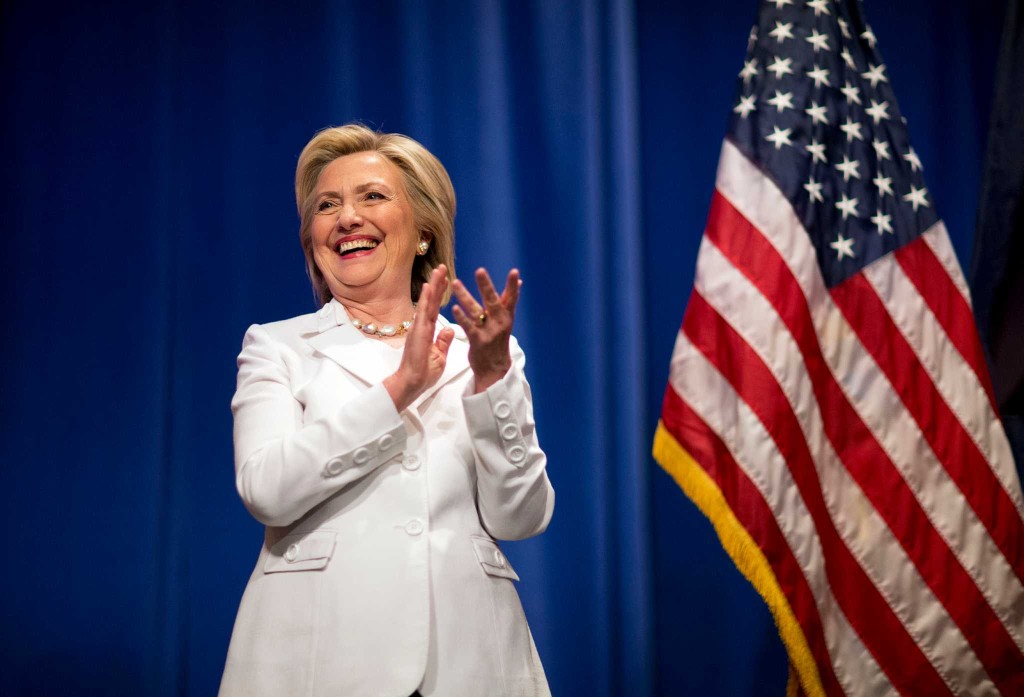
Hillary Rodham Clinton‘s campaign probably didn’t need a reminder of how crucial Latino voters could be to her presidential campaign. She got one anyway from Jeb Bush. The former Republican governor of Florida spoke fluent Spanish during his 2016 campaign kickoff this week, at which he introduced his wife, a native of Mexico, to an adoring crowd that cheered as he effortlessly deflected an attempt by immigration protests to interrupt his speech. “Ayúdennos a emprender una campaña que les da la bienvenida,” Bush said, which can be translated as, “Help us run a campaign that welcomes you.” Clinton will address the National Association of Latino Elected and Appointed Officials on Thursday in Las Vegas at a time when Bush’s bilingual pitch is prompting quiet pangs of concern among some Democratic strategists. They worry that a campaign that successfully presents Bush as the product of his Hispanic-infused South Florida home could cut into their party’s sizable demographic advantage with Latino voters, particularly in hard-fought states such as Florida, Colorado and Nevada. Bush comes across as “genuine and comfortable in his own skin,” said David Axelrod, a former strategist to President Barack Obama. “If he hangs tough and survives (the primary), Democrats should be sober. He would be a formidable opponent.” Bush may be the white scion of a political dynasty with deep roots in New England, but he has adopted Hispanic culture as his own. He made his career in the bilingual mecca of Miami, Spanish is his primary language at home, and he brags about buying cilantro to make Latin cuisine for his wife. On the campaign trail, Bush switches seamlessly between English and Spanish when answering questions, his skills in the language honed during the two years he spent in Venezuela as a young man. He also travels with Raul Henriques, a fresh-faced “body man” recently hired because Bush wanted a Spanish speaker. Republicans think Bush could help their party close a yawning political gap among Latino voters. GOP nominee Mitt Romney won just 27 percent of the Latino vote in 2012, the smallest margin in a decade. President George W. Bush, who had far weaker ties to the Hispanic community than his younger brother Jeb, earned as much as 40 percent of their vote during his 2004 re-election race. Maintaining a broad Democratic advantage among one of the country’s fastest-growing minority groups will be essential to Clinton’s path to the White House. Almost 28.2 million Hispanics will be eligible to vote in the 2016 presidential race, an increase of about 17 percent over 2012, according to an analysis of census data by the Center for American Progress, a liberal think tank. Clinton advisers have long singled Bush out from the rest of the crowded Republican field as a possible threat, arguing that his personal connection to the Latino community could help his campaign make inroads in several battleground states. “If Republicans were to win Florida and Ohio and Colorado, it’s hard to total up 270 for Democrats,” longtime Clinton confident Harold Ickes told reporters in November. For months, Clinton and her team have worked hard to develop and deepen relationships with Hispanic leaders. In May, she tapped Lorella Praeli, a leading immigrant-rights activist brought to the U.S. illegally as a young person, to lead outreach to Latino voters. Less than a month after announcing her plans to enter the race, Clinton called for a path to citizenship for undocumented immigrants. Her position left little political wiggle room for Republicans open to an immigration overhaul, Bush included, who favor granting legal status for some of the 11 million workers in the country illegally but not full citizenship. “We should offer hard-working, law-abiding immigrant families a path to citizenship,” Clinton said during her kickoff speech last weekend. “Not second-class status.” Campaigning in Iowa on Wednesday, Bush said he would support citizenship for some immigrants brought to the country illegally as children and a pathway to legal status for their parents, a step Obama took by executive order three years ago. But Bush’s efforts to woo Latinos may be complicated by the Republican primaries, where a vocal conservative minority holds outsized influence. In an indication of the potential toxicity of the issue to his primary bid, Bush had no plans to mention immigration during his Tuesday kickoff speech. But he couldn’t resist responding to the chants of protesters heckling him from the crowd with a pledge to tackle immigration legislation. “I believe what I believe, and I believe in comprehensive immigration reform,” he said in Iowa the following day. “People don’t agree with me in my own party, not everybody, but, trust me, there are a lot of people that have a differing view.” Republished with permission of The Associated Press.
Talladega looks to ban sagging pants
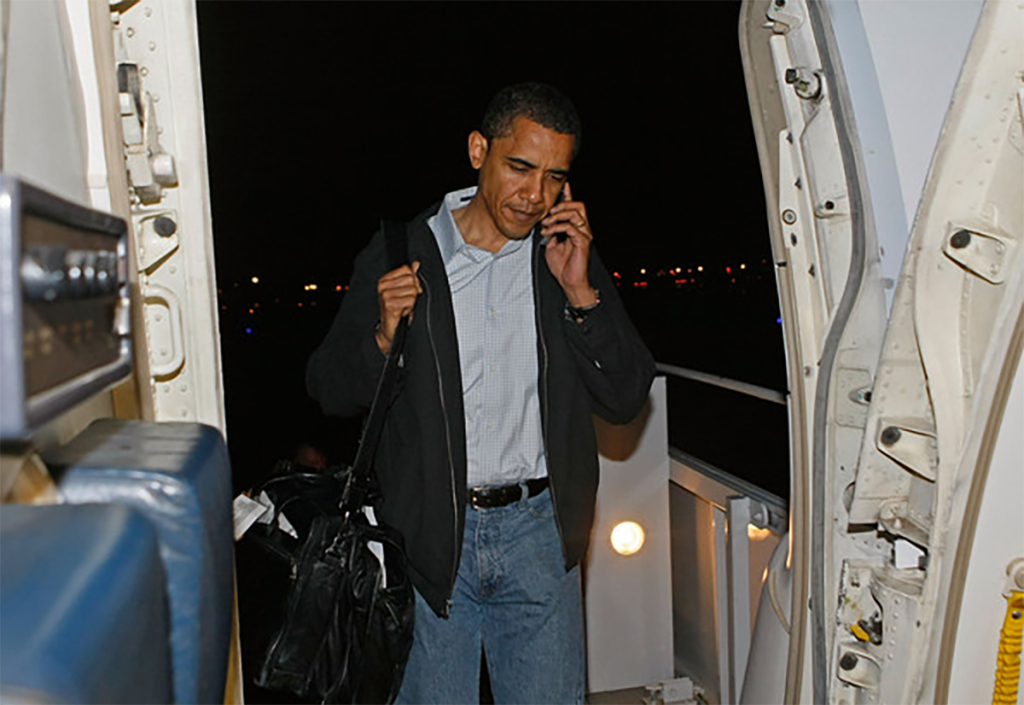
Should terrible fashion choices be outlawed? If so after we ban sagging pants can we re-evaluate the high-waisted Daisy-Duke cutoff jeans that young women wear these days? Joining a long line of cities before them the Talladega City Council is renewing a previous look into a resident’s request to ban sagging pants. The Anniston Star reports that resident Paul Johnson became concerned about the way sagging pants effects the community as a whole. He told the newspaper he considers them disrespectful, specifically to his granddaughter and the women in town. He asked that a ban be put in place and that punishments for violating it have teeth. Johnson told the Star, “I care about my community, about how and where I live. I want to teach my granddaughter what’s right, but we can’t do that if (sagging) is what she sees in public. If we don’t do something, it’s just going to get worse.” Bans on sagging pants have been proposed throughout the nation including in Talladega in the past. Last year, Ocala, Fla., passed a ban but repealed it when the NAACP threatened legal action. Even President Barack Obama weighed in on the issue. As a candidate in 2008 he said, ““Here’s my attitude: I think passing a law about people wearing sagging pants is a waste of time.” He did however go on to say, “Having said that, brothers should pull up their pants. You’re walking by your mother, your grandmother, and your underwear is showing. … What’s wrong with that? Come on. There are some issues that we face that you don’t have to pass a law [against], but that doesn’t mean folks can’t have some sense and some respect for other people. And, you know, some people might not want to see your underwear: I’m one of them.” Councilors have said they will hold public meetings on the issue and have the new city manager look into it when he starts. I’m hoping this issue only comes up just after the city gets to all the other important ones like actual crimes, poverty, hunger, etc.
Jeff Sessions continues to press conservative agenda on immigration
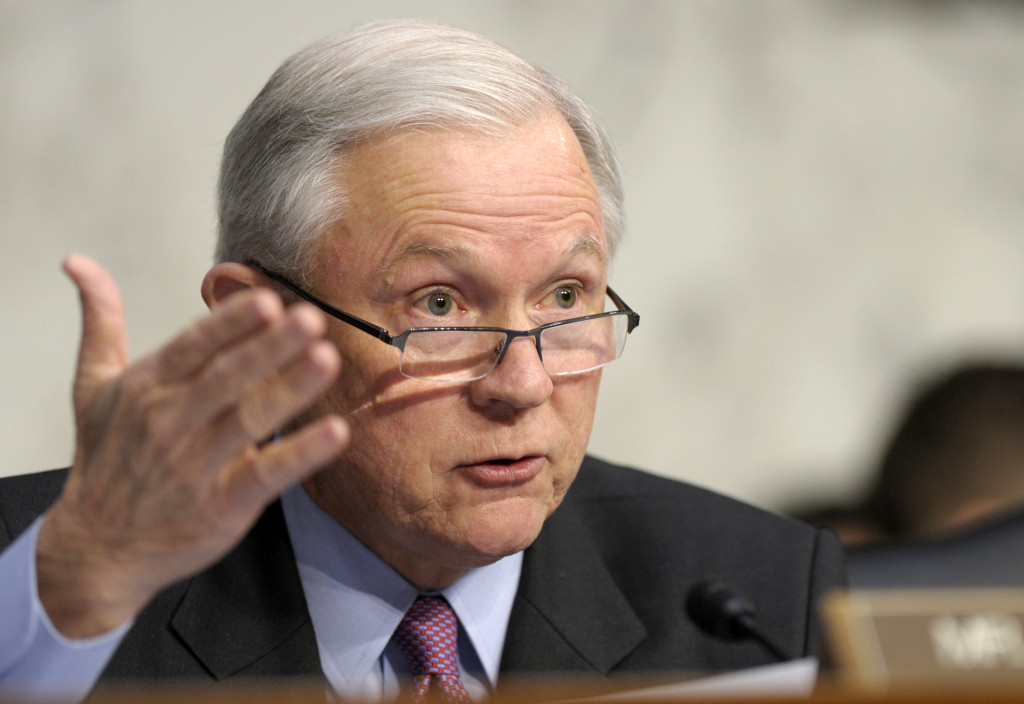
In a letter taking to task Obama administration officials over the release from state custody of more than 100 deportable immigrants who later went on to commit violent crimes, U.S. Sen. Jeff Sessions continued to work with Republican allies to advance a conservative immigration policy in the Senate. Sessions and U.S. Sen. Chuck Grassley — chairman of the Senate Judiciary Committee where Session has taken an active role lately — sent a letter addressed to Secretary of State John Kerry, Homeland Security Secretary Jeh Johnson, and Attorney General Loretta Lynch. Their letter railed against poor execution of deportation protocols by the federal Immigration and Customs Enforcement, formally requesting detailed answers to a list of more than 25 specific inquiries about why 121 suspected killers were allowed to pass through the federal immigration enforcement system and remain in the country. According to information provided by ICE, up to 121 homicides in the U.S. could have been avoided between Fiscal Year 2010 and 2014 had the aliens with criminal convictions been deported instead of released, Grassley and Sessions wrote. “This disturbing fact follows ICE’s admission that, of the 36,007 criminal aliens it released from ICE custody in FY 2013, 1,000 have been re-convicted of additional crimes in the short time since their release.” The senators pointedly asked the Cabinet members, appointed by President Barack Obama, whether their agencies are “fully leveraging existing tools and resources to prevent these dangerous outcomes.” “In the ongoing talks between the U.S. and Cuba, does the administration plan to make repatriation of all of those 30,000+ Cuban nationals, and not just some subset of that group, a condition precedent of granting diplomatic recognition to Cuba?” reads one question. “If not, why not?” The letter is in keeping with a long-term push on immigration on the part of Alabama’s junior senator. Last week, Sessions was vindicated in the conservative press after U.S. Rep. Paul Ryan expressed skepticism about Sessions’ claims that the Trans Pacific Partnership contains loopholes that could lead to a “flood” of new immigration. Ryan had called the language within the proposed TPP that would relax restrictions on the “Movement of Persons,” including professionals operating independently, an “urban legend.” Recent revelations about the trade deal, however, indicate that provisions to forbid mandatory interviews and economic means testing for visa-seekers are indeed part of the proposal, something that Sessions — dubbed by POLITICO as “the Senate’s anti-immigration warrior” — had spoken against. Senate Republican Whip John Cornyn of Texas called Sessions “perhaps the most vocal member of our conference” on immigration after he led the charge in confronting his own caucus in opposition of new H-1B visas for skilled foreign workers, saying it negatively affects domestic job-seekers. “We’ve got to ask — which hasn’t been asked — what does all this do to the ability of a college graduate who’s living at home with his parents because he can’t find a job?” said Sessions, chairman of the Subcommittee on Immigration & the National Interest. That’s a familiar note in his protectionist quest against labor pool distortions because of foreign labor. His approach to the issue evidently has struck a chord in his home state: Sessions was the only incumbent senator who ran unopposed in both primary and general elections in 2014. Sessions and Grassley gave the administration officials addressed in their inquiry a July 6 deadline to respond.
Hillary Clinton looks to build organizational edge in Iowa
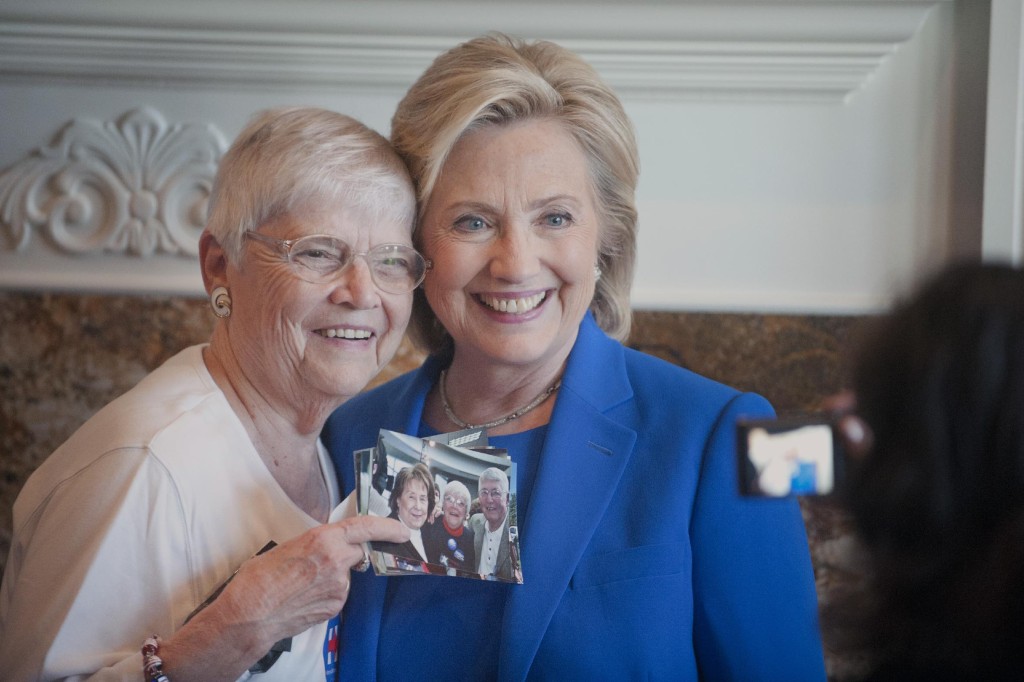
Seeking an army of volunteers, Hillary Rodham Clinton is trying to build an organizational edge in Iowa as some of her lesser-known Democratic rivals clamor for attention in the state that tripped up her first presidential campaign. Clinton flew to Iowa on Saturday night after her high-profile New York kickoff, telling supporters at a Sioux City house party that her campaign would seek to rally the country around an agenda for the future. “Everybody has a role to play,” Clinton said, urging supporters to sign up to join her campaign. Despite her dominant position in the Democratic primaries, Clinton’s allies are trying to erase the memories of her third-place finish in Iowa’s 2008 caucuses, the contest that fueled Barack Obama‘s rise to the White House. The former secretary of state’s Iowa event was streamed online to more than 600 similar gatherings around the country, covering every congressional district in an effort to add volunteers to the campaign’s roster. Clinton planned to address supporters at the Iowa State Fairgrounds in Des Moines on Sunday and then travel to the Mississippi River city of Burlington. But she had company in the state: One of her main Democratic challengers, Vermont Sen. Bernie Sanders, was campaigning across the state during the weekend. Former Virginia Sen. Jim Webb, who is exploring a potential Democratic bid, was holding events in Iowa on Sunday. During her New York speech, Clinton remained silent on some issues of critical importance to the Democratic base, most notably a Pacific Rim trade pact backed by Obama but opposed by organized labor, liberals and others who say it will cost the U.S. jobs. The agreement has not been finalized or submitted to Congress. Sanders, who has opposed the trade deal, again questioned Clinton’s refusal to say where she stood on the Trans-Pacific Partnership. “Most Democrats in the Congress are against it. But I don’t understand how you don’t have a position on this issue,” he said Saturday in Des Moines, where he opened a new campaign office. “You can’t take a position on a trade bill that you can’t see,” Clinton’s campaign manager, Robby Mook, told CBS’ “Face the Nation” on Sunday. Clinton and her advisers are not saying whether she supports legislation in Congress to give the president special negotiation authority on trade deals. In New Hampshire, former Maryland Gov. Martin O’Malley pointed to his executive experience while his campaign noted to supporters in an email that Clinton “didn’t say that she would take any substantive actions to hold Wall Street CEOs accountable for reckless behavior. Nor did she weigh in on the secretive TPP deal that could depress American wages and cost American jobs.” In New York, Clinton offered herself as a fierce advocate for those still struggling from the Great Recession. “I think you know by now that I’ve been called many things by many people,” Clinton said to cheers and laughter from the crowd of roughly 5,500 gathering on New York’s Roosevelt Island in the East River. “Quitter is not one of them.” Hours later in Iowa, Clinton added, “I don’t believe we should ever quit on our country.” Republished with permission of the Associated Press.
