
Martha Roby: Amid global tensions, a timely trip
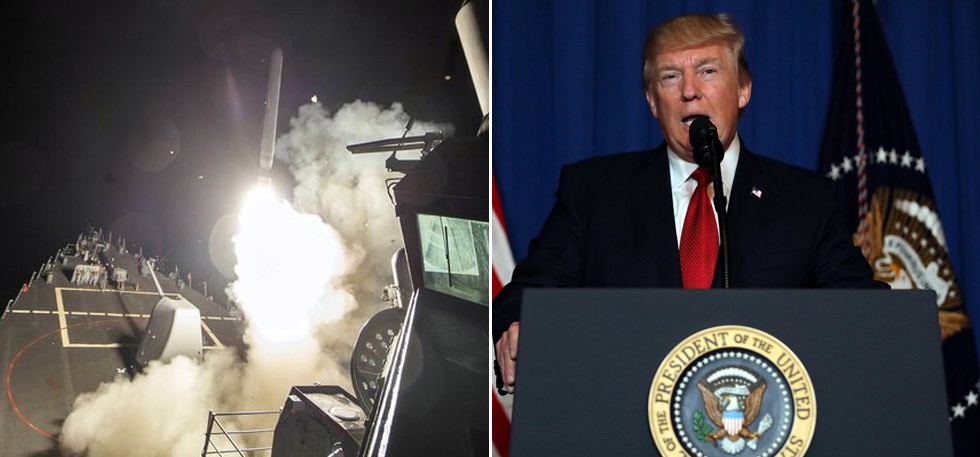
The last few weeks have seen a great deal of activity around the globe, on both the military and diplomatic fronts. As you know, Syrian dictator Bashar al-Assad launched a horrifying chemical weapons attack on Idilib Province that killed at least 86 of his own people, including many women and children. In response, President Donald Trump ordered a military strike of 59 Tomahawk missiles targeting the air base from which Assad’s attack originated. I support President Donald Trump’s decision to order a military strike, and I applaud him for taking decisive action. There are many questions going forward about how the United States and the world will deal with Syria. However, one thing is clear: this kind of brutality will no longer be tolerated. You may remember that I did not support President Barack Obama’s so-called plan for military involvement in Syria back in 2013. However, had President Obama taken similar action to strike military targets in response to a chemical weapons attack, I would have absolutely supported that decision. Unfortunately, that’s not what he did. Instead, after Assad crossed the supposed “red line,” President Obama hesitated over what to do. He came to Congress with a proposed Authorization for the Use of Military Force that was vague, incomplete, and self-defeating. I believe that plan would not have led to success in Syria, which is why I didn’t support it. The Obama Administration then brokered a deal through the Russians whereby Assad would give up his chemical weapons, which obviously did not work. All that said, while President Trump was well within his authority to order this strike, it will soon be time for him to come to Congress to discuss our future in Syria, particularly as it concerns escalation. I have the same expectation for him that I had for President Obama in 2013: We need a plan that is decisive, that doesn’t tie the hands of our military, and that has an end game. The situation in Syria has brought to the forefront some long-existing geo-political tensions with Russia. For some time I have believed that the United States must take a stronger stance toward Russia in response to their increased aggression. That’s why I have been pleased to see both President Trump and Secretary of State Rex Tillerson demonstrate toughness toward their Russian counterparts in recent days. Amid these tensions with Russia, it is as important as ever to reinforce our strategic partnerships with NATO-allied nations. This week I will be joining Speaker Paul Ryan (R-Wis.) and Armed Services Chairman Mac Thornberry (R-Texas) on a bi-partisan Congressional Delegation to NATO-allied nations in the North Atlantic and Baltic Sea. We will travel to the United Kingdom, Norway, Poland, and Estonia for meetings with government and military officials in these key European nations. It’s no secret that the former Soviet state of Estonia has seen increased aggression from neighboring Russia in recent years, including debilitating cyber attacks. Strengthening our country’s strategic military alliances is a priority for me on Defense Appropriations, and I’m looking forward to a productive trip. Our Congressional Delegation to these key NATO-allied nations couldn’t be more timely, and I appreciate Speaker Ryan for inviting me to be a part of it. Whether it concerns threats from rogue states like North Korea and Iran, or ongoing hostilities in Afghanistan and Iraq, or geopolitical tensions with Russia, I believe the United States is best served by a policy of peace through strength. I have been encouraged by the Trump Administration’s response to these early challenges, and I look forward to reinforcing our country’s position of global leadership from my role in Congress. ••• Martha Roby represents Alabama’s Second Congressional District. She lives in Montgomery, Alabama with her husband Riley and their two children.
Darryl Paulson: A look at Obama’s legacy, foolish hope of ‘post-racial’ America
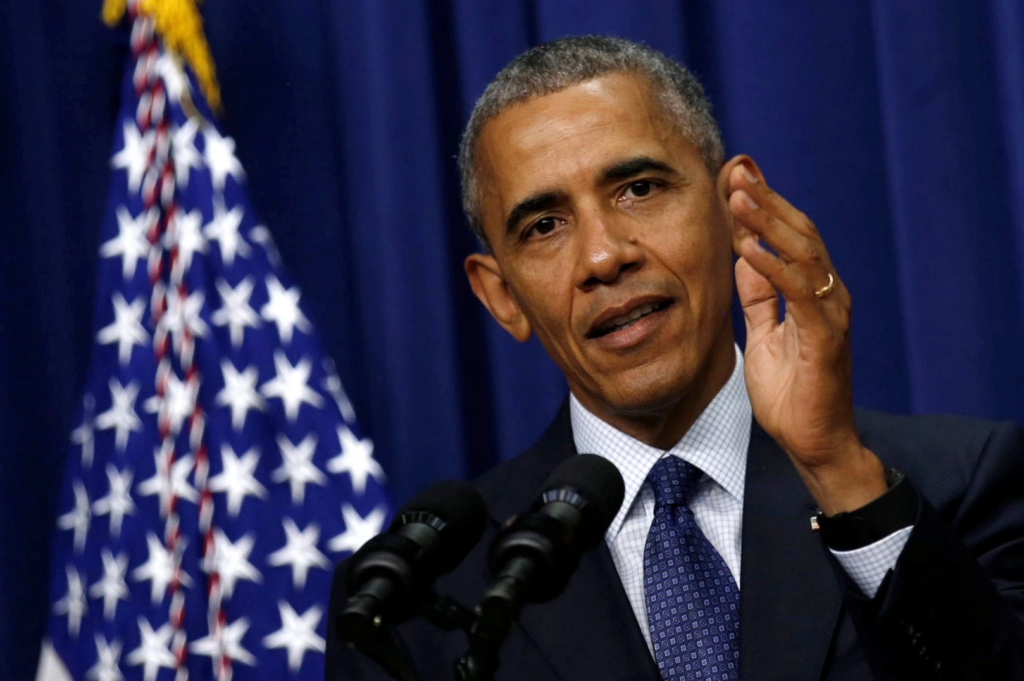
(Part 1 of two. Part two will deal with Obama’s political legacy) The 2008 presidential campaign of Barack Obama focused on the theme of change. Obama promised to “restore our moral standing” and “focus on nation-building here at home.” Obama, as a candidate, told audiences that “we are the ones we’ve been waiting for. We are the change we seek.” “Yes, we can” and “change you can believe in” became the campaign themes. Obama promised to “make government cool again.” This would be achieved by an activist, expanding federal government. Obama seemed to be contradicting the message of the last Democratic president, Bill Clinton, who argued that “the era of big government is over.” Although Obama viewed himself as a transformative president, much of his first year in office was spent stabilizing America’s collapsing economy and avoiding another Great Depression. America was losing 700,000 to 800,000 a month with no let up in sight. Major banks and Wall Street brokers were declaring bankruptcy, and the American auto industry was on the verge of collapse. If nothing else, Obama deserves credit for stabilizing the economy. His action plan included an unpopular stimulus program, a bailout of the auto industry that some described as socialism, and shoring up the big banks that were responsible for much of the economic instability with their risky loans. As a result of President Obama’s efforts, an economic catastrophe was avoided. We have had eight consecutive years of economic growth, although critics pointed out the less than 3 percent growth rate was low. The economic programs, in part, lead to an 88 percent increase in the national debt and the loss of the United States AAA bond rating. “Obamacare,” or the Affordable Care Act (ACA), was the primary domestic accomplishment of the Obama presidency. Young individuals could remain on their parent’s insurance until age 26, preexisting conditions would not disqualify you from coverage and 20 million more Americans received health care coverage. The ACA was not without its critics. The plan did not control health care costs as promised, and Obama’s promise to Americans that “if you like your doctors, you can keep them” and “if you like your health care plan, you can keep it” proved not to be true. In fact, Politics-Fact labeled those promises the “lie of the year.” The ACA was narrowly passed without a single Republican vote. That does not bode well for its long-term success. Major public policy change in the United States, to succeed, needs to be comfortably passed with bipartisan support. Civil rights legislation and Medicare are just two examples of that. Democrats contend that Republicans were not going to vote for the ACA and give Obama a major political victory. Republicans argued that the president made no attempt to reach out to them and find common ground. The president has many tools available to curry support, most importantly, the power of persuasion. For whatever reason, the goal seemed to pass the ACA with or without Republican votes. The election of Donald Trump now jeopardizes the ACA. Republicans must realize that if they attempt to “repeal and replace” Obamacare without Democratic support, their plan will fail just as Obama’s plan is likely to fail. Obama, the nation’s first African-American president, was supposed to lead to a “post-racial America.” That was a foolish and unrealistic expectation. During the 2008 campaign, Obama gave a speech on race in Philadelphia in an attempt to counter the negative public reaction to statements from Jeremiah Wright, the president’s longtime friend and minister. Wright attacked racism in America in many of his talks. The most explosive comment found Wright stating: “Not God bless America. God damn America!” In his address on race, Obama said Wright was correct in talking about racism but wrong in speaking “as if no progress had been made.” Almost as soon as he assumed the presidency, Obama dealt with one racial issue after another. In 2009, Obama said a police officer “acted stupidly” when he arrested Henry Louis Gates, a prominent black Harvard professor when Gates entered his home through a window after forgetting his house key. Obama quickly held a “beer summit,” inviting both Gates and the police officer to talk through their dispute. In 2012, the nation was divided when a white neighborhood watch volunteer shot and killed a young black male named Trayvon Martin. Obama told reporters that “if I had a son, he would look like Trayvon Martin.” The white shooter was found not guilty. A police shooting of another black teen in Ferguson, Missouri in 2014 led to criticism of Obama by both whites and blacks. Whites attacked the president for criticizing the police in “using excessive force” against protestors who were “lawfully exercising their First Amendment rights.” Blacks criticized the president for stating that there is “no excuse for violence against the police” or “those who would use this tragedy to cover for vandalism or looting.” In 2015, the nation was shocked by the brutal murder of nine black parishioners in Charleston, South Carolina by Dylann Roof, a young white male who had been invited to join the Bible study. The nation saw the moving acts of forgiveness as one relative after another of the victims said they forgave him. This act of grace led President Obama to conclude his remarks at the church by singing Amazing Grace. Obama was widely criticized for his foreign policy actions or inactions. Critics blamed the early exit if American forces from Iraq as creating a vacuum which allowed ISIS to emerge. His nuclear pact with Iran was criticized by Republicans, the military, Israel and others who saw the act as creating a nuclear-armed Iran in the Middle East. The president’s failure to enforce his “red line” in Syria if chemical weapons were used by Bashar al-Assad, created an inroad for both ISIS and the Soviets to expand their role. Like all presidents, Obama has a mixed bag of successes and failures as president. In his own analysis
Bradley Byrne: National security should always be our top priority
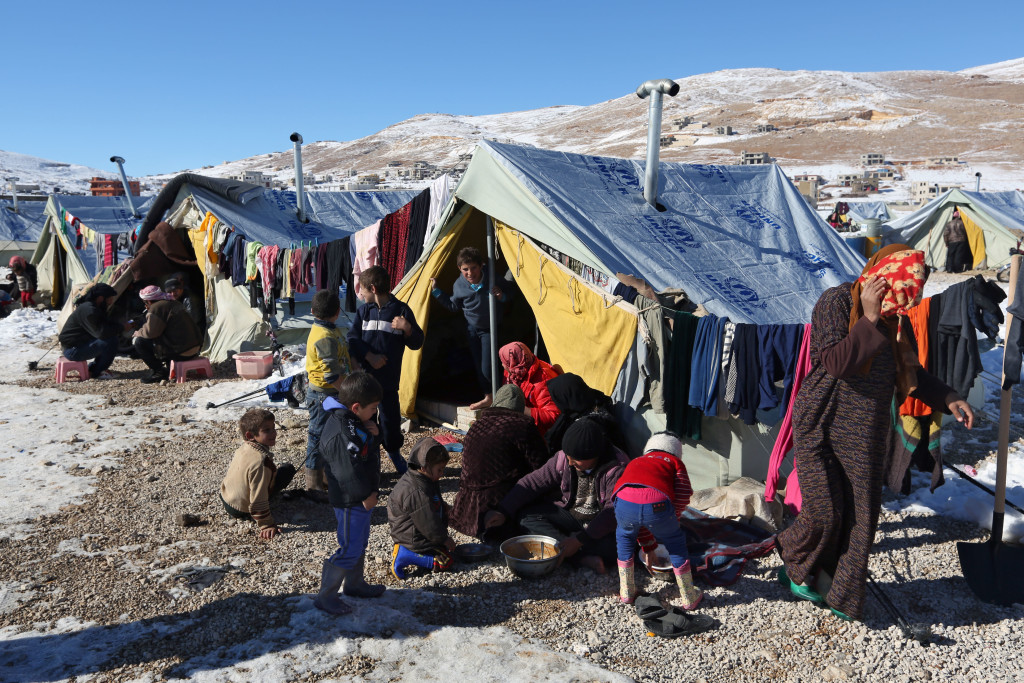
When considering whether to vote in favor of legislation, I often ask myself a simple question: Is this in the best interest of the American people? I believe that should be a guiding principle for all our elected officials when they are faced with a major decision. Recently, President Barack Obama and Secretary of State John Kerry announced a plan to increase the number of refugees allowed into the United States. Under their plan, the Obama Administration plans to accept at least 10,000 refugees from Syria. As soon as I heard this news, I had major concerns about the impact this decision would have on the American people and the national security of our country. Let me explain why. Currently, Syria is home to a major conflict between the regime of President Bashar al-Assad, fighters with the Islamic State, and many different factions of rebels who wish to overrun the government. This brutal fighting has resulted in a mass exodus of Syrian people looking to escape their war torn country. That’s where President Obama’s decision comes into play. As defined by the Immigration and Nationality Act, a refugee is someone who is unable or unwilling to return to his or her home country because of a “well-founded fear of persecution.” The federal government has a process for screening and accepting these individuals before allowing their admission into the US, and the Syrian people can certainly make a strong case to be admitted. However, I have serious concerns about the threat of terrorists infiltrating the refugee system and entering the United States. Groups like the Islamic State have made clear that they would attempt to disguise terrorist operatives as refugees. I am not the only one who has these concerns. In fact, Director of National Intelligence James Clapper recently called the migrant issue a “huge concern” and said that “we don’t put it past the likes of [the Islamic State] to infiltrate operatives among these refugees.” At a recent House Homeland Security Committee hearing, officials from the Federal Bureau of Investigation (FBI) and Department of Homeland Security (DHS) implied that bringing in a large number of Syrian refugees would represent a threat to our national security. DHS officials have even admitted that Syria does not have a computer database to check the criminal and terrorist records of these refugees. The issue is especially of interest to those of us in Southwest Alabama because Mobile is home to one of the 190 State Department refugee affiliates. This means Syrian refugees could be placed in our local community. That is why I sent a letter to the Department of State asking for information about the screening process the refugees would be required to go through. In response to my letter, I was invited to attend a classified briefing to learn more about the screening process. Unfortunately, I left the briefing with many of the same concerns. So after listening to the concerns of my constituents and getting more information from the State Department, I decided to support H.R. 3573, the Refugee Resettlement Oversight and Security Act. This bill would require approval from both the House and the Senate before refugees could be admitted to the United States. The bill would also give Congress the authority to block any inadequate refugee resettlement plan. There is simply no way to know for sure that terrorist groups, like the Islamic State, are not going to infiltrate the refugee process, and the Refugee Resettlement Oversight and Security Act will ensure that Congress, and in turn the American people, have the final say when it comes to increasing the number of refugees. On this issue, like many others, I can’t help but ask myself: Is this in the best interest of the American people? At this point, it seems clear the answer is no. Bradley Byrne is a member of the U.S. Congress representing Alabama’s 1st Congressional District.
