
Blake Dowling: With ads, 2017 is an all-new animal
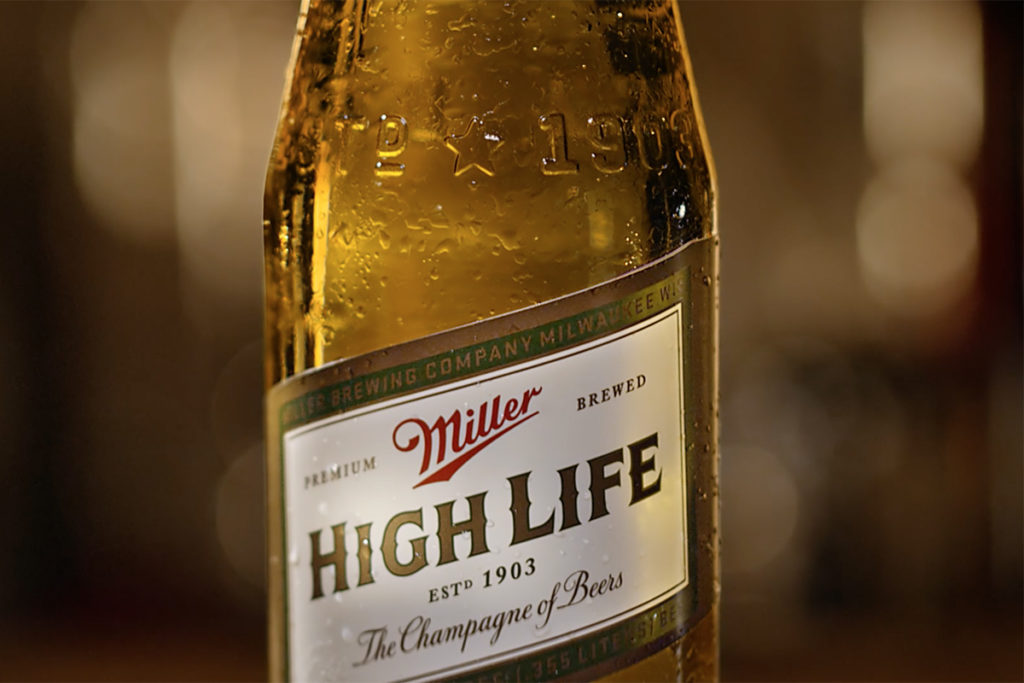
Who remembers when beer commercials were awesome? What happened to Spuds McKenzie? This awesome Lone Star Beer ad really shines: Or the team of studs at Elsinore Brewery: And — last but not least – this Schlitz Malt Liquor ads that ruled the early 80s (which might have been the pinnacle). No one does it like the bull: For so long, TV was everything from a media buyer’s stand point — but then it all changed. When pushing a product, or running a campaign, traditional media outlets stay, but the landscape has changed and opportunities are vast. Facebook ads, Twitter gurus pushing your product, and utilizing analytics from social engineering. My friend Michael Sharp, managing director for Nielsen Local Agencies, says this about media buying: “In today’s fragmented media environment, media buyers need access to dependable, actionable and accurate data that facilitates the advertising planning and buying process. Nielsen’s wide range of solutions enables agencies to effectively deliver on an advertiser’s campaign objectives while helping them uncover new audiences and consumer segments.” A law firm in North Florida – which definitely does not consult about marketing with anyone from this century – says they still advertise on the back of the phone book. When is the last time anyone has seen a phone book? The other day, I heard a kid ask: “What’s a phone book?” Disruption strikes again. We cannot even keep up with the terminology. You might say “I read something in the newspaper,” but did you really read a “newspaper?” Or are you just referring to a news website of a former newspaper? Sounds like we need some charts … Thirty years ago, if Ford and wanted to sell cars, they placed an ad in the auto section of a local paper. Guaranteed return on investment. Now, there is geo-fencing, tweeting, hiring Matthew McConaughey to drive cars around. What happened to radio? When I started my career, every morning began with a Mountain Dew, listening to the Regular Guys on 96 Rock while rolling into the downtown ATL (83 Walton Street, Capricorn Records Building). I have not listened to the radio in 11 years. Obviously, I am stating some pretty obvious trends here, but when thinking about marketing, you need to start thinking differently. The winner of the past two U.S. presidential elections utilized grassroots social media tools — coupled with finely tuned paid analytics — to sway the vote. So, TV and radio are certainly not dead, and (according to some experts) local radio still can reach 90 percent of the U.S. population on a weekly basis (I’m a 10-percenter, I guess). Nevertheless, these experts all agree … it’s a new animal in 2017. Then, of course, there is the fun of everyone gathering personal info on the web, even as they assure us they will not use it. But, I assure you, they do. Auto-buying pattern tools are watching and changing your online experience, suggesting and swaying your activities. Let’s hear from this Princeton dude: “The modern web is a mashup, which means the content that you’re looking at on the page, which just looks like one single webpage with text and graphics, is in fact assembled from multiple different sources, sometimes dozens, and these different sources can be a variety of different companies,” explains Arvind Narayanan, assistant professor of Computer Science at Princeton, “When you look at a webpage, there’s content visible to you and invisible stuff purely for the purpose of tracking what you’re doing.” In the end, it’s all pointing to privatized content platforms (such as Netflix), social media, targeted analytics, high-profile influencers, and websites. You have to find your buyers and voters. Available tools are endless, and (for the love of Spuds McKenzie) stop sending direct mail pieces –this means you, politicians. They go straight to the trash and don’t even make it through the door. My advice? Put aside $5M for a Super Bowl ad (as Mike from Nielsen told me offline — TV ads are still very effective) and your message will still get through. If that’s not in the budget, start with about $200 a month in paid Facebook ads and see what happens. Good luck out there; let’s close with a classic beer slogan: “If you’ve got the time, we’ve got the beer.” Miller Beer. Perfect. ___ Blake Dowling is CEO of Aegis Business Technologies and his favorite TV show is The Fall Guy.
Americans hop to aluminum as cans gain beer market share
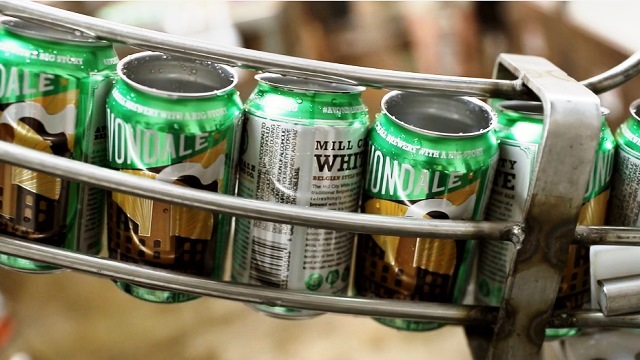
America’s beer drinkers prefer pulling tabs rather than twisting caps. Beer in cans represented 56.2 percent of the market in 2016, marking the fifth straight annual increase in share and up from 50.3 percent eight years earlier, according to the Beer Institute’s national packaging report. The share of bottled beer declined to 33.4 percent last year, down from 40.2 percent in 2008, while beer from a tap has increased only marginally. Republished with permission of Alabama NewsCenter.
Sierra Nevada brewery recalls beer in Alabama, 35 other states
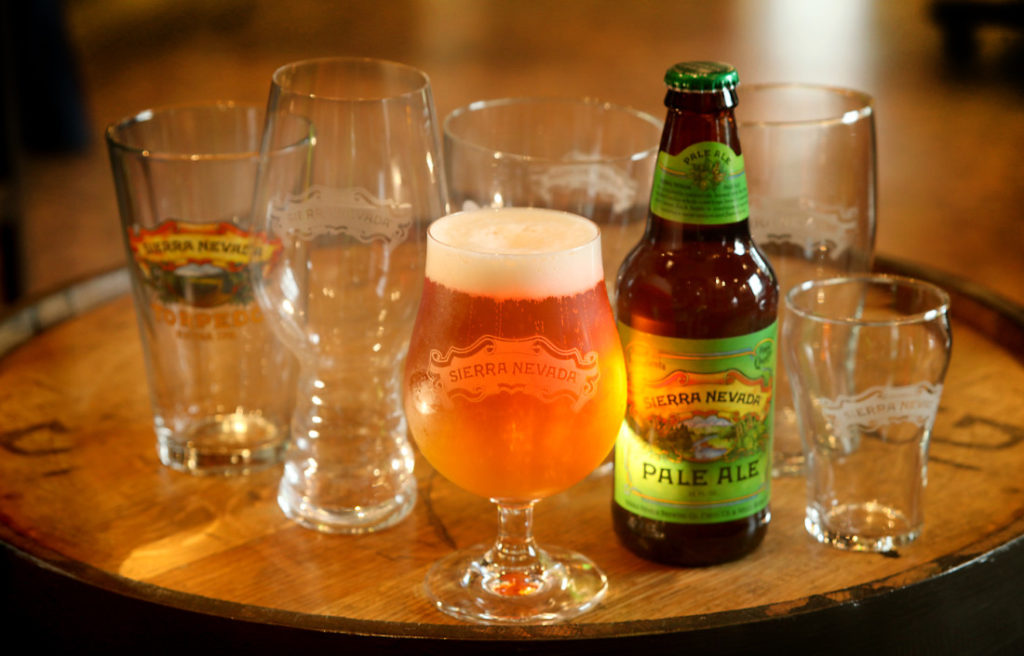
Sierra Nevada Brewing Co. has announced a recall of specific 12-ounce bottles of its pale ales, IPA’s and other beers after detecting a packaging flaw, which could cause a piece of glass to break off into the bottle. The company said an inspection of its brewery in Mills River, NC, “detected a very limited number of bottles with a flaw that may cause a small piece of glass to break off and possibly fall into the bottle, creating a risk for injury.” The brewer specifically named eight brands at risk for chipped glass: the flagship brand Pale Ale, Beer Camp Golden IPA, Sidecar Orange Pale Ale, Torpedo Extra IPA, Tropical Torpedo, Nooner, Hop Hunter and Otra Vez. The recall applies to beer sold in Alabama, as far south as Florida and all the way up to Maine, across the Midwest, reaching as far west as Texas and South Dakota. Click here for a full list of locations. “We have decided to take this precaution to ensure the safety of our customers,” said Mike Bennett, chief supply chain officer. “While we believe this concern impacts roughly 1 in every 10,000 (0.01%) of our bottles packaged during this time, Sierra Nevada has set the standard for quality in the craft brewing industry since 1980 and we have decided to take this precaution to ensure the safety of our consumers.” The recalled beers were packaged between Dec. 5, 2016, and Jan. 13, 2017, and the company said anyone who has purchased it is eligible for a refund. The company is removing the beer from stores.
Bye bye Big Brother: Alabama adjusts rule requiring beer buyers personal info
The Alabama Alcohol Beverage Control Board (ABC Board) adjusted a proposed Orwellian rule at its meeting Wednesday. The rule, which felt eerily like ‘big brother Alabama is watching’ would have required customers to leave personal information, including their birthdate and phone number, if they purchased beer for off-premise consumption from local breweries. Instead, the ABC Board decided to remove the portion of the rule that requires date of birth and phone number, leaving breweries to only record the names and addresses of buyers instead, in accordance with state law. According to AL.com, Board Chairman Robert W. “Bubba” Lee said that requirement is in the law for tax audit purposes. Wednesday’s decision left in place the to-consumer sales limits — to 288 ounces (the equivalent of a standard case of 24 bottles of 12 ounce beers) per person, per day.
Will Alabama alcohol regulators be the next ‘Big Brother’?
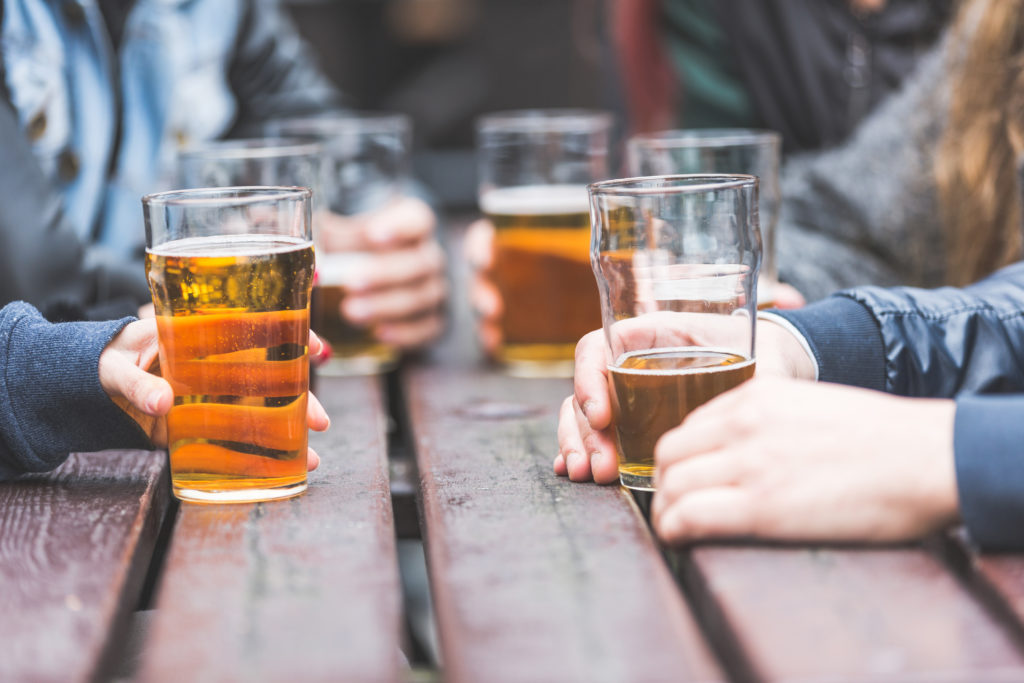
The Alabama Alcoholic Beverage Control Board (ABC Board) is poised to adopt a new rule that feels eerily like Big Brother — wanting to know exactly who is buying beer and taking it home to drink. More specifically, the ABC board is requiring breweries and brewpubs across the Yellowhammer State to collect the name, address, age, phone number, and date of birth from anyone who purchases beer at a brewery for off-premise consumption. The ABC board discussed the proposed Orwellian rule at a work session earlier this month and could vote on it at its meeting Sept. 28. The proposed rule follows a law that took effect this summer allowing the state’s craft breweries to sell six packs, growlers, and large bottles of beer directly to consumers. Prior to the bill’s passage, Alabama was the only state that banned such sales. Already, the law limits the to-consumer sales to 288 ounces (the equivalent of a standard case of 24 bottles of 12 ounce beers) per person per day. Which is where collecting consumer information comes in. In order to enforce the single-case restrictions, breweries and brew pubs would be required record the names, addresses, phone numbers and birth dates of customers, which they would have to report back to the ABC board each month. Industry groups are strongly opposed to the proposed regulation, which they say is an invasion of privacy, as well as a logistical nightmare to collect the information. Members of Free the Hops — a grassroots organization created in support of specialty, craft beer in Alabama — have spoken out, saying the new rule could infringe on consumer privacy. “As nonsensical as it might seem, this rule would essentially empower the ABC Board to come to an individual’s house to confirm his or her purchase of a six pack of beer,” Nick Hudson, president of Free the Hops said in a statement back in August. The Alabama Brewers Guild, composed of the state’s roughly two dozen breweries and brewpubs, said collecting the information would be an administrative nightmare and could pose concerns not just over privacy, but also about potential data breaches and governmental use of the information. “I’m honestly not sure they thought it out very well,” said Guild Executive Director Dan Roberts. While Alabama and other states require identification to prove the age of someone purchasing alcohol, Roberts said he knows of no other state that collects information about consumers.
