
Ben Carson campaign reaping cash as he rises in GOP polls
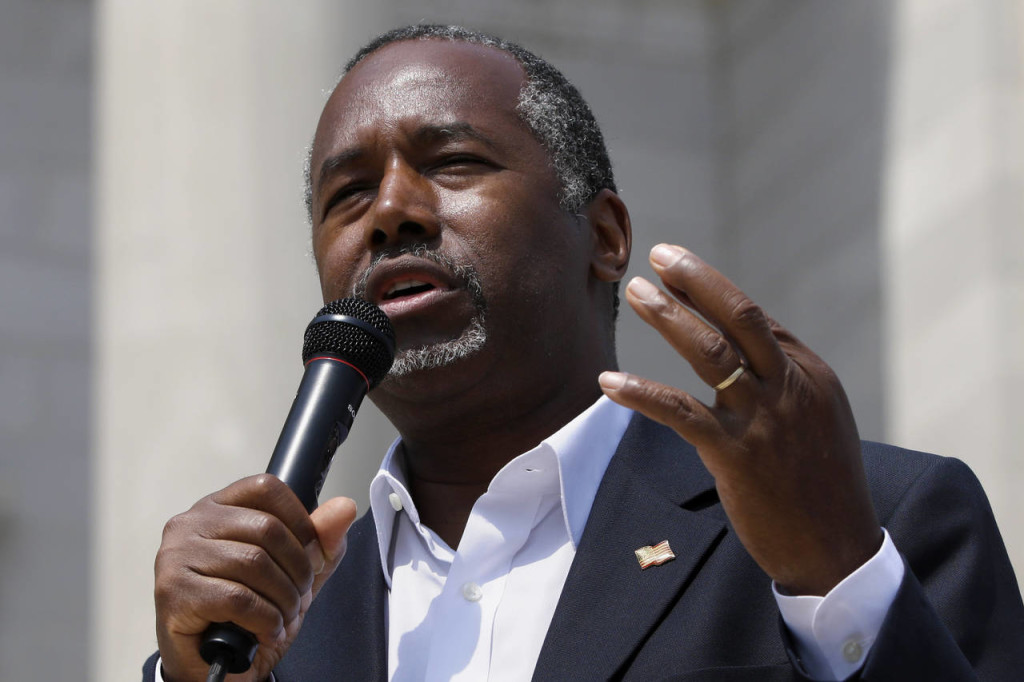
Vacation-filled August is typically one of the worst months for any politician to raise money. But it was Ben Carson‘s best yet. The political novice, a retired neurosurgeon seeking the 2016 Republican presidential nomination, raised $6 million, doubling his July total, his campaign told The Associated Press on Tuesday. Carson’s supporters have handed over roughly $20 million since he began raising money in March, making him a fundraising standout in a sprawling field of 17 Republican contenders. He enters the fall well-funded and rising in the polls, having carved out a niche as the mild-mannered version of bombastic Republican front-runner Donald Trump. Both appeal to voters – and small donors – who reject politics as usual. The doctor’s campaign is unusually reliant on small donors when others have turned to super PACs for million-dollar checks. Trump, a multibillionaire, is largely paying his own way. Of Republican and Democratic presidential candidates, only Vermont Sen. Bernie Sanders has a higher percentage of small contributions, defined as $200 or less per election cycle, than Carson. The dollars have arrived through innovative marketing campaigns and brisk sales of swag. “Carson for president” ball caps have netted $700,000 and individually numbered lithographs of the doctor an additional $500,000. A 90-page abridged version of Carson’s best-selling book “Gifted Hands” has sold 47,000 copies at $20 apiece. Even Carson’s campaign bus – dubbed the “Healer Hauler” by his fans and given its own Twitter handle (@healerhauler) – became a fundraising opportunity. The vehicle will soon be adorned with the names of some 4,000 children whose parents each paid $50 for the privilege. Carson turns his attention to traditional political fundraising this month, as he attends 25 events across the country where price of entry starts at $1,000. And a trio of pro-Carson super PACs and a nonprofit policy group in recent days got a boost when it became legal for his former campaign manager, Terry Giles, to coordinate their efforts. By law, Giles had to “cool off” for 120 days before joining the outside groups, which unlike the campaign, can accept donations of unlimited size. Carson posted strong initial fundraising numbers when his campaign filed its first two reports this year. Through the end of June, no Republican campaign had raised more except former Florida Gov. Jeb Bush and Texas Sen. Ted Cruz. (Govs. Scott Walker, John Kasich and Chris Christie hadn’t been in the race long enough to file reports at the time.) Carson’s money is paying for about 50 campaign employees and an intense travel schedule for the candidate. Campaigns aren’t due to file their next fundraising reports, covering July through September, to federal regulators until mid-October. Most have been reluctant to share summer fundraising totals. Republished with permission of the Associated Press.
Presidential TV ad roundup: August 14 edition

Here’s a roundup of all the Presidential TV ads from this past week: Jeb Bush: Title: Leading Again Published: August 13, 2015 Tone: Resolved and resolute Ben Carson Title: Why Published: August 6, 2015 Tone: Light Title: Carson for America Published: August 10, 2015 Tone: Supportive Ted Cruz Title: Values Published: August 11, 2015 Tone: Informative Rand Paul Title: Telling it like it is Published: August 12, 2015 Tone: Combative and determined Hillary Clinton Title: College Affordability Published: August 10, 2015 Tone: Encouraging and optimistic
Presidential TV ad roundup: Debate day edition – August 6
Earlier this week, Fox News set the line-up for the first Republican presidential debate of the election season. In just a few hours, real estate mogul Donald Trump; former Florida Gov. Jeb Bush; Wisconsin Gov. Scott Walker; former Arkansas Gov. Mike Huckabee; retired neurosurgeon Ben Carson; Texas Sen. Ted Cruz; Florida Sen. Marco Rubio; Kentucky Sen. Rand Paul; New Jersey Gov. Chris Christie; and Ohio Gov. John Kasich will square-off center stage in Cleveland, OH as they make their cases for the Republican nomination. Leading up to the debate, several candidates on both side of the aisle have taken to the airwaves with their messages in hopes of reaching voters before tonight’s primetime showdown. Here’s what the candidates are saying this week: Jeb Bush Title: The power of Christianity Published: August 4, 2015 Tone: Uplifting and committed Chris Christie Title: Secretary Clinton, Answer The Question Published: August 4, 2015 Tone: Feisty Bobby Jindal Title: Evolved again Published: August 5, 2015 Tone: N/A Rand Paul Title: #StandWithRand: The First Debate Published: August 5, 2015 Tone: Determined Hillary Clinton Title: Hillary Clinton: Support and Stand with Planned Parenthood Published: August 3, 2015 Tone: Heavy and frustrated Be sure to check back, as we will continue to add videos as they come in leading up to the debate.
GOP debate lineup: Trump and Bush in, Fiorina and Perry out
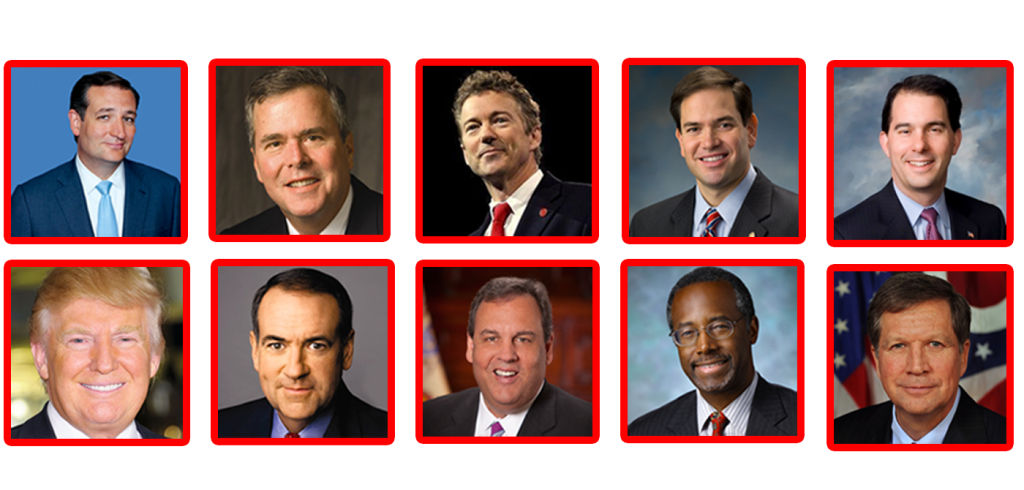
Ten candidates have made the cut for the first Republican presidential debate Thursday, with polling front-runner Donald Trump hoping for a civil evening but ready to pounce if attacked. The seven others lagging in the polls and relegated to an afternoon forum? Call them the not-ready-for-prime-time players, at least in the eyes of debate organizers. Sharing the Cleveland stage with the billionaire businessman will be former Florida Gov. Jeb Bush, Wisconsin Gov. Scott Walker, Texas Sen. Ted Cruz, Kentucky Sen. Rand Paul, Florida Sen. Marco Rubio, retired neurosurgeon Ben Carson, former Arkansas Gov. Mike Huckabee, New Jersey Gov. Chris Christie and Ohio Gov. John Kasich. Candidates with time to watch that debate are former tech executive Carly Fiorina, former Texas Gov. Rick Perry, Louisiana Gov. Bobby Jindal, South Carolina Sen. Lindsey Graham, former Pennsylvania Sen. Rick Santorum, former New York Gov. George Pataki and former Virginia Gov. Jim Gilmore. The largest field of contenders in modern memory challenged debate organizers. Fox News relied on an average of five national polls to decide the lineups for the prime-time debate and the forum four hours earlier. “We never ever envisioned we’d have 17 major candidates,” said Steve Duprey, New Hampshire’s representative to the Republican National Committee who helped craft the debate plan. “There’s no perfect solution.” Republican officials were particularly concerned about Fiorina’s status, hoping she would help balance Democratic front-runner Hillary Rodham Clinton‘s push to rally women. Trump’s recent surge in the polls, a surprise to many Republican officials, damaged Fiorina’s chances. Some Republicans fear that Trump’s rhetoric on immigration and other issues could hurt the party. “I probably am the target,” he said Wednesday on ABC’s “Good Morning America.” He said he did not want to attack any of his rivals and preferred to “just discuss the issues” in the course of a “very civil” debate. Still, he made clear that if attacked, he would have “to do something back.” Trump was far and away the front-runner in the five most recent national polls that determined the debate lineup. Several candidates were grouped together in the single digits, most separated by a number smaller than the margin of error. For example, in a Monmouth University survey released Monday, Kasich was the 10th candidate with the support of 3.2 percent of voters. But after taking the margin of error into account, Monmouth noted that Kasich’s support could be as low as 1.5 percent, while almost any of the candidates who polled lower could be that high or higher. Five more party-sanctioned debates are scheduled before primary voting begins in February. “This first debate is just one opportunity of many,” Amy Frederick, an aide to Fiorina, wrote supporters. “With many more debates to come, we fully expect that Carly will soon stand on the stage and show America what real leadership looks like.” Jindal spokeswoman Shannon Dirmann issued a challenge of sorts: “The governor will debate anyone anywhere at any time.” Candidates already began to turn their attention toward Trump. Asked about Trump while courting religious conservatives on Tuesday, Bush said the businessman’s rhetoric on immigrants is “wrong.” `’We have a different tone and a different view,” he said. “I respect the fact that he’s the front-runner for the Republican nomination,” Bush continued. “This is a serious thing. But I think to win and govern the right way – we have to unite rather than divide.” Republished with permission of The Associated Press.
Jeb Bush calls courtship of minority voters integral to campaign

Following his own advice, Jeb Bush is taking his presidential campaign to the neighborhoods and churches where Hispanics and African-Americans live and worship in an effort to broaden his appeal among minority voters. The former Florida governor was in Florida this week, speaking to a diverse group of 150 pastors and other religious leaders, repeating his oft-stated pledge to campaign in “every nook and cranny” of the country. On Friday, he’ll be one of only two Republican presidential candidates to address the National Urban League’s annual conference, joining Hillary Rodham Clinton and two other Democrats seeking the White House. “Republicans need to campaign everywhere. Not just amongst Latinos, but amongst blacks. It’s okay to get outside your comfort zone. It’s okay that not everybody agrees with my views,” Bush said Monday at his event outside Orlando. “It’s not OK to not try. That’s the difference.” It’s a lesson from Bush’s time running for office in Florida that he’s now applying to his race for president. In his first run for governor in 1994, Bush campaigned as a self-described “head-banging conservative” who said he’d do “probably nothing” for African-Americans, explaining he instead wanted “equality of opportunity” for all people. Bush lost that race, and then took a different tack four years later. After traveling the state to meet with minority groups that typically align with Democrats, he ran a winning campaign focused on schools and spoke often in black churches. William Andrews, executive director of Mercy Drive Ministries in Orlando, credits a statewide program Bush started once in office for helping him conquer his heroin and cocaine addiction. “Mr. Bush sold me on becoming a Republican,” said Andrews, who is black. Should Bush capture the GOP’s presidential nomination, repeating the campaign strategy he credits for his wins in Florida could be essential to his general election success in 2016. According to exit polls conducted for AP and television networks in 2012, 93 percent of blacks and 71 percent of Hispanics nationally voted to re-elect President Barack Obama. In 2008, Obama won the vote of 95 percent of blacks and 67 percent of Hispanics, who are likely to be especially crucial in the 2016 presidential race because of their growing numbers in swing states such as Colorado, Nevada and Florida. Democrats are eager to hold onto their decisive advantage among such voters, and argue blacks and Hispanics will ultimately reject Bush because of his support for policies that include repealing Obama’s health care overhaul, opposing a federal minimum wage and his record of tax cuts in Florida. “Bush’s failed policies of the past are no different than every other Republican in the field: He wants to divide families, hurt our economy, and let those like Jeb Bush, and only Jeb Bush, get ahead,” said Pablo Manriquez, the Democratic National Committee‘s Hispanic media director. For his part, Bush said this week his campaign does not have a Hispanic outreach strategy, because “outreach is a term that makes it sound like it’s on the periphery.” “There is no outreach plan here, this is an integral part of my campaign,” said Bush, who is fluent in Spanish and whose wife, Columba, is a Mexican immigrant. “I have Hispanic children. I have Hispanic grandchildren. I’m part of the community.” Bush isn’t alone in making an overt appeal to minority voters. Kentucky Sen. Rand Paul has addressed historically black universities, held public events at pilot schools for predominantly minority students in inner-city Chicago and discussed revisions to federal sentencing laws, which disproportionately affect minority offenders. In late June, the same day NBC announced it was severing ties with billionaire real-estate mogul and GOP candidate Donald Trump, who described some Mexican immigrants in the country illegally as “rapists” and “criminals” during his campaign announcement, Bush met privately with a racially mixed group of pastors in grief-stricken Charleston, S.C. Last week, Bush attended another meeting of about 40 pastors in Spartanburg, also split evenly between black and white ministers. Among those in attendance was the Rev. Windell Rodgers, a black Democrat from Greenville, who is supporting Bush in the state’s early voting Southern primary. “He has a love for what I gather are all people, and is willing to go into their areas,” he said. That includes Friday’s meeting of the Urban League, one of the nation’s oldest civil rights organizations. Bush and Ben Carson, a retired neurosurgeon and African-American, are the only two Republican candidates speaking at the event, where White House hopefuls are being asked to “share their visions for saving our cities.” “We have to campaign all across this country with joy in our heart rather than anger,” Bush said Monday. “And go to places where Republicans haven’t been seen in a long, long while.” Republished with permission of The Associated Press.
Presidential primary brief: 470 days until Election Day
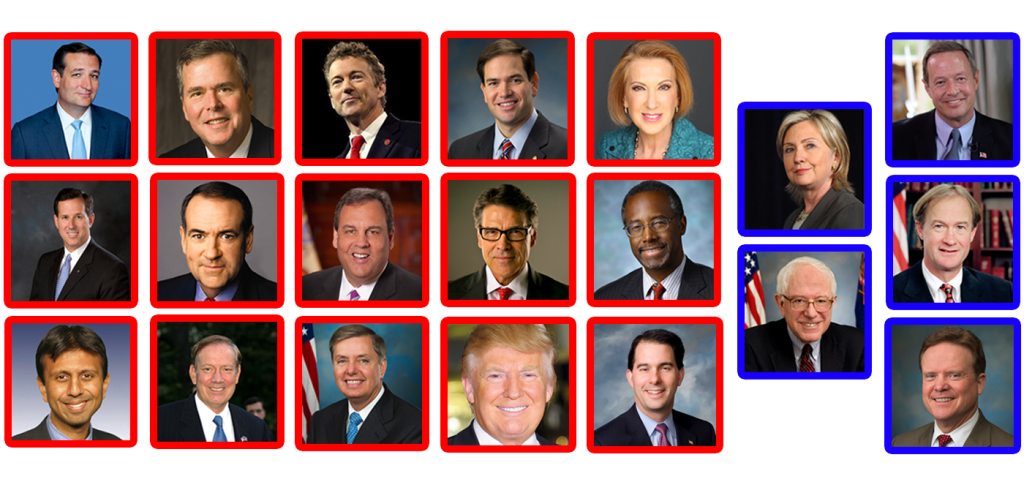
216 days until AL Presidential Primary 470 days until Election Day Convention Dates: Republican July 18-21 2016, Democratic July 25-28 2016 Weekly Headlines: John Kasich becomes 16th Republican to announce presidential bid Donald Trump surging in New Hampshire, Iowa AFL-CIO may delay endorsement of Clinton as 2016 presidential candidate Press Clips Clinton in trouble in Colorado, Iowa, and Virginia (Quinnipiac University Poll 7/22/15) Former Secretary of State Hillary Clinton is behind or on the wrong side of a too-‐close-‐to-‐ call result in match-ups with three leading Republican contenders, U.S. Sen. Marco Rubio of Florida, former Florida Gov. Jeb Bush and Wisconsin Gov. Scott Walker in Colorado, Iowa and Virginia, according to a Quinnipiac University Swing State Poll released today. Perhaps the biggest loser, however, is Donald Trump, who has negative favorability ratings of almost 2-‐1 in each state, the independent Quinnipiac University Poll Ninds. The Swing State Poll focuses on key states in the presidential election. In several matchups in Iowa and Colorado, another Democratic contender, U.S. Sen. Bernie Sanders of Vermont, runs as well as, or better than Clinton against Rubio, Bush and Walker. Vice President Joseph Biden does not do as well. C-‐SPAN scoops Fox News for First GOP candidates encounter (Latin Post 7/20/15) Three days before 10 Republican presidential hopefuls are scheduled to debate on Fox News, many of them will participate in a nationally televised forum hosted by C-‐SPAN. Steve Scully, C-‐SPAN’s politics executive producer, was not shy about touting his network’s scoop, AdWeek noted. “This event is significant” Scully said, “because it will afford the public its first opportunity to hear all of the Republican presidential candidates answer questions on one stage.” So far, the Washington-‐based network has received confirmations from New Jersey Gov. Chris Christie, former neurosurgeon Ben Carson, Ohio Gov. John Kasich, former Hewlett‐Packard Chief Executive Carly Fiorina, South Carolina Sen. Lindsey Graham and former New York Gov. George Pataki. 126 things to know about the 21 candidates running in 2016 (USA Today 7/20/15) With John Kasich’s campaign launch on Tuesday, that’s a whopping 21 candidates who have formally entered the 2016 race. (Still to come? An early August announcement by Republican Jim Gilmore, and a decision by Vice President Biden on the Democratic side.) The parade of contenders into the White House race began in March, when Texas Sen. Ted Cruz announced his bid. Since then, USA TODAY has been compiling facts and tidbits about the large presidential field to help you get to know the men and women seeking the nation’s highest office. Here are the 126 things you should know about 21 presidential candidates: #BlackLivesMatter is winning the 2016 Democratic primary (Time 7/23/15) When Black Lives Matter protestors stormed a room at a meeting in Phoenix and demanded that the 2016 presidential candidates say the names of black people killed by the police, the response was swift: Bernie Sanders did it the next day. “I wish that in the year 2015, I could tell you we have eliminated racism in this country, but you all know that is not true,” said Sanders, to a crowd of more than 11,000 in Houston on Sunday, and then listed the names: “Sandra Bland, Eric Garner, Tamir Rice, Freddie Gray and many, many others.” Donald Trump’s cash will only take him so far in 2016 (Politico 7/23/15) Donald Trump made a bold pledge during his rambling presidential announcement inside the brass-‐laden, marble-‐filled lobby of Trump Tower. “I’m using my own money. I’m not using the lobbyists. I’m not using donors. I don’t care. I’m really rich,” he said. While it’s true that Trump is really rich, the real estate mogul’s Financial disclosure made public this week casts doubt on the idea that he has access to enough cash right now to spend the $1.5 billion or more it’s expected to cost to reach the White House in 2016. Brace yourself, the presidential election is going to be all about anger (NPR 7/26/15) Hillary Clinton laid out some lofty goals for her presidency in a speech on Friday. “My mission from my Nirst day as president to the last will be to raise the incomes of hardworking Americans so they can once again afford a middle-‐class life,” she said. “This is the defining economic challenge not only of this election but our time.” So, she has her work cut out for her. But interestingly, that line came not from a populist barn burner of a speech, but from a policy-‐focused address about ending “quarterly capitalism” — the tendency for businesses to focus on short-‐term shareholder gains over long-‐term investment.
GOP White House hopefuls scramble for anti-abortion vote
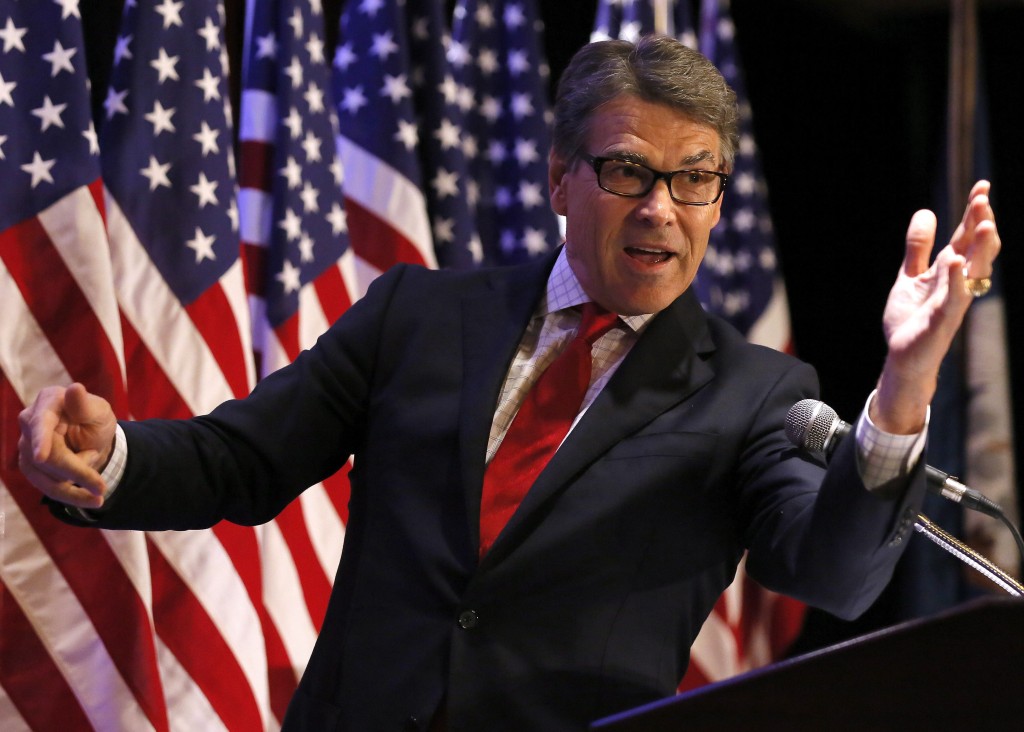
Trying to distinguish themselves in front of an important group of social conservative activists, Republican White House hopefuls on Friday used the National Right to Life Convention to share personal stories and detail the abortion restrictions they’ve helped write into law. The question now is whether the scramble helps or hinders an anti-abortion movement seeking unity as Republicans look to win back the presidency next November. National Right to Life Political Director Karen Cross urged the assembly to “make a decision right now that the issue of life trumps all else.” “There is no such thing as the perfect candidate,” she warned. Carol Tobias, the group’s president, argued in an interview that President Barack Obama benefited in both of his national victories from social conservatives who didn’t back John McCain in 2008 or Mitt Romney in 2012. “The quickest way to defeat a pro-lifer,” Tobias said, “is to fall in love with your candidate and then get your feelings hurt when they don’t win the nomination.” The candidates gave repeated nods to those sentiments, praising each other and hammering Democratic favorite Hillary Rodham Clinton, who supports abortion rights. Still, they spent most of their energy asserting their own conservative supremacy on the issue. Santorum boasted of how he sponsored the federal law that bans certain late-term abortion procedures after initially soft-pedaling his abortion stance because of Pennsylvania’s closely divided electorate. “You know me; there’s no quit in this dog,” he said. “Go ahead and nominate somebody who’s just going to go along. Then try to convince yourself you’ll make a difference.” Rick Perry predicted the next president will nominate as many as four Supreme Court justices — who could presumably overturn the 1973 Roe v. Wade ruling that legalized abortion nationally. “If I have the opportunity to put justices on the Supreme Court, they will not be squishy,” the former Texas governor said. Florida Sen. Marco Rubio explained his abortion opposition as “inseparable from the effort to reclaim the American dream … for every child,” and recalled abortion restrictions he helped pass as speaker of the Florida House of Representatives. Jeb Bush, whose tenure as Florida governor overlapped Rubio’s speakership, mentioned some of the same laws in a video presentation. He did not physically attend the convention. Ben Carson, a retired neurosurgeon, has never held elected office, but he blasted abortion providers as “evil.” Tobias said her group doesn’t wade into primaries in part because it’s hard to find meaningful distinctions between candidates, though she acknowledged the campaigns will find them. New Jersey Gov. Chris Christie supported abortion rights earlier in his career, something he generally avoids talking about now. Wisconsin Gov. Scott Walker celebrated passage of a new state ban on most abortions beyond the 20th week of pregnancy. Yet late in his 2014 re-election campaign, he aired an ad in which he affirmed his abortion opposition while emphasizing that Wisconsin law “leaves the final decision to a woman and her doctor.” South Carolina Sen. Lindsey Graham has sponsored a ban on abortions after 20 weeks. But some conservatives blast him for voting to confirm Obama’s two Supreme Court nominees. Tobias said those details sometimes matter to abortion opponents, but she maintained that nitpicking is counter-productive. For many anti-abortion voters, she said, choosing a primary candidate is about “trust” and “personal feel” rather than policy. The candidates’ approaches here suggest they understand that. Rubio and Perry talked about seeing their children on ultrasounds during pregnancy. Carson, a retired neurosurgeon, talked about how he gravitated to pediatric surgery because of how much he values children. Louisiana Gov. Bobby Jindal talked Thursday night about having to defend his anti-abortion stance in his interviews for medical school. Santorum tells the story of doctors advising that his daughter, Bella, who suffers from a rare genetic disorder, would not have a good quality of life and could die as an infant. “There is no better way to preach the gospel of life,” Santorum said Friday, than to have school-age Bella “in the White House.” Public opinion, meanwhile, remains divided. An Associated Press-GfK poll conducted in January and February found that 51 percent of Americans think abortion should be legal in all or most cases, while 45 percent think it should be illegal in most or all cases. At NARAL Pro-Choice America, a leading abortion rights advocacy group, Sasha Bruce said that means Republicans “are fighting over a slice of the minority,” putting them at a disadvantage in November. Tobias countered that among voters who rank abortion as a key issue in deciding on a candidate, “we win a majority of them.” Her movement’s job, she said, is to increase the share of voters who cast their vote “based on the life issue. If we do, we win.” Bruce said her organization is focused on educating general election voters about the success abortion opponents have had limiting abortion access through state-by-state restrictions. “They aren’t overturning Roe v. Wade, but they’re just chipping away,” she said. Republished with permission of The Associated Press.
Jeb Bush campaign, super PAC raise $114.4M for presidential bid
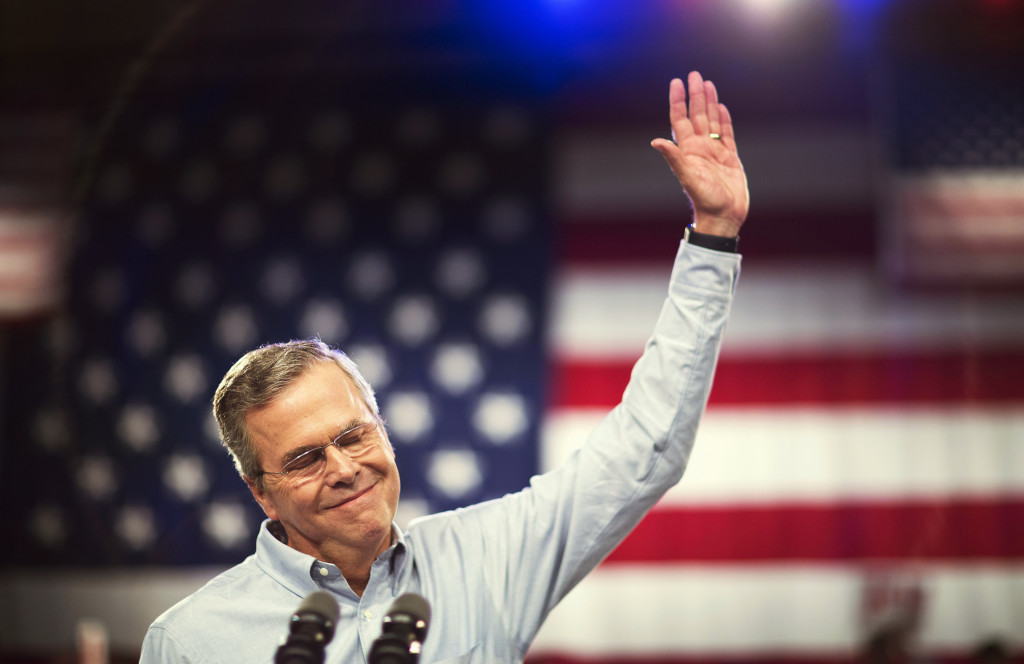
Republican presidential candidate Jeb Bush raised $114.4 million in the first six months of the year to fuel his White House ambitions, a historic amount that takes full advantage of the nation’s evolving campaign finance laws. No candidate for president has benefited from so much money so early in a campaign, and the total is sure to eclipse the fundraising of each of the other 16 major competitors for the Republican nomination. “People have been willing to take a look, and he’s overcome the people who have said, ‘Not another Bush,’” said Bill Kunkler, a Chicago construction company executive and Bush donor. “People are looking at him as a guy who did it on his own, and who stands on his own.” The former Republican governor of Florida is taking a unique approach to a presidential bid, delegating many operations to an affiliated group that is free of limits on how much money a traditional campaign can raise from individual donors. The affiliated group, a super PAC called Right to Rise, has been active since January. Run by a trusted Bush strategist, it said Thursday it had raised $103 million between January and the end of June. Right to Rise is not subject to the limits placed on donors to Bush’s campaign, and he spent the past six months traveling the country to attend fundraisers for the super PAC. The suggested donation at Right to Rise events was often as much as $100,000. The rest, $11.4 million, came to Bush’s formal campaign in the 16 days between its kickoff and the end of June. Contributions to the formal campaign are limited to checks of no more than $2,700 for the primary and general election. That amounts to an average of about $710,000 a day, which the campaign touted as more than the $562,000 per day average raised by Democratic front-runner Hillary Rodham Clinton since she launched her campaign April 12. Clinton’s campaign haul in that time totaled $45 million. Bush’s campaign must provide additional fundraising details, including the names of donors and how much they gave, to federal regulators by Wednesday night. “Jeb is encouraged and grateful for the tremendous early support and enthusiasm his candidacy has generated since he launched his campaign,” New York Jets owner Woody Johnson, the Bush campaign national finance chairman, said in a statement. “We are confident our campaign will have the resources needed to get Jeb’s conservative record, message and vision for the future out to voters across the country,” he said. Like Bush, several other GOP candidates have said ahead of that deadline how much their campaigns have raised. Among them, Texas Sen. Ted Cruz raised $14.2 million, retired neurosurgeon Ben Carson raised $10.5 million and former technology executive Carly Fiorina raised $1.4 million. The son and brother of two presidents, Bush came to the race with a deep roster of experienced fundraisers and likely donors. With their help, he traveled the country raising money for Right to Rise after saying in December he planned to explore a campaign. The super PAC is based in Los Angeles, where its leader, Mike Murphy, lives. It plans to handle a huge part of the costly work of running for president, including buying TV, online and radio commercials, conducting polling and even doing some organizing tasks such as voter outreach in early primary states. By law, it can’t take direction from the campaign, and the two operations have limits on how they can communicate. Right to Rise already is advertising on Bush’s behalf. It has spent $47,000 so far on digital media, according to documents filed this week with the Federal Election Commission. The group has also inquired with broadcast and cable stations in the early primary states about booking TV ad time. Bush’s official campaign bank account, although notably smaller than the super PAC’s, is important because it will pay for his travel and employee salaries and give him a pot of money from which to craft messages exactly as he sees fit. Republished with permission of The Associated Press.
Ted Cruz, Mike Huckabee go head-to-head for evangelical votes
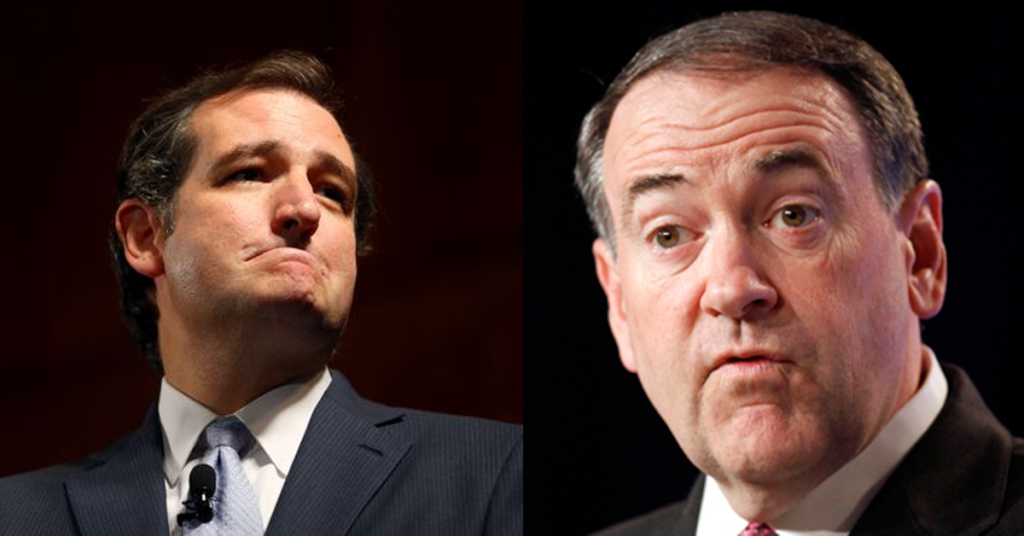
Republican presidential candidates Ted Cruz and Mike Huckabee went head-to-head for evangelical votes Sunday, telling a megachurch congregation in Georgia that God favors the United States but warning that the nation is on a perilous spiritual path because of actions like the Supreme Court decision legalizing same-sex marriage in all 50 states. Huckabee, who enjoyed evangelical support on his way to winning eight states in his 2008 White House bid, called the ruling “radical” and “illegal.” “I want to serve notice that the Supreme Court is just the supreme of the court system that is one of the three equal branches of government,” Huckabee told hundreds of members of Rock Springs Church in a rural area outside metro Atlanta. “It is not the supreme branch, and it most certainly is not the supreme being.” Cruz, the Texas senator, said a five-justice majority “ignored the text of the Constitution” and said the cascade of judicial and public support for same-sex marriage threatens religious liberty in America. He said he hopes the ruling “serves as a spark, to start a fire that becomes a raging inferno as the body of Christ stands up to defend the values that have built America.” Their appearance about 50 miles south of downtown Atlanta is part of the early, concerted scramble for the conservative evangelicals who remain an important bloc of the GOP presidential electorate. Christian conservatives have long held considerable influence in Iowa, which hosts the first caucus of the primary season, and in South Carolina, home of the South’s first primary a few weeks later. Now, Georgia and several other Southern states get more frequent visits from presidential hopefuls ahead of the planned “SEC primary,” named for the Southeastern Conference of college athletics. The March 1, 2016, vote falls after the traditional first four states and ahead of the usual “Super Tuesday” states. Huckabee, whose 2008 wins included Iowa and Georgia, has called the Southern-dominated primary date “manna from heaven.” But Cruz and others — Rick Santorum, Louisiana Gov. Bobby Jindal, retired neurosurgeon Ben Carson — are making hard runs for the same bloc of support. The Sunday event was a belated Independence Day observance that also featured The Charlie Daniels Band and Jep Robertson, one of the members of the cable television “Duck Dynasty” family. For Cruz and Huckabee, it might as well have been a county fair in Iowa, with an added opportunity to speak openly and passionately in their preferred evangelical tones. Cruz told the story of an Iowa couple he said were driven out of the wedding chapel business after denying their services to two men who wanted to get married. The case, Cruz said, “is emblematic of the persecution that religious liberty and believers across this country.” He continued: “I will always, always, always stand and defend the religious liberty of every American.” Huckabee said the Independence Day observances were an opportunity to reject “the revisionists” who say of the American founders: “They really were not believers.” The ordained Baptist minister argued: “There is simply no other explanation … God had to bless America or we would not exist. The question is will God continue to bless America without our repentance.” The Rev. Benny Tate, pastor of the 6,000-member Rock Springs congregation, joked about the attention. “Our zip code is E-I-E-I-O,” he said, “and we’ve got two presidential candidates. How about that?” But the minister is also a serious player in Republican politics, with many Georgia politicians, and now national ones, courting his public approval, if not his explicit endorsement. Tate told the assembly that Huckabee, as Arkansas governor, signed “a ban on partial-birth abortion,” referring to the termination of late-term pregnancies. He hailed Cruz for “standing against the Democratic Party … and even against the Republican Party.” Despite the emphasis on faith, Huckabee’s loudest applause came when he lauded his “fair tax” proposal that he said “would allow us to, once and for all, abolish the IRS.” Cruz, meanwhile, drew some of his most enthusiastic reactions when he declared, “I’m convinced 2016 will be a referendum on repealing Obamacare,” President Barack Obama‘s signature health care law. A few minutes earlier, the assembly passed offering plates for the church’s clinics, which Tate said provide “free health care” to residents in dozens of surrounding counties. Republished with permission of The Associated Press.
Ted Cruz’s 2016 campaign says its raised more than $14M
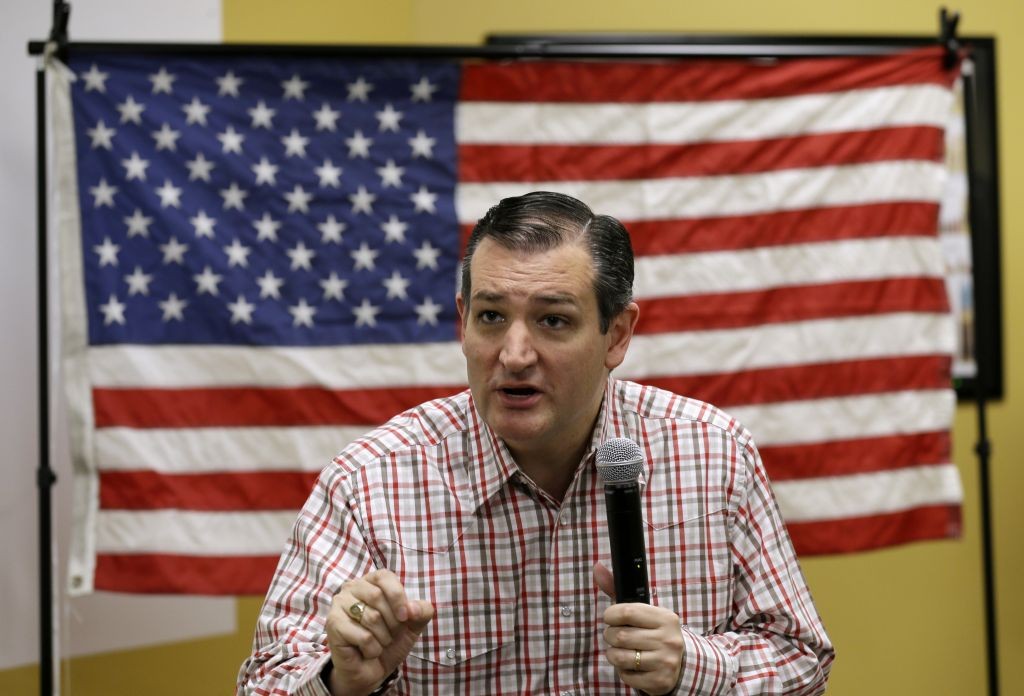
Ted Cruz‘s presidential campaign has raised more than $14 million since the Texas senator launched his bid for the Republican presidential nomination just over three months ago, his campaign said Sunday. The money comes from more than 120,000 donors who made an average contribution of $81. Presidential candidates are required to report detailed fundraising figures though the end of June to the Federal Election Commission by mid-July, but Cruz is among a handful of contenders who have announced overall totals ahead of the disclosure date. Republican Ben Carson, a retired neurosurgeon and political novice, will report having raised $8.3 million for his presidential candidacy, his campaign said on Wednesday. On the Democratic side, front runner Hillary Rodham Clinton will report having raised $45 million. Cruz was the first major Republican to wade into the GOP primary, which will soon have 16 formally declared candidates. After his March 23 announcement at Liberty University in Virginia, his campaign raised just over $4 million in the final week of that month. Since then, he’s collected another $10 million, his campaign said. Cruz also transferred $250,000 from his Senate campaign to his presidential campaign, according to documents filed with the FEC. “The grassroots energy and support we are seeing is overwhelming,” Cruz said in a statement. Cruz also will benefit from several super PACs that are supporting him and can raise money without contribution limits. Those groups have previously said they have raised $37 million. Presidential campaigns must report their fundraising details to federal regulators by July 15. Outside groups such as super PACs have a later deadline. Republished with permission of The Associated Press.
It’s official: Ben Carson loves Alabama
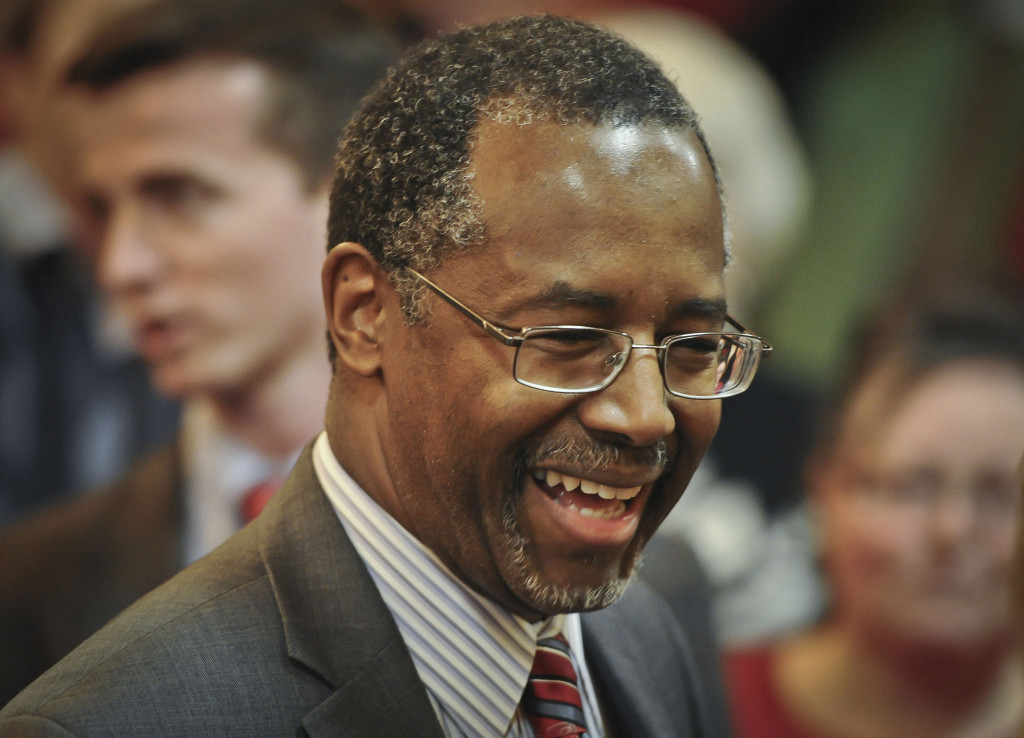
If this week’s schedule is any indication of presidential hopeful Ben Carson‘s feelings, there’s no denying: He loves Alabama. A frequent visitor to the Yellowhammer state, the 2016 GOP hopeful is poised to make yet another effort in the state this week when he dials-in as a special guest on conference call with the Alabama Republican Party on Thursday where he will address Alabama Republican State and County Party members, elected officials and grassroots activists. While many candidates put Alabama on the back-burner of their campaign, this is Carson’s second campaign effort just this week. Saturday, Carson was in Birmingham at the Gridiron Men’s Conference, a Christian conference for men with more than 6,500 attendees hailing from 15 different states that filled the Legacy Arena. There, Carson focused on his ideas of how he’d run the country and his faith, encouraging attendees with a message that “America is still is a place of great dreams.” Saturday’s trip was Carson’s third to the state in the past two months, since launching his campaign in May. You can be sure there will be more to come as his efforts in the state are paying off. Just last month he won the Southern Republican Leadership Conference straw poll with 25.4 percent of the vote, demonstrating his popularity among Southern conservative grassroots activists. Now that Alabama has joined the early March “SEC primary,” a reference to the NCAA’s Southeastern Conference which includes other states such as Florida, Texas, and Virginia, Carson and other presidential hopefuls are likely to make more frequent stops in the state in the coming months.
Who is in, and about to get in, the GOP race for President
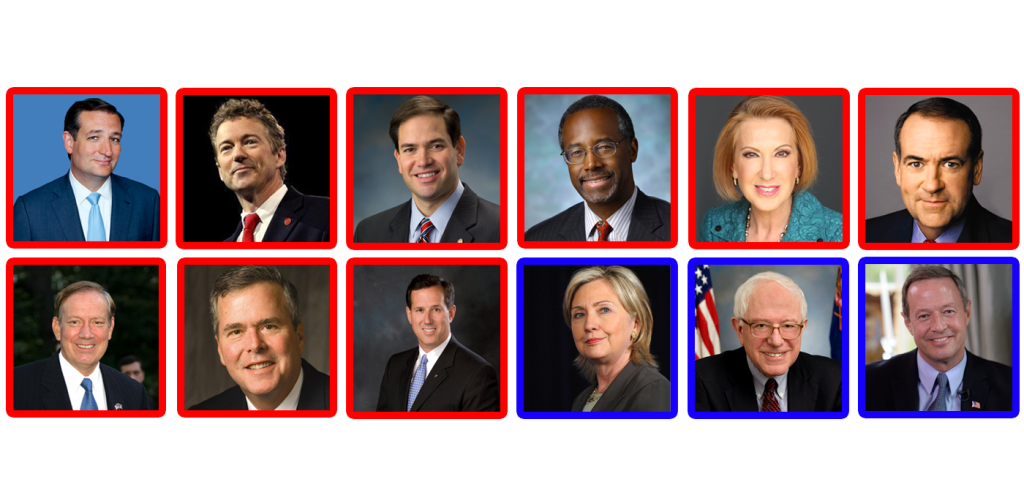
South Carolina Sen. Lindsey Graham is the ninth major Republican to enter the party’s 2016 presidential primary contest. Another half dozen or so are likely to get into the race later this summer, including former Texas Gov. Rick Perry later this week. Here’s a look at the GOP field: Who’s in, who’s almost in, and who’s still waiting for the right moment. IN THE RACE: Ted Cruz The first major Republican to get into the race, the Texas senator began his campaign March 23 at Liberty University in Lynchburg, Va. “I believe in you. I believe in the power of millions of courageous conservatives rising up to re-ignite the promise of America,” he said. Rand Paul The Kentucky senator launched his campaign April 7 in Louisville, where he told a hotel ballroom full of supporters, “I have a message, a message that is loud and clear and does not mince words: We have come to take our country back.” Marco Rubio In a speech April 13 in Miami, the senator from Florida called his candidacy for president a way for the country to break free of ideas “stuck in the 20th century.” He said, “This election is not just about what laws we are going to pass. It is a generational choice about what kind of country we will be.” Carly Fiorina The former tech executive chose social media and a nationally broadcast morning TV network show to launch her campaign on May 4, and she quickly went after Democratic front-runner Hillary Rodham Clinton. “I have a lot of admiration for Hillary Clinton, but she clearly is not trustworthy,” she said. Ben Carson The retired pediatric neurosurgeon got into the race the same day as Fiorina with an announcement speech in his native Detroit. “It’s time for people to rise up and take the government back. The political class won’t like me saying things like that. The political class comes from both parties.” Mike Huckabee The former Arkansas governor and runner-up in the 2008 GOP presidential primaries kicked off his second White House campaign May 5 in the hometown he shares with former President Bill Clinton — Hope, Ark. “Power, money and political influence have left a lot of Americans behind,” he said. Rick Santorum The runner-up to Mitt Romney in 2012, Santorum began his return engagement to presidential politics May 27 in his western Pennsylvania hometown of Cabot. “The last race, we changed the debate. This race, with your help and God’s grace, we can change this nation,” he said. George Pataki A former three-term governor of New York, who previously considered presidential campaigns in 2008 and 2012, Pataki got his campaign started on May 28 in Exeter, N.H. “While I saw the horrors of Sept. 11 first hand, in the days, weeks and months that followed, I also saw the strength of America on display. … I completely reject the idea that we can only come together in adversity.” Lindsay Graham After all but confirming the week before that he was in, the senior senator from South Carolina made it official Monday with a speech in his hometown of Central, S.C., that cast the foreign threats to America in dark terms. “Simply put, radical Islam is running wild. They have more safe havens, more money, more weapons and more capability to strike our homeland than any time since 9/11. They are large, they are rich, and they’re entrenched.” ALMOST THERE: Bobby Jindal The governor of Louisiana took his latest step toward running for president on May 18, announcing a campaign exploratory committee. “Economic collapse is much closer to the door than people realize, our culture is decaying at a rapid rate and our standing in a dangerous world is at an all-time low.” Rick Perry The former Texas governor is expected to announce his 2016 presidential bid on Thursday at an airfield outside Dallas, surrounded by prominent veterans — including the widow of Chris Kyle of “American Sniper” fame. WAITING FOR THEIR MOMENT: Jeb Bush The former Florida governor created a political action committee and super PAC in December and has been raising many millions for the groups expected to support his likely candidacy. Bush has begun visiting early-voting states, has a foreign policy trip to Europe planned for June and is expected to announce his plans shortly after returning. Chris Christie He says he hasn’t decided whether he’s running yet, but the New Jersey governor looks an awful lot like a candidate, making frequent trips to early-voting states, delivering a series of policy speeches and raising money for a political action committee and super PAC created by his backers. John Kasich The former congressman and current Ohio governor is hinting to donors and voters he’s likely to get into the race. His political organization, New Day for America, announced Monday his plans to travel to Iowa later this month. Donald Trump The real estate mogul and reality television star has launched a presidential exploratory committee and is still debating on whether to get into the race. Never short of self-confidence, he said last month he’d be a force to reckon with in the GOP debates. “Selfishly, the networks would put me on because I get great ratings,” Trump said. Scott Walker The Wisconsin governor says he will announce his decision after signing the state budget, which is expected to pass the Republican-controlled state Legislature in late June. Walker has already created a nonprofit group, Our American Revival, to help promote his expected candidacy, and a super PAC led by his close advisers is also up and running. Republished with permission of The Associated Press.
