
Ken McFeeters running for Congressional District 6
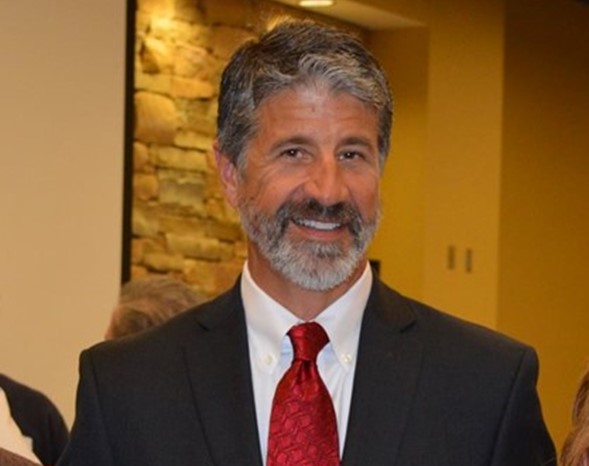
On Tuesday, Republican Ken McFeeters qualified to run for the U.S. House of Representatives in Congressional District Six. McFeeters is challenging five-term incumbent Gary Palmer in the Republican primary. Ken McFeeters is an independent insurance agent who lives and works in the Hoover-Birmingham area. Alabama Today spoke on the phone with McFeeters on Thursday while he was out campaigning. “I got involved in politics initially because of some issues that came up in the insurance business that I am in,” McFeeters said. Over time, McFeeters said that his concern about the country’s direction increased. “I have had some concerns for a while,” McFeeters told Alabama Today. “The last couple of years has been insane.” “Gary Palmer says all the Republican talking points, but I don’t feel that he is leading,” said McFeeters on why he would run against an entrenched incumbent. “I met with Gary for two hours hoping that he would talk me out of it (running),” McFeeters said. McFeeters said that he was not satisfied with Palmer’s answers on the issues he cares about, including Palmer’s answers on COVID-19 vaccines for infants, the war in Ukraine, and some of the shutdowns. That conversation convinced McFeeters to run. McFeeters believes the federal government needs some fiscal discipline, as evidenced by the $33 trillion national debt. “It is insanity,” McFeeters said. “Gary voted for the CARES Act, a $2.2 trillion bill.” McFeeters said on the issue of the COVID lockdowns, “Gary said under the circumstances, it would have been worse not to. How could it have been worse.” McFeeters also questioned the wisdom of the federal government’s COVID-19 vaccination program. “My sister was injured by the vaccine with micro clots,” McFeeters said. “Gary said that he thinks he got myocarditis from the shot. And his letter says that everybody should get shots.” “They are injecting it into infants,” McFeeters said. “They put it on the schedule, so unless you opt-out, it is given to every child.” We asked McFeeters about his view on the GOP house member’s inability to agree on a Speaker of the House. “It is discouraging,” McFeeters said. “I was disappointed. I was hoping that Jim Jordan would get it.” McFeeters said it was a bad look for House Republicans that they could not come together and select a Speaker of the House after the Hamas attacks on Israel. McFeeters speculated that the 20 members who opposed Rep. Jordan are controlled by corporate interests in Washington, D.C., that do not want Jordan to be speaker. “It seems like we are living at an insane time,” McFeeters said. McFeeters expressed fears that corporate elites have gained too much power in federal and state governments and that Congress and the legislatures serve them rather than the people. “Both sides call the other side fascist,” McFeeters said of the left and the right. “But if you look up the history of the term fascism, it was invented by Benito Mussolini in the twenties. He said that it represented the merger of state and corporate power. That seems like what we have been living with.” He discussed the education system. “I want to abolish the U.S. Department of Education and get the federal government out of education,” McFeeters said. “When it was created around 1980, our educational system was number two in the world. Now, after spending hundreds of billions of dollars, depending on what rankings you use, we are somewhere between 25 and 28.” McFeeters expressed concerns that the educational system is not teaching students how to be critical thinkers but instead just making them into good workers for corporate interests. McFeeters referenced the border issue as another area in which corporate interests supply big corporations with willing workers without regard for the people of the United States. “When Republicans were in there, they didn’t do anything either,” McFeeters said of the GOP’s inability to pass an immigration bill even in those times when they controlled both houses of Congress and held the presidency. McFeeters said that he is enjoying being out on the campaign trail. “Everywhere I go, everybody agrees with me,” McFeeters said. McFeeters said the informed voters who go to Republican group meetings, read, and actively study the issues generally agree with him on most issues. His concern is with the voters who aren’t paying attention and will be swayed by the media. McFeeters is not optimistic about his chances of beating a five-term incumbent in Palmer. “I don’t think I will win because not enough people are awake yet,” McFeeters said. The major party primaries are on March 5. To connect with the author of this story or to comment, email brandonmreporter@gmail.com.
Will Sellers: Benito Mussolini’s rise to power

One hundred years ago this month, Italy succumbed to a new political order that would ignite a worldwide struggle for freedom. Completely abandoning its rightful claim as the birthplace of republican self-government, Italy embraced the fanatical politics of Benito Mussolini and embarked on a sad journey of prioritizing rhetoric over reason and ideology over experience. The permanent scarring and disability of the veterans who suffered the horrors of trench warfare were a constant reminder of the failure of leadership that led to World War I. Each country would come to terms with its economy in this aftermath. Initially, countries experienced internal conflicts as citizens tried to define their new role in the world. The old leadership had clearly failed, but scant options were available to replace it. This was the age when academic discussions of government promoted communism, socialism, and nationalism in various combinations. Even though none of these systems was tried, much less true, people were restless for something new. In Italy, this search for something new gave rise to Mussolini. Remembering his ascension to power is not something to be celebrated, but rather observed. Even after 100 years, it is hard to reconcile the positive influence of Roman civilization with the destructive ideas of Mussolini. Nothing about Mussolini’s character is commendable. His youthful experiences revealed a bigoted bully who constantly fought his classmates; his knife play resulted in expulsion from a number of schools. Originally a socialist who advocated against war, his opinion gradually changed as he realized that the resulting destruction created possibilities for change and advancement. He thus became an advocate for war and against neutrality. So fervent was his newfound bellicosity that he was paid by the British to stir up Italians to fight against the Central Powers. This was not the first or last time that foreign powers would attempt to foment local support for an objective, only to have the instigator turn and become a mortal threat. It would be unfair to say that Mussolini was created by the British, but it is appropriate to note that his politics were financed by British pounds. Mussolini was a powerful advocate in speech and in print. He was an engaging writer and a mesmerizing orator. The cadence of his words and his soothing patronizing rhetoric gave him a following that morphed into a national movement. He was convinced that the answer to the constant post-war strikes and riots was a strong leader. And as he read various political tracts, Mussolini became convinced that he was the only leader who could unite his country and achieve prosperity. As Mussolini’s popularity grew and his stature increased, he forgot about any institutions of government and concluded he could be the government. He came to believe his own rhetoric, and his followers’ applause confirmed this view. Against any sense of traditional, liberal republican government, Mussolini assembled leaders of various disaffected groups and urged them to come together to form a new party. In giving an example of how tight their union and commitment to change should be, Mussolini advocated an image that would become the symbol of his government and an ill-used pejorative. Harking back to ancient Roman times, the symbol of power was a bundle of wooden rods surrounding an axe. Mussolini urged his followers to be a tight-knit group just like these “fascis” that surrounded the axe. Thus, the word fascist as a political movement was born. Sporting black shirts as an appeal to unnamed and forgotten men, Mussolini’s thugs imitated their leaders’ bullying tactics. In various towns and other political subdivisions, these gangs took power by force. The local leadership was not sure how to handle this development, but they were intimidated and succumbed to the demands of these unruly groups. A century ago, the Italian trade unions called a general strike. Mussolini used this event to demand that the national government act to restore order. Failing that, Mussolini threatened to march on Rome to take control. While simply using rhetoric as propaganda to promote himself, his words resonated with his followers. What started out as an opportunistic speech now became a rallying cry, and his followers heeded his encouragement by actually marching on Rome. At the time, the government in Italy was akin to a constitutional monarchy like England. While the King, Victor Emmanuel III, was generally respected, the prime minister and the parliament were not. When the Italian political leaders realized that Mussolini was serious about marching on Rome, they became afraid and asked the King to declare martial law. When he refused, the political leaders resigned. For reasons still debated, the King decided to ask Mussolini to become his prime minister and form a government. Mussolini did exactly this, but not willing to completely upset the status quo, he governed in coalition with other parties. Thus, he used the trappings of the official government to begin to seize power. Using extrajudicial means, including murder, he eliminated other political parties and leaders until he achieved his goal of becoming an absolute dictator. Initially, people were willing to tolerate the new government as it did provide the benefit of centralized efficiencies that the previous parliamentary system lacked. But eventually, when freedoms were curtailed, and the economy did not prosper as promised, Mussolini did what dictators always do; he found a national cause for distraction. Mussolini did this in a series of aggressive military actions culminating in the invasion of Ethiopia. The League of Nations tried to stop these naked aggressions, but without international leadership and with no real power, it took symbolic steps that not only failed to stop Italian atrocities but destroyed the League, opening the way, if not encouraging, other, more significant military aggressions culminating in World War II. Remembering Mussolini’s rise to power is to recall the consequences of not confronting a national bully who became an international pariah. If at any point in Mussolini’s infamy, someone in power had forcefully challenged him, the world would be a better place. Will Sellers is a
Will Sellers: What’s in a name?
There has been much debate lately about how we name public buildings and whether we should remove some names because of long-ago actions that no longer conform to contemporary societal practices. Public buildings are always tricky to name, as evidenced by the fact that just a couple of years ago, the University of Alabama Law School was named after Hugh Culverhouse, Jr. in acknowledgment of a very generous donation. However, Culverhouse’s donation was later returned, and his name was chiseled from the law school’s facade. At Alabama State University many years ago, in-fighting and disputes among the trustees resulted in the Joe L. Reed Acadome being renamed. Scandals and criminal convictions have caused other public facilities to suffer the same fate. A variety of buildings once named after Healthsouth founder Richard Scrushy no longer sport his name. Similarly, there is no longer an Enron Field; ditto the MCI Worldcom Center. So, before we take further action to name or rename any public buildings, I would like to suggest a new criterion that should be used in the future. It is always complicated to name something after a person who is still alive because the curriculum vitae is not complete. As long as someone is alive, there is more than adequate opportunity for them to act inappropriately, commit wrongdoing, or be revealed to possess feet made of clay rather than marble. I order to ensure that a facility named in someone’s honor avoids becoming an embarrassment to the institution – a retreat as opposed to advancement – perhaps a good rule would be to wait until they have been dead for at least five years. That way, their entire record is complete, most statutes of limitations have expired, and their legacy should be secure. Of course, one problem with this proposal is that living people tend to contribute more when they are alive and are attempting to establish a lasting legacy that, along with a satiated ego, only their name on a building will suffice. Heirs tend to prefer to experience a legacy more in selfish monetary terms; naming opportunities thus abound for the living. So, while donations might decrease, naming a building or whatever after someone who is deceased seems like a safe bet. . .or at least it used to. I say “seems” because now we are in a local and nationwide frenzy to fully explore the lives of people for whom structures have long ago been named. And in doing this, any improper conduct is scrutinized based on our current understanding of what should have been acceptable, polite behavior during the life of the honoree. Perhaps we are finally embracing Shakespeare’s observation that “the evil men do lives after them, but the good is oft interred in their bones.” No one can argue that commemorating someone who supported a criminal enterprise is acceptable. Not many cities have an Al Capone Avenue or a Benito Mussolini Drive. Open, obvious, and socially unacceptable behavior, no matter how sizable the donation or political influence at the time, can never reach the level of deserving commemoration. But we must be very careful because the finer the tooth on the comb and the higher the magnification of the glass provides details and information that might be better left undiscovered. In fact, few people look saintly when every nook and cranny of their life is fully examined. Several times a year, a new book comes out revealing that a well-known figure was a member of a socially unacceptable movement. Families under the yoke of an authoritarian government are shocked to discover an informer in their midst, a closeted Nazi or mafia hitman. Years ago, France was so stunned that a documentary revealed more collaborators than resistance fighters that it was banned from television because it “destroys myths that the people of France still need.” And who can forget when decades after World War II ended, United Nations General Secretary Kurt Waldheim was exposed as a Nazi intelligence officer? Others have discovered past family connections to organized crime. DNA testing often confirms embarrassing assignations. But in discovering a not so auspicious past, few communities completely jettison a native son, and families still embrace wayward kin. Most simply use the exposure to show the failed humanity that affects all of us. I once heard a businessman on a panel about ethics comment that “there is a little larceny in all of us.” In saying so, he was not refusing to condemn bad behavior but was pointing out the permanence of original sin. Thornton Wilder penned the famous quote: “There is so much good in the worst of us, and so much bad in the best of us, that it behooves all of us not to talk about the rest of us,” which is probably a good thing to remember when we critique others. I don’t know anyone who likes seeing their face in a mirror with magnification! The lives of humans are complicated, complex, and contradictory. Many seemingly mainstream people can have odd ideas about the world. In hindsight, old fads look sinister; the basis of past popular culture rarely survives contemporary scrutiny. Political correctness changes with the wind and whims. A thorough background check unearths activities that are at the same time sublime, ridiculous, and embarrassing. So, if we are going to name public buildings after people, we should be very careful not only in who we choose to honor but how we choose to judge them. We must also make certain that judging ourselves by the same standards does not reveal more than a measure of hypocrisy, sanctimony, and pretense. Rather than naming buildings after people, whether they are dead or alive, I have a much better idea. Perhaps we could name our edifices, parks, and public squares after non-violent animals, flowers, and friendly fruits and vegetables. The Alabama State
