
2020 Watch: Messy primary finally meets election year
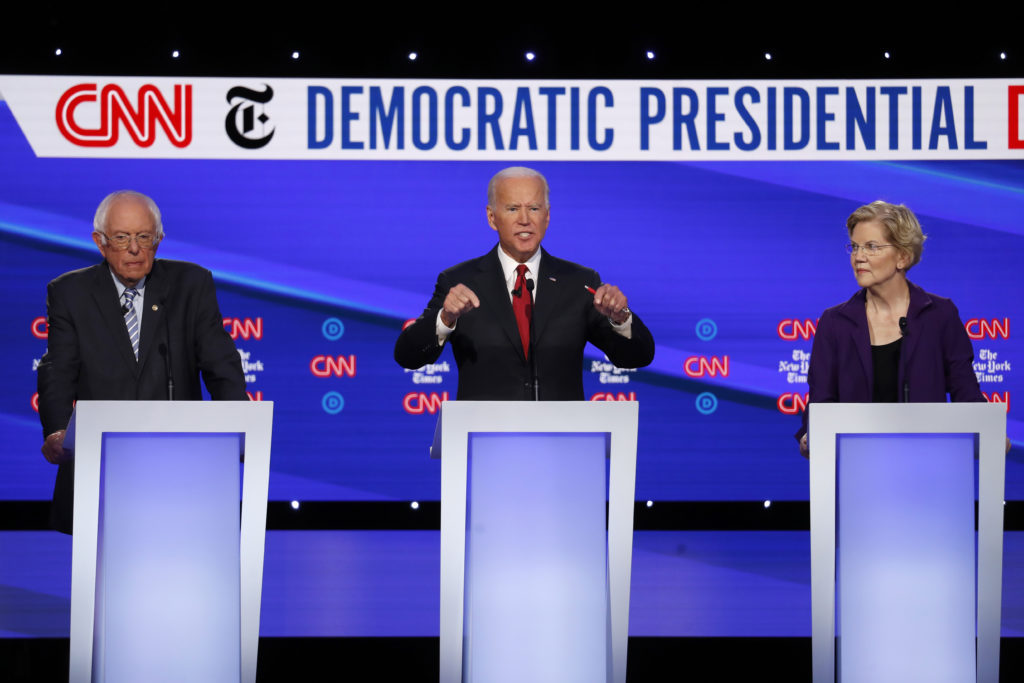
The presidential politics calendar turned to 2020 nearly a year ago. This week, the actual date catches up. What we’re watching as the preseason closes and election year opens: Days to Iowa caucuses: 35 Days to general election: 309 THE NARRATIVE The ups, downs and swerves of 2019 yielded a stable top slate. Former Vice President Joe Biden leads most national polls of Democratic primary voters, with Sens. Bernie Sanders of Vermont and Elizabeth Warren of Massachusetts within striking distance. Yet in the first caucus state of Iowa and the first primary state of New Hampshire, there’s a jumble of Biden, Sanders, Warren and Mayor Pete Buttigieg of South Bend, Indiana. At first glance, it’s a clean choice: Biden and Buttigieg hail from the center-left; Warren and Sanders come from the progressive left. Reality is more layered. All four have weaknesses within Democrats’ diverse electorate; each makes a different case for carrying the banner against President Donald Trump, who is now impeached but a near certainty to survive a Senate trial. If that’s not enough indecision, several wildcards — including two billionaires — still hope to scramble the contest. THE BIG QUESTIONS Money: Who can (sort of) compete with Michael Bloomberg’s wallet? The fourth-quarter fundraising period ends Tuesday. Warren and Sanders set the early curve for grassroots donations, outpacing Buttigieg and Biden, who tap traditional deep-pocketed contributors in addition to online donors. Now those small-donor juggernauts must compete with former New York Mayor Michael Bloomberg, who’s used a share of his estimated $50 billion personal fortune to blanket television and digital advertising and build an expansive staff in Super Tuesday states. For his rivals, it’s not so much about keeping up; Bloomberg can easily outspend every other campaign, including that of fellow billionaire Tom Steyer. But there’s only so much television time for sale, and if Warren and Sanders want to plow big money into Super Tuesday, especially the expensive television markets of California, they’ll need as much cash as possible ahead of time. Biden, meanwhile, has already secured his best fundraising quarter (a relative comparison for a candidate who’s lagged other top-tier contenders). The question is whether Biden’s “best” mollifies establishment Democrats who waved red flags when he reported having less than $9 million on hand at September’s end. Money, Part II: How long can Cory Booker keep going? The year-end deadline is critical for New Jersey Sen. Cory Booker as he reaches for relevance. The last of two African American candidates (along with former Massachusetts Gov. Deval Patrick), Booker made a do-or-die money appeal in September, and it worked. But it’ll take more than scraping by to fund the turnaround he envisions: a surprise finish in overwhelmingly white Iowa to kick-start a dramatic rise in more diverse primary states that follow (Barack Obama’s 2008 path). Campaigns that hit big fundraising numbers tend to leak that news before Federal Election Commission filings are due. Candidates with bad news tend to wait. So, it bears watching how Booker’s team plays it to start January. Is Amy Klobuchar being overlooked in Iowa? Those previously mentioned Iowa and New Hampshire jumbles omit Amy Klobuchar. But the Minnesota senator is plugging away in both states. She just hit her 99th Iowa county (that’s all of them), demonstrating her effort to use complex caucus rules that can reward candidates with a wide geographic footprint. Notably, Klobuchar’s strategy tracks Biden. Both aim for a more consistent appeal across 1,679 precincts than Warren, Sanders and Buttigieg muster on Feb. 3. The question becomes how many precincts give both Biden and Klobuchar the minimum 15 percent support required to count toward delegates. Anyone who doesn’t hit that viability mark drops from subsequent ballots, their backers going up for grabs. Biden’s Iowa hopes depend in part on picking up moderates on realignment votes (read: Klobuchar and Buttigieg supporters). If Klobuchar is as strong as she hopes to be, she could turn that strategy around on Biden, driving him below viability and attracting his supporters on later ballots. Biden returns to Iowa this week for another bus tour, though not as lengthy as his eight-day jaunt after Thanksgiving. Is Sanders a true contender this time? Sanders lost the 2016 nomination because of Hillary Clinton’s advantage among non-white Democrats. Since then, Sanders has deepened his ties among Latinos, African Americans and other non-whites. Warren and Buttigieg are still chasing that success. Sanders’ advisers believe the senator is well-positioned to challenge Biden among non-whites if he’s able to build early momentum in New Hampshire and Iowa, where Sanders will spend New Year’s Eve. If they’re right, that would open avenues to delegates Sanders didn’t get in 2016. Is Trump’s position improving? The president has never been popular judged in a vacuum. In 2016, he won GOP primaries with pluralities and lost the general election popular vote. As president, he’s never reached majority job approval in Gallup’s polling. But he’s still hovering in the 40s, not far from where his immediate predecessors were 11 months before winning second terms. Impeachment proceedings haven’t affected Trump’s standing. Meanwhile, the same Democratic-run House that impeached him approved his new North America trade pact. Top-line economic numbers shine, even if the on-ground reality is uneven. And Trump could be on the cusp of a peace deal in Afghanistan after the Taliban ruling council on Sunday agreed to a temporary cease-fire. As frenetic as Trump’s messaging is, he proved in 2016 that he relishes framing binary choices for voters, and he’s more than convinced he has a case in 2020. THE FINAL THOUGHT Most voters are just tuning into a presidential race that’s raged for a year. They’ll find a Democratic contest featuring stark options on policy and personality, but lacking an undisputed favorite. Candidates are navigating primary politics: dancing along the progressive-liberal-moderate spectrum and carefully choosing when to go after each other. At the same time, Trump dominates the 2020 narrative, a fact demonstrated most recently as Biden spent two days talking about whether he’d testify in a Senate trial on Trump’s removal from office.
Joe Biden’s new endorsement reflects battle for latino support
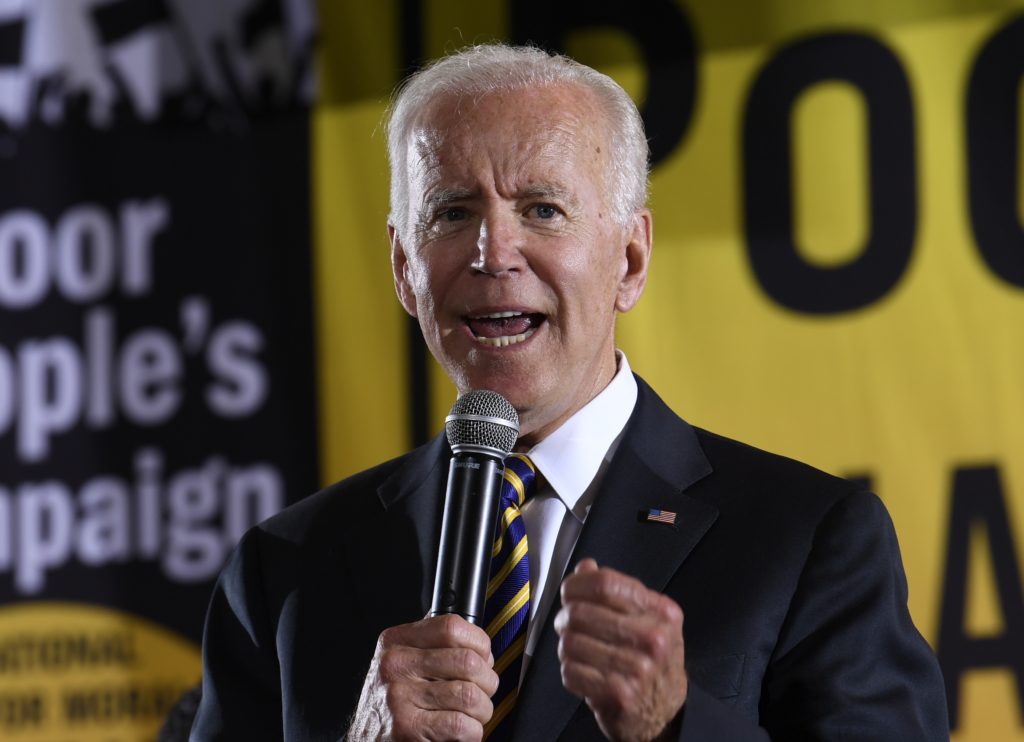
Joe Biden’s presidential bid got a boost Monday from one of the leading Latinos in Congress, with the chairman of the Hispanic Caucus’ political arm endorsing the former vice president as Democrats’ best hope to defeat President Donald Trump. “People realize it’s a matter of life and death for certain communities,” Rep. Tony Cárdenas, Democrat-California, told The Associated Press in an interview, explaining the necessity of halting Trump’s populist nationalism, hard-line immigration policies and xenophobic rhetoric that the California congressman called cruel. Cárdenas’ is the chairman of Bold PAC, the political arm of the Congressional Hispanic Caucus. His announcement follows presidential candidate Bernie Sanders’ weekend of mass rallies with Rep. Alexandria Ocasio-Cortez, a freshman congresswoman from New York who has become a face of the progressive movement and a key supporter for the Vermont senator’s second White House bid. The dueling surrogates highlight a fierce battle for the Hispanic vote between Sanders and Biden, whose campaigns each see the two candidates as the leading contenders. Biden leads the field among Democratic voters who are non-white, a group that includes Democratic voters who are Hispanic, with Sanders not far behind, according to national polling. Another top national contender, Sen. Elizabeth Warren, draws less support from non-white voters. There are few recent national polls with a sufficient sample of Hispanic Democratic voters to analyze them independently. The dynamics also demonstrate the starkly different approaches that Biden and Sanders take to the larger campaign. Biden is capitalizing on his 36-year Senate career and two terms as Barack Obama’s vice president to corral Democratic power players across the party’s various demographic slices. Cárdenas joins four other Hispanic caucus members who’ve already backed Biden, a show of establishment support in contrast to some Latino activists who’ve battered Biden over the Obama administration’s deportation record. Sanders, true to his long Capitol Hill tenure as an outsider and democratic socialist, eschews the establishment with promises of a political revolution, just as he did when he finished as runner-up for Democrats’ 2016 nomination. Together, it’s an argument on politics and policy at the crux of Democrats’ 2020 nominating fight. Sanders and his supporters like Ocasio-Cortez argue that existing political structures cannot help working-class Americans, immigrants or anyone else. That argument, they insist, can draw enough new, irregular voters to defeat Trump in November. “We need to be honest here,” retorted Texas Rep. Vicente Gonzalez, a Biden supporter whose congressional district includes part of the U.S.-Mexico border. “If Joe Biden loses the primary, Democrats will lose in 2020.” It’s impossible for polling almost a year ahead of a general election to affirm that view, but the contention echoes Biden’s consistent arguments about Electoral College math. Texas Rep. Filemon Vela, also a border-district congressman who backs Biden, was not so absolute. But he said Biden is best positioned for a general election on immigration because of his plans to roll back Trump’s immigration restrictions and boost the asylum process, while stopping short of decriminalizing all border crossings. Sanders supports making all border crossings civil offenses, rather than criminal, a position first pushed by the lone Hispanic presidential candidate and former Obama housing secretary Julian Castro. “In some swing states, that might not go over well,” Vela said, even as he, Gonzalez and Cárdenas said the distinction is more important to political pundits than to Hispanic voters. Said Cárdenas: “There is activist language and there are litmus tests; and there are hard-working people around the country who just want fairness.” He added another key plank of Biden’s case: that meaningful change, from reversing Trump’s migrant family separation policy to expanding health care coverage, requires not only winning in November but then achieving some semblance of consensus in Congress. Hispanic voters are a rapidly growing portion of the U.S. population and electorate, though they have consistently had lower election-participation rates than African Americans and non-Hispanic whites. At the least, Hispanics will play key roles in the Nevada caucus (third in the Democratic nominating process) and the Texas and California primaries, the two largest sources of delegates on the March 3 Super Tuesday slate. Sanders leads Biden among younger voters generally, according to national polling, and Biden aides say that could carry over to Hispanics. The variable is seemingly on display when comparing Biden’s campaign crowds with those like Ocasio-Cortez drew this weekend in California and Nevada. Immigrants-rights advocates picketed outside Biden’s Philadelphia campaign headquarters shortly after its opening. Castro used Democratic debates to challenge Biden on why he didn’t stop more deportations when he was vice president. Last month, members of the Movimiento Cosecha, which describes itself as an immigrant-led group pushing for “permanent, protection and respect” for immigrants, confronted Biden during a campaign event in South Carolina. One of them, Carlos Rojas, asked Biden to answer for deportations under Obama and to commit to an outright moratorium on all deportations — a position Sanders supports. Biden declined. After Rojas pressed him, Biden said, “You should vote for Trump.” Gonzalez called it “ridiculous” to question Biden’s commitment to immigrants, but said the skepticism demonstrates that the Latino community vote is not monolithic, with a range of national origins and philosophical differences. Vela agreed, adding that Sanders’ rallies and Ocasio-Cortez’s social media following shouldn’t obscure Biden’s standing among the “traditionalist Democrats” he said constitute the majority of Hispanic voters. Vela recalled an unplanned campaign stop he made recently with Biden at Mi Tierra, an iconic restaurant in San Antonio, Texas, after a campaign event with several hundred people. “He went table to table,” Vela said, “people getting up, ‘Joe Biden is here’ and ‘There’s Joe Biden.’ The response was overwhelming.” By Bill Barrow Associated Press Republished with the Permission of the Associated Press.
Takeaways from the democratic presidential debate
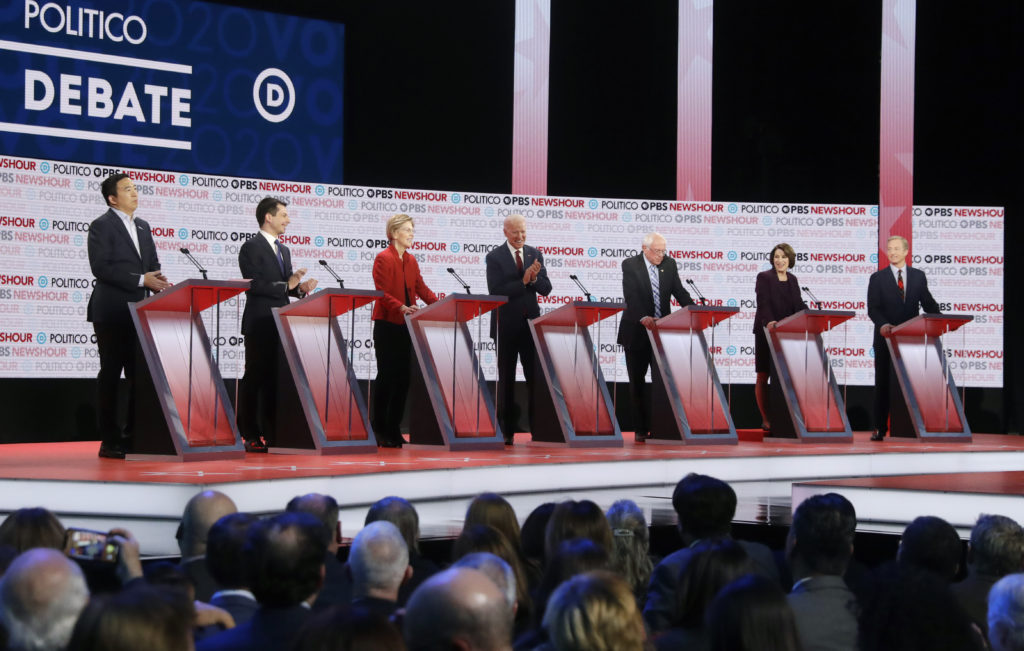
Democratic presidential candidates offered two very different debates during their final forum of 2019. In the first half, they spent much of their time making the case for their electability in a contest with President Donald Trump. The second half was filled with friction over money in politics, Afghanistan and experience. MONEY TALKED The candidates jousted cordially over the economy, climate change and foreign policy. But it was a wine cave that opened up the fault lines in the 2020 field. That wine cave, highlighted in a recent Associated Press story, is where Mayor Pete Buttigieg of South Bend, Indiana, recently held a big-dollar Napa Valley fundraiser, and Sen. Elizabeth Warren — who along with Sen. Bernie Sanders has eschewed fundraisers in favor of small-dollar grassroots donations — slammed him for it. “Billionaires in wine caves should not pick the next president of the United States,” Warren said. Buttigieg struck back, noting that he was the only person on the stage who was not a millionaire or billionaire. He said that if Warren donated to him he’d happily accept it even though she’s worth “ten times” what he is. He also added that Warren had only recently sworn off big money donations. “These purity tests shrink the stakes of the most important election,” Buttigieg snapped. It was an unusually sharp exchange between Warren and Buttigieg. The two have been sparring as Warren’s polling rise has stalled out and Buttigieg poached some of her support among college-educated whites. And Warren was not the only one going after Buttigieg. Sen. Amy Klobuchar of Minnesota hit him on another front, namely what she said was his lack of experience compared to her Senatorial colleagues on stage. Still, the divide is about more than Warren and Buttigieg. It’s about the direction of the party — whether it should become staunchly populist, anti-corporate and solely small-dollar funded, or rely on traditional donors, experience and ideology. IMPEACHMENT AS PROXY The first question in the debate was about impeachment. But the answer from the Democratic candidates was about electability. Most candidates had no answer to their party’s biggest challenge — getting Trump’s voters to abandon him over his conduct. Warren talked about one of her favorite themes, “corruption” in Washington. Sanders talked about having to convince voters Trump lied to them about helping the working class. Klobuchar, a former prosecutor, laid out the case against Trump as if she were giving the opening statement in his Senate trial. Buttigieg said the party can’t “give into that sense of hopelessness” that the GOP-controlled Senate will simply acquit Trump because Republican voters aren’t convinced. But Buttigieg didn’t provide any other hope. Only businessman Andrew Yang gave an explanation for why impeachment hasn’t changed minds. “We have to stop being obsessed about impeachment, which strikes many Americans like a ball game where you know what the score will be.” Instead, Yang said, the party has to grapple with the issues that got Trump elected — the loss of good jobs. BIDEN STEADY Former Vice President Joe Biden has held steady throughout the Democratic race as one of the top two or three candidates by almost any measure. He has done that with debate performances described as flat, uneven, and uninspired. He had a better night Thursday, even on a question about of one of his views that causes fellow Democrats to groan: that he can work with Republicans once he beats Trump in November. “If anyone has reason to be angry with the Republicans and not want to cooperate it’s me, the way they’ve attacked me, my son, my family,” Biden said, a reference to Trump’s push to investigate his son Hunter that led to the president’s impeachment. “I have no love. But the fact is we have to be able to get things done and when we can’t convince them, we go out and beat them.” Unlike others on the stage, he said pointedly that he doesn’t believe it’ll be impossible to ever work together with the other party. “If that’s the case,” Biden said, “we’re dead as a country.” He came close to trouble by initially saying he would not commit to a running for a second term, them quickly said that would be presumptuous to presume a first one. AMERICAN ROLE IN THE WORLD Is the greatest danger to America’s foreign interests and alliances coming from within the White House? Democratic presidential candidates faulted Trump on multiple fronts for his failure to lead in key disputes and areas of international friction, including in the Middle East and China. Buttigieg said Trump was “echoing the vocabulary” of dictators in his relentless attacks on the free press. Klobuchar said the president had “stood with dictators over innocents.” And Tom Steyer warned against isolating the U.S. from China, saying the two nations needed to work together on climate change. On Israel, Biden argued that Trump had played to fears and prejudices and stressed that a two-state solution was needed for peace to ever be achieved. The former vice president said Washington must rebuild alliances “which Trump has demolished.’” With China, “We have to be firm. We don’t have to go to war,” Biden said. “We have to be clear, “This is as far as you go, China,” he added. YANG’S PRO MOVES In June, Yang was a political punchline. During the first few Democratic debates, the entrepreneur, who has never before run for office, looked lost onstage, struggling to be heard over the din of nine other candidates. But on Thursday night, Yang looked like a pro. When the candidates debated complex foreign policy, Yang talked about his family in Hong Kong, the horror of China’s crackdown there and how to pressure them to respect human rights. When some candidates equivocated over whether nuclear energy should be used to combat climate change, Yang had the last word when he said: “We need to have everything on the table in a crisis situation.” And when a moderator noted that Yang was
Only 7 democrats will be on the stage for the last presidential debate of 2019
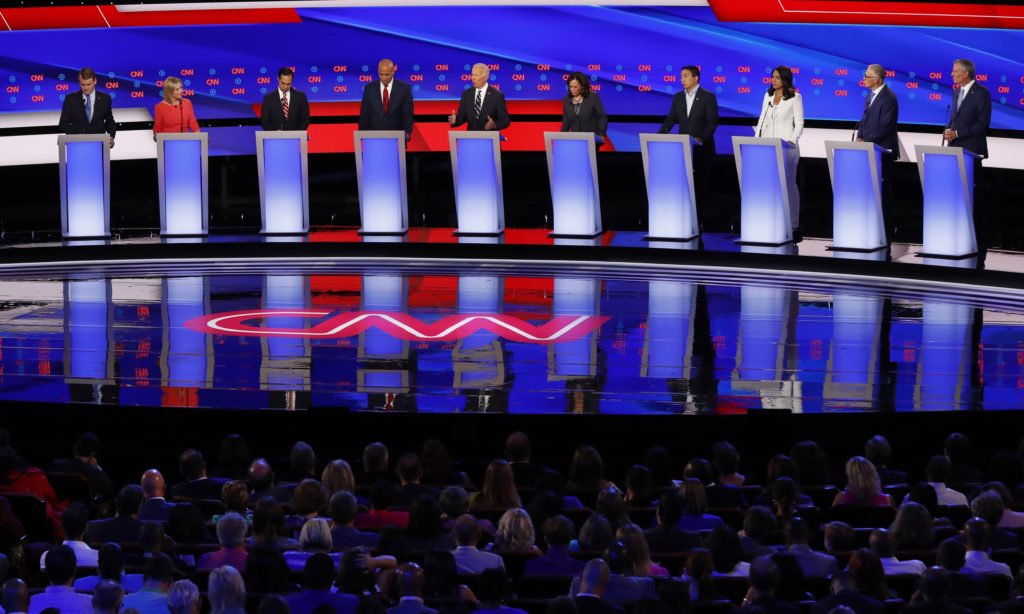
A winnowed field of Democratic presidential contenders takes the debate stage for a sixth and final time in 2019, as candidates seek to convince anxious voters that they are the party’s best hope to deny President Donald Trump a second term next year. Thursday night’s televised contest ahead of Christmas will bring seven rivals to heavily Democratic California, the biggest prize in the primary season and home to 1 in 8 Americans. And, coming a day after a politically divided House impeached the Republican president, the debate will underscore the paramount concern for Democratic voters: Who can beat Trump in November? With voters distracted by the holidays and the impeachment proceedings in Washington, the debate in Los Angeles could turn out to be the least watched so far. Viewership has declined in each round though five debates, and even campaigns have grumbled that the candidates would rather be on the ground in early voting states than again taking the debate stage. The lack of a clear front-runner reflects the uncertainty gripping many voters. Would Trump be more vulnerable to a challenge from the party’s liberal wing or a candidate tethered to the centrist establishment? Should the pick be a man or a woman, or a person of color? The Democratic field is also marked by wide differences in age, geography and wealth, and the party remains divided over issues including health care and the influence of big-dollar fundraising. There will be a notable lack of diversity onstage compared to earlier debates. For the first time this cycle, the debate won’t feature a black or Latino candidate. The race in California has largely mirrored national trends, with former Vice President Joe Biden, Vermont Sen. Bernie Sanders and Massachusetts Sen. Elizabeth Warren clustered at the top of the field, followed by South Bend, Indiana, Mayor Pete Buttigieg, Minnesota Sen. Amy Klobuchar, businessman Andrew Yang and billionaire philanthropist Tom Steyer. Conspicuously missing from the lineup at Loyola Marymount University on Thursday will be former New York City Mayor Michael Bloomberg, a billionaire who is unable to qualify for the contests because he is not accepting campaign donations. But even if he’s not on the podium, Bloomberg has been felt in the state: He’s running a deluge of TV advertising in California to introduce himself to voters who probably know little, if anything, about him. Bloomberg’s late entry into the contest last month highlighted the overriding issue in the contest, electability, a sign of the unease within the Democratic Party about its crop of candidates and whether any is strong enough to unseat an incumbent president. The eventual nominee will be tasked with splicing together the party’s disparate factions — a job Hillary Clinton struggled with after defeating Sanders in a long and bitter primary fight in 2016. Biden adviser Symone Sanders said to expect another robust exchange on health care. “This is an issue that is not going away and for good reason, because it is an issue that in 2018 Democrats ran on and won,” she said. Jess O’Connell with Buttigieg’s campaign said the candidate will “be fully prepared to have an open and honest conversation about where there are contrast between us and the other candidates. This is a really important time to start to do that. Voters need time to understand the distinctions between these candidates.” The key issues: health care and higher education. The unsettled race has seen surges at various points by Biden, Warren, Sanders and Buttigieg, though it’s become defined by that cluster of shifting leaders, with others struggling for momentum. California Sen. Kamala Harris, once seen as among the top tier of candidates, shelved her campaign this month, citing a lack of money. And Warren has become more aggressive, especially toward Buttigieg, as she tries to recover from shifting explanations of how she’d pay for “Medicare for All” without raising taxes. In a replay of 2016, the shifting race for the Democratic nomination has showcased the rift between the party’s liberal wing, represented in Sanders and Warren, and candidates parked in or near the political center, including Biden, Buttigieg and Bloomberg. Two candidates who didn’t make the stage will still make their presence felt for debate watchers with ads reminding viewers they’re still in the race. New Jersey Sen. Cory Booker and former Housing Secretary Julián Castro are airing television ads targeted to primary voters during the debate. Booker’s is his first television ad, and in it he says even though he’s not on the debate stage, “I’m going to win this election anyway.” It’s airing as part of a $500,000 campaign, running in Iowa, New Hampshire, Nevada and South Carolina, as well as New York, Washington, D.C., and Los Angeles. A pro-Booker super PAC is also going up with an ad in Iowa highlighting positive reviews of Booker’s past debate performances. Meanwhile, Castro is running an ad, in Iowa, in which he argues the state should no longer go first in Democrats’ nominating process because it doesn’t reflect the diversity of the Democratic Party. Both candidates failed to hit the polling threshold to qualify for the debates and have in recent weeks become outspoken critics of what they say is a debate qualification process that favors white candidates over minorities. By Kathleen Ronayne and Michael R. Blood Associated Press Associated Press writer Michelle L. Price in Las Vegas contributed to this report. Catch up on the 2020 election campaign with AP experts on our weekly politics podcast, “Ground Game.” Republished with the Permission of the Associated Press.
Bernie Sanders announces $150 billion plan to expand broadband access
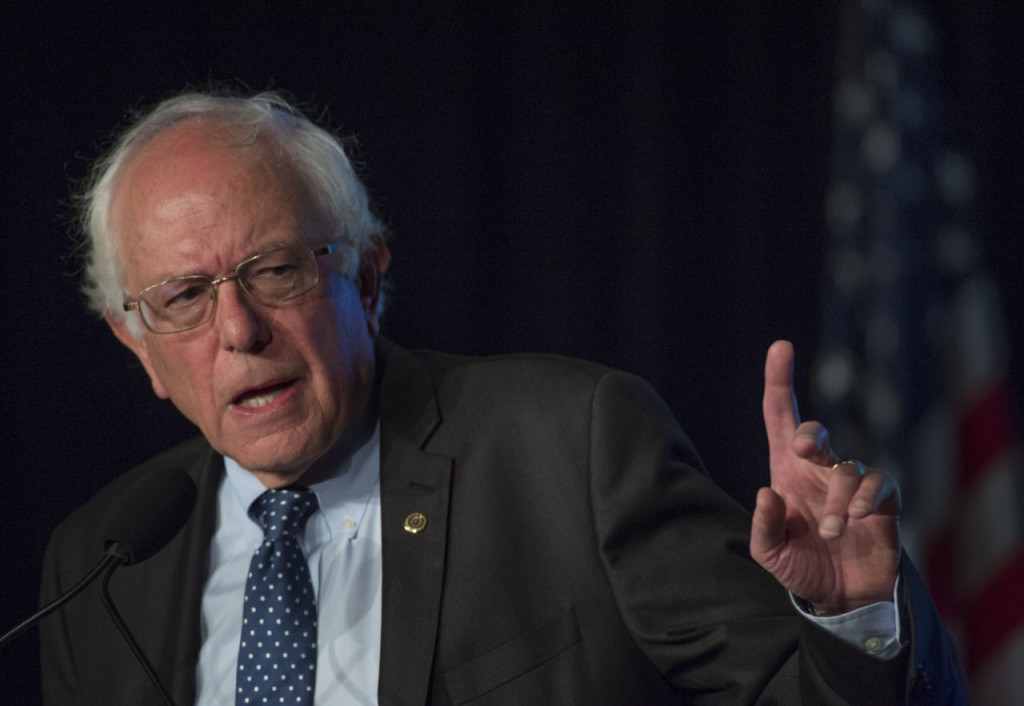
Democratic presidential candidate Bernie Sanders is promising to invest $150 billion to bring high-speed internet to “every household in America” while breaking up and better regulating monopolies he says currently limit access to drive up their profits. The Vermont senator on Friday unveiled a plan providing that funding in infrastructure grants and technical assistance to states and municipalities through Green New Deal climate-change fighting initiatives — allowing them to build what he called “publicly owned and democratically controlled, co-operative or open access broadband networks.” Sanders also wants to set aside $7.5 billion to increase high-speed broadband in Native American communities nationwide and increase funding for the Federal Communications Commission’s Office of Native Affairs and Policy. Citing FCC data, Sanders said that in rural areas, about 30 percent of Americans lack access to broadband internet access. The senator also says that, as president, he’d require all internet service providers to offer a “Basic Internet Plan” providing “quality broadband speeds at an affordable price.” He also vowed to break up internet service provider and cable monopolies, prohibit service advisers from providing content and wipe out “anti-competitive” mergers. “It is outrageous that across the country millions of Americans and so many of our communities do not have access to affordable high-speed internet,” Sanders said in a statement. He isn’t the only Democratic presidential hopeful promising to improve internet access in rural areas and other under-served communities. Massachusetts Sen. Elizabeth Warren wants to create a “public option for broadband” managed by a new Office of Broadband Access using an $85 billion federal grant. Former Vice President Joe Biden has released a plan to revitalize rural America that includes a $20 billion investment in rural broadband infrastructure. Republished with the Permission of the Associated Press.
Kamala Harris ends campaign for presidential bid, citing lack of funding
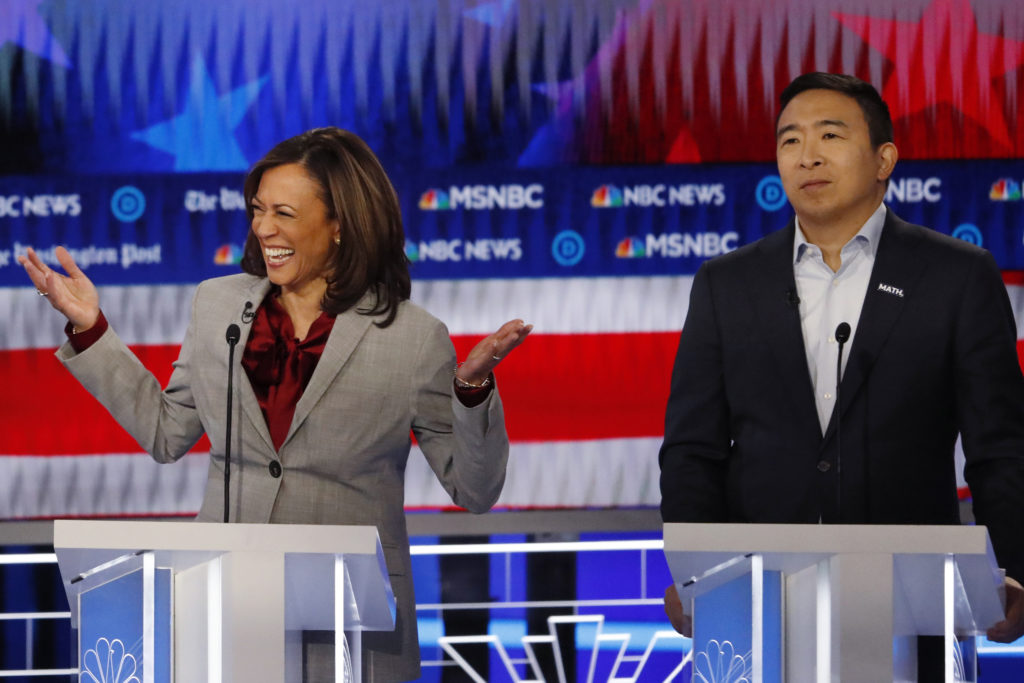
Sen. Kamala Harris told supporters on Tuesday that she was ending her bid for the 2020 Democratic presidential nomination, an abrupt close to a candidacy that held historic potential. “I’ve taken stock and looked at this from every angle, and over the last few days have come to one of the hardest decisions of my life,” the California Democrat said. “My campaign for president simply doesn’t have the financial resources we need to continue.” A senior campaign aide said Harris made the decision Monday after discussing the path forward with family and other top officials over the Thanksgiving holiday. Her withdrawal marked a dramatic fall for a candidate who showed extraordinary promise in her bid to become the first black female president. Harris launched her campaign in front of 20,000 people on a chilly January day in Oakland, California. The first woman and first black attorney general and U.S. senator in California’s history, she was widely viewed as a candidate poised to excite the multiracial coalition of voters that sent Barack Obama to the White House. Her departure erodes the diversity of the Democratic field, which is dominated at the moment by a top tier that is white and mostly male. “She was an important voice in the race, out before others who raised less and were less electable. It’s a loss not to have her voice in the race,” said Aimee Allison, who leads She the People, a group that promotes women of color. Harris ultimately could not craft a message that resonated with voters or secure the money to continue her run. She raised an impressive $12 million in the first three months of her campaign and quickly locked down major endorsements meant to show her dominance in her home state, which offers the biggest delegate haul in the Democratic primary contest. But as the field grew, Harris’ fundraising remained flat; she was unable to attract the type of attention being showered on Pete Buttigieg by traditional donors or the grassroots firepower that drove tens of millions of dollars to Elizabeth Warren and Bernie Sanders. In her note to supporters, Harris lamented the role of money in politics and, without naming them, took a shot at billionaires Tom Steyer and Michael Bloomberg, who are funding their own presidential bids. “I’m not a billionaire,” she said. “I can’t fund my own campaign. And as the campaign has gone on, it’s become harder and harder to raise the money we need to compete.” Harris suffered from what allies and critics viewed as an inconsistent pitch to voters. Her slogan “For the people” referenced her career as a prosecutor, a record that was viewed skeptically by the party’s most progressive voters. Through the summer, she focused on pocketbook issues and her “3 a.m. agenda,” a message that never seemed to resonate with voters. By the fall, she had returned to her courtroom roots with the refrain that “justice is on the ballot,” both a cry for economic and social justice as well as her call that she could “prosecute the case” against a “criminal” president. At times, she was tripped up by confusing policy positions; particularly on health care. After suggesting she would eliminate private insurance in favor of a fully government-run system, Harris eventually rolled out a health care plan that preserves a role for private insurance. Stumbles, often of the campaign’s making, continued to dog Harris into the winter, stymieing her ability to capitalize on solid moments. Harris kicked off November with a well-received speech at a massive Iowa dinner, just a day after her campaign announced it would fire staff at its Baltimore headquarters and was moving some people from other early states to Iowa. Her message was regularly overshadowed by campaign aides and allies sharing grievances with the news media. Several top aides decamped for other campaigns, one leaving a blistering resignation letter. “Because we have refused to confront our mistakes, foster an environment of critical thinking and honest feedback, or trust the expertise of talented staff, we find ourselves making the same unforced errors over and over,” Kelly Mehlenbacher wrote in her letter, obtained by The New York Times. Mehlenbacher now works for businessman Bloomberg’s campaign. With Harris’ exit, 15 Democrats remain in the race for the nomination. Several praised her on Tuesday. Former Vice President Joe Biden, who had a memorable debate stage tussle with Harris this summer, called the senator a “solid person, loaded with talent.” Vermont Sen. Bernie Sanders commended Harris for “running a spirited and issue-oriented campaign.” New Jersey Sen. Cory Booker, one of two black candidates still in the campaign, called Harris a “trailblazer.” Harris anchored her campaign in the powerful legacy of pioneering African Americans. Her campaign launch on the Martin Luther King Jr. holiday included a nod to Shirley Chisholm, the New York congresswoman who sought the Democratic Party’s presidential nomination 47 years ago earlier. One of her first stops as a candidate was to Howard University, the historically black college that she attended as an undergraduate. She spent much of her early campaign focusing on South Carolina, which hosts the first Southern primary and has a significant African American population. But Harris struggled to chip away at Biden’s deep advantage with black voters who are critical to winning the Democratic nomination. Harris and her aides believe she faced an uphill battle — and unfair expectations for perfection — from the start as a woman of color. Her campaign speech included a line about what Harris called the “donkey in the room,” a reference to the thought that Americans wouldn’t elect a woman of color. Harris often suggested it was criticism she faced in her other campaigns — all of which she won. Her departure from the presidential race marks her first defeat as a political candidate. Associated Press writers Steve Peoples in New York and Bill Barrow in Mason City, Iowa, contributed to this report. By Kathleen Ronayne and Nicholas Riccardi Associated Press. Republished with the Permission of the Associated Press.
Steve Bullock ends presidential campaign
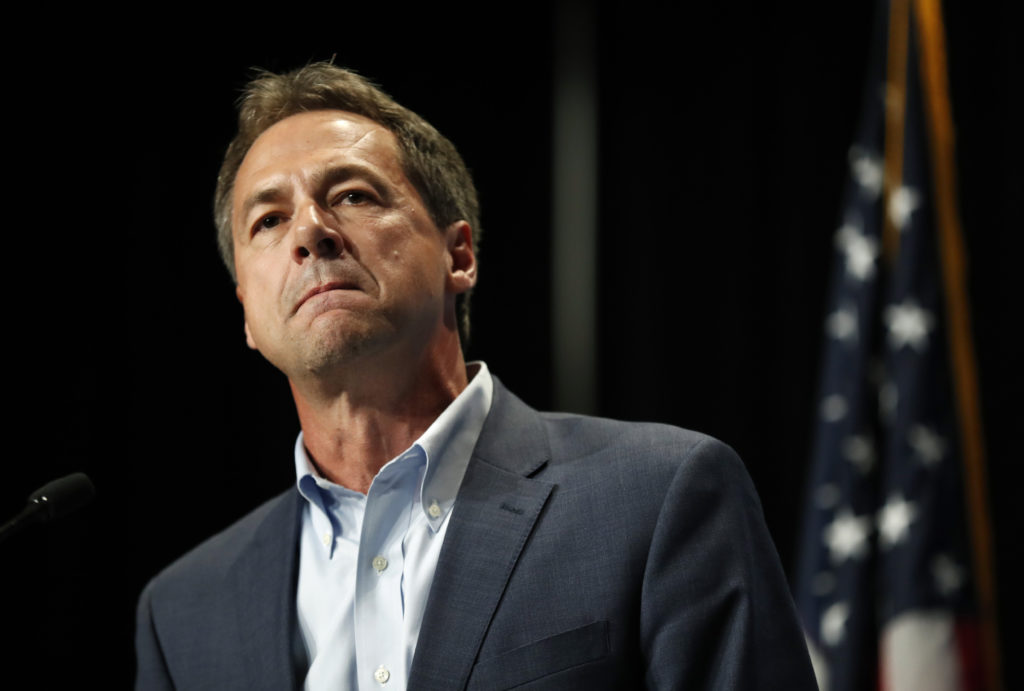
Montana Gov. Steve Bullock announced Monday that he’s ending his Democratic presidential campaign, saying it’s become clear that he won’t have a shot at being his party’s nominee. The two-term governor and former state attorney general tried to make the case that he was the best bet to beat President Donald Trump because he was the only Democratic candidate to win in a state that Trump won in 2016. But he got a late start, announcing his candidacy in May and joining nearly two dozen other Democratic candidates competing for attention and campaign donations. “While there were many obstacles we could not have anticipated when entering this race, it has become clear that in this moment, I won’t be able to break through to the top tier of this still-crowded field of candidates,” Bullock said in a statement. The governor said that he ran to win back places Democrats have lost and end the influence of “dark money” in politics. Those concerns have not changed, he said, but he leaves the race “filled with gratitude and optimism, inspired and energized by the good people I’ve had the privilege of meeting over the course of the campaign.” The 53-year-old struggled to raise money and register in the polls, managing to meet qualification thresholds for only one Democratic National Committee debate in July. He’s the third Western governor or former governor to drop out of the 2020 race after struggling to build a national profile and donor base against well-known alternatives like former Vice President Joe Biden and Vermont Sen. Bernie Sanders. Former Colorado Gov. John Hickenlooper dropped out in August to instead run for the Senate. His departure was followed quickly by that of Washington Gov. Jay Inslee, who is seeking reelection. Democrats had been pushing Bullock to give up his presidential bid and run instead for Senate, where first-term Republican Steve Daines is running for reelection. But Bullock has consistently and repeatedly said he has no interest in the Senate seat and that there are already strong candidates running against Daines. Bullock’s spokeswoman Galia Slayen reiterated that Monday. “While he plans to work hard to elect Democrats in the state and across the country in 2020, it will be in his capacity as a governor and a senior voice in the Democratic Party — not as a candidate for U.S. Senate,” Slayen said in a statement. Bullock had been exploring a presidential run since 2017, but he said he couldn’t announce his candidacy until he had finished his work in Helena, where the state legislature was meeting. He staked his presidential campaign on Iowa, and he made repeated trips to the state to campaign alongside prominent state Attorney General Tom Miller, the first statewide elected official in Iowa to endorse a 2020 candidate. Bullock stuck strictly to his campaign message of needing to win back rural Trump voters, noting he won reelection the day that Trump carried his state by 20 percentage points. He also touted his history as a crusader to eliminate the influence of anonymous and foreign money in elections. But he remained at the bottom of the polls and unfamiliar to many voters. His biggest national exposure appeared to come when he didn’t make the cut for the first debate, resulting in a slate of news stories and an appearance on “Late Night with Stephen Colbert.” Bullock was Montana’s attorney general for a term before he became governor in 2013. Before that, he worked as an assistant attorney general, as an attorney in private practice in Helena and for law firms in New York and Washington, D.C. By Michelle L. Price and Matt Volz Associated Press. Price reported from Las Vegas. Republished with the Permission of the Associated Press.
7 questions heading into the 2020 democratic debate
New uncertainty hangs over the Democratic presidential primary as 10 candidates meet on the debate stage once again. No longer is there a clear front-runner. The fight for African American voters is raging. And there are growing concerns that impeachment may become a distraction from the primary. Those issues and more will play out Wednesday night when the Democratic Party’s top 10 face off in Atlanta just 75 days before primary voting begins. Seven big questions heading into the debate, to be carried on MSNBC: WHO IS THE FRONT-RUNNER? Turbulent polling across the early voting states has created a murky picture of the top tier of the 2020 class. As much as Joe Biden is still a front-runner, so are Elizabeth Warren, Pete Buttigieg and Bernie Sanders. The question is who gets the front-runner treatment in Wednesday’s debate. Warren was under near-constant attack last month as a new leader. Will Warren continue to face the heat, or will the ascendant Buttigieg or weakening Biden take more hits? HOW WILL OBAMA PLAY? Former President Barack Obama, the most popular Democrat in America, inserted himself into the 2020 primary in recent days by warning candidates against moving too far to the left. His comments create a challenge for Warren and Sanders and an opening for moderates Buttigieg, Biden and Amy Klobuchar to attack. At the same time, Obama’s involvement offers a powerful reminder of the massive role African Americans will play in the presidential nomination process. As we know, all candidates not named Biden have serious work to do when it comes to winning over the black vote. Race and Obama’s legacy could play a major role in shaping the action. WHAT SAY YOU, IMPEACHMENT JURY? They have all come out in favor of impeachment — some more aggressively than others — but it’s noteworthy that five of the 10 Democrats onstage will serve as jurors in the Senate impeachment trial should the House vote to impeach President Donald Trump. It’s a complicated topic for Democrats. Some senators worry that a prospective impeachment trial will interfere with their ability to court voters early next year. Others fear that impeachment could hurt their party’s more vulnerable candidates in down-ballot elections next year. Either way, what the prospective jurors do or don’t say on the debate stage could be relevant if and when the Senate holds an impeachment trial, which is increasingly likely. WILL THEY BASH THE BILLIONAIRES? Never before has wealth been under such aggressive attack in a presidential primary election. And with one billionaire onstage and another likely to join the field in the coming days, the billionaire bashing could reach new heights. Tom Steyer has largely gone under the radar, but the even wealthier Michael Bloomberg has generated tremendous buzz as he steps toward a run of his own. Of the two, only Steyer will be onstage, but expect Bloomberg’s shadow in particular to generate passionate arguments about wealth and the role of money in politics. WILL SOMEONE STAND UP FOR THE ESTABLISHMENT? Biden continues to be the favorite of many establishment Democrats, but his underwhelming candidacy has created an opening for another pragmatic-minded Democrat to step up. That’s why former Massachusetts Gov. Deval Patrick and Bloomberg are moving into the race. Buttigieg stepped aggressively into the establishment lane in the last debate, but many donors and elected officials remain skeptical of the 37-year-old small-city mayor’s chances. The opportunity is there for lower-tier candidates including Kamala Harris, Klobuchar and Steyer. DOES SHE HAVE A PLAN FOR THAT? No single issue has dominated the initial Democratic primary debates more than health care, and it’s safe to assume that will be the case again Wednesday night. And no one has more riding on that specific debate than Warren, who hurt herself last month by stumbling through questions about the cost of her single-payer health care plan. Given that policy specifics make up the backbone of her candidacy, she can’t afford another underwhelming performance on the defining policy debate of the primary season. Expect the policy-minded senator to have a new strategy this time around. CAN THEY SAVE THEMSELVES? New Jersey Sen. Cory Booker, Hawaii Rep. Tulsi Gabbard, businessman Andrew Yang and Steyer are under enormous pressure to break out given their status as the only candidates onstage who haven’t yet qualified for the December debate. They likely won’t have the same number of opportunities to speak as their higher-polling rivals, but these are dire times for the underdogs. They need to do something if they expect to stay relevant in the 2020 conversation. By Steve Peoples AP National Political Writer. Catch up on the 2020 election campaign with AP experts on our weekly politics podcast, “Ground Game.” Republished with the permission of the Associated Press.
Donald Trump, 2020 Democrat contenders tout efforts to boost veterans
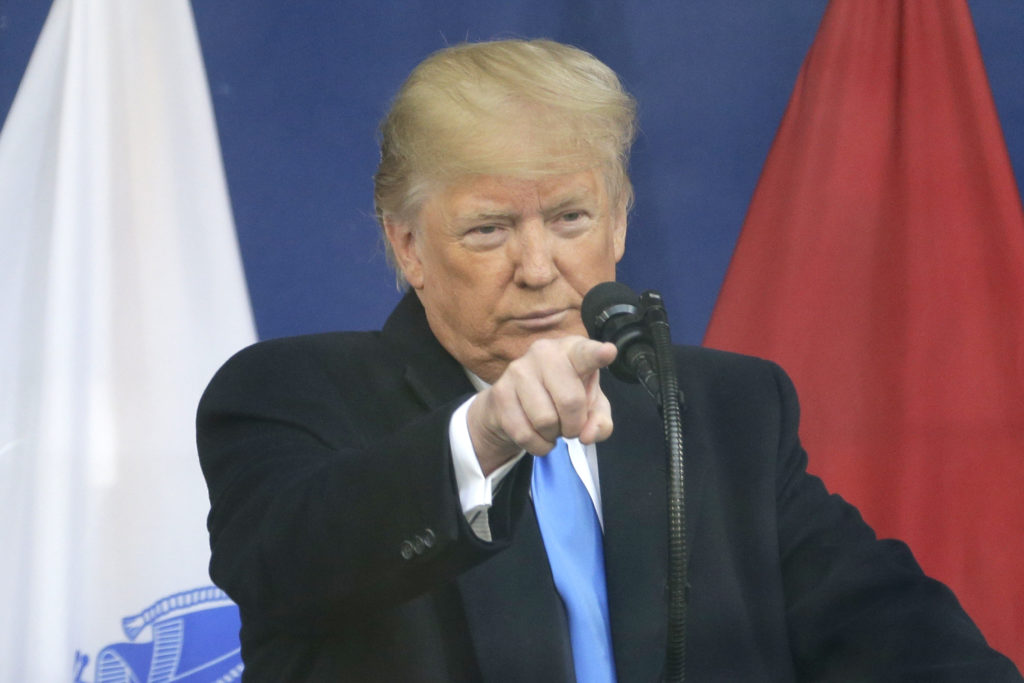
On Veterans Day, President Donald Trump paid tribute to America’s troops at a New York City parade as top 2020 Democratic candidates outlined their plans for the Department of Veterans Affairs, such as naming a woman to run the agency for the first time. The Democratic proposals, coming two days before historic impeachment hearings, sought to highlight policy differences with the embattled president before a key bloc of voters.“The president has let veterans down,” said Democrat Pete Buttigieg, the 37-year-old mayor of South Bend, Indiana. A former Navy intelligence officer, Buttigieg said female veterans and service members in particular have been neglected, including on concerns about sexual harassment and women’s health. Women are the military’s fastest-growing subgroup. “I think leadership plays a huge role so absolutely I’d seek to name a woman to lead VA,” he said. Trump was the first sitting president to attend New York’s veterans parade, viewing veterans as standing among his biggest supporters. Past presidents have typically spent Veterans Day at Arlington National Cemetery for a ceremonial wreath laying. Trump praised the strength of the U.S. military and the death of Islamic State leader Abu Bakr al-Baghdadi, saying the nation’s veterans “risked everything for us. Now it is our duty to serve and protect them every single day of our lives.” More than 100 protesters booed, some holding black balloons that read “support our troops, impeach.” In a liberal city where Trump is deeply unpopular in spite of his roots there, a nearby building’s soaring windows were adorned with signs reading “IMPEACH” and “CONVICT.” Veterans overall have strongly backed Trump throughout his presidency, though views vary widely by party, gender and age, according to AP VoteCast, a survey of 2018 midterm voters. In particular, younger veterans and women generally were more skeptical of Trump, who received multiple draft deferments to avoid going to Vietnam. Former Vice President Joe Biden, whose late son Beau spent a year in Iraq with the Army, stressed that he would “restore trust” in VA. Taking aim at Trump’s stalled progress in reducing suicide among veterans, Biden pledged to hire more VA staff to cut down office wait times for vets at risk of suicide to zero as well as continuing the efforts of the Obama-Biden administration to stem homelessness. About 20 veterans die by suicide each day, a rate basically unchanged during the Trump administration. Trump earlier this year directed a Cabinet-level task force to develop a broader roadmap for veterans’ suicide prevention, due out next spring. “Our veterans deserve leaders who will fight for them as ardently and as forcefully as they have fought for us,” Biden wrote in a Veterans Day statement with his wife, Jill. In a jab at Trump, Vermont Sen. Bernie Sanders released a video highlighting his role in working with the late Republican Sen. John McCain, a decorated war hero, to pass legislation that included the Veterans Choice program in 2014. Trump routinely takes credit for being the first to enact the Choice program. What he actually got done was an expansion of the program achieved by McCain and Sanders, a former chairman of the Senate Veterans Affairs Committee. Speaking at an event focused on seniors and veterans in Des Moines, Iowa, Sanders pledged to combat efforts to privatize the VA and assured a questioner that he would end the “very ugly practice” of deporting military veterans who are not U.S. citizens. “How cruel is it that when people put their lives on the line to protect us,” they are deported, he said. As president, Sanders promised he would build upon his past legislative efforts by making it easier for veterans to get into the VA system. He joins Buttigieg and Massachusetts Sen. Elizabeth Warren in urging increases in doctor pay to attract top VA candidates and fill 49,000 VA positions that have sat vacant as the Trump administration promoted private health care options. During a Veterans Day speech in Rochester, New Hampshire, Buttigieg reflected on his own military path, while taking some digs at Trump. “Having seen the outrage of Americans willing to put their lives on the line for this country having their careers threatened by a president who avoided his own chance to serve, yes, we are going to end the transgender military ban right away,” Buttigieg said. He added later in the speech that the VA needs to be depoliticized. “We’re going to have five-year terms for key positions so that decisions are made based on what is best for veterans and not based on whoever last spoke to the president during a golf game or made the right campaign contribution,” Buttigieg said. During a campaign stop in southeast Iowa, Biden noted that he carries with him every day the totals of those who have died as a consequence of wars in Iraq and Afghanistan. As of Monday, he told about 200 people at a private college in Oskaloosa, the total had reached 6,900. “Every single one of those fallen angels leave a broken community behind,” he said. Tens of thousands more, however, have returned home with post-traumatic stress disorder, Biden said. “They are in trouble and they deserve every single thing we can give them,” he said. Yen reported from Washington. Associated Press writers Alexandra Jaffe in Des Moines, Iowa, Tom Beaumont in Oskaloosa, Iowa, and Zeke Miller in New York contributed to this report. By Hope Yen and Hunter Woodall Associated Press. Republished with the permission of the Associated Press.
APNewsBreak: Pete Buttigieg hopes to name 1st female VA secretary
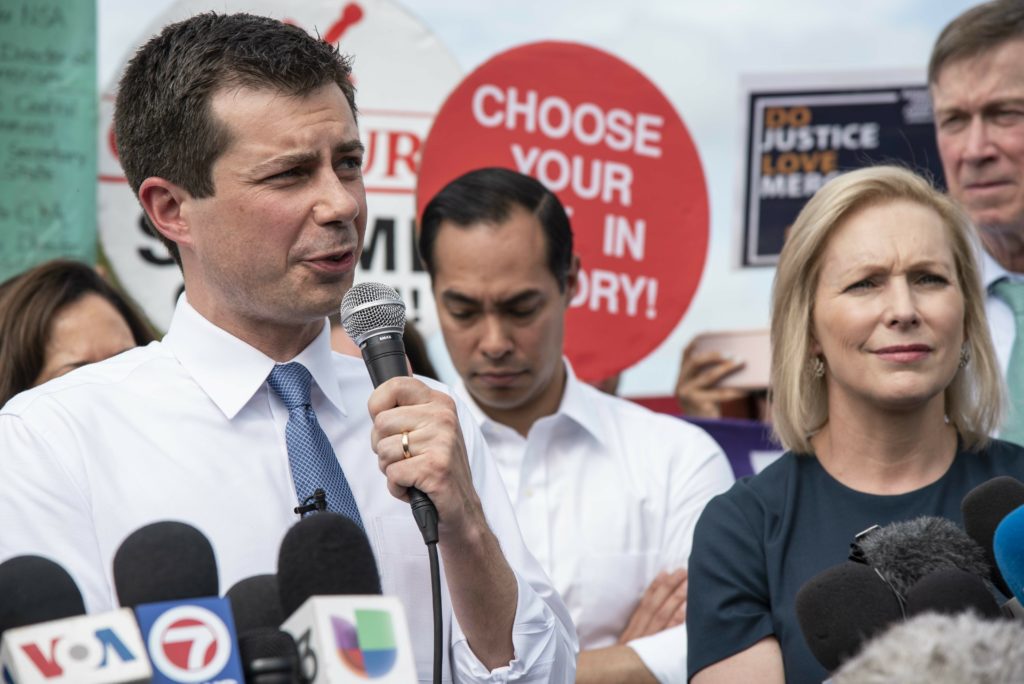
Democratic presidential candidate Pete Buttigieg says if elected he’d like to name a woman to lead the Department of Veterans Affairs for the first time as 2020 hopefuls take aim at President Donald Trump’s record on stemming military suicide and helping female vets. On Veterans Day, several candidates rolled out proposals to meet the needs of America’s 20 million former service members. Buttigieg, the 37-year-old mayor of South Bend, Indiana, said female veterans and service members have been neglected, including on concerns about sexual harassment and women’s health. Women are the military’s fastest-growing subgroup. “I think leadership plays a huge role so absolutely I’d seek to name a woman to lead VA,” Buttigieg, a former Navy intelligence officer, said in an interview with The Associated Press. His comments went a step beyond his 21-page wide-ranging plan released on Monday.“The president has let veterans down,” Buttigieg said. Of the Cabinet and Cabinet-level roles, four have never been held by a woman: Veterans Affairs, Defense, Treasury and White House chief of staff. Buttigieg says he’d take a close look at appointing a female defense secretary as well. Former Vice President Joe Biden’s campaign said he would seek to build on current gains for vets that were started under the Obama-Biden administration, such as stemming homelessness and improving mental health care. “Joe has a long record of support for veterans and our military families,” press secretary Jamal Brown said. “Bringing down the high rate of suicide among our military and veterans will be a top priority for a Biden administration.” In a dig at Trump, Vermont Sen. Bernie Sanders released a video on Monday highlighting his role in working with the late Republican Sen. John McCain, a decorated war hero, to pass legislation that included the Veterans Choice program in 2014. Trump routinely takes credit for being the first to enact the Choice program, ignoring the fact that it was signed into law by President Barack Obama. What Trump got done was an expansion of the program achieved by McCain and Sanders. That expanded program, one of Trump’s signature accomplishments, seeks to steer more veterans over the next decade to private-sector doctors outside the VA. Sanders, a former chairman of the Senate Veterans Affairs Committee who voted against Trump’s plan, says the expanded program goes too far in its investments in the private sector, rather than core VA health care , which many veterans view as better suited to treat battlefield injuries such as post-traumatic stress disorder. Sanders joins Buttigieg and Massachusetts Sen. Elizabeth Warren in urging increases in doctor pay to attract top VA candidates and fill 49,000 VA positions that have sat vacant as the Trump administration promoted private health care options. Sanders said he would fill those vacancies in his first year as president and provide at least $62 billion in new funding to repair and modernize VA facilities to provide cutting-edge care. “We will not dismantle or privatize the VA. We will expand and improve the VA,” Sanders said Monday. Buttigieg told the AP that he would look at rolling back some of the Trump administration’s rules expanding Choice. All the Democratic candidates who have articulated veterans’ plans call for added funding and training for suicide prevention. Buttigieg specifically proposes a new 24/7 VA “concierge” service aimed at guiding at-risk vets into mental health care. Currently, about 20 veterans die by suicide each day, a rate basically unchanged during the Trump administration. Trump earlier this year directed a Cabinet-level task force to develop a broader roadmap for veterans’ suicide prevention, due out next spring. Buttigieg, like Warren, would seek to improve responses to sexual assault in the military by shifting prosecution from military commanders to independent prosecutors. He also wants to put particular focus on stemming homelessness among women vets, many of whom may have experienced sexual trauma. He pointed to his seven-month deployment in Afghanistan in 2014 and watching the impact a female general had “culturally” on the NATO-led International Security Assistance Force. “When a leadership body is more gender diverse, it makes better decisions. So I would absolutely be looking at that,” Buttigieg told the AP. He’s previously pledged to appoint women to at least 50 percent of his Cabinet positions. While veterans overall have strongly backed Trump throughout his presidency, views vary widely by party, gender and age, according to AP VoteCast, a survey of 2018 midterm voters. In particular, younger veterans and women generally were more skeptical of Trump, who received multiple draft deferments to avoid going to Vietnam. A study released by the VA earlier this year found 1 in 4 women veterans using VA health care reported inappropriate comments by male veterans on VA grounds, raising concerns they may delay or miss their treatments. The VA also has rebuffed efforts by Iraq and Afghanistan Veterans of America and other groups to change the VA motto, which some vets believe is outdated and excludes women. That motto refers to the VA’s mission to fulfill a promise of President Abraham Lincoln “to care for him who shall have borne the battle, and for his widow, and his orphan.” Buttigieg said he would direct his VA secretary to change that motto to “fairly represent the diversity of service members and veterans.” Currently, about 10 percent of the nation’s veterans are female. In the U.S. military forces, about 17 percent of those enlisted are women, up from about 2 percent in 1973. By Hope Yen Associated Press HOPE YEN. Republished with the permission of the Associated Press.
Michael Bloomberg opens door to 2020 Democratic run for president
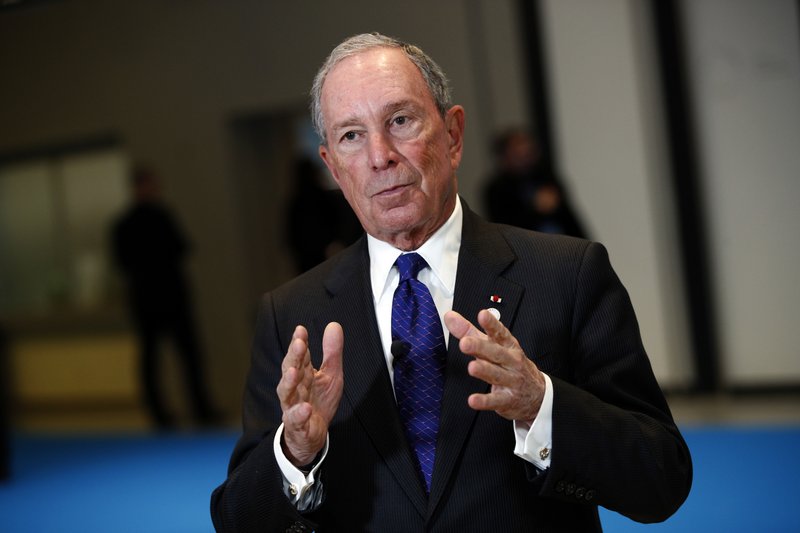
Michael Bloomberg, the billionaire former mayor of New York City, is opening the door to a 2020 Democratic presidential campaign, warning that the current field of candidates is ill equipped to defeat President Donald Trump. Full Coverage: Election 2020 Bloomberg, who initially ruled out a 2020 run, has not made a final decision on whether to jump into the race. If he were to launch a campaign, it could dramatically reshape the Democratic contest less than three months before primary voting begins. The 77-year-old has spent the past few weeks talking with prominent Democrats about the state of the 2020 field, expressing concerns about the steadiness of former Vice President Joe Biden’s campaign and the rise of liberal Massachusetts Sen. Elizabeth Warren, according to people with knowledge of those discussions. In recent days, he took steps to keep his options open, including moving to get on the primary ballot in Alabama ahead of the state’s Friday filing deadline. In a statement on Thursday, Bloomberg adviser Howard Wolfson said the former mayor believes Trump “represents an unprecedented threat to our nation” and must be defeated. “But Mike is increasingly concerned that the current field of candidates is not well positioned to do that,” Wolfson said. Bloomberg’s moves come as the Democratic race enters a crucial phase. Biden’s front-runner status has been vigorously challenged by Warren and Vermont Sen. Bernie Sanders, who are flush with cash from small-dollar donors. But both are viewed by some Democrats as too liberal to win in a general election faceoff with Trump. Despite a historically large field, some Democrats anxious about defeating Trump have been looking for other options. Former Attorney General Eric Holder and former Massachusetts Gov. Deval Patrick have quietly had conversations with supporters urging them to consider a run, but neither appears likely to get in the race. Bloomberg, a Republican-turned-independent who registered as a Democrat last year, has flirted with a presidential run before but ultimately backed down, including in 2016. He endorsed Hillary Clinton in that race and, in a speech at the Democratic Party convention, pummeled Trump as a con who has oversold his business successes. Bloomberg plunged his efforts — and his money — into gun control advocacy and climate change initiatives. He again looked seriously at a presidential bid earlier this year, traveling to early voting states and conducting extensive polling, but decided not to run in part because of Biden’s perceived strength. Biden did not address Bloomberg’s potential candidacy at a fundraiser Thursday night in Boston. With immense personal wealth, Bloomberg could quickly build out a robust campaign operation across the country. Still, his advisers acknowledge that his late entry to the race could make competing in states like Iowa and New Hampshire, which have been blanketed by candidates for nearly a year, difficult. Instead, they previewed a strategy that would focus more heavily on the March 3 “Super Tuesday” contests, including in delegate-rich California. Some Democrats were skeptical there would be a groundswell of interest in the former New York mayor. “There are smart and influential people in the Democratic Party who think a candidate like Bloomberg is needed,” said Jennifer Palmieri, who advised Clinton’s 2016 campaign. “But there is zero evidence that rank-and-file voters in the early states of Iowa and New Hampshire feel the same.” Still, others credited Bloomberg with taking on “some of America’s biggest challenges” and finding success. “While this is not an endorsement, Michael Bloomberg is a friend and I admire his track record as a successful business leader and Mayor who finds practical solutions to some of America’s biggest challenges, from creating good jobs to addressing the opioid crisis and fighting for common-sense gun safety,” said Rhode Island Gov. Gina Raimondo, a Democrat. Bloomberg reached out to several prominent Democrats on Thursday, including Raimondo. One Democrat Bloomberg hasn’t spoken to as he’s reconsidered his run is former President Barack Obama. Bloomberg would pose an immediate ideological challenge to Biden, who is running as a moderate and hopes to appeal to independents and Republicans who have soured on Trump. But the billionaire media mogul with deep Wall Street ties could also energize supporters of Warren and Sanders, who have railed against income inequality and have vowed to ratchet up taxes on the wealthiest Americans. “He’s a literal billionaire entering the race to keep the progressives from winning,” said Rebecca Katz, a New York-based liberal Democratic strategist. “He is the foil.” Warren on Thursday tweeted: “Welcome to the race, @MikeBloomberg!” and linked to her campaign website, saying he would find there “policy plans that will make a huge difference for working people and which are very popular.” Bloomberg would face other challenges as well, particularly scrutiny of his three terms as mayor. He has defended the New York Police Department’s use of the controversial stop-and-frisk policy that has been criticized as targeting African Americans and Hispanics. Black voters in particular are one of the most powerful constituencies in Democratic politics. Bloomberg will have to move quickly in the coming days and weeks to get on the ballot in many of the primary states, including Alabama. New Hampshire’s filing deadline is Nov. 15. In Arkansas, another Super Tuesday state, a Democratic Party spokesman said a person representing a “mystery candidate” reached out Thursday afternoon asking about the requirements to join the ballot. Reed Brewer, communications director for the Arkansas Democrats, said he walked the individual through the process — which simply requires filing documentation with both the state party and secretary of state, as well as paying a $2,500 fee — and was assured that the fee would be “no problem” for the mystery candidate. There is no filing requirement for a candidate to run in the Iowa caucuses, which are a series of Democratic Party meetings, not state-run elections. It means a candidate can enter the race for the Feb. 3 leadoff contest at any time. Associated Press writers Jill Colvin in Washington; Alexandra Jaffe and Thomas Beaumont in Des Moines,
Democrats push candidates to fully commit to 2020 nominee
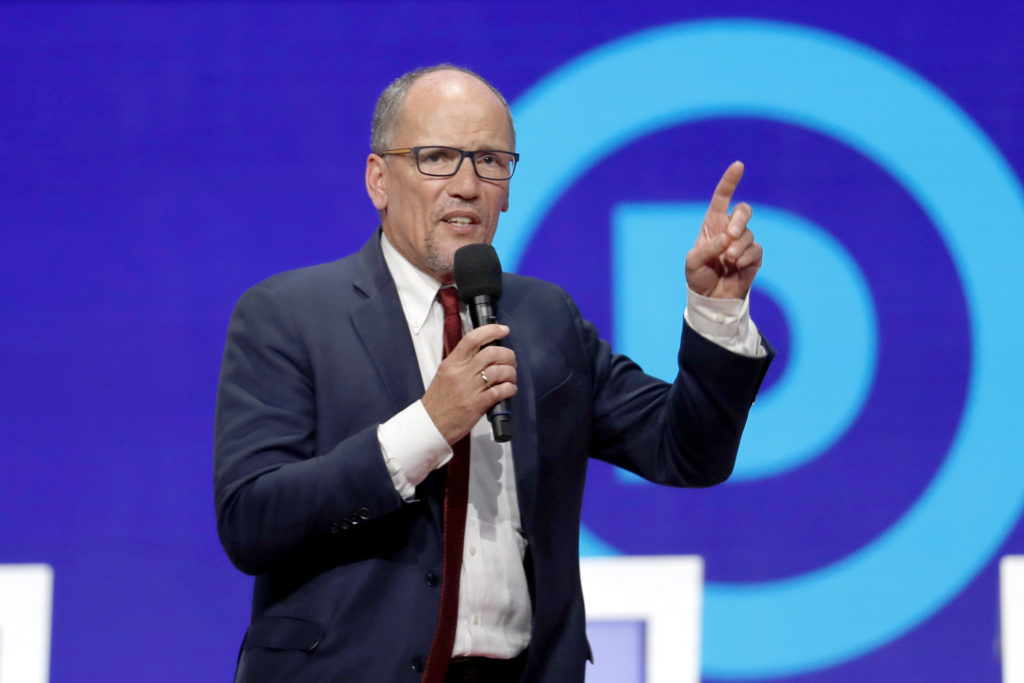
The Democratic National Committee is increasing pressure on its presidential candidates to commit to campaign actively for the party’s nominee in 2020, going beyond a previous loyalty pledge for White House hopefuls. The push from Chairman Tom Perez is part of a wide-ranging strategy designed to prevent the mistakes that cost Democrats the 2016 presidential election. It comes as the Republican National Committee continues to dwarf the Democratic Party in fundraising, while Democrats face the prospect of a bruising, expensive nominating fight that could last well into election year. “We’ll need every Democrat working together in order to defeat Donald Trump,” Perez said, repeating his pledge for a full national campaign even as most Democrats remain focused on the primary campaign. As an example, the DNC holds up former President Barack Obama, who is already raising money and remains neutral in a nominating fight that includes his vice president, Joe Biden, and who is already raising money for the party. An Oct. 25 email from Obama to grassroots donors produced the party’s best online fundraising day of the cycle, the DNC said, and the former president will headline a fundraising gala in California in November. DNC officials say Obama has already talked with party leaders about campaigning on behalf of the nominee, whoever it is. Perez is asking all candidates to commit, like Obama, to serve as surrogates, with a focus on battleground states in the weeks after the July 13-16 nominating convention in Milwaukee. And Perez wants each campaign, as candidates drop out, to designate a senior adviser to serve as a liaison to help the national party use the vestiges of individual candidates’ campaigns to build out Democrats’ general election campaign. DNC officials say the effort isn’t targeted at any campaign. But since President Donald Trump’s 2016 election, Democratic power players have lamented the bitterness that lingered among many supporters of Bernie Sanders after he lost the nomination to Hillary Clinton. Sanders endorsed and campaigned for Clinton, but some of his supporters never fully embraced her candidacy, and some Clinton loyalists blamed them for her narrow losses in key states like Wisconsin, Michigan and Pennsylvania. DNC officials say the overall purpose of what Perez calls a “unity effort” is to pool all Democratic resources, making them available to state parties in battleground states to benefit the presidential nominee and all other Democrats running for lower offices. Perez already has required candidates to pledge explicitly to support the nominee. Candidates also have been asked to help the party raise money and, as a condition of getting the DNC’s national voter file, pledge to give back the additional data they gather on voters once they drop out of the presidential race. The DNC says 10 candidates to date have sent fundraising emails and 15 have participated in fundraising events. That list includes Elizabeth Warren, who has shunned high-dollar fundraisers for her own campaign but agreed to help the party with events that include wealthy donors who legally can give the party hundreds of thousands of dollars. Sanders, Warren’s chief rival for the Democrats’ progressive faction, has sent a fundraising email but hasn’t yet hosted a DNC fundraiser. Sanders’ campaign says he is willing to attend such events provided they are open to low-dollar donors. Both Sanders and Warren have criticized Biden for leaning on wealthy donors and accepting the help of an independent political action committee that can accept unlimited contributions from individuals and corporations. The data requirements, meanwhile, are part of Democrats’ attempts to catch up to a Republican data operation that surprised the Clinton campaign in 2016 and to avoid the scenario under Obama, whose campaign ran its own sophisticated data operation but never fully integrated it with the party. Sanders also never turned over his voter data after ending his 2016 bid. By Bill Barrow Associated Press. Republished with the permission of the Associated Press.
