
Steve Schale: Unsolicited advice for Bernie Sanders
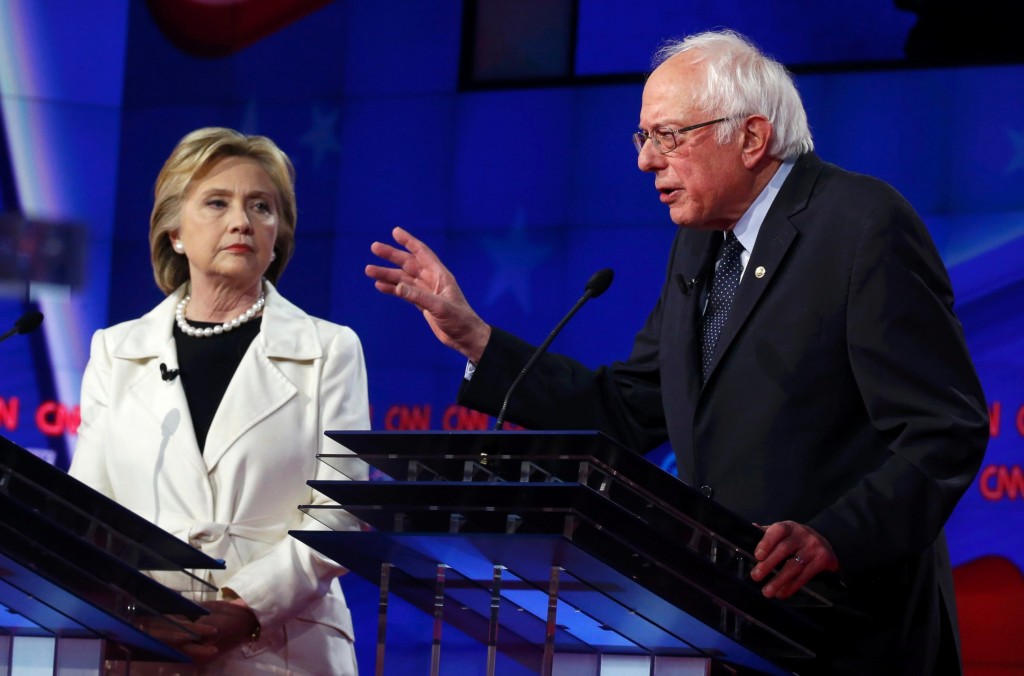
One of the hardest things for a campaign, particularly one completely engaged in the fight, is to see beyond itself. Typically, this only gets worse when campaigns, both ones winning and losing, reach the desperate phase — the point when you have simply run out of options because the end is near. Every candidate wants to win, so no campaign, at any level of the ballot, is immune. Right now, Bernie Sanders falls into this box. Over the past month or so, as it became more and more clear his campaign is nearing the end, the campaign has taken on a sharper edge, saying and doing things that make it harder for him to land the plane softly. But now the plane is going to land regardless – and after tomorrow, there really is no tomorrow. If he were to ask, below is the advice I would give to Bernie Sanders. So here goes, my Memo to Bernie Sanders 1. Use Your Political Capital Wisely: You will never have more political capital than you have today, but every day that goes by, you will lose a bit of your capital. Whether you want it to or not, the party is going to move on. You want to define the terms of your exit, not have it defined for you, and in this frame, you need to figure out what deliverables they can actually give you. As you know, politics is zero-sum, so be realistic, and remember, that conversation isn’t the end game. 2. You need to go all in for her: It may be counter-intuitive, but the success of your movement — and your ability to lead it, is entirely dependent on Hillary Clinton winning. If she loses, your movement won’t look to you for leadership, but instead will start looking for new candidates — and many Democrats will blame you for the loss. But when she wins, you can use your movement to push for more progressive policies. 3. Don’t obsess about the platform: No one has ever read it. No one ever will. And yes, the nomination process in both parties is messed up. But that isn’t today’s fight – beating Donald Trump is. 4. Help her win, then take credit for it: Right now, the sense is the Democratic Party is not united. You often say that you can’t make your followers do what you want, but we all know this isn’t true. Just like Hillary Clinton made it easy for her supporters to join up with Obama, you need to do the same. And when she wins in November, driven by a united Democratic coalition, the campaign obits will all give you credit for it, and all of the sudden, you will find yourself in charge of an incredibly powerful movement — with a president who can help you get things done. 5. Think long term. Change doesn’t happen in Washington, change starts in local communities. Encourage and help your activists run for school boards, city commissions, and state legislatures. Your campaign has been a moment — but you can build a movement by inspiring a generation of young activists to understand a lifetime of public service is an honorable one, and look back in 15-20 years and see what real change looks like. The biggest thing you should do Wednesday is get some sleep. Go back to Burlington for a day or two, get your team off the television, and take a day or two to catch your breath. At some level, I’ve been there. After three months in the barrel for Joe Biden, it was hard to stop fighting. But with space and rest, the path will become clear. And senator, remember leadership isn’t just about inspiring a movement, it is also about knowing when to lead your team off the mountain before you are trapped in a storm. Your job now is to give your movement the best chance to succeed in the future. Your loudest supporters will want you to push on — but your job is to help them understand why it is time to move on.
AP count: Hillary Clinton has delegates to win Democratic nomination
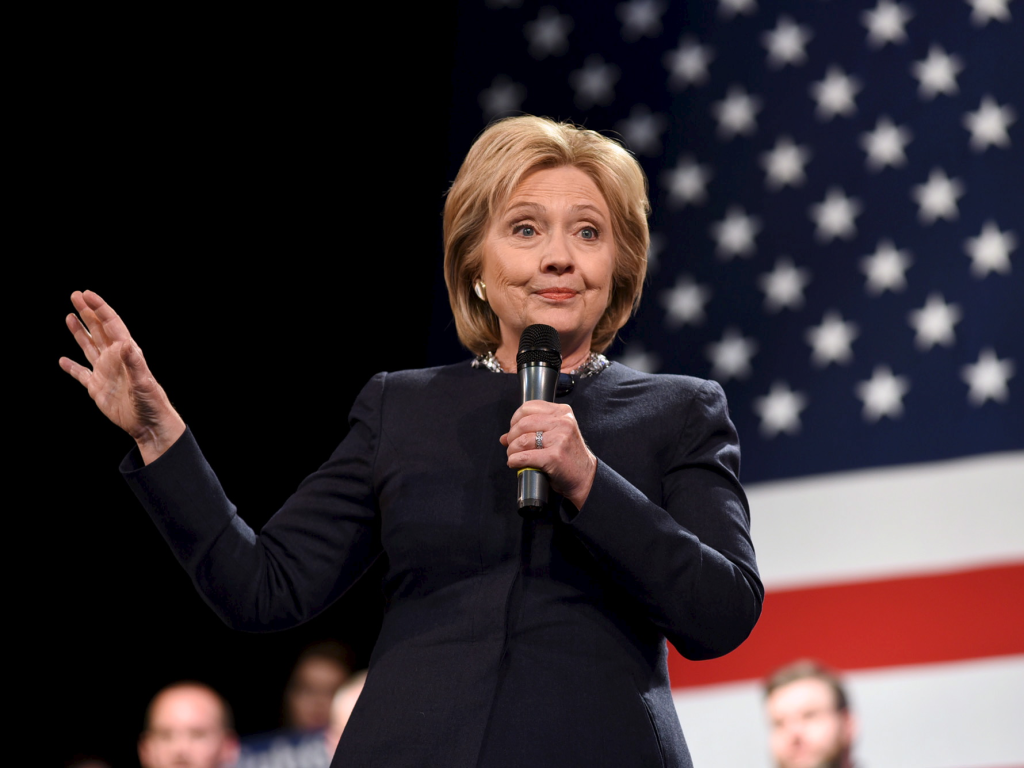
Striding into history, Hillary Clinton will become the first woman to top the presidential ticket of a major U.S. political party, capturing commitments Monday from the number of delegates needed to become the Democrats’ presumptive nominee. The victory arrived nearly eight years to the day after she conceded her first White House campaign to Barack Obama. Back then, she famously noted her inability to “shatter that highest, hardest glass ceiling.” Campaigning this time as the loyal successor to the nation’s first black president, Clinton held off a surprisingly strong challenge from Vermont Sen. Bernie Sanders. He mobilized millions with a fervently liberal message and his insurgent candidacy revealed a deep level of national frustration with politics-as-usual, even among Democrats who have controlled the White House since 2009. Clinton, the former secretary of state, New York senator and first lady, reached the 2,383 delegates needed to become the presumptive Democratic nominee Monday with a decisive weekend victory in Puerto Rico and a burst of last-minute support from superdelegates. Those are party officials and officeholders, many of them eager to wrap up the primary amid preference polls showing her in a tightening race with presumptive GOP nominee Donald Trump. Clinton has 1,812 pledged delegates won in primaries and caucuses. She also has the support of 571 superdelegates, according to an Associated Press count. The AP surveyed all 714 superdelegates repeatedly in the past seven months, and only 95 remain publicly uncommitted. While superdelegates will not formally cast their votes for Clinton until the party’s July convention in Philadelphia, all those counted in her tally have unequivocally told the AP they will do so. “We really need to bring a close to this primary process and get on to defeating Donald Trump,” said Nancy Worley, a superdelegate who chairs Alabama’s Democratic Party and provided one of the last endorsements to put Clinton over the top. Clinton outpaced Sanders in winning new superdelegate endorsements even after his string of primary and caucus wins in May. Following the results in Puerto Rico, it is no longer possible for Sanders to reach the 2,383 needed to win the nomination based on the remaining available pledged delegates and uncommitted superdelegates. Sanders said this past weekend he plans to fight on until the convention, promising to make the case to superdelegates that he is better positioned to beat Trump in November. Superdelegates can change their minds. But since the start of the AP’s survey in late 2015, no superdelegates have switched from supporting Clinton to backing Sanders. Indeed, Clinton’s victory is broadly decisive. She leads Sanders by more than 3 million cast votes, by 291 pledged delegates and by 523 superdelegates. She won 29 caucuses and primaries to his 21 victories. That’s a far bigger margin than Obama had in 2008, when he led Clinton by 131 pledged delegates and 105 superdelegates at the point he clinched the nomination. Echoing the sentiments of California Gov. Jerry Brown, who overcame a decades-long rivalry with the Clinton family to endorse her last week, many superdelegates expressed a desire to close ranks around a nominee who could defeat Trump in November. “It’s time to stand behind our presumptive candidate,” said Michael Brown, one of two superdelegates from the District of Columbia who came forward in the past week to back Clinton before the city’s June 14 primary. “We shouldn’t be acting like we are undecided when the people of America have spoken.” Though she marched into her second presidential primary campaign as an overwhelming favorite, Clinton could not shake Sanders until its final days. He campaigned aggressively in California ahead of the state’s Tuesday election, unwilling to exit a race Clinton stood on the cusp of winning. Beyond winning over millions of Sanders supporters who vow to remain loyal to the self-described democratic socialist, Clinton faces challenges as she turns toward November, including criticism of her decision to use a private email server run from her New York home while serving as secretary of state. Her deep unpopularity among Republicans has pushed many leery of Trump to nevertheless embrace his campaign. “This to me is about saving the country and preventing a third progressive, liberal term, which is what a Clinton presidency would do,” House Speaker Paul Ryan told the AP last week after he finally endorsed Trump, weeks after the New Yorker clinched the GOP nomination. Yet Clinton showed no signs of limping into the general election as she approached the milestone, leaving Sanders behind and focusing on lacerating Trump. She said electing the billionaire businessman, who has spent months hitting her and her husband with bitingly personal attacks, would be a “historic mistake.” “He is not just unprepared. He is temperamentally unfit to hold an office that requires knowledge, stability and immense responsibility,” Clinton said last week in a speech that was striking in its forcefulness, previewing a brutal five-month general election campaign to come. Even without the nomination, Sanders can claim ideological victory. His liberal positions pushed the issue of income inequality into the spotlight and drove Clinton to the left on issues such as trade, Wall Street and campaign finance reform. But she prevailed, in part, by claiming much of the coalition that boosted Obama. She won overwhelming support from women and minorities, catapulting her to decisive victories in diverse, delegate-rich states such as New York and Texas. When Clinton launched her campaign last April, she did so largely unopposed, having scared off more formidable challengers by locking down much of the party’s organizational and fundraising infrastructure. Vice President Joe Biden, seen as her most threatening rival, opted not to run in October. Of the four opponents who did take her on, Sanders was the only one who emerged to provide a serious challenge. He caught fire among young voters and independents, his campaign gaining momentum from a narrow loss in Iowa in February and a commanding victory in New Hampshire. His ability to raise vast sums of money online gave him the resources to continue into the spring. But
Presidential Primary Brief: 154 days until Election Day
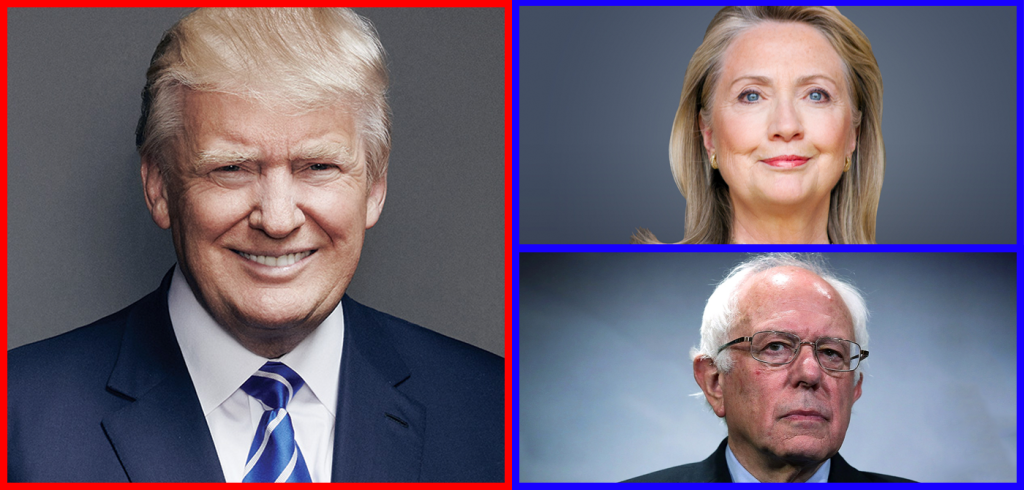
154 days until Election Day Convention Dates: Republican July 18-21 2016, Democratic July 25-28 2016 Weekly Headlines: Obama dives into 2016 fight, lambasts GOP on economy Libertarians Pick Gary Johnson & William Weld as Presidential Election Ticket RNC taps groups reviled by Trump to write GOP platform Press Clips: Frank Luntz: The 2016 presidential election will be determined by the ‘none of the above’ voters (LA Times 6/1/16) If prior elections were decided by soccer moms, security moms, NASCAR dads, or even “the economy, stupid,” the 2016 presidential election will be determined by the NAs — the none of the above voters who have so far refused to support either Hillary Clinton or Donald Trump. For them, the election isn’t about mere dissatisfaction. It’s about rejection. Comprising about 11% of the electorate in the critical swing states, the NAs are unwilling or unable to distinguish between our two wildly different candidates — arguably the most different of any presumptive nominees in modern history. These voters are loud, aggressive, and they give me a headache. San Jose, California, police under fire after Trump rally (WTOP 6/3/16) This Silicon Valley city and its police department are facing mounting complaints of a tepid and tardy law enforcement response to attacks of Donald Trump supporters after a political rally. Videos circulating online show physical clashes occurring in front of San Jose police officers dressed in riot gear and standing stoically in a line outside the convention center where Trump spoke. Critics also complained that assaults occurred on side streets near the venue that lacked police presence. Election 2016 Leadership Contrast: Résumé vs. Bumper Sticker, Pollster Says (WSJ 6/3/16) As the 2016 presidential primary season comes to a close for both parties, voters have gotten a pretty clear impression of what kind of leadership they would get from former Secretary of State Hillary Clinton and New York businessman Donald Trump. The latest Wall Street Journal/NBC News poll helps illustrate how dramatically different those impressions of the two presumptive nominees are. GOP pollster Micah Roberts concludes that Mrs. Clinton’s selling points read like a résumé; Mr. Trump’s like a bumper sticker. Boomers 35% Of Voters In 2016 Presidential Election (MediaPost 5/30/16) According to the American Consumers Newsletter by Cheryl Russell, New Strategist Press, the Baby-Boom generation will account for more than one-third of voters in the 2016 presidential election, outnumbering voters in the other generations. Millennials will account for 26% of the total. Gen Xers will rank third, casting 20% of votes, more than the Silent and World War II generations combined. The oldest members of the iGeneration (aged 18 to 21) will cast their first vote for president in 2016, and they will account for just 4% of the total. Demo Memo calculated these figures by applying single-year-of-age citizenship and voting rates from the 2012 presidential election to the Census Bureau’s 2016 population projections. How Donald Trump could win (CNN 6/1/16) Donald Trump’s transition from primary flame-thrower to general-election standard bearer has been marked by controversy. In just the past week, he’s caused an uproar by blasting the Republican governor of New Mexico — one of the party’s most prominent Latinas — while also calling Elizabeth Warren “Pocahontas” and abruptly parting ways with his recently hired political director. But there are also signs that he’s willing to moderate some of his primary positions and take more conventional steps to prepare for November, such as building out a national finance team, hiring a pollster, accepting checks from wealthy donors and hitting the fundraising circuit. Oil analyst: Here’s who Saudi Arabia wants as the next U.S. president (CNBC 6/1/16) The U.S. presidential race is capturing the interest of every nation as onlookers look to see who becomes the next “leader of the free world.” According to Bob McNally, president of consulting firm Rapidan Group, countries in the oil-producing Middle East, including Saudi Arabia, are hoping for Hillary Clinton to become president. The presidential election is scheduled for early November and the two leading contenders are viewed as Donald Trump, the presumptive Republican nominee, and Clinton, front- runner for the Democratic nomination. How new voter ID laws may affect the 2016 presidential contest (PBS 6/5/16) 17 states will have new voting regulations in place for the presidential election this November. 12 states will join the ranks of those requiring voters to show a government-issued photo ID, including North Carolina and Texas. For more insight on these new regulations, Hari Sreenivasan speaks with Reuters National Affairs Editor Jason Szep. California’s registered voters hit record high ahead of Tuesday presidential primary (LA Times 6/5/16) With one of the most closely watched presidential primary seasons in modern times0, California’s voter rolls grew by almost 650,000 in the final six weeks of registration. And three of every four new voters were Democrats. On Friday, Secretary of State Alex Padilla released the final report of voter registration prior to the June 7 statewide primary. The deadline to register for Tuesday’s election was May 23. Of the 646,220 people who registered in the final rush —between April 8 and May 23 — 76% became Democrats. ‘Missing’ White Voters Might Help Trump, But Less So Where He Needs It (FiveThirtyEight 6/2/16) A common refrain is that demographics will ultimately doom Donald Trump’s candidacy. His most reliable supporters have been whites without college degrees — a group that made up 65 percent of voters in 1980 but is on pace to make up just 33 percent in 2016. Meanwhile, nonwhite voters, with whom Trump is extremely unpopular, rose from 12 percent of the electorate in 1980 to 28 percent in 2012.
After weekend wins, Hillary Clinton on cusp of Democratic nomination
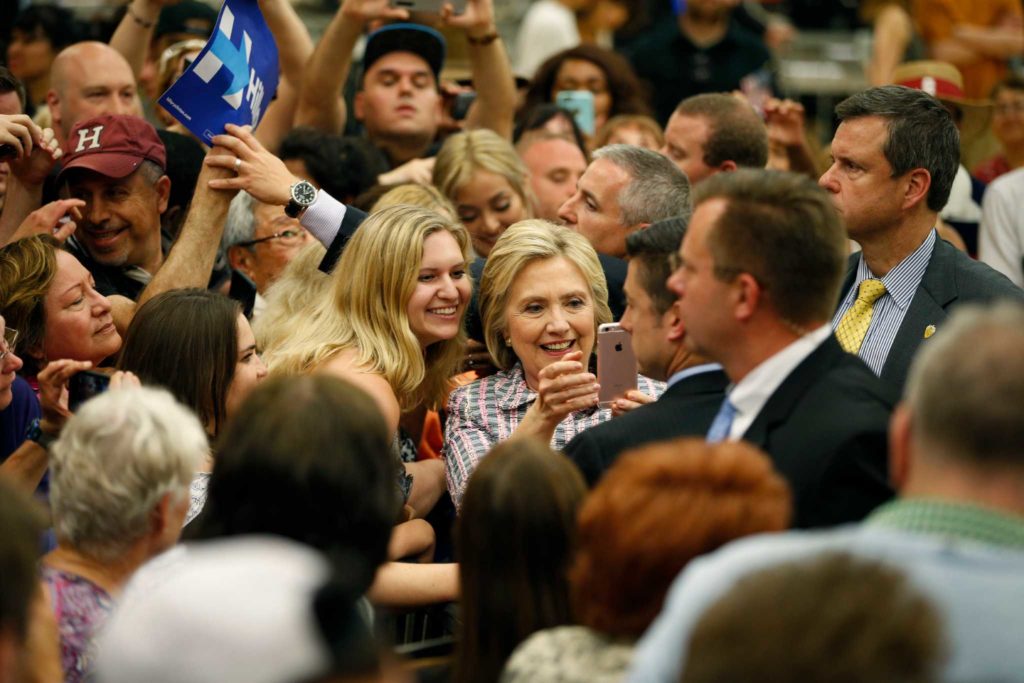
Hillary Clinton stands on the cusp of having enough delegates to claim the Democratic presidential nomination, having overwhelmed Bernie Sanders in a pair of weekend elections in the Caribbean. Yet the former secretary of state barely noted her commanding wins Saturday in the U.S. Virgin Islands and Sunday in Puerto Rico, instead remaining focused on Tuesday’s contest in California and five other states — and a general election matchup to come against presumptive GOP nominee Donald Trump. “We’re going to have a very contentious campaign,” Clinton said late Sunday night at a rally in the California capital, “because I’m going to point out at every single moment that I can why I believe the Republican nominee should never get near the White House.” Urging voters to come out Tuesday, Clinton said she wants to “finish strong in California. It means the world to me.” After blowout weekend wins the two U.S. territories, Clinton is now 26 delegates short of the 2,383 needed to win the nomination, according to an Associated Press count. Clinton won all seven delegates available in the U.S. Virgin Islands and at least 33 of the 60 delegates available in Puerto Rico. She beat the Vermont senator there by roughly 61 percent to 39 percent. Clinton now has 1,809 pledged delegates won in primaries and caucuses; Sanders has 1,520. When including superdelegates, the party insiders who can vote for the candidate of their choice at the party’s summer convention, her lead over Sanders is substantial: 2,357 to 1,566. Though Clinton did not spend much time campaigning in Puerto Rico, the victory is fraught with symbolism for her campaign. Eight years ago, with the presidential nomination slipping from her grasp, she rolled through the streets of San Juan on the back of a flat-bed truck, wooing voters to a soundtrack of blasting Latin music. She beat then-Illinois Sen. Barack Obama with nearly 68 percent of the vote. “I’m for Hillary, girl,” said 83-year-old Candida Dones on Sunday as she cast her ballot. “I can’t wait for a female president. She’s one of us. She wears the pants. If we don’t look out for our own interests, who will?” Both Clinton and Sanders spent Sunday in California, the biggest prize among the six states voting on Tuesday. Sanders shook hands and stopped for photos during a stroll of more than an hour along the shops, restaurants and amusement park rides of the Santa Monica Pier. That included a stop at a charity “Pedal on the Pier” fundraiser, where Sanders told people riding on stationary bikes that the U.S. should have “an economy that works for all people, not just the one percent.” Like Clinton, Sanders made little mention of the outcome in Puerto Rico’s primary. He said during an evening rally in San Diego that Democratic leaders should take notice that the “energy and grassroots activism” that will be crucial to the party in the fall “is with us, not Hillary Clinton.” He pointed to polls showing him faring better than Clinton in head-to-head matchups with Trump and his strength among Democratic voters under the age of 45. “If the Democratic leadership wants a campaign that will not only retain the White House but regain the Senate and win governors’ chairs all across this country, we are that campaign,” he said. While those watching the results in Puerto Rico focused on their impact on the race for the Democratic nomination, the focus of many voters on the island was its ongoing economic crisis. Both Sanders and Clinton have pledged to help as the island’s government tries to restructure $70 billion worth of public debt that the governor has said is unpayable. “This is one of the most important political moments for Puerto Rico,” said Emanuel Rosado, a 29-year-old Clinton supporter. “I’m taking action as a result of the economic crisis.” Two weeks before the primary, Sanders criticized a rescue deal negotiated by U.S. House leaders and the Obama administration as having colonial overtones. In a letter to fellow Senate Democrats, Sanders said the House bill to create a federal control board and allow some restructuring of the territory’s $70 billion debt would make “a terrible situation even worse.” Clinton has said she has serious concerns about the board’s powers, but believes the legislation should move forward, or “too many Puerto Ricans will continue to suffer.” Among those voting Sunday was Democratic Party superdelegate Andres Lopez. He had remained uncommitted, but said Sunday he will support Clinton. “It is time to focus on squashing ‘El Trumpo,’” he said. Republished with permission of The Associated Press.
Hillary Clinton to attack Donald Trump’s foreign policy in San Diego speech
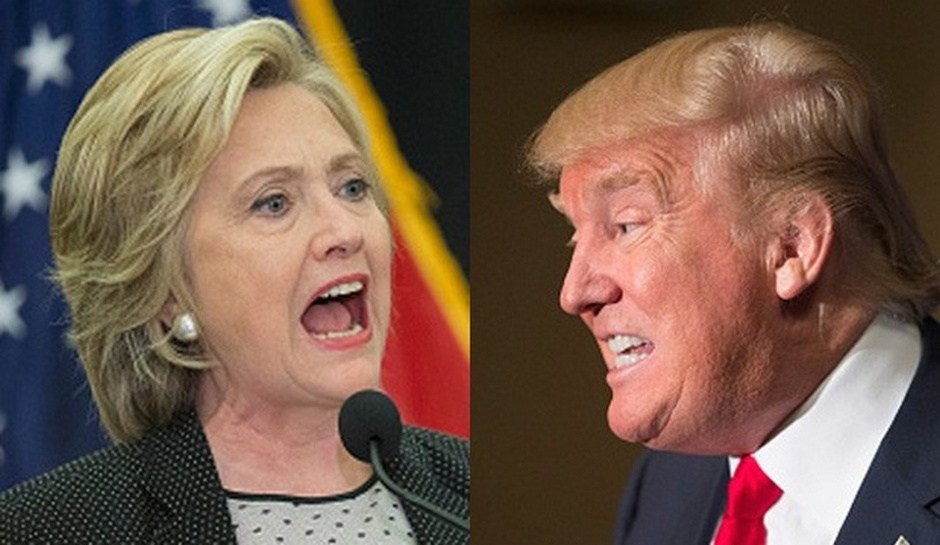
Hillary Clinton is set to unleash a major foreign policy attack on Donald Trump, using a speech in San Diego to cast the Republican as unqualified and dangerous. The former secretary of state, who has repeatedly called Trump a “loose cannon,” will seek Thursday to contrast her foreign policy experience with Trump’s. Foreign policy adviser Jake Sullivan said Clinton would make clear how high the stakes are in the race, as well as share her “larger vision of who we are, what we’re all about as a country.” “She is going to make clear why Donald Trump is simply unqualified to be commander in chief,” Sullivan said, adding that the speech “will go into specifics in a very direct and clear way about what makes Donald Trump unfit, both in terms of temperament and ideas. This is as full-throated and full-bodied a case as you will have seen from anyone on the danger that Donald Trump poses.” During an appearance in Newark, New Jersey, Wednesday, Clinton assailed Trump over his past statements, criticizing him for proposing to ban Muslims from entering the country, for advocating the use of torture and for saying other countries should acquire nuclear weapons. “This is not just divisive rhetoric, my friends, this is dangerous,” Clinton said. “What he has already said has given aid and comfort to terrorists.” Clinton and Trump offer starkly different visions of U.S. foreign policy. Clinton’s detail-oriented proposals reflect the traditional approach of both major parties. Despite differences on some issues, such as the Iraq war and Iran, Democratic and Republican presidents have been generally consistent on policies affecting China, Russia, North Korea, nuclear proliferation, trade, alliances and many other issues. Trump says U.S. foreign policy has failed. His strong-man “America first” approach is short on details, but appeals to the emotions of angry voters who believe that successive leaders have weakened the country, made it vulnerable to terrorism and have been duped into bad trade deals that have cost American jobs. Trump accused Clinton of lying about his foreign policy plans at a rally at an airport hangar in Sacramento, California, Wednesday night. “She lies. She made a speech and she’s making another one tomorrow. And they sent me a copy of the speech and it was such lies about my foreign policy,” Trump said. “They said I want Japan … to get nuclear weapons. Give me a break,” he objected. “I want Japan and Germany and Saudi Arabia and South Korea and many of the NATO nations – they owe us tremendous. We’re taking care of all these people. And what I want them to do is pay up.” Trump has suggested in the past that he might be OK with Japan one day obtaining nuclear weapons. Clinton’s campaign hopes her foreign policy experience will appeal to voters who may be wary of Trump’s bombastic style and lack of international experience. They hope those points, combined with Trump’s controversial statements about women and minorities, will give Clinton opportunities with independent and moderate Republican voters. In recent days, Clinton has criticized Trump over his past business practices, his recent promises to raise money for veterans and his now defunct education company, Trump University. On Wednesday Clinton called Trump a “fraud” and said the real estate mogul had taken advantage of vulnerable Americans. Trump has pushed back against the critiques. On the education company, he has maintained that customers were overwhelmingly satisfied with the offerings. While Clinton is stressing her concerns about Trump, she is still dealing with her primary race. Clinton needs just 71 more delegates from states voting Tuesday to win the Democratic primary, but is dealing with an increasingly tough fight with rival Bernie Sanders in California, where the Vermont senator is gaining in polling. Clinton plans to be in California though Monday as she seeks to avoid a primary loss there. Republished with permission of The Associated Press.
Tom Jackson: After IG report, only Bernie Sanders doesn’t care about Hillary Clinton email treachery
Bernie Sanders might be the only person in America who still doesn’t “care about [Hillary Clinton’s] damn emails.” But the State Department inspector general’s withering report on the matter certainly has everyone else’s attention. And now even those buried deep for more than a year in Ready-for-Hillary denial knows, irrefutably: Everything the Democratic Party’s presidential front-runner has said about her use of private email and her home-brew server is, to apply the correct term, a lie. She neither sought nor obtained permission for her unique email arrangement. She knew at all times her out-of-bounds arrangement put sensitive material at risk. She knew about ongoing attempts to hack her setup, and she took no corrective measures. In other chilling words, this wasn’t just “a mistake.” And it wasn’t merely a failure of judgment — although it surely was that, too. She was cavalier about preserving and surrendering self-identified agency-related emails, leaving the IG to discover certain damning correspondence through other means. And, despite spouting at every turn that she was ready to talk to anybody from the government at any time to help clear up any misconceptions, she ducked every interview attempt by the IG, making her uniquely elusive among secretaries of state, former and current, subject to the probe. Yes, the report provides a smidgen of cover. Other secretaries of state used private accounts. The department itself has a history of records-keeping sloppiness. But these amount to window dressing that cannot obscure the serious nature of Clinton’s reckless, rules-shattering and, indeed, patently illegal behavior. What does Sanders say? He didn’t, actually, having taken himself out of this particular game months ago. Instead, a campaign spokesman offered up a big “meh.” “The IG report speaks for itself.” That’s it? It speaks for itself? This unwillingness to drive home the stake poised over the heart of his adopted party’s soulless front-runner makes you wonder whether Sanders really does want to win the Democratic nomination, or if he’s sticking around just to bust up the living room furniture. Meanwhile, the GOP’s presumptive nominee was typically incoherent and self-distracting, telling supporters in Anaheim, California, Clinton “had a little bad news.” In a response, MSNBC’s “Morning Joe” Scarborough snidely called “Churchillian,” Donald Trump waxed characteristically manic: “She’s as crooked as they come. She had a little bad news today, as you know, from some reports that came down — weren’t so good. Not so good. The inspector general’s report — not good.” He immediately shifted to a rant about “Crazy Bernie” and a long-rumored party-salvaging deus ex machina moment for Vice President Joe Biden. “Bad news”? “Not good”? That’s all you’ve got, Donald? Wow. Just wow. But if Trump essentially blew his opportunity to expand and expound upon Clinton’s national-security-threatening misdeeds, the FBI is unlikely to be satisfied with sentence fragments and eighth-grade zingers. And the FBI is where the action is now. The investigation should, and almost certainly will, pivot on the definition of “gross negligence,” a legal term of art that puts the suspect at risk without regard to whether she was acting intentionally and with knowledge that she knew what she was doing was illegal. Clinton knew she was operating outside the rules — rules, indeed, she took pains to enforce on underlings. And she knew, as the IG’s report makes plain, she was putting sensitive material at risk. But those were rules for others, not for a Clinton. And as Hill and Bill have made plain, rules never are for Clintons. At least, they haven’t been in the past. FBI Director James Comey’s primary lies ahead. Whatever comes from it, voters now have a clearer picture of what yet another Clinton presidency would mean. ___ Recovering sports columnist and former Tampa Tribune columnist Tom Jackson argues on behalf of thoughtful conservative principles as our best path forward. Fan of the Beach Boys, pulled-pork barbecue and days misspent at golf, Tom lives in New Tampa with his wife, two children and two yappy middle-aged dogs.
Bernie Sanders’ campaign requests Kentucky vote recanvass
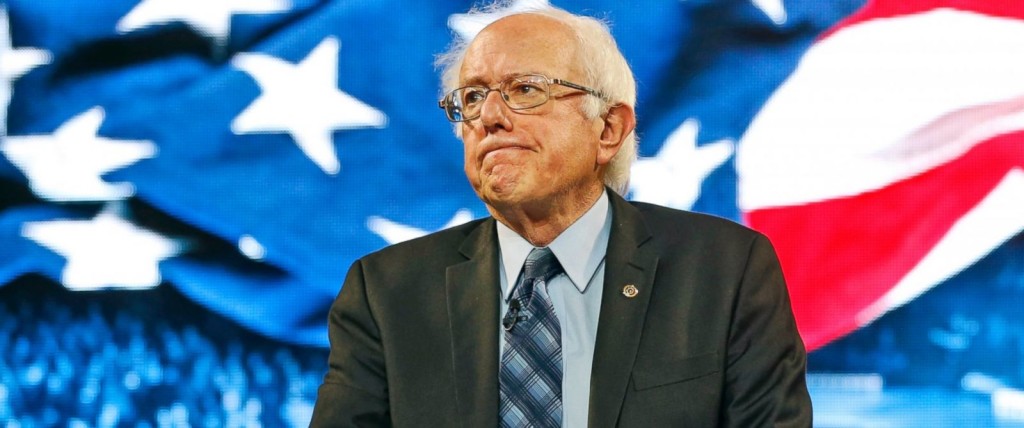
Bernie Sanders‘ presidential campaign requested a recanvass in Kentucky’s presidential primary Tuesday, where he trails by less than one-half of 1 percent of the vote. The Sanders campaign said it will ask the Kentucky secretary of state to have election officials review electronic voting machines and absentee ballots from last week’s primary in each of the state’s 120 counties. Sanders signed a letter Tuesday morning requesting a full and complete check and recanvass of the election results in Kentucky. “He’s in this until every last vote is counted and he’s fighting for every last delegate,” said Sanders’ spokesman Michael Briggs. Clinton holds a 1,924-vote lead over Sanders out of 454,573 votes cast. The Associated Press had not called the race, despite Clinton’s slight lead, in the event that Sanders might ask to recanvass the vote. A recanvass is not a recount but a review of the voting totals. It is unlikely to affect the final outcome but could affect the awarding of a single delegate still up for grabs. Sanders has vowed to amass as many delegates as possible in his lengthy primary fight against Clinton, where he trails the former secretary of state by 274 pledged delegates according to a count by The Associated Press. Clinton holds a substantial lead with party leaders and elected officials, called superdelegates, and is on track to clinch the nomination through the combination of pledged delegates and superdelegates after contests on June 7. Sanders can ask a judge to order a recount or an examination of individual ballots, but his campaign would have to pay for it. The deadline to request a recanvass is Tuesday at 4 p.m. Clinton and Sanders both picked up 27 delegates in Kentucky, and one remaining delegate will be allocated in the sixth congressional district, which includes Frankfort and Lexington. The delegate will be awarded based on final vote tallies and Clinton currently leads Sanders by a slim margin of about 500 votes in that district. The recanvass is conducted by the state at no cost to the campaign. A tip in the statewide vote in Sanders’ favor would not guarantee him that last delegate. But if a recanvass were to determine he actually received more votes than Clinton in the sixth congressional district, Sanders could earn the last remaining delegate that Clinton would otherwise receive. Earlier this year, Sanders could have pressed for a review of voting results in the leadoff Iowa caucuses and in Missouri’s primary. He narrowly lost both contests. But in those cases, he chose not to contest the results but pursue delegates later in the process. Republished with permission of The Associated Press.
Presidential Primary Brief: 168 days until Election Day
168 days until Election Day Convention Dates: Republican July 18-21 2016, Democratic July 25-28 2016 Weekly Headlines: Trump slips by Clinton in a virtual dead heat in new poll Mark Cuban: I’d consider a future White House bid Sanders backs DNC chair’s primary opponent NRA facing member backlash over Trump endorsement Press Clips: Model That Correctly Predicted Every Election Since 1980 Gives 2016 Verdict (Daily Caller 5/22/16) One of the world’s most well-known financial institutions which correctly predicted every presidential election since 1980 is predicting a win for Hillary Clinton. Moody’s Analytics, a subsidiary of credit ratings agency Moody’s, believes President Obama’s strong approval ratings will give the Democratic nominee a significant advantage come November. Aviation security, presidential election featured on Sunday talk shows (USA Today 5/21/16) Aviation safety and terrorism will share the spotlight with the 2016 presidential election on the five major Sunday talk shows this week. The cause of the crash of an EgyptAir plane into the Mediterranean Sea remains unknown, but it has renewed questions about how to protect airline passengers from tragic accidents and intentional acts of terror. Members of Congress with responsibility for homeland security, foreign affairs and intelligence appear on four shows, as well as Secretary of Homeland Security Jeh Johnson, who will be on Fox News Sunday. Polls Predict a Tightening Presidential Race (National Review 5/17/16) The results from our latest national survey completed on May 16 shows that the de facto end of the Republican presidential nomination and the continuation of Hillary Clinton’s pyrrhic victory over Bernie Sanders are signaling some important cross currents within national voter opinion. Supreme Court Punts on Little Sisters’ Obamacare Case Until After 2016 Election (Breitbart 5/16/16) The Court expresses no view on the merits of the cases.” With that, the Supreme Court in Zubik v. Burwell (the official name for the various “Little Sisters of the Poor” cases) punted the latest Supreme Court fight over Obamacare to 2017 or beyond — but did so in a fashion that conservatives can be happy about for now, teeing up yet another issue that will be decided one way or the other by 2016’s presidential election. Presidential Elections And The Trump Effect On The U.S. Dollar (Forbes 5/18/16) Politics and economics make for intimate bedfellows. The effects of the former on the latter are significant, particularly when the prize is the Oval Office, as in the case of the U.S. Presidential Elections in November this year. While Hillary Clinton and Bernie Sanders are competing for the Democratic Party leadership nomination, Donald Trump is the Republican Party’s presumptive presidential nominee. The Democratic primary race and the Presidential Elections will have an impact on currency market sentiment, as will the result of the election. Here’s How Many Primaries Are Left (Fortune 5/18/16) Admit it — even the most hardcore political junkies, the ones who have watched every debate and stayed up late on every primary night, are ready for primary season to be over. Soon, it will be. For Democrats, the following states still have to vote: Washington (non-binding primary) on May 24. Virgin Islands (12 delegates) on June 4. Puerto Rico (67 delegates) on June 5. California (548 delegates), Montana (27 delegates), New Jersey (142 delegates), New Mexico (43 delegates), North Dakota (23 delegates), and South Dakota (25 delegates) on June 7. And, finally, Washington, DC (46 delegates) on June 14. On the GOP side, here’s what is left: Washington (44 delegates) on May 24. California (172 delegates), Montana (27 delegates), New Jersey (51 delegates), New Mexico (24 delegates), and South Dakota (29 delegates) on June 7. That’s it. When It Comes To Economic Election Prediction Models, It’s A Mixed Bag (NPR 5/17/16) Most election prediction models that try to forecast who’s going to win the presidency take into account some measure of how the economy is doing. That’s because generally if it’s going strong in the six months or so before the election, history suggests the party currently in the White House will win. If the economy stinks, the party not in the White House takes over. But, what if the economy is just so-so like it is now? 538 founder Nate Silver gives Donald Trump 25 percent chance of beating Hillary Clinton (Washington Times 5/15/16) Political prognosticator Nate Silver said Sunday that he gives Republican Donald Trump a 25 percent chance of winning the 2016 presidential election, while noting that he has been wrong before. Mr. Silver admitted that he initially gave Mr. Trump only a 5 percent chance of capturing the Republican nomination, saying he would peak early and “flame out” like 2012 presidential contender Herman Cain. “This is one of the crazier things we’ve seen in politics for a long time. I think it was fair for us to be skeptical early on about the odds this could occur,” Mr. Silver told CNN’s “Reliable Sources.” Stocks, not polls, could predict election winner (USA Today 5/22/16) Ignore the pundits and polls. If you want to know which candidate will win the presidential election, the stock market will let you know. That’s right, it turns out that the Standard & Poor’s 500 index has “correctly predicted” 19 of the past 22 elections, according to data compiled by Daniel Clifton, an analyst at Strategas Research Partners who specializes in how politics impacts financial markets. So who’s got a better shot at the White House in November? Billionaire Donald Trump? Or former first lady and secretary of State Hillary Clinton? US election: Donald Trump open to talks with North Korea (BBC News 5/18/16) Presumptive US Republican presidential candidate Donald Trump says he is willing to meet North Korea’s leader to discuss its nuclear programme. “I would speak to him, I would have no problem speaking to him,” the businessman said of Kim Jong-un. Such a meeting would mark a significant change of US policy towards the politically isolated regime. Conservatives in secretive group ‘slow walk’ Trump support (CNN Politics 5/17/16) Donald Trump has inflicted a dark night of the
Darryl Paulson: The trials and tribulations of Reince Priebus and Debbie Wasserman Schultz
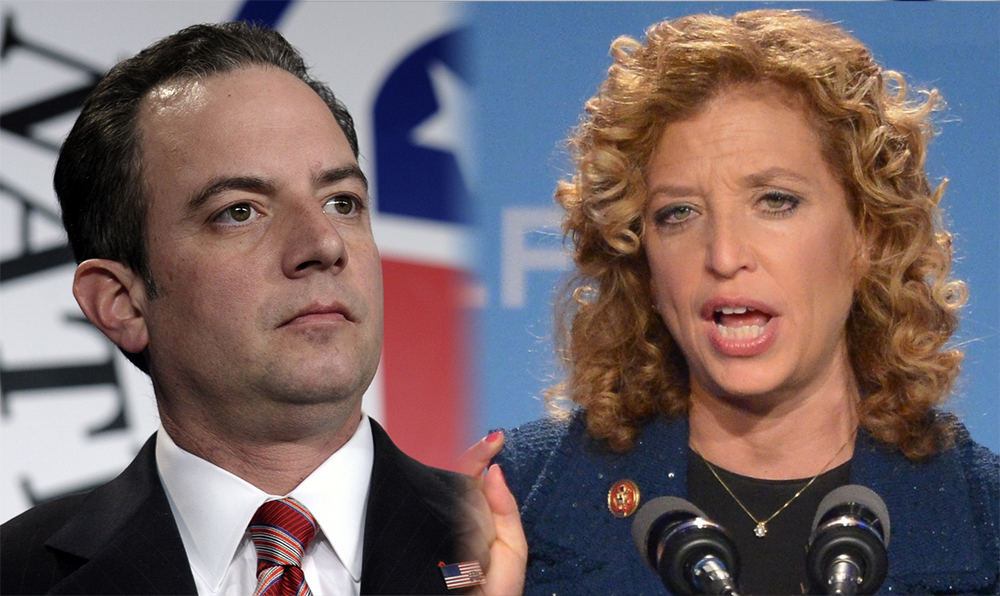
When the 2016 presidential campaign began, everyone believed that Hillary Clinton would quickly wrap up the Democratic nomination since she faced what many saw as token opposition. It was the Republicans, who had enough candidates to field a football team, who were expected to have a bitter, protracted primary. As so often has been the case in 2016, conventional wisdom was dead wrong. Donald Trump, who most thought would never enter the primary process, who not only entered the primaries but tore his opponents to shreds. Trump did what Julius Caesar wrote about 2,000 years ago: He came. He saw and he conquered. Clinton, who was supposed to dominate the small and weak Democratic field, is still engaged in a long and increasingly bitter campaign with Bernie Sanders. It may well be the Democrats, not the Republicans, who find themselves in the midst of a contested national convention. Both parties are headed by individuals who have chaired the party for many years. Reince Priebus was perceived to have the most difficult job in expanding the party’s appeal to minorities and women while at the same time having a candidate who spat at vitriol at those groups as fast as he could Twitter. On the Democratic side, Debbie Wasserman Schultz has chaired the party since 2011. Managing the 2016 Democratic presidential campaign has been far more confrontational than she and fellow Democrats anticipated. Both Priebus and Schultz have faced a common problem: dealing with a candidate who believes the system is rigged, and the party establishment is doing whatever it can to defeat their campaign. Trump was considered such a loose cannon and political liability to the party that Priebus developed a loyalty oath procedure to prevent Trump from fleeing the party and mounting an independent or third-party campaign. Splitting the party would guarantee a Democratic victory in the fall. As difficult as it has been for Priebus to manage the Republicans, it has been even worse for Wasserman Schultz. From the very beginning, Sanders and his supporters have argued that Schultz has done everything possible to undermine his campaign. Sanders and his campaign manager Jeff Weaver have contended that Wasserman Schultz had “rigged the election” for Clinton. Few debates were scheduled, and when they were held, they were scheduled on weekends when viewership would be minimal. The Sanders campaign also alleged that the party chair denied them access to their own election data, and they had to sue to retrieve their own data. Finally, they argue that Wasserman Schultz appointed “hostile Hillary partisans” to key committees at the national convention. It is not just the Sanders campaign that is complaining about the biased conduct of the party chair. Congresswoman Tulsi Gabbard, a DNC member, was critical of the number and scheduling of the debates. As a result, the chair revoked her invitation to the first Democratic presidential debate. Gabbard resigned from the DNC in protest. Van Jones, a CNN contributor and active Democrat, has complained that Wasserman Schultz, instead of being neutral, is “coming in harder for Hillary than she is for herself.” “I wish Reince Priebus was my party chair,” notes Jones. “He did a better job of handling the Trump situation than I’ve seen my party chair handle the situation.” MSNBC News host Chris Hayes summarized a common view of the bias of Wasserman Schultz for Clinton. “It is clearly the case when given truth serum, Debbie Wasserman Schultz vastly prefers Hillary Clinton to be the party’s nominee. . .” Mika Brzezinski, co-host of “Morning Joe” on MSNBC, has called on Wasserman Schultz to resign, and Joe Scarborough said that “If the party I was a member of treated me like this … I’d say, ‘Go straight to hell, I’m running as an independent.” Donald Trump has jumped in to support Sanders by saying that “Bernie Sanders is being treated very badly by the Democrats and the system is rigged against him.” Trump clearly benefits from a divided Democratic Party and has urged Sanders voters to support Trump in the fall. Wasserman Schultz’s management of the Democratic presidential race has created problems in her own re-election campaign. She is now facing a serious challenge from Tim Canova, a law professor at Nova Southeastern Law School. Canova has raised more than a million dollars to challenge Wasserman Schultz, an impressive amount for someone running against the chair of the Democratic Party. Wasserman Schultz has raised $1.8 million and has the support of both President Obama and Vice President Biden. But, for those who think Wasserman Schultz will easily win re-election, they might want to talk to former Republican Majority Leader Eric Cantor, who ended up losing to little-known professor Dave Brat. On the primary election night, Wasserman Schultz might recall the words of songwriter Leslie Gore: “It’s my party, and I’ll cry if I want to.” ••• Darryl Paulson is professor emeritus of government at USF St. Petersburg.
Donald Trump to wary Republicans: Trust me. Really.
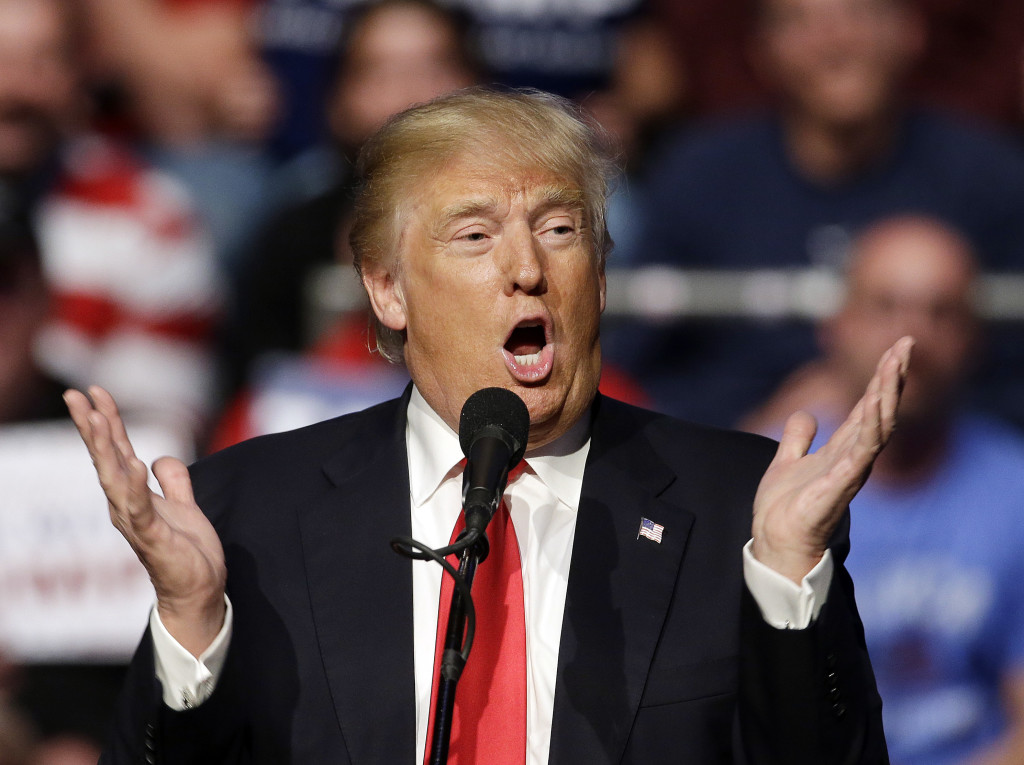
Call it Donald Trump‘s trust-me tour of the Republican establishment. The lone political survivor of a riotous GOP primary is embarking on another campaign, this time to convince wary Republican leaders to sign on to his improbable turn as their presidential nominee. Trump is seeking to show – not just tell – that he’s a conservative who will unite the party and help the GOP hang on to its congressional majorities. Trump’s branding effort is showing signs of working: He’s collected some key endorsements on Capitol Hill. And some critics, such as Sen. Lindsey Graham, have muted their nastygrams. But he’s working in what could be a very short window, while likely Democratic opponent Hillary Clinton labors to vanquish Sen. Bernie Sanders‘ stubborn challenge. And it’s far from clear how long Trump and top Republicans can remain on their best, most unified behavior. Here’s a look at Trump’s drive for buy-in from the GOP establishment: —- TRUST ME: I’M A CONSERVATIVE It’s one of the top GOP concerns about Trump: He wasn’t a Republican for most of his public life, so how conservative could he be? Who Trump would nominate to the Supreme Court, which now has one vacancy and almost surely will have more in the coming years, has lingered as a key question. House Speaker Paul Ryan discussed the issue with Trump at their meeting last week; the billionaire assured Ryan he’d release a list of potential nominees, “soon.” He demonstrated follow-through: On Wednesday, Trump named 11 federal and state court judges he’d consider as potential replacements for the late Justice Antonin Scalia, any of whom would restore conservative control of the court lost with his death. The group was widely praised as a conservative dream team. — TRUST ME: I’M A LOYAL REPUBLICAN Trump has said for weeks that he wants to unite the party and help it raise always-welcome political cash. On Thursday in New Jersey, he demonstrated one way how. Trump attended fundraisers designed to help former rival Chris Christie and the state Republican Party pay down debt they incurred during the governor’s presidential campaign and the party’s legal bills from the George Washington Bridge scandal. Christie, who folded his presidential campaign and endorsed Trump, took a huge risk earlier this year to endorse the billionaire. The pair attended a $25,000-per-person fundraiser for the state GOP to help it pay off about $500,000 incurred in legal fees, an event that could go a long way toward making that debt disappear. Trump and Christie headlined a separate, $200 per-person fundraiser to pay down Christie’s roughly $250,000 presidential campaign debt. — TRUST ME: THE REPUBLICAN NATIONAL COMMITTEE DOES Trump and the RNC this week signed a joint fundraising agreement that will allow donors to write checks of up to $449,400. The agreement will allow the Trump campaign to raise cash that the national party can spend on both his campaign and other Republican efforts. RNC Chairman Reince Priebus said it will go toward expanding ground, data and digital operations to elect Republicans “up and down the ballot.” — TRUST ME: I’M RUNNING A PROFESSIONAL CAMPAIGN NOW The early iteration of Trump and a few inexperienced aides running the campaign has morphed into a more professional operation as Trump has brought in seasoned political operatives. Political veteran Paul Manafort is running the convention operation; RNC Finance Chairman Lew Eisenberg will head up the joint fundraising project. And after suggesting that pollsters are a waste of money, Trump hired pollster Tony Fabrizio, who’s worked for GOP presidential candidates going back decades. — TRUST ME: I’VE GIVEN POLICY SOME THOUGHT Trump caused much indigestion among Republican leaders in March when he said on MSNBC that women who have abortions should be punished – then changed positions and settled on leaving the law the way it is. Then-rival Ted Cruz groused that Trump clearly hasn’t given “serious thought” to policy. Trump has sought to refute that impression, giving a foreign policy speech to the National Press Club earlier this month, an address to the National Rifle Association on Friday, an energy speech next week and beyond that, an address on economic policy. — TRUST ME: I’M LISTENING Across the Sunday news shows last weekend, key Republicans described party unity as the education of Donald Trump. Even his chief Senate ally, U.S. Sen. Jeff Sessions of Alabama, who sits on the armed services committee, said Trump is “going to need to learn. He’s going to need to understand really completely … how complex this world is.” Also on ABC’s “This Week,” U.S. Rep. Tom Cole, R-Okla., called him “a work in progress.” And Ryan has refused so far to endorse Trump. But Trump is meeting with lawmakers and taking their calls. And his aides, including Manafort, are shuttling between meetings with members of Congress and policy think tanks taking suggestions for policy papers. For all of this stated open-mindedness, though, Trump was quoted by The New York Times last weekend: “Just what I need is more advice. The (Republicans) I beat are still giving me advice.” Republished with permission of The Associated Press.
Presidential Primary Brief: 175 days until Election Day
175 days until Election Day Convention Dates: Republican July 18-21 2016, Democratic July 25-28 2016 Weekly Headlines: Pelosi still withholding Clinton endorsement Georgia poll shows tight presidential race Trump racks up endorsements from House chairs Press Clips: America’s Speed Date with Bernie Sanders (Washington Post 5/15/16) When Sen. Bernie Sanders of Vermont announced his candidacy last spring, he trailed Hillary Clinton by 56 points in national polling. He had the support of less than 6 percent of Democrats. How many of those Democrats were residents of Vermont is hard to say, but it’s pretty safe to assume that part of Sanders’s low poll numbers were the fact that, to most Americans, he was one of the vast majority of the United States of whom they’d never heard. That changed. Quickly. Gallup conducts regular polling on how Americans view presidential candidates, asking respondents whether they view politicians favorably or unfavorably. There’s a third option, too; people can tell Gallup whether they’ve never heard of the candidate. And using that metric, we can get a good sense for how quickly (or slowly) awareness of presidential candidates spread across the country. State GOP leaders crush ‘Never Trump’ rebellions (Politico 5/14/16) Republican activists chose party unity over “never Trump” resistance Saturday, with party leaders in one state after another pressuring their members to fall in line behind the presumptive nominee — and even punishing those who refused. Eleven states held annual Republican conventions or party leadership meetings Saturday, offering a platform for those who still object to Donald Trump as their party’s standard-bearer a prime opportunity to make mischief. But at almost every turn, they slammed into state leaders who closed ranks around a candidate who many once said they’d never support. A GOP senator just compared the 2016 election with 9/11 (The Week 5/15/16) Speaking at the Wisconsin Republican Party Convention on Saturday, Sen. Ron Johnson likened the 2016 presidential election to Sept. 11’s Flight 93, which crashed after the passengers decided to fight the hijackers and keep the plane from hitting its target. “We’re going to be encouraging our fellow citizens to take a vote,” said Johnson, who has endorsed Donald Trump. “It may not be life and death, like the vote the passengers on United Flight 93 took, but boy is it consequential.” If it ends up Trump vs. Clinton, over 25% of born-again Christians are ready to skip voting (Christian Today 5/15/16) An ongoing interactive “polling explorer” by Reuters news agency indicated that as of Friday, May 13, 25.9 percent of “born again Christians” will neither vote for Donald Trump nor Hillary Clinton, and will vote for a third candidate or abstain from voting instead. With the “born-again Christian” filter applied for the May 13 Reuters polling, Trump was favored by 43 percent of 422 respondents while Clinton registered 30.8 percent. However, without any filter, the polling results showed Clinton getting the vote of 38.1 percent of the respondents while Trump had 34 percent. The “Other/wouldn’t vote/refused” sector registered 27.9 percent. Poll predictor Nate Silver gives Trump 25% chance of beating Clinton in November (Washington Times 5/15/16) Political prognosticator Nate Silver said Sunday that he gives Republican Donald Trump a 25 percent chance of winning the 2016 presidential election, while noting that he has been wrong before. Mr. Silver admitted that he initially gave Mr. Trump only a 5 percent chance of capturing the Republican nomination, saying he would peak early and “flame out” like 2012 presidential contender Herman Cain. “This is one of the crazier things we’ve seen in politics for a long time. I think it was fair for us to be skeptical early on about the odds this could occur,” Mr. Silver told CNN’s “Reliable Sources.”
Presidential Primary Brief: 182 days until Election Day
182 days until Election Day Convention Dates: Republican July 18-21 2016, Democratic July 25-28 2016 Weekly Headlines: John Kasich suspends campaign for President Ted Cruz suspends his campaign for President Donald Trump says wealthy may see tax increase Press Clips: The GOP’s 24 hour meltdown (Politico 5/8/16) Donald Trump on Tuesday night assumed the mantle of presumptive nominee and declared: “We want to bring unity to the Republican Party. We have to bring unity.” Three days later, the GOP is tearing itself apart. Friday brought another day of incredible division and revolt with Jeb Bush and Lindsey Graham falling in line not behind Trump, but behind House Speaker Paul Ryan, who said a day earlier that he cannot yet support the brash real estate mogul as his party’s standard-bearer. Trump, instead of trying to make peace, lashed out. He fired off a vicious statement, calling Graham an “embarrassment” with “zero credibility.” Then he laced into both of his former rivals during his rally in Omaha, Nebraska, where he is continuing to campaign ahead of Tuesday’s primary, despite having vanquished the rest of the GOP field. Donald Trump’s latest campaign shifts are not likely to be his last (LA Times 5/8/16) One of the top reasons voters have flocked to Donald Trump’s campaign has been because the tough-talking businessman “tells it like it is,” polls have shown. But what, exactly, Trump stands for has become a shifting picture of policies and proposals that even he acknowledged Sunday may not produce the promised outcomes. It’s not just that the billionaire’s ideas are vague by traditional political standards: bring back jobs, build a “beautiful” wall, “make America great again.” The political newcomer does not appear grounded in an ideology beyond assuring that America is “winning.” Hillary Clinton Says She Is Available for F.B.I. Interviews Over Emails (NY Times 5/8/16) Hillary Clinton said Sunday that the F.B.I. had not asked to interview her as part of its inquiry into her use of a personal email server as secretary of state. But Mrs. Clinton reiterated on CBS’s “Face the Nation” that she would make herself available to law enforcement officials as necessary. The investigation into Mrs. Clinton’s email practices and her handling of classified intelligence has shadowed her presidential campaign, and CNN reported last week that she was likely to be interviewed soon by the F.B.I. Mrs. Clinton said on Sunday that no meeting had been requested or scheduled. Trump: My tax plan is negotiable (Politico 5/8/16) Presumptive GOP presidential nominee Donald Trump said in an interview aired Sunday his tax plan was negotiable, explaining that taxes for the wealthy needed to “go up” — a stance that appears to contradict what’s in his plan. “For the wealthy, I think, frankly, it’s going to go up. And you know what, it really should go up,” Trump said on NBC News’ “Meet the Press.” His said his tax plan, which would lower tax rates for the wealthiest Americans, would be the opening bid of a negotiation with Congress and that his numbers were a “Floor.” Bernie Sanders rides ‘political revolution’ with thousands in N.J. (NJ.com 5/8/16) He’s down but not out, and his supporters are charged up. The math isn’t on U.S. Sen. Bernie Sanders’ side when it comes to securing the Democratic nomination, but thousands of eager supporters welcomed the underdog White House hopeful to New Jersey on Sunday and enthusiastically cheered on to “Light back and make a political revolution.” The cheers that filled the room and echoed off the walls of Rutgers University’s Louis Brown Athletic Center in Piscataway turned into roars of support when Sanders preached Lighting income inequality, the war or drugs and racial discrimination. “We have come a very long way in the past year,” Sanders said. “Real change is coming to America.” Nevada has option to vote ‘none of the above’ in 2016 presidential election (Las Vegas Now 5/4/16) The presidential race has narrowed and the only candidates still vying for the nomination are Hillary Clinton, Bernie Sanders and Donald Trump. Trump’s the only candidate in the race for the GOP, but for a lot of Republicans, he’s not their first choice. “I vehemently oppose our nominee in some of the comments and issues that he brought up during the campaign,” said U.S. Senator Dean Heller, R-NV. “Things he said about Muslims; issues he brought up about women and the Hispanic community — I just cannot agree with some of his positions, but I will tell you that I will not be voting for Hillary Clinton. I stated that early on, I will not be supporting a candidate that is nothing more than a third term of the Obama administration. So I will be looking else where in November.” Trump: I don’t know how people make it on $7.25 an hour (Politico 5/8/16) Donald Trump said in an interview aired Sunday he wants to see the minimum wage increased but would rather it be done by the states than the federal government. The presumptive GOP presidential nominee’s openness to increases in the minimum wage is a reversal from his previous stance that the minimum wage should not be raised, including when he famously pronounced during a debate last year that wages were “too high.”
