
Tommy Tuberville wins GOP Senate race, House runoffs undecided
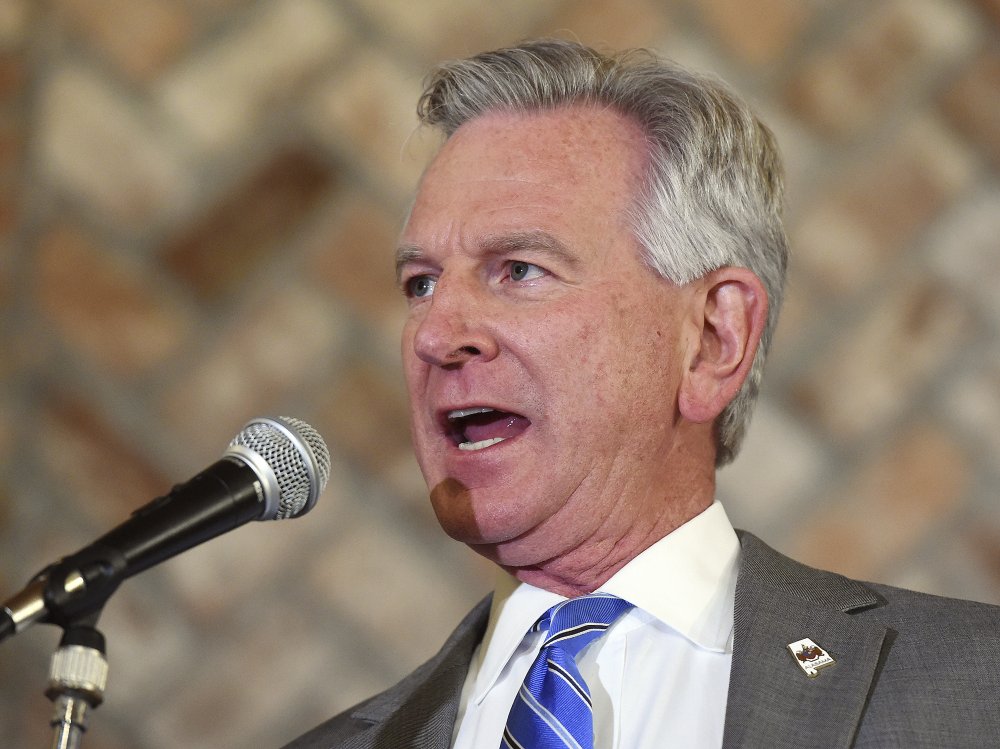
Former football coach and first-time candidate Tommy Tuberville handily defeated former U.S. Attorney General Jeff Sessions.
Senate, House runoffs included on today’s runoff ballot
The nation focuses its attention on Alabama today.
Senate, House runoffs included on Alabama runoff ballot
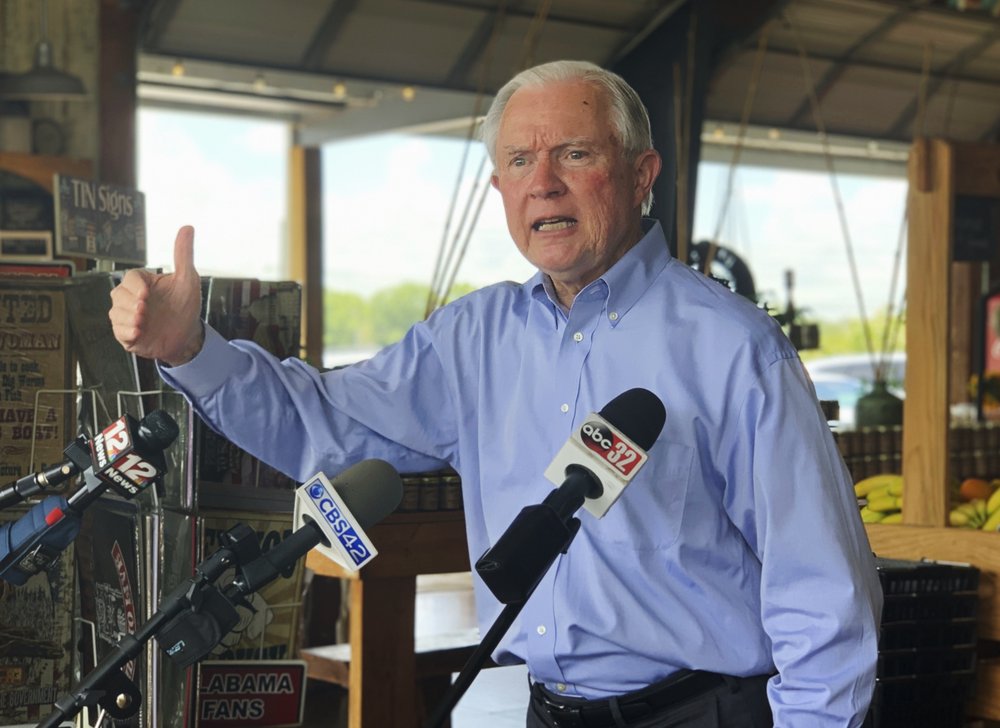
There are important runoffs for Senate, Congress, State School Board and Court of Criminal Appeals.
Inside the Statehouse: Primaries next week

Steve Flowers discusses next week’s primary elections.
Steve Flowers: Honest, diligent women make their mark in Alabama politics

Hillary Clinton’s failure to break the proverbial glass ceiling in American politics came up a little short. More than 100 men have been nominated for president by the nation’s political parties over the past 220 years. She was the first female to be the nominee of one of the two major parties. After Hillary became the Democratic nominee last year, former Colorado Congresswoman Patricia Schroeder, who ran for president in 1988, said it best, “It’s been the ultimate tree house with a no girls allowed sign posted on it.” Nevertheless, national studies have indicated that women still face a double standard when it comes to political campaigns. These surveys reveal that voters will support a male candidate they do not like if they believe he is qualified. However, they are less likely to support a female candidate they think is qualified unless they also like her. Therefore, it appears that for women candidates, likeability is intrinsically linked to electability. However, when it comes to honesty and trustworthiness women have an enormous advantage. Voters simply trust women more than men. A study done by the respected Pew Research Center Poll revealed that 31 percent said women were more honest and ethical than men. Amazingly only 3 percent said men were more honest and ethical. I have observed and stated that same opinion for years. My observation when I was in the Legislature was that women legislators were more honest, forthright and more diligent in their duties. Other political experts have espoused this same belief, especially, when it comes to Alabama’s politics. In the 1990s, the nation’s business community brought the political guru, Karl Rove, to Alabama to help elect a pro-business state supreme court. He was successful in his endeavor. As he departed the state he left an emphatic statement, “If you want to hold the court in Republican pro-business hands, the best candidate is a conservative female Republican, preferably one who has experience as a Circuit Judge.” Voters simply trust women more and especially for judgeships. We now have a record number of women on our State Supreme Court and Courts of Appeals. There is no question that women in Alabama have an inherent advantage on the ballot in state judicial and secondary statewide races. If you put the name John Doe on a ballot against Jane Doe in Alabama and neither does any advertising and voters simply show up and vote in a secondary statewide race, Jane Doe will win every time. However, a survey conducted by the Center for Women and Politics at Rutgers University ranks Alabama 46th in the nation for women serving in the legislature. We are indeed inexplicably underrepresented by women in the State House and Senate. Although today we have numerous ladies in statewide office. Kelli Wise and Lyn Stuart are premier justices on the state Supreme Court. Judges Beth Kellum and Mary Windom serve with distinction on the State Court of Criminal Appeals. Judge Terri Thomas of Cullman is outstanding on the State Court of Civil Appeals. Kay Ivey is our Lieutenant Governor and Twinkle Cavanaugh serves as President of the Public Service Commission. In the course of history, it has not been that long that women were given the right to vote. The 19th Amendment to the Constitution gave women suffrage. Alabama’s legislature voted to ratify the 19th Amendment in 1953. However, women began to be elected statewide in Alabama long before other so-called progressive states. Beginning in the 1950s women dominated the offices of Secretary of State, State Auditor, and State Treasurer to such an extent that they became known as “the ladies’ offices.” The first woman elected to a statewide office was Sybil Poole who won the Secretary of State office in 1946. She was soon followed by the legendary Agnes Baggett and then Mary Texas Hurt Garner and Melba Till Allen. These women would simply swap the posts of Secretary of State and State Treasurer after their term limits. By the time Lurleen Wallace became the first female governor in 1967, women held almost half of Alabama’s constitutional offices. It may be time for another female governor. Twinkle Cavanaugh or Kay Ivey or someone else may make the leap. We will see. See you next week. ___ Steve Flowers is Alabama’s leading political columnist. His weekly column appears in over 60 Alabama newspapers. He served 16 years in the state Legislature. Steve may be reached at www.steveflowers.us.
Women represented proportionally well in Alabama Judiciary

While women have made strides in their representation in elected office in recent decades, the gender is still proportionately under-represented, particularly in Alabama, where women make up only 14.3 percent of the state legislature and hold only one of the state’s constitutional officer positions. At all levels of the Alabama judiciary, however, women are beginning to achieve parity with their male counterparts, being elected and appointed to the bench at increasing numbers each year. There are two female justices on Alabama’s Supreme Court, or 22 percent of the body, as well as 40 percent of the Alabama Court of Criminal Appeals, and 20 percent of the Court of Civil Appeals. Among all judges in Alabama, approximately 20 percent are women, with the highest percentage serving in the state’s intermediate appellate courts These honorable women of the court, whether elected or appointed, are interpreting state and federal law, their decisions having an immediate and tangible impact on our daily lives. Here are just a few of those accomplished and esteemed ladies: Alabama Supreme Court Associate Justice Lyn Stuart: Justice Stuart, first elected to the bench in 2000, has as impressive of a resume as any judge. An alumna of the University of Alabama Law School, Justice Stuart has served as an assistant attorney general, an assistant district attorney, a district judge, and circuit judge. She is a past president of the Alabama Council of Juvenile and Family Court Judges, as well as a past president of the Blue Ridge Institute for Juvenile and Family Court Judges. A native of Atmore, Alabama, Justice Stuart and her family live in Bay Minette. She will be up for reelection in 2018. Associate Justice Alissa Kelli Wise: The youngest member of the Alabama Supreme Court, Justice Wise’s bachelor’s degree is actually in Nursing, which she earned from Auburn University in 1985, before returning to law school several years later and earning her Juris Doctorate from the Jones School of Law in Birmingham. Justice Wise’s legal career began in the private sector, but after obtaining a Masters in Public Administration in 2000, she won election to the Alabama Court of Criminal Appeals, earning the distinction of becoming the youngest woman ever elected to sit on an Alabama Appellate Court. Justice Wise was elected to the Alabama Supreme Court in 2010, and will seek reelection for her position on the bench this November. Alabama Court of Criminal Appeals Judge Mary Becker Windom: Windom is the presiding judge of the Alabama Court of Criminal Appeals and wife of longtime Alabama politician and former Lieutenant Governor Steve Windom. An alumna of the University of South Alabama and Jones Law School, Judge Windom began her legal career in private practice before becoming an Assistant United States Attorney and Deputy Attorney General for Alabama. Judge Windom was elected to her seat on the bench in 2008, and was reelected in 2014. Her current term doesn’t expire until 2020. Judge Beth Kellum: A Vance, Alabama native, Judge Kellum earned both her undergraduate and juris doctorate degrees at the University of Alabama, jut a few miles from her home. After working as an Assistant Attorney General and Staff Attorney for the Court of Criminal Appeals, Judge Kellum turned to private practice for a few years before returning to public service. Judge Kellum was elected in 2008, then reelected in 2014. Alabama Court of Civil Appeals Judge Terri Willingham Thomas: A graduate of the Cumberland School of Law, Judge Thomas served 10 years as a District and Juvenile Court Judge in Cullman County before being elected to the bench in 2006. While women have a long way to go before achieving proportional representation in elected positions, including the Alabama judiciary, there is reason to believe progress will soon be made. According to the American Bar Association, 35 percent of lawyers nationwide are women, but even more encouragingly, 47.3 percent of recent law school graduates are female. Among those in American colleges and universities women now outnumber men, a trend that has only increased in recent years. Whether the historical reality of having fewer women in positions of power and influence is based on traditional gender roles, discrimination, or simply women’s choices, it appears the disparity is on its way out. As more and more women choose public service, including positions in the judiciary, many of the barriers and possible prejudices against women in positions of power will begin to crumble. Be sure to read Alabama Today’s features on Women of Influence in Alabama here.
