
2020 Watch: Messy primary finally meets election year
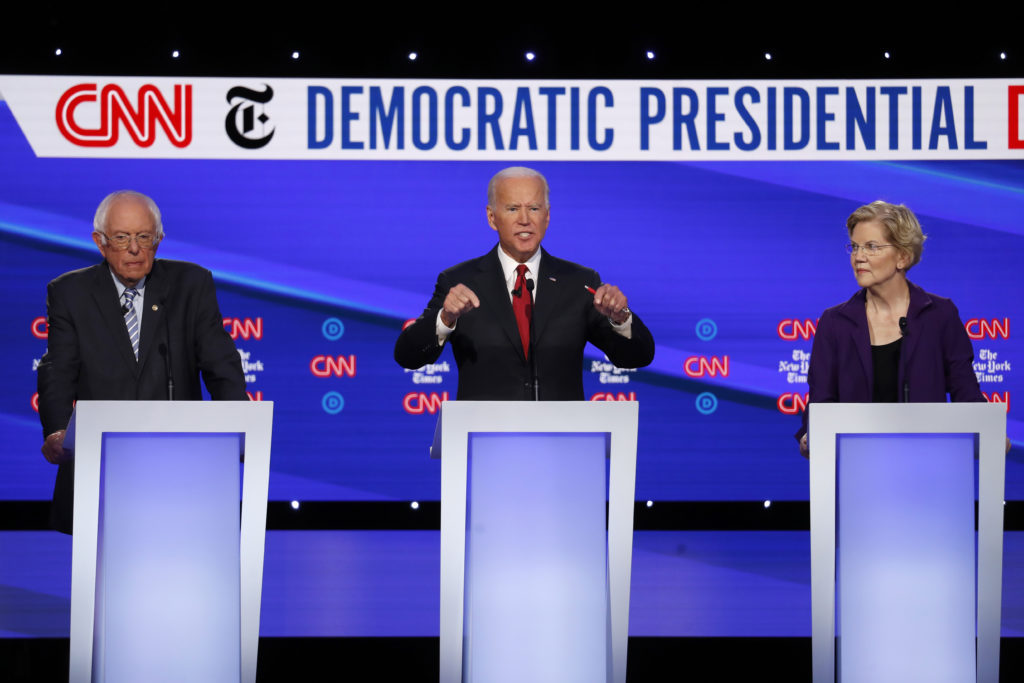
The presidential politics calendar turned to 2020 nearly a year ago. This week, the actual date catches up. What we’re watching as the preseason closes and election year opens: Days to Iowa caucuses: 35 Days to general election: 309 THE NARRATIVE The ups, downs and swerves of 2019 yielded a stable top slate. Former Vice President Joe Biden leads most national polls of Democratic primary voters, with Sens. Bernie Sanders of Vermont and Elizabeth Warren of Massachusetts within striking distance. Yet in the first caucus state of Iowa and the first primary state of New Hampshire, there’s a jumble of Biden, Sanders, Warren and Mayor Pete Buttigieg of South Bend, Indiana. At first glance, it’s a clean choice: Biden and Buttigieg hail from the center-left; Warren and Sanders come from the progressive left. Reality is more layered. All four have weaknesses within Democrats’ diverse electorate; each makes a different case for carrying the banner against President Donald Trump, who is now impeached but a near certainty to survive a Senate trial. If that’s not enough indecision, several wildcards — including two billionaires — still hope to scramble the contest. THE BIG QUESTIONS Money: Who can (sort of) compete with Michael Bloomberg’s wallet? The fourth-quarter fundraising period ends Tuesday. Warren and Sanders set the early curve for grassroots donations, outpacing Buttigieg and Biden, who tap traditional deep-pocketed contributors in addition to online donors. Now those small-donor juggernauts must compete with former New York Mayor Michael Bloomberg, who’s used a share of his estimated $50 billion personal fortune to blanket television and digital advertising and build an expansive staff in Super Tuesday states. For his rivals, it’s not so much about keeping up; Bloomberg can easily outspend every other campaign, including that of fellow billionaire Tom Steyer. But there’s only so much television time for sale, and if Warren and Sanders want to plow big money into Super Tuesday, especially the expensive television markets of California, they’ll need as much cash as possible ahead of time. Biden, meanwhile, has already secured his best fundraising quarter (a relative comparison for a candidate who’s lagged other top-tier contenders). The question is whether Biden’s “best” mollifies establishment Democrats who waved red flags when he reported having less than $9 million on hand at September’s end. Money, Part II: How long can Cory Booker keep going? The year-end deadline is critical for New Jersey Sen. Cory Booker as he reaches for relevance. The last of two African American candidates (along with former Massachusetts Gov. Deval Patrick), Booker made a do-or-die money appeal in September, and it worked. But it’ll take more than scraping by to fund the turnaround he envisions: a surprise finish in overwhelmingly white Iowa to kick-start a dramatic rise in more diverse primary states that follow (Barack Obama’s 2008 path). Campaigns that hit big fundraising numbers tend to leak that news before Federal Election Commission filings are due. Candidates with bad news tend to wait. So, it bears watching how Booker’s team plays it to start January. Is Amy Klobuchar being overlooked in Iowa? Those previously mentioned Iowa and New Hampshire jumbles omit Amy Klobuchar. But the Minnesota senator is plugging away in both states. She just hit her 99th Iowa county (that’s all of them), demonstrating her effort to use complex caucus rules that can reward candidates with a wide geographic footprint. Notably, Klobuchar’s strategy tracks Biden. Both aim for a more consistent appeal across 1,679 precincts than Warren, Sanders and Buttigieg muster on Feb. 3. The question becomes how many precincts give both Biden and Klobuchar the minimum 15 percent support required to count toward delegates. Anyone who doesn’t hit that viability mark drops from subsequent ballots, their backers going up for grabs. Biden’s Iowa hopes depend in part on picking up moderates on realignment votes (read: Klobuchar and Buttigieg supporters). If Klobuchar is as strong as she hopes to be, she could turn that strategy around on Biden, driving him below viability and attracting his supporters on later ballots. Biden returns to Iowa this week for another bus tour, though not as lengthy as his eight-day jaunt after Thanksgiving. Is Sanders a true contender this time? Sanders lost the 2016 nomination because of Hillary Clinton’s advantage among non-white Democrats. Since then, Sanders has deepened his ties among Latinos, African Americans and other non-whites. Warren and Buttigieg are still chasing that success. Sanders’ advisers believe the senator is well-positioned to challenge Biden among non-whites if he’s able to build early momentum in New Hampshire and Iowa, where Sanders will spend New Year’s Eve. If they’re right, that would open avenues to delegates Sanders didn’t get in 2016. Is Trump’s position improving? The president has never been popular judged in a vacuum. In 2016, he won GOP primaries with pluralities and lost the general election popular vote. As president, he’s never reached majority job approval in Gallup’s polling. But he’s still hovering in the 40s, not far from where his immediate predecessors were 11 months before winning second terms. Impeachment proceedings haven’t affected Trump’s standing. Meanwhile, the same Democratic-run House that impeached him approved his new North America trade pact. Top-line economic numbers shine, even if the on-ground reality is uneven. And Trump could be on the cusp of a peace deal in Afghanistan after the Taliban ruling council on Sunday agreed to a temporary cease-fire. As frenetic as Trump’s messaging is, he proved in 2016 that he relishes framing binary choices for voters, and he’s more than convinced he has a case in 2020. THE FINAL THOUGHT Most voters are just tuning into a presidential race that’s raged for a year. They’ll find a Democratic contest featuring stark options on policy and personality, but lacking an undisputed favorite. Candidates are navigating primary politics: dancing along the progressive-liberal-moderate spectrum and carefully choosing when to go after each other. At the same time, Trump dominates the 2020 narrative, a fact demonstrated most recently as Biden spent two days talking about whether he’d testify in a Senate trial on Trump’s removal from office.
Joe Biden’s new endorsement reflects battle for latino support
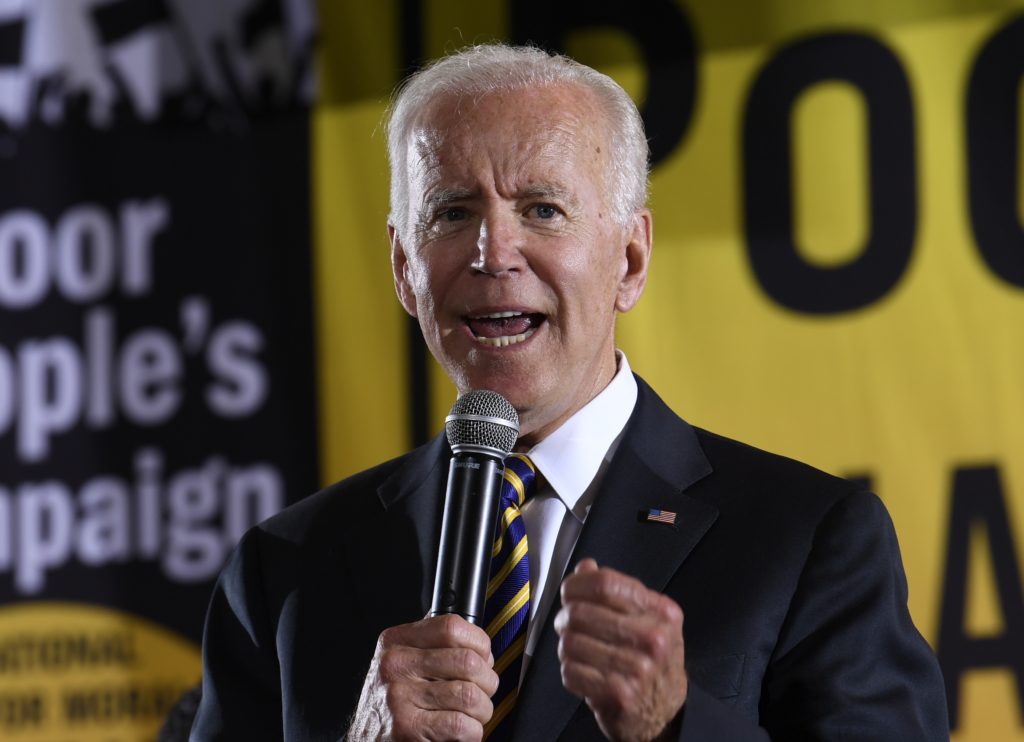
Joe Biden’s presidential bid got a boost Monday from one of the leading Latinos in Congress, with the chairman of the Hispanic Caucus’ political arm endorsing the former vice president as Democrats’ best hope to defeat President Donald Trump. “People realize it’s a matter of life and death for certain communities,” Rep. Tony Cárdenas, Democrat-California, told The Associated Press in an interview, explaining the necessity of halting Trump’s populist nationalism, hard-line immigration policies and xenophobic rhetoric that the California congressman called cruel. Cárdenas’ is the chairman of Bold PAC, the political arm of the Congressional Hispanic Caucus. His announcement follows presidential candidate Bernie Sanders’ weekend of mass rallies with Rep. Alexandria Ocasio-Cortez, a freshman congresswoman from New York who has become a face of the progressive movement and a key supporter for the Vermont senator’s second White House bid. The dueling surrogates highlight a fierce battle for the Hispanic vote between Sanders and Biden, whose campaigns each see the two candidates as the leading contenders. Biden leads the field among Democratic voters who are non-white, a group that includes Democratic voters who are Hispanic, with Sanders not far behind, according to national polling. Another top national contender, Sen. Elizabeth Warren, draws less support from non-white voters. There are few recent national polls with a sufficient sample of Hispanic Democratic voters to analyze them independently. The dynamics also demonstrate the starkly different approaches that Biden and Sanders take to the larger campaign. Biden is capitalizing on his 36-year Senate career and two terms as Barack Obama’s vice president to corral Democratic power players across the party’s various demographic slices. Cárdenas joins four other Hispanic caucus members who’ve already backed Biden, a show of establishment support in contrast to some Latino activists who’ve battered Biden over the Obama administration’s deportation record. Sanders, true to his long Capitol Hill tenure as an outsider and democratic socialist, eschews the establishment with promises of a political revolution, just as he did when he finished as runner-up for Democrats’ 2016 nomination. Together, it’s an argument on politics and policy at the crux of Democrats’ 2020 nominating fight. Sanders and his supporters like Ocasio-Cortez argue that existing political structures cannot help working-class Americans, immigrants or anyone else. That argument, they insist, can draw enough new, irregular voters to defeat Trump in November. “We need to be honest here,” retorted Texas Rep. Vicente Gonzalez, a Biden supporter whose congressional district includes part of the U.S.-Mexico border. “If Joe Biden loses the primary, Democrats will lose in 2020.” It’s impossible for polling almost a year ahead of a general election to affirm that view, but the contention echoes Biden’s consistent arguments about Electoral College math. Texas Rep. Filemon Vela, also a border-district congressman who backs Biden, was not so absolute. But he said Biden is best positioned for a general election on immigration because of his plans to roll back Trump’s immigration restrictions and boost the asylum process, while stopping short of decriminalizing all border crossings. Sanders supports making all border crossings civil offenses, rather than criminal, a position first pushed by the lone Hispanic presidential candidate and former Obama housing secretary Julian Castro. “In some swing states, that might not go over well,” Vela said, even as he, Gonzalez and Cárdenas said the distinction is more important to political pundits than to Hispanic voters. Said Cárdenas: “There is activist language and there are litmus tests; and there are hard-working people around the country who just want fairness.” He added another key plank of Biden’s case: that meaningful change, from reversing Trump’s migrant family separation policy to expanding health care coverage, requires not only winning in November but then achieving some semblance of consensus in Congress. Hispanic voters are a rapidly growing portion of the U.S. population and electorate, though they have consistently had lower election-participation rates than African Americans and non-Hispanic whites. At the least, Hispanics will play key roles in the Nevada caucus (third in the Democratic nominating process) and the Texas and California primaries, the two largest sources of delegates on the March 3 Super Tuesday slate. Sanders leads Biden among younger voters generally, according to national polling, and Biden aides say that could carry over to Hispanics. The variable is seemingly on display when comparing Biden’s campaign crowds with those like Ocasio-Cortez drew this weekend in California and Nevada. Immigrants-rights advocates picketed outside Biden’s Philadelphia campaign headquarters shortly after its opening. Castro used Democratic debates to challenge Biden on why he didn’t stop more deportations when he was vice president. Last month, members of the Movimiento Cosecha, which describes itself as an immigrant-led group pushing for “permanent, protection and respect” for immigrants, confronted Biden during a campaign event in South Carolina. One of them, Carlos Rojas, asked Biden to answer for deportations under Obama and to commit to an outright moratorium on all deportations — a position Sanders supports. Biden declined. After Rojas pressed him, Biden said, “You should vote for Trump.” Gonzalez called it “ridiculous” to question Biden’s commitment to immigrants, but said the skepticism demonstrates that the Latino community vote is not monolithic, with a range of national origins and philosophical differences. Vela agreed, adding that Sanders’ rallies and Ocasio-Cortez’s social media following shouldn’t obscure Biden’s standing among the “traditionalist Democrats” he said constitute the majority of Hispanic voters. Vela recalled an unplanned campaign stop he made recently with Biden at Mi Tierra, an iconic restaurant in San Antonio, Texas, after a campaign event with several hundred people. “He went table to table,” Vela said, “people getting up, ‘Joe Biden is here’ and ‘There’s Joe Biden.’ The response was overwhelming.” By Bill Barrow Associated Press Republished with the Permission of the Associated Press.
