
Hillary Clinton’s turn: Guide to the Democratic National Convention
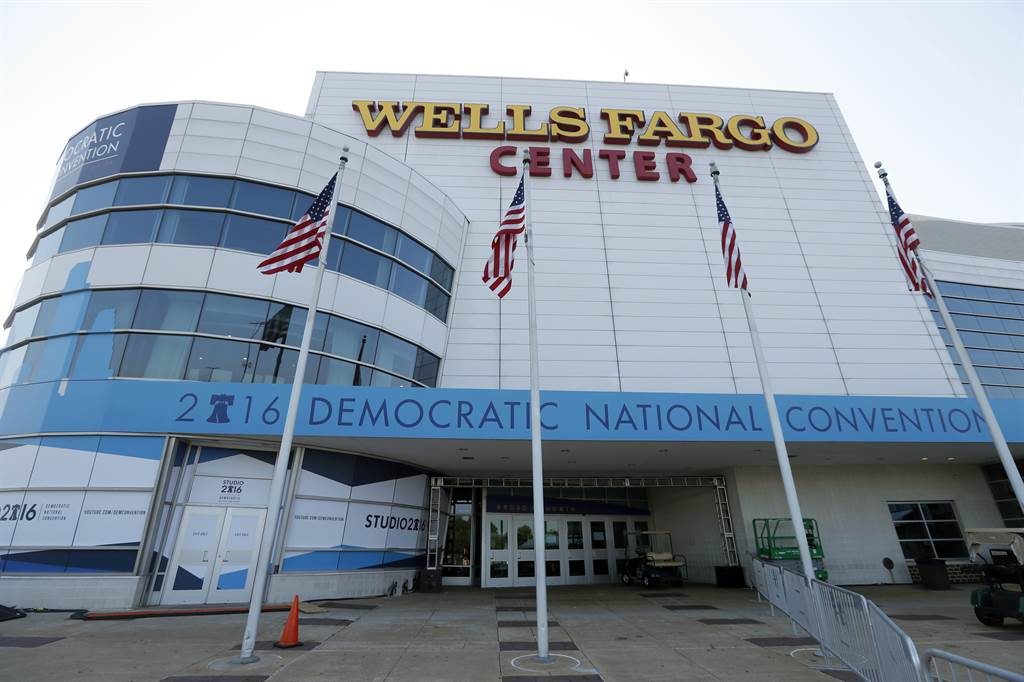
It’s Hillary Clinton‘s turn. The Democratic National Convention opening Monday in Philadelphia is Clinton’s chance to hit reset after a vigorous primary against Bernie Sanders and the unlikely movement that formed behind the Vermont senator. Sanders, a self-described democratic socialist, has endorsed Clinton, but many of his supporters have not. Some of them were dismayed by her choice of Sen. Tim Kaine, D-Va., as her running mate. Last week’s Republican National Convention in Cleveland exposed deep, lingering reservations about Donald Trump from within his own party. The Democratic gathering is expected to be a more smoothly choreographed display of unity among Clinton, Sanders and Democratic lawmakers and voters. What to know about the week: THE POINT Both parties use their national conventions to formally nominate candidates for president and vice president. Party leaders showcase their nominees, and the prime-time speeches by the candidates and prominent politicians win some of the largest television audiences of the campaign. That makes the convention a critical opportunity for a party to introduce its candidates to the country. Democrats also will adopt its platform, which lays out policy principles but has no binding effect. THE LOCATION The Wells Fargo Center, home to the NHL’s Philadelphia Flyers and the NBA’s Philadelphia 76ers, is the convention site. The arena has been transformed with stages, platforms, cameras and lights. Democrats are hoping that city’s historical role in the founding of American democracy will serve as a powerful backdrop for the themes they’ll highlight. WHO’S GOING More than 5,000 delegates are among the 50,000 people set to be in Philadelphia. They include alternates, lawmakers, special guests, journalists and protesters. Among the delegates, about 15 percent are superdelegates, mainly members of Congress and members of the Democratic National Committee. At the GOP convention, a striking number of prominent Republican lawmakers and party leaders were nowhere to be seen, including the party’s previous two presidents and its two most recent presidential nominees. In contrast, bold-name Democrats have been eagerly vying for a chance to speak in Philadelphia. Most Democratic senators and House members are expected to attend. THE SCHEDULE First lady Michelle Obama is set to speak Monday. That’s also when Sanders will give his speech — a closely watched moment for signs of whether his loyal supporters will line up behind Clinton, as he’s asked them to do. Former President Bill Clinton, the candidate’s husband, is the speech to watch Tuesday. A day later, President Barack Obama and Vice President Joe Biden come to Philadelphia. On Thursday, the final night, Chelsea Clinton will introduce her mother for her speech accepting the Democratic nomination. Kaine, who made his debut as Clinton’s running mate at a joint appearance Saturday, will give a speech introducing himself to the country. Officials haven’t yet said when, but the running mate typically speaks Wednesday. Other scheduled speakers are Massachusetts Sen. Elizabeth Warren, New Jersey Sen. Cory Booker, New York Mayor Bill de Blasio and House Minority Leader Nancy Pelosi. THE ENTERTAINMENT Shoop Dogg, Lady Gaga, Lenny Kravitz and Cyndi Lauper will appear in Philadelphia during the convention. Fergie will perform at The Creative Coalition’s gala. THE ROLL CALL States will get a chance to announce how their delegates are voting in the formal roll call Tuesday. It’s a high point for Sanders delegates; they’re pushing to have their votes fully tallied. In 2008, Clinton halted the roll call midway through to call for then-Sen. Barack Obama’s approval by acclamation, or unanimous vote. Sanders says he favors a state-by-state roll call, but he hasn’t indicated exactly what he will do. There’s a total of 4,763 delegates. It takes 2,382 to win the Democratic nomination. Clinton arrives in Philadelphia with 2,814 delegates to Sanders’ 1,893, according to an Associated Press count. That includes the superdelegates, who can vote for any candidate they choose. This year, those superdelegates overwhelmingly backed Clinton. The remaining 4,051 are pledged delegates, won by the candidates based on the results of state primaries and caucuses. THE PROTESTS If there are any fireworks in Philadelphia, expect them to come from Sanders supporters. They have said they plan to show up in full force. Philadelphia officials estimate between 35,000 and 50,000 people will demonstrate across the city each day. Activists have put the estimate higher, at roughly 100,000. Among the groups planning to demonstrate are gun control advocates, the group Occupy DNC Convention and Trump supporters from Pennsylvania. Republished with permission of the Associated Press.
Steven Kurlander: In defense of Debbie Wasserman Schultz

With the Democratic coronation of Hillary (and Bill again, too) Clinton slated to begin Monday, it looks like Congresswoman and Democratic National Committee Chairwoman Debbie Wasserman Schultz won’t be waiving her very curly hair, or the gavel as Chairwoman of the convention in Philadelphia. In fact, she resigned her position as Chairwoman before the convention began. David Axelrod, the former senior advisor to President Obama, stated Sunday “I would ask her to step aside. I would ask her to step aside because she’s a distraction in a week that is Hillary Clinton’s week.” CNN indicated that over the weekend the DNC decided not to allow DWS to speak or preside over the convention (the term “quarantined” was used) while Politico reported that DWS herself pulled herself off the convention dais for fear of being booed by Bernie Sanders supporters. The latest trouble for DWS as DNC Chairwoman began after the (obviously calculated) leak of over 20,000 email by WikiLeaks revealed that DWS and staffers at the DNC were working very hard against Bernie Sanders and his campaign. There was one particular email that set off its own shitstorm where it appeared to indicate that the DNC was going to play Sanders as an atheist to weaken his appeal to southern voters. Imagine that. DWS and the DNC working hard to ensure that self-described socialist Bernie would not get the nomination? Jeez, as Gomer Pyle would opine, SURPRISE, SURPRISE, SURPRISE! In reality, the American political system in terms of how we pick our leaders was always and continues to be just plain biased. There’s no fairness about it. Never was. Never will be. The expectation that political operatives like DWS and parties are arbiters of fairness is just plain silly. Her job, from the beginning of the campaign, was to ensure that Hillary (and Bill too) got nominated. Period. Whether you like her or not, both in her role as DNC Chairwoman or as the chief Democratic antagonist in the House (particularly after Congressman Anthony Weiner took one too many selfies), DWS has been the ultimate loyal soldier to the “mainstream” Clinton-Pelosi wing of the Democratic Party-whether it meant getting into contentious fights with Axelrod and the Obama White House or doing everything she could to ensure that Hillary (and Bill again too) sailed through a nomination process that was rigged from the get go. As chairwoman of a splintered and weak Democratic Party, DWS accomplished what Reince Priebus and mainstream Bushy Republicans couldn’t do – keep what would be in normal times a truly unqualified, populist candidate from obtaining the nomination for president. So while DWS was forced to resign by her own benefactors, DWS got the job done for Hillary (and Bill too). She may have in the long run also prevented the Democratic Party from becoming truly irrelevant to the majority of Americans too. No matter what David Axelrod or any other Democrats say, DWS should hold her curls and head high for a job well do
Hillary Clinton looks to steal Donald Trump thunder with VP pick

Hillary Clinton moved closer to introducing her running mate, snatching attention from newly crowned Republican nominee Donald Trump just hours after he closed out his convention with a fiery and foreboding turn at the podium. Crews were still sweeping confetti from the GOP convention hall floor, as the Clinton campaign signaled an announcement was coming soon. In a tweet Friday morning, her campaign urged supporters to text the campaign to get the first word. Virginia Sen. Tim Kaine had emerged as the leading contender, according to Democrats familiar with Clinton’s search. The news could quickly steal Trump’s thunder. In a 75-minute speech Thursday night, Trump made forceful promises to be the champion of disaffected Americans, capping his convention on a high note for the party, not a moment too soon after shows of disharmony and assorted flubs before the four-day closer. Speaking to “the forgotten men and women of our country,” the people who “work hard but no longer have a voice,” he declared: “I am your voice.” With that, he summed up both the paradox and the power of his campaign — a billionaire who made common cause with struggling Americans alienated from the system, or at least a portion of them. The speech was strikingly dark for a celebratory event and almost entirely lacking in policy details. Trump pledged as president to restore a sense of public safety, strictly curb immigration and save the nation from Clinton’s record of “death, destruction, terrorism and weakness.” “I have joined the political arena so that the powerful can no longer beat up on people that cannot defend themselves,” Trump said. He shouted throughout as he read off a teleprompter, showing few flashes of humor or even smiles. Democrats offered a different assessment, with Clinton campaign chairman John Podesta arguing that Trump “offered no real solutions to help working families get ahead or to keep our country safe, just more prejudice and paranoia. America is better than this. America is better than Donald Trump.” Clinton opens a two-day campaign swing Friday in Florida and is expected to introduce her running mate either at a Friday afternoon rally at the state fairgrounds in Tampa or on Saturday at Florida International University in Miami. Kaine, 58, appeared to be the favorite for her choice, according to two Democrats, who both cautioned that Clinton has not made a decision and could change direction. In Cleveland, Trump’s acceptance of the Republican nomination capped his improbable takeover of the GOP, a party that plunges into the general election united in opposition to Clinton but still torn over Trump. Underscoring his unorthodox candidacy, Trump reasserted the hard-line immigration policies that fired up conservatives in the primary but broke with many in his party by expressing support for gays and lesbians. Ever the showman, he fed off the energy of the crowd, stepping back to soak in applause and joining the delegates as they chanted, “U-S-A.” It was an altogether smoother — and more scripted — chapter in a footloose convention shocked a night earlier by Ted Cruz’s prime-time speech, a pointed non-endorsement of the nominee by the Texas senator who finished second in the race and came to Cleveland harboring grievances — and future presidential ambitions. During their convention, Republicans were relentless and often raw in demonizing Clinton. As fired-up supporters at Trump’s acceptance speech broke out in their oft-used refrain of “Lock her up,” the nominee waved them off, and instead declared, “Let’s defeat her in November.” Yet he also accused her of “terrible, terrible crimes.” “This is the legacy of Hillary Clinton: death, destruction, terrorism and weakness,” he said. “But Hillary Clinton’s legacy does not have to be America’s legacy.” In a direct appeal to Americans shaken by a summer of violence at home and around the world, Trump promised that if he takes office in January, “safety will be restored.” He also said young people in predominantly black cities “have as much of a right to live out their dreams as any other child in America.” And he vowed to protect gays and lesbians from violence and oppression, a pledge that was greeted with applause from the crowd. “As a Republican, it is so nice to hear you cheering for what I just said,” he responded. The Democratic convention in Philadelphia, which starts Monday, is expected to be a more orderly affair. Clinton is, if anything, disciplined. Kaine has been active in the Senate on foreign relations and military affairs and built a reputation for working with both parties as Virginia’s governor and mayor of Richmond. “I’m glad the waiting game is nearly over,” Kaine said Thursday. Agriculture Secretary Tom Vilsack, a longtime friend of Hillary and Bill Clinton, is still in the mix, according to one of the two Democrats. Both Democrats are familiar with the selection process and spoke on the condition of anonymity because they were not authorized to discuss it publicly. Kaine’s selection would not be without complication. Liberals have expressed wariness of Kaine for his support of putting the Trans-Pacific Partnership trade agreement on a “fast track” to approval, which both Clinton and primary rival Bernie Sanders oppose. They also note that Kaine recently signed onto a letter asking for less burdensome regulation of regional banks. Republished with permission of the Associated Press.
Hillary Clinton VP search focus is Tim Kaine, Tom Vilsack, Tom Perez
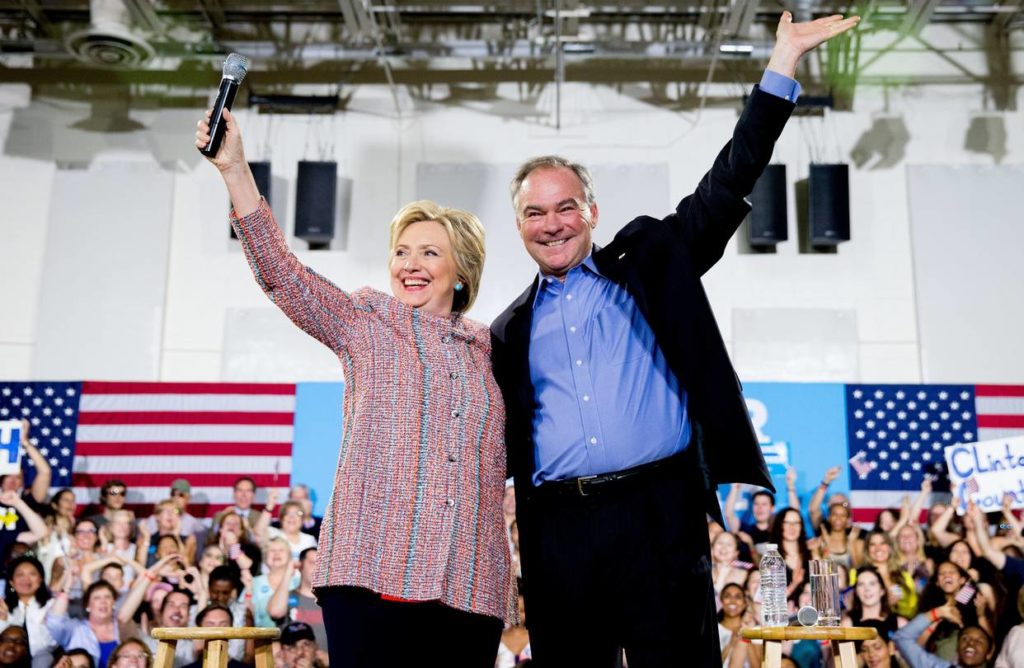
Hillary Clinton‘s vice presidential search is centering on three main contenders, with an announcement expected as soon as Friday as the Democrat prepares for her party’s national convention next week in Philadelphia. Clinton’s campaign has focused in recent days on Virginia Sen. Tim Kaine, a former governor, mayor and one-time Catholic missionary fluent in Spanish; Agriculture Secretary Tom Vilsack, an ex-Iowa governor and longtime Clinton ally; and Labor Secretary Tom Perez, a progressive champion who would be the first Hispanic on a major-party ticket, according to the Associated Press, which cites Democrats familiar with the search. The Democrats cautioned that Clinton had not yet reached a final decision and was weighing a number of factors, including the person’s readiness to be president, personal compatibility and ability to help her administration govern. Massachusetts Sen. Elizabeth Warren, a favorite of liberals, remains in the mix and offers the campaign a fundraising juggernaut and the tantalizing prospect of an all-female ticket. But Warren is not expected to be the final choice, the AP reported, citing Democrats familiar with the process. They spoke to AP on condition of anonymity to describe private discussions about the search process. Clinton’s choice will be the culmination of a closely held search for a running mate, run by a small group of longtime advisers and confidantes. Preparing for a showdown with Republican presidential nominee Donald Trump, Clinton has sought to project an inclusive campaign aimed at “breaking down barriers and building bridges” to mobilize the diverse coalition of voters who twice elected President Barack Obama. Clinton is expected to announce her decision during a two-day campaign swing in Florida later this week. The vice presidential rollout could come at either a Friday rally at the Florida State Fairgrounds in Tampa or at a Saturday rally at Florida International University in Miami, where two-thirds of the student body is Hispanic. Following next week’s Democratic National Convention in Philadelphia, the newly minted ticket is expected to embark on a campaign bus tour, reminiscent of the “First 1,000 Miles” convoy that took Bill Clinton, Al Gore and their spouses across eight states after the party’s 1992 convention. Trump’s choice of Indiana Gov. Mike Pence, a conservative former congressman, for the GOP ticket was not viewed as requiring her to choose a specific running mate in response, according to the AP, citing Democrats familiar with the process. Campaign officials declined to comment. Kaine has been considered a leading contender for weeks based on his broad experience in Virginia, a presidential battleground state, as governor, senator and mayor of Richmond. He also served as chairman of the Democratic National Committee and as a lawyer working on fair housing and civil rights issues. Vilsack, the longest-serving member of Obama’s Cabinet, has known Clinton for many years — his late brother-in-law worked with her in the early 1970s — and she was among his most prominent surrogates in his come-from-behind gubernatorial victory in 1998. Perez, meanwhile, is highly regarded by the White House for his policy chops and could potentially galvanize Latinos who have been turned off by Trump’s harsh rhetoric about Hispanics. The son of immigrants from the Dominican Republic, Perez played a behind-the-scenes role as a federal prosecutor, a top aide to the late Sen. Ted Kennedy and the head of the Justice Department’s civil rights division. Both Vilsack and Kaine have been through the process before. Vilsack was among the final group considered by John Kerry in 2004 and Kaine was vetted by Obama’s team four years later. If either Vilsack or Perez were selected, they would be required to resign from Obama’s Cabinet. Clinton’s decision will be steeped in her personal experience. She was involved in her husband’s selection of Gore in 1992 and has the unique vantage point of having seen up close the various roles played by the vice president. In an interview this week with Charlie Rose of CBS News, Clinton said her main criterion was “would this person be a good president? You know, I am afflicted with the responsibility gene and I know what it’s like being president.” Quizzed on potential running mates, Clinton noted that Kaine had “never lost an election” and was a “world-class mayor, governor and senator.” She said Warren had “put the agenda of inequality front and center.” Clinton also praised retired Adm. James Stavridis, a former NATO supreme allied commander, calling him “exceptional.” Other possible choices include Housing Secretary Julian Castro, Colorado Gov. John Hickenlooper, Ohio Sen. Sherrod Brown and New Jersey Sen. Cory Booker. Clinton met with Castro, Hickenlooper and Warren at her Washington home on Friday. Republished with permission of the Associated Press.
Liar. Lucifer. Lock her up. GOP denounces Hillary Clinton
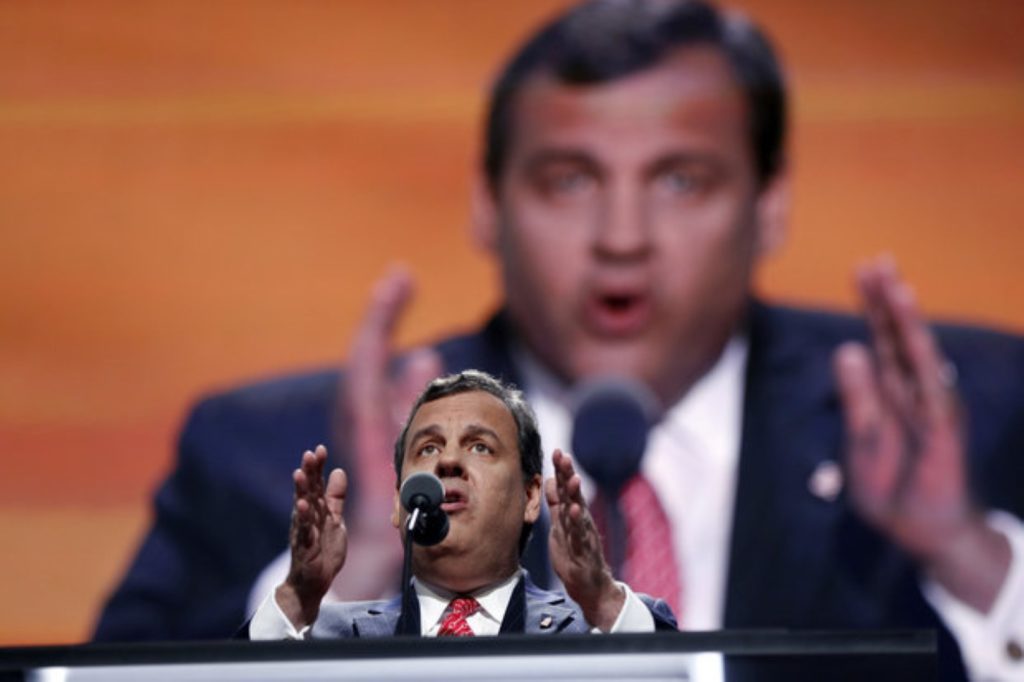
Liar. Lucifer. Lock her up. Republicans may have mixed feelings about nominating Donald Trump for president, but one thing they can all rally around is a deep dislike for Democrat Hillary Clinton. Convention speakers have “prosecuted” Clinton at a mock trial, accused her of being a serial liar and even linked her to the Devil himself. Throughout the campaign, Trump has reveled in referring to his opponent as “Crooked Hillary.” The attacks are an echo of the 1990s when conservatives denounced President Bill Clinton as the chief executive dealt with scandal and impeachment. The most blistering assault at the GOP convention came Tuesday night when New Jersey Gov. Chris Christie took on the role of prosecutor and put Clinton on trial “for her performance and her character.” The audience responded with chants of “Lock her up! Lock her up!” But others have piled on. Senate Majority Leader Mitch McConnell told the crowd scandal follows Clinton and former President Bill Clinton “like flies.” “She lied about her emails. She lied about her server. She lied about Benghazi. She even lied about sniper fire. Why, even she lied about why her parents named her Hillary,” McConnell said. And Wednesday, Trump campaign manager Paul Manafort said the airport meeting between former President Bill Clinton and Attorney General Loretta Lynch last month probably helped Clinton’s wife escape criminal charges over her use of a private email server. He told ABC that Lynch “probably” gave Bill Clinton special information that helped his wife. Manafort even tried to blame Clinton for the controversy over Melania Trump lifting passages of her convention remarks from a speech that Michelle Obama delivered in 2008. “For people to try and disparage that speech and say that it was something that it wasn’t is once again politics,” he told Fox News. “It’s Hillary Clinton once again feeling threatened by a woman and trying to destroy the woman and demean her as a way of positioning her own fate.” Perhaps the wildest attack on Tuesday came from former GOP presidential candidate Ben Carson, who told the crowd that one of Clinton’s “role models” — community activist Saul Alinsky — “acknowledges Lucifer” in a 1971 book. “So are we willing to elect someone as president who has as their role model somebody who acknowledges Lucifer?” Carson said. “Think about that.” Clinton wrote a college thesis about Alinsky and has said she agreed with some of his opinions on social change, but disagreed with his view that the system could only be changed from the outside. Some Republicans are wary of going too far. Arizona Sen. Jeff Flake, one of the more prominent Trump skeptics, Tweeted late Tuesday: “@HillaryClinton now belongs in prison? C’mon. We can make the case that she shouldn’t be elected without jumping the shark.” But attacking Clinton may be the most effective tactic with polls showing high unfavorable ratings for both candidates. An Associated Press-GfK poll this month found that three-quarters of voters say their pick for president is motivated by a desire to cast their ballot against Clinton or Trump. Republished with permission of the Associated Press.
Mike Pence with Donald Trump on blocking some immigration

The Latest on the 2016 presidential campaign (all times local): 10:40 p.m. Indiana Gov. Mike Pence says he supports Donald Trump‘s call to “temporarily suspend immigration from countries where terrorists’ influence and impact represents a threat to the United States.” Pence spoke Friday on Fox News Channel’s “Hannity,” giving his first TV interview since Trump invited him to join the Republican ticket for the White House. Last year, Pence came out against Trump’s proposed temporary ban on foreign Muslims entering the United States, calling such a ban “offensive and unconstitutional.” Trump’s spokeswoman recently said he no longer supports his proposed religious test. Pence says he “stepped up without hesitation” when Trump asked him to be his running mate. He says Trump “understands the anxiety and the aspiration of the American people” like no leader since President Ronald Reagan. __ 9:10 p.m. Hillary Clinton is expressing support for the government of Turkish President Recep Tayyip Erdogan after an attempted military coup rocked Turkey’s capital. The Democratic presidential candidate is urging “calm and respect for laws, institutions, and basic human rights and freedoms — and support for the democratically elected civilian government.” She says, “All parties should work to avoid further violence and bloodshed, and the safety of American citizens and diplomatic missions must be ensured.” Turkish officials say the government appears to have repelled the attempted coup following a night of explosions, air battles and gunfire across Ankara. __ 8:10 p.m. A leader of conservatives making a last-ditch attempt to block Donald Trump’s nomination says she’s dropping her effort to force the Republican National Convention to vote on her plan to let delegates back any presidential candidate they want. The convention rules committee has already rejected Colorado delegate Kendal Unruh‘s proposal to “unbind” delegates from the candidates they were committed to by state primaries and caucuses. Unruh had been saying that despite that defeat, she’d get enough support to force a full convention vote next week on her plan to let delegates vote their conscience. But she said Friday that the Trump campaign and party officials have peeled away that support. She says she and her supporters believe delegates already have the right to vote their conscience and will oppose Trump’s nomination. ___ 5:35 p.m. Donald Trump says the taxes he pays are a private matter. But for candidates auditioning to be his running mate, similar reluctance wasn’t an option. Vice presidential search finalist Newt Gingrich said Thursday that Trump’s campaign required him to submit more than a decade worth of tax returns as part of the vetting process. Vetting potential vice presidents’ tax returns is a standard practice for candidates in both parties — but Trump has so far refused to make his own returns public on the grounds that he is being audited by the Internal Revenue Service. But tax scholars and former IRS officials have noted there is no rule against releasing tax filings during audits and say Richard Nixon released his returns while under audit in 1973. __ 5:15 p.m. Housing and Urban Development Secretary Julian Castro has met with Hillary Clinton at her Washington home as the presumptive Democratic presidential nominee considers her choice for vice president. That’s according to a person familiar with the Friday gathering, who spoke on condition of anonymity to discuss the private meeting. Two other senior Democrats also appeared to meet with Clinton on Friday. Massachusetts Sen. Elizabeth Warren and Colorado Gov. John Hickenlooper were seen in separate cars that departed Clinton’s home Friday afternoon. Clinton is also vetting Virginia Sen. Tim Kaine for the vice presidency and campaigned with him in his home state Thursday. Castro is considered a rising star in the party and is a former mayor of San Antonio. ___ 4:40 p.m. Colorado Gov. John Hickenlooper has visited Hillary Clinton’s Washington home as the presumptive Democratic presidential nominee ponders her choice for vice president. Hickenlooper was in a car that departed Clinton’s Washington home Friday afternoon. The Democratic governor declined to comment on his visit. The apparent meeting came after Massachusetts Sen. Elizabeth Warren visited Clinton’s house earlier Friday. Other candidates Clinton is known to be vetting are Virginia Sen. Tim Kaine and Housing and Urban Development Secretary Julian Castro. A person who spoke on condition of anonymity to discuss internal matters said earlier that Clinton was holding meetings Friday about her running mate selection. ___ 4 p.m. Delegates to the Republican National Convention are embracing Donald Trump‘s choice for vice president — even those who have yet to warm up to Trump. Some delegates hope the choice of Indiana Gov. Mike Pence will help unite Republicans and fire up the party base to support Trump. Not everyone is on board. But at the very least, Trump has all but assured that next week’s convention vote for vice president will go smoothly. Pence has a strong reputation among fellow Republicans as a social conservative. The former congressman has plenty of Washington experience and a calm, thoughtful demeanor that stands in stark contrast to the bombastic Trump. New Hampshire delegate Tom Rath called Pence a solid pick who should reassure a lot of people in the party. __ 3:40 p.m. An application by Bernie Sanders‘ campaign for a permit to rally during the Democratic National Convention has been denied. A spokeswoman for Philadelphia Mayor Jim Kenney says it was rejected because of the requested location in a park across from the convention site. She says the campaign sought to use a certain field that can only be used for recreational purposes. The application said the July 24 rally would be in support of Sanders’ campaign and estimated the crowd size at 15,000 to 40,000 people. Kenney’s spokeswoman, Lauren Hitt, says it’s not too late for the campaign to apply for a different location, if it is still interested. Sanders said Friday he won’t be holding any large rallies during the July 25-28 convention, but will focus on attending smaller events and talking to delegates. __ 3:30 p.m.
With few political allies, Donald Trump plans celebrity convention

Donald Trump‘s team promises an extraordinary display of political entertainment at this month’s Republican National Convention, with the accent on entertainment. The former reality television star plans to feature his high-profile children at the summer gathering in Cleveland, with the hope they’ll be joined by a number of celebrity supporters. Prospects include former Indiana basketball coach Bobby Knight, New England Patriots quarterback Tom Brady and longtime boxing promoter Don King. “I’m going to be involved, definitely,” said King, who lives in Cleveland and is a passionate supporter of the presumptive Republican nominee. “He’s my man. I love him. He’s going to be the next president.” While those bold-face names have yet to be confirmed, the fact they’re on Trump’s list is a reminder that many of the Republican Party’s biggest stars aren’t willing to appear on his behalf. The GOP’s two living presidents, George H.W. Bush and George W. Bush, its most recent presidential nominee, Mitt Romney, and Ohio’s Republican governor, John Kasich, all plan to avoid the four-day event that traditionally serves as a powerful display of party unity heading into the sprint toward Election Day. “He’s going to have to bring all his skills to bear to make this work, not just in Cleveland, but for the next four months,” said Matt Borges, the Ohio Republican Party chairman. “It won’t be easy, but that’s what he’s got to do.” Trump’s team says he’s up to the challenge. “This is not going to be your typical party convention like years past,” said Trump spokesman Jason Miller. “Donald Trump is better suited than just about any candidate in memory to put together a program that’s outside of Washington and can appeal directly to the American people.” When Hillary Clinton hosts her party at the Democratic National Convention the following week, she’ll face a different issue entirely: how to squeeze in the many popular, prominent Democrats backing her campaign. Along with Clinton and her eventual vice presidential pick, there are sure to be speeches from President Barack Obama, Vice President Joe Biden, first lady Michelle Obama and, of course, the candidate’s husband, former President Bill Clinton. There’s also Massachusetts Sen. Elizabeth Warren, a favorite of progressives and one of Trump’s fiercest critics. Warren is on Clinton’s running-mate shortlist but will surely be slotted for a prominent convention speech even if she’s not selected. By necessity as much as preference, Trump’s team is crafting a far different lineup. Former House Speaker Newt Gingrich, one of the likely speakers, praised Trump’s plan to use his celebrity connections to reach a broader audience. “Trump understands that if he can appeal to consumer America, he drowns political America,” Gingrich told The Associated Press. He said he had little idea of what kind of show to expect, but recalled a recent conversation with a Trump family member who confidently told him, “We know how to do conventions.” “My children are all going to be speaking: Ivanka, Tiffany, Don, Eric. They’re going to be speaking,” Trump said Friday during an appearance at the Western Conservative Summit in Denver. “My wife is going to be speaking at the convention. We’re going to have a great time.” Trump’s campaign has also been in touch with aides to chief primary rival, Texas Sen. Ted Cruz, who has been trying to win a speaking slot. Other national leaders under consideration include former United Nations Ambassador John Bolton, West Virginia Sen. Shelley Moore Capito, Washington Rep. Cathy McMorris Rodgers and Gingrich. Some celebrities backing Trump have passed on the chance to be a part of the show. Among them: former Chicago Bears coach Mike Ditka, who told the Chicago Tribune last week, “I spoke with Mr. Trump this afternoon, and he invited me. But I don’t think I’m going to go.” Clinton’s speaking program, too, isn’t without its uncomfortable riddles. There’s no public sense yet of what role she’ll give to Bernie Sanders, the Vermont senator whose surprisingly strong challenge in the Democratic primary has yet to officially come to an end. Sanders says he’ll vote for Clinton, but he’s yet to formally endorse her and is pushing for changes to the Democratic platform. Ivanka Trump predicted in a recent radio interview the GOP convention would be “a great combination of our great politicians, but also great American businessmen and women and leaders across industry and leaders across really all sectors, from athletes to coaches and everything in between.” “I think it will be a convention unlike any we’ve ever seen,” she said. “It will be substantive. It will be interesting. It will be different. It’s not going to be a ho-hum lineup of, you know, the typical politicians.” And that will still leave room for complaints from Trump’s Republican skeptics. “Whatever you want to say about Trump, he’s been a showman. And I expect something completely different,” said former Kasich adviser Jai Chabria. “I find it hard to believe that that’s going to be enough to put him over the top.” Republished with permission of the Associated Press.
More Hillary Clinton emails released, including some she deleted
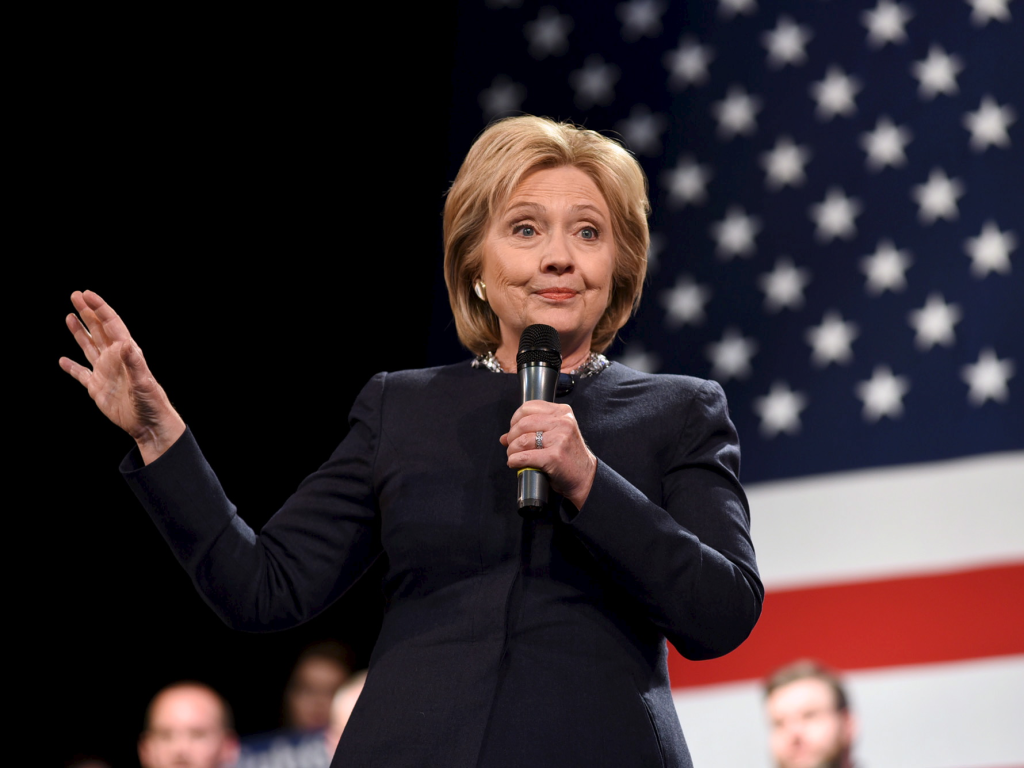
An additional 165 pages of emails from Hillary Clinton‘s time at the State Department surfaced Monday, including nearly three dozen that the presumptive Democratic presidential nominee failed to hand over last year that were sent through her private server. The latest emails were released under court order by the State Department to the conservative legal advocacy group Judicial Watch. The batch includes 34 new emails Clinton exchanged through her private account with her deputy chief of staff, Huma Abedin. The aide, who also had a private email account on Clinton’s home server, later gave her copies to the government. The emails were not among the 55,000 pages of work-related messages that Clinton turned over to the agency in response to public records lawsuits seeking copies of her official correspondence. They include a March 2009 message where the then-secretary of state discusses how her official records would be kept. “I have just realized I have no idea how my papers are treated at State,” Clinton wrote to Abedin and a second aide. “Who manages both my personal and official files? … I think we need to get on this asap to be sure we know and design the system we want.” In a blistering audit released last month, the State Department’s inspector general concluded Clinton and her team ignored clear internal guidance that her email setup violated federal records-keeping standards and could have left sensitive material vulnerable to hackers. The audit also cited a then-unreleased copy of a November 2010 email Clinton sent Abedin in which the secretary discussed using a government email account, expressing concern that she didn’t want “any risk of the personal being accessible.” Clinton never used a government account that was set up for her, instead continuing to rely on her private server until leaving office in 2013. Though Clinton’s work-related emails were government records, she didn’t turn over copies until more than 30 lawsuits were filed, including one by The Associated Press. Before providing her correspondence, Clinton and her lawyers withheld and subsequently deleted tens of thousands of messages that she claimed were personal, such as emails about her daughter’s wedding plans, family vacations, yoga routines and condolence notes. With the new release Monday, more than 50 work-related emails sent or received by Clinton have since surfaced that were not among those she provided. Clinton campaign spokesman Brian Fallon did not immediately respond Monday to a message seeking comment. Last week, Fallon told AP that Clinton had provided “all potentially work-related emails” that were still in her possession when she received the 2014 request from the State Department. “Secretary Clinton had some emails with Huma that Huma did not have, and Huma had some emails with Secretary Clinton that Secretary Clinton did not have,” Fallon said. Fallon declined to say whether Clinton deleted any work-related emails before they were reviewed by her legal team. Dozens of the emails sent or received by Clinton through her private server were later determined to contain classified material. The FBI has been investigating for months whether Clinton’s use of the private email server imperiled government secrets. Agents recently interviewed several of Clinton’s top aides, including Abedin. As part of the probe, Clinton turned over the hard drive from her email server to the FBI. It had been wiped clean, and Clinton has said she did not keep copies of the emails she chose to withhold. In a report released Monday by Democrats on the House select panel probing the 2012 attacks on a U.S. outpost in Benghazi, Libya, Republican congressional investigators asked questions about Clinton’s use of the private email server in interviews with her close aides. Abedin told interviewers that she was aware of Clinton’s heavy use of private emails from the start and that Clinton continued a practice that she had developed as a U.S. senator for New York and as a 2008 presidential candidate. “It was a natural progression from what she was doing previously, and she continued to do so.” Asked repeatedly who serviced Clinton’s private server in the basement of her New York home, Abedin identified Justin Cooper, a technology staffer at that time for former President Bill Clinton, and Bryan Pagliano, a State Department technology official who is cooperating with an FBI investigation of Clinton’s private server under an immunity deal with prosecutors. Abedin was hazy about Pagliano’s role at the agency and his private work overseeing Clinton’s server in New York. Pagliano, who previously worked for Clinton’s 2008 presidential campaign, invoked his constitutional right against self-incrimination and declined to answer the committee’s questions. In a sworn deposition last week, Pagliano also refused to answer questions posed by lawyers from Judicial Watch, including who paid for the system and who else at the State Department used email accounts on it. Pagliano also would not answer whether he discussed setting up a home server with Clinton prior to her tenure as secretary of state, according to a transcript. Other State Department officials told congressional investigators that Clinton never responded to internal offers to set her up with an official State account and an agency computer. Patrick Kennedy, the undersecretary for management at the State Department, said Clinton did “not know how to use a computer to do email. So it was never set up.” Republished with permission of The Associated Press.
Primary odd couple pushes to unite Democratic party

It seemed like a surprising party of two. There was Robby Mook, Hillary Clinton‘s top campaign aide, known for his calm temperament and fiercely disciplined ways, and Jeff Weaver, a combative political fighter often called Bernie Sanders‘ alter ego, sharing a Friday night dinner at The Farmhouse Tap & Grill in Burlington, Vermont. But over the long months of a frequently contentious primary, the two rival Democratic campaign managers struck up an unusually friendly relationship, founded on exhaustion, goofy jokes and a shared affection for their home state of Vermont. They talk almost daily, text frequently and email often. Now, as Sanders lingers in the presidential race, refusing to concede the nomination to Clinton even as he says he’ll vote for her on Election Day, the competing campaign managers have become a powerful political odd couple, responsible for engineering a graceful conclusion to a hard-fought Democratic contest. “I’ve really come to respect him,” Mook said. “There were some tense moments, but he was always honest, straightforward and very easy to work with.” Weaver is equally effusive in his praise. “I think he’s the kind of guy who is doing what he does for the right reasons,” Weaver said about Mook. “He believes in the cause and he believes in making the world a better place.” After Clinton and Sanders met at Washington hotel this month, their managers stayed until almost midnight, attempting to hammer out an agreement that would give Sanders some of the changes he wants to make to the party’s platform. During his Friday trip to Vermont, Mook made sure to meet with Sanders supporters. Some of the communication hints at far closer cooperation to come. The two camps are increasingly comparing notes on how best to attack presumptive GOP nominee Donald Trump. Clinton’s campaign and state Democratic parties have hired some Sanders staffers, and there is chatter about joint events to come. Both Mook and Weaver share a slightly silly sense of humor. Mook, 35, regales his fiercely loyal band of young operatives, known as the Mook Mafia, with impressions, including spot-on impersonations of Bill Clinton and Sanders. Weaver, 50, who owns and operated a Falls Church, Virginia, comic book and gaming store before taking the helm of Sanders’ campaign, made up gag business cards at the start of the campaign describing himself as the “comic book king.” “His Bill Clinton is pretty good,” Weaver said of Mook. “It’s not only the voice, but it’s the subject matter.” But their back-channel negotiations are nothing but serious. While Clinton has largely unified Democratic leadership around her bid, she’s struggling to win over the young and liberal voters who supported Sanders, a Vermont senator. Sanders is pushing for ways of addressing key economic issues in the Democratic platform, including trade, providing free college tuition and expanding Medicare and Social Security. “Right now, what we are doing is trying to say to the Clinton campaign, stand up, be bolder than you have been. And then many of those voters, in fact, may come on board,” Sanders told CNN’s “State of the Union” on Sunday. He also wants procedural changes, such as allowing independents to participate in primaries and curtailing the role of superdelegates — the party leaders who help determine the party’s nominee. On Friday, Sanders told MSNBC that he would vote for the former secretary of state. But he shied away from offering a formal endorsement or urging his supporters to back her. Instead, he’s kicked off a new phase of his “political revolution,” campaigning on behalf of like-minded Democrats who are running for Congress or local office. To close that gap, the candidates may rely on the personal rapport between their two top aides, a relationship helped along by formative years in Vermont politics. Weaver was raised in a rural, northern Vermont town. Mook, the son of a Dartmouth professor, grew up in Norwich, near the New Hampshire border. As a 20-year-old Boston University student, Weaver drove Sanders around the small state during Sanders’ unsuccessful campaign for governor. Mook’s first campaign memory: going to the dump to get petition signatures and distribute literature. While they knew of each other, the first time they met in person was in October, at the Iowa Democratic Party’s Jefferson-Jackson Dinner, a key stop for presidential candidates. Wearing matching outfits of khakis, blue blazers and Johnston & Murphy brown shoes, they posed for photos with their legs propped up on a security barrier. “His shoes were in better condition,” joked Mook. In New Hampshire, they were subjected to a series of interviews about each other’s campaigns — while sitting kitty-corner. The experience was remarkably friendly, Weaver recalled, allowing them to commiserate over the lack of sleep and endless travel that is part of a presidential campaign. After that, the conversation slowly expanded. Today, their relationship has grown far closer than that of their bosses. Though Clinton and Sanders have known each other since she came to Washington as first lady in 1993, they rarely communicate, say aides. Former President Bill Clinton, according to aides, was particularly frustrated by Sanders’ ability to cast himself as above politics-as-usual while firing off what he considered to be misleading attacks on Clinton’s White House legacy. For Weaver, his focus remains on ensuring that Sanders and his supporters are represented in the party and the platform that will be voted on at the Philadelphia convention. “It obviously is important that the secretary during the general election speaks to the aspirations of that 13 million people who voted for Bernie Sanders,” Weaver said. “It’s important those people be heard — not just feel like they’ve been heard — but be heard.” Republished with permission of The Associated Press.
Jac VerSteeg: Hamlet, Clint Eastwood and Jesus on Kenneth Starr
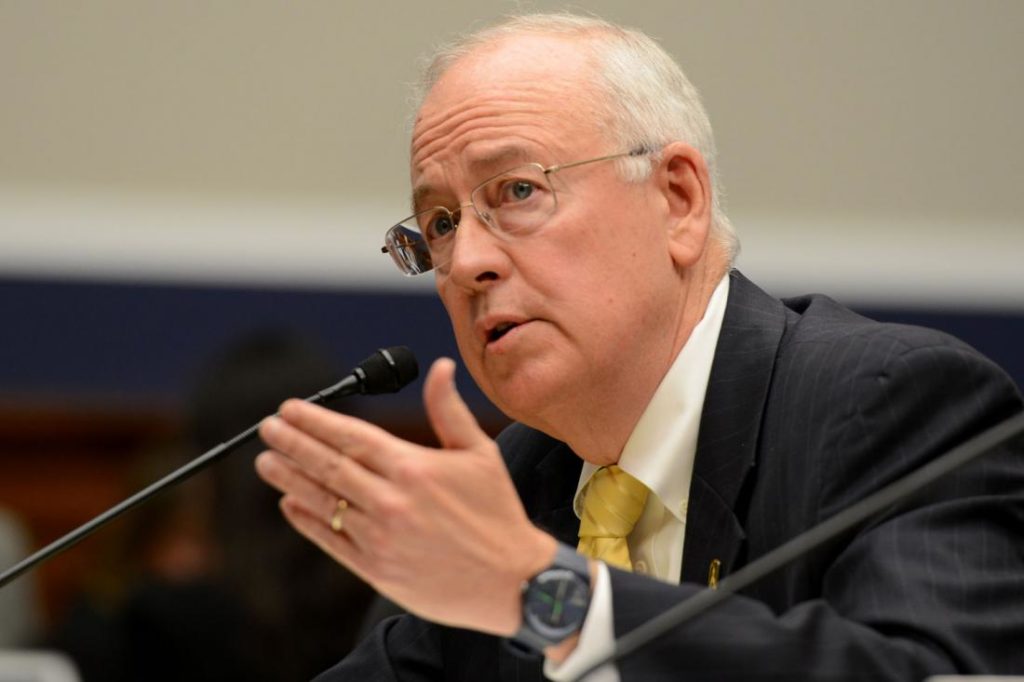
When Hamlet, Clint Eastwood and Jesus agree on something, it must be true. Said Hamlet: “Use every man after his desert, and who should ’scape whipping?” Said Clint in “Unforgiven:” “We all got it coming, kid.” Said Jesus: “He that is without sin among you, let him cast the first stone.” Those quotes should instill underlying caution when criticizing or accusing someone. Beware the boomerang effect. Take, as a recent example, Kenneth Starr. Starr was the independent counsel who probed – and probed, and probed and probed – the allegations of misconduct that led to the House impeachment of then-President Bill Clinton in 1998. Starr’s findings were drenched in sleaze. That’s true in large part because Bill Clinton’s actions were drenched in sleaze. Nevertheless, Starr has been seen as the run-amok tool of a Republican Party hell-bent on removing Clinton from office using the pretext of a sex scandal that did not rise to the level of an impeachable offense. And, since the Senate did not convict and remove Clinton, that judgment has festered. Nearly two decades later, Starr is dealing with his own sex scandal. As president of Baylor University in Texas, Starr presided over an administration that enabled the school’s athletics department to cover up sexual assaults by players. The conduct was so egregious that Baylor fired football coach Art Briles and ousted Starr as president. Oh, the irony. Clinton clung to his presidency; Starr relinquished his. The man who left no stone unturned (or dress unexamined) when pursuing Clinton buried his head in the sand when his own nest was being befouled. Had Starr carried out investigations at Baylor with the same zeal he brought to the Clinton probe, he and the university would have avoided major embarrassment. Even worse for Starr, his laxity had the effect of harming a number of victims. Not only did they suffer the initial assaults, they suffered from the ongoing cover-ups, which denied them dignity and justice. There is evidence Starr has been humbled by experience. Just days before he was removed as Baylor president, Starr unexpectedly rose to Clinton’s defense in remarks at a forum hosted by the National Constitution Center in Philadelphia. Amid attacks from Donald Trump that dragged up Bill Clinton’s exploitation of Monica Lewinsky and renewed the completely unfounded speculation that Hillary Clinton might have been involved in the “murder” of Vince Foster, Starr praised Clinton’s compassion and praiseworthy actions since leaving office. “His compassion for human beings is absolutely clear,” Starr said of Clinton. … “The ‘I feel your pain is absolutely genuine.” “There are certain tragic dimensions which we all lament,” Starr said. “That having been said, this redemptive process afterwards, we have certainly seen that powerfully.” You have to wonder if Starr was pondering his own situation and preparing for his own redemptive journey. It’s a journey others involved in the attempt to remove Clinton from office have had to undertake. Newt Gingrich and Bob Livingston left the House amid revelations about their own sexual escapades. They were followed by Dennis Hastert, who has just been sentenced to prison in a case that revealed he had sexually abused young boys while he was a teacher. For a Florida angle, I would note that then-Rep. Bill McCollum was a leader in presenting the House’s impeachment case to the Senate. He has not been hit with a sex scandal. But neither did his lead impeachment role boost his political fortunes. He lost a Senate bid to Bill Nelson in 2000 and failed to win the GOP Senate nomination in 2004. After being elected attorney general in 2006, he lost to Rick Scott in his 2010 bid for the GOP’s gubernatorial nomination. While it is appropriate to note the irony in Starr’s current disgrace and in the political and legal problems that have plagued many of those who went after Clinton, I would caution against unbridled taunting, sneering and rejoicing. Don’t ignore it. Corruption and faults need to be exposed. But the proper emotion, folks, is sadness. We’re all humans. In one way or another, we all got it coming. And to quote anonymous: “Payback is a bitch.” ___ Jac Wilder VerSteeg is a columnist for The South Florida Sun-Sentinel and former deputy editorial page editor for The Palm Beach Post.
Darryl Paulson: Candidate’s running mate rarely affects outcome of presidential election
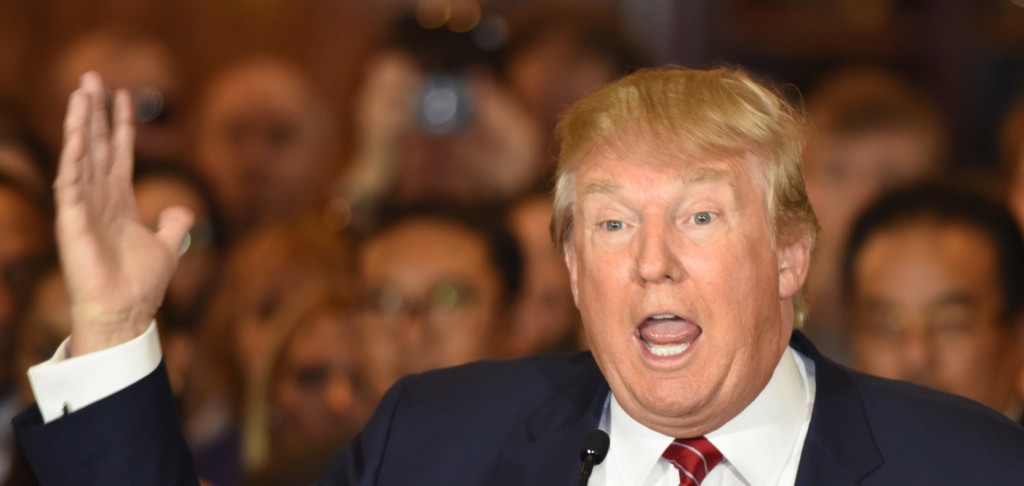
The national conventions are less than three months away and, as the nomination phase comes to a close, attention will gravitate toward potential vice presidential candidates. Let’s focus on the factors that have been used in selecting vice presidents. Most conventional wisdom is wrong. To begin with, most people and many presidential candidates select a vice president who they believe will help them win the election. Few vice presidents have had any effect on the election results. Jack Kemp did not help carry his home state for Bob Dole and Paul Ryan did not win Wisconsin for Mitt Romney. On the Democratic side, Sen. Lloyd Bentsen was not able to carry Texas for Michael Dukakis, nor did John Edwards help the Democrats win South Carolina or other southern states. One of the few times a vice president actually helped a president carry a state was in 1960 when John F. Kennedy picked Sen. Lyndon Johnson as his running mate. If Kennedy had not won Texas, Richard Nixon would have won the presidency. In like fashion, vice presidents are sometimes selected to provide regional balance, although there is no evidence that this helps. When Bill Clinton of Arkansas picked fellow southerner Al Gore as his vice president, many thought this unbalanced regional ticket was crazy. When the Clinton-Gore team captured the electoral vote of four southern states, something that Democrats had been unable to do in recent presidential elections, Clinton’s choice looked like genius. In addition to regional balance, vice presidents are sometimes selected to provide ideological balance. With increased polarization in recent years, this is becoming a less important factor. In 1976, Ronald Reagan announced Sen. Richard Schweiker of Pennsylvania as his vice presidential choice prior to the convention. Reagan hoped to alleviate the fears of some that he was too conservative and needed a moderate to balance the ticket. More importantly, Reagan hoped that picking Schweiker would convince some Pennsylvania delegates to support his candidacy over incumbent Gerald Ford. The pick of Schweiker did not help Reagan and Ford went on to win the nomination. Many Democrats in 2016 see Hillary Clinton as too conservative and too establishment and have urged her to choose a progressive as vice president. In addition to Bernie Sanders, other progressive names being floated are Sen. Sherrod Brown of Ohio and Sen. Elizabeth Warren of Massachusetts. A vice president is sometimes selected to stimulate participation by a particular group. Walter Mondale selected Geraldine Ferraro to get more women to vote. That pick didn’t provide much help. Mondale won only his home state of Minnesota and the District of Columbia against Reagan. Vice presidents have been picked to add gravitas to the ticket. Concerns about Reagan’s limited government experience led him to pick George Herbert Walker Bush as his vice president. Bush had been a member of Congress, the U.S. ambassador to the United Nations and to China, head of the Republican National Committee and head of the CIA prior to his selection. Bush’s son, George W., picked Dick Cheney as his vice president to add heft to his ticket. Cheney had served as Chief-of-Staff to Ford, been a member of the House, and served as Secretary of Defense for George W’s father. In fact, Cheney headed George W’s vice presidential selection team and concluded he was the best candidate. Do any of these factors help a presidential candidate win? The answer is no. A study by two political scientists, Bernard Grofman and Reuben Kline, analyzed 11 presidential elections between 1968 and 2008 and found the net effect of a vice president was 1 percent at most. If Clinton is the Democratic nominee, she may pick a progressive or choose someone like Secretary of Housing and Urban Development Julian Castro. Although not well known, Castro’s youth and Hispanic background might help stimulate Hispanic turnout. If Trump is the GOP nominee, it is easier to put together a list of people he would not select than those he would. There is little chance that “lying Ted,” “little Marco,” or “low energy Bush” would want to join forces with Trump. Gov. Scott Walker of Wisconsin is one possibility since he dropped out of the nomination race early before Trump had the opportunity to insult him. Chris Christie is another option because he was the first major candidate to endorse Trump after Christie withdrew. Another option is Florida Gov. Rick Scott. Florida is a “must win” state and Scott endorsed Trump as a “businessman outsider who will shake up the status quo in Washington.” Although most of the factors in the vice presidential selection process have been shown to have little impact, there are two general rules that no president should ignore. First, pick someone you feel comfortable working with. Second, and most important, pick someone who is ready to be president. Nothing else matters. *** Darryl Paulson is Professor Emeritus of Government at USF St. Petersburg.
AP Poll: Improved economic outlook boosts Barack Obama approval
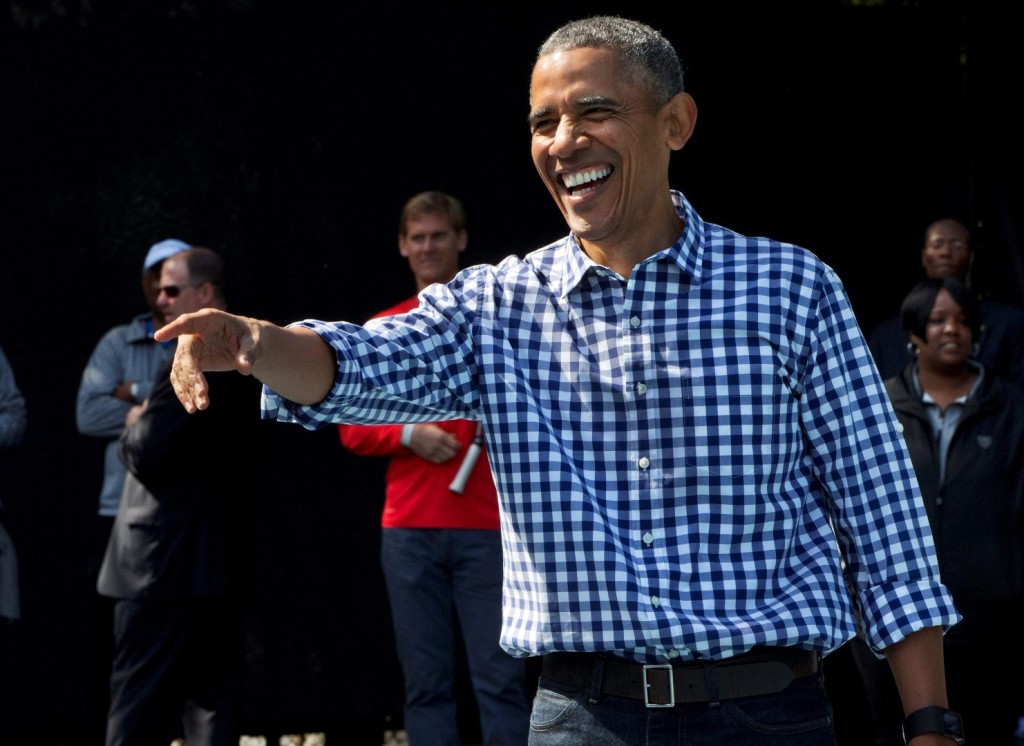
As many in the United States hold their noses in the search for the next president, they’re increasingly warming to the president they already have. Buoyed by some good economic news and a surge of goodwill from his base of supporters, President Barack Obama is seeing his approval rating rise. That puts Obama, who leaves office in January, in a position to remain a force in the political debate at a point in his final term when some others faded into the background. For the first time since 2013, half of those questioned approve of the job Obama is doing in office, according to an Associated Press-GfK poll. The survey found the apparent uptick in approval extended across issues, including foreign affairs, immigration and, most notably the economy, where people said they felt slightly better about their own prospects and Obama’s stewardship. Asked about their opinion of Obama more generally, those surveyed were more likely to give him a positive rating than any of the candidates for president, Republican or Democrat. Terry Trudeau, 66, said he preferred Obama to “all of them” running for the White House. “One of the qualities I like is he’s been able to work with other countries and make deals,” Trudeau said, citing Obama’s climate change pacts with China as an example. “Donald Trump will never be able to do that. He would try to bully them.” Obama’s numbers remain modest. Compared with his predecessors, he’s well above Republican George W. Bush, who had about a 30 percent approval rating at this point in his presidency, but below Democrat Bill Clinton‘s roughly 60 percent, according to polls conducted by Gallup. Still, where each of those second-term presidents largely sat on the sidelines during the races to replace them, Obama is poised to stay in the game. Approval ratings generally are tied to how people feel about the economy. Obama has enjoyed and promoted a steady trickle of positive economic news. The survey showed people were slightly more likely to describe the economy as good and slightly more optimistic about their own financial situations than they were in February. Still, 54 percent characterize the economy as poor. While the poll found an increase in approval among Democrats and with people under 50, there is no evidence that Republican opposition is thawing or that the president has become a less polarizing figure. Only about 1 in 10 Republicans expressed a positive opinion of Obama or the job he’s doing. “I just feel that he’s out of touch with what’s going on. I feel like he’s more concerned with his legacy than making change,” said Angela Buckmaster, a 47-year-old Republican from Lansing, Michigan. Still, the numbers may help explain some of Obama’s recent swagger and why it’s likely to continue as he tries to rally his party behind its eventual 2016 nominee — Hillary Clinton or Bernie Sanders. Obama has been quick to take aim at GOP candidates. This past week, he called front-runner Trump’s latest immigration proposal “half-baked.” The president seized the spotlight with a new rule and aggressive critique aimed at corporate tax dodgers, risking riling Wall Street but capitalizing on the populism of the moment. He has put himself at the front and center of the fight over the Supreme Court, returning on Thursday to the law school where he once taught and portraying the GOP blockade of his nominee as a threat to democracy. Obama also conducted his first interview as president with “Fox News Sunday,” a favorite show for conservatives. The White House says Obama always planned to squeeze every last minute out of his two terms, regardless of his popularity. Aides have promised more policy announcements, particularly economic initiatives, as several efforts long in the works come to fruition. Also, he probably will be a force in the campaign, working to fire up his core coalition of young, African-American and Hispanic voters, and backers in Rust Belt states, where he has continued to show strength. Eighty-one percent of those questioned in the poll say the economy is a very or extremely important issue to them personally, compared with the 74 percent who say that about health care or the 69 percent about the threat posed by the Islamic State group. People were split 49 percent to 49 percent, in their approval or disapproval of Obama’s handling of the economy. But that divide was a slight improvement over the 44 percent approval in February. On other issues, views of Obama are not as rosy. More in the survey disapprove than approve of his handling of world affairs, the threat from IS, immigration, and health care. But on each measure, Obama has improved at least slightly since February. The AP-GfK Poll of 1,076 adults was conducted online March 31-April 4, using a sample drawn from GfK’s probability-based KnowledgePanel, which is designed to be representative of the U.S. population. The margin of sampling error for all respondents is plus or minus 3.3 percentage points. Republished with permission of the Associated Press.
