
Katie Britt, Tim Scott, and colleagues lead a bicameral amicus brief challenging the CFPB’s funding structure
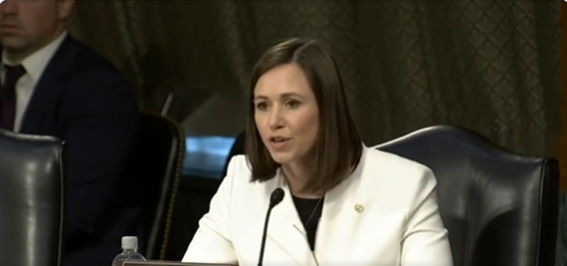
U.S. Senator Katie Britt recently joined Ranking Member Tim Scott (R-S.C.) of the Senate Committee on Banking, Housing, and Urban Affairs, Chairman Patrick McHenry (R-North Carolina) of the House Financial Services Committee, Representative Andy Barr (R-Kentucky), the Chairman of the Subcommittee on Financial Institutions and Monetary Policy, Representative Bill Huizenga (R-Michigan), the Chairman of the Subcommittee on Oversight and Investigations, and a bicameral group of 132 members of Congress in filing an amicus curiae brief to the Supreme Court in Consumer Financial Protection Bureau, et al., v. Community Financial Services Association of America, Limited, et al. U.S. Senator Tommy Tuberville (R-Alabama) has also joined the amicus brief. The brief urges the Supreme Court to uphold the Fifth Circuit’s decision that the Consumer Financial Protection Bureau’s (CFPB) funding structure is unconstitutional and to make the Bureau’s funding subject to congressional appropriations like most of the federal government. “The Constitution clearly grants Congress power over the appropriations process. The CFPB should be no exception but has been operating outside of this lawful process with little oversight or taxpayer accountability,” said Senator Britt. “This amicus brief reaffirms the importance of spending public funds as directed by Congress and ‘not according to the individual favor of Government agents.’ The current funding scheme utilized by the CFPB is unsustainable and unconstitutional, and I urge the Court to uphold the Fifth Circuit’s decision.” “Thankfully, our government has a system of checks and balances, one of which includes congressional oversight and the power of the purse—appropriations,” Sen. Scott said. “In these important and trusted roles, we analyze and scrutinize the executive branch’s actions on behalf of the American taxpayer, so that the voices of the country’s citizens are heard and their viewpoints reflected. Unfortunately, the Consumer Financial Protection Bureau—or the CFPB—is a notable exception. It is not accountable to Congress or the American taxpayer through the appropriations process, and it routinely and brazenly acts outside of the scope of its authority.” The brief states, “The Court need not determine which particular aspect of the CFPB’s funding scheme is the most problematic. This is the easy case. The CFPB ‘is in an entirely different league’ from other entities when it comes to its insulation from Congress… to the point that the CFPB currently operates as ‘a sort of junior-varsity Congress’ setting its own funding levels in perpetuity… Such insulation means that Congress itself is not determining the CFPB’s funding. The Court should affirm the judgment below, which will return the matter of the CFPB’s funding to the normal political and legislative channels, as Article I and the Appropriations Clause require.” Questions about the constitutionality of the CPFB have followed the agency since its founding in the early years of the Obama Presidency. Then U.S. Sen. Richard Shelby (R-Alabama) said. “For years, I have argued that supporters of Dodd-Frank sacrificed our Constitution in the name of bureaucratic independence,” Shelby stated. “While the court’s ruling today is a victory for accountability, it is meaningless without a President who is willing to rein in the unmatched authority of the CFPB’s Director.” Conservatives are optimistic that the Court will rule to place the troubled agency under congressional oversight through the budgeting process. Katie Britt was elected to the U.S. Senate in 2022. To connect with the author of this story or to comment, email brandonmreporter@gmail.com.
Tommy Tuberville urges Supreme Court to rule Consumer Financial Protection Bureau’s funding structure unconstitutional

On Tuesday, U.S. Senator Tommy Tuberville joined Senator and presidential candidate Tim Scott in filing an amicus curiae brief to the U.S. Supreme Court in Consumer Financial Protection Bureau, et al., v. Community Financial Services Association of America, Limited, et al. The brief urges the Court to uphold the Fifth Circuit’s decision that the Consumer Financial Protection Bureau’s (CFPB) funding structure is unconstitutional and to make the Bureau’s funding subject to congressional appropriations. The brief states, “The Court need not determine which particular aspect of the CFPB’s funding scheme is the most problematic. This is the easy case. The CFPB ‘is in an entirely different league’ from other entities when it comes to its insulation from Congress… to the point that the CFPB currently operates as ‘a sort of junior-varsity Congress’ setting its own funding levels in perpetuity… Such insulation means that Congress itself is not determining the CFPB’s funding. The Court should affirm the judgment below, which will return the matter of the CFPB’s funding to the normal political and legislative channels, as Article I and the Appropriations Clause require.” Sen. Tuberville represents Alabama on the Senate Committee on Banking, Housing, and Urban Affairs, where Sen. Scott is the Ranking Member. Tuberville and Scott were joined in the brief by Chairman Patrick McHenry (R-North Carolina) of the House Financial Services Committee; Representative Andy Barr (R-Kentucky), the Chairman of the Subcommittee on Financial Institutions and Monetary Policy, and Representative Bill Huizenga (R-Michigan), the Chairman of the Subcommittee on Oversight and Investigations in a bicameral group of 132 members of Congress. “Thankfully, our government has a system of checks and balances, one of which includes congressional oversight and the power of the purse—appropriations,” Sen. Scott said. “In these important and trusted roles, we analyze and scrutinize the executive branch’s actions on behalf of the American taxpayer, so that the voices of the country’s citizens are heard and their viewpoints reflected. Unfortunately, the Consumer Financial Protection Bureau—or the CFPB—is a notable exception. It is not accountable to Congress or the American taxpayer through the appropriations process, and it routinely and brazenly acts outside of the scope of its authority.” Then U.S. Sen. Richard Shelby raised similar constitutional concerns over the independent funding mechanism of the CFPB when he was in office, and the Obama Administration created the CPFB. “For years, I have argued that supporters of Dodd-Frank sacrificed our Constitution in the name of bureaucratic independence,” Shelby stated. “While the court’s ruling today is a victory for accountability, it is meaningless without a President who is willing to rein in the unmatched authority of the CFPB’s Director.” Sen. Shelby concluded, “That is why it is critical for the Bureau to be subject to the congressional appropriations process and governed by a board of directors. Only then will Congress have the ability to conduct meaningful oversight to ensure that the CFPB is truly accountable.” Tommy Tuberville was elected to the Senate in 2020. To connect with the author of this story or to comment, email brandonmreporter@gmail.com.
Reps. Barry Moore and Mo Brooks demand DOD halt involuntary discharges for vaccine refusal immediately
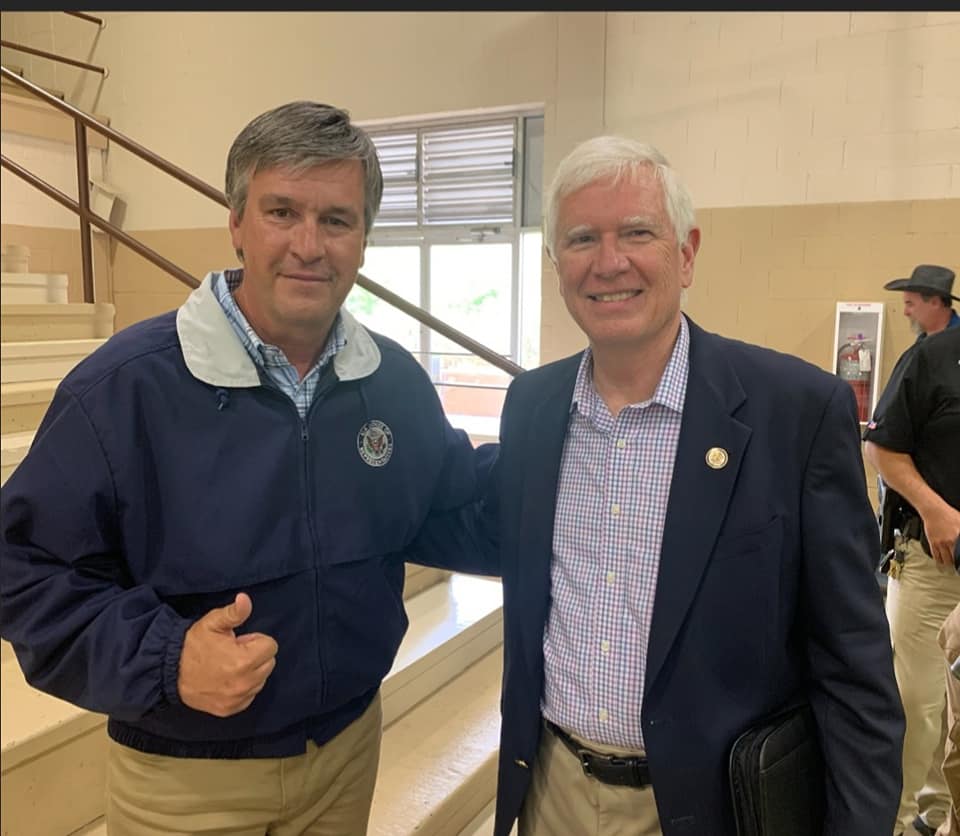
Reps. Barry Moore and Mo Brooks joined 40 of their colleagues in sending a letter to the Department of Defense (DOD) to demand that they halt efforts to involuntarily discharge members of the military who have refused COVID-19 vaccination. The letter requests that they stop until an in-depth review of natural immunity is complete, and the Department has issued uniform procedures for vaccine exemptions. According to Moore’s press release, Section 720 of the National Defense Authorization Act for Fiscal Year 2022 requires the DOD to establish uniform procedures for issuing exemptions and fully consider natural immunity. This includes eligibility timelines for consideration of exemptions for service members nearing separation and retirement in the development of uniform procedures relating to administrative exemptions. According to an NPR report, as of January 26, 96% of active troops had been completely vaccinated, while 3,350 soldiers had refused to get the vaccine. Nearly 5,900 have received temporary exemptions. “The DOD must immediately halt efforts to discharge our active-duty military members who refuse to get the vaccine just because overreaching politicians want to continue intervening in the private lives of the American people,” said Moore. “We must ensure that the DOD completes an in-depth review of natural immunity. I will continue to fight against the tyrannical vaccine mandate on our service members.” The letter states, “We are gravely concerned that the military services are proceeding with involuntary discharges when it is unclear to us whether uniform procedures have been issued by the Department of Defense. If the Department of Defense has not issued uniform procedures or reviewed the inclusion of natural immunity and the military services are moving forward with involuntary discharges, then we believe the Department is ignoring and violating Section 720. Congress included this language to protect our service members, and we expect the Department of Defense to abide by the law.” Additional members of Congress to sign the letter include Vicky Hartzler, Doug Lamborn, Elise Stefanik, Brian Mast, David McKinley, Darrell Issa, Kevin Hern, Rodney Davis, Bill Huizenga, Yvette Herrell, Michael Waltz, Bill Posey, Michael Guest, David Valadao, Thomas Tiffany, Pete Stauber, Mike Kelly, Andy Biggs, Neal Dunn, Gus Bilirakis, Dan Crenshaw, Randy Weber, Sr., Louie Gohmert, Lauren Boebert, Glenn Grothman, Alex Mooney, Joe Wilson, Scott DesJarlais, Jack Bergman, David Schweikert, Jeff Duncan, Ralph Norman, Bruce Westerman, Jim Banks, Rick Crawford, Jodey Arrington, Christopher H. Smith, Victoria Spartz, Ted Budd, and Gregory Steube.
