
House chairman: Donald Trump favors privatizing air traffic control
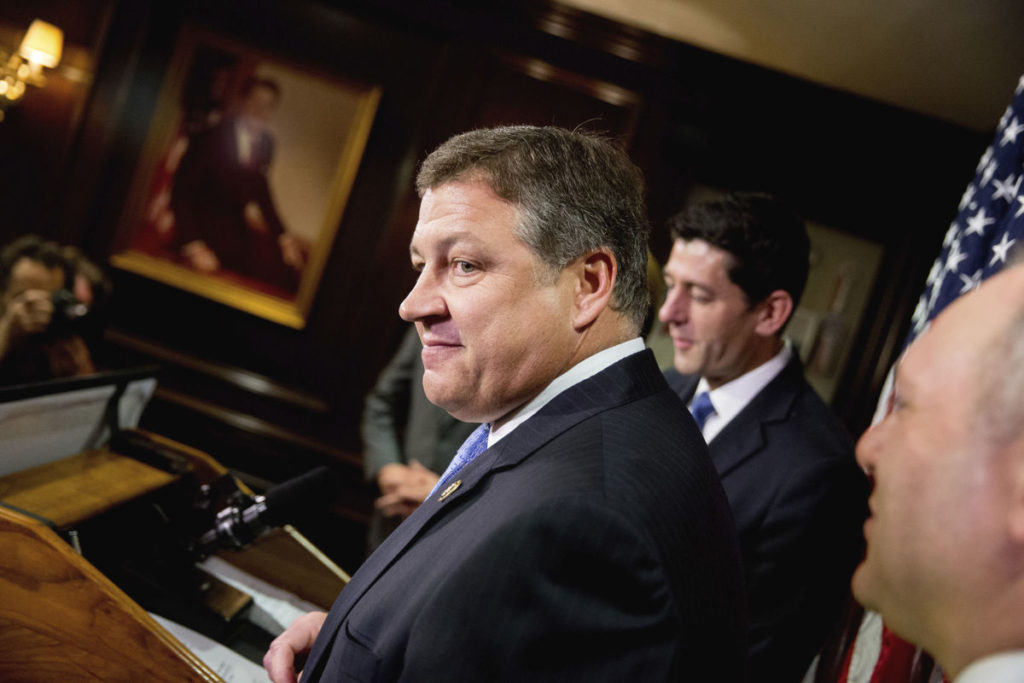
A House committee chairman says President-elect Donald Trump likes the idea of spinning off air traffic control operations from the government and placing them under the control of a private, non-profit corporation chartered by Congress. Rep. Bill Shuster, head of the House transportation committee, told The Associated Press that he spoke to Trump about the idea several times both before and during the presidential election. He said he believes the president-elect would be supportive, although details would have to be worked out. “I have spoken to him on a number of occasions and he generally likes the idea,” Shuster said. “We do need to sit down and put meat on the bones … I think in general he sees it as something that’s positive and we need to work on it.” The Republican lawmaker endorsed Trump early on and campaigned twice with him in his Pennsylvania congressional district. He also campaigned twice with Vice President-elect Mike Pence. Since the election, Shuster has met with Shirley Ybarra, a former Virginia transportation secretary who is working with the Trump transition team on transportation matters. Ybarra and the Trump transition team didn’t immediately respond to requests for comment. Shuster and most of the airline industry have been pressing for air traffic control privatization. They say the Federal Aviation Administration is moving too slowly to adopt new technology and that airlines haven’t seen the benefits they expected from the agency’s air traffic control modernization program, which has been in the works for more than a decade. Earlier this year, Shuster included a plan to privatize air traffic control in a bill to extend the FAA’s operating authority. The bill was approved by the transportation committee, but Shuster was unable to get it to the House floor after several influential lawmakers, including the Ways and Means Committee chairman and the House and Senate Appropriations Committee chairmen, raised objections. Democrats, some segments of the aviation industry and some FAA unions also oppose the plan, although the National Air Traffic Controllers Association endorsed the bill. Sen. John Thune, R-S.D., the Commerce, Science and Transportation Committee chairman and Shuster’s Senate counterpart, hasn’t taken a position on the issue. He said Friday that the FAA hasn’t been successful in bringing fundamental change to how air traffic is managed despite spending billions of dollars. “Congress has different options, and we will continue to explore them, but the case for changing the FAA’s approach to air traffic control modernization has become stronger,” Thune told the AP. Rep. Peter DeFazio, D-Ore., the senior Democrat on the House transportation committee, cautioned earlier this week that any proposal to overhaul the existing air traffic system “must be thoroughly vetted, not rushed through Congress just because the political landscape makes it easier.” Sen. Bill Nelson, D-Fla., raised objections Friday to what he described as an attempt by House proponents of air traffic control privatization to include language in a defense policy bill that would effectively squelch military objections to the plan. Nelson described his concerns in a letter Friday to Senate Armed Committee Chairman John McCain, R-Ariz., and Sen. Jack Reed, D-R.I., the committee’s senior Democrat. Republished with permission of the Associated Press.
Guns, immigration and Zika top agenda as Congress returns

Gun control, immigration and money to combat the Zika virus top the congressional agenda as lawmakers sprint toward the political conventions this month and a seven-week summer recess. Amid all that, Republicans plan to squeeze in a meeting with Donald Trump on Thursday. The House and Senate have just eight legislative days before their break, and lawmakers have scheduled a handful of politically charged votes with implications for incumbents in November’s election. In the House, legislation to fight terrorism and a gun control measure that already failed in the Senate are planned for this week. House Speaker Paul Ryan said a GOP plan to keep suspected terrorists from obtaining firearms would do so “without compromising a citizen’s basic bill of rights,” including the rights to bear arms and receive due process under the law. In the Senate, immigration bills and legislation to impose labeling on genetically modified food are on tap. Unclear is whether Republicans and Democrats can resolve the dispute over funds for the mosquito-borne Zika virus now that summer is in full swing, or whether the matter will have to wait until September when Congress returns. A look at the issues: ___ ZIKA Back in February, President Barack Obama requested $1.9 billion in emergency money to fight Zika, which causes grave birth defects and has infected 287 pregnant women in the United States and 250 in U.S. territories, according to the most recent numbers from the Centers for Disease Control. Congress has failed to fund the request as the issue has been caught up in partisan fights and the typical dysfunction. House Republicans rammed through a bill that would provide $1.1 billion by cutting money from other government agencies. The legislation, to the anger of Democrats, would bar new funding for Planned Parenthood clinics in Puerto Rico and allow pesticide spraying that environmentalists argue would be harmful. Senate Democrats have blocked the bill and another vote is expected this week, although progress is unlikely. ___ GUN CONTROL Bowing to election-year pressure from Democrats, Ryan, R-Wis., says the House will vote on a GOP proposal aimed at keeping suspected terrorists from obtaining firearms, a measure backed by the National Rifle Association. Democrats want to vote on their own gun control bills, and they haven’t ruled out a return to disruptive tactics if they’re rebuffed. Ryan indicated on Tuesday that Democrats are unlikely to get a vote. Democrats staged a sit-in on the House floor that lasted nearly 26 hours last month to call attention to their demand for gun-control votes. The sit-in followed the June 12 mass shooting in Orlando, Florida, that killed 49 people and heightened attention on the national toll taken by firearms. The GOP bill would let the government block firearms purchases for suspected terrorists, but only if prosecutors can prove in court that the buyer is involved in terrorism. It would also establish a new office within the Department of Homeland Security to focus on preventing extremist groups from recruiting followers. Democrats say the Republican bill is too weak. They want votes on one measure expanding background check requirements for gun buyers, and a second banning firearms sales to terror suspects without requiring prosecutors to first prove the buyer was embarking on terrorism. ___ FAA REAUTHORIZATION Key House and Senate lawmakers are close to a deal on a bill to extend the Federal Aviation Administration’s programs and policies, which are due to expire on July 15. Rep. Bill Shuster, R-Pa., chairman of the House Transportation Committee, has agreed to temporarily drop his contentious plan to privatize the nation’s air traffic control system in order to allow a bill to move forward. Negotiations have focused on what policy provisions to include in the extension. There is strong support in both chambers to include an array of proposals to enhance airports security in light of recent airport attacks in Istanbul and Brussels. Proposals to extend new protections to airline consumers, relax medical requirements for private pilots and lift some restrictions on commercial drone flights are also under discussion. ___ TRUMP House and Senate Republicans are slated to meet with the GOP’s presumptive presidential nominee less than two weeks before the party convention in Cleveland. Among those expected to attend the separate sessions are Sens. Bob Corker of Tennessee, Jeff Sessions of Alabama and Joni Ernst of Iowa, all of whom have been mentioned as possible running mates for the blustery billionaire. Trump’s short list of possible vice presidential candidates is heavy with Washington insiders who could help usher his agenda through Congress. ____ IMMIGRATION Senate Democrats are expected to block a GOP bill that would withhold congressional funding from so-called sanctuary cities that shield residents from federal immigration authorities. Republicans also are proposing a bill to impose a mandatory minimum sentence of five years for any person who illegally re-enters the country after being removed. Republicans have pushed for action since last year when 32-year-old Kathryn Steinle was shot in San Francisco. The man charged in the killing was in the country illegally despite a long criminal record and multiple prior deportations. He had been released by San Francisco authorities despite a request from federal immigration authorities to keep him detained. Republished with permission of the Associated Press.
Republicans beginning to make peace with Donald Trump as nominee
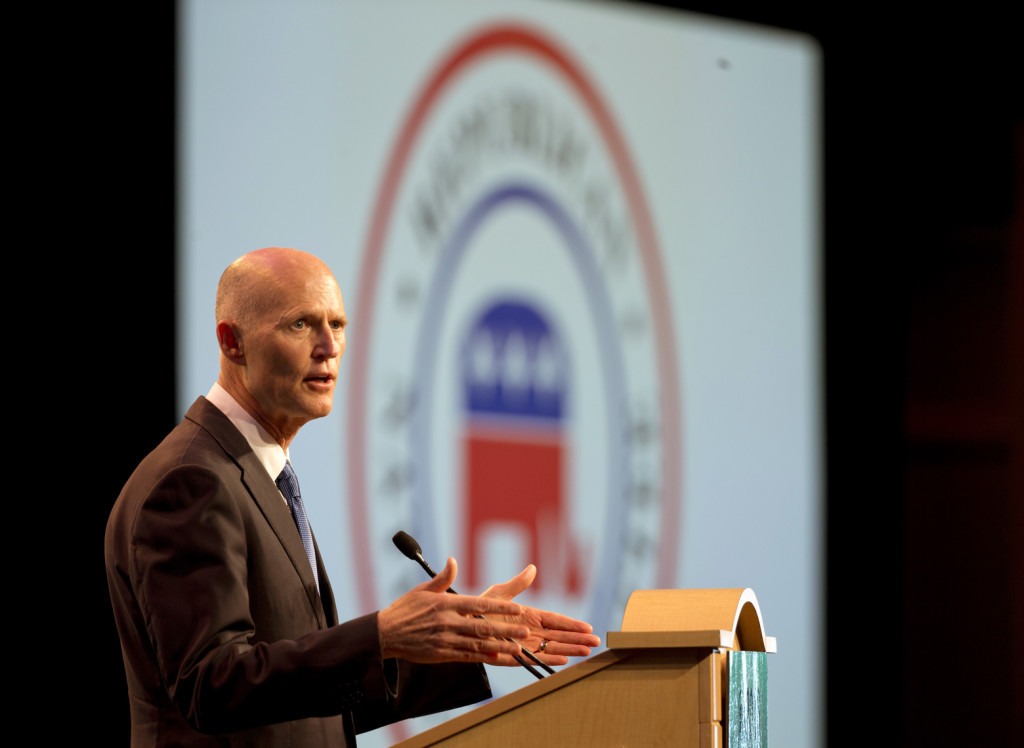
They thought it was impossible. Some still fear it. Others can barely believe it. But leading Republicans are beginning to accept the idea that Donald Trump will be their party’s presidential nominee. In the wake of the businessman’s commanding wins in five Eastern states this week, a growing number of national Republicans and GOP lawmakers on Capitol Hill say Trump has taken on an indisputable air of inevitability. Some argue they should get behind him now and abandon the “Never Trump” efforts still nursed by some establishment Republicans. Embracing Trump, these Republicans say, may be the GOP’s only hope of blocking Democrat Hillary Clinton in November. “Donald Trump is going to be our nominee,” Florida Gov. Rick Scott wrote on Facebook this week. “The Republican leaders in Washington did not choose him, but the Republican voters across America did choose him. The voters have spoken.” “Republicans now need to come together,” Scott wrote, warning that continued opposition to Trump “will be nothing more than a contribution to the Clinton campaign.” On Capitol Hill, support for Trump has also gotten markedly easier to find. “I don’t understand. I mean, it’s not ‘Never Trump.’ It’s ‘Never Hillary.’ Never, never, never Hillary. Come on. Wake up and smell the coffee,” said Rep. Mike Kelly of Pennsylvania, who earlier this week cast his ballot for Trump, along with all members of his large family and 57 percent of Republican primary voters in his state. “I’ve never seen a party attack one of its own candidates with this aggressiveness,” Kelly said of GOP establishment figures who oppose Trump, blaming it on an elitist Washington attitude out of touch with voters. Sen. Orrin Hatch of Utah, a respected senior member of the Senate, previously endorsed Jeb Bush and then Sen. Marco Rubio and said he doesn’t intend to endorse Trump. But Hatch said of Trump, “It looks to me like he’s going to win, and if he does, I’m going to do everything in my power to help him.” Some leading Republicans have forecast that a Trump candidacy could spell electoral disaster, help Democrats win back control of the Senate and even cost safe Republican seats in the House. They point to Trump’s disparaging comments about women and minorities that have contributed to high unfavorability ratings. Hatch, along with others, disagreed. “I think he could be great if he’ll get serious about being president, and I think he will,” Hatch said. “When he gets hit with reality that this is the toughest job in the world, he’s a clever, smart guy who I think will want to be remembered for doing good things, so I have a feeling he can make that transition.” On Thursday, Trump picked up endorsements from two House committee chairmen: Reps. Bill Shuster of Pennsylvania, who chairs the Transportation Committee, and Jeff Miller of Florida, who chairs Veterans Affairs. He talked foreign policy in a phone call with Sen. Bob Corker, R-Tenn., who heads the Foreign Relations Committee. Corker later was full of compliments about Trump, though he said he had no plans to endorse him. To be sure, not all are on board. Some in the GOP continue to cringe at the thought of vulnerable Senate Republicans and candidates getting linked to Trump’s provocative stances or attempting to distance themselves from them. “My feeling about Donald Trump is, I don’t think that that’s our best foot forward at all,” said Sen. Jeff Flake of Arizona, an outspoken Trump critic. “And I can’t imagine being forced to take some of those positions that he’s taken. A ban on Muslims, build a wall and make the Mexicans pay for it, you name it.” It remains uncertain whether Trump will amass the 1,237 delegates needed to clinch the nomination ahead of the Republican convention in Cleveland in July. If he does not, Texas Sen. Ted Cruz hopes to make a play to win the nomination as balloting progresses. Ohio Gov. John Kasich also remains in the race. Next week’s primary in Indiana, where polling suggests a close race, could be crucial in determining whether either Cruz or Kasich can continue to argue they have a path forward. Roger Villere, longtime Louisiana state GOP chief and one of the national party’s vice-chairmen, said a “clear supermajority” at the Republican National Committee spring meeting earlier this month in South Florida were warming to the idea of Trump as standard-bearer. “There were a lot of them who Trump wasn’t their first choice, but when we got in closed rooms and everybody started talking, the general consensus was that he’s going to be our nominee, and we will rally around him,” Villere said Friday. “I wouldn’t say it was even reluctance. It’s just the reality.” Offering a common party refrain, Villere added, “All of our possibilities are clearly superior to what the Democrats have.” Republished with permission of the Associated Press.
