
January 6 panel: Donald Trump ‘detached from reality’ in defeat
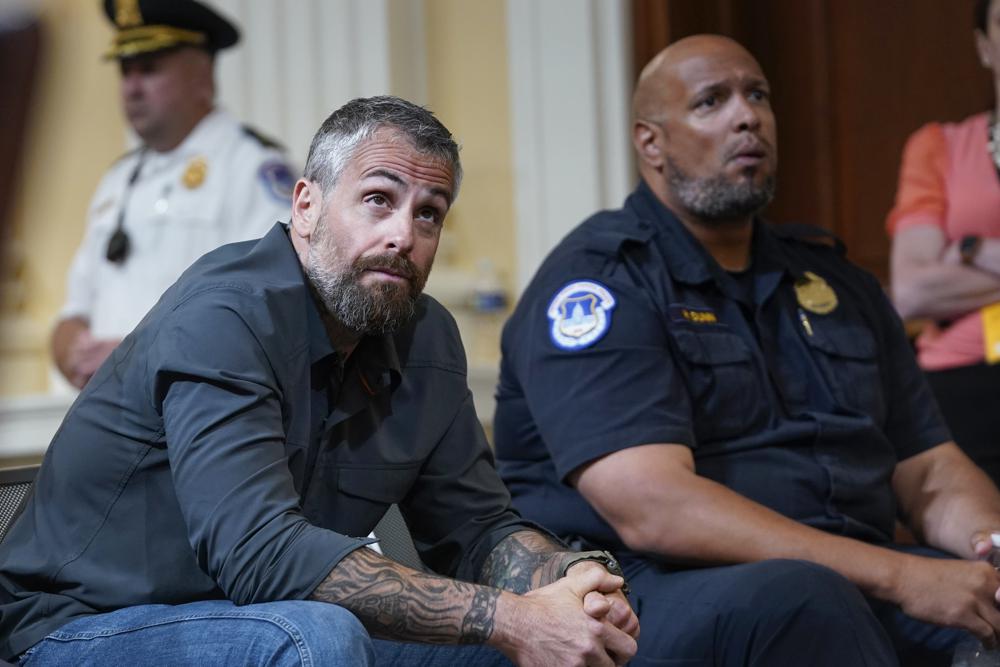
Donald Trump’s closest campaign advisers, top government officials, and even his family were dismantling his false claims of 2020 election fraud ahead of January 6, but the defeated president seemed “detached from reality” and kept clinging to outlandish theories to stay in power, the committee investigating the Capitol attack was told Monday. With gripping testimony, the panel is laying out in step-by-step fashion how Trump ignored his own campaign team’s data as one state after another flipped to Joe Biden and instead latched on to conspiracy theories, court cases, and his own declarations of victory rather than having to admit defeat. Trump’s “big lie” of election fraud escalated and transformed into marching orders that summoned supporters to Washington and then sent them to the Capitol on January 6 to block Biden’s victory. “He’s become detached from reality if he really believes this stuff,” former Attorney General William Barr testified in his interview with the committee. Barr called the voting fraud claims “bull——,” “bogus,” and “idiotic,” and resigned in the aftermath. “I didn’t want to be a part of it.” The House 1/6 committee spent the morning hearing delving into Trump’s claims of election fraud and the countless ways those around him tried to convince the defeated Republican president they were not true and that he had simply lost the election. The witnesses Monday, mostly Republicans and many testifying in prerecorded videos, described in blunt terms and sometimes exasperated detail how Trump refused to take the advice of those closest to him, including his family members. As the people around him splintered into a “team normal” headed by former campaign manager Bill Stepien and others led by Trump confidant Rudy Giuliani, the president chose his side. On election night, Stepien said, Trump was “growing increasingly unhappy” and refusing to accept the grim outlook for his presidency. Son-in-law Jared Kushner tried to steer Trump away from Giuliani and his far-flung theories of voter fraud. The president would have none of it. The back-and-forth intensified in the run-up to January 6. Former Justice Department official Richard Donoghue recalled breaking down one claim after another — from a truckload of ballots in Pennsylvania to a missing suitcase of ballots in Georgia —- and telling Trump “much of the info you’re getting is false.” Still, he pressed on with his false claims even after dozens of court cases collapsed. On Monday, an unrepentant Trump blasted the hearings in his familiar language as “ridiculous and treasonous” and repeated his claims. The former president, mulling another run for the White House, defended the Capitol attack as merely Americans seeking “to hold their elected officials accountable.” Nine people died in the riot and its aftermath, including a Trump supporter, shot and killed by Capitol police. More than 800 people have been arrested, and members of two extremist groups have been indicted on rare sedition charges over their roles in leading the charge into the Capitol. During the hearing, the panel also provided new information about how Trump’s fundraising machine collected some $250 million with his campaigns to “Stop the Steal” and others in the aftermath of the November election, mostly from small-dollar donations from Americans. One plea for cash went out 30 minutes before the January 6, 2021, insurrection. “Not only was there the big lie, there was the big ripoff,” said Rep. Zoe Lofgren, D-Calif. Chairman Rep. Bennie Thompson, D-Miss., opened Monday’s hearing saying Trump “betrayed the trust of the American people” and “tried to remain in office when people had voted him out.” As the hearings play out for the public, they are also being watched by one of the most important viewers, Attorney General Merrick Garland, who must decide whether his department can and should prosecute Trump. No sitting or former president has ever faced such an indictment. “I am watching,” Garland said Monday at a press briefing at the Justice Department, even if he may not watch all the hearings live. “And I can assure you the January 6 prosecutors are watching all of the hearings as well.” Biden was getting updates but not watching “blow by blow,” said White House press secretary Karine Jean-Pierre. Stepien was to be a key in-person witness Monday but abruptly backed out of appearing live because his wife went into labor. Stepien, who is still close to Trump, had been subpoenaed to appear. He is now a top campaign adviser to Trump-endorsed House candidate Harriet Hageman, who is challenging committee vice chair Rep. Liz Cheney in the Wyoming Republican primary. The panel marched ahead after a morning scramble and delay, with witness after witness saying Trump embraced and repeated his claims about the election, although those closest told him the theories of stolen ballots or rigged voting machines were simply not true. Stepien and senior adviser Jason Miller described how the festive mood at the White House on Election Night turned grim as Fox News announced Trump had lost the state of Arizona to Joe Biden, and aides worked to counsel Trump on what to do next. But he ignored their advice, choosing to listen instead to Giuliani, who was described as inebriated by several witnesses. Giuliani issued a general denial Monday, rejecting “all falsehoods” he said were being said about him. Stepien said, “My belief, my recommendation was to say that votes were still being counted, it’s too early to tell, too early to call the race.” But Trump “thought I was wrong. He told me so.” Barr, who had also testified in last week’s blockbuster opening hearing, said Trump was “as mad as I’d ever seen him” when the attorney general later explained that the Justice Department would not take sides in the election. Barr said when he would tell Trump “how crazy some of these allegations were, there was never; there was never an indication of interest in what the actual facts were.” For the past year, the committee has been investigating the most violent attack on the Capitol since the War of 1812, which some believe posed a grave threat to democracy. Monday’s hearing also featured live witnesses, including Chris Stirewalt, a
Fraud claims aimed in part at keeping Donald Trump base loyal
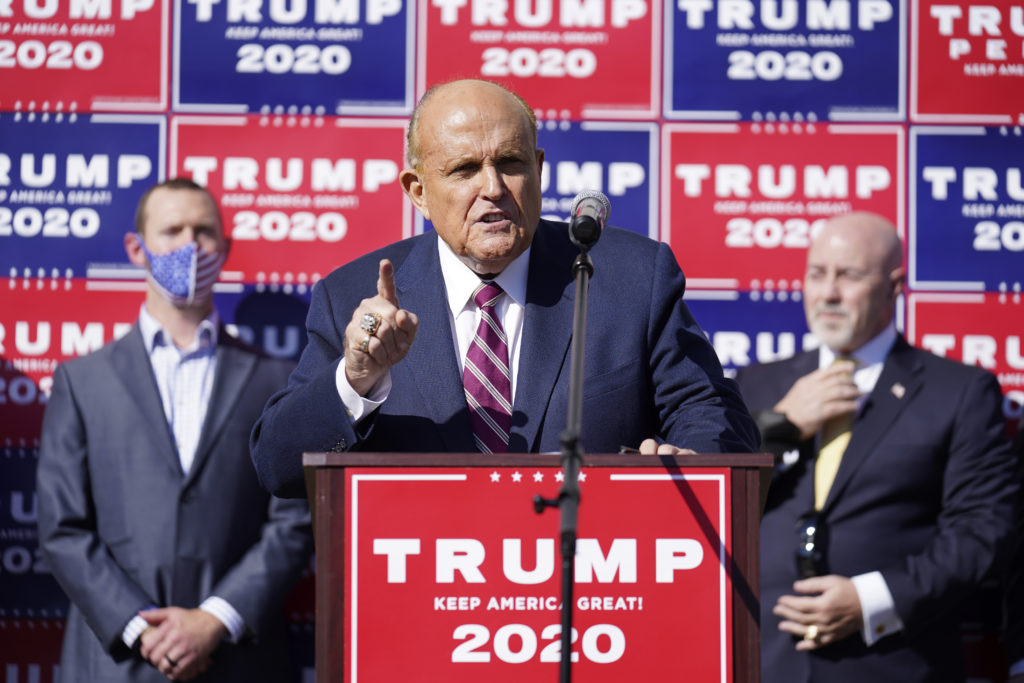
President Donald Trump has promised legal action in the coming days as he refused to concede his loss to Democrat Joe Biden, making an aggressive pitch for donors to help finance any court fight. Trump and his campaign have leveled accusations of large-scale voter fraud in Pennsylvania and other states that broke for Biden, so far without proof. But senior officials, campaign aides, and allies told The Associated Press that overwhelming evidence of fraud isn’t really the point. The strategy to wage a legal fight against the votes tallied for Biden in Pennsylvania and other places is more to provide Trump with an off-ramp for a loss he can’t quite grasp and less about changing the election’s outcome, the officials said. They spoke to AP on the condition of anonymity to discuss internal strategy. Trump aides and allies also acknowledged privately the legal fights would — at best — forestall the inevitable, and some had deep reservations about the president’s attempts to undermine faith in the vote. But they said Trump and a core group of loyalists were aiming to keep his base of supporters on his side even in defeat. There has been no election in decades in which such widespread fraud was alleged. The closest was the 1960 election in which Democrat John F. Kennedy beat Republican Richard Nixon, and there were allegations that fraud helped Kennedy win. Moments after the AP called the race for Biden, Trump attorney Rudy Giuliani stood in front of campaign banner taped over the garage door of a landscaping company in Philadelphia, wedged between a cremation center and an adult book store, with a handful of poll watchers and declared they’d been kept too far away to check for any inaccuracies. “We have no way of knowing, because we’ve been deprived of the right to inspect ballots,” he said. Partisan poll watchers are designated by a political party or campaign to report any concerns they may have. They are not poll workers who actually tally ballots. Monitoring polling places and election offices is allowed in most states, but rules vary and there are certain limits to avoid any harassment or intimidation. They are not allowed to interfere with the conduct of the election and are typically required to register in advance with the local election office. This year, because of the coronavirus that has killed more than 230,000 people across the country, there was litigation in a few states, including Pennsylvania, over where poll watchers could stand to ensure social distancing. Lawyers could potentially argue the vote tally should be cast aside over fraud observed by poll watchers, but in order to win that argument, they’d need evidence, not just allegations the monitors weren’t allowed to see clearly enough. Judges are loathe to disenfranchise any voters and there would need to be substantial proof that fraud had damaged the count so much that it must be set aside. Democratic poll watchers, who were also given the same access, have not raised concerns. Giuliani called evidence of fraud circumstantial at the news conference. He said he’d be filing suit in federal court, but the issue has already been before judges. A federal judge in Philadelphia Thursday night ordered the two sides to work out an agreement on the number of poll watchers and how close they could be to the counting. The judge also voiced concerns about the safety of poll workers during the pandemic if poll watchers were allowed to peer over their shoulders. On Fox News Channel’s “Sunday Morning Futures” Sunday, Giuliani said two additional lawsuits were in the process of being drafted, in addition to existing litigation in Pennsylvania. By the end of this week, Giuliani predicted the campaign would have filed “four or five” lawsuits, with a total of 10 possible. Voter fraud is extremely rare, and when it does happen, people are generally caught and prosecuted and it does not change the outcome of the election. Typically, it involves someone wanting to honor the wishes of a loved one who recently died and either knowingly or not commits a crime by filling out that ballot. Trump campaign officials have also alleged that more than 21,000 had been cast in the name of the dead in Pennsylvania. The claims stem from a conservative legal group’s lawsuit against the Secretary of State, accusing her of wrongly including some 21,000 supposedly dead residents on voter rolls. The federal judge who has the case, John Jones, has said he was doubtful of the claims. He said the Public Interest Legal Foundation that brought the claims was asking the court to accept that there were dead people on voter rolls, and he asked for proof and questioned why they had waited until the “eleventh hour” to file suit. “We cannot and will not take plaintiff’s word for it —in an election where every vote matters, we will not disenfranchise potentially eligible voters based solely upon the allegations of a private foundation,” he wrote in an Oct. 20 ruling. Even Trump’s own administration has pushed back at the claims of widespread voter fraud and illegal voting though it didn’t mention Trump was the one making the allegations. The Cybersecurity and Infrastructure Security Agency, the federal agency that oversees U.S. election security, also noted local election offices have detection measures that “make it highly difficult to commit fraud through counterfeit ballots.” Top election officials in the battleground states of Arizona, Georgia, Michigan, Pennsylvania, and Nevada – both Republican and Democrat – have all said they see no widespread voting irregularities, no major instances of fraud or illegal activity. Meanwhile, on a call with supporters Saturday, Trump campaign manager Bill Stepien encouraged them to be ready to continue the fight for Trump, including standing by for rallies and demonstrations. Other aides outlined what they argued were irregularities in the count. And Republicans were sticking to the idea that all “legal” votes must be counted — the language freighted with a clear implication that Democrats want
Next Trump-Biden debates uncertain, though Oct. 22 is likely

The campaign’s final debates between President Donald Trump and Democrat Joe Biden were thrown into uncertainty Thursday as the rival camps offered dueling proposals for the remaining faceoffs that have been upended by the president’s coronavirus infection. The chair of the nonpartisan Commission on Presidential Debates told The Associated Press that the final debate, scheduled for Oct. 22, was still slated to go on with both candidates present as planned. But next Thursday’s debate seemed to be gone, after the Trump team objected to the commission’s format change. The whipsaw day began with an announcement from the commission that the town hall-style affair set for Oct. 15 in Miami would be held virtually. The commission cited health concerns following Trump’s infection as the reason for the change. Trump, who is eager to return to the campaign trail despite uncertainty about his health, said he wouldn’t participate if the debate wasn’t in person. Biden’s campaign then suggested the event be delayed a week until Oct. 22, which is when the third and final debate was already scheduled. Next, Trump countered again, agreeing to a debate on Oct. 22 — but only if face to face — and asking that a third contest be added on Oct. 29, just before the election. But Biden’s advisers rejected squaring off that late in the campaign. After the release late Thursday of a letter from Trump doctor Navy Cmdr. Sean Conley that the president had “completed his course of therapy” and could resume campaigning this weekend, the Trump campaign called on the commission to hold next week’s debate in person as originally scheduled. “There is therefore no medical reason why the Commission on Presidential Debates should shift the debate to a virtual setting, postpone it, or otherwise alter it in any way,” said Trump campaign manager Bill Stepien. But commission chair Frank Fahrenkopf said late Thursday that the decision to hold the debate virtually, guided by its medical advisers at the Cleveland Clinic, was not going to be reversed. The commission said it made the announcement in order to “protect the health and safety of all involved,” including the everyday citizens invited to ask questions of the candidates. The debate commission, which has the unenviable task of finding common ground between the competing campaigns, already came under scrutiny after the first debate between Trump and Biden deteriorated, with the president frequently interrupting his opponent and the moderator unable to take control. The Oct. 22 debate in Nashville, Tennessee, is scheduled to feature a format similar to the first. Biden’s campaign has suggested that it be modified to the “town meeting” format, though the Trump campaign has not weighed in. Founded after the 1984 presidential election, the commission has organized every general election debate since 1988 — and typically selects the dates, moderators, formats and locations without input from the candidates. Biden moved quickly to make sure he would still appear in front of a television audience next week. Instead of debating Trump on Thursday, he will take part in a town hall sponsored by ABC News. As he campaigned in Arizona, Biden said he would indeed attend the Oct. 22 debate. “We agreed to three debates back in the summer,” Biden said. “I’m showing up. I’ll be there. And if, in fact, he shows up, fine. If he doesn’t, fine.” For Trump, who is recovering from COVID-19 at the White House after spending three days in the hospital, the health-induced changes are an unwelcome disruption to his effort to shift focus away from a virus that has killed more than 210,000 Americans this year. In an interview with Fox Business anchor Maria Bartiromo shortly after the commission’s announcement, Trump insisted he was in “great shape” and called the idea of a virtual debate a “joke.” “I’m not going to do a virtual debate,” he declared. Stepien said Trump would stage a rally rather than debate next Thursday, though it’s not yet clear if he will be well enough to do that. With less than four weeks until Election Day and with millions of voters casting early ballots, pressure is building on Trump to turn around a campaign that is trailing Biden in polls nationally and in most battlegrounds, where the margin is narrower. A debate before an audience of tens of millions of television viewers could provide that reset. But another debate could also expose Trump to political risks. GOP strategists say the party’s support began eroding after his seething performance against Biden last week when he didn’t clearly denounce a white supremacist group. Trump’s apparent unwillingness to change his style to win back voters he needs — particularly women — was on display again Thursday during his Fox Business interview when he referred to Democratic vice presidential nominee Kamala Harris as a “monster.” Campaigning with Harris in Arizona, Biden called Trump’s characterization of the first Black woman on a major party’s presidential ticket “despicable” and added that it was “so beneath the office of the presidency.” This would not be the first time Trump has skipped a debate. During the 2016 Republican primary, he boycotted the last debate before Iowa’s first-in-the nation caucuses, holding a fundraiser for veterans instead — a move he later speculated may have contributed to his loss in the state. Trump fell ill with the virus on Oct. 1, just 48 hours after sharing a stage with Biden in person during the first presidential debate in Cleveland. While the two candidates remained a dozen feet apart, Trump’s infection sparked health concerns for Biden and sent him to undergo multiple COVID-19 tests before returning to the campaign trail. His campaign announced Thursday that Biden had undergone his fifth such test and was found to be negative. Trump was still contagious with the virus when he was discharged from Walter Reed National Military Medical Center on Monday, but his doctor said Thursday he had “completed his course of therapy” and could resume campaigning this weekend. According to the Centers for Disease Control and Prevention, those with mild to
Donald Trump raises $210 million, robust but well short of Joe Biden

Trump’s campaign released its figure Wednesday, several days later than usual and nearly a week after the Biden campaign unveiled its total, the highest for any one month during a presidential campaign.
Donald Trump calls off Florida segment of GOP National Convention
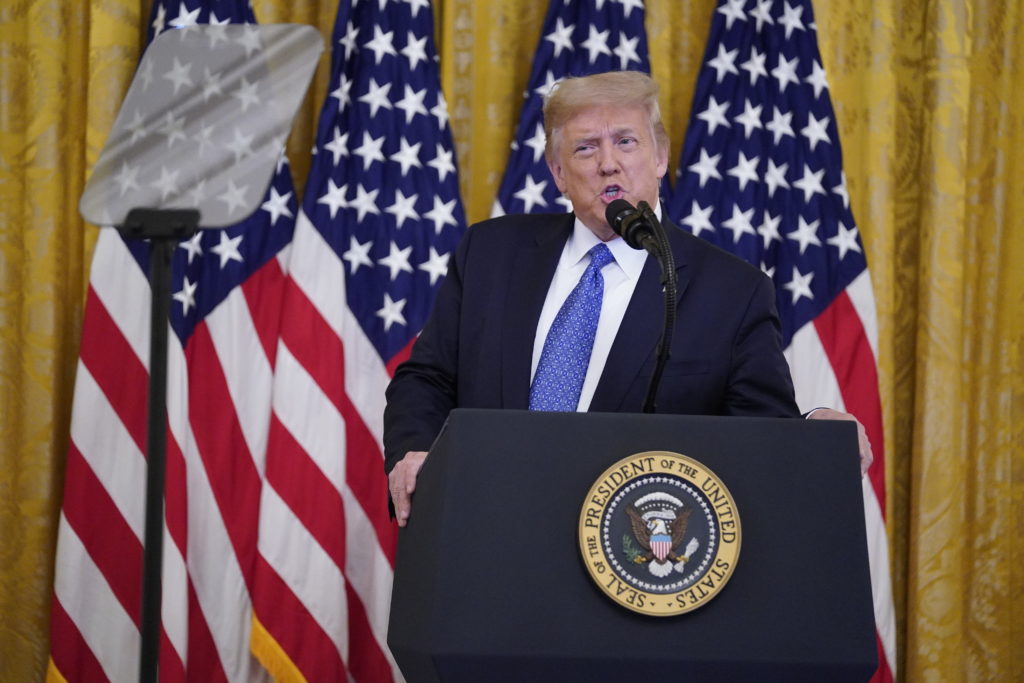
Bowing to the coronavirus threat, President Donald Trump on Thursday scrapped plans for a four-night Republican National Convention celebration in Florida that had been set to draw more than 10,000 people to a pandemic hot spot to mark his renomination. Trump had already moved the convention’s public events out of North Carolina because of virus concerns. But the spiking virus shifted south, too, and the planned gathering in Jacksonville increasingly appeared to be both a health and political risk. Trump and his advisers feared that going forward with big parties and “infomercial” programming in Florida would ultimately backfire on the president. “It’s a different world, and it will be for a little while,” Trump said, explaining his decision at a White House coronavirus briefing. “To have a big convention is not the right time.” A small subset of GOP delegates will still formally renominate Trump on Aug. 24 in Charlotte, North Carolina, at an event scheduled to last just four hours. Trump had decided last month to shift the ceremonial portions of the GOP convention to Florida because of a dispute with North Carolina’s Democratic leaders over holding an indoor gathering with throngs of supporters taking a pass on face masks. But his plans for a grand gathering in Florida starting shrinking almost as quickly as the move was announced, as virus cases spiked in the state and other parts of the country. Trump said he plans to deliver his nomination acceptance speech in an alternate form still to be determined — perhaps online. Trump campaign manager Bill Stepien said the campaign will still “provide exciting, informative, and enthusiastic programming so Republicans can celebrate the re-nomination of President Trump and Vice President Pence.” Trump said thousands of his supporters and delegates wanted to attend the events in Florida, but “I just felt it was wrong” to gather them in a virus hot spot. Some of them would have faced quarantine requirements when they returned to their home states from the convention. “We didn’t want to take any chances,” he added. “We have to be vigilant. We have to be careful, and we have to set an example.” Democrats will hold an almost entirely virtual convention Aug. 17-20 in Milwaukee using live broadcasts and online streaming, according to party officials. Joe Biden plans to accept the presidential nomination in person, but it remains to be seen whether there will be a significant in-person audience. The Biden campaign did not immediately respond to messages Thursday seeking comment on Trump’s announcement. In recent weeks, Trump aides and allies have encouraged the president to consider calling off the convention, arguing it was not worth going forward with the event if the focus would be on the pandemic. Trump acknowledged that consideration, saying, “I could see the media saying, ‘Oh, this is very unsafe.’” After a three-month hiatus, Trump has stepped back to the forefront of the government’s handling of the virus with regular briefings aiming to stanch an erosion of support in public and private polls that has followed the surge in new virus cases. Trump said he did not cancel the convention events at the request of local officials, but the Jacksonville City Council was set to meet Friday to discuss safety concerns around the gathering. Jacksonville Mayor Lenny Curry, a former chair of the Florida Republican Party, said he appreciated Trump “putting health and public safety first.” “I know this was a difficult decision and just demonstrates and reaffirms once again his commitment to Jacksonville, the state of Florida and the people of the United States of America,” he said. “I’m grateful for him and his leadership, and this was the right way to move forward.” Joe Gruters, current chair of the Florida Republican Party and a state senator from Sarasota, called it a “selfless move.” “Having our home-state candidate was going to be a really big deal for Florida, but listen, he had it right,” Gruters said. “At the end of the day, it’s about safety.” More than 10,000 people were expected in Jacksonville — already a fraction of the number that would typically attend a nominating convention. Only 336 delegates will be allowed to participate in Charlotte under extraordinary procedures approved last month by the Republican National Committee. The balance of the more than 2,500 delegates will vote by proxy. Cory Burkarth, a spokesman for the city of Charlotte, said Thursday, “We have an agreement in place with the Republican National Committee to host a substantially scaled down business meeting and that is what we are planning to do.” Republished with the permission of the Associated Press.
With eyes on midterms, Donald Trump embraces immigration fight
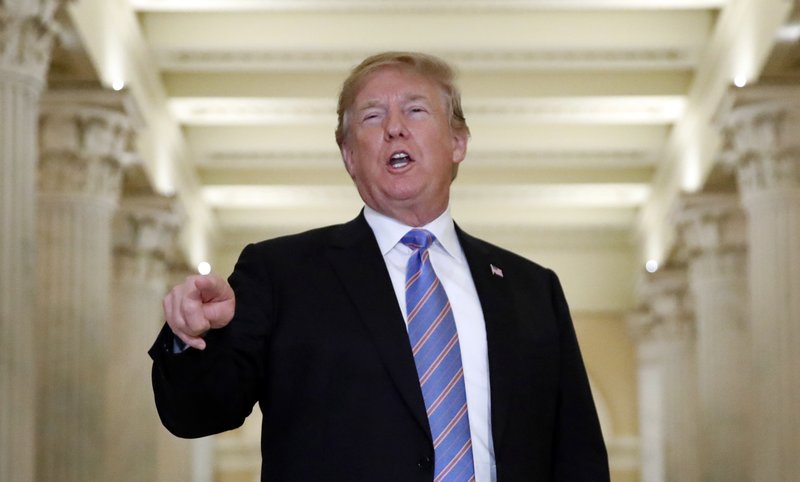
Calling the shots as his West Wing clears out, President Donald Trump sees his hard-line immigration stance as a winning issue heading into a midterm election he views as a referendum on his protectionist policies. “You have to stand for something,” Trump declared Tuesday, as he defended his administration’s immigration policy amid mounting criticism over the forced separation of children from their parents at the U.S.-Mexico border. The chorus of condemnation includes Democrats, as well as Republicans, who are increasingly worried that reports about bereft children taken from their parents could damage the GOP’s chances in November. Still, Trump believes that his immigration pledges helped win him the presidency and that his most loyal supporters want him to follow through. He made a rare trip to Capitol Hill late Tuesday to meet with GOP legislators and endorse a pair of bills that would keep detained families together, among other changes, but he remains confident that projecting toughness on immigration is the right call, said five White House officials and outside advisers who spoke on condition of anonymity because they were not authorized to speak publicly. “It’s amazing how people are surprised that he’s keeping the promises he made on the campaign trail now,” said Trump political adviser Bill Stepien. While the White House signaled Trump may be open to a narrow fix to deal with the problem, the president spent the day stressing immigration policies that he has championed throughout his surprise political career. He has resisted calls to reverse the separation policy, saying any change must come through Congress. In a speech to a business group earlier Tuesday, Trump said he wanted to see legislation deal with family separation, which, he said, “We don’t want.” He also emphasized border security and again made the false argument that Democrats are to blame for the family separation problem. Said Trump: “Politically correct or not, we have a country that needs security, that needs safety, that has to be protected.” Several White House aides, led by adviser Stephen Miller, have encouraged the president to make immigration a defining issue for the midterms. And Trump has told advisers he believes he looks strong on the matter, suggesting that it could be a winning culture war issue much like his attacks on NFL players who take a knee for the national anthem. Former Trump senior adviser Steve Bannon said the president is emphasizing the policies that brought him to the White House. “I think this is one of his best moments. I think this is a profile in courage. This is why America elected him,” Bannon said. “This is not doubling down, it is tripling down.” Still, Trump, a voracious watcher of cable news who is especially attuned to the power of images, appeared to acknowledge later Tuesday that the optics could be doing damage. During his closed-door meeting with lawmakers on the Hill, Trump said his daughter Ivanka had encouraged him to find a way to end the practice, and he said separating families at the border “looked bad,” according to several attendees. “He said, ’Politically, this is bad,’” said Rep. Randy Weber, R-Texas. “It’s not about the politics. This is the right thing to do.” Trump’s immigration standoff comes as he escalates his nationalist trade moves, imposing new tariffs on imports and threating more. With few powerful opposing voices remaining in the West Wing, Trump is increasingly making these decisions solo. Some key advisers have left, and chief of staff John Kelly appears sidelined. Republicans, particularly those in more moderate districts, are worried they will be damaged by the searing images of children held in cages at border facilities, as well as by audio recordings of young children crying for their parents. The House Republicans’ national campaign chairman, Ohio Rep. Steve Stivers, said Monday that he’s asking “the administration to stop needlessly separating children from their parents.” Other conservatives also raised concerns, but many called for Congress to make changes instead of asking Trump to directly intervene. Ralph Reed, chairman of the Faith & Freedom coalition of evangelical voters, added to the drumbeat to end the child separation policy Tuesday, calling on Congress to pass legislation that would end the process as part of a broader immigration overhaul. But asked if the border policy was bad for Trump politically, Reed suggested core supporters remain on the president’s side. He said the group’s members are “more than willing to give the president and his administration the benefit of the doubt that this is being driven by a spike in people crossing the border, a combination of existing law and court decisions require this separation, and the fact that the Democrats refused to work with the administration to increase judges so that this can be dealt with more expeditiously.” Trump on Tuesday mocked the idea of hiring thousands of new judges, asking, “Can you imagine the graft that must take place?” Worried that the lack of progress on his signature border wall will make him look “soft,” according to one adviser, Trump has unleashed a series of tweets playing up the dangers posed by members of the MS-13 gang — which make up a minuscule percentage of those who cross the border. He used the loaded term “infest” to reference the influx of immigrants entering the country illegally. As the immigration story becomes a national flashpoint, Trump has been watching the TV coverage with increasing anger, telling confidants he believes media outlets are deliberately highlighting the worst images — the cages and screaming toddlers — to make him look bad. The president has long complained about his treatment by the media, but his frustrations reached a boiling point after he returned from his Singapore summit with North Korea’s Kim Jong Un to face news reports questioning his negotiating skills. He complained to one adviser that the media had not given him enough credit after the summit and was continuing to undermine him on immigration, according to a person familiar with the conversation but
