
$2.9 billion headed to Alabama from Bipartisan Infrastructure Law
Today, the White House released updated state and territory fact sheets that highlight the nationwide impact of the Bipartisan Infrastructure Law. This law is one of the largest long-term investments in U.S. infrastructure and competitiveness in nearly a century. To date, almost $2.9 billion in Bipartisan Infrastructure Law funding has been announced and is headed to Alabama with over 90 specific projects identified for funding. Since the Law passed, Alabama is set to receive more than $2.5 billion for transportation to invest in roads, bridges, public transit, ports, and airports and over $137 million for clean water. And, as of today, more than 280,000 households across the state are receiving affordable internet due to the Bipartisan Infrastructure Law. In Alabama, there are 620 bridges and over 2,961 miles of highway in poor condition. Based on formula funding alone, Alabama is expected to receive approximately $5.8 billion over five years in federal funding for highways and bridges. Nearly 32% of Alabamians do not have an internet subscription. Alabama will receive a minimum allocation of at least $100 million to help ensure high-speed internet coverage across the state. Additionally, experts estimate that as many as 860,000 households in Alabama are eligible for the Affordable Connectivity Program, which cuts internet bills by up to $30 per month, or $75 for households on Tribal lands, and provides a one-time $100 discount off a connected device. To date, over 280,000 households in Alabama are enrolled in the Affordable Connectivity Program, with more signing up every day. $137 million is available in the fiscal year 2022 to provide clean and safe water across the state through the Environmental Protection Agency. Of this funding, $61.1 million is dedicated to lead pipe and service line replacement, with another $38.8 million for safe drinking water investments that can also support lead pipe replacement in fiscal year 2022. The Infrastructure Law has made the largest investment in public transit in U.S. history. Based on formula funding, Alabama would expect to receive more than $400 million over five years under the Bipartisan Infrastructure Law to improve public transit across the state. This funding will expand healthy, sustainable transportation options in Alabama, where non-white households are 4.5 times more likely to commute via public transportation, and 27% of transit vehicles in the state are currently past useful life. To date, Alabama has been allocated $76.4 million to improve public transportation options across the state in fiscal year 2022. Additionally, Alabama has been awarded $20.5 million for the Environmental Protection Agency’s Clean School Bus Program and $28.6 million in 2022 and 2023 to build out a network of EV chargers across the state. Approximately $61.7 million has been allocated to Alabama for clean energy, energy efficiency, and power in 2022. This includes:$47.5 million for weatherization, $7.4 million through the State Energy Program, and $6.8 million to prevent outages and make the power grid more resilient. Alabama has received more than $39.5 million in 2022 for airports and $78.7 million in 2022 for ports and waterways.
Terri Sewell joins White House leaders to announce rural wastewater infrastructure initiative
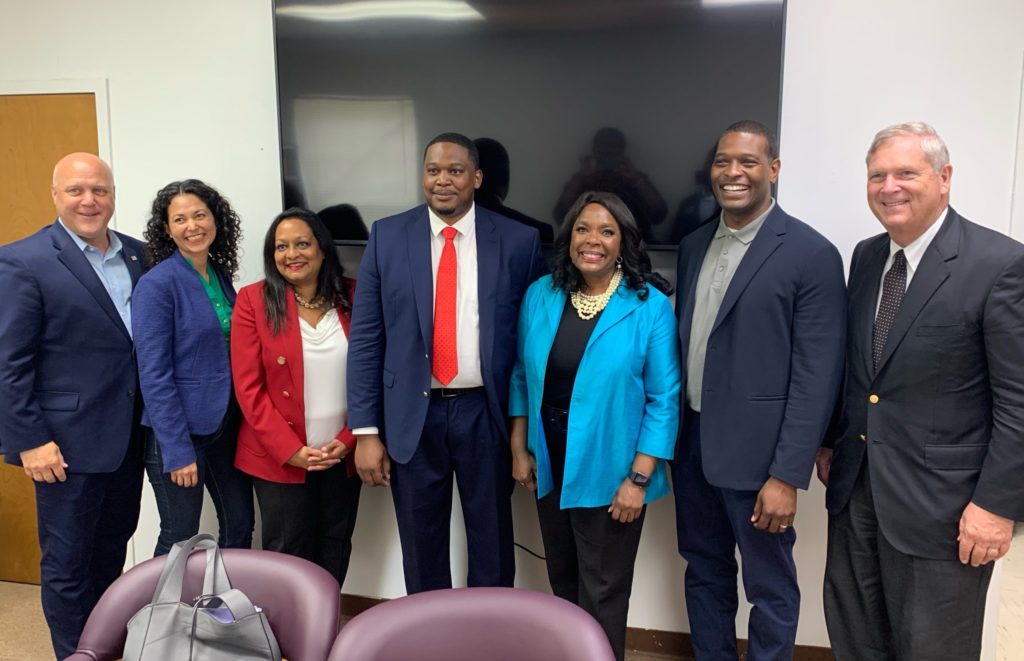
On Tuesday, U.S. Rep. Terri Sewell welcomed U.S. Agriculture Secretary Tom Vilsack, Environmental Protection Agency (EPA) Administrator Michael S. Regan, and White House Infrastructure Coordinator Mitch Landrieu to Lowndes County, Alabama, to announce a new wastewater infrastructure initiative under the Bipartisan Infrastructure Law. Sewell hosted a roundtable at the White Hall Town Hall to give federal officials an opportunity to hear from local leaders about the unique needs of each community and to address broken and failing wastewater systems in rural Alabama. “Access to adequate wastewater infrastructure is a basic human right, but for too many of my constituents, generations of disinvestment have led to broken and failing wastewater systems that put the health of our communities at risk,” said Rep. Sewell. “Since coming to Congress, I have made addressing our wastewater crisis a top priority, working to secure funding and direct resources to areas in need of help. Now, thanks to the leadership of the Biden-Harris Administration and transformative investments from the Bipartisan Infrastructure Law, more help is on the way. This joint initiative between the EPA and USDA will be instrumental in our fight to improve wastewater infrastructure for our most underserved communities.” Today, I welcomed @EPAMichaelRegan, @SecVilsack, and @MitchLandrieu46 to Lowndes County where we announced a brand new initiative under the Bipartisan Infrastructure Law to help fix our broken wastewater systems here in rural Alabama. THREAD 👇🏾 pic.twitter.com/y2dRsKOBcA — Rep. Terri A. Sewell (@RepTerriSewell) August 2, 2022 The Closing America’s Wastewater Access Gap Community Initiative will allow EPA and USDA—in close collaboration with local communities, state and Tribal partners, and on-the-ground technical assistance providers—to leverage technical and financial expertise to make progress on addressing the wastewater infrastructure needs of some of America’s most underserved communities. According to an EPA press release, the new initiative will be piloted in 11 communities across the country where residents lack basic wastewater management that is essential to protecting their health and the environment. Each community or Tribe will receive direct support to develop wastewater assessments with technical engineering support, design wastewater community solution plans, identify and pursue funding opportunities, and build long-term capacity. Catherine Flowers, founder of the Center for Rural Enterprise and Environmental Justice applauded the initiative. “Decades ago, Lowndes County led the charge for voting rights – today we are leading the call for wastewater equity. Most Americans couldn’t imagine raw sewage pooling in their yard just outside the kitchen window, or worse, backing up into their home when it rains too much,” stated Flowers. “I want to thank the Biden-Harris Administration for committing to help us find a solution. Today, we are taking a big step toward achieving a more just future for the people of Lowndes and rural communities across the U.S.” An estimated 2.2 million people in the United States lack basic running water and indoor plumbing. This initiative will help communities access financing and technical assistance to improve wastewater infrastructure to “close the gap” for communities that have been left behind. “The America that we all believe in is a land of opportunity. But, for historically marginalized communities from Alabama to Alaska, that opportunity is stolen when basic sanitation doesn’t work—exposing adults and children to backyard sewage and disease,” said Regan. “By partnering with USDA, states, and leveraging funding through the Bipartisan Infrastructure Law, EPA is working to restore dignity and opportunity to rural communities here in Lowndes County and across the country.” Agriculture Secretary Vilsack argued that this initiative would help provide communities with vital services. “Access to modern, reliable wastewater infrastructure is a necessity, and the Biden-Harris Administration is committed to doing everything we can to ensure every family and every child in America has access to these vital services. By combining USDA and EPA resources and taking advantage of the historic Bipartisan Infrastructure Law, we can restore to these communities a sense of economic vitality and social dignity that the people living there deserve.” “President [Joe]Biden has been clear—we cannot leave any community behind as we rebuild America’s infrastructure with the Bipartisan Infrastructure Law. This includes rural and Tribal communities who, for too long, have felt forgotten. The Bipartisan Infrastructure Law provides $11.7 billion in loans and grants to communities for a wide range of water-quality infrastructure projects, including wastewater solutions for these communities,” stated White House Infrastructure Coordinator Mitch Landrieu. The EPA and USDA—in partnership with state, Tribal, and local partners—are launching the initiative in: Bolivar County, Mississippi; Doña Ana County, New Mexico; Duplin County, North Carolina; Greene County, Alabama; Halifax County, North Carolina; Harlan County, Kentucky; Lowndes County, Alabama; McDowell County, West Virginia; Raleigh County, West Virginia; San Carlos Apache Tribe, Arizona; and, Santo Domingo Pueblo, New Mexico.
Rep. Terri Sewell announces over $76 Million for Alabama transit projects
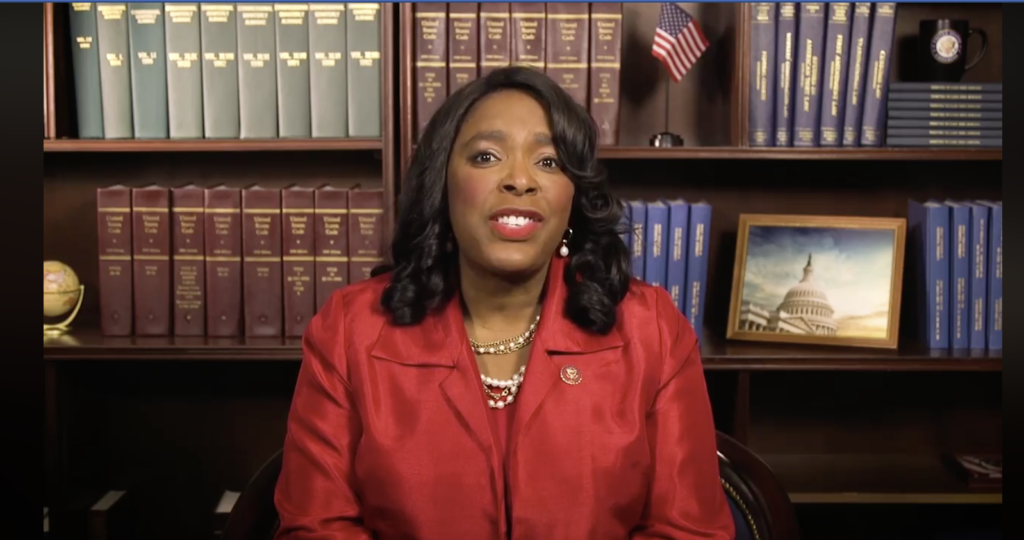
Today, U.S. Rep. Terri Sewell announced $76 million of funding from the Bipartisan Infrastructure Law to upgrade and expand local transit in Alabama. The funding will create even more manufacturing jobs, in addition to the 2,900 manufacturing jobs already created in Alabama in the last year. $11,791,104 of these funds have been allocated for local transit projects in Birmingham, and $4,124,766 will go to local transit projects in Montgomery. This investment will allow local transit authorities to buy new buses and railcars, address repair backlogs, modernize fleets, and transition to new technologies that reduce carbon emissions. “Today’s announcement is yet another example of how the Bipartisan Infrastructure Law is delivering for Alabamians,” said Rep. Sewell in a press release. “Alabama’s transit systems are in dire need of repair. This funding, which I was proud to help secure, will help us upgrade and expand our transit systems to reduce commute times and help connect our communities, all while creating good-paying jobs.”
