
Alabama panel addresses school safety
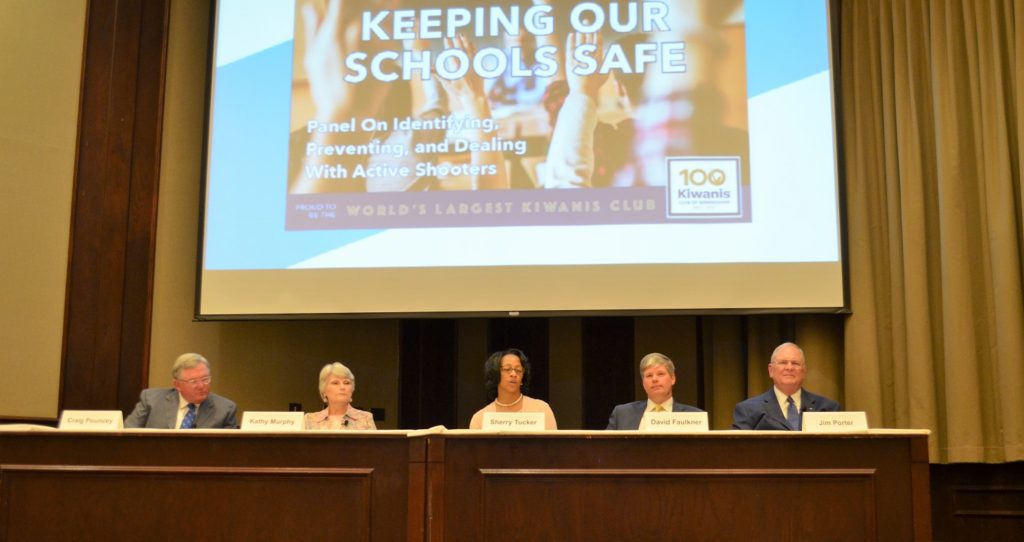
As educators prepare for a new school year, leading their discussions is the issue of keeping students safe, in a time when no corner of the country seems immune to school violence. Tuesday, the Kiwanis Club of Birmingham hosted a school safety forum with two local superintendents, the president of the Alabama Education Association, a state legislator and the former president of the National Rifle Association. While they differ on how to keep students safe, they agreed on one point: Something needs to be done. In a perfect world, they said, every school would be assigned its own police officer, known as a school resource officer (SRO). Since most districts can’t afford police for every school, keeping students safe could mean installing metal detectors, adding security cameras or blocking outside entrances. For the more rural and poorer school systems, a new – and controversial – law allowing administrators to be armed under certain circumstances could help. The forum, “Keeping Our Schools Safe: Identifying, Preventing and Dealing with Active Shooters,” featured as panelists Craig Pouncey, superintendent of Jefferson County schools; Kathy Murphy, superintendent of Hoover city schools; Sherry Tucker, president of the Alabama Education Association; state Rep. David Faulkner, whose district includes Jefferson County; and Jim Porter, past president of the NRA. The Jefferson County school system is the state’s second-largest, with 36,000 students and 56 schools. Some of its schools are urban, others extremely rural. Some are 50-plus years old; others are state of the art. For the upcoming school year, the district bought 2,555 devices that add a secondary lock to classroom doors in a lockdown situation. The district added five SROs, bringing the total to 27. “We can’t put an SRO at every school, it’s just not financially feasible for us,” Pouncey said, adding that the additional five SROs cost the district $400,000 annually. He is not in favor of arming educators, a point agreed with by Murphy. Murphy said Hoover is “privileged” to have an officer stationed at every school, with three SROs assigned to each of the high schools. She’s been on the other side of that equation when she was superintendent of Monroe County schools. “In Monroe County, there was a little community known as Packers Bend. It took me an hour and 10 minutes to get from the central office to drive to that school, which was on the other side of the Alabama River,” she said. “It was always that little school that troubled me. Sixty-one children are in that school.” The program does not include teachers, and will require that the administrators successfully complete training created and certified by the Alabama Law Enforcement Agency. In rural areas, response time for first responders can be 45 minutes or more, said Faulkner. Those are the areas that could benefit from the new sentry program announced in May, which permits administrators in schools without an SRO to have a secured firearm on campus. The NRA’s National School Shield Program was created in 2012 following the fatal shooting of 20 students and six teachers at Sandy Hook Elementary School in Newtown, Connecticut. Porter, an attorney who was president of the NRA from 2013 to 2015, said the goal of the program is improving security and preventing future shootings. “The important takeaway here is that any school that needs help finding additional security measures, we will help free of charge,” he said, adding that no school system in Alabama has applied for the NRA’s help. After the forum, Birmingham Board of Education member Mary Boehm spoke about the March shooting at Huffman High School that left student Courtlin Arrington dead. “We have figured out that the student voice is what really matters,” Boehm said. “After the shooting at Huffman, it was clear that the students knew this gun was in the school. They know about guns that are in our schools every single day.” Mental health is one of the biggest challenges facing school systems, she said. “When I called my colleagues at mental health, I was told that funds have been cut so drastically that we are barely able to serve adults, let alone children,” Boehm said. “And we’re not prepared to handle that.” Republished with the permission of the Alabama Newscenter.
Birmingham Board of Education election results 2017

District 1 Bennie M. Holmes: 277 votes | 6.86 percent Douglas Lee Ragland: 1,027 votes | 25.45 percent Keith Rice: 418 votes | 10.36 percent Cedric Small: 1,497 votes | 37.10 percent Jerry Tate: 816 votes | 20.22 percent District 2 Terri Michal: 1,717 votes | 50.18 percent Brandon McCray: 1,705 votes | 49.82 percent District 3 Larry J. Contri: 1,129 votes | 29.01 percent Mary Drennen Boehm: 2,763 votes | 70.99 percent District 4 Daagye Hendricks: 1,308 votes | 34.29 percent (incumbent) Amber Courtney: 717 votes | 18.79 percent Edward Maddox: 1,790 votes | 46.92 percent District 5 Buford L. Burks: 148 votes | 3.62 percent Eloise M. Crenshaw: 329 votes | 8.05 percent Martha McDowell: 565 votes | 13.82 percent David T. McKinney: 628 votes | 15.36 percent Mickey Millsap: 1,236 votes | 30.23 percent Andrea Mitchell: 332 votes | 8.12 percent Aaisha Muhammad: 476 votes | 11.64 percent Angela Scoggins-Watson: 375 votes | 9.17 percent District 6 Cheri Gardner: 2,946 votes | 79.24 percent (incumbent) Ervin Philemon Hill Sr: 772 votes | 20.76 percent District 7 Wardine Alexander: 1,197 votes | 26.23 percent (incumbent) Patricia S. McAdory: 1,836 votes | 40.24 percent Walter Wilson: 1,530 votes | 33.53 percent District 8 P.B. Henderson: 1,178 votes | 29.58 percent Tyrone Silmon: 1,093 votes | 27.45 percent Sonja Q. Smith: 1,252 votes | 31.44 percent Antwon Womack: 459 votes | 11.53 percent District 9 Sandra Kelley Brown: 3,136 votes | 68.10 percent (incumbent) Lawrence Jackson: 1,469 votes | 31.90 percent *Fully bolded row denotes winner
Birmingham schools superintendent Dr. Kelley Castlin-Gacutan fired after one year
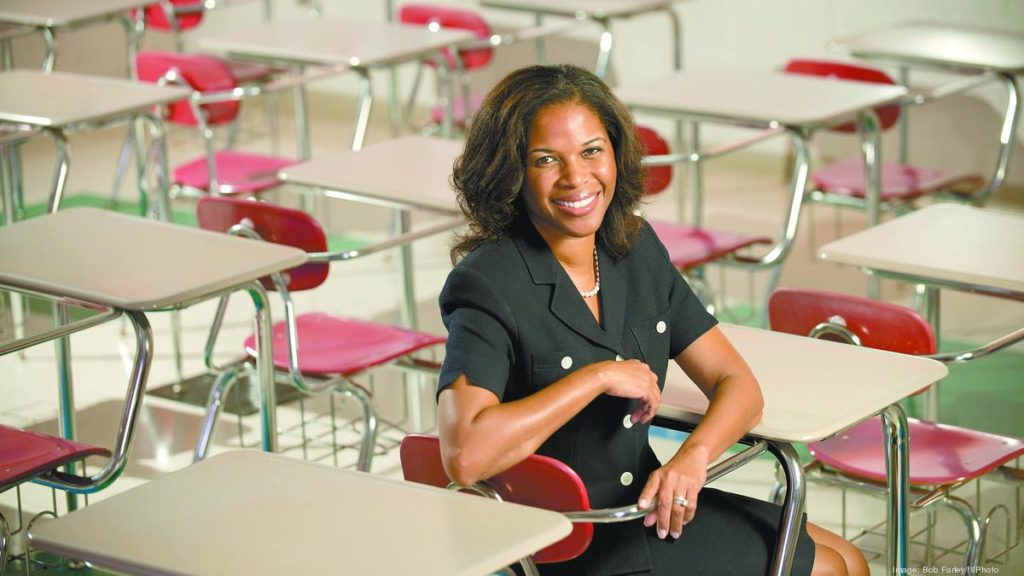
After one year at the helm of the city of Birmingham’s public school system, Superintendent Dr. Kelley Castlin-Gacutan‘s contract was terminated Thursday by the Birmingham Board of Education. The board voted to terminate Castlin-Gacutan Thursday evening by a 6-3 vote, during a special meeting called to discuss governance and leadership of the Birmingham school system. “This school year just started and we’re going to terminate her without cause it’s inappropriate and it’s wrong,” Board Member Randall Woodfin said at the meeting. Woodfin, along with Lyord Watson and Brian Giantinna, were the three members who voted against terminating Castlin-Gacutan’s contract. Woodfin said the district needs to learn why it can’t keep a Superintendent. “We all need to challenge ourselves to figure out why we continue to have these issues.” Per her employment contract, the vote served as Castlin-Gacutan’s 60 days notice of termination. For her final two months, she will be on paid administrative leave. While the details of her contract were debated at the meeting, the Birmingham school system will have to pay out Castlin-Gacutan’s remaining salary and benefits for the next two years of her contract, which was set to expire on June 30, 2018. Those payments could total over $400,000 as Castlin-Gacutan was being paid $202,000 a year. Prior to being named Superintendent in Birmingham, Castlin-Gacutan served as Deputy Superintendent of School Operations and Interim Superintendent in the Bibb County School District in Macon, Georgia. She was a seasoned educator with 24 years of experience including classroom teacher, assistant principal, principal, district level administrator, and university professor/director. An explicit reason was not given for her termination, though fiscal responsibility was brought up during the meeting. Following the termination vote, the board named longtime administrator and director of schools for zone four, Larry Contri, interim superintendent.
