
BCRI reverses decision, reaffirms award for controversial activist Angela Y. Davis
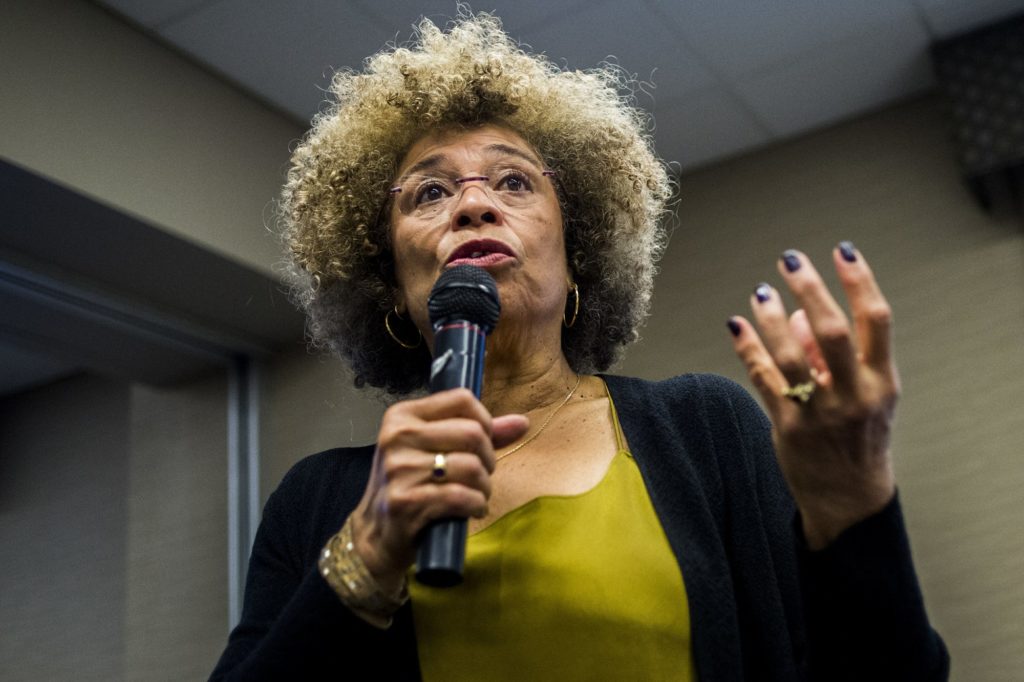
In an attempt to right what they are now calling a wrong, the Birmingham Civil Rights Institute (BCRI) is reversing a recent decision they made to rescind an award for controversial, political activist Angela Davis. That latest move comes in the wake of public outcry over the BRCI’s decision to rescind the award following complaints from the Jewish community. On Jan. 14, the BCRI issued a public apology to Davis for “its missteps in conferring, then rescinding, its nomination” of her for the BCRI’s 2018 Reverend Fred L. Shuttlesworth Human Rights Award. Immediately after that public apology, the Board voted to reaffirm Dr. Davis as the recipient. “Dr. Angela Davis, a daughter of Birmingham, is highly regarded throughout the world as a human rights activist,” said BCRI President and CEO Andrea L. Taylor. “In fact, the Schlesinger Library at Harvard University’s Radcliffe Institute of Advanced Study acquired her personal archives in 2018, recognizing her significance in the movement for human rights, her involvement in raising issues of feminism, as well as her leadership in the campaign against mass incarceration. Her credentials in championing human rights are noteworthy,” she said. Reverend Thomas L. Wilder, interim BCRI Board Chair, said “at the end of the day, we stand for open and honest dialogue on issues. It is only through our ability to talk openly and honestly with one another that we can achieve true understanding and appreciation for one another’s perspectives. We look forward to continuing the Institute’s legacy as we foster dialogue and open communications, improve our Board governance and policies, and stay focused on our Vision 2020 strategic plan.” BCRI’s Vision 2020 Strategic Plan Wilder said that BCRI’s Vision 2020 strategic plan is based on four guiding goals: To accelerate the reach of the Institute by doubling the number of visitors by 2020, by building greater awareness, and by attracting significantly larger audiences, year over year; To promote the success of the newly designated Civil Rights National Monument; To facilitate superb programming that optimizes the Institute’s own educational, curatorial and archival assets; and, To build a healthy, adaptive and sustainable institution that is both financially self-sufficient and nationally significant. “We ask everyone to partner with us to rebuild trust in the Institute and its important work,” Wilder said.
Holocaust group sought reconsideration of Angela Davis honor
An Alabama civil rights organization withdrew a planned human rights award from political activist Angela Davis after a group that educates Alabamians about the Holocaust asked them to reconsider the honor. The Birmingham Holocaust Education Center wrote to the Birmingham Civil Rights Institute on Jan. 2 expressing “concern and disappointment” about the plan to honor Davis with an award named for minister and civil rights pioneer Fred L. Shuttlesworth. The letter urged the institute to “reconsider your decision.” The Holocaust group cited “recent outspoken support” of a boycott, divestment and sanctions campaign against Israel, Al.com reported. In a statement posted on its website over the weekend, the Birmingham Civil Rights Institute said, “Upon closer examination of Ms. Davis’ statements and public record, we concluded that she unfortunately does not meet all of the criteria on which the award is based.” The Institute’s statement did not say what specific criteria Davis did not meet. Davis, a Birmingham native, said Monday that the board wouldn’t tell her why it rescinded the award but she later learned her “long-term support of justice for Palestine was at issue.” The civil rights institute also canceled a gala set for February. The award’s withdrawal spawned widespread controversy and prompted three BCRI board members to resign Wednesday. The former board members — chair Mike Oatridge, first vice chair Walter Body and secretary Janice Kelsey — said they regret the circumstances surrounding the award’s selection process and “the dissension this has caused.” “It is hoped this move will enable the City of Birmingham to create a board structure that will best enable the BCRI to continue its critical mission in the future,” the trio said in a statement. “Our intention was to go on record about our concerns in a private letter sent to BCRI leadership,” she said in an email to AL.com, responding to a query about the letter. “We had no further part in the decision made by BCRI to cancel the event, and we were surprised at their decision.” The Holocaust education center’s letter was signed by board president Deborah Layman and the 11 other members of the board’s executive committee, as well as executive director Thomas Bryant. Layman said the committee voted unanimously to send the letter. Davis said she is still coming to Birmingham next month as part of “an alternative event.” A coalition of local activists and citizens said the “grassroots” event will be open to the public and will take place Feb. 16, at a site yet to be determined. “It will be a conversation with Dr. Davis, not a ticketed event,” DeJuana Thompson, founder of Woke Vote, said at a news conference Wednesday. “It will center around her life’s work and the current work she’s doing to address injustice around the world.” Layman said the Holocaust education organization is willing to meet Davis with when she comes to her hometown. ″(We) would be happy to have a conversation with Prof. Davis,” Layman said. “We believe that through open, respectful dialogue, mutual understandings may be reached.” Holocaust refers to the mass murder of European Jews and other groups by the Nazi Germans before and during World War II. Republished with permission from the Associated Press.
Civil rights group did the right thing with Angela Y. Davis
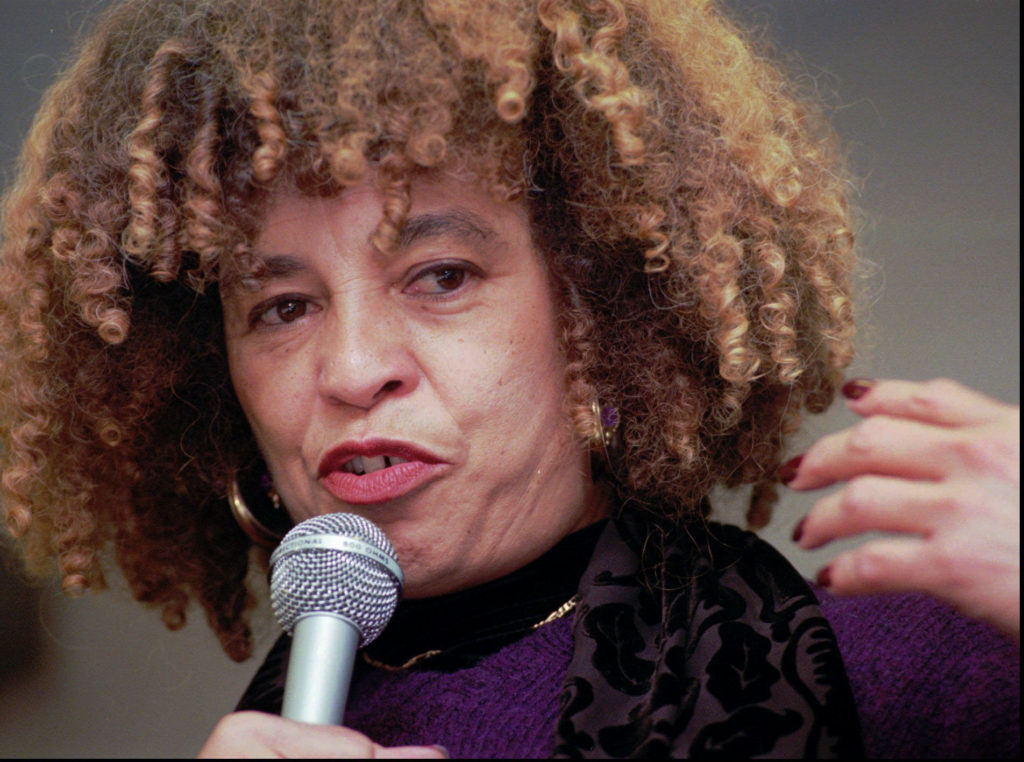
If you asked me before this week who Angela Y. Davis is I wouldn’t have been able to tell you. In light of the attention she’s received over the last several days, because of the decision by the Birmingham Civil Rights Institute (BCRI) to rescind their offer to honor her this year, I decided to become more familiar with her work and their decision. I’ve read numerous speeches, news articles quoting her and have purchased and skimmed through two of her books. It is with that background I’m absolutely confident the Institute did the right thing by reconsidering their initial offer to recognize her work. While some of the work Angela Davis has done is laudable, one shouldn’t cherry-pick just those things and ignore her record on the whole. A record that includes ties, which she herself celebrates, with notable terrorists and those who would seek to see Israel handed over to the Palestinian people. Hate and bigotry are serious issues, but to focus on the plight of African American communities while furthering the plight of another group (in Davis’ case the Jewish community), you are doing no one favors. Someone dropped the ball at the BCRI by not properly vetting Davis’s full history, speeches and current activism prior to choosing her for the award. That said, had they turned a blind eye to the concerns of the Jewish community and others after the announcement their troubles would have been compounded by still choosing to honor her.
Alabama civil rights institute rescinds Angela Davis honor
Black activists on Monday called for leadership changes and protests at an Alabama civil rights museum after it rescinded an award for political activist Angela Davis, a move the mayor said followed complaints from the Jewish community. Speaking outside the Birmingham Civil Rights Institute, located in the same downtown area where civil rights violence once shocked the nation, organizers told a news conference that Davis, a Birmingham native, was wronged by the decision to rescind the honor. Davis, a longtime activist who has supported Palestinian rights and criticized Israeli policy, is on a par with civil rights legend Rosa Parks, said activist Frank Matthews. “This is the ultimate insult to deny Angela Davis her inheritance,” he said. Museum leaders should quit, he said, and protests will be held. Other speakers called for a boycott. The institute announced in September that Davis would receive the Fred L. Shuttlesworth Human Rights Award, named for the late minister who once prominently led civil rights demonstrations in the city. In a statement posted on its website over the weekend, the publicly funded museum said it was canceling a gala set for next month and rescinding the award after directors concluded Davis “unfortunately does not meet all of the criteria on which the award is based.” Mayor Randall Woodfin said he was “dismayed” by the decision, which he said followed “protests from our local Jewish community and some of its allies.” The longtime executive director of the Birmingham Jewish Federation, Richard Friedman, did not immediately return a phone message seeking comment. A representative of the Birmingham Civil Rights Institute did not immediately return an email message seeking comment; neither did a California-based agency that represents Davis. Davis , 74, has spent decades fighting for civil rights. She was an active member of the Black Panther Party, Student Nonviolent Coordinating Committee and Communist Party USA. She also is an outspoken supporter of the Boycott, Divestment and Sanctions movement targeting Israel’s treatment of Palestinians. The civil rights institute’s president and CEO, Andrea Taylor, said in October that the organization was “thrilled to bestow this honor” on Davis whom she described as “one of the most globally recognized champions of human rights, giving voice to those who are powerless to speak.” But the institute announced Saturday that in late December, “supporters and other concerned individuals and organizations, both inside and outside of our local community, began to make requests that we reconsider our decision.” The statement did not indicate what criteria Davis didn’t meet, nor did it identify the origin of the complaints. Many people responded with outrage on Twitter and Facebook. Mayor Woodfin called the museum’s decision a reactive and divisive decision and offered to facilitate a community dialogue in response. While the city helps fund the museum, one of the top tourist draws in Alabama, it doesn’t get involved in “programmatic decisions,” Woodfin said. Protest organizer Carlos Chaverst Jr. said the city has gotten involved at the institute before and could intervene if it wanted to do so. “Our mayor lied, and he’s still lying,” Chaverst said. Republished with permission from the Associated Press.
Marchers to commemorate 1963 Children’s Crusade in Birmingham this weekend

This weekend, on the 55th anniversary of one of Birmingham’s most famous civil rights protests, the Children’s Crusade, hundreds of children from Birmingham and the nation will join those who experienced the protest firsthand to march to commemorate the events of 1963. Jack and Jill of America, Inc. and the Birmingham Civil Rights Institute have planned two separate events for this weekend in and around Kelly Ingram Park and the Sixteenth Street Baptist Church. Dozens of the original “foot soldiers,” will have prominent roles in both events. The Birmingham Civil Rights Institute event will feature a recreation of the original marches. At 10 a.m. Saturday marchers will gather at St. Paul United Methodist Church on 6th Ave North. The church was one of two churches used for the 1963 protests to gather the young marchers and give them instructions before heading into Kelly Ingram Park. “The Power of Children: Then and Now,” hosted by Jack and Jill Inc. is a three-day event which takes place at the Birmingham Jefferson Convention Complex and the Sixteenth Street Baptist Church and includes a commemorative march at 2 p.m. on Saturday from Kelly Ingram Park to Railroad Park. “When you think about the pivotal role that children played, not just in civil rights history but in U.S. history in Birmingham, and it is critically important that our young people know that,” Jack and Jill President Joli Cooper-Nelson told AL.com. “So this weekend is about educating, honoring, remembering, inspiring, and celebrating.” Jack and Jill is expecting up to 2,000 of its members and their families to participate, with many families traveling from outside Alabama. “We have determined based on the response we’re getting that this will be the first of many annual commemorations of the children’s march,” Birmingham Civil Rights Institute CEO, Andrea Taylor told AL.com. “Because I can assure you that five years from now, 10 years from now, 25 years from now, even half a century from now, there will be issues of concern in the moment that young people want to engage with and can be change agents about.” The original marches were a major turning point in the Civil Rights movement. Thousands of children were trained by movement leaders in the tactics of non-violent protesting. May 2, 1963 they left the 16th Street Baptist Church in groups, marching throughout the city to peacefully protest segregation, but were not met with a peaceful response. On the first day of the protest, hundreds of children were arrested. On the second day, Commissioner of Public Safety Bull O’Connor ordered police to threaten the children with police dogs, spray them with powerful water hoses, and hit them with batons. Pictures and stories of the violent crackdown on peacefully protesting children in Birmingham circulated throughout the nation and the world, and caused a major outcry on their behalf, eventually leading to the desegregation of businesses and marking a significant victory in Birmingham.
Alabama to receive over $2.3 million in grants to preserve civil rights history
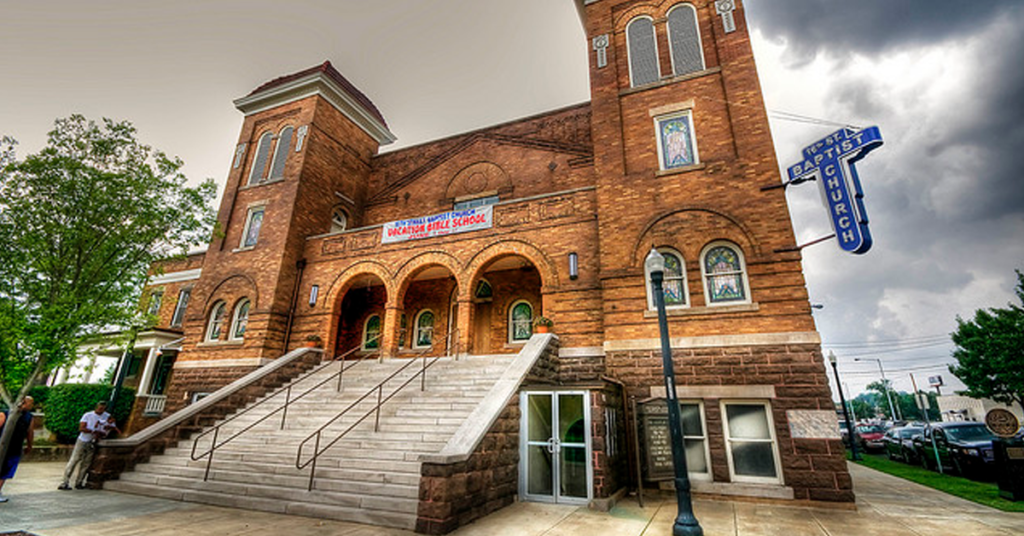
On Monday, the U.S. Department of the Interior, and the National Parks Service announced $12.6 million in grants to fund 51 projects in 24 states across the nation. The grants have been provided to preserve sites and highlight stories connected to the Civil Rights movement, and events leading up to it. Alabama itself will be receiving over $2.3 million in grants for projects within the state, including the repair and preservation of the historic Sixteenth Street Baptist Church in Birmingham Ala., and the restoration and rehabilitation of the Perry County Jailhouse. in Marion, Ala. “An integral part of the Interior and National Park Service mission is to help preserve and tell America’s story,” said Ryan Zinke, U.S. Secretary of the Interior. “These grants will benefit places across the nation that help tell an essential piece of that story through the African American struggle for civil rights and equality.” “Through the work and engagement of public and private partners, these grants will preserve a defining part of our nation’s diverse history,” Dan Smith, Deputy Director of the National Park Service said. “By working with local communities to preserve these historic places and stories, we will help tell a more complete narrative of the African American experience in the pursuit of civil rights.” A full list of grants designated for Alabama and the projects they will be funding is as follows: Alabama The Restoration of Mount Zion A.M.E. Zion Church Memorial Annex Mount Zion Center Foundation, Inc. $500,000 Alabama Restoration and Rehabilitation of the Perry County Jailhouse Perry County Commission $500,000 Alabama Preservation, Repair and Restoration of the Historic Sixteenth Street Baptist Church: Phase III Sixteenth Street Baptist Church $500,000 Alabama Moore Building Master Plan and Phase I Rehabilitation Alabama Historical Commission $365,720 Alabama Second Phase Continuation in the Preservation of Brown Chapel AME Historic Brown Chapel AME Church Preservation Society, Inc. $300,000 Alabama 21st Century Preservation & the Next Generation of Global Activism: Archives Preservation and Digitization Project Birmingham Civil Rights Institute $44,918 Alabama Civil Rights Struggle in the Shoals University of North Alabama $45,364 Alabama Freedom Rides Museum 60th Anniversary Commemoration Exhibit Plans Alabama Historical Commission $50,000 Alabama Montgomery Alabama Civil Rights Survey/Planning/Research/Documentation City of Montgomery $50,000
Birmingham Civil Rights Institute celebrates 25 years of education, dialogue and history
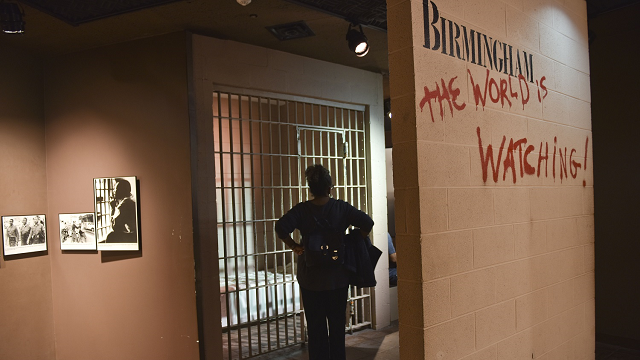
The dignified domed building on 16th Street North in downtown Birmingham looks as though it was always meant to be there. The Birmingham Civil Rights Institute (BCRI) is flanked by historic Sixteenth Street Baptist Church to the north and Kelly Ingram Park to the east. This year, the BCRI is celebrating its 25th anniversary. Former Birmingham Mayor Richard Arrington Jr. said establishing the institute was a priority when he was elected to office in 1979. He put together a 21-member task force that eventually led to the opening of the facility. “It was very important to me that young people understand the history here,” said Arrington, Birmingham’s first African-American mayor, who is now a professor at Miles College. “It is easy to think that things have always been the way they are now, but what happened in Birmingham in the 1960s is not ancient history.” The BCRI, which opened in November 1992, recalls a time in Birmingham’s history that many initially wanted to forget. Some opposed the creation of the institute. Today, many recognize and laud the institute for confronting the city’s past, shining a light on international civil rights issues and honoring the foot soldiers who sacrificed to end segregation and help make Birmingham the city it is today. Since its opening, more than 2 million people have visited the BCRI, and its role today is more important than ever. “Almost everyone would agree that this is a very challenging and troubling time in our history,” said BCRI President and CEO Andrea Taylor. “We can play a very important role by providing a place where people can gain factual information and share dialogue; by providing a place where people have an opportunity to interact with different people by building coalitions; and by providing a place where people can continue to learn, share and grow in an increasingly complex society.” Birth of the BCRI Arrington has been a part of the BCRI since its planning stages, but he has always credited the idea to late Birmingham Mayor David Vann, who visited a Holocaust museum in Israel and returned to Birmingham with a mounting interest in establishing a civil rights museum. Vann lost his bid for re-election, but Arrington pledged that he would continue the commitment to build a museum dedicated to the people who gave their lives for equality. Arrington tapped civic leader Odessa Woolfolk in 1986 to lead the institute’s task force, which had a goal of formulating the plans — from mission statement to content and design. Talent was recruited from the city’s education, arts and business communities to work on the project. “What happened here in Birmingham was transformative,” said Woolfolk, BCRI founding board chair. “We wanted to tell the story of how a movement of nonviolence was used to resolve conflict.” Woolfolk, who grew up in Titusville, was the ideal person to chair the task force. She was an educator who had public policy experience, and she had vivid memories of the bomb that ripped through the Sixteenth Street Baptist Church and when nonviolent groups were met with fire hoses and snarling dogs. Plus, she was a teacher at historic Ullman High School during the civil rights movement in Birmingham. Woolfolk knew instantly that she wanted to be a part of creating such a monument in the city. Old wounds Those years of steering the task force were difficult, Woolfolk recalled. It was a challenge to convince so many people that the institute was necessary to educate a new generation of children who had not witnessed what happened. “People just wanted to forget the pain of that time,” she said. Arrington agreed with Woolfolk. “No one wanted to open old wounds,” he said, pointing out some in the business community, whom felt the BCRI would be only for black patrons and, worse, cause a backlash against whites in the city. Blacks had reservations about the project, too, because they didn’t trust the city to get the story right. Nonetheless, the city’s history had to be told — openly and honestly. Members of the original task force, including Ed LaMonte, a retired Birmingham-Southern College political science professor, and Robert Corley, a professor in the Department of History at UAB, said the BCRI had to address some uncomfortable subjects. “I remembered the (Sixteenth Street Baptist) church bombing,” said Corley, who grew up in Birmingham and was the regional director of the National Conference of Christians and Jews. “I was (5 years old) when the demonstrations happened, and at the time I was trying to figure out my values and how I fit into the world.” “I was very eager to be a part of it,” Corley continued. “We wanted it to be not just a museum but an institute where there is an ongoing discussion. We also needed something that could educate children here about what really happened.” Funding Arrington placed two bond issues before voters in Birmingham: one that included revenue for schools, recreation and public works; and another to fund a civil rights museum. Both times, items involving the museum failed. Arrington persisted and was able to generate the $12 million necessary to build the institute, but he still encountered resistance from Birmingham’s corporate community. However, when business leaders had the opportunity to view plans for the facility, along with the storyline for the exhibition, they eventually came to understand the potential and offered their backing, raising an additional $5 million to complete the exhibition and provide financial support through the first several years of operation. Woolfolk continued to push forward, and eventually the task force made decisions on the design and exhibitions. She especially wanted to give credit to Birmingham’s foot soldiers, those residents who were on the front lines and made a huge difference during the city’s demonstrations. Doors opened After eight years of planning, the doors of the 28,000-plus-square-foot building opened in 1992—with many who had been opposed now onboard. Woolfolk noted that those same business leaders that were hesitant to support the institute had come around and were investing in it. “When there was something to look at, we got
Birmingham celebrates its place in history with Civil Rights National Monument sign unveiling
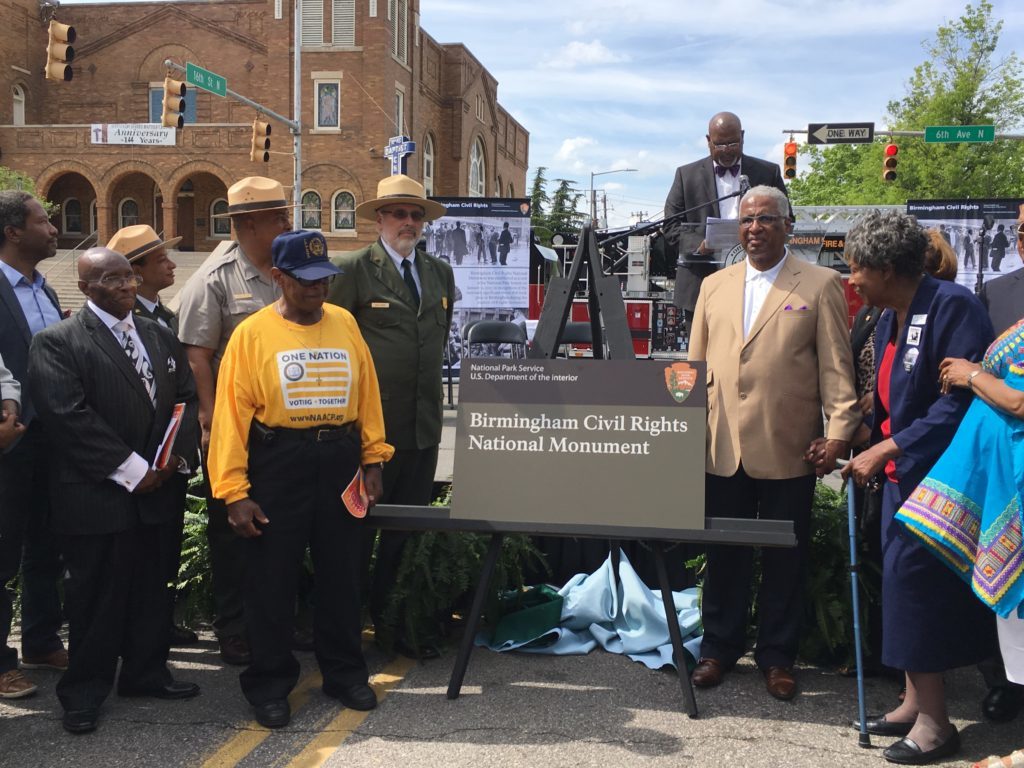
The new sign for the Birmingham Civil Rights National Monument was unveiled during a dedication ceremony Saturday afternoon in downtown Birmingham. For Alabama 7th District U.S. Rep. Terri Sewell getting the site recognized as a national monument has been a labor of love. Since 2015, she’s worked to bring stakeholders and federal policymakers together in the Magic City in support of creating the Birmingham Civil Rights National Monument. In 2016, Sewell continued her efforts and introduced legislation, supported by the entire Alabama congressional delegation, urging creation of a national civil rights monument in Birmingham. Later that year, Sewell and Birmingham Mayor William Bell hosted Interior Secretary Sally Jewell and National Park Service Director Jonathan Jarvis for a tour of Birmingham historical sites and a public meeting with the Birmingham community. Her efforts finally paid off when President Barack Obama designated the site the Birmingham Civil Rights District as a national monument just days before leaving office in January 2017 using his authority under the Antiquity Act. “Birmingham was the epicenter of America’s civil rights movement, and the Birmingham Civil Rights National Monument recognizes the remarkable contributions made by the foot soldiers and leaders of the movement,” said Sewell, who was unable to attend the event due of the funeral of her father. “We can never repay the debts we owe to those who fought, bled, and died to secure the blessings of liberty, equality, and justice for all Americans during the struggle for civil and voting rights. The Birmingham Civil Rights National Monument will help preserve their stories for future generations. I am thrilled at the investments the National Park Service is making in Birmingham as part of the national commitment to protecting the legacy of our nation’s civil rights heroes.” The national monument — which includes the Sixteenth Street Baptist Church, Bethel Baptist Church, the Birmingham Civil Rights Institute (BCRI), the A.G. Gaston Motel, parts of the 4th Avenue Business District and Kelly Ingram Park, where protesters were hosed down in unimaginable showdowns during the civil rights movement — highlights civil rights demonstrations in Birmingham in 1963 held against legalized segregation. “We can read textbooks and learn about different things, but I still think American citizens learn best when they go see, touch and feel the history that the National Park Service is preserving for future generations,” said Reginald Tiller, acting superintendent of the national park, in a video for the City of Birmingham.
Terri Sewell introduces bill to designate Birmingham’s Historic Civil Rights District as national park
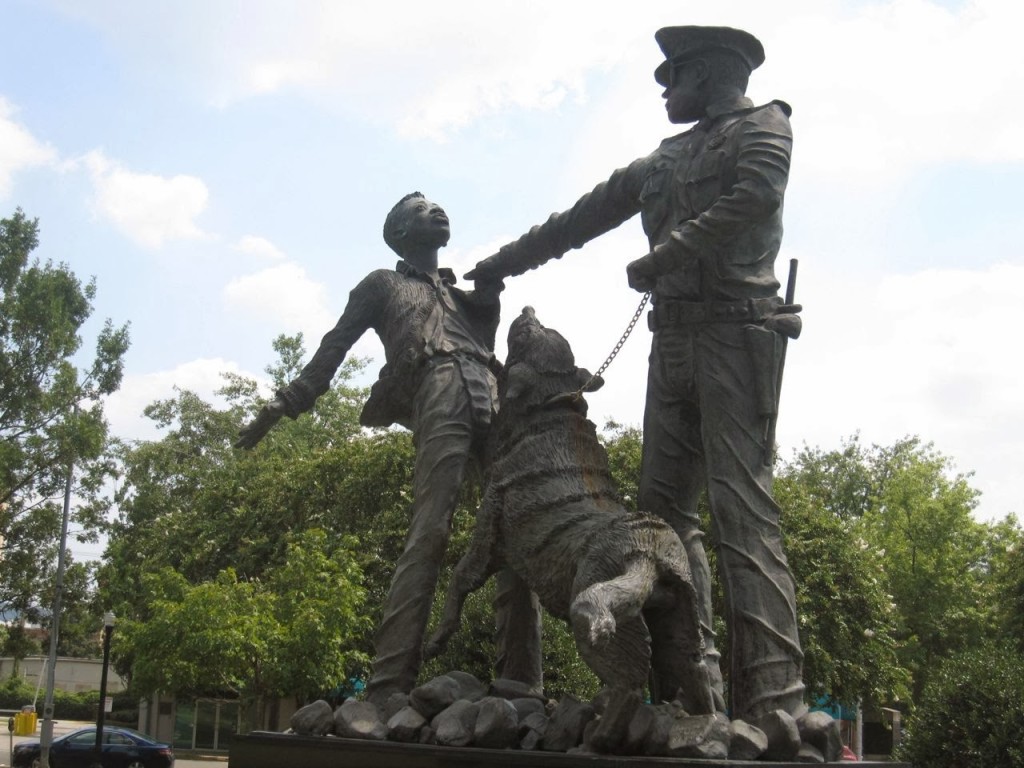
U.S. Rep. Terri Sewell (AL-07) Monday introduced a bill that would designate Birmingham’s Civil Rights District as a new National Historic Park. The Civil Rights District, designated by the city in 1992, covers a six-block area of downtown Birmingham where several significant events in the American Civil Rights Movement of the 1950s and 1960s took place. “I am proud to introduce this important, bipartisan legislation that incorporates Birmingham’s Historic Civil Rights sites into the National Park Service System,” Sewell stated. “With this designation, historic preservation efforts will be enhanced for these historic sites, greater economic revitalization will occur, and it will forever cement the pivotal role Birmingham played in the Civil Rights Movement.” Ranging from Sixth to Second Avenue North, and from 15th to 19th Street in the heart of downtown Birmingham, the district includes the Birmingham Civil Rights Institute, Kelly Ingram Park, 16th Street Baptist Church, Alabama Jazz Hall of Fame and the Fourth Avenue Business District. Sewell said, “The Historic Civil Rights District in Birmingham holds many stories of the journey from what was regarded as one of the most segregated cities in the South to what Birmingham is today. The National Park designation will be a real tourism boost for Birmingham and will mean greater economic development for Alabama. The Birmingham Civil Rights District will include the 16th Street Baptist Church, Kelley Ingram Park, A.G. Gaston Motel and other historic landmarks.”
