
Donald Trump says border troops defending southern border could hit 15K
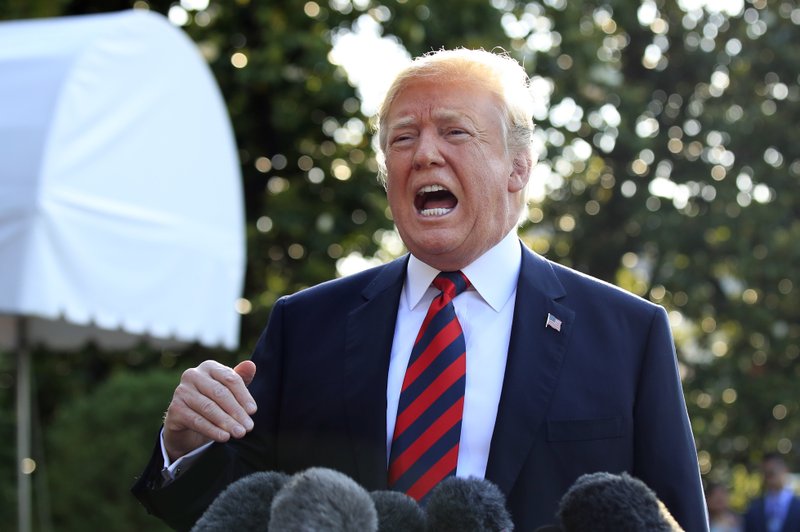
President Donald Trump says the number of military troops deployed to the U.S.-Mexican border could reach 15,000 — roughly double the number the Pentagon said it currently plans for a mission whose dimensions are shifting daily. The Pentagon says “more than 7,000” troops were being sent to the southwest border to support the Customs and Border Protection agents. Officials said that number could reach a maximum of about 8,000 under present plans. The troop numbers have been changing at a dizzying pace, with Trump drawing a hard line on immigration in the lead-up to the midterm elections. Just last week officials were indicating that about 800 to 1,000 might be sent. On Monday, officials announced that about 5,200 were being deployed. The next day, the Air Force general running the operation said more than the initially announced total were going, and he pointedly rejected a news report that it could reach 14,000, saying that was “not consistent with what’s actually being planned.” Gen. Terrence O’Shaughnessy, the commander of U.S. Northern Command, told reporters the number would exceed the initial contingent of 5,200, but he offered no estimate of the eventual total. Just 24 hours later, Trump thrust new uncertainty into the picture, catching the Pentagon by surprise. With his eyes squarely on Tuesday’s contests, Trump has rushed a series of immigration declarations, promises and actions as he tries to mobilize supporters to retain Republican control of Congress. His own Republican campaign in 2016 concentrated on border fears, and that’s his focus in the final week of the midterm fight. “As far as the caravan is concerned, our military is out,” Trump said. “We have about 5,800. We’ll go up to anywhere between 10,000 and 15,000 military personnel on top of Border Patrol, ICE and everybody else at the border.” Later Wednesday, Trump told ABC News, “We have to have a wall of people.” His comments were the latest twist in a story that has pushed the Pentagon unhappily into the political space, prompting questions about whether Defense Secretary Jim Mattis was allowing the military to be leveraged as a political stunt. “We don’t do stunts,” Mattis said Wednesday. Trump rejected the idea he was “fearmongering” or using the issue for political purposes, but his escalating rhetoric in the waning days of the campaign season calls that denial into question. Trump has railed against illegal immigration, including several caravans of migrants from Central America slowly moving on foot toward the U.S. border. The caravan of an estimated 4,000 people is still nearly 1,000 miles (1,600 kilometers) from the border. Several smaller groups, estimated at a combined 1,200 people, are farther away. As he seeks to stoke concerns about illegal immigration ahead of the midterm elections, Trump tweeted a video alleging Democrats were responsible for allowing a homicidal immigrant into the U.S. He provided no evidence supporting that claim. It was reminiscent of the infamous “Willie Horton” ad used against Democratic presidential candidate Michael Dukakis in 1988 and condemned as racist. Horton, who was black, raped a woman while out of prison on a weekend furlough. As Massachusetts governor, Dukakis supported the furlough program. Dukakis went on to lose to Republican George H.W. Bush. In his Wednesday tweet, Trump highlighted the case of Luis Bracamontes, a twice-deported immigrant from Mexico sentenced to death in California for killing two police officers. The 53-second spot includes expletives uttered by Bracamontes during his trial as he professed regret at not killing more officials. “Illegal immigrant, Luis Bracamontes, killed our people!,” the video states, adding, “Democrats let him into our country…Democrats let him stay.” It includes scenes of a migrant “caravan” moving toward the U.S., warning ominously, “Who else would Democrats let in?” Trump has insisted the media is underestimating the caravans. “You have caravans coming up that look a lot larger than it’s reported actually. I’m pretty good at estimating crowd size. And I’ll tell you they look a lot bigger than people would think,” he told ABC. He has also promised to end so-called catch-and-release policies by erecting tent cities to hold those crossing illegally. And this week he is asserting he could act by executive order to unilaterally end birthright citizenship for the children of non-U.S. citizens. Trump’s comments left some in the Pentagon scratching their heads. Officials said they had no plans to deploy as many as 15,000 troops. The number conceivably could reach 10,000, counting the 2,100 National Guard soldiers who have been operating along the border for months as part of a separate but related mission. The number of active-duty troops tapped for deployment stood at 7,000 as of Wednesday but could reach 8,000. A deployment of 15,000 would bring the military commitment on the border to roughly the same level as in war-torn Afghanistan. And it would more than double the number of people thought to be in the caravans. Trump did not back down Wednesday from his proposal to upend the very concept of American citizenship. In a morning tweet, he said the right to citizenship for babies born to noncitizens on American soil “will be ended one way or the other.” He also claimed that what he terms “so-called Birthright Citizenship” is “not covered by the 14th Amendment.” However, the text of the amendment’s opening Citizenship Clause is this: “All persons born or naturalized in the United States and subject to the jurisdiction thereof, are citizens of the United States and of the State wherein they reside.” The citizenship proposal would inevitably spark a long-shot legal battle over whether the president can alter the long-accepted understanding that the 14th Amendment grants citizenship to any child born on U.S. soil, regardless of his parents’ immigration status. House Speaker Paul Ryan asserted Tuesday that “obviously” Trump could not upend that policy by executive order, drawing a tweeted rebuke from Trump. He said Wednesday that Ryan “should be focusing on holding the Majority rather than giving his opinions on Birthright Citizenship, something he knows nothing about!” Speaking to reporters
Donald Trump stokes pre-election fear of immigrants to drive voters
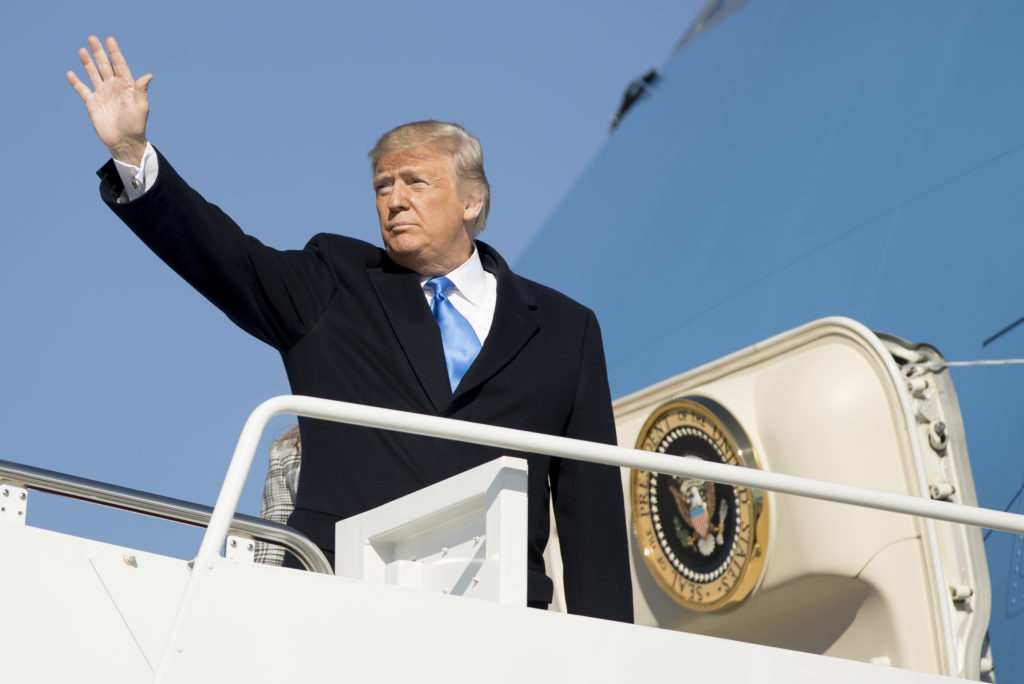
Thousands of U.S. troops to stop an “invasion” of migrants. Tent cities for asylum seekers. An end to the Constitution’s guarantee of birthright citizenship. With his eyes squarely on next Tuesday’s elections, President Donald Trump is rushing out hardline immigration declarations, promises and actions as he tries to mobilize supporters to retain Republican control of Congress. His own campaign in 2016 concentrated on border fears, and that’s his final-week focus in the midterm fight. “This has nothing to do with elections,” the president insists. But his timing is striking. Trump says he will send more than 5,000 military troops to the Mexican border to help defend against caravans of Central American migrants who are on foot and still hundreds of miles away. Tent cities would not resolve the massive U.S. backlog of asylum seekers. And most legal scholars say it would take a new constitutional amendment to alter the current one granting citizenship to anyone born in America. Still, Trump plunges ahead with daily alarms and proclamations about immigration in tweets, interviews and policy announcements in the days leading up to elections that Democrats hope will give them at least partial control of Congress. Trump and many top aides have long seen the immigration issue as the most effective rallying cry for his base of supporters. The president had been expected to make an announcement about new actions at the border on Tuesday, but that was scrapped so he could travel instead to Pittsburgh, where 11 people were massacred in a synagogue during Sabbath services. Between the shootings, the deadliest attack on Jews in U.S. history, and the mail bomb scare targeting Democrats and a media organization, the caravan of migrants slowly trudging north had faded from front pages and cable TV. But with well-timed interviews on Fox and “Axios on HBO,” Trump revived some of his hardest-line immigration ideas: An executive order to revoke the right to citizenship for babies born to non-U.S. citizens on American soil. And the prolonged detention of anyone coming across the U.S.-Mexico border, including those seeking asylum, in “tent cities” erected “all over the place.” The administration on Monday also announced plans to deploy 5,200 active duty troops — more than double the 2,000 who are in Syria fighting the Islamic State group — to the border to help stave off the caravans. The main caravan, still in southern Mexico, was continuing to melt away — from the original 7,000 to about 4,000 — as a smaller group apparently hoped to join it. Trump insists his immigration moves have nothing to do with politics, even as he rails against the caravans at campaign rallies. “I’ve been saying this long before the election. I’ve been saying this before I ever thought of running for office. We have to have strong borders,” Trump told Fox News host Laura Ingraham in an interview Monday. Critics weren’t buying it. “They’re playing all of us,” said David W. Leopold, an immigration attorney and counsel to the immigration advocacy group America’s Voice. “This is not about locking people up. This is not about birthright citizenship. This is about winning an election next week.” Trump’s citizenship proposal would inevitably spark a long-shot legal battle over whether the president can alter the long-accepted understanding that the 14th Amendment grants citizenship to any child born on U.S. soil, regardless of his parents’ immigration status. Omar Jadwat, director of the Immigrants’ Rights Project at the American Civil Liberties Union in New York, said the Constitution is very clear. “If you are born in the United States, you’re a citizen,” he said. He called it “outrageous that the president can think he can override constitutional guarantees by issuing an executive order. James Ho, a conservative Trump-appointed federal appeals court judge, wrote in 2006, before his appointment, that birthright citizenship “is protected no less for children of undocumented persons than for descendants of Mayflower passengers.” Even House Speaker Paul Ryan, typically a supporter of Trump proposals, said on WVLK radio in Kentucky: “Well you obviously cannot do that. You cannot end birthright citizenship with an executive order.” But Trump says his lawyers have assured him that the change could be made with “just with an executive order” — an argument he has been making since his early days as a candidate, when he dubbed birthright citizenship a “magnet for illegal immigration” and pledged to end it. “We’re the only country in the world where a person comes in and has a baby, and the baby is essentially a citizen of the United States,” he said in an Axios interview excerpt released Tuesday. Not so, according to a 2010 study from the Center for Immigration Studies, a group that supports immigration restrictions, which said at least 30 countries offer birthright citizenship. Vice President Mike Pence said the administration was “looking at action that would reconsider birthright citizenship.” “We all know what the 14th Amendment says. We all cherish the language of the 14th Amendment. But the Supreme Court of the United States has never ruled on whether or not — whether the language of the 14th Amendment, ‘subject to the jurisdiction thereof,’ applies specifically to the people who are in the country illegally,” he said at a Politico event. The nonpartisan Migration Policy Institute estimates that more than 4 million U.S.-born children under the age of 18 have an unauthorized immigrant parent. A person familiar with the internal White House debate said the topic of birthright citizenship has come up inside the West Wing at various times — and not without some detractors. However, White House lawyers expect to work with the Justice Department to develop a legal justification for the action. The person was not authorized to discuss the policy debate so spoke on condition of anonymity. In Trump’s Monday interview with Fox, he said the U.S. also plans to build tent cities to house migrants seeking asylum, who would be detained until their cases were completed. Right now, some asylum seekers, particularly families, are
First the 14th Amendment, then what? The 1st and 2nd? Trump should reconsider executive order
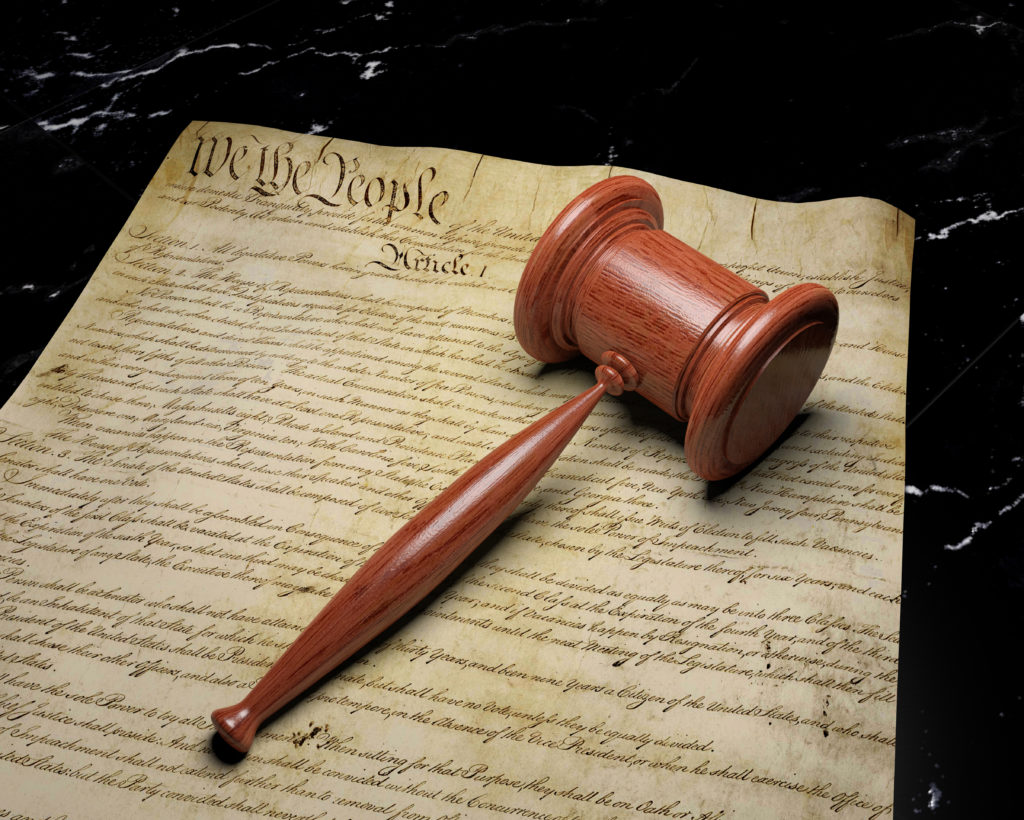
It was announced on Tuesday that President Donald Trump is considering ending birthright citizenship, a product of the 14th Amendment through an executive order. Trump is quoted in an Axios interview as saying, “It was always told to me that you needed a constitutional amendment. Guess what? You don’t.” Exclusive: Trump plans to sign an executive order terminating birthright citizenship, he said yesterday in an exclusive interview for “Axios on HBO.” pic.twitter.com/D2RE4N4OrJ — Axios (@axios) October 30, 2018 While I’m not a Constitutional law expert, I do know enough about American history, law and government to know that this move is something that no one should celebrate. Even those who oppose the rampant use of birthright citizenship by illegal aliens or want to see an end to the growing birth-tourism market, should understand that there’s a right way and a wrong way to address constitutional changes, or in this case, the challenges to existing language. The foundation of our nation rests on our Constitution. The two ways in which that document can be amended substantively is spelled out clearly in Article V. Article V The Congress, whenever two thirds of both houses shall deem it necessary, shall propose amendments to this Constitution, or, on the application of the legislatures of two thirds of the several states, shall call a convention for proposing amendments, which, in either case, shall be valid to all intents and purposes, as part of this Constitution, when ratified by the legislatures of three fourths of the several states, or by conventions in three fourths thereof, as the one or the other mode of ratification may be proposed by the Congress; provided that no amendment which may be made prior to the year one thousand eight hundred and eight shall in any manner affect the first and fourth clauses in the ninth section of the first article; and that no state, without its consent, shall be deprived of its equal suffrage in the Senate. Ultimately any executive order by Trump would be challenged and go to the U.S. Supreme Court to decide. The role of the court however is to interpret laws, not to create or change them. Changing the widely held, historically used interpretation of the 14th Amendment would be to legislate from the bench which no one, regardless of party, should support from any level of the judicial branch. There is certainly good reason to revisit the 14th Amendment and the abuse of it but we should insist that Congress do that (here’s to looking at you Sen. Lindsay Graham). The president should insist that Congress do that. We’ll be hearing from a lot of experts in the coming hours and days. From the perspective of just an individual who values the sanctity of our Constitution and the rights that it protects — I urge people to look at this proposal, not for the policy implications, but for the practical ones. There’s a right and a wrong way to do things and the moment one side tries to exploit a potential workaround, it’s only a matter of time before the other side tries to do the same. Today it’s the 14th Amendment, but tomorrow it could be the 1st or the 2nd. Let us not get complacent in wanting to reach a goal without consideration of how we get there. I think this not about immigrants or immigration, illegal or illegal, but to me this is about protecting our foundation of our nation.
Donald Trump: Deport children of immigrants living illegally in U.S.
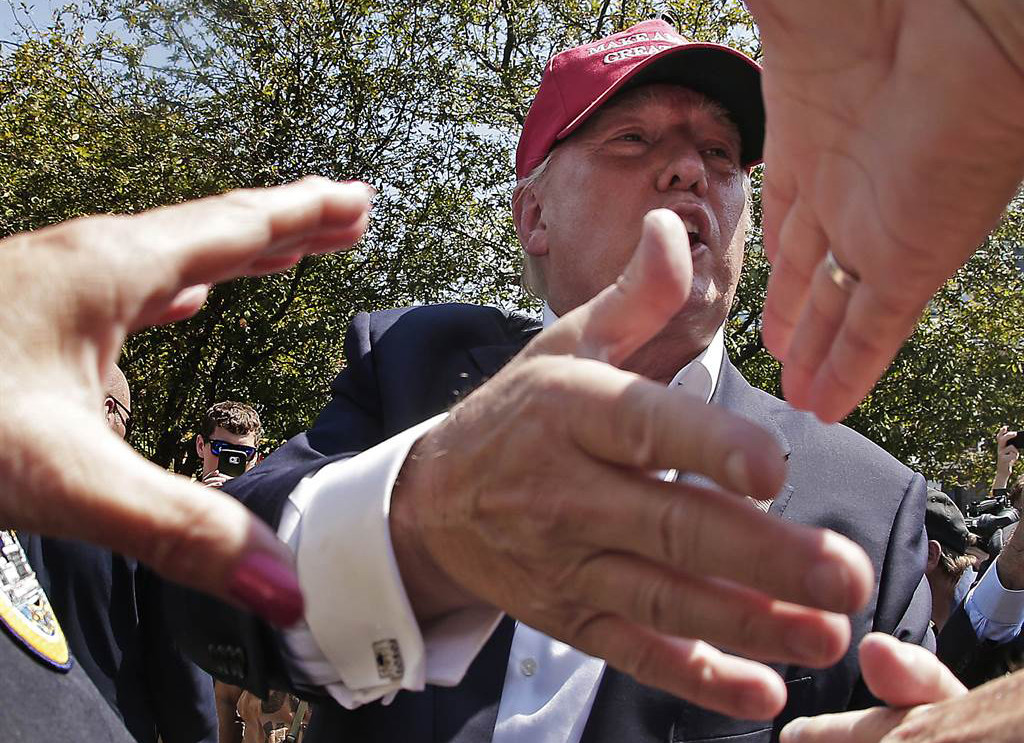
Republican presidential candidate Donald Trump wants more than a wall to keep out immigrants living in the country illegally. He also wants to end “birthright citizenship” for their children, he said Sunday. And he would rescind Obama administration executive orders on immigration and toughen deportation, allowing in only “the good ones.” Trump described his expanded vision of how to secure American borders during a wide-ranging interview Sunday on NBC’s “Meet The Press,” saying that he would push to end the constitutionally protected citizenship rights of children of any family living illegally inside the U.S. “They have to go,” Trump said, adding: “What they’re doing, they’re having a baby. And then all of a sudden, nobody knows…the baby’s here.” Native-born children of immigrants — even those living illegally in the U.S. — have been automatically considered American citizens since the adoption of the 14th amendment of the U.S. Constitution in 1868. The odds of repealing the amendment’s citizenship clause would be steep, requiring the votes of two-thirds of both houses of Congress and support from three-fourths of the nation’s state legislatures. Republicans in Congress have pushed without success to repeal that provision since 2011. “They’re illegal,” Trump said, describing native-born children of people living illegally in the US. “You either have a country or not.” Trump’s remarks came as his campaign website posted his program for “immigration reform.” Among its details: Making Mexico pay for a permanent border wall. Mandatory deportation of all “criminal aliens.” Tripling the force of immigration officers by eliminating tax credit payments to immigrant families residing illegally in the U.S. He said that families with U.S.-born children could return quickly if deemed worthy by the government. “We’re going to try and bring them back rapidly, the good ones,” he said, adding: “We will expedite it so people can come back in. The good people can come back.” Trump did not elaborate on how he would define “good people.” But echoing earlier controversial remarks that Mexico was sending criminals across the border, Trump said a tough deportation policy was needed because “there’s definitely evidence” of crimes linked to immigrants living in the country illegally. The New York businessman also said he would waste little time rescinding President Barack Obama’s executive actions aimed at allowing as many as 3.7 million immigrants living illegally in the U.S. to remain in the country because of their U.S.-born relatives. Obama’s November 2014 actions were halted by temporary injunctions ordered by several federal courts in rulings challenging his executive powers to alter immigration policies without Congressional approval. The cases could lead to the U.S. Supreme Court. “We have to make a whole new set of standards,” Trump said. “And when people come in, they have to come in legally.” On Sunday, Ohio Gov. John Kasich echoed Trump’s call to finish construction of an incomplete system of barriers on the nation’s southern border with Mexico. There are still gaps in the barriers, which have been under construction since 2005. Speaking on CBS’ “Face the Nation,” Kasich said he would “finish the wall” but would then work to legalize 12 million immigrants now estimated to live in the U.S. illegally. Kasich said he would “make sure we don’t have anybody — any of the criminal element here.” He would also revive the guest-worker programs that previously brought in temporary workers to aid in farming and other industries hobbled by labor shortages. Most other GOP candidates also back completing the border wall but differ over how to treat immigrant families already living in the U.S. Former Florida Gov. Jeb Bush recently released his own immigration plan calling for the use of forward bases and drones to guard the border, but also backing an eventual plan to legalize the status of immigrant families. Bush disagrees with Obama’s use of executive actions to unilaterally enforce the policy. Florida Sen. Marco Rubio worked with senators from both parties to develop a comprehensive plan in 2013 that would have legalized the status of many immigrant families. But Congress balked at the idea as tea party Republicans opposed the deal and Rubio has since backed away from his support. Republished with permission of the Associated Press.
