
Steve Flowers: What will our Congressional districts look like after the 2020 Census
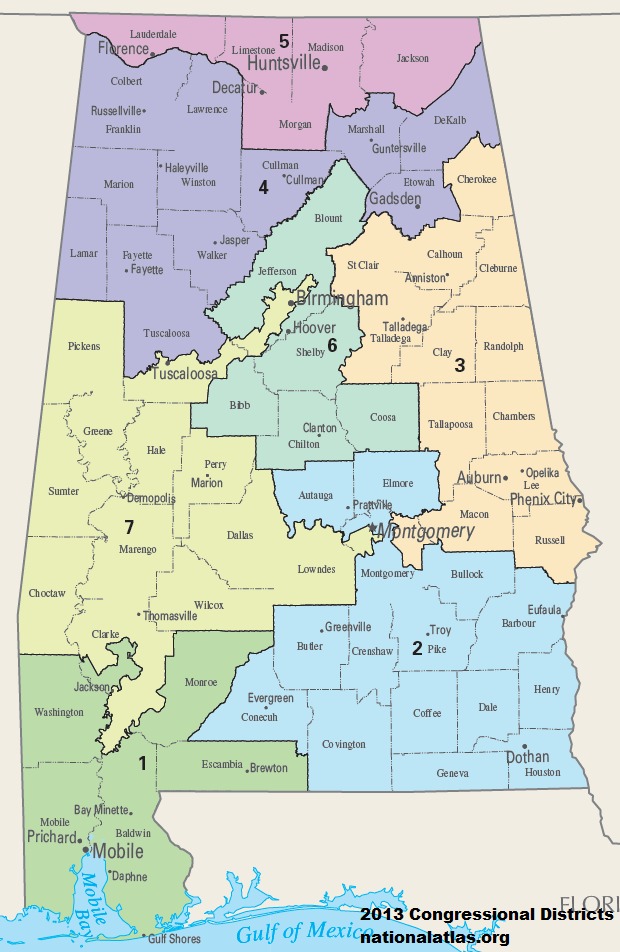
Preparations are being made to take the 2020 Census. This process is not just a fun game to spell out demographic changes and interesting tidbits about us as Americans. It is a very important mandate dictated by the Constitution. The number of people counted determines how many seats each state has in Congress. Thus, it is taken every 10-years. The Country has been changing, demographically, over the last decade, as it always has over the course of history. The states of California, Texas and Florida continue to grow exponentially. All Americans, not just older ones, seek the sun. They like a sunny, warm climate. That is why our neighboring state of Florida is and has been for decades America’s growth state. Last week I visited with you about our 1940’s Congressional Delegation. At that time we had nine seats. We lost one after the 1960’s census. We lost another after 1980. We are projected to lose another one after this upcoming Census of 2020. We now have seven seats. It is predicted that we will only have six after next year. We most certainly will lose one to California if they are allowed to count illegal immigrants. The State Legislature is constitutionally designated as the drawer of lines of congressional districts for each respective state. Currently, we have six Republican seats and one Democratic seat. If indeed we drop from seven to six Congressional districts, how will it shake out. The census will reveal that Huntsville and North Alabama have been our growth spots. Alabama’s population continues to move toward the northern tier of the state. Two out of every three Alabamians live in Birmingham, Hoover, and Tuscaloosa north. The Black Belt continues to lose population. The census will also reveal quite a disparity of financial prosperity. It will show that the same Black Belt counties are some of the poorest areas of the country and conversely Huntsville will be one of the most prosperous. So who are the winners and losers under Congressional redistricting? You start with one premise. You have to have one majority minority African American district. The federal courts have mandated this edict. Therefore, Congresswoman Terri Sewell’s district is sacred. It now is very large, geographically. It will become even larger. The district will take in most of the African American population in Birmingham, Tuscaloosa and Montgomery, and the entire Black Belt stretching from south of Birmingham and Tuscaloosa all the way to Mobile. It will be a big geographic district and be numbered district six rather than seven. This leaves us with five Republican districts and six incumbent Republicans. Therefore, who gets the short end of the stick. A cursory look says the odd person out is Martha Roby in the second district. However, our current delegates have already come up with a plan to save everybody. Mo Brooks, the Congressman from Huntsville, will choose to move up or out in 2022. He is assuming that Senator Richard Shelby retires at age 88. Therefore, Brooks will see his fast-growing Tennessee Valley district divided and delved out to a plan that grows the districts north, which complies with the growth pattern. Our senior and most seniority laden Congressman, Robert Aderholt, will opt to stay in Congress rather than risk a run for the Senate. This is a very wise and prudent move for him and the state. He has over 24-years in seniority and is in line to be Chairman of the House Appropriations Committee. He will move north and pick up part of the Huntsville area and he will cut Gadsden loose. Mike Rogers will move north and pick up Gadsden and all of northeast Alabama, which is a more natural fit for him with his native Anniston area. Rogers’ move north will allow him to abandon Auburn-Opelika, which in turn allows Roby’s district to exist primarily like it is with the population centers of East Montgomery, Elmore, Autauga, and the Wiregrass and Dothan and that district will add Auburn-Opelika. The current 6th District of Jefferson-Shelby represented by Gary Palmer will remain essentially the same. Its upscale suburbs will make it one of the most Republican in the nation. The last district seat of Mobile-Baldwin will remain intact and will still be District 1. However, the tremendous growth of Baldwin will require that the district only contain Mobile and Baldwin. The cadre of rural counties north of Mobile that are currently in the District will have to be cut loose to probably go to the Black Belt district. The current 1st District Congressman, Bradley Bryne, is running for the U.S. Senate in 2020. However, his replacement will be a conservative Republican. See you next week. ••• Steve Flowers is Alabama’s leading political columnist. His weekly column appears in over 60 Alabama newspapers. He served 16 years in the state legislature. Steve may be reached at www.steveflowers.us.
Terri Sewell leads effort to address wastewater systems in rural Alabama
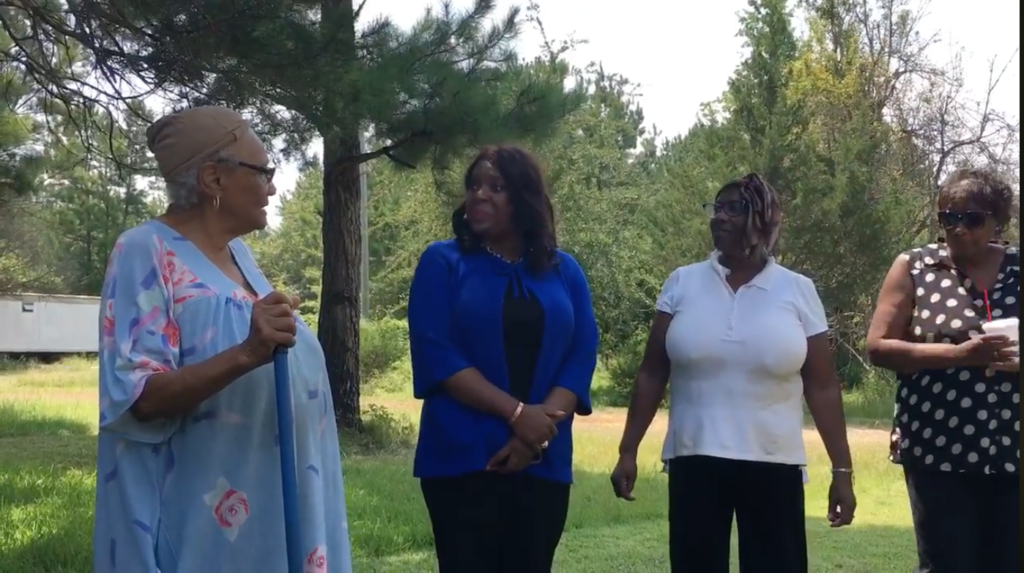
Alabama 7th District U.S. Rep. Terri Sewell joined local officials and experts in Lowndes County on Monday to address what she referred to as a “public health crisis” in rural Alabama Black Belt and surrounding counties. For decades, homes in rural communities in the state have not been connected to their local wastewater and sewage systems, causing a myriad of problems for the residents. For some, brackish wastewater fills their yard and the smell of sewage, only increased by the heat, wafts through the air. In poverty-stricken Lowndes County the situation has led to a surge of tropical diseases mostly found in developing countries; hookworm, toxocara, and the perfect breeding grounds for mosquito-borne illnesses, including Zika and West Nile. Experts suggest 60 percent of homes in some parts of rural Alabama drain wastewater without treatment from a septic system.1 Researchers from the University of Alabama estimate that more than 500,000 gallons of raw sewage enter rivers and streams in Alabama’s Black Belt each day. “In most countries in the Western world, it’s assumed governments will one way or another make sure basic facilities like clean running water, sewage, and sanitation are available,” Philip Alston, the United Nations Special Rapporteur on extreme poverty and human rights, told the Montgomery Advertiser. “What was striking to me in Alabama was the extent to which there’s no sense that a government should be working towards providing basic infrastructure,” Alston continued. “If you happen to live in one of the big cities, you will get access, but if you don’t — and particularly if you live in one of the poor counties like Lowndes — there isn’t any obligation and there are no plans in place.” But Sewell is hoping to change that. On Monday, she called on state departments to stop fining those residents who are living with insufficient and failing water systems; instead asking that they relax the citation practice for a year to give residents time to be identified, and ask for help. “They [the health department] have been been lenient,” Sewell told the Montgomery Advertiser. “But in order to really have people self-identify, you’re going to have to incentivize that.” “These are remote areas; they are 40 miles from nowhere,” Sewell continued. “And it’s not just Lowndes County. It’s rural America. Even in Alabama, the problems are not just in the Black Belt. We can’t fine people. We need to help them.” Sewell met with experts from several fields and local residents to discuss the problem posting a video of her interactions on Facebook, saying that solving the issue “is going to take all of us working together!!” Sewell’s visit come just a few days after The United States Department of Agriculture announced over $4 billion in national agriculture loan funds assigned to fund rural wastewater infrastructure projects. The experts she met with said that one-size-fits-all solutions will not work in Lowndes County, saying a mixture of solutions will be necessary for any real change to occur.
Hunters vie for big bucks — and money, too — in Alabama Black Belt photo contest

Colder temperatures in the region have the deer in Alabama’s Black Belt on the move, and a boost in the Alabama Black Belt Adventures Association Big Buck Photo Contest prize package has sparked a run in the number of entries as the deadline draws closer. Deer hunters are vying for prizes valued at more than $3,000 in the contest, which ends on Valentine’s Day, a week after the close of deer season. More than 40 entries have already been received. “The generosity of so many has provided the greatest Big Buck Photo Contest prize package we’ve ever had throughout its six-year history. We are thankful for their support of our efforts to brand the region an outdoor destination,” said Pam Swanner, ALBBAA project director. “It’s this type of partnership, from those who work every day to boost the Black Belt’s economy, that will help draw attention to the great opportunities for hunters in the Black Belt.” The new prize package for the contest, which started with the opening of bow season in October: An Alabama Hog Control Thermal Hog Hunt for three, valued at $1,800. A Winchester XPR 270-caliber rifle from Central Alabama Farmers Cooperative in Selma, valued at $550. A $300 cash donation from The Management Advantage in Helena. An American Hunter 200-pound Tri-Pod Feeder, valued at $129, plus a $50 gift card from Rountree Outdoors in Selma. A $250 cash donation from the Southeastern Land Group. Also, the winner – determined by the photo that receives the most “likes” on the ALBBAA Facebook page – will receive a Lifetime Alabama Wildlife Heritage License, valued at more than $200. To be eligible, the deer must be taken in the Black Belt during the 2017-2018 season and the photo must be emailed to photocontest@albbaa.org. Photos uploaded to Facebook are not eligible, and Big Buck Photo Contest winners from 2015-16 and 2016-17 are ineligible this year. Entries should include the name of the hunter and the county where the deer was taken with the email. The Black Belt includes the following counties: Barbour, Bullock, Butler, Choctaw, Clarke, Conecuh, Crenshaw, Dallas, Greene, Hale, Lee, Lowndes, Macon, Marengo, Monroe, Montgomery, Perry, Pickens, Pike, Russell, Sumter, Tuscaloosa and Wilcox. The Alabama Black Belt Adventures Association is committed to promoting and enhancing outdoor recreation and tourism opportunities in the Black Belt in a manner that provides economic and ecological benefits to the region and its residents. For information, go to www.alabamablackbeltadventures.org. Republished with permission from the Alabama NewsCenter.
Steve Flowers: Are we now a two party state?
As we enter the 2018 campaign season, many of you have asked me to look back and analyze the 2017 Special Election Senate race and explain in depth what happened and why. The most asked question is how could a Democrat win a U.S. Senate seat in Alabama and does this mean that we are now possibly a two party state? I will give you numerous answers, however, the simple answer to why a Democrat won is that Roy Moore was the Republican nominee. Are we a state that can go either way in an open U.S. Senate seat? As we have just seen, it is possible but not probable. The Democrat, Doug Jones, won in the perfect storm. We will probably never have this same scenario again. There are two maxims in politics that over my years of following politics never fail and become truer and truer. The more things change, the more they stay the same. One is money is the mother’s milk of politics. The second is that more people vote against someone or something than vote for someone or something. To the first adage, money is the mother’s milk of politics, nine times out of ten when one candidate out spends the other the one who spends the most usually wins. When one outspends the other 3-to-1, they always win. In this race, the National Democratic Party saw an opening and they seized on it. The people in blue America are mad as hell that Donald Trump upset Hillary Clinton. Our senate race was the only race in town or should we say the country. Not only do Democrats despise Trump, but when they heard that Alabama had a Republican candidate that is a pro-God, pro-gun, gun toting, antiabortion, horse riding, religious zealot that said that he was not only against gay marriage but said that gays were legally committing bestiality, the nation saw Roy Moore as a little extreme in today’s America. In addition, a good many people around the country believe he is a pedophile. The liberal and gay money flowed into here by the barrel. It came from New York and San Francisco and all liberal pockets in America. The bottom line is the Democrat, Doug Jones, outspent the Republican, Roy Moore, 6-to-1; 18 million to 3 million and that does not count the soft money spent by the National Democratic Party that was spent on getting out the vote. The book was written on Moore from the get go. The first poll and the last poll revealed that 30 percent of Alabamians would vote for Roy Moore come hell or high water. However, he is so polarizing that a whopping 70 percent said that they would not vote for him under any circumstance. The reason that he won the Republican nomination was that his 30 percent became accentuated due to turnout. His voters are more ardent, fervent and frankly older. Moore’s 30 percent did indeed vote on December 12. The problem for Moore was that the 70 percent that detest him voted more than was expected. The biggest part of that 70 percent was African American voters who voted in epic, unparalleled proportions. It was statewide. It was not only in the urban counties of Jefferson, Montgomery, and Mobile and the Black Belt. This tidal wave occurred in all 67 counties. African American voters came together in a crescendo and sent Roy Moore to a watery grave. Doug Jones owes his election to the Black voters and he knows it. A significant number of urbane, upscale, more educated business establishment Republicans voted against Moore, pragmatically. The image that Moore portrayed to the nation was bad for business and economic development. The best example of this was the results in Madison County. Huntsville is Alabama’s crown jewel and economic engine. They generally vote Republican. Moore lost Madison County by 20,000 votes. Senator Richard Shelby contributed to Moore’s defeat. His refusing to vote for Moore and his open acknowledgement that he cast a write-in vote for an unknown Republican gave credence and impetus for other Republicans to follow suit. There were about 22,000 write-in votes. Moore lost by 21,000. How does this play into 2018. It gives Walt Maddox and Sue Bell Cobb hope and credence that under the right and perfect circumstances a Democrat can win. However, it probably does not change the fact that a Republican gubernatorial or senatorial candidate will be favored to win 60/40. Luther Strange or Mo Brooks would have won the Senate race 60/40. See you next week. ••• Steve Flowers is Alabama’s leading political columnist. His weekly column appears in over 60 Alabama newspapers. He served 16 years in the state legislature. Steve may be reached at www.steveflowers.us.
Black Belt Community Foundation awarded $1.4 million Head Start grant
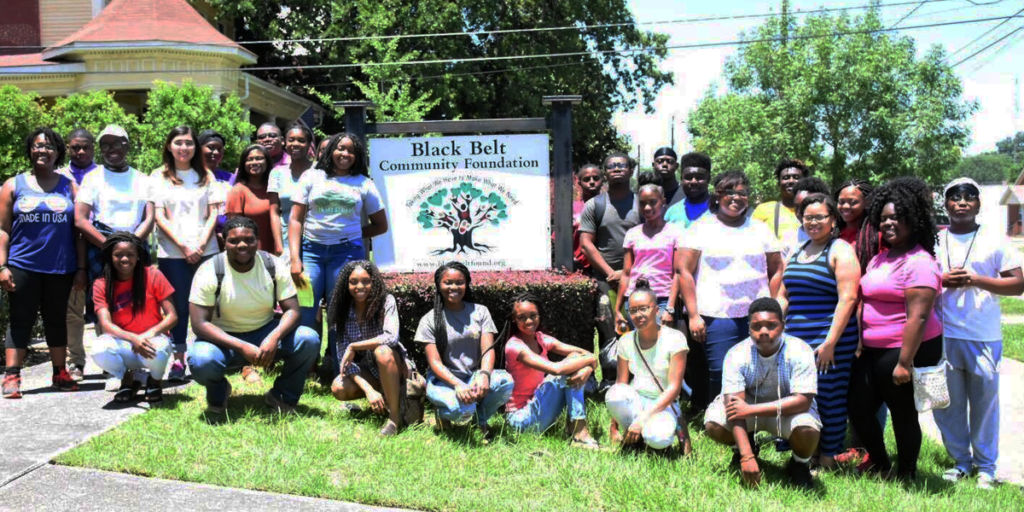
Thanks to a new federal Head Start grant, an estimated 307 children in Alabama’s Black Belt will be able to receive critical investment in their early educational development through high-quality program options. The $1.4 million grant was recently awarded to the Black Belt Community Foundation (BBCF) by the U.S. Department of Health and Human Services to oversee the Head Start programs in Dallas, Choctaw, Marengo, and Wilcox counties in Alabama. “We are excited to be selected as a first-time Head Start grantee and we are eager to expand our education and community development efforts by providing high-quality Head Start services to children and families in the region,” said Felecia Lucky, BBCF President. “With our programs, we have served over 50,000 children and families. Like Head Start, our programs emphasize the importance of starting early and working closely with families to improve academic outcomes.” Founded in 2004 with the idea that those living and working in the Black Belt best knew the area’s challenges and opportunities, the BBCF actively puts needed resources into the region that make a lasting impact. Since its inception it has granted in excess of $3 million to nonprofit organizations throughout the 12-county region it serves to bolster programs primarily in the arts, community and economic development, education, and health and wellness. “This is outstanding news for children and families in the Black Belt region. It is so important that our children are supported at an early age with educational programs such as Head Start so that their learning capabilities can be cultivated throughout their formative years,” said Alabama 7th District U.S. Rep. Terri Sewell. “With this grant, the Black Belt Community Foundation will be able to bring valuable program offerings to children in the state that need this support the most.” The Community Foundation will be hosting information sessions in the upcoming weeks to introduce its programs to the community and prospective families and staff.
Robert Bentley paramour Rebekah Mason behind effort to shut DMV offices in black counties, new report shows

Rebekah Mason, Gov. Robert Bentley’s former top adviser and illicit lover, pushed to close 31 offices of the Alabama Department of Motor Vehicles in mostly black counties. After protests by civil rights activists, including Jesse Jackson, the politically motivated effort was later overturned, resulting in a federal investigation. The relationship between Bentley and Mason and how it impacted the DMV closure plan was the focus of a new 131-page report, which the Birmingham News reports was released by investigators examining impeachment proceedings against the governor. The report, from lead investigator Jack Sharman, found Mason “proposed closing multiple driver’s license offices throughout the State” and asking Alabama Law Enforcement Agency to “put together a plan.” Sharman also noted that former ALEA head Spencer Collier – well-aware of Mason’s intent – was instructed to have a plan “rolled out in a way that had limited impact on Government Bentley’s political allies.” Collier reported the closure plan to Luther Strange, Alabama’s then-Attorney General, expressing concern over possible Voting Rights Act violations. The News reports that Collier eventually agreed to the closure plan, but through “objective measure based on processed transactions per year to determine which offices to close.” Mason’s plan, if enacted, would of save the state $200,000 – a small amount in a General Fund showing typical annual shortfalls between $100 million and $200 million. Bentley agreed to the plan, the report said, with a single exception: removing state Sen. Gerald Dial’s district from the list. Dial told the News he never spoke with Bentley about any closures and is not aware of which county was under consideration. The plan set off an investigation by the U.S. Department of Transportation, which discovered that the closures would hit rural counties hardest and disproportionately affect black neighborhoods, a violation of the 1964 Civil Rights Act. The NAACP, the nation’s leading civil rights organization, filed a lawsuit prompting the federal review. At first, Bentley was critical of DOT involvement in the investigation, which he said was political in nature. But after striking an agreement between state and federal agencies, ALEA agreed it would extend service hours for DMV offices in Alabama’s so-called “Black Belt.”
Robert Bentley vetoes bill requiring longer driver’s license office hours in Alabama
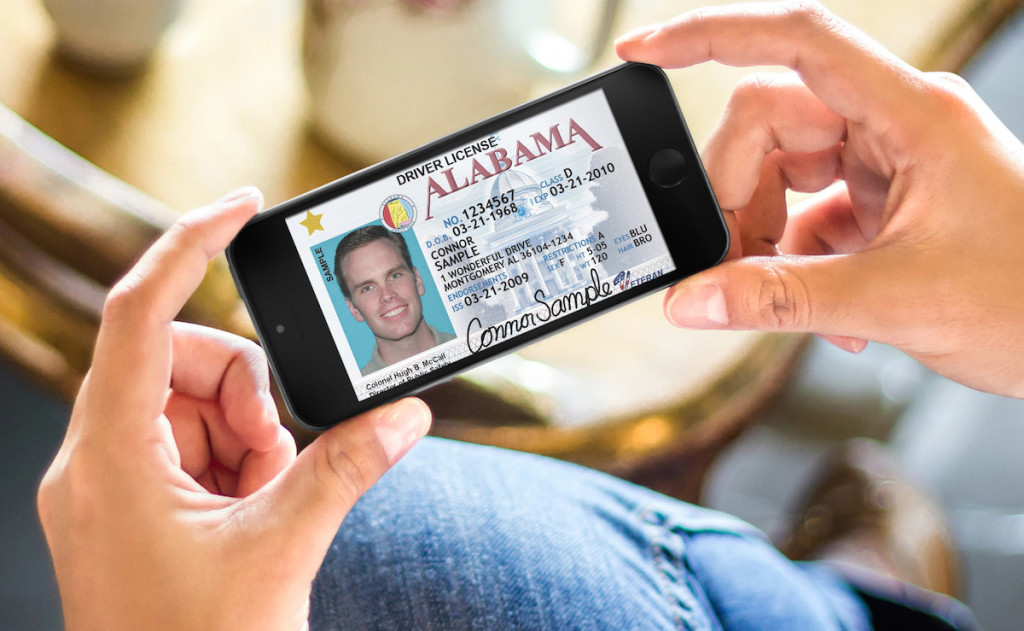
A widely passed bill requiring driver’s license offices across the state to be open a minimum of two days a week was pocket vetoed by Alabama Gov. Robert Bentley Monday, after the time during which he had to either veto or sign the bill expired. Because the pocket veto occurred after the Alabama Legislature had already concluded the session during which the bill was passed, the effort is dead for the year. The bill passed on the last day of the 2016 Regular Session, earning a vote of 24-3 in the Senate, and 99-1 in the House. The legislation was introduced during the budget fights of 2015’s multiple sessions after the Alabama Law Enforcement Agency decided to close down 31 of the state’s lowest-utilized driver’s license offices, including 10 in the already under-served agricultural “Black Belt” region. After a significant public outcry over the closures, many of the offices were reopened on a part-time basis, for as little as one day a month. Civil Rights activist Jesse Jackson even came to Alabama in October of last year to protest the bill, and have a conversation with the governor and other elected leaders in the state. The bill’s sponsor, Democratic Sen. Hank Sanders of Selma, says he is disappointed by the pocket veto, but plans on introducing the bill again in either a Special Session later this year or during 2017’s Regular Session. Supporters of the bill say they’d even be amenable to having the driver’s license offices open only one day a week, as was almost included in an amendment that was tabled due to timing concerns. “I’m not going to quit trying,” Sanders said. “I want every county to have a place where people can go on a weekly basis to get a driver’s license.” As of publishing time, the governor’s office had given no indication of why Bentley chose not to sign the bill into law.
John Merrill announces ‘civic engagement and environmental conservation’ events
Robert C. Hatch High School (RHHS) and Francis Marion High School (FMHS), two schools in Alabama’s Black Belt region, will be taking part in the annual Teach for America/Americorps Week with events aimed at “civic engagement and environmental conservation.” According to a press release from the office of Secretary of State John Merrill, “Teach For America-Alabama has become an important partner in the local effort to ensure that every child has access to an excellent and equitable education.” The organization recruits college graduates to teach in rural and urban schools for at least two years to ensure that “all children have an equal chance in life.” Merrill will be the guest speaker in two classrooms at an event March 9 at FMHS and will discuss his role as Secretary of State, lessons learned from his own educational and professional career and the importance of voting and community service. That same day, Black Warrior Riverkeeper Nelson Brooke will address students at RHHS to discuss water pollution and conservation efforts aimed at the Black Warrior River in Perry County. The Riverkeepers are a non-profit organization dedicated to protecting the river, which is entirely contained in Alabama.
Bill Cosby to advocate for education in rural Alabama
Embattled actor and comedian Bill Cosby will visit Alabama on Thursday and Friday for events aimed at highlighting schools in one of the poorest areas of the state. Cosby, whose record of educational philanthropy has been overshadowed in recent months by sexual assault allegations from more than 25 women and two pending lawsuits, will speak in several cities across Alabama’s rural Black Belt. The region is named for its fertile black soil but stifled by low income and high unemployment. Cosby will speak with high school students as part of the nonprofit Black Belt Community Foundation’s new campaign to improve education in the south-central part of the state. Foundation president Felecia Lucky said Cosby is volunteering his time to bring exposure to schools in the area. “We are really grateful for the opportunity to shed light on the plight of our children,” she said. “We’re hoping that people will realize now more than anything is that Black Belt children matter.” Lucky said Cosby will meet students at Selma High School on Friday before marching with them across the historic Edmund Pettus Bridge. The bridge was the setting for Bloody Sunday in 1965, where police beat peaceful demonstrators marching in favor of voting rights. Over the course of decades, Cosby and his wife, Camille, have donated millions of dollars in gifts to colleges and hundreds of thousands more for scholarship grants through the couple’s foundation. Lucky said the foundation chose Cosby based on his history of advocating for education. “We are so grateful for the gift of Dr. Cosby and the opportunity to showcase it on a national stage,” she said. “But at the end of the day the main focus is that Black Belt children matter.” Republished with permission of The Associated Press.
