
Alabama AG announces $3M settlement with Tyson over spill
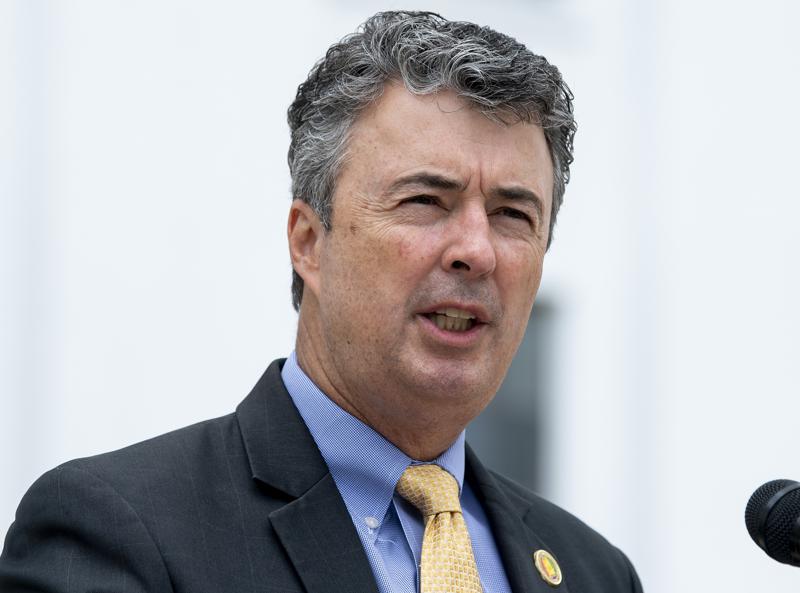
A $3 million settlement has been reached with Tyson Farms, Inc. over a 2019 wastewater spill that killed an estimated 175,000 fish — one of the largest recorded fish kills in Alabama history, Attorney General Steve Marshall said Wednesday. The settlement agreement, filed in Walker County Circuit Court, brings an end to the lawsuit brought by the state in April 2020 over the spill in the Mulberry Fork of the Black Warrior River, Marshall said. The lawsuit alleged the meat company illegally discharged thousands of gallons of partially treated wastewater in May and June of 2019 that ended up in the state’s waters after a pipe failed. The spill angered local residents in northern Alabama as waves of dead and decomposing fish washed down the river for days. The settlement, valued at $3,025,000, directs money to the affected communities for specific projects and requires Tyson take steps to lessen the possibility of such a spill happening again, Marshall said. “I am pleased to finally be able to tell the communities of the Mulberry and Sipsey Forks that the state has resolved this matter,” Marshall said. “Though my Office was ready to go to trial, I am convinced that this agreement prioritizes the concerns that I heard from locals and gets money into the right hands quickly.” In a statement, Tyson expressed remorse over the 2019 spill and said it is establishing new environmental governance and management systems. “We deeply regret what happened in 2019 at our Hanceville, AL facility and have taken steps to make it right. We’re pleased this matter has been resolved in a way that reflects the significant enhancements we’ve made at our facility, our commitment to provide funds to benefit the local communities in Cullman and Walker Counties, and increased public access to the river so many people enjoy,” the company said. The spill occurred on June 8, 2019, when a pipe failed at the River Valley Ingredients poultry processing facility in Hanceville, sending tens of thousands of gallons of partially treated wastewater into the river. Black Warrior Riverkeeper, an environmental group that works to protect the river, said the settlement is a better outcome than if the state had tried to fine Tyson, but it had hoped the company would have been fined at least $10 million, with the majority of the money going toward restoration and conservation of the section of the river “most affected by this tragedy.” “While it remains to be seen what the $1.5M will be spent on in Cullman and Walker counties, no portion of that amount can possibly provide adequate retribution for the river and its inhabitants,” the group stated. “Black Warrior Riverkeeper will continue to keep watch over Tyson’s operations and push for more stringent enforcement of environmental laws in Alabama.” Described as the “largest poultry rendering facility in the country,” the facility would take parts of chicken not desired for human consumption and turn it into animal and pet feed. Tyson says the spill occurred because some temporary piping installed by an outside contractor failed, sending partially treated wastewater into the river. Republished with the permission of the Associated Press.
‘It smells like death:’ Alabama endures NYC ‘poop train’
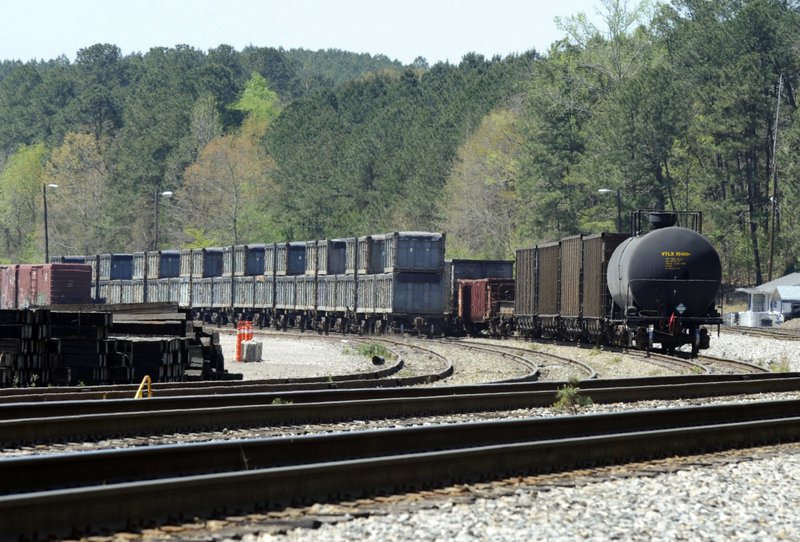
A stinking trainload of human waste from New York City is stranded in a tiny Alabama town, spreading a stench like a giant backed-up toilet — and the “poop train” is just the latest example of the South being used as a dumping ground for other states’ waste. In Parrish, Alabama, population 982, the sludge-hauling train cars have sat idle near the little league ball fields for more than two months, Mayor Heather Hall said. The smell is unbearable, especially around dusk after the atmosphere has become heated, she said. “Oh my goodness, it’s just a nightmare here,” she said. “It smells like rotting corpses, or carcasses. It smells like death.” All kinds of waste have been dumped in Georgia, Alabama and other Southern states in recent years, including toxic coal ash from power plants around the nation. In South Carolina, a plan to store radioactive nuclear waste in a rural area prompted complaints that the state was being turned into a nuclear dump. In Parrish, townspeople are considering rescheduling children’s softball games, or playing at fields in other communities to escape the stink. Sherleen Pike, who lives about a half-mile from the railroad track, said she sometimes dabs peppermint oil under her nose because the smell is so bad. “Would New York City like for us to send all our poop up there forever?” she said. “They don’t want to dump it in their rivers, but I think each state should take care of their own waste.” Alabama’s inexpensive land and permissive zoning laws and a federal ban on dumping New Yorkers’ excrement in the ocean got the poop train chugging, experts say. Nelson Brooke of the environmental group Black Warrior Riverkeeper, describes Alabama as “kind of an open-door, rubber-stamp permitting place” for landfill operators. “It’s easy for them to zip into a rural or poor community and set up shop and start making a ton of cash,” he said. The poop train’s cargo is bound for the Big Sky landfill, about 20 miles (30 kilometers) east of Parrish. The landfill has been accepting the New York sewage sludge since early 2017. Previously, it was transferred from trains to trucks in nearby West Jefferson, but officials there obtained an injunction to keep the sludge out of their town. The sludge “smells of dead rotting animals as well as human waste,” West Jefferson’s attorney said in a lawsuit against Big Sky Environmental LLC. It also caused the community to become “infested with flies,” the complaint states. After West Jefferson went to court, the train stopped in late January in Parrish, which lacks the zoning regulations to block the train cars. It’s sat there ever since. “We’re probably going to look at creating some simple zoning laws for the town of Parrish so we can be sure something like this does not happen again,” the Parrish mayor said. Hall said she’s optimistic the sludge will all be trucked to the landfill soon. New York City has discontinued shipping it to Alabama for the time being, said Eric Timbers, a city spokesman. Its waste, recovered from the sewage treatment process and often called “biosolids,” has been sent out of state partly because the federal government in the late 1980s banned disposal in the Atlantic Ocean. In an earlier trash saga, a barge laden with 3,186 tons (2,890 metric tons) of non-toxic paper and commercial garbage from Long Island and New York City wandered the ocean for months in 1987, seeking a place to dump it after plans by a private developer to turn it into methane gas in North Carolina fell through. It was turned away by North Carolina, Alabama, Mississippi, Louisiana, Texas, Florida, Mexico, Belize and the Bahamas. Brooke’s Black Warrior Riverkeeper group last year opposed continued permits for the Big Sky landfill. Rural parts of Alabama are “prime targets” for landfills that accept out-of-state waste, it argued, meaning “that Alabama was becoming a dumping ground for the rest of the nation.” Big Sky officials did not return multiple email and phone messages from The Associated Press seeking comment. Nationally, the waste and recycling industry generates more than $93 billion in gross revenue annually, said Brandon Wright, a spokesman for the National Waste & Recycling Association. Wright said there are many reasons waste is sometimes transported out of state. There might not be enough landfill space nearby “and the waste has to go somewhere, so it gets transported out of state,” he said. Alabama and other Southern states have a long history accepting waste from around the U.S. A former state attorney general once described a giant west Alabama landfill as “America’s Pay Toilet.” It was among the nation’s largest hazardous waste dumps when it opened in 1977. At its peak, the landfill took in nearly 800,000 tons (72,570 metric tons) of hazardous waste annually. Plans to dump coal ash in Southern states have been particularly contentious. Each year, U.S. coal plants produce about 100 million tons (90 metric tons) of coal ash and other waste; more than 4 million tons of it wound up in an Alabama landfill following a 2008 spill in Tennessee. In Parrish, the mayor hopes the material in the train cars is removed before the weather warms up. “We’re moving into the summer, and the summer in the South is not forgiving when it comes to stuff like this,” she said. Republished with the permission of the Associated Press.
Conservation groups sue over abandoned Alabama mine
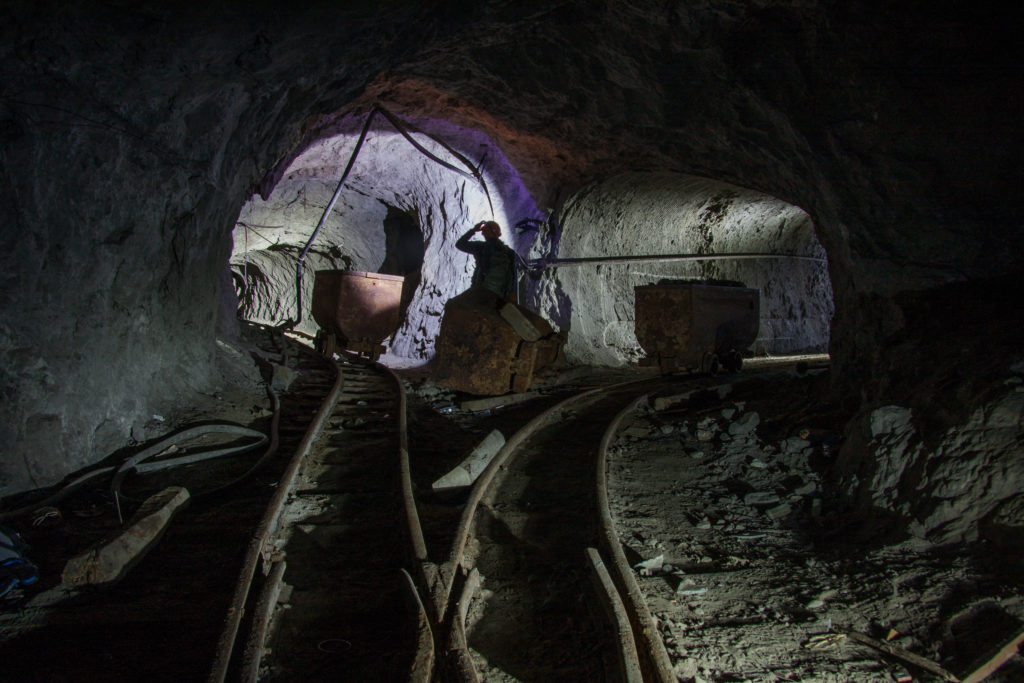
Conservation groups are suing the Birmingham-based Drummond Co. over an abandoned coal mine. The federal lawsuit contends the old Maxine Mine is discharging polluted, acidic water into the Locust Fork of the Black Warrior River. The complaint filed by the Southern Environmental Law Center, Black Warrior Riverkeeper and Public Justice. The groups say mine waste has filled in what was once a tributary of the stream. The suit asks a judge to make the company clean up the waste and restore the polluted streams. Drummond hasn’t responded to an email seeking comment. The groups say hundreds of abandoned mine are located in the Black Warrior basin, and the Maxine site is one of the worst. Republished with permission of The Associated Press.
Court dismisses challenges to Northern Beltline road project
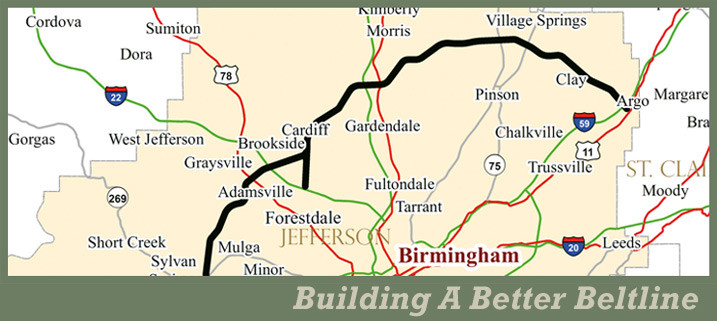
A federal U.S. District Court ruled against an environmental group Thursday as they sought to halt construction of part of the $5.4 billion Northern Beltline project that aims to streamline traffic in and out of Birmingham. The group, Black Warrior Riverkeeper, filed a challenge to the permitting process that has allowed the sprawling project to go forward. The 52-mile proposed highway expansion would connect Interstate 459 in Bessemer with Interstate 59, in northeast Jefferson County. The riverkeeper group had argued, via Southern Environmental Law Center attorneys who represent them in court, that state Department of Transportation and U.S. Army Corps of Engineers officials were remiss in their oversight duties by considering only one section of the project at a time, rather than evaluating the overall effect. U.S. District Court Judge Keith Watkins disagreed, ruling the “Plaintiff’s preferred approach would effectively reduce the Northern Beltline Project to nothing more than an intractable administrative mess.” The group’s counsel expressed disappointment at the decision. Senior attorney Gil Rogers said Thursday, “We stand by our position that these agencies have continuously cut corners for the monetary gain of a few wealthy landowners and corporations to move the project forward without fully analyzing the environmental and economic costs, impacts, or alternatives.” The Coalition for Regional Transportation, an advocacy organization in support of the Northern Beltline project, says the project will help fulfill the transportation needs of the region, “allowing traffic to flow more efficiently around and into the city of Birmingham.” CRT says the project would create almost 70,000 jobs and have a positive initial benefit of $7 billion for the region during the construction period alone, plus add billions more in revenues and employment benefits annually for Alabamians after the project is completed. The project moves forward with official resolutions in favor of the projects from major cities along the proposed route, including the cities of Birmingham, Mountain Brook, and Vestavia Hills, as well as the Birmingham Water Works Board, Birmingham-Shuttlesworth International Airport Authority, and Central Alabama Fire Chiefs Association.
Conservation advocates file lawsuit against Army Corps of Engineers over Black Warrior River mine
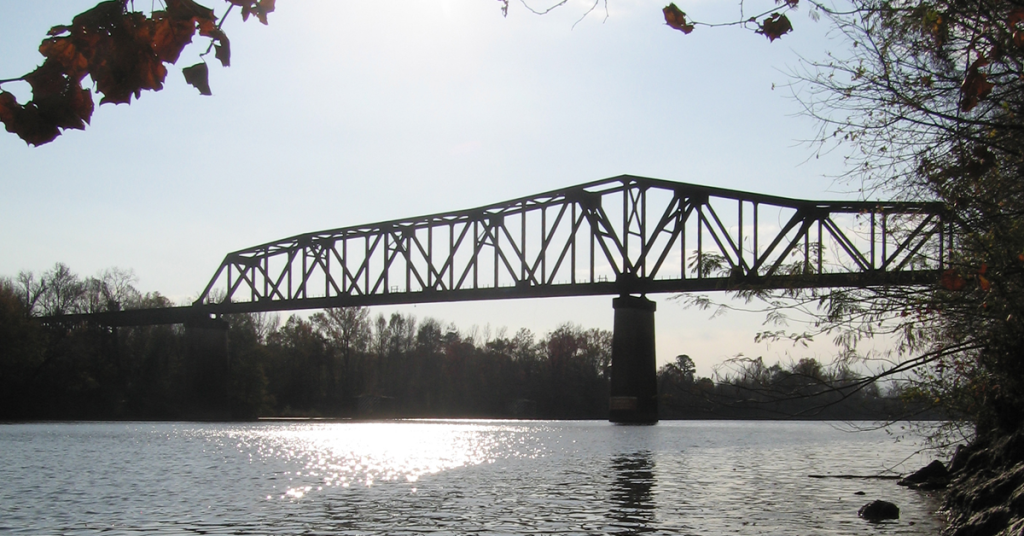
Conservation groups have filed a lawsuit challenging the U.S. Army Corps of Engineers‘ approval of a permit for a new mine on the Black Warrior River. Black Warrior Riverkeeper and Defenders of Wildlife filed the lawsuit Tuesday in Birmingham federal court. It accuses the Corps of Engineers of failing to fully weigh the effect on endangered wildlife and water quality by the filling of streams and wetlands. It also says the agency failed to consider the cumulative effect of the multiple mines located along the Warrior River. The river twists through coal-rich areas of the state According to the lawsuit, the Corps of Engineers granted the permit last year to Global Met Coal Corp. for Black Creek Mine. Republished with permission of The Associated Press.
