
JeffCo voters elect first African-American sheriff, DA
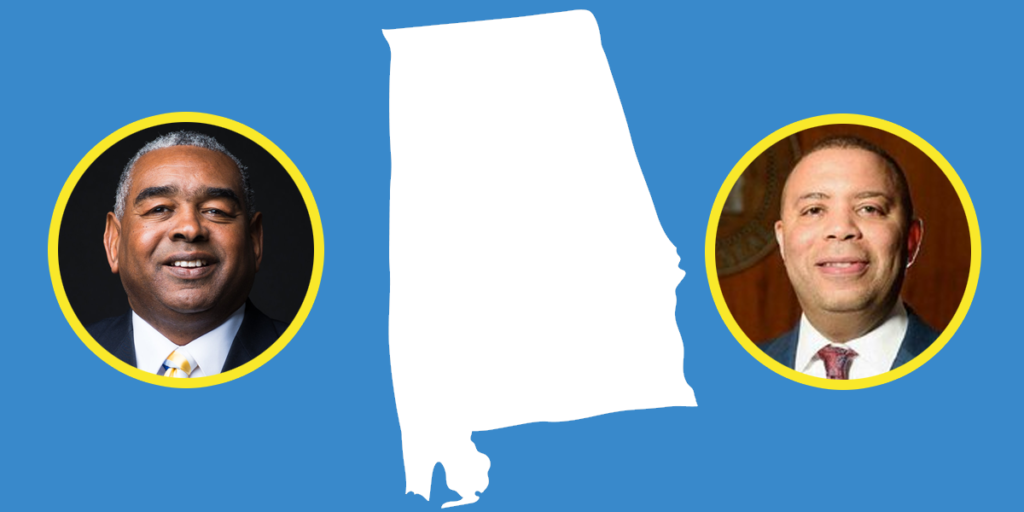
African-Americans have been elected for the first time to two of the top law enforcement positions in Alabama’s most populous county. Jefferson County voters around Birmingham elected black Democrat Mark Pettway as sheriff, turning back a re-election bid from longtime Republican incumbent Mike Hale, who is white. Voters also elected black Democrat Danny Carr as district attorney. He defeated white Republican Mike Anderton, who was appointed to the position last year. The county has about 660,000 residents and is almost evenly split racially. Pettway has spent more than 25 years in law enforcement and has worked for the Jefferson County Sheriff’s Office for nearly two decades. Carr is a longtime prosecutor who was working as chief assistant district attorney. He previously served as district attorney on an interim basis. Republished with permission from the Associated Press.
July Fourth holiday brings mixed feelings for minorities
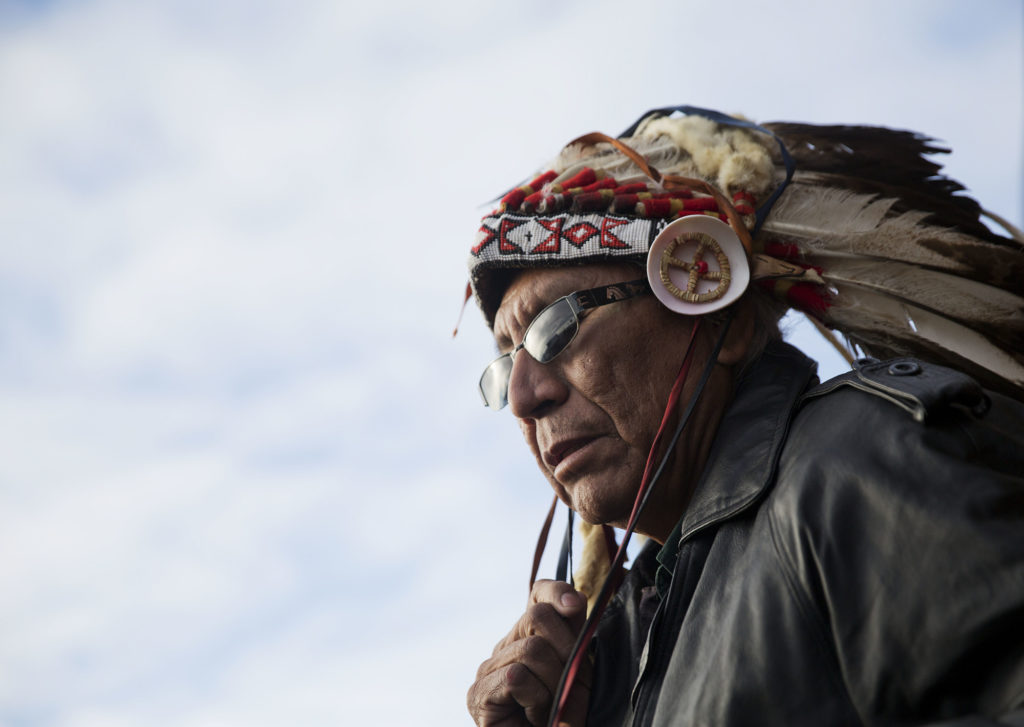
As many in the United States celebrate the Fourth of July holiday, some minorities have mixed feelings about the revelry of fireworks and parades in an atmosphere of tension on several fronts. How do you celebrate during what some people of color consider troubling times? Blacks, Latinos and immigrant rights advocates say the aftermath of the 2016 presidential election, recent non-convictions of police officers charged in the shootings of black men, and the stepped-up detentions of immigrants and refugees for deportation have them questioning equality and the promise of life, liberty and the pursuit of happiness in the United States. Filmmaker Chris Phillips of Ferguson, Missouri, says he likely will attend a family barbecue just like every Fourth of July. But the 36-year-old black man says he can’t help but feel perplexed about honoring the birth of the nation after three officers were recently cleared in police shootings. — POLICE SHOOTINGS Since the 2014 police shooting of unarmed teenager Michael Brown in Ferguson, Missouri, officer shootings – of black males in particular – have drawn scrutiny, sparking protests nationwide. Few officers ever face charges, and convictions are rare. Despite video, suburban St. Paul, Minnesota, police officer, Jeronimo Yanez, was acquitted last month in the shooting of Philando Castile, a black man. The 32-year-old school cafeteria worker was killed during a traffic stop July 6, almost a year ago. “Justice apparently doesn’t apply to all people,” said Phillips, who saw the protests that roiled his town for weeks following Brown’s death. His yet-unreleased documentary “Ferguson 365” focuses on the Brown shooting and its aftermath. “A lot of people have lost hope.” Unlike Phillips, Janette McClelland, 55, a black musician in Albuquerque, New Mexico, said she has no intention of celebrating July Fourth. “It’s a white man’s holiday to me. It’s just another day,” McClelland said. “I’m not going to even watch the fireworks. Not feeling it.” McClelland, who grew up in Los Angeles before the urban unrest of the 1960s, said she fears cities may see more violence amid a feeling of helplessness. “I’m praying and trying to keep positive,” she said. — IMMIGRATION Immigration was a key issue during the presidential campaign for both parties. Since then, Trump’s administration has stepped up enforcement and instituted a scaled-back partial travel ban that places new limits on entry to the U.S. for citizens of six Muslim-majority countries. The temporary ban requires people to prove a close family relationship in the U.S. or an existing relationship with an entity like a school or business. On Friday, the administration announced that Immigration and Customs Enforcement would arrest people – including relatives – who hire smugglers to bring children into the U.S. illegally. Patricia Montes, a Boston resident and immigrant from Honduras, said she’s grateful for the opportunities and security the United States has given her. Yet this year, she doesn’t know how to approach the Fourth of July holiday. “I fell very conflicted,” said Montes, an immigrant advocate. “I mean, what are we celebrating? Are we celebrating democracy?” Montes said it pains her to see children fleeing violence get turned away and deported back to Central America without due process. She also is disturbed by recent immigration raids in Latino and Muslim communities that spark more fear and uncertainty. In Texas, Latino activists have been protesting a state law that forces cities and towns to cooperate with federal immigration authorities. In New Mexico and Michigan, immigrant advocates have been rallying on behalf of Iraqi refugees facing deportation. “There’s a lot not to be proud about when celebrating the Fourth of July,” said Janelle Astorga Ramos, a University of New Mexico student and daughter of a Mexican immigrant. “Even though it’s a time to celebrate as a country and (for) our unity, it’s definitely going to be on the back of our minds.” Desspite those problems and concerns, Ramos said her family will recognize the holiday and visit Elephant Butte, New Mexico, a popular summer destination. “This is our home,” Ramos said. Isabella Baker, a 17-old Latina from Bosque Farms, New Mexico, said she’ll celebrate the holiday based on her own views of patriotism. “More people are standing up because of the political climate,” Baker said. “That makes me proud.” — PROTEST AGAINST PIPELINE For months, members of the Standing Rock Sioux were at the center of a protest against an oil pipeline in North Dakota. A protest camp was set up. The tribe said the Dakota Access oil pipeline plan could pose a threat to water sources, if there were a leak, and cause cultural harm. Police made more than 700 arrests between August 2016 and February 2017. The Trump administration approved the final permit for the $3.8 billion pipeline, which began operating June 1. The pipeline moves oil from western North Dakota to a distribution point in Illinois. Four Sioux tribes are still fighting in federal court to get the line shut down. Ruth Hopkins, a member of South Dakota’s Sisseton Wahpeton Oyate tribe, said Native Americans have always viewed the Fourth of July with ambivalence, and this year will be no different. However, there will be celebrations. Her Lake Traverse Indian Reservation holds an annual powwow on July 4 to honor veterans as a way to take the holiday back, she said. “Also, a lot of people up here use fireworks and the holiday to celebrate victory over Custer for Victory Day,” said Hopkins, referring to Sitting Bull and Crazy Horse defeating George Custer and his 7th Cavalry at the Battle of the Little Big Horn. Still, the holiday comes after tribes and others gathered in North Dakota to support the Standing Rock Sioux tribe and its fight against the pipeline, Hopkins said. Because of that, water and land rights remain on peoples’ mind, Hopkins said. Gyasi Ross, a member of Montana’s Blackfeet Nation and a writer who lives on the Port Madison Indian Reservation near Seattle, said all the tensions this Fourth of July are a blessing because it has
Poll says blacks less likely to have enough for retirement
Older white Americans are nearly twice as likely as African-Americans to say they’ve saved enough for retirement, a new poll found. The Associated Press-NORC Center for Public Affairs Research survey also found that African- Americans and Latinos have less financial security than whites and will rely on fewer sources of income during retirement. The retirement savings gap between white and other minority groups extends beyond pensions, 401(k)s or other retirement accounts. The survey shows older white Americans are also more likely to collect Social Security benefits, inherit money from their families or receive income from the sale of a home or other physical assets. The disparity in retirement readiness is a sign that the structural inequalities black and Latino workers face during their working years extend into retirement. For example, the unemployment rate among African-Americans is twice that of whites. On top of that, blacks earn less than whites with similar education and experience, research shows. “Having good saving habits is good but black and Latino workers are just always worse off and it makes every aspect of saving for retirement harder,” said Matthew Rutledge, an economist at the Center for Retirement Research at Boston College. About 38 percent of older white Americans said they had sufficient money for retirement compared with 20 percent for African-Americans. Four in 10 older Americans say they think they’ll outlive their retirement savings. “Black and Latino families benefit from being close,” Rutledge said, adding that family members help to care for children and the elderly. “But it doesn’t pay off when compared to whites family’s (financial) contributions.” Families not only pass down money, but also information on how to handle finances. “They have learned better savings behavior from the previous generation,” he said. “Older Americans who received financial help from family are less likely to have racked up credit card debt or student loans. They can save (for retirement) rather than paying off debt.” The poll showed whites are significantly more likely, compared to African-Americans and Latinos to say they have a retirement account. They’re also more likely than African-Americans to say they will have income from the sale of physical assets. But even when it comes to the most basic form of income during retirement, whites are more likely to say they will receive Social Security payments – 82 percent compared to 62 percent for African-Americans and 60 percent for Latinos, the survey found. The situation is so dire that some older African-Americans and Latinos have no sources of income for retirement -14 percent compared to 4 percent of whites, the survey found. Maria Villanueva, 69, is one of them. Villanueva doesn’t collect Social Security payments because she didn’t pay into the system. Villanueva immigrated illegally to California in the 70s to work as a farmworker and became a legal resident after the Immigration Reform and Control Act was signed into law. The single mother worked as a domestic worker but was paid in cash. “I didn’t know I had to pay into Social Security,” she said in Spanish. “All my life I’ve taken care of everyone except myself.” Villanueva hoped she would be able to work into older age but she can’t because of various chronic illnesses including diabetes and arthritis. She now relies on government assistance and food stamps. She provides for her 15-year-old granddaughter. “I try not to think about the future because I don’t know what’s going to happen tomorrow,” she said. “What if I go to sleep tonight and I don’t wake up tomorrow?” Retired members of minority groups tend to have lower incomes and are more likely to describe their financial situation as “somewhat poor or very poor” compared to white Americans. Black Americans were also more likely to say they sometimes fall behind on bills, the poll found. John Jackson, 66, of Fort Lauderdale, Florida, contributed to an Individual Retirement Account when he worked as a manager. Now, two years into retirement, he said he’s not sure if his savings and Social Security will be enough. Jackson, who is black, says there are many people worse off than him and that’s why he doesn’t like to complain. Worst case scenario, he said, he has a big loving family who could take care of him. “I know God will take care of me,” he said. Some white Americans also are fearful about having enough for retirement. For example, Karen Brooks, a 52-year-old university professor living in a suburb outside Seattle, said she’s concerned whether she’s saved enough. Brooks is, by most standards, better off financially than Jackson. She has a pension from her work as a school teacher. She is also contributing about 15 percent of her current income to a retirement account and she may even receive a small inheritance. But her biggest source of worry is that she didn’t save when she went back to graduate school. “I’m pretty smart and I’ve done well,” she said. “I’m saving for retirement but I don’t know if it’s going to be enough. It’s frightening even talking about it now.” The survey was conducted Feb. 14 through March 13 by The Associated Press-NORC Center for Public Affairs Research with funding from the Alfred P. Sloan Foundation. It involved interviews in English and Spanish with 1,683 people aged 50 and older nationwide who are members of NORC’s probability-based AmeriSpeak panel, which is designed to be representative of the U.S. population. It includes oversamples of 332 African Americans and 308 Hispanics. Results from the full survey have a margin of sampling error of plus or minus 3.0 percentage points. Republished with permission of the Associated Press.
AP Poll: Americans overwhelmingly view Donald Trump negatively
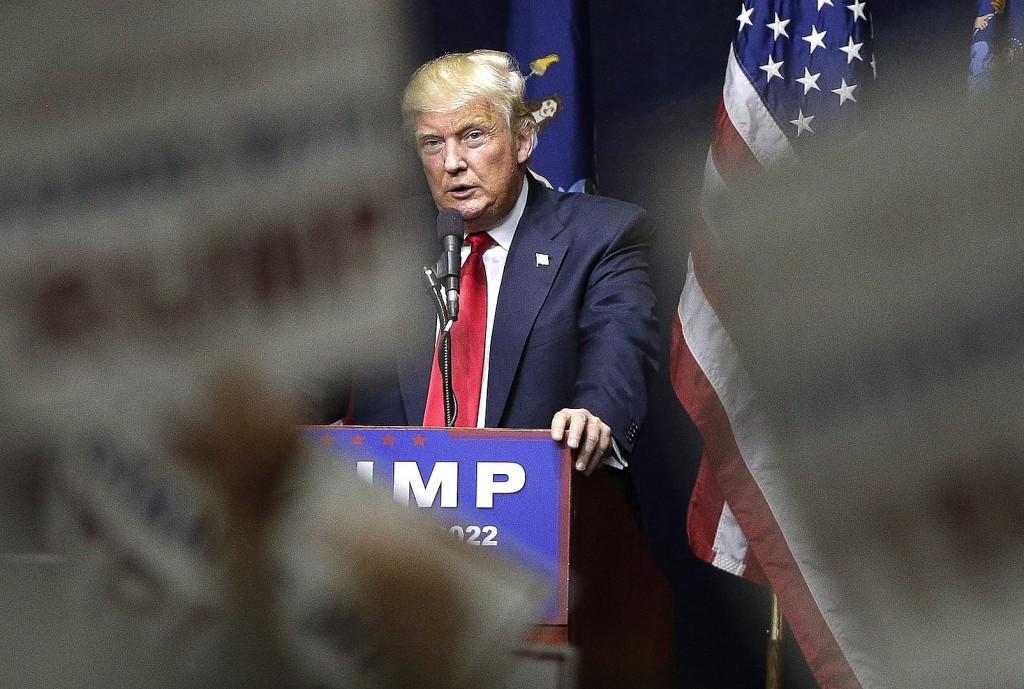
For Americans of nearly every race, gender, political persuasion and location, disdain for Donald Trump runs deep, saddling the Republican front-runner with unprecedented unpopularity as he tries to overcome recent campaign setbacks. Seven in 10 people, including close to half of Republican voters, have an unfavorable view of Trump, according to a new Associated Press-GfK poll. It’s an opinion shared by majorities of men and women; young and old; conservatives, moderates and liberals; and whites, Hispanics and blacks — a devastatingly broad indictment of the billionaire businessman. Even in the South, a region where Trump has won GOP primaries decisively, close to 70 percent view him unfavorably. And among whites without a college education, one of Trump’s most loyal voting blocs, 55 percent have a negative opinion. Trump still leads the Republican field in delegates and has built a loyal following with a steady share of the Republican primary electorate. But the breadth of his unpopularity raises significant questions about how he could stitch together enough support in the general election to win the White House. It also underscores the trouble he may still face in the Republican race, which appears headed to a contested convention where party insiders would have their say about who will represent the GOP in the fall campaign. “He’s at risk of having the nomination denied to him because grass-roots party activists fear he’s so widely disliked that he can’t possibly win,” said Ari Fleischer, a former adviser to President George W. Bush. Beyond their generally negative perception of Trump, large majorities also said they would not describe him as civil, compassionate or likable. On nearly all of these measures, Trump fared worse than his remaining Democratic or Republican rivals. Not that voters have all that much love for those rivals. But their negative perceptions don’t match the depth of the distaste for Trump. Texas Sen. Ted Cruz, who is seeking to catch Trump in the Republican delegate count, is viewed unfavorably by 59 percent, while 55 percent have negative views of Democratic front-runner Hillary Clinton. Another problem for Trump is that his public perception seems to be getting worse. The number of Americans who view him unfavorably has risen more than 10 percentage points since mid-February, a two-month stretch that has included some of his biggest primary victories but also an array of stumbles that suggested difficulties with his campaign organization and a lack of policy depth. A survey conducted by Gallup in January found Trump’s unfavorable rating, then at 60 percent in their polling, was already at a record high level for any major party nominee in their organization’s polling since the 1990’s. Candi Edie, a registered Republican from Arroyo Grande, California, is among those whose views on Trump have grown more negative. “At first, I thought he was great. He was bringing out a lot of issues that weren’t ever said, they were taboo,” Edie said. Now the 64-year-old feels Trump’s early comments masked the fact that he’s “such a bigot.” “I don’t know if he’s lost it or what,” she said. “He’s not acting presidential.”Trump’s unpopularity could provide an opening for Cruz, though he is loathed by many of his Senate colleagues and other party leaders. After a big win Tuesday in Wisconsin, Cruz is angling to overtake Trump at the July GOP convention. Clinton’s campaign believes Trump’s sky-high unfavorable ratings could offset some questions voters have about her own character, and perhaps even give her a chance to peel off some Republicans who can’t stomach a vote for the real estate mogul. Andrew Glaves, a “hard core” Republican from Bothell, Washington, said he might have to side with Clinton if Trump becomes the nominee, even though she’s out of step with his views on gun rights, his top election issue. “I’d be willing to take that as opposed to doing so much harm to the country’s reputation,” said Glaves, 29. More than 60 percent of all registered voters and 31 percent of Republicans said they definitely would not vote for Trump in the general election. One group that is still with him includes those who describe themselves as both Republicans and supporters of the tea party movement. Sixty-eight percent of them have a favorable view. Pennsylvania Republican Robert Paradis plans to vote for Trump in his state’s primary this month. The 76-year-old said that while Trump’s uneven temperament makes him cringe “all the time,” he’s hopeful the front-runner’s bluntness can shake up Washington. “He’s not a politician; he says it the way he feels it,” Paradis said. ___ The AP-GfK Poll of 1,076 adults was conducted online March 31-April 4, using a sample drawn from GfK’s probability-based KnowledgePanel, which is designed to be representative of the U.S. population. The margin of sampling error for all respondents is plus or minus 3.3 percentage points. Respondents were first selected randomly using telephone or mail survey methods and later interviewed online. People selected for KnowledgePanel who didn’t otherwise have access to the Internet were provided access at no cost to them. Republished with permission of the Associated Press.
Pew Research: Here come Asian immigrants, Millennials and unaffiliated voters

Huge immigration over the past 40 years have made Hispanics America’s largest minority group but the next wave is Asian immigrants, and they will overtake Hispanic immigration in coming decades, according to a new report from the Pew Research Center. What’s more, Millennials might already be the nation’s largest generation, surpassing Baby Boomers. Women breadwinners continue to be a rapidly-growing group in America. And whites, blacks, Christians and the middle class all will continue to lose share of the American population over the next few decades, the new Pew report, ten demographic trends that are shaping the U.S. and the world, states. The trends, all clearly evidenced in Florida, which in most ways is ahead of the national curves on demographic trends, lay out new economic, social and political policy challenges, and also, help explain many of the immediate conflicts in American society and politics. “At its core, demography is the act of counting people. But it’s also important to study the forces that are driving population change, and measure how these changes have an impact on people’s lives,” Pew authors D’Vera Cohn and Andrea Caumont state in the report released Thursday morning. “For example, how does immigration affect U.S. population growth? Do Americans feel that children are better off with a parent at home, in an era when most women work? How is the rise of the young-adult Millennial generation contributing to the rise of Americans with no stated religion?” Among the trends Pew highlights are: The U.S. population is projected to become even more diverse in coming decades. Within 50 years, Hispanic, Asian and black Americans will become a majority — 51 percent — while whites slip to 46 percent of the population. Hispanic immigration is declining, and Asian immigration is increasing, so that within three or four decades Asian immigration will surpass Hispanic immigration to the United States. Already, whites are likely to represent less than 70 percent of the American electorate in 2016, making it the most diverse electorate in history. Wide generational gaps are opening on political views, particularly on social issues. “Young adult Millennials are much more likely than their elders to hold liberal views on many political and social issues though they are also less liable to identify with either political party: 50 percent call themselves political independents,” Cohn and Caumont write. And Millennials are the most diverse generation ever, with 43 percent nonwhite. Yet, many Millennials struggle with student debt, and, faced with the weak labor market of recent years, many still live at home. Despite these troubles, Millennials are the most upbeat about their financial future. The share of U.S. adults living in middle-income households fell to 50 percent in 2015, after more than four decades in which those homes served as the nation’s economic majority. Christians are declining as a percentage of the American population while people identifying themselves with no particular religious institution is growing rapidly.
