
GOP’s lackluster fundraising spurs post-election infighting

Trailing badly in his Arizona Senate race as votes poured in, Republican Blake Masters went on Tucker Carlson’s Fox News program and assigned blame to one person: Senate Minority Leader Mitch McConnell. “You know what else is incompetent, Tucker? The establishment. The people who control the purse strings,” Masters said before accusing the long-serving GOP leader and the super PAC aligned with him of not spending enough on TV advertising. “Had he chosen to spend money in Arizona, this race would be over. We’d be celebrating a Senate majority right now.” Masters not only lost his race against Democratic Sen. Mark Kelly, but he also trailed every other Republican running for statewide office in Arizona. There’s another problem Masters didn’t acknowledge: He failed to raise significant money on his own. He was hardly alone. As both parties sift through the results of Democrats’ stronger-than-expected showing in the midterm elections, Republicans are engaged in a round of finger-pointing, including a failed attempt by Florida Sen. Rick Scott, who led the Senate GOP’s campaign arm, to challenge McConnell for his leadership post. But the recriminations obscure a much deeper dilemma for the party. Many of their nominees — a significant number of whom were first-time candidates who adopted far-right positions — failed to raise the money needed to mount competitive campaigns. That forced party leaders, particularly in the Senate, to make hard choices and triage resources to races where they thought they had the best chance at winning, often paying exorbitant rates to TV stations that, by law, would have been required to sell the same advertising time to candidates for far less. The lackluster fundraising allowed Democrats to get their message out to voters early and unchallenged, while GOP contenders lacked the resources to do the same. “This has become an existential and systemic problem for our party, and it’s something that needs to get addressed if we hope to be competitive,” said Steven Law, a former McConnell chief of staff who now leads Senate Leadership Fund, a super PAC that spent at least $232 million on advertising to elect Republicans to the Senate this year. “Our (donors) have grown increasingly alarmed that they are being put in the position of subsidizing weak fundraising performances by candidates in critical races. And something has got to give. It’s just not sustainable,” Law said. In key Senate and House battlegrounds, Democratic candidates outraised their Republican counterparts by a factor of nearly 2-to-1, according to an Associated Press analysis of campaign finance data. Consider the handful of races that helped Democrats retain their Senate majority. In Arizona, Masters was outraised nearly 8-to-1 by Kelly, who poured at least $32 million into TV advertising from August until Election Day, records show. Masters spent a little over $3 million on advertising during the same period after Senate Leadership Fund pulled out of the race. Meanwhile, in Nevada, Democratic Sen. Catherine Cortez Masto raised $52.8 million compared to Republican Adam Laxalt’s $15.5 million. And in Pennsylvania, Democratic Sen.-elect John Fetterman took in $16 million more than his GOP opponent, Dr. Mehmet Oz. That’s despite the celebrity TV doctor lending $22 million to his campaign, records show. Similar disparities emerged in crucial House races, including in Nevada, Pennsylvania, and Virginia, helping limit House Republicans to a surprisingly narrow majority. When it came to purchasing TV ad time, Democrats’ fundraising advantage yielded considerable upside. Ad sellers are required by law to offer candidates the cheapest rate. That same advantage doesn’t apply to super PACs, which Republican candidates relied on to close their fundraising gap — often at a premium. In Las Vegas, for example, a candidate could buy a unit of TV advertising for $598, according to advertising figures provided to the AP. That same segment cost a super PAC $4,500. In North Carolina’s Raleigh-Durham media market, a $342 spot cost a super PAC $1,270. And a $580 candidate segment in the Philadelphia area cost a super PAC nearly $2,000, the advertising figures show. Republicans also found themselves playing defense in states that weren’t ultimately competitive. JD Vance, who won his Ohio Senate race by more than 6 percentage points, was outraised nearly 4-to-1 by Democratic Rep. Tim Ryan. To shore him up, Senate Leadership Fund poured $28 million into the state. The group’s advertising ultimately accounted for about 70% of all Republican media spending from August until Election Day. A similar situation played out in North Carolina, where the McConnell-aligned super PAC was responsible for 82% of the Republican advertising spending during the same period. GOP Rep. Ted Budd won his Senate race by over 3% of the vote. But money woes weren’t the only complicating factor. Donald Trump elevated a series of untested, first-time candidates. They included Masters, Vance, and former NFL star Herschel Walker, whose complicated backstory includes threats of violence against his ex-wife, false claims of business success, and allegations that he pressured two girlfriends to get abortions, which Walker denies. Then there was Oz, who moved to Pennsylvania to seek the seat and also secured Trump’s endorsement but was pilloried by Democrats as an out-of-touch carpetbagger. The former president gave them his endorsement, but he was parsimonious when it came to sharing some of the more than $100 million he’s amassed in a committee designed to help other candidates. He ended up spending about $15 million on ads across five Senate races, records show. Meanwhile, the National Republican Senatorial Committee, led by Scott, often worked at cross-purposes with McConnell’s political operation. Early on, Scott ruled out getting involved in primaries, which he saw as inappropriate meddling. McConnell’s allies, meanwhile, moved to fend off candidates they saw as poor general-election contenders, like Don Bolduc, a far-right conservative who lost his New Hampshire Senate race by nearly 10 percentage points. McConnell forces also defended Alaska Sen. Lisa Murkowski, a GOP moderate, against a conservative challenger. “Senate races are just different,” McConnell said in August. “Candidate quality has a lot to do with the outcome.” In response, Scott took a shot at McConnell without mentioning him by name, suggesting in an opinion article published in the Washington Examiner that any “trash-talking”
Tommy Tuberville only U.S. Senator openly backing Donald Trump in 2024
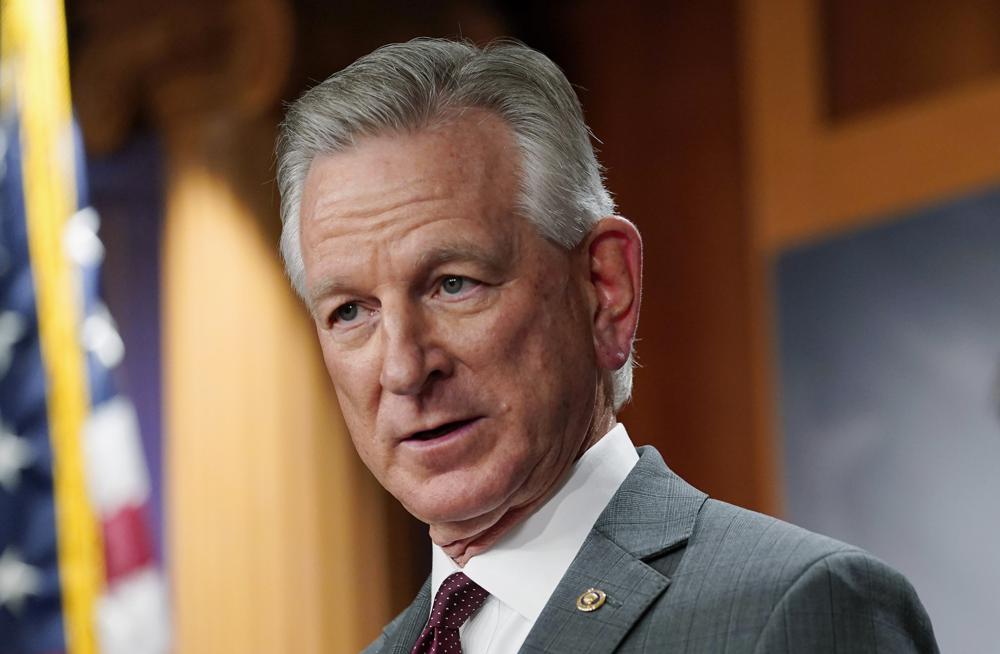
Former President Donald Trump announced last week that he was indeed running for the Republican nomination for President of the United States in 2024. U.S. Sen. Tommy Tuberville has since told reporters that he will support Trump’s candidacy for president and praised his track record in the Oval Office. “He’s the leader America needs in 2024,” said Sen. Tuberville on Twitter Thursday night. “That’s why I’m proud to endorse Donald J. Trump for President of the United States!” Tuberville followed those comments with an interview on Fox News. “He stood up for the American people,” Tuberville said of Trump in a recent comment on Fox News, speaking with Maria Bartiromo, saying that he was “100%” behind Trump. Tuberville followed that up with comments to reporters from Washington, D.C. “He doesn’t have to learn the ropes,” Tuberville said. “He knows the ropes. He won’t be running again (in 2028). I like someone who will come in and say, ‘Listen, I don’t care. I will do what’s good for America.’” The other 48 Republican Senators were not so quick to jump on the Trump bandwagon. Sen. Lindsey Graham stopped short of endorsing Trump’s candidacy. “If President Trump continues this tone and delivers this message on a consistent basis, he will be hard to beat,” Graham wrote following Trump’s Mar-O-Lago speech. “His speech tonight, contrasting his policies and results against the Biden Administration, charts a winning path for him in the primaries and general election.” Graham was non-committal on endorsing Trump, though. Sen. Mitt Romney has been harshly critical of Trump. Romney called former President Donald Trump an “albatross” on electoral prospects for Republicans in the midterms. “I think President Trump was an albatross on the electoral prospects for some of our candidates,” Romney told MSNBC’s, Saul Kapur. “He helped select some of the people who turned out not to be very effective candidates.” “I understand that he’s going to run for president and announce that tomorrow. It’s like the aging pitcher who keeps losing games,” Romney added. “If we want to win, we need a different pitcher on the mound.” Senate Minority Leader Mitch McConnell has said that the party has scared off moderate Republicans and independents. Trump, for his part, has blamed McConnell for the underwhelming GOP performance in midterm Senate races. “It’s Mitch McConnell’s fault,” Trump wrote on Truth Social. “Spending money to defeat great Republican candidates instead of backing Blake Masters and others was a big mistake. Giving 4 trillion dollars to the Green New Deal, not infrastructure, was an even bigger mistake. He blew the Midterms, and everyone despises him and his otherwise lovely wife Coco Chow.” Former Speaker of the House Paul Ryan came out strongly against another Trump run for the Presidency. “I am a Never-Again-Trumper. Why? Because I want to win, and we lose with Trump,” Ryan said in a recent interview on ABC News ‘This week.’ “It was really clear to us in ’18, in ’20, and now in 2022.” “I personally think the evidence is really clear. The biggest factor was the Trump factor … I think we would have won places like Arizona, places like Pennsylvania, New Hampshire had we had a typical, traditional conservative Republican, not a Trump Republican.” Trump is currently 76 years old. By the 2024 election, he will be older than Ronald Reagan was when Reagan was leaving office. The only President in American history who was older is President Joe Biden, who turned 80 on Sunday. To connect with the author of this story, or to comment, email brandonmreporter@gmail.com.
Joe Guzzardi: Pro-Environment platform a mid-term winner
The latest mid-term election polling shows that Republicans and Democrats are dead even. In January, the same polling firm Statista had the GOP ahead by four points. Other polls like 538.com indicate more or less the same outcome. But if voters have learned anything since the 2016 and 2020 elections, it would be to distrust polling firm projections. Results from 2020 polls favored Democrats, with Susan Collins (R-Maine), Lindsey Graham (R-S.C.), Joni Ernst (R-Iowa), Thom Tillis (R-N.C.), and Steve Daines (R-Mont.) as likely losers. But Collins, 6.5 points behind, or so said the pre-election pollsters, won by 8.6 points. The other five candidates that the prognosticators wrote off as doomed won handily. Pollsters have an explanation to defend their theory that congressional Democrats might still retain the majority, despite record inflation, rising crime rates, a botched Afghanistan withdrawal, student debt forgiveness, billions of dollars squandered in support of what’s become an endless Russia-Ukraine war, and an open border. It is that the GOP has nominated poor candidates in key swing states. Among the races, pollsters are tracking most closely are Blake Masters in Arizona vs. incumbent Mark Kelly, Herschel Walker in Georgia vs. incumbent Raphael Warnock, Adam Laxalt in Nevada vs. incumbent Catherine Cortez Masto, and Mehmet Oz vs. John Fetterman in Pennsylvania, where incumbent Republican Pat Toomey is retiring. A state official who has no congressional voting record, Fetterman proudly notes that his wife’s family overstayed their visas, at which time their immigration status converted to unlawfully present, a clue that he favors more immigration. Fetterman’s website says he supports a “humane” immigration system, a vapid remark which confirms that he endorses Biden’s status quo. The GOP challengers, all within striking distance, may be getting short shrift from pollsters. The candidates were persuasive enough to capture primary nominations; they’re not too tongue-tied to debate. More important, going into the general election, the GOP has as much fodder – listed above – and primo debate material as any high-office challengers in history, thanks mostly to President Biden’s slipshod governance, and the incumbents’ whole-hearted endorsement of it. On the key open borders issue, Masters, Walker, and Laxalt have the benefit of launching an offensive against their opponents’ immigration voting records. Their rivals, Kelly, Warnock, and Cortez Masto are, like Fetterman and Biden, all-in on open borders. A review of the incumbents’ immigration votes found that each has consistently voted against reducing amnesty fraud, against curbing illegal immigrants’ rewards, against ending unnecessary employment visas, against stricter border enforcement, and against more rigorous interior enforcement. Stumping on reducing immigration can be problematic since such a focused campaign would trigger untruthful but potentially damaging racist allegations. A winning campaign would include linking immigration to unsustainable population growth, an indisputable fact that the Census Bureau confirms. Census Bureau data predicts that by the mid-21st century, the U.S. population will increase to more than 400 million from its current 333 million, a greater than 20 percent increase. More than half of that growth will be attributable to immigration and births to immigrants. For comparison’s sake, the Center for Immigration Studies’ researchers, based entirely on the Census Bureau’s American Community Survey and the Current Population Survey Annual Social and Economic Supplements, found that in 2017 there were 35.8 million legal and illegal immigrants living in the U.S. who arrived from 1982 to 2017. Further, these immigrants had 16.9 million U.S.-born children and grandchildren. In total, immigration added 52.7 million people to the U.S. population between 1982 and 2017, accounting for a little over 56 percent of population growth during this 35-year time period. For the nation’s population to increase by more than 65 million people, as the Census Bureau predicts, in less than 30 years, creates a grave danger that will exacerbate existing environmental problems like water shortages and land lost to urban sprawl. Opinions about immigration and its effects often differ. But sentiments about the environmental future Americans want to ensure for their children and grandchildren are consistent. Americans want open spaces and nature’s bounty to remain for future generations to enjoy, a goal that ever-more immigration makes impossible. To win and to prove the pollsters wrong again, the GOP platform must emphasize immigration’s harmful, unwanted consequences of unchecked population growth and the environmental degradation that accompanies it. Joe Guzzardi is a nationally syndicated newspaper columnist who writes about immigration and related social issues. Joe joined Progressives for Immigration Reform in 2018 as an analyst after a ten-year career directing media relations for Californians for Population Stabilization, where he also was a Senior Writing Fellow. A native Californian, Joe now lives in Pennsylvania. Contact him at jguzzardi@pfirdc.org.
Poll: 1 in 3 fears immigrants influence U.S. elections
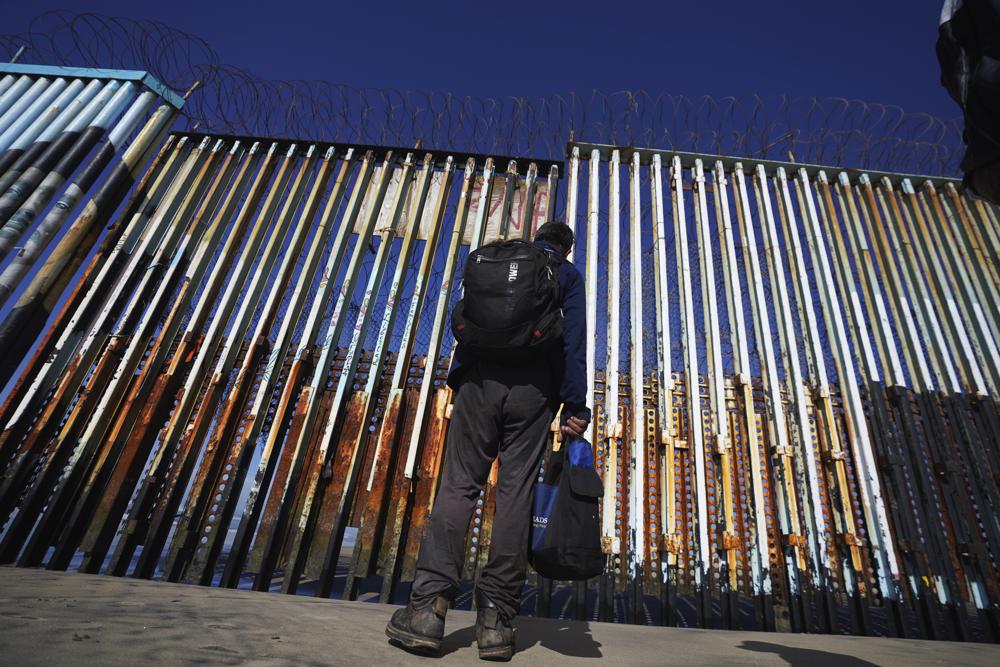
With anti-immigrant rhetoric bubbling over in the leadup to this year’s critical midterm elections, about 1 in 3 U.S. adults believes an effort is underway to replace U.S.-born Americans with immigrants for electoral gains. About 3 in 10 also worry that more immigration is causing U.S.-born Americans to lose their economic, political and cultural influence, according to a poll by The Associated Press-NORC Center for Public Affairs Research. Republicans are more likely than Democrats to fear a loss of influence because of immigration, 36% to 27%. Those views mirror swelling anti-immigrant sentiment espoused on social media and cable TV, with conservative commentators like Tucker Carlson exploiting fears that new arrivals could undermine the native-born population. In their most extreme manifestation, those increasingly public views in the U.S. and Europe tap into a decades-old conspiracy theory known as the “great replacement,” a false claim that native-born populations are being overrun by non-white immigrants who are eroding, and eventually will erase, their culture and values. The once-taboo term became the mantra of one losing conservative candidate in the recent French presidential election. “I very much believe that the Democrats — from Joe Biden and Nancy Pelosi, all the way down — want to get the illegal immigrants in here and give them voting rights immediately,” said Sally Gansz, 80. Actually, only U.S. citizens can vote in state and federal elections, and attaining citizenship typically takes years. A white Republican, Gansz has lived her whole life in Trinidad, Colorado, where about half of the population of 8,300 identifies as Hispanic, most with roots going back centuries to the region’s Spanish settlers. “Isn’t it obvious that I watch Fox?” quipped Gansz, who said she watches the conservative channel almost daily, including the top-rated Fox News Channel program “Tucker Carlson Tonight,” a major proponent of those ideas. “Demographic change is the key to the Democratic Party’s political ambitions,” Carlson said on the show last year. “In order to win and maintain power, Democrats plan to change the population of the country.” Those views aren’t held by a majority of Americans — in fact, two-thirds feel the country’s diverse population makes the U.S. stronger, and far more favor than oppose a path to legal status for immigrants brought into the U.S. illegally as children. But the deep anxieties expressed by some Americans help explain how the issue energizes those opposed to immigration. “I don’t feel like immigration really affects me or that it undermines American values,” said Daniel Valdes, 43, a registered Democrat who works in finance for an aeronautical firm on Florida’s Space Coast. “I’m pretty indifferent about it all.” Valdes’ maternal grandparents came to the U.S. from Mexico, and he said he has “tons” of relatives in the border city of El Paso, Texas. He has Puerto Rican roots on his father’s side. While Republicans worry more than Democrats about immigration, the most intense anxiety was among people with the greatest tendency for conspiratorial thinking. That’s defined as those most likely to agree with a series of statements, like much of people’s lives is “being controlled by plots hatched in secret places” and “big events like wars, recessions, and the outcomes of elections are controlled by small groups of people who are working in secret against the rest of us.” In all, 17% in the poll believe both that native-born Americans are losing influence because of the growing population of immigrants and that a group of people in the country is trying to replace native-born Americans with immigrants who agree with their political views. That number rises to 42% among the quarter of Americans most likely to embrace other conspiracy theories. Alex Hoxeng, 37, a white Republican from Midland, Texas, said he found those most extreme versions of the immigration conspiracies “a bit far-fetched” but does believe immigration could lessen the influence of U.S.-born Americans. “I feel like if we are flooded with immigrants coming illegally, it can dilute our culture,” Hoxeng said. Teresa Covarrubias, 62, rejects the idea that immigrants are undermining the values or culture of U.S.-born Americans or that they are being brought in to shore up the Democratic voter base. She is registered to vote but is not aligned with any party. “Most of the immigrants I have seen have a good work ethic, they pay taxes and have a strong sense of family,” said Covarrubias, a second-grade teacher in Los Angeles whose four grandparents came to the U.S. from Mexico. “They help our country.” Republican leaders, including border governors Doug Ducey of Arizona and Greg Abbott of Texas — who is running for reelection this year — have increasingly decried what they call an “invasion,” with conservative politicians traveling to the U.S.-Mexico border to pose for photos alongside former President Donald Trump’s border wall. Vulnerable Democratic senators up for election this year in Arizona, Georgia, New Hampshire, and Nevada have joined many Republicans in calling on the Biden administration to wait on lifting the coronavirus-era public health rule known as Title 42 that denies migrants a chance to seek asylum. They fear it could draw more immigrants to the border than officials can handle. U.S. authorities stopped migrants more than 221,000 times at the Mexican border in March, a 22-year high, creating a fraught political landscape for Democrats as the Biden administration prepares to lift Title 42 authority May 23. The pandemic powers have been used to expel migrants more than 1.8 million times since it was invoked in March 2020 on the grounds of preventing the spread of COVID-19. Newly arrived immigrants are barred from voting in federal elections because they aren’t citizens, and gaining citizenship is an arduous process that can take a decade or more — if they are successful. In most cases, they must first obtain permanent residency, then wait five more years before they can apply for citizenship. Investigations have failed to turn up evidence of widespread voting by people who aren’t eligible, including by non-citizens. For example, a Georgia audit of its voter rolls completed this year found fewer than 2,000 instances of
