
Lawmakers to delay 3rd grade reading promotion requirement

Alabama lawmakers are close to approving a delay of a high-stakes requirement to hold back third-graders who don’t read on grade level. The Alabama House of Representatives on Wednesday unanimously voted to push back the requirement for two years. Instead of taking effect at the end of this school year, the legislation would delay implementation until the 2023-2024 school year. The Alabama Senate has approved similar legislation. Lawmakers in 2019 approved the Alabama Literacy Act that will require third graders to meet reading benchmarks before moving to the fourth grade. Students would have to make a minimum score on a reading assessment or demonstrate mastery of all third grade state reading standards. However, many lawmakers and educators pushed for a delay after the COVID-19 pandemic interrupted classrooms for two years. The state Board of Education in November set a cutoff score that third-graders must make on that Alabama Comprehensive Assessment Program in order to be promoted. State officials said 23% of students scored below that number on the latest assessment. Republican Rep. Terri Collins, the sponsor of the Literacy Act, said the two-year delay is a compromise. Collins said she believes the interventions and other measures in the law are already making a difference for students. Collins said the Senate bill will be in House committee next week. Republished with the permission of the Associated Press.
What Kay Ivey has right and wrong about Amendment 1

I’ve held a strong opinion about Amendment 1 since the first day I heard about it. Let’s make no mistake about what this is – a power grab. This amendment would take away the voters right to elect their own member to the state board of education and instead make each commissioner a gubernatorial appointment. Now the language is nice, fluffy and misleading as hell as it doesn’t come out and say that’s what they’re doing. They sell it as a way to get better-diversified representation, add term-limits, and rename the board, but truly I’m going to say it again. This my friends is a what? Oh yeah, a power grab. The vote should truly be a no brainer for everyone. The answer is no. I mean, not just no, but heck no. What in the world are you people thinking? NO. Are you kidding me? For real? NO. What are you trying to say? Your constituents are too stupid to pick a good candidate themselves? Still, NO. I’ll come back to that though. We, the voters, may be partially to blame for our state’s education problems, but that’s not quite the end of the story. The buck doesn’t stop there. Imagine my surprise when during the State of the State speech last night Governor Kay Ivey made this point for me. Thanks, gov. No really. Thank you. Here’s the line from her speech: Ask yourself this question: Is there any high school in Alabama, much less any college or university, that would continue to keep a head coach who produced teams that were consistently dead last? Would Auburn or Alabama? Well no, Governor. I don’t believe they would. We love our football like we love our, wait for it, kids. Which is why we should get rid of the “head coach” of the Alabama Board of Education. Let’s see, who that would be? Wait, I have an image from their website. Looking at the titles, looking at the titles, wait, who’s “President?” Oh, yeah. Hmm. So about that head coach analogy, it doesn’t really work the way you intended it to, does it, Ivey? After all, there’s no way you would have called us voters, your constituents, the proverbial head coach or insinuated that we needed to be fired. No! You would not have dared to put it that way. Would you? But the more I think about it, it seems clear that’s exactly you’re saying there. So allow me to address that. What the governor and the legislators who support this amendment have said, repeatedly, is that it’s necessary to pass Amendment 1 because we have failed. In her state of the union, Ivey all but blamed us voters for the failures of our current education system and to some extent she’s right. They’re right. Let me explain. To be honest, up until the time this amendment came up in the last six years I’ve lived in Alabama, I haven’t spent a lot of time worrying about the SBOE. I was guilty of not recognizing the importance of the board. I think it’s because my three children are still so young, only one is of grade school age and she attends a private school. The reason for that is because the school we are zoned for is failing. Not only is it failing academically, but it is also failing in every other imaginable way, including failing in providing a safe, nurturing and engaging environment and there is no continuity in administration. So, yeah, that’s a no go. No one should be forced to send their child to a school like I’m zoned for, which is why we need school choice but I digress. I wasn’t paying attention to the system quite yet because I was overwhelmed by it’s failing results in my own world. Let’s take a second to read what the governor had to say in her speech: But first, I want to, once again, level with you, the Members of the Legislature, and perhaps more importantly, with the people of Alabama. During last year’s session, the Legislature gave the voters of Alabama an opportunity to help move our education system in a bold, new direction, by having an opportunity to vote on AMENDMENT ONE, which will be on the March 3rd primary ballot. Unfortunately, we’ve gotten all-too-complacent to being at or near the bottom of national education rankings. Ask yourself this question: Is there any high school in Alabama, much less any college or university, that would continue to keep a head coach who produced teams that were consistently dead last? Would Auburn or Alabama? Sadly, too many of our third graders are not proficient in reading. In fact, according to the Nation’s Report Card, we are 49th in the nation in reading and we are 52nd in the nation in math! And it only gets worse as they get older… too many of our high school graduates simply aren’t ready for college or a career. Let me be abundantly clear… this isn’t the fault of our hard-working teachers, principals or local superintendents…Folks, it starts at the top. Alabama is one of only six states that still has an elected state school board and this board has selected 5 State Superintendents in the past 5 years. Very simply, Amendment One will create term limits for the State Board and no member will serve more than two six-year terms, thus bringing fresh new ideas to the commission every few years. Equally important, the newly constituted board will reflect the racial, gender and geographic diversity to reflect the make-up of students in our public school system. There’s no other way to say it but our current system isn’t working. Page 5 of 10 For us to prepare today’s students for tomorrow’s opportunities, it is time we get serious: It’s time for creativity. It’s time for accountability. It’s time for stability. It’s time to vote YES for Amendment One on March 3rd! She lost me when she gave the coach analogy because SHE
Birmingham Board of Education election results 2017
District 1 Bennie M. Holmes: 277 votes | 6.86 percent Douglas Lee Ragland: 1,027 votes | 25.45 percent Keith Rice: 418 votes | 10.36 percent Cedric Small: 1,497 votes | 37.10 percent Jerry Tate: 816 votes | 20.22 percent District 2 Terri Michal: 1,717 votes | 50.18 percent Brandon McCray: 1,705 votes | 49.82 percent District 3 Larry J. Contri: 1,129 votes | 29.01 percent Mary Drennen Boehm: 2,763 votes | 70.99 percent District 4 Daagye Hendricks: 1,308 votes | 34.29 percent (incumbent) Amber Courtney: 717 votes | 18.79 percent Edward Maddox: 1,790 votes | 46.92 percent District 5 Buford L. Burks: 148 votes | 3.62 percent Eloise M. Crenshaw: 329 votes | 8.05 percent Martha McDowell: 565 votes | 13.82 percent David T. McKinney: 628 votes | 15.36 percent Mickey Millsap: 1,236 votes | 30.23 percent Andrea Mitchell: 332 votes | 8.12 percent Aaisha Muhammad: 476 votes | 11.64 percent Angela Scoggins-Watson: 375 votes | 9.17 percent District 6 Cheri Gardner: 2,946 votes | 79.24 percent (incumbent) Ervin Philemon Hill Sr: 772 votes | 20.76 percent District 7 Wardine Alexander: 1,197 votes | 26.23 percent (incumbent) Patricia S. McAdory: 1,836 votes | 40.24 percent Walter Wilson: 1,530 votes | 33.53 percent District 8 P.B. Henderson: 1,178 votes | 29.58 percent Tyrone Silmon: 1,093 votes | 27.45 percent Sonja Q. Smith: 1,252 votes | 31.44 percent Antwon Womack: 459 votes | 11.53 percent District 9 Sandra Kelley Brown: 3,136 votes | 68.10 percent (incumbent) Lawrence Jackson: 1,469 votes | 31.90 percent *Fully bolded row denotes winner
Board of Education to discuss State Superintendent Michael Sentance’s contract
The Alabama State Board of Education has scheduled a meeting to discuss the superintendent’s contract weeks after board members gave him a low marks during a performance review. The board is scheduled to meet Aug. 23. On Friday morning the previously released agenda was modified to include an item to discuss superintendent Michael Sentance’s contract under the “New Business” section of the agenda. A spokeswoman for the Department of Education said she has no further details about the updated agenda item.
Matthew Brown running for State Board of Education

State Board of Education appointee Matthew Brown announced on Tuesday he will run to seek the Republican nomination for a new term on the board. The 28-year-old Republican was a design engineer with the Baldwin County Highway Department before his appointment by Gov. Robert Bentley to the board in a controversial move that drew the ire of The Washington Post, who decried the appointment of a man the paper described as ‘no friend of public schools.’ Brown’s family home schools their children and is an ardent supporter of tax credits and vouchers to support parochial and charter schools. Brown will run for the District 1 seat on the board and says he is not for a weaker school system, but rather in favor of stronger families and greater parental involvement in their children’s education. “Every time I cast my vote regarding a particularly policy or program before the State Board of Education I will always ask this question: Does this policy or program enable and empower parents to be more engaged and involved in their child’s education?” said Brown in his kick-off announcement. Brown currently occupies the District 1 seat – home to some 735,000 Alabama residents – and promises to continue his aggressive approach to parental empowerment, saying accountability and transparency are paramount for someone seeking his office. “As your District 1 representative on the State Board of Education, I am committed to combing through our annual education budget and ensuring that our tax dollars are being leveraged to the greatest benefit to our students,” said Brown in prepared remarks. Brown helped lead the charge against the “Build Baldwin Now” campaign that sought to raise local property millage rates in order to fund new school construction. Brown is a graduate of Pensacola Christian College and Samford University’s College of Law. He serves as chair of the Baldwin Young Republicans.
Why the Washington Post is scared of Matthew Brown on the Board of Education
Earlier this week Valerie Strauss of the Washington Post took to task Governor Robert Bentley‘s appointment of Matthew Brown to the state’s Board of Education. Why is a national columnist worried so much about what happens in Alabama’s schools? Because Brown has realistic expectations of the education system. Strauss points to his opposition to a tax increase, opposition that voters overwhelmingly agreed with him on voting 2-1 against the increase. If you want to read more about the fiscal and logical reasons Brown and voters rejected the tax, visit the website he set up Education Baldwin Now. Strauss doesn’t like that Brown has the audacity to realize throwing money at the system isn’t going to fix it. Brown supports school choice including charter schools (which he emphasizes accountability for) and homeschooling (which he was himself). He openly admits that if a public school isn’t the best available place for his children to get an education he would consider alternatives to make sure they receive the kind of education that all parents should desire for their families. Why on earth would we want that fresh take and that perspective to be represented on a board tasked with education decisions? Wait, wait, I know it’s because he’s not deeply entrenched in the school system. Being jaded by years of being a cog in a machine that abhors change and progress should certainly be a prereq for the Board. Wishing local school boards and the state spendendless amounts of money should be a prereq for the job. Openly stating that you’d put your children in public schools even if they’re not the best choice available, providing the highest quality education and safety should be a prereq. Yes, Matthew Brown certainly can’t be qualified for the Board of Education because his perspective is too unique. He was homeschooled. Oh the travesty. Using that logic no one at the Pentagon who hasn’t been in a war zone should be making decisions on military action. His motivation, a better system that will make public schools the best option for his children is not really that important. His willingness to look at all of the information and all of the options that could make our schools better is just terrible.
Committee OKs plan to remove BOE from charter schools

The House Education Policy Committee approved a bill on Tuesday that would remove the Alabama State Board of Education from confirming a new charter school commission. Republicans who sponsored Alabama’s newly passed charter school legislation expressed frustration at the state school board’s refusal to confirm a list of nominees for the commission. The charter school commission is responsible for hearing appeals of charter school applications rejected on the local level. Bill sponsor Republican Rep. Terri Collins of Decatur said the bill is needed to ensure the commission is in place by the June 1 deadline. “The bill has to go through so many steps in order to pass,” she said. “Getting that simply done by June 1 will be an effort. If they were to actually pass the state commission at any point during that, then the bill could just stop, but I’m probably not going to postpone the bill until they do something.” Republicans have passed charter school legislation this session after making it a priority for several years. Board members have said they wanted more time to interview and research candidates nominated by the governor, lieutenant governor, House speaker and Senate president pro tem. Several state board members have said they agree with being removed from the process. “I think they deserve the entire decision making process on this,” board member Ella Bell said last week. “They created the charter schools. This was not the decision of the people of this state.” Democratic Rep. Patricia Todd of Birmingham voted against the bill. She said it’s too soon to cut the school board out of the process. Todd said it seems reasonable to allow for the board to have more time talk with the candidates, even if it means extending the June 1 deadline. “They have had one round to look at people,” she said. “I don’t think just one round and all of a sudden boom they’re going to appoint them and take their authority away is good policy.” Other bills this session already have taken away major responsibilities from the state school board. Gov. Robert Bentley signed a bill removing the state’s two-year college system from BOE oversight. Another bill, which died in a Senate committee, would have created term limits for the board’s elected members but would have raised their pay. Republished with permission of The Associated Press.
Bill would cut Board of Education from charter school plan
The Alabama State Board of Education, having already suffered a sapping of power this legislative session, could soon be cut from confirming the state’s new charter school commission. Republican champions of charter schools are striking back this week after the state school board on Wednesday refused to confirm a list of nominations for a new charter school commission. The state commission would be designated with hearing appeals of charter school applications rejected on the local level. Board members said they didn’t have enough time to thoroughly vet the list of candidates, saying they felt the process was a set-up. “I thought it was ridiculous,” said Senate President Pro Tem Del Marsh, R-Anniston. “Those members had the information over a week. If they had taken the time to go through it they would have been prepared for the meeting.” Marsh, who sponsored the Senate bill to create charter schools, said delaying confirmations was “irresponsible.” He threatened to take action if the board didn’t act quickly. “I have a bill on my desk that goes to an appointed school board, which I personally would like to see,” he said. “I would like to be very selective and make sure we choose people with proper backgrounds. I’m not saying that these people don’t have it, but when action takes place like what took place the other day it makes me wonder.” Republicans finally passed charter school legislation earlier this session after making it a priority for several years. The day after the board’s meeting, Rep. Terri Collins, R-Decatur, introduced a new bill that would allow nominees to forego board confirmation. The governor, lieutenant governor, Senate president pro tem and speaker of the House each nominate charter school commission members. The bill will be up for a vote in the House Education Policy Committee on Tuesday. Members of the Board of Education said they feel they are under attack more this session than in the past. Other bills this session already have taken away major responsibilities from the state school board. Gov. Robert Bentley signed a bill removing the state’s two-year college system from BOE oversight. Another bill, which died in a Senate committee, would have created term limits for the board’s elected members but would have raised their pay. “In 15 years, we’ve never had such intrusion into the operations of the board until this legislative session,” board member Ella Bell said. “So I just have to take it as their plan to control every process.” House Speaker Mike Hubbard, R-Auburn, said the legislature and the governor tried including the school board in the process by allowing them to appoint members. “Some of the school board members have chosen to ignore their responsibilities under the law in an attempt block classroom innovation and keep thousands of students trapped in underperforming schools offering subpar educations,” he said. “These members are giving their personal prejudices and egos priority over the futures of a generation of public school students.” Board member Stephanie Bell said it would have been difficult to decide the best options without interviewing candidates. Bell said she’s fine with not being included in the process. “I don’t think they really cared,” she said. “Ultimately, I think the goal was to put us in a position where we could be blamed for rejecting names, and when a problem surfaces, with the approval of a charter that had been turned down at the local level, the question will be asked ‘who appointed this group?’” Betty Peters, another board member, also said she is fine with not confirming nominees. “I think that was the correct approach in the beginning,” she said. “Because how in the world would we be considered the appropriate people to just flip a coin and say, ‘I’ll take A or B. Next one. I’ll take A or B’?” Reprinted with permission from the Associated Press.
Lawmakers approve new board for two-year colleges
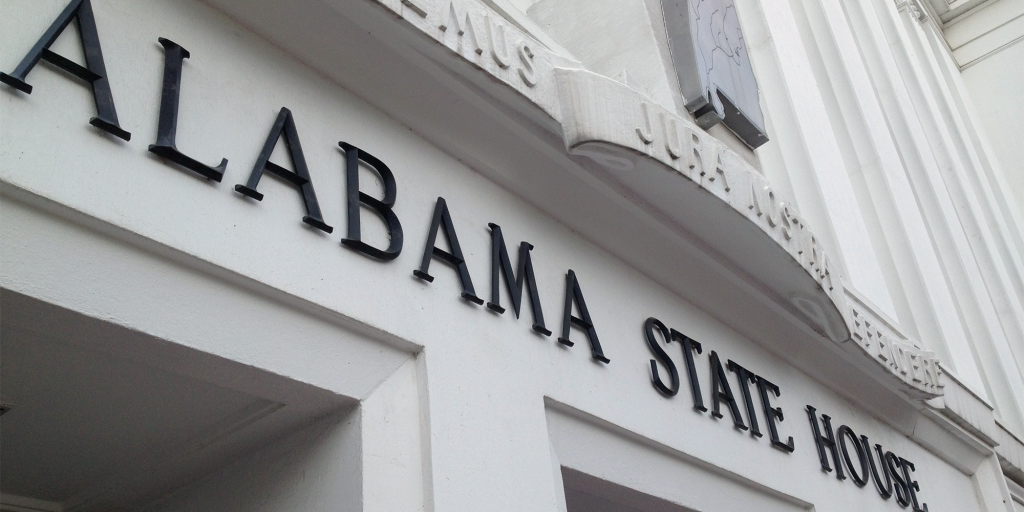
A new state board will oversee Alabama’s two-year college system. Alabama lawmakers on Tuesday gave final approval to legislation to remove the community college system from the oversight of the state Board of Education and give it to a new board appointed by the governor. Legislators voted to go along with a change proposed by Gov. Robert Bentley. A state senator requested the amendment stating that all board appointments had to be confirmed by the Alabama Senate. Legislators said a board made up of industry and business leaders would help focus the colleges’ mission of worker training and workforce development. State board of education members opposed the move and called it a power grab. Republished with permission of The Associated Press.
