
Apology overdue? McCain flap overshadows Trump’s GOP lunch

Last fall, when President Donald Trump headed to Capitol Hill for the Senate Republican lunch, he was feuding with the powerful chair of the foreign relations panel and tweeted that the man couldn’t get elected dog catcher. On Tuesday, he dropped in on the weekly GOP lunch entangled in a controversy over an aide’s comment disparaging ailing GOP Sen. John McCain. At least one attendee said the McCain flap never came up, but several of the GOP leaders have said it’s past time for an apology from the White House. “The smart thing to do would have been five days ago to just nip it in the bud and come out and apologize for it,” said Sen. John Thune of South Dakota, the No. 3 Senate Republican. Trump’s Capitol Hill lunch Tuesday with Senate Republicans comes as the White House and its GOP allies are trying to coalesce around a political message ahead of the midterm elections. Also on the agenda is the White House push to get Senate approval on Trump’s nominee for CIA director, as well as Trump’s upcoming summit with North Korea. But much like when Trump was headed to the GOP Senate lunch to talk policy in October 2017, the White House agenda was eclipsed by another story. During a closed-door meeting last week White House communications aide Kelly Sadler dismissed McCain’s opposition to the CIA nominee by saying of the Arizona Republican: “He’s dying anyway.” The 81-year-old McCain was diagnosed in July with glioblastoma, an aggressive form of brain cancer. Sadler has apologized to the McCain family privately, but McCain’s daughter has asked for a public apology. The White House, which has appeared more focused on the fact the leak took place than its substance, has said it has dealt with the matter internally — but has refused to say how. In a tweet Monday, Trump said “so-called leaks” were a “massive over exaggeration” but added: “With that being said, leakers are traitors and cowards, and we will find out who they are!” The issue has left many senators unsettled. Several of McCain’s long-time colleagues, including Senate Majority Leader Mitch McConnell, South Carolina’s Lindsey Graham and former Vice President Joe Biden, have traveled to Arizona to visit the ailing senator. The “person who said that should apologize and apologize publicly,” McConnell said Tuesday of Sadler. When Trump attended the October Senate GOP luncheon, he was locked into a public feud with Sen. Bob Corker of Tennessee. Earlier that month, Corker had accused the president of intentionally being divisive and untruthful, and comparing the White House to an “adult day care center.” The morning of the luncheon, Trump tweeted that Corker “couldn’t get elected dog catcher in Tennessee.” Bob Corker, who helped President O give us the bad Iran Deal & couldn’t get elected dog catcher in Tennessee, is now fighting Tax Cuts…. — Donald J. Trump (@realDonaldTrump) October 24, 2017 The major issue at the time was tax legislation, which Trump and Republicans needed to pass after failing to rally behind a comprehensive health care bill. The tax bill was ultimately successful, despite the Trump-Corker diversion. Corker has said he will not seek re-election this fall. The following month, Trump lunched with GOP senators at the Capitol and declared it a “love fest,” reserving his wrath for Democrats on a spending bill. On Tuesday, Corker said that none of the senators raised the McCain issue. “That’s not what we do in these meetings,” he said. “No one would have brought up something like that.” Republicans are increasingly relying on the president to help protect the GOP’s slim 51-49 majority in the Senate this fall. Republished with the permission of the Associated Press.
Mike Pompeo facing rare opposition from Senate panel
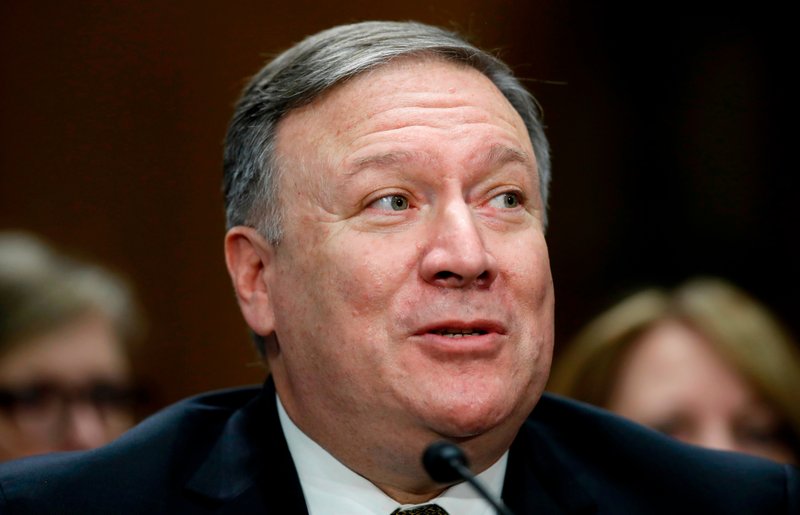
President Donald Trump’s nominee for secretary of state, Mike Pompeo, is facing serious opposition before the Senate Foreign Relations Committee, which may not have enough votes to recommend him for confirmation because all Democrats, and at least one Republican, have said they will oppose him. The full Senate is still expected to consider Pompeo’s nomination later this week. But the rare rebuke expected from the panel Monday, even after Pompeo’s recent visit with North Korean leader Kim Jong Un, would be the first time in years that a nominee for the high-level Cabinet position did not receive a favorable committee vote. Sen. Bob Corker, R-Tenn., the chairman of the committee, blamed partisan politics for opposition to Pompeo, now the CIA director, saying Pompeo is just as qualified as past secretaries of state nominees Hillary Clinton or John Kerry, both of whom received overwhelming support. “We are in an era where somebody like this, who is qualified, unfortunately, is likely to be voted out without recommendation or with a negative recommendation,” Corker said Sunday on “State of the Union” on CNN. “It’s just sad that our nation has devolved politically to this point.” Pompeo’s confirmation before the full Senate now hangs in balance, with the votes of just a handful of senators determining whether he becomes the nation’s top diplomat after Trump fired Rex Tillerson last month. Key Democrats, including some who had voted for Pompeo as CIA director last year, are peeling away, and Republican Sen. Rand Paul of Kentucky remains opposed, despite personal overtures from the president. Pressure is mounting on senators from both sides. White House allies are unloading ad campaigns against Democrats from Trump-won states, including North Dakota, Indiana and Missouri, to vote for the president’s nominee. But progressive groups are pounding senators’ offices in opposition to Pompeo’s hawkish foreign policy views and negative comments about gay marriage and Muslims. As soon as Sen. Heidi Heitkamp, D-N.D., announced her support last week, one group called on her to switch. “I don’t agree with every position he’s taken or every word he has spoken,” Sen. Susan Collins, R-Maine, said Sunday on “Meet the Press” on NBC. “But I believe he has an extensive knowledge of world affairs that has been enhanced by his time at the CIA.” Sen. Maggie Hassan, D-N.H., who met with the nominee last week, “has concerns about Mr. Pompeo’s nomination to serve as secretary of state,” said spokesperson Ricki Eshman. The senator “is reviewing his record before making a final decision.” In the committee, the opposition has been building ahead of Monday’s session. Sen. Chris Coons, D-Del., who was among the last Democrats on the panel to announce his no vote, said he’s is concerned that Pompeo “will embolden, rather than moderate or restrain” Trump’s “most belligerent and dangerous instincts.” “I do not make this decision lightly or without reservations,” Coons said in a statement Friday. “However, I remain concerned that Director Pompeo will not challenge the President in critical moments. On vital decisions facing our country, Director Pompeo seems less concerned with rule of law and partnership with our allies and more inclined to emphasize unilateral action and the use of force.” Rather than allow an unfavorable vote on the panel, where Republicans have a one-seat majority, senators could choose not to issue a recommendation if Pompeo cannot find enough backing. The committee action won’t necessarily stall Pompeo’s confirmation before the full Senate, but it would be an unusual setback not seen since the panel took a pass on John Bolton, President George W. Bush’s pick for ambassador to the United Nations. Sen. Tom Cotton, R-Ark., who has been among Pompeo’s most vocal champions in the Senate, lambasted his colleagues ahead of voting. “Democrats, especially on the Foreign Relations Committee, are really engaged in shameful political behavior,” Cotton said Sunday on CBS’ “Face the Nation.” But several Democratic senators who supported Pompeo for CIA director say Pompeo’s views are not reflective of those they want in the top diplomat. Republished with the permission of the Associated Press.
Senate panel divided over Mike Pompeo for secretary of state
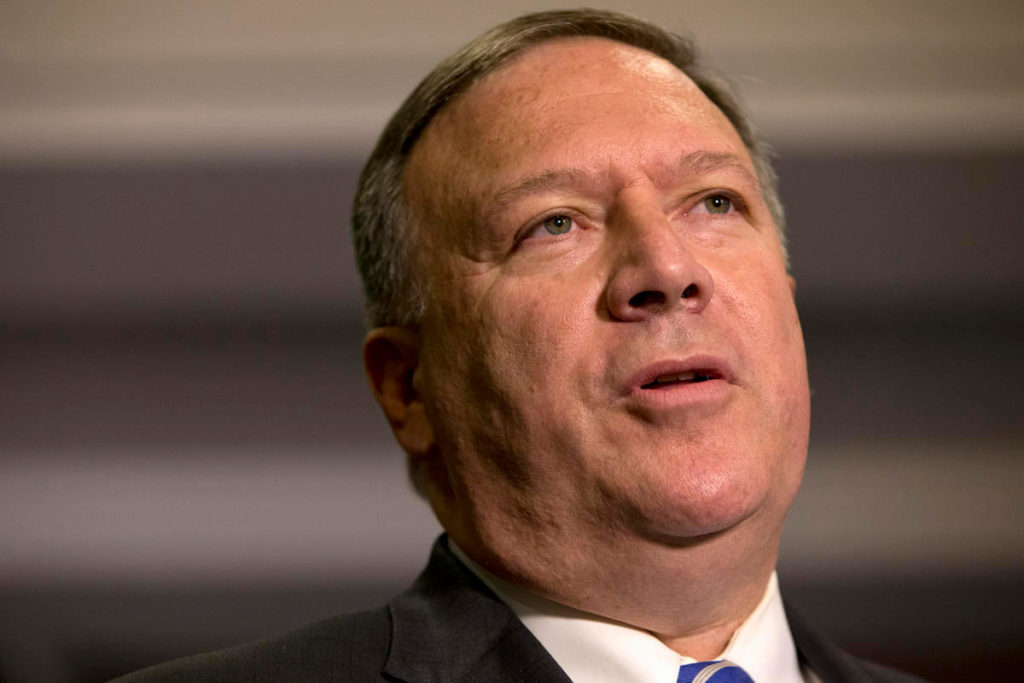
President Donald Trump’s pick for secretary of state, CIA Director Mike Pompeo, is facing so much opposition from Democrats on the Senate Foreign Relations Committee that the panel could be forced to take the unusual step of sending the nomination to the full Senate without a favorable recommendation. Democratic Sen. Jeanne Shaheen of New Hampshire on Tuesday became the latest member of the committee to announce her opposition, and Sen. Tim Kaine, D-Va., recently said he would vote no. Both supported Pompeo as CIA director last year. Pompeo is still expected to have enough votes in the full Senate to replace Rex Tillerson, who was fired by Trump. But as support peels away, his confirmation may come down to a handful of senators. The backlash ahead of the panel’s vote is a rare rebuke for such a high-profile Cabinet pick, and sets Pompeo on a potentially uneven path for the new job. “I continue to have deep concerns regarding Mr. Pompeo’s past statements and policy views, particularly in regards to the LGBTQ community, American Muslims and women’s reproductive rights,” Shaheen said in a statement, after calling the former Kansas congressman Tuesday to tell him she would be opposed. Shaheen said Pompeo’s previous roles “are fundamentally different from that of Secretary of State, who represents American values around the world.” A sign of the important role Pompeo plays in the Trump administration: The CIA director traveled to North Korea for a secret meeting with leader Kim Jong Un, two U.S. official say. The meeting came as U.S. and North Korean officials plan a summit between Trump and Kim. The officials spoke anonymously because they were not authorized to discuss the trip publicly. Rarely has the Senate panel failed to back a nominee, and some said not since President George W. Bush nominated John Bolton as U.S. ambassador to the United Nations has the committee declined to recommend a White House pick. Republicans have a narrow Senate majority, which gives them a single-vote advantage on the panel. But with stiff opposition from Democrats — and at least one Republican, Sen. Rand Paul of Kentucky, opposed — the committee may have few other options when it convenes as soon as next week. “We’ll see,” said the committee’s chairman, Sen. Bob Corker, R-Tenn. Under Senate rules, if the nominee does not have support in the committee, the panel could report to the full Senate unfavorably, which would send a strong rebuke to the White House, or simply report without a recommendation. It also could take no action. One top committee Democrat, Sen. Ben Cardin of Maryland, said he was still reviewing his decision. Senators submitted more than 100 questions for the nominee after his initial hearing, and many are waiting for those responses. Trump initially tapped Pompeo as CIA director, one of his first Cabinet nominees in 2017, and they became close allies. But some Democrats have faced resistance for their votes, and Pompeo is having a tougher path as the nominee for secretary of state over his hawkish foreign policy views and comments about minorities, having suggested that Muslims should denounce extremism and gay people should not be able to marry. During his confirmation hearing last week, Pompeo told senators it’s unlikely he’d resign if Trump fired special counsel Robert Mueller, who is leading the investigation into Russian interference in the 2016 election. Of the more than a dozen Democrats who supported Pompeo’s nomination as CIA director in 2017, at least four, including Sen. Dianne Feinstein of California and Sen. Brian Schatz of Hawaii, now oppose his nomination for State. “The Secretary of State is a very different role than CIA director, and it’s not the kind of position you learn on the job,” Feinstein said in a statement Tuesday. “I sense a certain disdain for diplomacy in Mike Pompeo that I believe disqualifies him from being our next senior diplomat.” Senate Minority Leader Chuck Schumer, D-N.Y., who also backed Pompeo earlier, declined to say Tuesday how he would vote. Republished with the permission of the Associated Press.
Congress passes $1.3 trillion budget, averting another shutdown
Congress gave final approval Friday to a giant $1.3 trillion spending bill that ends the budget battles for now, but only after late obstacles skirted close to another shutdown as conservatives objected to big outlays on Democratic priorities at a time when Republicans control the House, Senate and White House. Senate passage shortly after midnight averted a third federal shutdown this year, an outcome both parties wanted to avoid. But in crafting a sweeping deal that busts budget caps, they’ve stirred conservative opposition and set the contours for the next funding fight ahead of the midterm elections. The House easily approved the measure Thursday, 256-167, a bipartisan tally that underscored the popularity of the compromise, which funds the government through September. It beefs up military and domestic programs, delivering federal funds to every corner of the country. But action stalled in the Senate, as conservatives ran the clock in protest. Then, an unusual glitch arose when Sen. James Risch, R-Idaho, wanted to remove a provision to rename a forest in his home state after the late Cecil Andrus, a four-term Democratic governor. At one point, Sen. Bob Corker, R-Tenn., stepped forward to declare the entire late-night scene “ridiculous. It’s juvenile.” Once the opponents relented, the Senate began voting, clearing the package by a 65-32 vote a full day before Friday’s midnight deadline to fund the government. “Shame, shame. A pox on both Houses – and parties,” tweeted Sen. Rand Paul, R-Ky., who spent the afternoon tweeting details found in the 2,200-page bill that was released the night before. “No one has read it. Congress is broken.” Paul said later he knew he could only delay, but not stop, the outcome and had made his point. The omnibus spending bill was supposed to be an antidote to the stopgap measures Congress has been forced to pass — five in this fiscal year alone — to keep government temporarily running amid partisan fiscal disputes. Leaders delivered on President Donald Trump’s top priorities of boosting Pentagon coffers and starting work his promised border wall, while compromising with Democrats on funds for road building, child care development, fighting the opioid crisis and more. But the result has been unimaginable to many Republicans after campaigning on spending restraints and balanced budgets. Along with the recent GOP tax cuts law, the bill that stood a foot tall at some lawmakers’ desks ushers in the return of $1 trillion deficits. Trump only reluctantly backed the bill he would have to sign, according to Republican lawmakers and aides, who acknowledged the deal involved necessary trade-offs for the Democratic votes that were needed for passage despite their majority lock on Congress. “Obviously he doesn’t like this process — it’s dangerous to put it up to the 11th hour like this,” said Sen. David Perdue, R-Ga., who opposes the bill and speaks regularly to Trump. “The president, and our leadership, and the leadership in the House got together and said, Look, we don’t like what the Democrats are doing, we got to fund the government.” White House legislative director Marc Short framed it as a compromise. “I can’t sit here and tell you and your viewers that we love everything in the bill,” he said on Fox. “But we think that we got many of our priorities funded.” Trying to smooth over differences, Republican leaders focused on military increases that were once core to the party’s brand as guardians of national security. “Vote yes for our military. Vote yes for the safety and the security of this country,” said House Speaker Paul Ryan, R-Wis., ahead of voting. But even that remained a hard sell. In all, 90 House Republicans, including many from the conservative House Freedom Caucus, voted against the bill, as did two dozen Republicans in the Senate. It was a sign of the entrenched GOP divisions that have made leadership’s job controlling the majority difficult. They will likely repeat on the next budget battle in fall. Democrats faced their own divisions, particularly after failing to resolve the stalemate over shielding young Dreamer immigrants from deportation as Trump’s decision to end the Deferred Action for Childhood Arrivals program has left it for the courts to decide. Instead, Trump won $1.6 billion to begin building and replacing segments of the wall along the border with Mexico. The Congressional Hispanic Caucus opposed the bill. Also missing from the package was a renewal of federal insurance subsidies to curb premium costs on the Affordable Care Act exchanges. Trump ended some of those payments as part of his effort to scuttle President Barack Obama’s health care law, but Republicans have joined Democrats in trying to revive them. Bipartisan efforts to restore the subsidies, and provide additional help for insurance carriers, foundered over disagreements on how tight abortion restrictions should be on using the money for private insurance plans. Senate Republicans made a last-ditch effort to tuck the insurance provisions into the bill, but Democrats refused to yield on abortion restrictions. Still, Democrats were beyond pleased with the outcome. Minority Leader Nancy Pelosi, D-Calif., chronicled the party’s many gains, and noted they could have just have easily withheld votes Republicans needed to avert another shutdown. “We chose to use our leverage to help this bill pass,” Pelosi said. Senate Minority Leader Chuck Schumer, D-N.Y., said as the minority party in Congress, “We feel good.” He added, “We produced a darn good bill.” Republished with the permission of the Associated Press.
Testy tweeting free-for-all between Donald Trump, Tenn. GOP Sen. Bob Corker
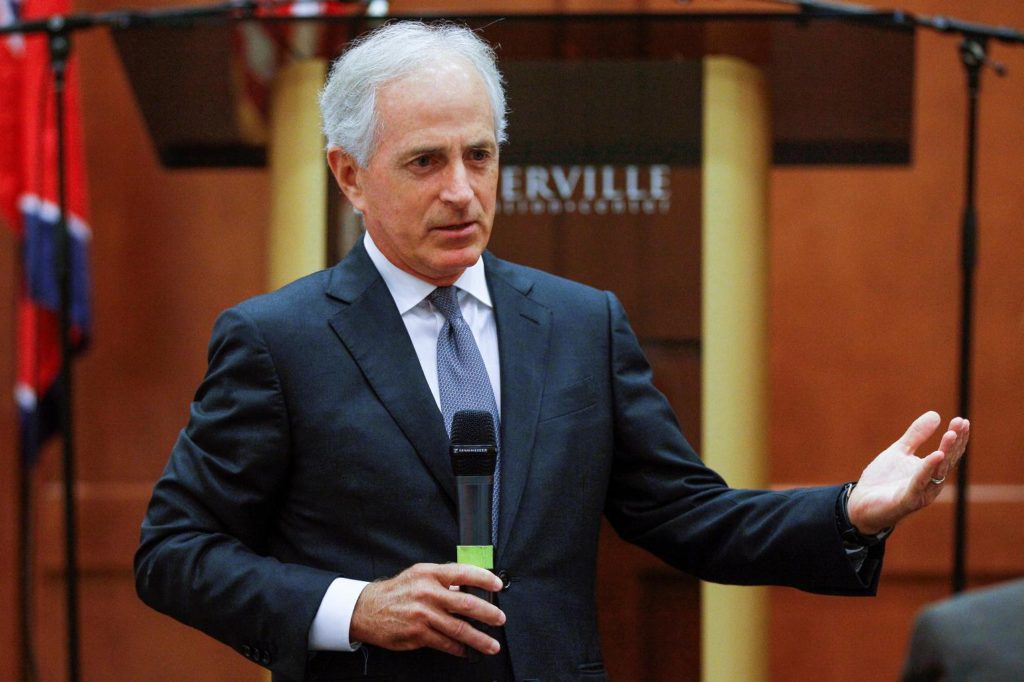
An enraged President Donald Trump and a prominent Republican senator who fears the country could be edging toward “chaos” engaged in an intense and vitriolic back-and-forth bashing on social media Sunday, a remarkable airing of their party’s profound rifts. In political discourse that might once have seemed inconceivable, the GOP’s foreign policy expert in the Senate felt compelled to answer his president’s barbs by tweeting: “It’s a shame the White House has become an adult day care center. Someone obviously missed their shift this morning.” In an interview Sunday with The New York Times, Corker said Trump could set the U.S. “on the path to World War III” with threats toward other countries. Corker also said Trump acted as if he was on his old reality-TV show and that he concerned the senator, adding: “He would have to concern anyone who cares about our nation.” Corker also said his concerns about Trump were shared by nearly every Senate Republican, the paper reported. In a series of stinging tweets earlier in the day, Trump contended Corker: -Was “largely responsible for the horrendous” Iran nuclear deal, which the Democratic Obama administration negotiated and Corker considered badly flawed. The senator also tried to require that President Barack Obama submit the accord to Congress for approval. -Intended to obstruct the White House agenda, though he offered no evidence for saying he expected Corker “to be a negative voice.” -“Begged” for Trump’s endorsement in his 2018 re-election, then opted against seeking a third term when Trump declined, showing the senator “didn’t have the guts to run.” The Associated Press reported that Trump, in a private meeting in September, had urged Corker to run. Corker’s chief of staff, Todd Womack, said Sunday that Trump called Corker last Monday to ask that he reconsider his decision to leave the Senate. Trump “reaffirmed that he would have endorsed him, as he has said many times,” the aide said. -Wanted to be secretary of state, and “I said ‘NO THANKS,’” said Trump, who picked Exxon Mobil’s Rex Tillerson for that Cabinet post. Corker, the Senate Foreign Relations Committee chairman, was mentioned as a possible pick after the election. Trump added another tweet Sunday evening: “Bob Corker gave us the Iran Deal, & that’s about it. We need HealthCare, we need Tax Cuts/Reform, we need people that can get the job done!” Corker always had been one to speak his mind, and even before Sunday’s verbal volleys, his new free agent status promised to make Trump and the party nervous. Already, there was the prospect of even more elbow room to say what he wants and to vote how he pleases over the next 15 months as Trump and the party’s leaders on Capitol Hill struggle to get their agenda on track. Not long before Trump’s tweeting, White House budget director Mick Mulvaney said on NBC’s “Meet the Press” that “it’s going to be fun to work” with Corker, “especially now that he’s not running for re-election, because I think it sort of unleashes him to do whatever – and say whatever – he wants to say.” In his interview with the Times, Corker said: “Look, except for a few people, the vast majority of our caucus understands what we’re dealing with here,” adding that “of course they understand the volatility that we’re dealing with and the tremendous amount of work that it takes by people around him to keep him in the middle of the road.” Corker delivered a rebuke of the Trump White House after the president’s tweets scoffing at Tillerson’s diplomatic efforts to resolve the crisis with North Korea. Corker said Tillerson, along with Defense Secretary Jim Mattis and White House chief of staff John Kelly, are “those people that help separate our country from chaos.” And Corker will be at the center of what may be a stormy debate over the future of the Iran agreement. Trump’s hostility toward the deal has stoked concerns he’s aiming to dismantle the international accord despite Europe’s objections. Corker is opposed to scrapping the agreement outright. “You can only tear these things up one time,” Corker said. “It might feel good for a second. But one of the things that’s important for us is to keep our allies with us, especially our Western allies.” Corker is the latest Republican to face Trump’s wrath. The president in recent months has lit into Senate Majority Leader Mitch McConnell, R-Ky., over the failure of the GOP to repeal and replace Obama’s health care law, and specifically targeted Sens. John McCain, R-Ariz., and Lisa Murkowski, R-Alaska, for their opposition to GOP health legislation. Corker, 65, announced last month that his second, six-year term would be his last. Corker in August delivered a blistering assessment of Trump in the wake of the president’s contentious remarks about the violence in Charlottesville, Virginia. Corker said Trump hasn’t “demonstrated that he understands the character of this nation.” Trump fired back, tweeting that Corker’s comments were strange “considering that he is constantly asking me whether or not he should run again in ’18. Republished with permission from the Associated Press.
Bob Corker’s attacks on Donald Trump highlight broader concerns in GOP
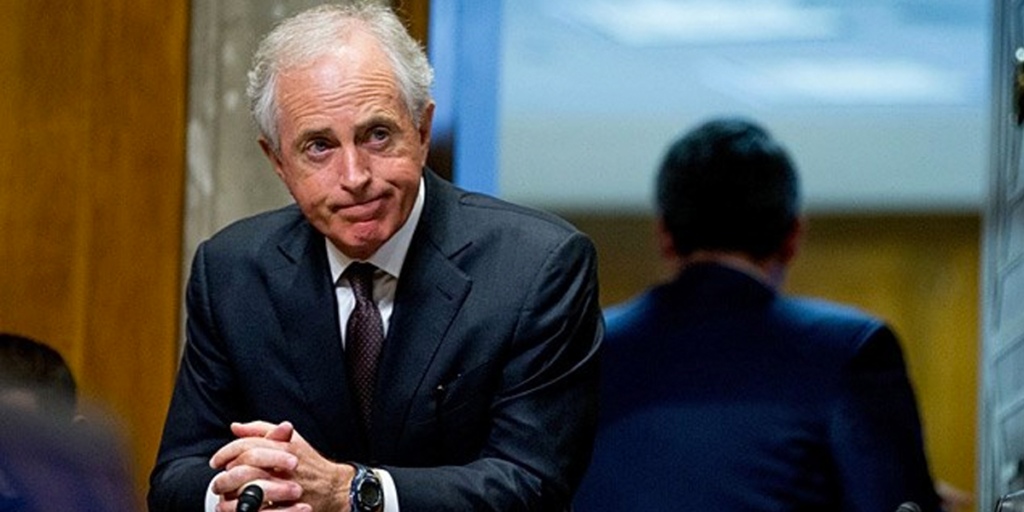
Sen. Bob Corker is hardly the only Republican lawmaker raising dark concerns about harm President Donald Trump might cause the U.S. and the world. But he’s one of the few willing to air those worries in public. Most GOP senators were silent Monday, a day after Corker charged that the White House was an “adult day care” and Trump could set the nation “on the path to World War III.” The only senator who publicly hinted at similar concerns was Iowa Sen. Chuck Grassley, who said both Trump and Corker should “cool it.” “And I think it would help if the president would be the first to cool it,” he added. Tennessee’s Corker, with his Twitter broadsides and an explosive weekend New York Times interview, gave voice to concerns that circulate widely on Capitol Hill about an unpredictable president whose tendency to personalize every issue creates risks for the GOP agenda. But Trump’s enduring popularity with a segment of the GOP base serves as a political muzzle that keeps most elected Republicans from saying anything similar, even those who believe it to be true. Grassley, who won’t be up for re-election until 2022, responded bluntly when asked about the situation. “I don’t see how it’s productive, and I think that two words would kind of answer your question from my point of view: Cool it,” he said. “I think it would be better if we stuck to the issues and leave personalities out of it.” A few other Republican senators who provided public views Monday avoided aligning themselves with Corker. “You’ll have to ask Sen. Corker what led him to make that statement. I haven’t made that statement,” Sen. Marco Rubio of Florida said of Corker’s suggestion that Trump could take the country into another world war. Sen. Jeff Flake has been outspoken in his criticism of Trump, who’s attacked him in return. But the Arizona Republican was restrained during a joint interview with Rubio after a re-election fundraiser in Scottsdale. “Any of us who’ve worked with Sen. Corker know that he speaks his mind,” Flake said, demurring on whether he shares Corker’s view that the White House has become an “adult day care center.” “I agree with him on some things, I’ve supported a lot of his agenda, some things I’ve disagreed with and continue to do so,” Flake said of Trump. The Associated Press sought to contact all 52 Republican senators Monday for their response to Corker’s comments and ask whether they believe Trump is fit for office, a question Corker declined to answer in the Times interview. With the Senate on recess this week and many offices closed for Columbus Day, the inquiries elicited few responses, and those who did largely declined comment. Corker offered no solution to the problem he identified so graphically. Trump is the president, and few doubt that he will remain so, despite constitutional provisions for impeachment or for the vice president to take over if the commander in chief cannot discharge his duties. Moreover, Republicans’ political fortunes remain tied to the president’s. They need his signature if they are to rescue a flagging agenda and pass a tax overhaul, a goal many believe is imperative if the GOP is to retain control of Congress in next year’s midterm elections. So unlike Corker, who recently announced he is not running for re-election in Tennessee, even GOP Trump critics will continue to mute their concerns about his behavior and try to work with the administration. “Sen. Corker, who’s been a strong supporter of the president in the past, is essentially saying the emperor has no clothes,” said Michael Steel, who served as spokesman to former House Speaker John Boehner of Ohio. But, Steel added: “The president was elected under our constitutional system and that’s where we stand. Congressional leaders are going to continue concentrating on doing everything they can to get big things done for the American people, and they hope to have as much support from the administration as possible.” Senate Majority Leader Mitch McConnell of Kentucky, the target of Trump attacks after the Senate’s failure to pass health care legislation, didn’t directly answer when asked at an event in Hazard, Kentucky, whether he shared Corker’s sentiments. “Sen. Corker is a valuable member of the Senate Republican caucus and he’s also on the Budget Committee and a particularly important player as we move to the floor on the budget next week,” McConnell said. His comments underscored what has frustrated Republicans most about the Trump-Corker feud, which burst open Sunday when Trump began tweeting, inaccurately, that Corker had begged for his endorsement and decided not to run for re-election when Trump turned him down. Trump will need Corker if he is to get big tax changes through the Senate, where the narrow GOP majority was unable to pass McConnell’s efforts to repeal the Affordable Care Act. And Corker also figures to be a key player if Trump moves as expected to unwind the Iran nuclear deal. Vice President Mike Pence, in a statement that never mentioned Corker, praised the president for “achieving real results on the international stage. While critics engage in empty rhetoric and baseless attacks.” Republicans do frequently complain about Trump’s attacks on fellow Republicans like McConnell, his failure to stay focused on his legislative agenda and his tendency to make demands on Congress and then blame lawmakers for poor results. But those GOP comments are nothing like Corker’s apocalyptic statements. For House Republicans, who face voters every two years and largely represent conservative districts where support for the president remains strong, there’s even less incentive to turn against the commander in chief. Sixty-eight percent of Republican voters approve of Trump, though that’s down from 80 percent in March, according to a recent AP-NORC poll. Rep. Mark Meadows of North Carolina, chairman of the conservative House Freedom Caucus, criticized Corker, saying he finds “those type of comments to not be appropriate especially coming from the chairman of the Foreign Relations Committee,
GOP Sen. Bob Corker says Donald Trump hasn’t shown stability, competence
A prominent Republican senator delivered a stinging rebuke Thursday of Donald Trump‘s short time in office, declaring he has not shown the stability or competence required for an American president to succeed. Sen. Bob Corker of Tennessee, chairman of the Foreign Relations Committee, also said Trump “recently has not demonstrated that he understands the character of this nation.” During comments to local reporters after a speech to the Chattanooga Rotary Club, Corker called for “radical changes” in how the Trump White House operates. His remarks, which were posted on Facebook, came two days after Trump declared at a New York press conference that white supremacists don’t bear all the blame for the violence last weekend in Charlottesville, Virginia. The president’s remarks have triggered a firestorm of protest, with a number of Republicans criticizing Trump for giving weight to the complaints of white nationalists by refusing to definitively condemn them. Corker has sought to be a strong supporter of Trump’s, particularly on foreign policy matters. But Trump’s impulsive and often bombastic style has complicated the relationship for Corker and other congressional Republicans. A few months ago, following reports that Trump had disclosed highly classified information to a pair of Russian diplomats in the Oval Office, Corker said the White House was “in a downward spiral.” But Corker in recent weeks had largely declined to answer questions about Trump’s tweets or other political drama, telling reporters covering Congress that he was focused instead on matters of policy. He elected to weigh in Thursday, however. Noting that the country is polarized, Corker said, “Helping inspire divisions because it generates support from your political base is not a formula for causing our nation to advance, our nation to overcome the many issues that we have to deal with right now.” Corker said, “The world needs for our president to be successful,” and said he’s hopeful Trump will do what’s necessary to bring out the best in people, regardless of their political affiliations. Trump, he said, needs “to take stock of the role that he plays in our nation and move beyond himself, move way beyond himself, and move to a place where daily he’s waking up thinking about what is best for our nation.” Corker also defended his Republican colleague, Sen. Jeff Flake of Arizona. On Twitter Thursday, Trump called Flake “toxic” while praising his primary election opponent. Flake is “one of the finest best human beings I’ve ever met,” Corker said. He said the White House would be well served to embrace Flake because of his substance and character. Flake has a “conscience and is a real conservative,” Corker said. Republished with permission of The Associated Press.
GOP ponders whether Donald Trump helps sell health care
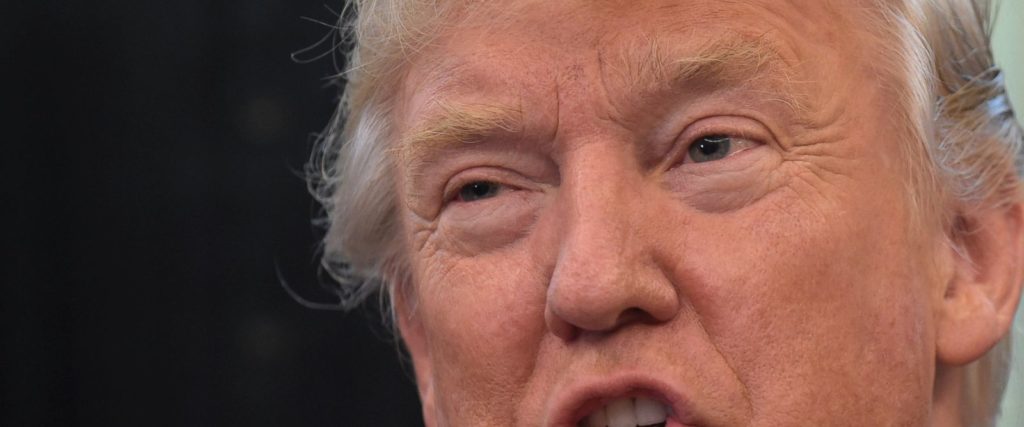
It was a platform most politicians can only hope for: A captivated, 6,000-person crowd and more than an hour of live, prime-time television coverage to hype the Republican vision for a new health care system. But when President Donald Trump got around to talking about the Republican plan — about 15 minutes into his speech — he was wildly off message. Instead of preaching party lines about getting the government out of Americans’ health decisions and cutting costs, he declared: “Add some money to it!” The moment captured a major dilemma for Republicans as they look for ways to jumpstart their stalled health care overhaul. A master salesman, Trump has an inimitable ability to command attention, and that could be used to bolster Americans’ support for Republican efforts and ramp up pressure on wavering lawmakers. But some lawmakers and congressional aides privately bemoan his thin grasp of the bill’s principles, and worry that his difficulty staying on message will do more harm than good. “You know, he’s very personable and people like talking to him and he’s very embracing of that, so there will be certain people he’d like to talk to,” said Sen. Bob Corker, R-Tenn. “But I’d let Mitch handle it,” he continued, referring to the lead role Senate Majority Leader Mitch McConnell has played thus far. McConnell delayed a vote on the health legislation this week after it became clear he couldn’t muster enough Republican support to offset the unanimous opposition from Democrats. GOP leaders are now hoping to pass a bill in the Senate and reconcile it with an earlier version approved by the House before lawmakers head home for their August recess. Trump has largely ceded the details to McConnell, deferring to the Kentucky lawmaker’s legislative expertise. He has spent some time talking privately to wavering senators, including Ted Cruz of Texas and Mike Lee of Utah, testing his powers of persuasion. But he’s invested no significant effort in selling the American people on the impact the Republican bill would have on their health care coverage, beyond making sweeping declarations about how wonderful he expects it to be. “We’re looking at a health care that will be a fantastic tribute to your country,” Trump said during a White House event Wednesday. “A health care that will take care of people finally for the right reasons and also at the right cost.” His approach is a contrast to former President Barack Obama, who delivered an address to Congress on health care and held town halls around the country about the Democrats’ legislation in 2009. The Obamacare measure barely cleared Congress and became a rallying cry for Republicans, something Obama blamed in part on a failure by his party to communicate its virtues clearly to the public. At times, even Trump’s largely generic health care commentary has left Republicans fuming. Some lawmakers were particularly irked by Trump’s assertion that the House bill — which he robustly supported and even celebrated with a Rose Garden ceremony — was “mean.” One Republican congressional aide said that comment left some lawmakers worried that the president — who had no real ties to the GOP before running for the White House — could turn on them if a bill passes but the follow-up becomes politically damaging. The official insisted on anonymity in order to describe private discussions. Newt Gingrich, the former GOP House speaker and a close Trump ally, said Republicans have struggled to communicate about the complexities of health care policy because “nobody has served as a translator.” He said Trump is well-positioned to take the lead, but acknowledged that the real estate mogul-turned-politician would need some help from policy experts in formulating a sales pitch. “Trump will be able to repeat it with enormous effectiveness once somebody translates it,” Gingrich said. The White House disputes that Trump isn’t steeped in the details of the Obamacare repeal efforts. Economic adviser Gary Cohn and other officials on the National Economic Council have convened several meetings with him to explain differences between the House and Senate bills. One senior White House official described the president as “fully engaged” in the process. During a private meeting Tuesday with Kentucky Sen. Rand Paul, who is strongly opposed to the current Senate bill, Trump said his priority was to increase the number of insurance choices available to consumers and lower monthly premiums, according to an administration official with direct knowledge of the discussion. The official said the president also specifically highlighted the non-partisan Congressional Budget Office’s projection that average premiums would be 30 percent lower in 2020 if the Senate bill took effect. To some Trump allies, more public engagement on a substantive policy debate like the future of the nation’s health care system would also be a welcome reprieve for a president whose approval ratings have tumbled amid the snowballing investigations into possible collusion between his campaign and Russia. “I think his numbers would go up if he had a couple of addresses,” said Sam Nunberg, a former Trump campaign adviser. “If he communicates directly with the American people, he cuts through the noise.” Republished with permission of The Associated Press.
No trial balloons: Donald Trump flips script with startling ideas
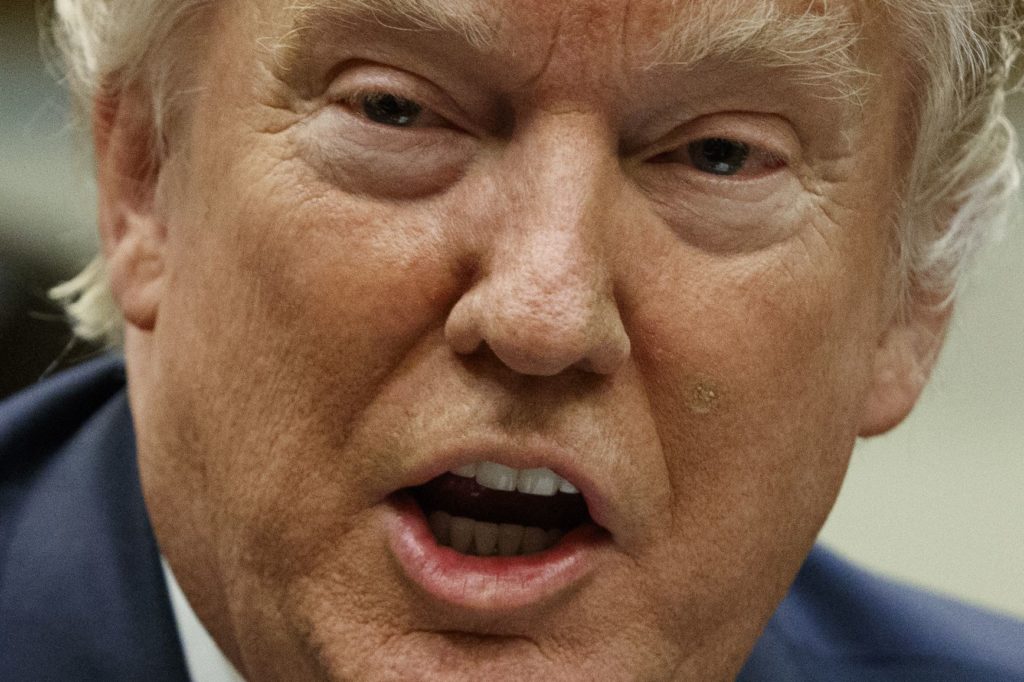
Washington policymakers have a time-tested method for rolling out new ideas: float a trial balloon. Spread rumors of a policy change or selectively leak it to the press, then see how it plays and proceed only if it looks doable. President Donald Trump has flipped that script. Big and startling ideas fly out of his mouth or from his Twitter feed. Then the rest of his administration scrambles to catch up — and to figure out when his statements signal new presidential policies and when they’re offhand remarks that mean little. In the past week alone, Trump has suggested he’s open to higher gas taxes, tweeted that a government shutdown could be a good thing and called North Korean dictator Kim Jong Un a “smart cookie” whom he’d be honored to meet under the right conditions. Trump also invited Philippine leader Rodrigo Duterte, with a troubling human rights record, to visit the White House and insisted the GOP health plan would provide coverage for people with pre-existing medical conditions, even though an ironclad guarantee is not reflected in the latest version of the legislation. Such pronouncements sometimes force Trump’s top policy advisers to try to adjust administration policy to sync with the president’s remarks. His communications aides contort themselves to explain away inconsistencies in administration messages. And blindsided GOP congressional leaders have to decide when to realign their positions and when to stay the course. “It’s a scramble drill in the White House every day, and certainly a scramble drill in Trump’s mind every day,” says Calvin Jillson, a presidential scholar at Southern Methodist University. The frustration of Republican legislators was clear when Trump tweeted Tuesday that the government “needs a good shutdown” in September to fix the “mess,” after Democrats prevailed on a number of spending issues in a bipartisan budget bill designed to keep the government open. “I do wish somebody would take his iPhone away from him,” said Sen. Bob Corker, R-Tenn. “I wish he’d think twice before tweeting,” seconded Sen. John McCain, R-Ariz. House Speaker Paul Ryan wondered aloud: “How many times have I had this, ‘Do you agree with the tweet this morning?’” Ryan said he shared the president’s aggravation with Democrats over the spending negotiations. But he also defended the budget deal, telling reporters it was an “important first step in the right direction.” On North Korea, Trump seemed to recognize the startling nature of his conciliatory comments about Kim in which he told CBS on Sunday that he would be “honored” to meet the leader if circumstances were right. The president labeled his own comments “breaking news.” White House Press Secretary Sean Spicer quickly stressed that Trump wouldn’t meet with the North Korean leader unless he changed course and showed “signs of good faith.” Asked how Trump could be honored to meet with someone who’s threatened to destroy the U.S., Spicer said that because Kim was a head of state, “there’s a diplomatic piece to this.” Likewise, it fell to Spicer to tamp down expectations after Trump told Bloomberg in an interview that he would “certainly consider” generating more money for his big infrastructure plan by raising gasoline and diesel fuel taxes. The idea of raising taxes is a no-go zone for most Republican legislators. Spicer said Trump was merely showing “respect” for an idea that had been raised by industry groups and “there was no endorsement of it or no support of it.” Trump’s interviews sometimes make news to his own team. When Trump promised an AP interviewer last month that he’d roll out his tax plan the following week, officials at the White House and Treasury Department, as well as Republicans on Capitol Hill, were caught off guard. The announcement sent aides scrambling to put together a one-sheet outline of a tax plan by the president’s surprise deadline. Trump’s Twitter feed is an ongoing source of surprise, perhaps most notably his March accusation that President Barack Obama had him wiretapped during the presidential campaign. That triggered an all-out effort by aides to find ways to justify the claim. Jillson allowed that sometimes Trump may appear to be winging it when his statements are planned, such as the president’s phone conversation during the transition with the president of Taiwan. The call generated speculation that Trump had unthinkingly broken longstanding U.S. policy but appears to have been part of a calculated effort to throw China off-balance, Jillson said. Trump’s White House invitation to Duterte, whose record includes extrajudicial killings of suspected drug dealers and users, caught key players at the State Department unaware and left White House officials trying to explain why it would be a good idea. White House chief of staff Reince Priebus framed the president’s invitation as part of an effort to counter the military threat of North Korea, adding that “it doesn’t mean that human rights don’t matter.” Jillson said that while administration officials may feel compelled to align the policies they’re developing with Trump’s latest statements, GOP members of Congress are becoming more discriminating about when they need to sync up with the president’s pronouncements and when they can disregard them. On the bipartisan budget deal, he said, congressional Republicans and Democrats “forgot about Trump for enough time to craft a deal, almost without reference to him, and got a win.” “They’re learning to let this stuff wash off their backs and continue to try to think systematically,” Jillson said. Republished with permission of The Associated Press.
Analysis: For Donald Trump, the weight of world’s problems sink in
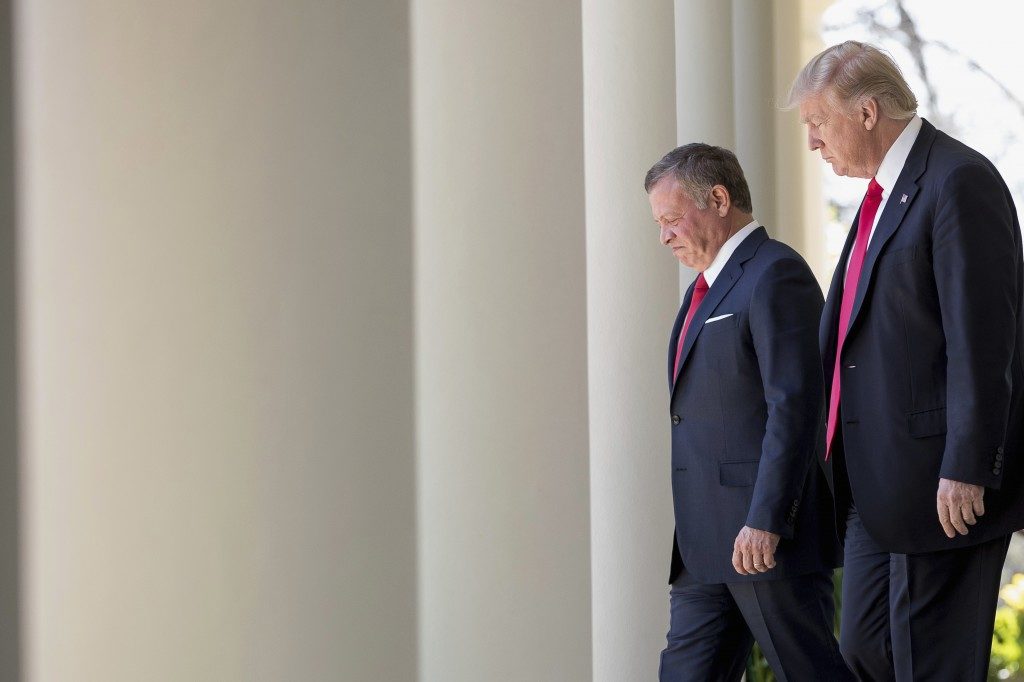
For Donald Trump, the reality of the world’s problems may be starting to sink in. Standing in the sunny White House Rose Garden, the president said Wednesday that the gruesome chemical weapons attack in Syria had changed his views on the quagmire of a conflict that he’d previously indicated he wanted to steer clear of. He mourned the deaths of the youngest victims — “innocent children, innocent babies” — and said brutality had “crossed a lot of lines for me.” “It is now my responsibility,” he declared. The president’s words were far from a declaration that he intends to act, and he notably avoided discussing what retaliatory options he would be willing to consider. Ultimately, his rhetoric may well land among the litany of harsh condemnations of Syrian President Bashar Assad by Barack Obama and other world leaders that did little to quell the six-year civil war. Yet Trump’s willingness to accept that he now bears some responsibility for a far-away conflict marked a significant moment for an “America First” president who has vowed to focus narrowly on U.S. interests. His comments also suggested a growing awareness that an American president — even an unconventional one like him — is looked to as defender of human rights and a barometer of when nations have violated international norms. The bloodshed in Syria is just one of the intractable international problems piling up around Trump. North Korea appears intent on building up its nuclear program, despite vague threats from his administration. The Islamic State group is still wreaking havoc in Iraq and Syria, while a Pentagon review of U.S. strategy sits on his desk. Trump conceded Wednesday that of all the world’s problems, the Middle East is one area he would rather avoid. His decision to at least rhetorically take a measure of responsibility was all the more striking given his frequent shoveling of blame for problems big and small onto anyone but himself. In public, he faults Obama for leaving him “a mess” and says his campaign opponent Hillary Clinton is behind the flood of revelations possibly linking his campaign to Russia. In private, he berates his staff for failing to fix the self-made crises that have battered the White House, including his pair of travel bans blocked by the courts and the failure to pass health care legislation. Trump initially took the same blame-shifting approach in addressing the deadly attack in Syria. In a short written statement Tuesday, he said the carnage was “a consequence of the past administration’s weakness and irresolution.” In 2013, Obama pulled back from planned airstrikes against Syria following a chemical weapons attack, despite having declared that the deployment of deadly gases would cross a “red line” for him. Obama’s decision was widely criticized in the U.S. and by Middle Eastern allies, and undermined later attempts to compel Assad to leave office. “The regrettable failure to take military action in 2013 to prevent Assad’s use of chemical weapons remains a blight on the Western world,” said Sen. Bob Corker, R-Tenn., the chairman of the Senate Foreign Relations Committee. Still, foreign policy officials within the Trump administration were irritated by the president’s eagerness to focus on his predecessor in his first reaction. Some wanted him to focus more on condemning Assad and highlighting U.S. resolve. Their objections did little to sway the president at the time. But just a day later, Trump appeared more willing to embrace the gravity of the situation and his new role in it. His posture may well have been impacted by the fact that his remarks in the Rose Garden came after meeting with Jordan’s King Abdullah, whose country has borne the brunt of the refugee crisis spurred by the Syrian war. Jordan is among Washington’s most important partners in the region and is significantly dependent on the United States. Abdullah, who worked closely with Obama, enthusiastically embraced Trump’s condemnation of the chemical weapons attack. During a joint news conference, he said to Trump, “I believe under your leadership we will be able to unravel this very complicated situation.” Eliot Cohen, a Trump critic who served in the State Department under President George W. Bush, said that whether Trump intended to or not, he now has put himself in the same position as Obama, raising the stakes for action in Syria, perhaps without having thought out whether he plans to follow through. “The deep irony here is you may see a lot of the same failures that the Obama administration had except delivered with a different style,” Cohen said. Republished with permission of The Associated Press.
Donald Trump steps into security bubble; will he bring his phone?
A few hours after President-elect Donald Trump was briefed by intelligence officials about Russian meddling in the election, an Associated Press reporter called his cellphone seeking an interview. The call went to voicemail and the reporter did not leave a message. About an hour later, Trump called back. It’s hard to imagine many politicians — particularly one about to become president of the United States — calling back an unknown number on their cellphone. With Trump, it’s simply how business gets done, whether he’s fielding calls from real estate partners and longtime friends or foreign leaders and congressional lawmakers in the weeks after the election. But as Trump prepares to take the oath of office Friday, the future of his ever-present Android smartphone is now a matter of national security. On Thursday, he told a friend that he had given up his phone, as security agencies had urged him to do. It was unclear whether he was following the lead of President Barack Obama, the nation’s first cellphone-toting president, who exchanged his personal device for a Blackberry heavily modified for security purposes. The friend who spoke with Trump spoke to The Associated Press on the condition of anonymity in order to disclose the private conversation. The presidency has long been a lonely, isolating office, with security concerns keeping the commander in chief at a distance from the public. Under Obama, worries about cyber intrusions — particularly by foreign governments — pulled the president’s technology deeper into the security bubble as well. Many of the functions on Obama’s Blackberry were blocked and only a handful of people had his phone number or email address. Trump doesn’t email, but he uses his phone to tweet — something he’s made clear he plans to continue in office. He’s known to make calls early in the morning and late at night, often seeking input from multiple sources when making a decision. Sometimes he leaves a voicemail. Christopher Ruddy, the CEO of Newsmax and a friend of the president-elect, described Trump’s phone etiquette, as “just like one of his speeches, it’s very stream of consciousness.” Sen. Bob Corker, R-Tenn., called Trump “amazingly accessible,” saying the president-elect picks up his phone even when he doesn’t know who is calling. “My phone says, No Caller ID, so I’m not saying that it has anything to do with me,” Corker said. “Nobody knows who it is that’s calling when I’m calling.” Foreign leaders and diplomats took advantage of Trump’s accessibility in the days after his election as they scrambled to find ways to reach him. Some called into Trump Tower hoping to be transferred to the president-elect’s office. Australian Prime Minister Malcolm Turnbull got Trump’s cellphone number from the golfer Greg Norman. Trump’s accessibility can create headaches for his aides, who can’t always control who he’s speaking to or what he’s saying. After actress Meryl Streep blasted Trump during a Golden Globes speech earlier this month, a New York Times reporter called the president-elect at midnight to get a response. Trump’s criticism of Streep dominated the news the following day, overshadowing his team’s planned agenda. For Obama, getting to use a Blackberry in office was considered a victory. He later switched to an iPhone that allowed him to send and receive email from a limited group of people, surf websites and read the news. But Obama wasn’t known to use his cellphone to make or receive telephone calls, according to individuals familiar with his technology use. Even senior government officials didn’t have the number and instead reached the president through the White House switchboard. The president also used the switchboard to place his calls, said the individuals, who weren’t authorized to speak publicly and requested anonymity. Obama had a phone in his control that he used to tweet, one of the only devices with access to the official presidential Twitter feed due to hacking concerns. But Obama rarely hit “send” on a tweet himself, and never without coordinating it with his staff, the individuals said. If Trump does get rid of his cellphone, it could end up with a home not far from the White House. Curators at the Newseum, which chronicles the First Amendment and the evolution of electronic communication, reached out to Trump’s campaign in November about the prospect of acquiring his Android phone. They haven’t heard back, said Carrie Christoffersen, the museum’s curator of collections. Republished with permission of The Associated Press.
Donald Trump picks Rex Tillerson to lead State Department

President-elect Donald Trump announced Tuesday he has picked ExxonMobil CEO Rex Tillerson to be secretary of state, calling him “among the most accomplished business leaders and international dealmakers in the world.” “Rex Tillerson’s career is the embodiment of the American dream. Through hard work, dedication and smart deal making, Rex rose through the ranks to become CEO of ExxonMobil, one of the world’s largest and most respected companies,” the billionaire real estate mogul said in a pre-dawn news release from Trump Tower in New York. Tillerson “knows how to manage a global enterprise, which is crucial to running a successful State Department,” Trump said. In a tweet, Trump added that Tillerson “has vast experience at dealing successfully with all types of foreign governments.” In an accompanying statement, Tillerson said he was “honored” by his selection and shares Trump’s “vision for restoring the credibility of the United States’ foreign relations and advancing our country’s national security.” But Tillerson has close ties to Russia and President Vladimir Putin, which is certain to draw scrutiny and fuel a potential Senate confirmation fight. Leading Republicans have already expressed anxieties as they contend with intelligence assessments saying Russia interfered with the U.S. presidential election to help Trump. Sen. Bob Corker, chairman of the Senate Foreign Relations Committee that will hold confirmation hearings in January, called Tillerson “a very impressive individual” with “an extraordinary working knowledge of the world.” Corker, who had been considered for the secretary of state job, said Trump called him Monday to inform him of the pick. Reince Priebus, Trump’s incoming chief of staff, said Tuesday that Tillerson was chosen because he is “a diplomat that happens to be able to drill oil.” Tillerson has “had to maintain relationships across the world in many places that aren’t the easiest places to have relationships,” Priebus said on MSNBC. “The good Lord didn’t put oil in all freedom-loving democracies across the world and yet Rex Tillerson was able to make this work. Donald Trump and Rex Tillerson, they hit it off, and they have a similar vision of how to get things done,” Priebus said. Trump has made it clear he sees Tillerson’s deep relations with Moscow as a selling point. As ExxonMobil’s head, Tillerson maintained close ties with Russia and was awarded by President Vladimir Putin with the Order of Friendship in 2013, an honor for a foreign citizen. For weeks, Trump has teased out the secretary of state decision process publicly, often exposing rifts in his organization. Besides Corker, he also considered former Massachusetts Gov. Mitt Romney, a one-time vocal Trump critic. Romney wrote on Facebook Monday that it “was an honor to have been considered” for the job. Trump’s unconventional Cabinet vetting procedures are in keeping with his presidential style thus far, unconcerned with tradition or business as usual. In recent weeks, he’s attacked CIA intelligence, spoken to the leader of Taiwan — irritating China — and has continued his late-night Twitter tirades. Beijing is looking forward to working with the new secretary of state “to push forward greater progress of the bilateral relationship on a new starting point,” China’s foreign ministry spokesman, Geng Shuang, said Tuesday. In Washington, a congressional investigation is in the works over a CIA assessment that Russia interfered in the November election on his behalf, a conclusion Trump has called “ridiculous.” The issue is raising red flags among lawmakers concerned about the sanctity of the U.S. voting system and potentially straining relations at the start of Trump’s administration. On Twitter Monday, Trump pushed back, saying: “Can you imagine if the election results were the opposite and WE tried to play the Russia/CIA card. It would be called conspiracy theory!” Putin, meanwhile, said he was ready to meet with Trump “at any moment.” In the transcript of his interview with journalists which was released Tuesday in Moscow, Putin said “it’s widely known that the elected president of the United States has publicly called for the normalization of the Russian-American relationship. We cannot but support this.” Putin added that he thought a meeting with Trump would be more likely after Trump’s January inauguration. “We understand it will not be a simple task considering the extent of degradation of the Russian-American relationship,” he said. “But we are prepared to do our bit.” If confirmed, Tillerson would face immediate challenges in Syria, where a civil war rages on, and in China, given Trump’s recent suggestions that he could take a more aggressive approach to dealing with Beijing. A native of Wichita Falls, Texas, Tillerson came to ExxonMobil Corp. as a production engineer straight out of the University of Texas at Austin in 1975 and never left. Groomed for an executive position, Tillerson came up in the rough-and-tumble world of oil production, holding posts in the company’s central United States, Yemen and Russian operations. Early in the company’s efforts to gain access to the Russian market, Tillerson cut a deal with state-owned Rosneft. The neglected post-Soviet company didn’t have a tremendous amount to offer, but Exxon partnered with it “to be on the same side of the table,” Tillerson said, according to “Private Empire,” an investigative history of Exxon by Steve Coll. Republished with permission of the Associated Press.
