
CDC issues new eviction ban for most of U.S. through Oct. 3

The Centers for Disease Control and Prevention issued a new eviction moratorium that would last until Oct. 3, as the Biden administration sought to quell intensifying criticism from progressives that it was allowing vulnerable renters to lose their homes during a pandemic. The ban announced Tuesday could help keep millions in their homes as the coronavirus’ delta variant has spread, and states have been slow to release federal rental aid. It would temporarily halt evictions in counties with “substantial and high levels” of virus transmissions and would cover areas where 90% of the U.S. population lives. The announcement was a reversal for the Biden administration, which allowed an earlier moratorium to lapse over the weekend after saying a Supreme Court ruling prevented an extension. That ripped open a dramatic split between the White House and progressive Democrats who insisted the administration do more to prevent some 3.6 million Americans from losing their homes during the COVID-19 crisis. Speaking at the White House on Tuesday, Joe Biden said he pushed the CDC to again consider its options. But he still seemed hesitant as to whether the new moratorium could withstand lawsuits about its constitutionality, saying he has sought the opinions of experts as to whether the Supreme Court would approve the measure. “The bulk of the constitutional scholarship says that it’s not likely to pass constitutional muster,” Biden said. “But there are several key scholars who think that it may, and it’s worth the effort.” The president added that the moratorium — even if it gets challenged in court — “will probably give some additional time” for states and cities to release billions of dollars in federal relief to renters. Politically, the extension could help heal a rift with liberal Democratic lawmakers who were calling on the president to take executive action to keep renters in their homes. The administration had spent the past several days scrambling to reassure Democrats and the country that it could find a way to limit the damage from potential evictions through the use of federal aid. But pressure mounted as key lawmakers said it was not enough. Top Democratic leaders joined Rep. Cori Bush, D-Mo., who has been camped outside the U.S. Capitol for several days. The freshman congresswoman once lived in her car as a young mother and pointed to that experience to urge the White House to prevent widespread evictions. As she wiped her eyes before a crowd at the Capitol after the CDC’s announcement, Bush said she was shedding “joyful tears.” “My God, I don’t believe we did this,” she said. “We just did the work, just by loving folks to keep millions in their homes.” House Speaker Nancy Pelosi said it was a day of “extraordinary relief.” “The imminent fear of eviction and being put out on the street has been lifted for countless families across America. Help is Here!” Pelosi said in a statement. Administration officials had previously said a Supreme Court ruling stopped them from setting up a new moratorium without congressional backing. When the court allowed the eviction ban to remain in place through the end of July by a 5-4 vote, one justice in the majority, Brett Kavanaugh, wrote that Congress would have to act to extend it further. But on Tuesday, the CDC cited the slow pace of state and local governments disbursing housing aid as justification for the new moratorium. Aside from the moratorium, Biden has insisted that federal money is available — some $47 billion previously approved during the pandemic — that needs to get out the door to help renters and landlords. “The money is there,” Biden said. The White House has said state and local governments have been slow to push out that federal money and is pressing them to do so swiftly. Treasury Secretary Janet Yellen briefed House Democrats Tuesday about the work underway to ensure the federal housing aid makes it to renters and landlords. She provided data so that lawmakers could see how their districts and states are performing with distributing the relief, according to a person on the call. The treasury secretary tried to encourage Democrats to work together, even as lawmakers said Biden should act on his own to extend the eviction moratorium, according to someone on the private call who insisted on anonymity to discuss its contents. Yellen said on the call, according to this person, that she agrees “we need to bring every resource to bear” and that she appreciated the Democrats’ efforts and wants “to leave no stone unturned.” The CDC put the initial eviction ban in place as part of the COVID-19 response when jobs shifted, and many workers lost income. The ban was intended to hold back the spread of the virus among people put out on the streets and into shelters, but it also penalized landlords who lost income as a result. National Apartment Association president and CEO Bob Pinnegar said the organization “has always held the same position — the eviction moratorium is an unfunded government mandate that forces housing providers to deliver a costly service without compensation and saddles renters with insurmountable debt.” Democratic lawmakers said they were caught by surprise by Biden’s initial decision to end the moratorium even though the CDC indicated in late June that it probably wouldn’t extend the eviction ban beyond the end of July. Rep. Maxine Waters, the powerful chair of the Financial Services Committee, has been talking privately for days with Yellen and urged the treasury secretary to use her influence to prod states to push the money out the door. But Waters also called on the CDC to act on its own. After the CDC’s announcement Tuesday, Waters released a statement thanking Biden “for listening and for encouraging the CDC to act! This extension of the moratorium is the lifeline that millions of families have been waiting for.” Republished with the permission of the Associated Press.
Joe Biden to allow eviction moratorium to expire Saturday
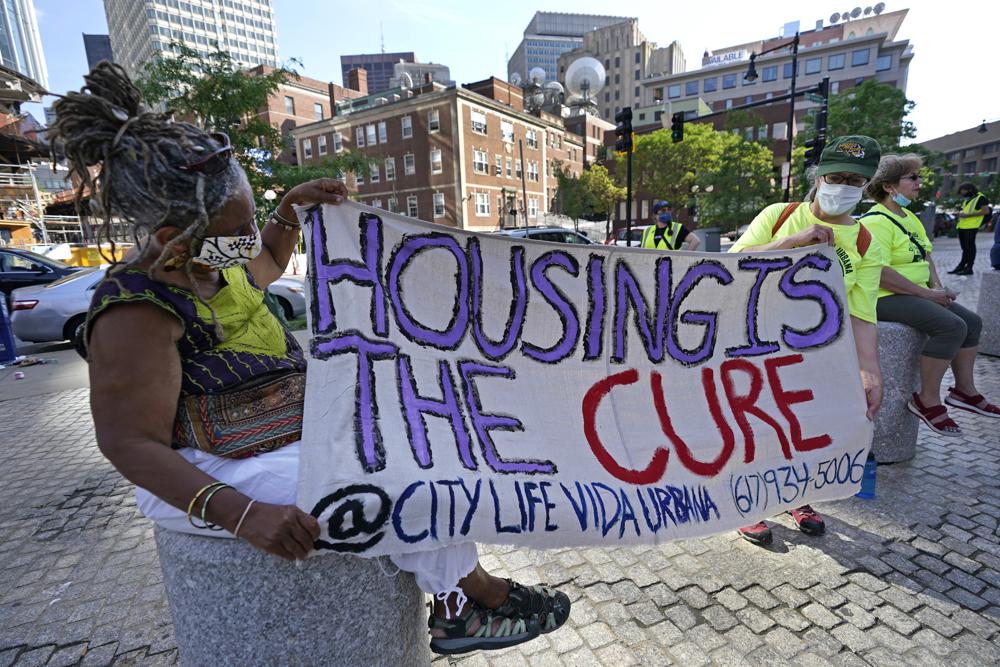
The Biden administration announced Thursday it will allow a nationwide ban on evictions to expire Saturday, arguing that its hands are tied after the Supreme Court signaled the moratorium would only be extended until the end of the month. The White House said President Joe Biden would have liked to extend the federal eviction moratorium due to spread of the highly contagious delta variant of the coronavirus. Instead, Biden called on “Congress to extend the eviction moratorium to protect such vulnerable renters and their families without delay.” “Given the recent spread of the delta variant, including among those Americans both most likely to face evictions and lacking vaccinations, President Biden would have strongly supported a decision by the CDC to further extend this eviction moratorium to protect renters at this moment of heightened vulnerability,” the White House said in a statement. “Unfortunately, the Supreme Court has made clear that this option is no longer available.” Aides to Senate Majority Leader Chuck Schumer and Sen. Sherrod Brown, the chairman of the Senate Committee on Banking, Housing and Urban Affairs, said the two are working on legislation to extend the moratorium. Democrats will try to pass a bill as soon as possible and are urging Republicans not to block it. In the House, a bill was introduced Thursday to extended the moratorium until the end of the year. But the prospect of a legislative solution remained unclear. The court mustered a bare 5-4 majority last month, to allow the eviction ban to continue through the end of July. One of those in the majority, Justice Brett Kavanaugh, made clear he would block any additional extensions unless there was “clear and specific congressional authorization.” By the end of March, 6.4 million American households were behind on their rent, according to the Department of Housing and Urban Development. As of July 5, roughly 3.6 million people in the U.S. said they faced eviction in the next two months, according to the U.S. Census Bureau’s Household Pulse Survey. Dr. Rochelle Walensky, director of the Centers for Disease Control and Prevention, said in June this would be the last time the moratorium would be extended when she set the deadline for July 31. It was initially put in place to prevent further spread of COVID-19 by people put out on the streets and into shelters. Housing advocates and some lawmakers have called for the moratorium to be extended due to the increase in coronavirus cases and the fact so little rental assistance has been distributed. Congress has allocated nearly $47 billion in assistance that is supposed to go to help tenants pay off months of back rent. But so far, only about $3 billion of the first tranche of $25 billion has been distributed through June by states and localities. Some states like New York have distributed almost nothing, while several have only approved a few million dollars. “The confluence of the surging delta variant with 6.5 million families behind on rent and at risk of eviction when the moratorium expires demands immediate action,” said Diane Yentel, executive director of the National Low Income Housing Coalition. “The public health necessity of extended protections for renters is obvious. If federal court cases made a broad extension impossible, the Biden administration should implement all possible alternatives, including a more limited moratorium on federally backed properties.” Gene Sperling, who is charged with overseeing the implementation of Biden’s $1.9 trillion coronavirus rescue package, said it was key that states and local authorities speed up the rental assistance distribution. “The message is that there are no excuses,” he told The Associated Press. “States and cities across the country have shown these programs can work, that they can get money out the door effectively and efficiently,” he continued. “The fact that some states and cities are showing they can do this efficiently and effectively makes clear that there is no reason that every state and city shouldn’t be accelerating their funds to landlords and tenants, particularly in light of the end of the CDC eviction moratorium.” The trouble getting rental assistance to those who need it has prompted the Biden administration to hold several events in the past month aimed at pressuring states and cities to increase their distribution, coax landlords to participate, and make it easier for tenants to get money directly. Associate Attorney General Vanita Gupta also has released an open letter to state courts around the country encouraging them to pursue measures that would keep eviction cases out of the courts. On Wednesday, the Consumer Financial Protection Bureau unveiled a tool that allows tenants to find information about rental assistance in their area. Despite these efforts, some Democratic lawmakers had demanded the administration extend the moratorium. “This pandemic is not behind us, and our federal housing policies should reflect that stark reality. With the United States facing the most severe eviction crisis in its history, our local and state governments still need more time to distribute critical rental assistance to help keep a roof over the heads of our constituents,” Democratic U.S. Reps. Cori Bush of Missouri, Jimmy Gomez of California, and Ayanna Pressley of Massachusetts said in a joint statement. But landlords, who have opposed the moratorium and challenged it repeatedly in court, were against any extension. They have argued the focus should be on speeding up the distribution of rental assistance. This week, the National Apartment Association and several others this week filed a federal lawsuit asking for $26 billion in damages due to the impact of the moratorium. “Any extension of the eviction moratorium equates to an unfunded government mandate that forces housing providers to deliver a costly service without compensation and saddles renters with insurmountable debt,” association president and CEO Bob Pinnegar said, adding that the current crisis highlights the need for more affordable housing. “Our nation faces an alarming housing affordability disaster on the horizon — it’s past time for the government to enact responsible and sustainable solutions that ultimately prioritize making both
