
Number of arrests at Mexican border declines
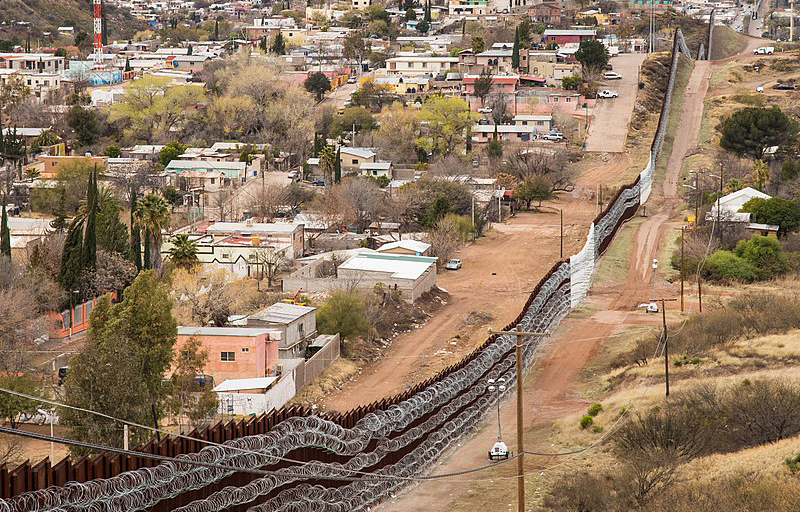
This is the seventh consecutive month of declines.
U.S. government opens new holding center for migrant children

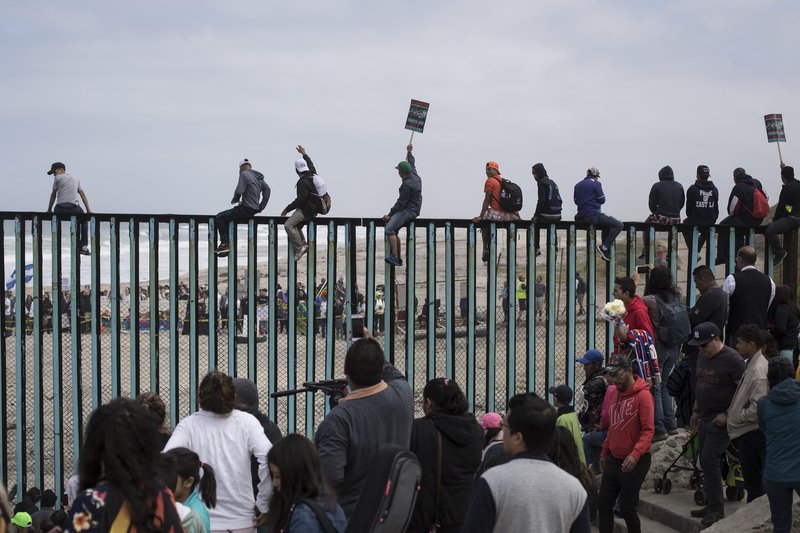
A former oilfield worker camp off a dirt road in rural Texas has become the U.S. government’s newest holding center for detaining migrant children after they leave Border Patrol stations, where complaints of overcrowding and filthy conditions have sparked a worldwide outcry. Inside the wire fence that encircles the site are soccer fields, a giant air-conditioned tent that serves as a dining hall, and trailers set up for use as classrooms and as places where children can call their families. The long trailers once used to house workers in two-bedroom suites have been converted into 12-person dorms, with two pairs of bunk beds in each bedroom and the living room. The Department of Health and Human Services (HHS) said about 225 children are being held at the site in Carrizo Springs, with plans to expand to as many as 1,300, making it one of the biggest camps in the U.S. government system. The government said the holding center will give it much-needed capacity to take in more children from the Border Patrol and prevent their detention in stations like the one in Clint, Texas, where lawyers last month reported some 250 youngsters were being held in cells with inadequate food, water and sanitation. Of the children held at Carrizo Springs, 21 had previously been detained at Clint, HHS spokesman Mark Weber said. HHS said the Carrizo Springs location is a comfortable environment for children while they wait to be placed with family members or sponsors in the U.S. But immigrant advocates and others liken such places to child prison camps and worry that the isolated location 110 miles (180 kilometers) from San Antonio, the nearest major city, will make it more difficult to find lawyers to help the teenagers with their immigration cases. Advocates have complained that HHS’ largest holding centers — a facility in Homestead, Florida, a converted Walmart in Brownsville, Texas, and a now-closed tent camp at Tornillo, Texas — have traumatized children through overcrowding and inadequate staffing. “All of this is part of a morally bankrupt system,” said Rep. Joaquin Castro, a San Antonio Democrat. There’s also the huge cost: an average of $775 per day for each child. HHS plans to pay the nonprofit Baptist Child and Family Services up to $300 million through January to run the Carrizo Springs site. The government allowed The Associated Press to visit on Tuesday and distribute photos and video, though the AP could not show children’s faces because of privacy restrictions. Boys and girls are kept in separate buildings and follow separate schedules. They have decorated their rooms with drawings of superheroes and the flags of their home countries, including Guatemala and El Salvador. Many children smiled and greeted visitors as they walked by. Several girls knitted yarn hats and armbands. A series of tents serves as the infirmary, with nurses on hand treating a few children for lice and flu-like symptoms. Breakfast is at 7 a.m., followed by soccer, then six hours of classes in reading, writing, social studies, science and math. In reading class on Tuesday, the students were asked to practice reciting the Pledge of Allegiance in English. Many did so haltingly before the teachers called one student to the front to help lead them. After he finished, the whole class applauded. HHS said the goal is to move the children through the holding center and others like it as quickly as possible. The department said it has sped up placing children with sponsors to an average of 45 days, down from 93 days last November. One key, HHS said, was lifting a requirement that all adult relatives be fingerprinted before they can take a child out of custody. “This facility is all about unification,” said Weber, the HHS spokesman.The holding center is opening amid record numbers of family members apprehended at the border and thousands of children traveling without their parents as they flee violence and poverty in Central America. Baptist Child and Family Services also ran the Tornillo camp, which opened last summer as thousands of children were separated from their parents by Trump administration policy. Tornillo reached as many as 2,800 children until it was closed in January. BCFS CEO Kevin Dinnin said he had refused in December to take more children at Tornillo because the camp was holding them for so long, a decision that led to its closing. Dinnin said he resolved never to open another emergency center like it, but the conditions reported in Border Patrol custody changed his mind. He said he also believes HHS is doing more to process children more quickly. “At the end of the day, our philosophy has been … to keep kids out of CBP jail cells,” Dinnin said. Jonathan Ryan, executive director of the legal group RAICES, said his organization is ready to send lawyers to Carrizo Springs but is waiting for the OK from the government. “We just want to get inside and work with those kids,” Ryan said. “Children who have been detained, who have gone through deprivation and cages in Border Patrol custody, are potentially being released without ever having had access to legal advice and screening.” By Nomaan Merchant Associated Press Republished with the permission of the Associated Press.
House looks set to pass emergency funding bill for migrants
House Democrats were teeing up a vote Tuesday night on a $4.5 billion emergency border aid package to care for thousands of migrant families and unaccompanied children detained after crossing the U.S.-Mexico border. Democratic leaders appeared confident that they had quelled a mini-revolt by progressives and Hispanic lawmakers who sought significant changes to the legislation. New provisions added to the bill Tuesday were more modest than what those lawmakers had sought, but a full-court press by Speaker Nancy Pelosi, Democrat-California, and other party leaders seemed to quiet the rebellion. Passage of the House bill would set up a showdown with the Republican-led Senate, which may instead force Democrats to send Trump a different, and broadly bipartisan, companion measure in coming days as the chambers race to wrap up the must-do legislation by the end of the week. “The Senate has a good bill. Our bill is much better,” Pelosi told her Democratic colleagues in a meeting Tuesday morning, according to a senior Democratic aide who spoke on condition of anonymity to describe the private session. “You can find fault with any bill that comes down the pike, but we must respect the bill for what is does rather criticize it for what it does not.” The bill contains more than $1 billion to shelter and feed migrants detained by the border patrol and almost $3 billion to care for unaccompanied migrant children who are turned over the Department of Health and Human Services. It seeks to mandate improved standards of care at HHS “influx shelters” that house children waiting to be placed with sponsors such as family members in the U.S. Both House and Senate bills ensure funding could not be shifted to Trump’s border wall and would block information on sponsors of immigrant children from being used to deport them. Trump would be denied additional funding for Immigration and Customs Enforcement detention beds. “This is strictly a supplemental that’s in response to a humanitarian crisis that is taking place right now,” said Rep. Lucille Roybal-Allard, Democrat-California, one of the authors of the bill. She said language in the measure limits the use of the funding to “food, clothing, better shelter facilities and so on.” The White House is threatening to veto the House bill, saying it would hamstring the administration’s border security efforts, and the Senate’s top Republican suggested Tuesday that the House should simply accept the Senate measure — which received only a single “nay” vote during a committee vote last week. “The idea here is to get a (presidential) signature, so I think once we can get that out of the Senate, hopefully on a vote similar to the one in the Appropriations Committee, I’m hoping that the House will conclude that’s the best way to get the problem solved, which can only happen with a signature,” said Senate Majority Leader Mitch McConnell, Republican-Kentucky. House Democrats seeking the changes met late Monday with Pelosi, and lawmakers emerging from the Tuesday morning caucus meeting were generally supportive of the legislation. Congress plans to leave Washington in a few days for a weeklong July 4 recess, and pressure is intense to wrap up the legislation before then. Agencies are about to run out of money and failure to act could bring a swift political rebuke and accusations of ignoring the plight of innocent immigrant children. Lawmakers’ sense of urgency to provide humanitarian aid was amplified by recent reports of gruesome conditions in a windowless Border Patrol station in Clint, Texas, where more than 300 infants and children were being housed. Many were kept there for weeks and were caring for each other in conditions that included inadequate food, water and sanitation. By Tuesday, most had been sent elsewhere. The incident was only an extreme example of the dire conditions reported at numerous locations where detainees have been held, and several children have died in U.S. custody. The Border Patrol reported apprehending nearly 133,000 people last month — including many Central American families — as monthly totals have begun topping 100,000 for the first time since 2007. Federal agencies involved in immigration have reported being overwhelmed, depleting their budgets and housing large numbers of detainees in structures meant for handfuls of people. Pelosi warned her colleagues that President Donald Trump’s hand would be strengthened if the legislation failed. “The president would love for this bill to go down today,” she said, according to the aide. “A vote against this bill is a vote for Donald Trump and his inhumane, outside-the-circle-of-civilized attitude toward the children.” Changes unveiled Tuesday would require the Department of Homeland Security to establish new standards for care of unaccompanied immigrant children and a plan for ensuring adequate translators to assist migrants in their dealings with law enforcement. The government would have to replace contractors who provide inadequate care. Many children detained entering the U.S. from Mexico have been held under harsh conditions, and Customs and Border Protection Chief Operating Officer John Sanders told The Associated Press last week that children have died after being in the agency’s care. He said Border Patrol stations are holding 15,000 people — more than triple their maximum capacity of 4,000. Sanders announced Tuesday that he’s stepping down next month amid outrage over his agency’s treatment of detained migrant children. In a letter Monday threatening the veto, White House officials told lawmakers they objected that the House package lacked money for beds the federal Immigration and Customs Enforcement agency needs to let it detain more migrants. Officials also complained in the letter that the bill had no money to toughen border security, including funds for building Trump’s proposed border wall. By Andrew Taylor and Alan Fram Associated Press Republished with permission of the Associated Press.
Richard Shelby: Border security talks ‘stalled’ as clock ticks
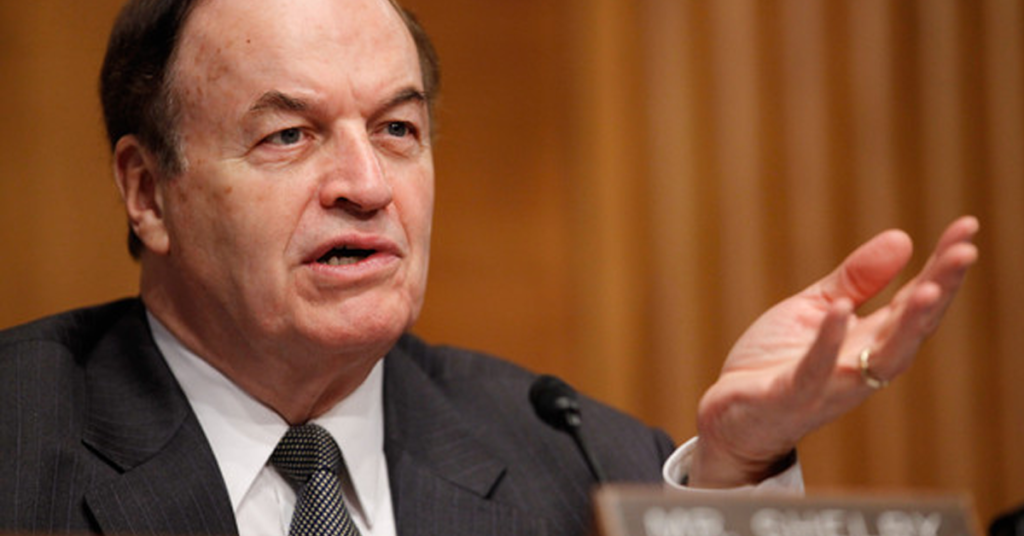
Bargainers clashed Sunday over whether to limit the number of migrants authorities can detain, tossing a new hurdle before negotiators hoping to strike a border security compromise for Congress to pass this coming week. The White House wouldn’t rule out a renewed partial government shutdown if an agreement isn’t reached. With the Friday deadline approaching, the two sides remained separated by hundreds of millions of dollars over how much to spend to construct President Donald Trump’s promised border wall. But rising to the fore was a related dispute over curbing Customs and Immigration Enforcement, or ICE, the federal agency that Republicans see as an emblem of tough immigration policies and Democrats accuse of often going too far. Acting White House chief of staff Mick Mulvaney, in appearances on NBC’s “Meet the Press” and “Fox News Sunday,” said “you absolutely cannot” eliminate the possibility of another shutdown if a deal is not reached over the wall and other border matters. The White House had asked for $5.7 billion, a figure rejected by the Democratic-controlled House of Representatives, and the mood among bargainers has soured, according to people familiar with the negotiations not authorized to speak publicly about private talks. “You cannot take a shutdown off the table, and you cannot take $5.7 (billion) off the table,” Mulvaney told NBC, “but if you end up someplace in the middle, yeah, then what you probably see is the president say, ‘Yeah, OK, and I’ll go find the money someplace else.’” A congressional deal seemed to stall even after Mulvaney convened a bipartisan group of lawmakers at Camp David, the presidential retreat in northern Maryland. While the two sides seemed close to clinching a deal late last week, significant gaps remain and momentum appears to have slowed. Though congressional Democratic aides asserted that the dispute had caused the talks to break off, it was initially unclear how damaging the rift was. Both sides are eager to resolve the long-running battle and avert a fresh closure of dozens of federal agencies that would begin next weekend if Congress doesn’t act by Friday. “I think talks are stalled right now,” Sen. Richard Shelby, Republican-Ala., said Sunday on “Fox News Sunday.” ″I’m not confident we’re going to get there.” Sen. Jon Tester, Democrat-Mont., who appeared on the same program, agreed: “We are not to the point where we can announce a deal.” But Mulvaney did signal that the White House would prefer not to have a repeat of the last shutdown, which stretched more than a month, left more than 800,000 government workers without paychecks, forced a postponement of the State of the Union address and sent Trump’s poll numbers tumbling. As support in his own party began to splinter, Trump surrendered after the shutdown hit 35 days without getting money for the wall. This time, Mulvaney signaled that the White House may be willing to take whatever congressional money comes — even if less than Trump’s goal — and then supplement that with other government funds. “The president is going to build the wall. That’s our attitude at this point,” Mulvaney said on Fox. “We’ll take as much money as you can give us, and we’ll go find the money somewhere else, legally, and build that wall on the southern border, with or without Congress.” The president’s supporters have suggested that Trump could use executive powers to divert money from the federal budget for wall construction, though it was unclear if he would face challenges in Congress or the courts. One provision of the law lets the Defense Department provide support for counterdrug activities. But declaring a national emergency remained an option, Mulvaney said, even though many in the administration have cooled on the prospect. A number of powerful Republicans, including Senate Majority Leader Mitch McConnell, Republican-Ky., have also warned against the move, believing it usurps power from Congress and could set a precedent for a future Democratic president to declare an emergency for a liberal political cause. The fight over ICE detentions goes to the core of each party’s view on immigration. Republicans favor tough enforcement of immigration laws and have little interest in easing them if Democrats refuse to fund the Mexican border wall. Democrats despise the proposed wall and, in return for border security funds, want to curb what they see as unnecessarily harsh enforcement by ICE. People involved in the talks say Democrats have proposed limiting the number of immigrants here illegally who are caught inside the U.S. — not at the border — that the agency can detain. Republicans say they don’t want that cap to apply to immigrants caught committing crimes, but Democrats do. In a series of tweets about the issue, Trump used the dispute to cast Democrats as soft on criminals. He charged in one tweet: “The Border Committee Democrats are behaving, all of a sudden, irrationally. Not only are they unwilling to give dollars for the obviously needed Wall (they overrode recommendations of Border Patrol experts), but they don’t even want to take muderers into custody! What’s going on?” Democrats say they proposed their cap to force ICE to concentrate its internal enforcement efforts on dangerous immigrants, not those who lack legal authority to be in the country but are productive and otherwise pose no threat. Democrats have proposed reducing the current number of beds ICE uses to detain immigrants here illegally from 40,520 to 35,520. But within that limit, they’ve also proposed limiting to 16,500 the number for immigrants here illegally caught within the U.S., including criminals. Republicans want no caps on the number of immigrants who’ve committed crimes who can be held by ICE. As most budget disputes go, differences over hundreds of millions of dollars are usually imperceptible and easily solved. But this battle more than most is driven by political symbolism — whether Trump will be able to claim he delivered on his long-running pledge to “build the wall” or newly empowered congressional Democrats’ ability to thwart him. Predictably each side blamed
Border security bargainers trade offers as deadline nears

Congressional bargainers traded offers and worked toward a border security compromise Friday that would avert a fresh federal shutdown and resolve a clash with President Donald Trump that has dominated the opening weeks of divided government. differences Both sides’ negotiators expressed optimism that an accord could be reached soon on a spending package for physical barriers along the Southwest border and other security measures. Participants said the agreement would all but certainly be well below the $5.7 billion Trump has demanded to build his proposed wall, and much closer to the $1.6 billion that was in a bipartisan Senate bill last year. “That’s what we’re working toward,” said Rep. Lucille Roybal-Allard, Democrat-Calif., one of the bargainers. Besides the dollar figure, talks were focusing on the type and location of barriers, participants said. Also in play were the number of beds the federal Immigration and Customs Enforcement agency could have for detained migrants, and how much aid for natural disaster relief would be included. Money for high-tech surveillance equipment and more personnel was also expected to be included. No one ruled out that last-minute problems could emerge, especially with Trump’s penchant for head-snapping turnabouts. But the momentum was clearly toward clinching an agreement that Congress could pass by next Friday. The next day, government agencies would have to close again for lack of money, if no deal is reached. Negotiator Rep. Chuck Fleischmann, Republican-Tenn., said the latest Democratic offer was “much more reasonable.” And Democratic bargainer Rep. Pete Aguilar of California said, “Each time an offer and a counter is going back and forth the number of open items is reducing. That is progress.” Rep. Mark Meadows, Republican-N.C., who leads the hard-right House Freedom Caucus, said he spoke Thursday night to Trump, who he said was in “wait and see” mode. Meadows said he expects an agreement to provide something closer to $1.6 billion. “I’m not optimistic it’ll be something the president can support,” Meadows said. A conservative House GOP aide said to back a deal, Freedom Caucus members wanted at least $2 billion for barriers and no restrictions on new construction, land acquisition or new types of barriers that could be built. The aide also said the agreement need not contain the term “wall” — a word that was a premier plank of Trump’s presidential campaign, and which Trump has lately alternated between embracing and abandoning. The person would talk only on condition of anonymity to describe private talks. Meadows’ assessment of Trump’s view clashed with one expressed Thursday by Sen. Richard Shelby of Alabama, the chief GOP bargainer. He described the emerging deal to Trump in the Oval Office and told reporters the session was “the most positive meeting I’ve had in a long time.” Shelby said that if the final agreement followed the outline currently under discussion, he believed Trump “would sign it.” Trump has modest leverage in the battle. Besides facing unified Democratic opposition, there is virtually no GOP support in Congress for another shutdown. When congressional talks began, Trump called them a “waste of time.” “They’ve got to come to a solution that actually does what they promised they would do, which is protect the American people,” White House spokesman Hogan Gidley said on Fox News. Trump faces an aggressive, Democratic-led House that is ramping up investigations into Russian involvement in his campaign and businesses and trying to get access to his income tax returns. But ending the border security fight would close one chapter that’s bruised him, including his surrender after a 35-day partial federal shutdown that he started by unsuccessfully demanding taxpayer money to build the border wall. Even with a deal, it was possible Trump might try using claims of executive powers to reach for more wall funding. That could spark votes by Congress to block him, which Trump could veto but would still inflict political damage. Sen. Lindsay Graham, Republican-S.C., said Thursday that an accord could be “a good down payment” and added, “There are other ways to do it and I expect the president to go it alone in some fashion.” Acting White House Chief of Staff Mick Mulvaney said on Fox News Channel’s “Hannity” on Wednesday, “If Congress won’t participate or won’t go along, we’ll figure out a way to do it with executive authority.” Members of both parties have expressed opposition to Trump bypassing Congress by declaring a national emergency at the border, a move that would be certain to produce lawsuits that could block the money. Lawmakers have grown accustomed to expecting the unexpected from Trump. Before Christmas, both parties’ leaders believed he’d support a bipartisan deal that would have prevented the recently ended shutdown, only to reverse himself under criticism from conservative pundits and lawmakers. “There’s a small light at the end of the tunnel,” said Sen. Pat Roberts, Republican-Kan. “We just hope it’s not a train coming the other way.” Republished with permission from the Associated Press
Trump breaks brief public silence during border negotiations

After days sequestered behind closed doors, President Donald Trump let loose Thursday, holding forth on border security negotiations, North Korea and other topics from the Oval Office. Trump invited reporters in for the 40-minute session, which broke a five-day stretch with no public events from the typically media-hungry leader. Up to that point, Republicans and Democrats alike seemed just fine with Trump hanging back as legislators try to work out a deal to keep the government open and resolve a standoff over funding for the president’s long-sought wall at the southern border. The president’s comments underscored the feeling among lawmakers that Trump was not always helpful in the negotiations. Trump accused House Speaker Nancy Pelosi of “playing games” and said he was not expecting much from Congress. “I’m not waiting for this committee and I’ve told a lot of people I don’t expect much coming out of the committee because I keep hearing the words that ‘we’ll give you what you want but we’re not going to give you a wall,’” Trump said. “And the problem is if they don’t give us a wall it doesn’t work. Without a wall, it doesn’t work.” Trump also started the morning with a flurry of tweets weighing in on the House-Senate talks that kicked off Wednesday during which House Democrats offered a plan without a penny for his long-promised wall. “Republicans on the Homeland Security Committee are wasting their time,” Trump tweeted Thursday. “Democrats, despite all of the evidence, proof and Caravans coming, are not going to give money to build the DESPERATELY needed WALL. I’ve got you covered. Wall is already being built, I don’t expect much help!” Trump’s flurry of activity followed a lull with no public events for five days. The White House had said the president had made his demands for border wall funding clear and was letting the committee process play out on Capitol Hill. One official, speaking on the condition of anonymity to discuss private talks, still stressed that Trump was “engaged at every level” on border security, including receiving a lengthy briefing on the topic Wednesday, and has continued to get his message out, including doing an interview with The Daily Caller. The official added that the White House has also been heavily involved at a staff level. Democrats were more pointed about the positive aspects of less Trump. “When the president stays out of the negotiations, we almost always succeed,” said Senate Minority Leader Chuck Schumer, a New York Democrat. “When he mixes in, it’s a formula for failure. So I’d ask President Trump, ‘Let Congress deal with it on its own.’” Asked about Schumer’s comment, Trump told The Daily Caller, “I don’t blame him.” But the Republican president added that “without our involvement, a deal is not going to get done.” While Trump had been avoiding public appearances, he continued dishing out his practiced blend of bluster and blame on Twitter, including contradicting his intelligence chiefs and slamming a former staffer for writing a White House tell-all. Trump will be speaking up more in the coming days. He’ll do an interview with CBS that will air during the Super Bowl on Sunday, his State of the Union address is Tuesday and the White House is weighing travel options for after the speech to drive home his message on border security. Going quiet after the fractious fight with Democrats raised questions about whether Trump was missing an opportunity to publicly frame the debate and push his border security arguments. But some Republicans said Wednesday it was the right move. “I think it’s smart for him to hang back here,” said Marc Short, former White House director of legislative affairs. “I do think he should still be traveling to vulnerable districts to put pressure on (Democrats) politically. But I think it’s fine for him not to be at the center of the negotiations.” Trump’s allies also noted that he has been working on a variety of other issues throughout this period. He called Venezuelan opposition leader Juan Guaido to offer his support Wednesday. He attended a political function at the Trump International Hotel on Monday night. He hosted Republican Sen. David Perdue of Georgia for lunch at the White House on Sunday. “There’s a ton going on. It’s Venezuela, China, North Korea. It’s not the public event stuff,” former Trump campaign aide Barry Bennett said. Bennett argued that giving Congress some space made sense for Trump, adding: “If I was him, I would see what they offer. If they don’t solve it, then solve it yourself.” Republished with permission from the Associated Press
Democrats make opening offer, with no money for Donald Trump’s wall
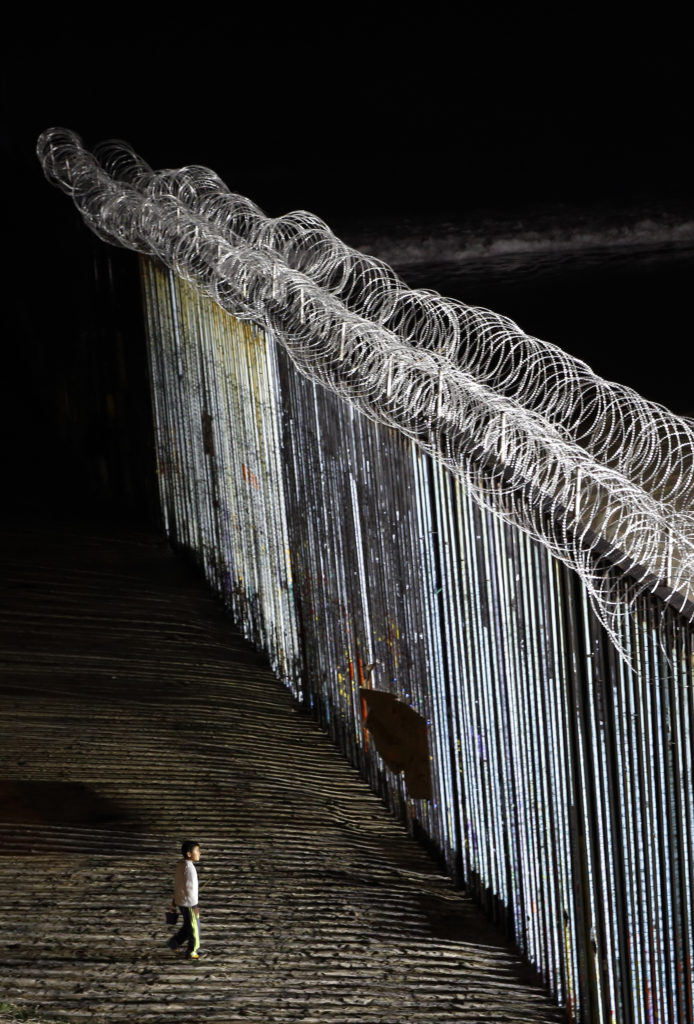
Democrats in the House offered a border security plan on Wednesday that would not provide a penny for Donald Trump’s border wall, ignoring — for now — an early-morning warning from the president that they’d be “wasting their time” if they don’t come up with wall money. The Democratic offer is just a starting point in House-Senate talks on border security funding that kicked off in a basement room in the Capitol. A top Democrat acknowledged that “everything is on the table,” including the border barriers demanded by Trump. Lawmakers on both sides flashed signs of flexibility, eager to demonstrate willingness to compromise in hopes of resolving the standoff with Trump that sparked the just-ended 35-day partial government shutdown. The high-stakes talks are taking place against the backdrop of another possible shutdown in mid-February — an outcome Trump’s GOP allies in the Senate are especially eager to avoid. But while Trump’s rhetoric has cooled, he’s proven to be an unpredictable force in the shutdown debate, often veering back to his original demands for the wall. Lawmakers negotiating the bill are well aware that he could move to quash an agreement at any time, plunging them back into crisis. Still, Trump’s request for $5.7 billion to build about 234 miles of barriers along the U.S. border with Mexico faces uphill odds. Even Trump’s GOP allies acknowledge he may only get a fraction of it. The Democratic plan includes new money for customs agents, scanners, aircraft and boats to police the border, and to provide humanitarian assistance for migrants. “Democrats are once again supporting strong border security as an essential component of homeland security. Border security, however, is more than physical barriers; and homeland security is more than border security,” said Rep. Lucille Roybal-Allard, Democrat, Calif. Senators revisited a bipartisan $1.6 billion proposal for 65 miles of fencing in the Rio Grande Valley in Texas that passed a key committee last year. The panel of old-school lawmakers from the powerful appropriations committees has ample expertise on homeland security issues, as many of them helped finance fence built over the years that stretches across much of the 1,954-mile border. “Because of the work we did years ago we’ve already built almost 700 miles of fencing on our nation’s border,” said Rep. David Price, Democrat, N.C. “Whatever the president may say it is far from an open border. Meanwhile, the number of undocumented immigrants crossing our border or attempting to cross remain not at alarming highs but at historic lows.” Republican allies of the president said there will have to be some money to meet Trump’s demands. But they also predict privately that the White House is eager to grab an agreement and declare victory — even if winning only a fraction of Trump’s request. “The components of border security are people, technology and a barrier. And everybody has voted for all three,” said Sen. John Hoeven, Republican, N.D. “To get to an agreement we’ve got to have all three in there.” But as talks on the homeland security budget open, Trump and Republicans are in a weakened position just 17 days before the government runs out of money again without a deal. Democrats won back the House in a midterm rout and prevailed over Trump in the shutdown battle. “Smart border security is not overly reliant on physical barriers,” House Appropriations Committee Chairwoman Nita Lowey, Democrat, N.Y., said as the session began. She said the Trump administration has failed to demonstrate that physical barriers are cost effective compared with better technology and more personnel. The comments at once served notice that Democrats weren’t ruling out financing physical structures, but would do so only on a limited basis. Sen. Richard Shelby, Republican,Ala., who chairs the Senate Appropriations Committee, said that while Republicans favor improved border security technology, “Smart technology alone does not actually stop anyone from crossing into the U.S. illegally.” Shelby said physical barriers are needed “not from coast to coast, but strategically placed where traffic is highest.” That echoed recent remarks by Trump as he’s retreated from his more strident comments from the 2016 presidential campaign. The president surrendered last Friday and agreed to reopen government for three weeks so negotiators can seek a border security deal, but with no commitments for wall funds. If negotiations on the 17-member panel falter, one option would be to enact another temporary government funding measure to replace the current one, which expires Feb. 15. Trump tweeted Wednesday morning, hours before the negotiators were to sit down for their first meeting, that the group of Republicans and Democrats is “Wasting their time!” if they aren’t “discussing or contemplating a Wall or Physical Barrier.” Prospects for broadening the scope of the talks to include broader immigration issues such as providing protection against deportation to “Dreamer” immigrants brought illegally to the country as children — or even must-do legislation to increase the government’s borrowing cap — appeared to be fading. “It’s just a matter of border security at this moment,” Democrat Lowey said. Republished with permission from the Associated Press
Pentagon: Several thousand more troops to the Mexico border
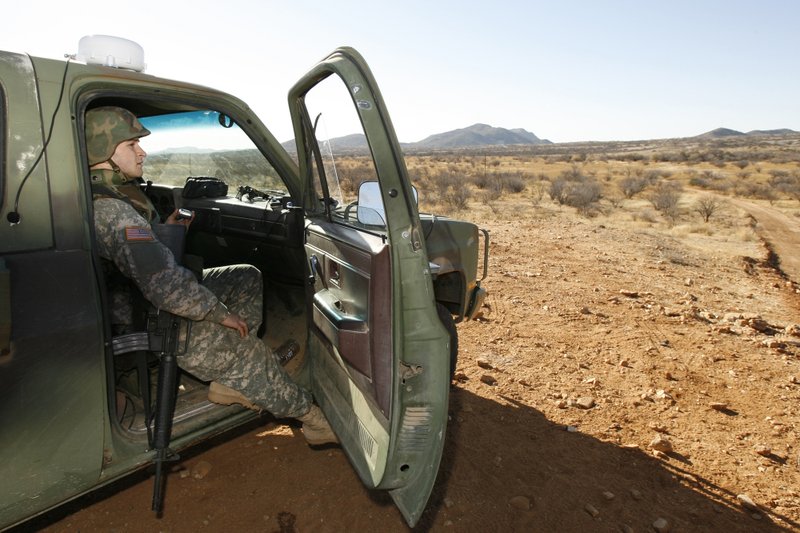
The U.S. will be sending “several thousand” more American troops to the southern border to provide additional support to Homeland Security, Acting Defense Secretary Pat Shanahan said Tuesday, providing for the first time new estimates for the next phase of the military aid. He said the troops will mainly be used to install additional wire barriers and provide a large new system of mobile surveillance and monitoring of the border area. Plans call for about 150 more miles of concertina wire placed mainly in the gaps between ports of entry. It’s still not clear how many of the roughly 2,400 active duty forces currently working the border mission will go home and not be replaced, but the Pentagon estimates that the total number of forces deployed there over the coming months will exceed 4,000. The Department of Homeland Security, said Shanahan “has asked us to support them in additional concertina wire and then expanded surveillance capability, and we’ve responded with, you know, here how many people it would take and this is the timing and mix of the people to support that.” The Pentagon has approved an extended U.S. deployment to the border through the end of September. As of Tuesday, officials were still working out exactly how many forces would be deployed and what units should be tapped. Shanahan’s comments came as members of the House Armed Services Committee grilled top defense and military leaders about the border mission, demanding details on its impact on military readiness and whether needed training and other jobs were not being done as a result. “What impact does it have to readiness to send several thousand troops down to the Southern border? It interrupts their training. It interrupts their dwell time,” said Rep. Adam Smith (Democrat-Washington) and chairman of the committee. Vice Adm. Mike Gilday, the director of operations for the Joint Staff, told the panel that he does not believe military readiness has been significantly affected. He said some units have missed training opportunities because of the deployment and others have seen less time at home between deployments than the military likes to provide. But he said there is an effort to rotate service members in and out of the mission every six to eight weeks in order to minimize any impact. He also said that the estimated cost of deploying the active duty personnel through the end of this month is $132 million, and the cost of deploying about 2,300 National Guard members to the border last year was $103 million and is estimated at $308 million for this year. Lawmakers said they’ve been told that troops remained at the border after they had finished their missions and had nothing to do, and that many were spending time playing sports or watching videos. Gilday acknowledged some trial and errors as the mission progressed. “We have tried really hard not to waste people’s time down to the border,” he said. “There have been occasions when we haven’t gotten it right with respect to numbers. And maybe we had excess capacity, but we have brought those people back when we realized that we have made a mistake.” Officials said that the majority of the troops going to the border now will be combat engineers and support forces who will install the additional barriers. The expectation is that they will complete the job in a few months and then be able to go home. Many of the others will start the expanded surveillance mission which will last at least through September. The U.S. forces will use Customs and Border Protection vehicles that have mounted surveillance cameras and they will monitor the border. Troops are not allowed to do any law enforcement duties, so they can’t detain migrants crossing the border. Instead, when they see suspicious activity they will alert CBP agents, who would then deal with any migrants involved. Republished with permission from the Associated Press.
Donald Trump plans border visit as shutdown lurches into 3rd week
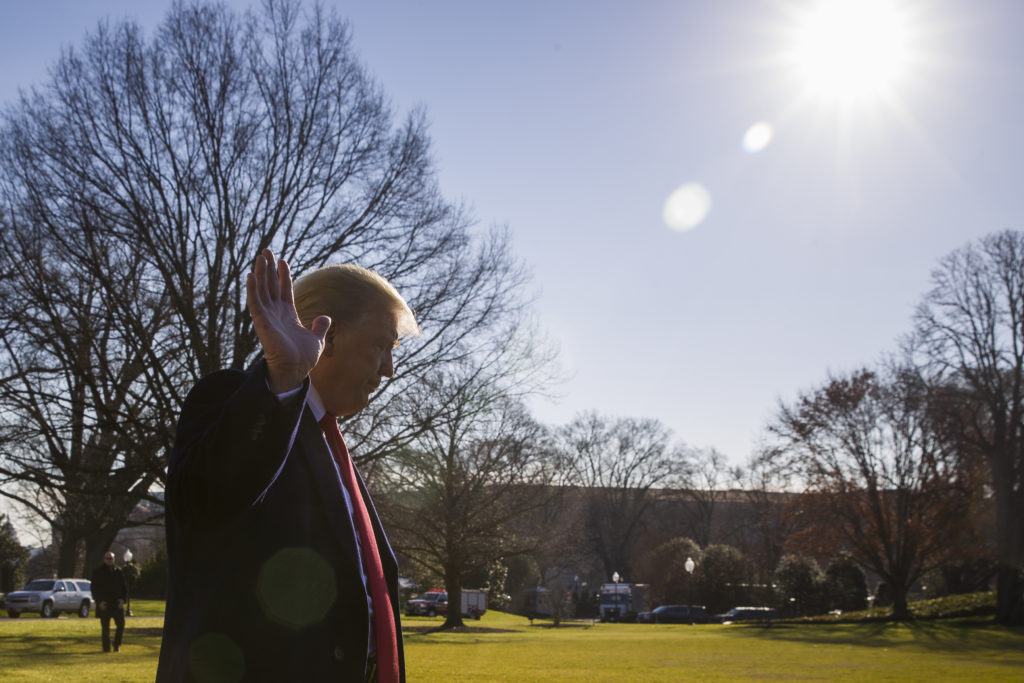
With no breakthrough in sight to end the partial government shutdown, President Donald Trump is planning to visit the U.S.-Mexico border on Thursday to highlight his demands for a border wall. Newly empowered House Democrats plan to step up pressure on Trump and Republican lawmakers to reopen the government. Trump maintains that more than $5 billion for a wall is necessary to secure the border. White House press secretary Sarah Huckabee Sanders tweeted Monday that Trump will use the visit to “meet with those on the front lines of the national security and humanitarian crisis.” As the shutdown lurched into a third week, many Republicans watched nervously from the sidelines as hundreds of thousands of federal workers went without pay and government disruptions hit the lives of ordinary Americans. Trump has offered to build the barrier with steel rather than concrete, billing that as a concession to Democrats’ objections to a solid wall. They “don’t like concrete, so we’ll give them steel,” he has said. But the Democrats have made clear they see a wall as immoral and ineffective and prefer other types of border security funded at already agreed-upon levels. White House officials affirmed Trump’s funding request in a letter to Capitol Hill after a meeting Sunday with senior congressional aides led by Vice President Mike Pence at the White House complex yielded little progress. The letter from Office of Management and Budget Acting Director Russell Vought sought funding for a “steel barrier on the Southwest border.” The White House said the letter, as well as details provided during the meeting, sought to answer Democrats’ questions about the funding request. Democrats, though, said the administration still failed to provide a full budget of how it would spend the billions requested for the wall from Congress. Trump campaigned on a promise that Mexico would pay for the wall, but Mexico has refused. The administration letter includes a request for $800 million for “urgent humanitarian needs,” a reflection of the growing anxiety over migrants traveling to the border — which the White House said Democrats raised in the meetings. And it repeats some existing funding requests for detention beds and security officers, which have already been panned by Congress and would likely find resistance among House Democrats. House Speaker Nancy Pelosi intends to begin passing individual bills to reopen agencies in the coming days, starting with the Treasury Department to ensure Americans receive their tax refunds. That effort is designed to squeeze Senate Republicans, some of whom are growing increasingly anxious about the extended shutdown. Among the Republicans expressing concern was Sen. Susan Collins, R-Maine, who said Senate Majority Leader Mitch McConnell should take up bills from the Democratic-led House. “Let’s get those reopened while the negotiations continue,” Collins said on NBC’s “Meet the Press.” Adding to concerns, federal workers might miss this week’s paychecks. Acting chief of staff Mick Mulvaney said on NBC’s “Meet the Press” that if the shutdown continues into Tuesday, “then payroll will not go out as originally planned on Friday night.” Over the weekend, the federal agency tasked with guaranteeing U.S. airport security acknowledged an increase in the number of its employees calling off work. But Trump and the Department of Homeland Security pushed back on any suggestion that the call-outs represented a “sickout” that was having a significant effect on U.S. air travel. At the White House, on Monday, spokeswoman Mercedes Schlapp complained that Democratic leaders have yet to define what they mean when they say they are for enhancing border security. “Democrats want to secure the border? Great. Come to the table,” she said. “We are willing to come to a deal to reopen the government.” Trump reaffirmed that he would consider declaring a national emergency to circumvent Congress and spend money as he saw fit. Such a move would seem certain to draw legal challenges. Incoming House Armed Services Committee Chairman Adam Smith, D-Wash., said on ABC’s “This Week” that the executive power has been used to build military facilities in Iraq and Afghanistan but would likely be “wide open” to a court challenge for a border wall. Speaking on CNN’s “State of the Union,” Intelligence Committee Chairman Adam Schiff called the idea a “nonstarter.” Trump asserted that he could relate to the plight of the hundreds of thousands of federal workers who aren’t getting paid, though he acknowledged they will have to “make adjustments” to deal with the shutdown shortfall. Republished with permission from the Associated Press.
Pentagon sending 5,200 troops to Southwest border week before midterms
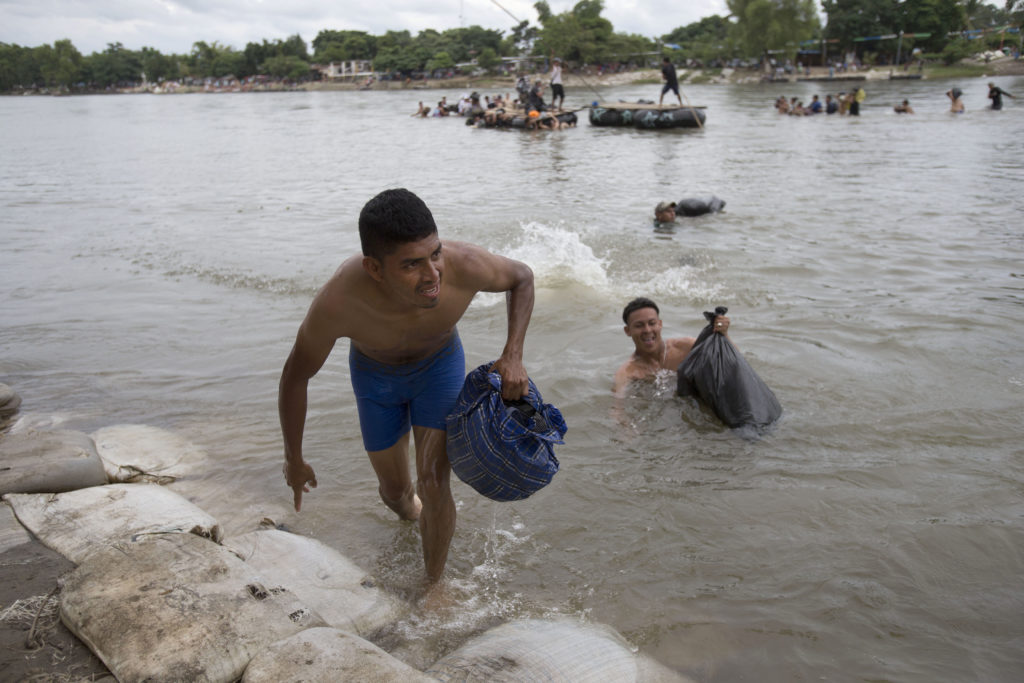
The Pentagon said Monday it is sending 5,200 troops to the Southwest border in an extraordinary military operation ordered up just a week before midterm elections in which President Donald Trump has put a sharp focus on Central American migrants moving north in slow-moving caravans that are still hundreds of miles from the U.S. The number of troops being deployed is more than double the 2,000 who are in Syria fighting the Islamic State group. Trump, eager to keep voters focused on illegal immigration in the lead-up to the elections, stepped up his dire warnings about the caravans, tweeting, “This is an invasion of our Country and our Military is waiting for you!” But any migrants who complete the long trek to the southern U.S. border already face major hurdles — both physical and bureaucratic — to being allowed into the United States. In an interview Monday, Trump said the U.S. would build “tent cities” for asylum seekers. “We’re going to put tents up all over the place,” told Fox News Channel’s Laura Ingraham. “They’re going to be very nice and they’re going to wait and if they don’t get asylum, they get out.” Under current protocol, migrants who clear an initial screening are often released until their cases are decided in immigration court, which can take several years. Trump denied his focus on the caravan is intended to help Republicans in next week’s midterms, saying, “This has nothing to do with elections.” The Pentagon’s “Operation Faithful Patriot” was described by the commander of U.S. Northern Command as an effort to help Customs and Border Protection “harden the southern border” by stiffening defenses at and near legal entry points. Advanced helicopters will allow border protection agents to swoop down on migrants trying to cross illegally, said Air Force Gen. Terrence O’Shaughnessy. Troops planned to bring heavy concertina wiring to unspool across open spaces between ports. “We will not allow a large group to enter the U.S. in an unlawful and unsafe manner,” said Kevin McAleenan, commissioner of Customs and Border Protection. Eight hundred troops already are on their way to southern Texas, O’Shaughnessy said, and their numbers will top 5,200 by week’s end. Some of the troops will be armed. He said troops would focus first on Texas, followed by Arizona and then California. The troops will join the more than 2,000 National Guardsmen that Trump has already deployed to the border. It remained unclear Monday why the administration was choosing to send active-duty troops given that they will be limited to performing the same support functions the Guard already is doing. The number of people in the first migrant caravan headed toward the U.S. has dwindled to about 4,000 from about 7,000 last week, though a second one was gaining steam and marked by violence. About 600 migrants in the second group tried to cross a bridge from Guatemala to Mexico en masse Monday. The riverbank standoff with Mexico police followed a more violent confrontation Sunday when the migrants used sticks and rocks against officers. One migrant was killed Sunday night by a head wound, but the cause was unclear. The first group passed through the spot via the river — wading or on rafts — and was advancing through southern Mexico. That group appeared to begin as a collection of about 160 who decided to band together in Honduras for protection against the gangs who prey on migrants traveling alone and snowballed as the group moved north. They are mostly from Honduras, where it started, as well as El Salvador and Guatemala. Another, smaller caravan earlier this year dwindled greatly as it passed through Mexico, with only about 200 making it to the California border. Migrants are entitled under both U.S. and international law to apply for asylum. But there already is a bottleneck of would-be asylum seekers waiting at some U.S. border crossings to make their claims, some waiting as long as five weeks. McAleenan said the aim of the operation was to deter migrants from crossing illegally, but he conceded his officers were overwhelmed by a surge of asylum seekers at border crossings. He also said Mexico was prepared to offer asylum to members of the caravan. “If you’re already seeking asylum, you’ve been given a generous offer,” he said of Mexico. “We want to work with Mexico to manage that flow.” The White House is also weighing additional border security measures, including blocking those traveling in the caravan from seeking legal asylum and preventing them from entering the U.S. The military operation drew quick criticism. “Sending active military forces to our southern border is not only a huge waste of taxpayer money, but an unnecessary course of action that will further terrorize and militarize our border communities,” said Shaw Drake of the American Civil Liberties Union’s border rights center at El Paso, Texas. Military personnel are legally prohibited from engaging in immigration enforcement. The troops will include military police, combat engineers and others helping on the border. The escalating rhetoric over the migrants and expected deployments come as the president has been trying to turn the caravans into a key election issue just days before elections that will determine whether Republicans maintain control of Congress. “This will be the election of the caravans, the Kavanaughs, law and order, tax cuts, and you know what else? It’s going to be the election of common sense,” Trump said at a rally in Illinois on Saturday night. On Monday, he tweeted without providing evidence, “Many Gang Members and some very bad people are mixed into the Caravan heading to our Southern Border.” “Please go back,” he urged them, “you will not be admitted into the United States unless you go through the legal process. This is an invasion of our Country and our Military is waiting for you!” It’s possible there are criminals mixed in, but Trump has not substantiated his claim that members of the MS-13 gang, in particular, are among them. The troops are expected
National Guard members begin arriving at U.S.-Mexico border
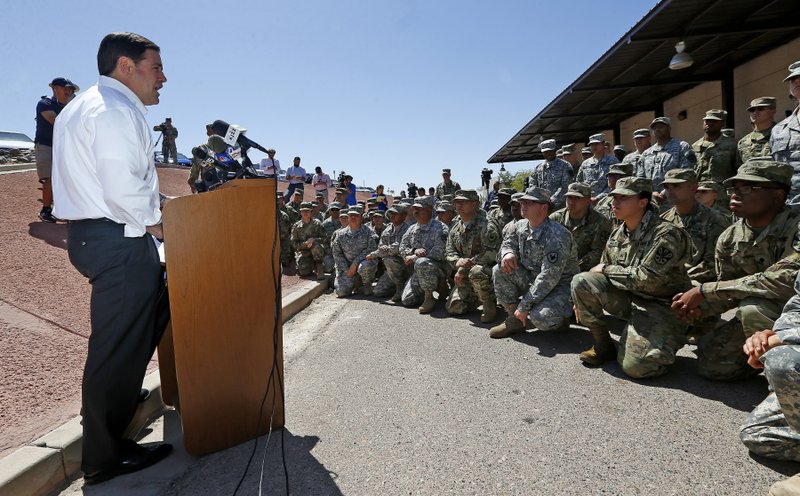
Some National Guard members have started arriving at the U.S.-Mexico border with more expected as federal government officials continue to discuss what they’ll do about illegal immigration. The Republican governors of Texas, Arizona and New Mexico on Monday committed 1,600 Guard members to the border, giving President Donald Trump many of the troops he requested to fight what he’s called a crisis of migrant crossings and crime. The only holdout border state was California, led by Democratic Gov. Jerry Brown, who has not announced whether troops from his state’s National Guard will participate and has repeatedly fought with Trump over immigration policy. Under the federal law Trump invoked in his proclamation calling for National Guard troops, governors who send troops retain command and control over their state’s Guard members and the U.S. government picks up the cost. Brown’s spokesman, Evan Westrup, said California officials still are reviewing Trump’s troop request. Trump said last week he wants to send 2,000 to 4,000 National Guard members to the border, issuing a proclamation citing “the lawlessness that continues at our southern border.” Trump administration officials have said that rising numbers of people being caught at the southern border, while in line with seasonal trends in recent years, require an immediate response. Apprehensions are still well below their historical trends during the terms of former presidents George W. Bush and Barack Obama, both of whom also deployed the Guard to the border. In Mexico City, a caravan of Central American migrants that had been heading north stopped in the Mexican capital. The caravan had sparked furious criticism from Trump, followed days later by his National Guard border protection deployment plan. Organizers said they never intended to go to the U.S. border. Arizona Gov. Doug Ducey told a group of soldiers preparing to deploy from a Phoenix military base that their “mission is about providing manpower and resources” to support agencies on the border and denied that there was a political motive. “I don’t think this is a partisan issue or an identity issue,” he said. “You show me somebody who is for drug cartels or human trafficking or this ammunition that’s coming over a wide-open and unprotected border here.” Texas Gov. Greg Abbott told San Antonio radio station KTSA that he would add about 300 troops a week until the total number reaches at least 1,000 troops. Some Guard members will be armed if they are placed in potential danger, Abbott said, adding he wanted to downplay speculation that “our National Guard is showing up with military bayonets trying to take on anybody that’s coming across the border, because that is not their role.” There is no end date for the deployment, Abbott said: “We may be in this for the long haul.” New Mexico Gov. Susana Martinez’s office said that more than 80 troops would deploy later this week. They will be the first of an expected 250 Guard members from New Mexico to serve on the border. South Carolina Gov. 6 a Republican, offered to send members of his state’s Guard as well. South Carolina sent troops to the border during Operation Jump Start, the border deployment ordered by Bush in 2006. Trump has said he wants to use the military at the border until progress is made on his proposed border wall, which has mostly stalled in Congress. Defense Secretary James Mattis last Friday approved paying for up to 4,000 National Guard personnel from the Pentagon budget through the end of September. Mexico’s foreign relations secretary said his government is evaluating its cooperation with the United States. Luis Videgaray said in a Monday interview with local media that he will give results of the analysis to President Enrique Pena Nieto in coming weeks. The country’s Senate passed a resolution last week saying Mexico should suspend cooperation with the U.S. on illegal immigration and drug trafficking in retaliation for Trump’s move. But Videgaray said “no decision has been taken to reduce or suspend any mechanism or cooperation.” Joel Villarreal, the mayor of Rio Grande City in Texas, said he did not agree with what he characterized as “the militarization of the border.” “It’s not good for business, to be frank with you,” Villarreal said. Republished with the permission of the Associated Press.
Mike Rogers: Protecting America’s taxpayers by securing the border
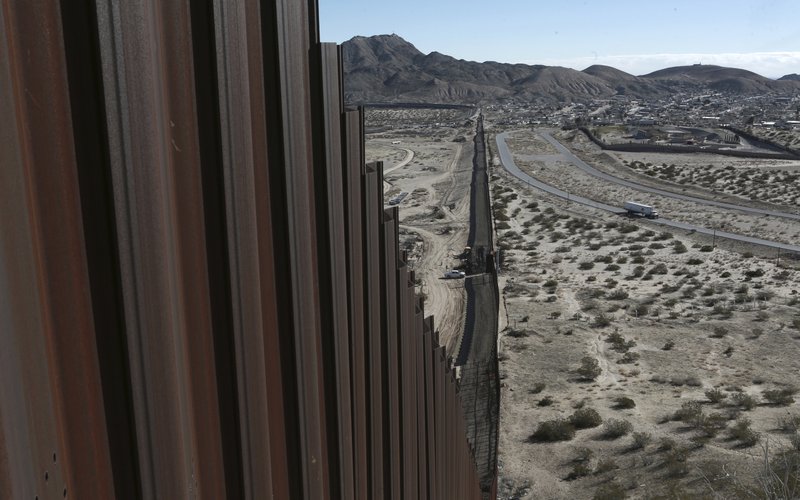
Most folks across East Alabama watched with excitement on January 25th as President Donald Trump signed an executive order to strengthen our country’s immigration laws. I, too, applauded our new president’s action to take seriously our nation’s immigration crisis. As a senior member of the House Homeland Security Committee, I have long been an advocate for protecting American taxpayers from the enormous costs of illegal immigration. President Trump’s action stated his intent to build a wall along our southern border. The Secure Fence Act of 2006 authorized the building of a fence along our southern border. I am proud to say that I was a cosponsor of that legislation then, and I remain a strong supporter of that law now. Though President Obama ignored this public law, we in the Congress will work with our new president to build the wall once and for all. Recently, in a House Homeland Security Committee hearing I was able to speak with Department of Homeland Security Secretary Kelly about our shared efforts. I believe border wall construction is a time-sensitive issue and should start as soon as possible. In order to jumpstart construction of the wall, I will sponsor a bill, the Border Security Funding Act of 2017, which will require illegal workers to pay a fee on money they send away to their home countries. This bill will also strengthen penalties for any country benefitting from illegal immigrant work in America. Thankfully, with Jeff Sessions becoming our Attorney General, we will finally have a strong supporter of the rule of law at the DOJ. By building a border wall and enforcing the laws on the books, American can start to reclaim its sovereignty. I am looking forward to working closely with the Trump administration to curb America’s illegal immigration problem. • • • Mike Rogers is a member of U.S. Congress representing Alabama’s 3rd Congressional District.
