
Budget deal allows far less money than Donald Trump wanted for wall

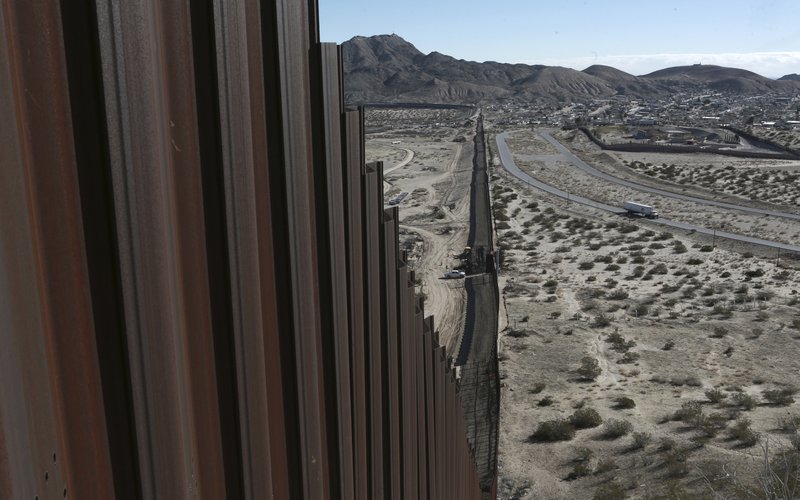
Congressional negotiators reached agreement to prevent a government shutdown and finance construction of new barriers along the U.S.-Mexico border, overcoming a late-stage hang-up over immigration enforcement issues that had threatened to scuttle the talks. Republicans were desperate to avoid another bruising shutdown. They tentatively agreed Monday night to far less money for President Donald Trump’s border wall than the White House’s $5.7 billion wish list, settling for a figure of nearly $1.4 billion, according to congressional aides. The funding measure is through the fiscal year, which ends on Sept. 30. It’s not clear whether Trump will support the deal, although GOP negotiators said they were hopeful. The agreement means 55 miles (88 kilometers) of new fencing — constructed through existing designs such as metal slats instead of a concrete wall — but far less than the 215 miles (345 kilometers) the White House demanded in December. The fencing would be built in the Rio Grande Valley in Texas. “With the government being shut down, the specter of another shutdown this close, what brought us back together I thought tonight was we didn’t want that to happen” again, said Senate Appropriations Committee Chairman Richard Shelby, Republican-Ala. Details won’t be officially released until Tuesday, but the pact came in time to alleviate any threat of a second partial government shutdown this weekend. Aides revealed the details under condition of anonymity because the agreement is tentative. “Our staffs are just working out the details,” said House Appropriations Committee Chairwoman Nita Lowey, Democrat-N.Y. The pact also includes increases for new technologies such as advanced screening at border entry points, humanitarian aid sought by Democrats, and additional customs officers. This weekend, Shelby pulled the plug on the talks over Democratic demands to limit immigrant detentions by federal authorities, frustrating some of his fellow negotiators, but Democrats yielded ground on that issue in a fresh round of talks on Monday. Asked if Trump would back the deal, Shelby said: “We believe from our dealings with them and the latitude they’ve given us, they will support it. We certainly hope so.” But Fox News Channel’s Sean Hannity, a Trump ally, said the barrier money in the agreement was inadequate. He warned late Monday that “any Republican that supports this garbage compromise, you will have to explain.” Trump traveled to El Paso, Texas, for a campaign-style rally Monday night focused on immigration and border issues. He has been adamant that Congress approve money for a wall along the Mexican border, though he no longer repeats his 2016 mantra that Mexico will pay for it, and he took to the stage as lawmakers back in Washington were announcing their breakthrough. “They said that progress is being made with this committee,” Trump told his audience, referring to the congressional bargainers. “Just so you know, we’re building the wall anyway.” Democrats carried more leverage into the talks after besting Trump on the 35-day shutdown but showed flexibility in hopes on winning Trump’s signature. After yielding on border barriers, Democrats focused on reducing funding for detention beds to curb what they see as unnecessarily harsh enforcement by Immigration and Customs Enforcement, or ICE. The agreement yielded curbed funding, overall, for ICE detention beds, which Democrats promised would mean the agency would hold fewer detainees than the roughly 49,000 detainees held on Feb. 10, the most recent date for which figures were available. Democrats claimed the number of beds would be ratcheted down to 40,520. But a proposal to cap at 16,500 the number of detainees caught in areas away from the border — a limit Democrats say was aimed at preventing overreach by the agency — ran into its own Republican wall. Democrats dropped the demand in the Monday round of talks, and the mood in the Capitol improved markedly. Trump met Monday afternoon with top advisers in the Oval Office to discuss the negotiations. He softened his rhetoric on the wall but ratcheted it up when alluding to the detention beds issue. “We can call it anything. We’ll call it barriers, we’ll call it whatever they want,” Trump said. “But now it turns out not only don’t they want to give us money for a wall, they don’t want to give us the space to detain murderers, criminals, drug dealers, human smugglers.” The recent shutdown left more than 800,000 government workers without paychecks, forced postponement of the State of the Union address and sent Trump’s poll numbers tumbling. As support in his own party began to splinter, Trump surrendered after the shutdown hit 35 days, agreeing to the current temporary reopening without getting money for the wall. The president’s supporters have suggested that Trump could use executive powers to divert money from the federal budget for wall construction, though he could face challenges in Congress or the courts. The negotiations hit a rough patch Sunday amid a dispute over curbing ICE, the federal agency that Republicans see as an emblem of tough immigration policies and Democrats accuse of often going too far. According to ICE figures, 66 percent of the nearly 159,000 immigrants it reported detaining last year were previously convicted of crimes. Reflecting the two administration’s differing priorities, in 2016 under President Barack Obama, around 110,000 immigrants were detained and 86 percent had criminal records. Few convictions that immigrants detained last year had on their records were for violent crimes. The most common were for driving while intoxicated, drugs, previous immigration convictions and traffic offenses. The border debate got most of the attention, but it’s just part of a major spending measure to fund a bevy of Cabinet departments. A collapse of the negotiations would have imperiled another upcoming round of budget talks that are required to prevent steep spending cuts to the Pentagon and domestic agencies. Republished with permission from the Associated Press
Border security bargainers trade offers as deadline nears

Congressional bargainers traded offers and worked toward a border security compromise Friday that would avert a fresh federal shutdown and resolve a clash with President Donald Trump that has dominated the opening weeks of divided government. differences Both sides’ negotiators expressed optimism that an accord could be reached soon on a spending package for physical barriers along the Southwest border and other security measures. Participants said the agreement would all but certainly be well below the $5.7 billion Trump has demanded to build his proposed wall, and much closer to the $1.6 billion that was in a bipartisan Senate bill last year. “That’s what we’re working toward,” said Rep. Lucille Roybal-Allard, Democrat-Calif., one of the bargainers. Besides the dollar figure, talks were focusing on the type and location of barriers, participants said. Also in play were the number of beds the federal Immigration and Customs Enforcement agency could have for detained migrants, and how much aid for natural disaster relief would be included. Money for high-tech surveillance equipment and more personnel was also expected to be included. No one ruled out that last-minute problems could emerge, especially with Trump’s penchant for head-snapping turnabouts. But the momentum was clearly toward clinching an agreement that Congress could pass by next Friday. The next day, government agencies would have to close again for lack of money, if no deal is reached. Negotiator Rep. Chuck Fleischmann, Republican-Tenn., said the latest Democratic offer was “much more reasonable.” And Democratic bargainer Rep. Pete Aguilar of California said, “Each time an offer and a counter is going back and forth the number of open items is reducing. That is progress.” Rep. Mark Meadows, Republican-N.C., who leads the hard-right House Freedom Caucus, said he spoke Thursday night to Trump, who he said was in “wait and see” mode. Meadows said he expects an agreement to provide something closer to $1.6 billion. “I’m not optimistic it’ll be something the president can support,” Meadows said. A conservative House GOP aide said to back a deal, Freedom Caucus members wanted at least $2 billion for barriers and no restrictions on new construction, land acquisition or new types of barriers that could be built. The aide also said the agreement need not contain the term “wall” — a word that was a premier plank of Trump’s presidential campaign, and which Trump has lately alternated between embracing and abandoning. The person would talk only on condition of anonymity to describe private talks. Meadows’ assessment of Trump’s view clashed with one expressed Thursday by Sen. Richard Shelby of Alabama, the chief GOP bargainer. He described the emerging deal to Trump in the Oval Office and told reporters the session was “the most positive meeting I’ve had in a long time.” Shelby said that if the final agreement followed the outline currently under discussion, he believed Trump “would sign it.” Trump has modest leverage in the battle. Besides facing unified Democratic opposition, there is virtually no GOP support in Congress for another shutdown. When congressional talks began, Trump called them a “waste of time.” “They’ve got to come to a solution that actually does what they promised they would do, which is protect the American people,” White House spokesman Hogan Gidley said on Fox News. Trump faces an aggressive, Democratic-led House that is ramping up investigations into Russian involvement in his campaign and businesses and trying to get access to his income tax returns. But ending the border security fight would close one chapter that’s bruised him, including his surrender after a 35-day partial federal shutdown that he started by unsuccessfully demanding taxpayer money to build the border wall. Even with a deal, it was possible Trump might try using claims of executive powers to reach for more wall funding. That could spark votes by Congress to block him, which Trump could veto but would still inflict political damage. Sen. Lindsay Graham, Republican-S.C., said Thursday that an accord could be “a good down payment” and added, “There are other ways to do it and I expect the president to go it alone in some fashion.” Acting White House Chief of Staff Mick Mulvaney said on Fox News Channel’s “Hannity” on Wednesday, “If Congress won’t participate or won’t go along, we’ll figure out a way to do it with executive authority.” Members of both parties have expressed opposition to Trump bypassing Congress by declaring a national emergency at the border, a move that would be certain to produce lawsuits that could block the money. Lawmakers have grown accustomed to expecting the unexpected from Trump. Before Christmas, both parties’ leaders believed he’d support a bipartisan deal that would have prevented the recently ended shutdown, only to reverse himself under criticism from conservative pundits and lawmakers. “There’s a small light at the end of the tunnel,” said Sen. Pat Roberts, Republican-Kan. “We just hope it’s not a train coming the other way.” Republished with permission from the Associated Press
Richard Shelby: Border security meeting with Donald Trump ‘the most positive I’ve had in a long time’
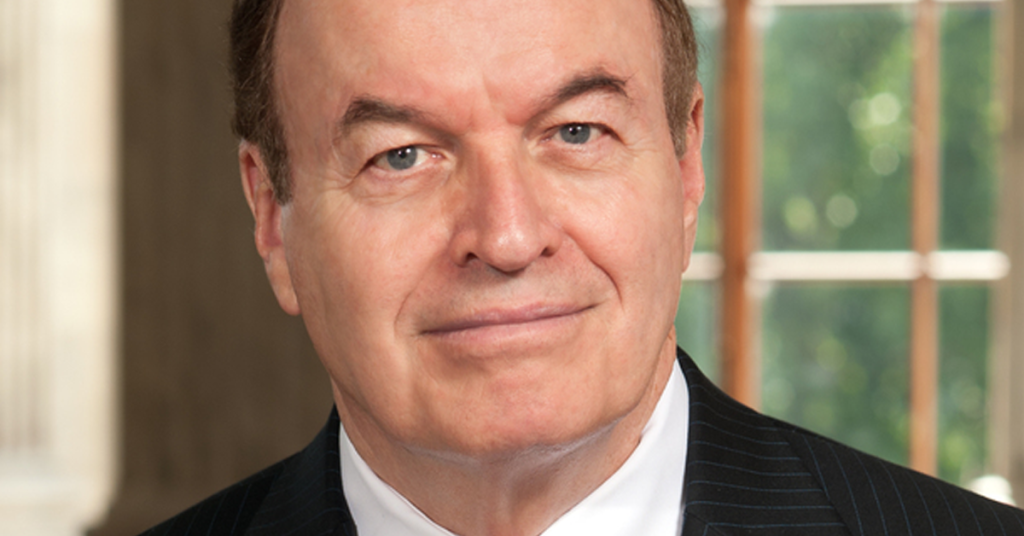
President Donald Trump appears to be taking a more positive view of Capitol Hill talks on border security, according to negotiators who struck a distinctly optimistic tone after a White House meeting with a top Republican on the broad parameters of a potential bipartisan agreement. Appropriations Committee Chairman Richard Shelby of Alabama said Thursday’s session in the Oval Office was “the most positive meeting I’ve had in a long time” and that the president was “very reasonable.” Down Pennsylvania Avenue at the Capitol, the mood among negotiators was distinctly upbeat, with participants in the talks between the Democratic-controlled House and GOP-held Senate predicting a deal could come as early as this weekend. There’s a Feb. 15 deadline to enact the measure or a stopgap spending bill to avert another partial government shutdown, which neither side wants to reprise. Republicans are especially eager to avoid another shutdown after they got scalded by the last one. Trump had previously called the talks a “waste of time,” and he’s threatened to declare a national emergency to bypass Congress and build a wall on the U.S.-Mexico border. But Shelby said Trump during their meeting “urged me to get to yes” on an agreement. Publicly on Thursday Trump took a wait-and-see approach. “I certainly hear that they are working on something and both sides are moving along,” Trump said. “We’ll see what happens. We need border security. We have to have it, it’s not an option. Let’s see what happens.” The White House is committed to letting the negotiations play out, with some saying they are “cautiously optimistic” about getting a deal they could live with, said a senior administration official who lacked authorization to publicly discuss internal deliberations and spoke on condition of anonymity. The new openness comes after Trump delivered a well-received State of the Union speech in which he preached the value of bipartisanship. Despite the newfound optimism, Trump continues to threaten to declare a national emergency to circumvent Congress if lawmakers fail to reach a deal he can stomach. Still, Sen. Lindsay Graham, Republican-S.C., a close ally of Trump, said Thursday that the deal could be a good starting place — suggesting Trump could take additional action if needed to secure more wall funding without congressional approval. “I would recommend that this will probably be a good down payment and what else is lacking, the delta between what you want and what you get, there are other ways to do it, and I expect the president to go it alone in some fashion,” Graham told reporters. Shelby said he and Trump didn’t discuss whether Trump still might use an emergency declaration even if there’s a deal, saying: “The president’s got constitutional powers. … I would think he wouldn’t, but I don’t know what the situation” will be. Beyond the border security negotiations, the measure is likely to contain seven appropriations bills funding domestic agencies and the foreign aid budget, as well as disaster aid for victims of last year’s hurricanes and western wildfires. “I’m hopeful,” said Senate Majority Leader Mitch McConnell, R-Ky. “I do like the idea of getting all of last year’s work finished, and I hope that’s where it ends up.” Any move by Trump to fund a border barrier by executive fiat, however, would roil many Republicans on Capitol Hill, raising the likelihood that both House and Senate could pass legislation to reverse him. Trump could veto any such measure, but he’s also certain to face a challenge in the courts. “If Congress won’t participate or won’t go along, we’ll figure out a way to do it with executive authority,” Acting White House Chief of Staff Mick Mulvaney said on Fox News Channel’s “Hannity” on Wednesday. Mulvaney said that the administration has identified well more than $5.7 billion to transfer to wall construction, saying they would try to avoid legal obstacles. “Find the money that we can spend with the lowest threat of litigation, and then move from that pot of money to the next pot that maybe brings a little bit more threat of litigation,” Mulvaney said. It’s clear that Trump won’t get anything close to the $5.7 billion he’s demanded for wall construction, just as House Speaker Nancy Pelosi, Democrat-Calif., will have to depart from her view that there shouldn’t be any wall funding at all. Last year, a bipartisan Senate panel approved $1.6 billion for 65 miles of pedestrian fencing in Texas — in line with Trump’s official request. The negotiations aren’t likely to veer very far from that figure, aides involved in the talks said, and newly empowered House Democrats were looking to restrict use of the money. A key negotiator, Sen. Dick Durbin, Democrat-Ill., said details on nettlesome border wall issues haven’t been worked out. Sen. Roy Blunt, Republican-Mo., another participant, said both sides are showing flexibility, including Democrats who insisted during the recently-ended 35-day shutdown on no wall funding at all. “They are not opposed to barriers,” Blunt said about Democrats. “And the president, I think, has embraced the idea that there may actually be something better than a concrete wall would have been anyway.” Pelosi told reporters Thursday that she was hopeful of an agreement that would “protect our borders as we protect our values.” Rep. Lucille Roybal-Allard, Democrat-Calif., another negotiator, acknowledged that Democrats could possibly lose votes on any final deal and that it’s “unrealistic” to think there would be no funding at all for any physical barriers. “Like in any negotiation — if the Republicans and the White House are saying they need barriers, wall, whatever you want to call it, and that is an absolute objective, and we’re saying we want some other things — like in anything else, it’s a trade off,” she said. Among the things Democrats are battling against are higher levels of funding for detention beds to hold migrants crossing into the U.S. illegally. ___ This story has been corrected to reflect the White House meeting was between Trump and Shelby, not between
Richard Shelby says ‘The dialogue is good’ as wall deadline nears
President Donald Trump and House Speaker Nancy Pelosi struck starkly different tones in their border security standoff Wednesday, as Trump planned a rally in a Texas border city he says exemplifies the need for a wall and Pelosi said she’d back any bipartisan deal congressional bargainers produce. The contrasting pathways — with Trump set to appear before raucous supporters and Pelosi signaling compromise — came with just over a week until a Feb. 15 deadline for negotiators to reach agreement or potentially face a renewed partial government shutdown. House-Senate bargainers say their talks have become increasingly substantive and some lawmakers — including Pelosi herself — expressed hopes that negotiators might produce an accord as soon as Friday. Participants said the two sides were narrowing differences in their talks. Rep. Chuck Fleischmann, Republican-Tennessee, a negotiator, said Democrats were showing some flexibility in the semantic dispute over the type of physical barriers they would accept while Republicans seemed potentially willing to limit where the structures might be built. “That basically sets the stage for a very reasonable, flexible negotiation,” he said. Other unresolved questions include the amount to be spent on border security, and whether — as Democrats have proposed — to reduce the number of detention beds for migrants available to the federal Immigration and Customs Enforcement agency, Fleischmann said. “If they come up with a bipartisan agreement, I’m happy to support it,” Pelosi, Democrat-California, told reporters. She said she hoped Trump would take “the same hands off” approach. Democrats have been in a position of strength in the talks, after Republicans lost House control in November’s elections, Trump forced a record 35-day federal shutdown and surrendered without getting $5.7 billion he’s demanded for a wall. Senate Majority Leader Mitch McConnell, Republican- Kentucky, has also given bargainers a green light to seek a deal that he’s said he hopes Trump would find “worth signing.” If Pelosi and McConnell embrace a bipartisan agreement, it could isolate Trump and pressure him to accept it without re-escalating the fight. Trump has threatened a new shutdown or a declaration of a national emergency to access other budget funds if he’s not satisfied with a deal — steps members of both parties oppose. Bargainers met Wednesday privately for nearly two hours with federal border patrol and customs officials to hear their recommendations on how to secure the Southwest border. But several lawmakers emerged with differing conclusions. No. 2 Senate Democratic leader Richard Durbin said lawmakers were told the top priority was technology that could screen vehicles for drugs or migrants at border ports of entry. “They don’t rule out barriers, they don’t rule out fencing, but that isn’t the first priority,” Durbin told reporters. But Sen. Richard Shelby, Republican- Alabama, said the officials suggested a three-pronged approach using barriers, technology and personnel. He said the closed-door session was constructive. “The dialogue is good. The tone is good. We’re talking about substance,” Shelby said. He also said that in a phone conversation with Pelosi, “I just said, ‘Look, can we reach a yes on this in any way or are we wasting our time.’ She said, ‘No, keep working together,’ and she would like to see a legislative solution, the sooner the better.” In comments that suggested a potential avenue for agreement, some lawmakers suggested that giving local officials a say would be pivotal. “We can probably get there on some sort of enhanced barriers with local input,” said another negotiator, Rep. Henry Cuellar, Democrat-Texas. Democrats have proposed spending as much as $1.6 billion for border security including some types of physical barriers, but it remains unclear how much more money they’d accept as part of a deal. Cuellar said $5.7 billion for the wall is “not going to happen.” Meanwhile, the White House said Trump will hold his first campaign rally of the year next Monday in El Paso, Texas. His campaign manager, Brad Parscale, tweeted that the rally will be held “less than 1000 feet from the successful border fence that keeps El Paso safe!” In his State of the Union address Tuesday, Trump cited El Paso as once having “extremely high rates of violent crime. He asserted that with its wall, “El Paso is one of the safest cities in our country.” In fact, El Paso has never been considered one of the nation’s most dangerous cities and its trends in violent crime mirror national swings. In 2005, the city had a murder rate of 2.5 for every 100,000 residents, compared with a national rate of 5.6. By 2010 after the wall was built, El Paso’s murder rate had dropped to 0.9 for every 100,000 residents, compared with a national average of 4.8. Rep. Veronica Escobar, Democrat-Texas, tweeted that “El Paso has been one of the safest cities in the nation long before the wall was built in 2008. #WallsDontWork.” “El Paso is safe due to its people, the good community relations with law enforcement, and the trust of all communities in our local institutions,” Fernando Garcia, executive director of the Border Network for Human Rights, said in a statement. “El Pasoans should be offended by the way the president used our community to advance his racist and xenophobic agenda.” Republished with permission from the Associated Press
Steve Marshall calls on Congress to fully fund Donald Trump’s border wall
Alabama Attorney General Steve Marshall isn’t mincing words — he wants the new Congress to fully fund President Donald Trump‘s border wall with Mexico. On Thursday, Marshall called on the new Congress to fully fund a border wall to protect Americans and uphold the rule of law. He also criticized incoming U.S. House Speaker Nancy Pelosi for deliberately ignoring border security by pushing a budget plan that funds every remaining federal agency for the balance of fiscal 2019 except for the U.S. Department of Homeland Security. “It is the fundamental role of government to provide for the safety and security of its citizens and yet many in Washington, D.C., shirk this basic duty in order to score political points,” said Marshall. “Shame on them and shame on Speaker Pelosi for turning a blind eye to continued security threats to Americans by refusing to fund a border wall and the vital operations of U.S. Homeland Security. Marshall continued, “As Alabama’s Attorney General, I am deeply troubled by the steady stream of dangerous illegal drugs entering my state and the impact it has on our citizens and law enforcement. Drug trafficking, human trafficking and many violent crimes committed in Alabama can be traced to criminal elements crossing our country’s borders and the failure of current efforts to secure our border.” Marshall made the request less than a day after news broke that a previously deported illegal immigrant was charged with first-degree rape of a juvenile in Alabaster, Ala. “This week, we learned that a criminal alien previously deported for drug crimes illegally reentered the country—even returning to Alabama where his original crimes were committed—and was charged with the rape of a minor. Where does it end? When does it end? It ends with a border wall as the backbone of a serious and effective border-security strategy that protects Alabamians and all Americans.” Attorney General Marshall participated in a White House panel on protecting America’s borders in August 2018.
Martha Roby: Border security is a priority for Alabamians

As a member of the House Appropriations Committee, one of my jobs is to work alongside my colleagues to see that the government is funded on time each year. It’s no secret that the process is far from perfect and Congress often falls short of executing this important responsibility in the way our founding fathers intended, but this year, I am glad to report that we have taken steps in the right direction. As you may know, current government funding expires on December 7, and as of now, we have already funded 75 percent of the government under regular order. We have done our job to fund our military and the Department of Veterans Affairs on time, and now it is imperative that we build upon this positive momentum by properly funding the rest, including the Department of Homeland Security, in order to crack down on our country’s illegal immigration problem. I’m sure you have seen the recent news reports about the caravan of individuals trying to force their way across our southern border. This situation is deeply troubling, and it is a direct threat to our national security. The unfortunate truth, however, is that this isn’t the first time something like this has occurred, and until we truly secure our border, it won’t be the last. Let me be clear: Our immigration system is broken, and it badly needs to be reformed. But, any real, meaningful discussions about reforms to the existing system absolutely must begin with securing the border. As I always say, if you have a leak in your house, you don’t replace the drywall until you fix the leak. In the same way, we cannot attempt to solve the larger problem with our immigration system until we stop the flow of illegal immigrants across our border. That’s why it is critical that Congress fully fund the Department of Homeland Security, which oversees border security and immigration, to provide the resources and tools necessary to secure the border, including President Trump’s request for a border wall. Last year, we put a down payment on construction of a wall along our southern border, and this year, it is our responsibility to direct additional funds towards this important measure and others. With my seat on the House Appropriations Committee, I’m in a strong position to ensure that many of our Alabama priorities are properly funded from year to year. Border security is one of those priorities, and I am eager to get this important work done. ••• Martha Roby represents Alabama’s Second Congressional District. She lives in Montgomery, Alabama, with her husband Riley and their two children.
Bradley Byrne: Border security must always come first
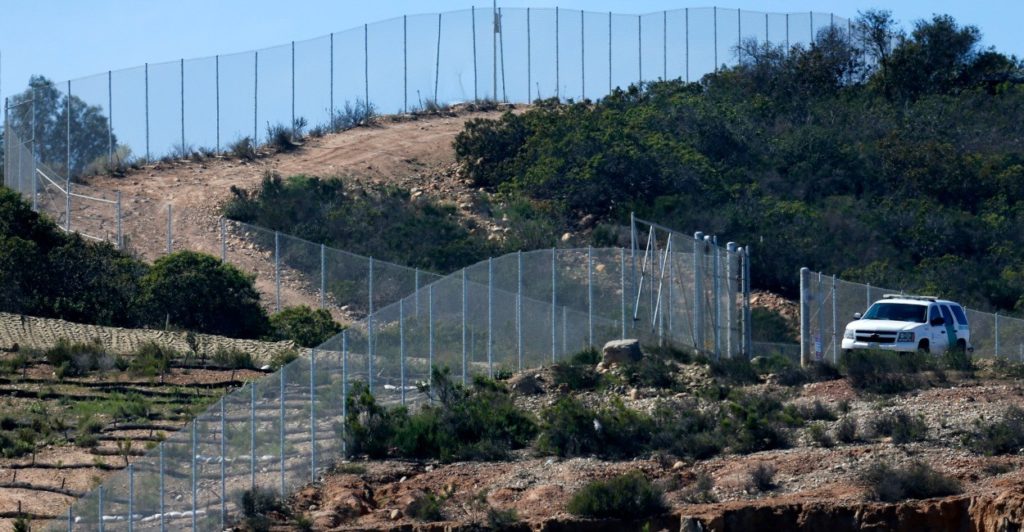
If you have turned on your television recently, you have probably heard about the ongoing immigration debate in our country. Here in Congress, it is an issue that has drawn much of our attention as well. Since being elected to Congress, I have held two top principles when it comes to the immigration debate. First, I do not and will not support granting amnesty to those who are in our country illegally. Second, any immigration reform bill must start with a sincere and tangible effort to secure the border. Until the border is secure, any other immigration efforts would be in vain. Recently, the House voted on two separate immigration bills that were designed to help crack down on illegal immigration. One bill, the Securing America’s Future Act, earned my support. The bill included very strong border security provisions, made the E-Verify program mandatory, and satisfied President Trump’s four pillars for immigration reform. Unfortunately, the bill failed by a vote of 193 to 231. Another bill, the Border Security and Immigration Reform Act, failed to earn my support. The bill would have created a special pathway to citizenship for over 1.8 million illegal immigrants. The legislation would have unfairly allowed these illegal immigrants to jump in front of thousands who are waiting to come into our country the right way. Thankfully, the bill did not receive the support necessary to pass. Despite the failure of these two bills, we must not give up in our efforts to secure the border, close loopholes in our immigration system, and ensure our immigration laws are fully enforced. This issue is far too important to the safety and security of the American people. The immigration issue has also hit close to home with reports that the Department of Homeland Security and the Department of Defense are considering housing up to 25,000 illegal immigrants at Navy outlying airfields in south Baldwin County. I am working with local leaders and my Alabama colleagues to once again fight this flawed proposal tooth and nail. Housing anyone in tents on the Gulf Coast during the heat of summer and the heart of hurricane season would be inhumane and a major mistake. Not to mention that these airfields lack even basic infrastructure, such as running water, housing, or restroom facilities, to provide even basic needs for detained immigrants. I also believe we need to return these illegal immigrants to their home countries as quickly as possible. It makes no sense to bring them so far away from the border when the ultimate goal is to return them to their home countries. Another issue that has drawn national attention is the Trump Administration’s zero tolerance policy, which says that anyone who crosses the border illegally will be prosecuted. I strongly support the policy because we are a nation of laws, and we must enforce the laws. That said, like President Trump, I do not support separating children from their families at the border. This is why I have co-sponsored a bill from Senator Ted Cruz (R-TX) and Congressman Dave Brat (R-VA) that would allow families to stay together while speeding up the processing and review of asylum cases. The bill would also devote funding to double the number of federal immigration judges and authorize the construction of new temporary shelters close to the border to keep families together. As we continue to crack down on illegal immigration and ensure our borders are secure, I welcome your ideas and feedback. aThese are complicated and difficult issues, but they are so critical to the future of our country. We cannot become a country with open borders and no rule of law. • • • Bradley Byrne is a member of U.S. Congress representing Alabama’s 1st Congressional District.
Martha Roby: Discriminating against companies contracted to secure border is unacceptable
It has recently been reported that several city and state governments are considering laws and ordinances to blacklist federal contractors because they wish to work on bolstering the infrastructure at the southern border, including construction of a wall. For example, the California State Senate considered legislation that would force the state to drop its investments in any companies involved in border security projects. Earlier this year, the City Council of Austin, Texas, approved a resolution banning the city from conducting business with contractors working on the southern border wall. These aren’t the only examples of this discriminatory behavior, and I find this deeply troubling to say the least. I have had countless conversations about our country’s illegal immigration problem with many of the people who live and work in Alabama’s Second District, and the overwhelming majority of individuals I’ve spoken with agree: When it comes to illegal immigration, our top priority must be securing the border. It is absolutely vital that we do this to put an end to individuals crossing into our country illegally. In order to strengthen the border infrastructure, we must have a qualified workforce and experienced businesses that are able to operate without discrimination or retaliation for simply following federal government contract directives of building a secure system – a wall – along our southern border. This type of behavior is dangerous because when private companies are threatened with the looming possibility of discrimination of this kind, it can understandably cause them to hesitate to volunteer their work to play the many roles that the federal government asks them to play in delivering on the goods and services necessary to protect our national security interests, specifically as it relates to securing our border. Unless checked, these emboldened state and local officials will further discriminate against companies that perform any number of critical national security tasks on behalf of our federal government. These discriminatory measures could easily multiply as state and local officials attempt to deter the construction of anything they consider offensive to their own beliefs. While this situation is very unsettling, I am pleased to report that the Department of Justice is fully aware of what’s going on and plans to take action. I recently had the opportunity to discuss this matter with Attorney General Jeff Sessions when he testified before the Commerce, Justice, and Science Appropriations Subcommittee, on which I am proud to serve. During the hearing, I asked our Attorney General when and how the Justice Department plans to respond to these state and local governments about their discriminatory behavior. I appreciated his direct response: “We will not accept it. This is an unbelievable assertion of power. We don’t believe it is sustainable legally, and we will challenge it wherever there is a case to be proven.” Congress, and only Congress, has the power to change or alter our immigration laws – not various local or state governments. By discriminating against these companies based on their personal opposition to the construction of a border wall, these governments are undermining the constitutional Supremacy Clause of the federal government. I appreciate our Attorney General and his diligent work to combat our serious illegal immigration problem, and I will continue to tackle the issue in every way I can as your representative in Congress. For now, Attorney General Sessions and I have made our position clear: Discriminating against companies for their important work to strengthen border security as directed by the federal government is unacceptable, and we will fight it every step of the way. ••• Martha Roby represents Alabama’s Second Congressional District. She lives in Montgomery, Alabama with her husband Riley and their two children.
Jeff Sessions to address immigration at border sheriffs meeting
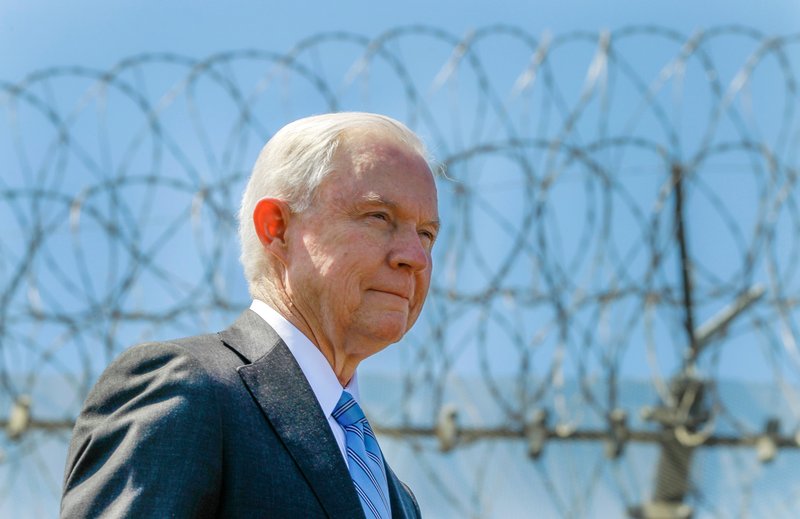
As thousands of National Guard troops deploy to the Mexico border, U.S. Attorney General Jeff Sessions plans to bring his firm stance on immigration enforcement to New Mexico where a group of Southwest border sheriffs are meeting Wednesday. Sessions will speak in Las Cruces at the Texas Border Sheriff’s Coalition Annual Spring Meeting with the Southwestern Border Sheriff’s Coalition, which is made up of 31 sheriff’s departments from Texas, New Mexico, Arizona and California. Their counties are located within 25 miles (40 kilometers) of the U.S.-Mexico border. Immigrant rights activists promised to protest Sessions’ visit on Wednesday, as they rejected his past characterization of the border region during a 2017 visit to El Paso, Texas, as “ground zero” in the Trump administration’s fight against cartels, and human traffickers. “He treated our home like a war zone, referring to it as ‘ground zero,’” said Fernando Garcia, executive director of the Border Network for Human Rights in El Paso. “He was wrong then, and he is wrong now.” El Paso is some 50 miles (80 kilometers) south of Las Cruces. Sessions’ trip to Las Cruces, a city about an hour north of the border, comes as construction begins nearby on 20-miles (32-kilometers) of steel fencing that officials say is a part of President Donald Trump’s promised wall. U.S. Customs and Border Protection officials have described the new, heightened barrier as a structure that will be harder to get over, under and through than the old post and rail barriers that has lined the stretch of the border’s El Paso sector. Sessions has issued an order directing federal prosecutors to put more emphasis on charging people with illegal entry, citing a “crisis” on the border. A 37 percent increase in illegal border crossings in March brought more than 50,000 immigrants into the United States, which was triple the number of reported illegal border crossings in the same period last year. It was still far lower, however, than the surges during the last years of the Obama administration and prior decades. The attorney general’s “zero-tolerance” for border-crossing prosecutions calls for taking action against people who are caught illegally entering the United States for the first time. In the past, such offenses have been treated as misdemeanors. He also recently set quotas for immigration judges to reduce enormous court backlogs, saying they must complete 700 cases a year to earn a satisfactory grade. The quotas take effect Oct. 1. Republished with permission from the Associated Press.
The key to a DACA deal: Stick to your principles

We’re at a crossroads in the United States of America when it comes to our immigration system. Many Americans’ feel like the system isn’t working to benefit them, but to benefit foreigners at the expense of people who are already American citizens. Many people who have spent their life working hard-labored jobs feel that the importation of immigrants from poor parts of the world have cost them their job or forced their wages to go down. The decline in wages and accessibility to these types of blue-collar jobs likely have more to do with the technological revolution and automation than with immigration, but that doesn’t mean people who feel this way don’t have a point. The reality is that America does bring in low-skilled immigrants and needs to transition to a more modern, merit-based immigration system. At the same time, immigrants from poor parts of the world are more likely to appreciate the American dream and have respect for values such as freedom of speech and free enterprise, which brings me to the Deferred Action for Childhood Arrivals (DACA) program. By all account the majority of the 800,000 recipients in the DACA program, are good people, and I don’t think anybody faults them for the law-breaking actions of their parents. These kids were brought here as minors and those who have been law-abiding, and sought out a job and an education deserve the opportunity to continue to be a part of the American dream. However, a pathway to citizenship cannot be provided for anybody who happens to be here illegally if we don’t secure our borders first. While the immigration debate can bring out the worst in some people, the need to secure our borders should be something that transcends ideology. The constitution demands that the United States government secure our border, which is something they have clearly failed to do over the past few decades. If a path to citizenship is provided for any group of undocumented immigrants, without the guarantee of first securing the border — that is simply poor public policy and an invite for people to bring their families across our border, with the guarantee that their kids get to stay. I believe that there is a dark side to today’s immigration debate. Folks on the far-right, whom will slur anybody prepared to go to the negotiating table as shills for “amnesty,” or “open borders,” even when those same people are demanding border security. Those on the far-left will ridicule Democrats who agree to border security as racist. Both Democrats and Republicans should understand that the loudest voices in the immigration debate don’t speak for the American people or the majority of either party’s voters. I urge all lawmakers on both sides: block out the noise and stick to your principles. Don’t be afraid to tick off some folks. Only then will real, comprehensive immigration reform be possible. ••• William Davis is a sophomore at the University of Alabama. There he is involved in various conservative groups and organizations.
Martha Roby: House takes steps to secure the southern border
Immigration was one of the most hotly debated issues during the last presidential election, so it’s no surprise that there continue to be significant developments on these policies. I wanted to provide an update and share some of the progress we’ve made in the House to change the course of our nation’s illegal immigration problem. As you probably know, the Trump Administration recently announced that it would end the Deferred Action for Childhood Arrivals (DACA) program. President Barack Obama established DACA in 2012 to allow undocumented immigrants who were brought to the United States as children to avoid deportation and obtain renewable work authorization. Since then as many as 800,000 individuals have been accepted into DACA. Whether you agree or disagree with the intention of the program, DACA was a blatantly unconstitutional abuse of executive power. Attorney General Jeff Sessions is right to phase out this program and allow Congress time to craft the appropriate policy in an orderly and constitutional manner. I believe our immigration policies should discourage illegal entry, not reward it. In addressing this problem, we must also recognize and sympathetic to the fact that these individuals were brought here as children and not of their own accord. This is just one of the many areas of immigration law that needs to be fixed, and I look forward to working with my Judiciary Committee colleagues to craft policies that restore the rule of law and promote America’s economic interests. When it comes to cracking down on illegal immigration, I believe most of us agree that we should start by targeting the dangerous criminals who put Americans at risk. That’s why I was proud to recently vote in favor of H.R. 3697, the Criminal Alien Gang Member Removal Act. This bill will amend the law to finally make a person’s history of involvement in a criminal gang grounds for inadmissibility into this country. This bill would also allow law enforcement agents to automatically detain and deport anyone found to be a criminal alien gang member. You might read this and wonder, “What gang violence?” The most notorious Latin American gang is known as MS-13. It began in the 1980s and has grown to an estimated 8,000 members in the United States. They have a violent history of organized crime in the areas of drug trafficking, kidnapping, human smuggling, sex trafficking, murder, assassinations, blackmail, and extortion. To paint a clear picture of just how violent MS-13 is, their motto is “Mata, Roba, Viola, Controla,” which translates to “Kill, Steal, Rape, Control.” If that isn’t enough to demonstrate the serious threat these individuals pose, MS-13 has been responsible for eight brutal murders in Northern Virginia alone just since last November. Our bill makes it crystal clear that criminal alien gang members are not welcome in this country, and if they should find themselves here, we are dedicated to getting them off the street. Also on the immigration front, the House took action to put a “down payment” on construction of a border wall. Our government-wide appropriations bill, the Make America Prosperous and Secure Appropriations Act, contains $1.6 billion for construction and security upgrades at the southern border. It is Congress’ responsibility to budget for national priorities, and securing the border is a top priority. We need bigger, stronger, and smarter barriers along our southern border, and that’s why our bill funds this down payment to begin construction. Immigration is a sensitive issue that many people on both sides of the argument have strong feelings about. There are no easy fixes, but I believe most Americans are ready for a sensible immigration system that promotes public safety, fairness, and economic growth. As a member of the Judiciary Committee, I will remain actively involved in this issue and I am optimistic we can continue to make real progress. ••• Martha Roby represents Alabama’s Second Congressional District. She lives in Montgomery, Alabama with her husband Riley and their two children.
GOP leaders dismiss James Comey firing as fleeting political drama
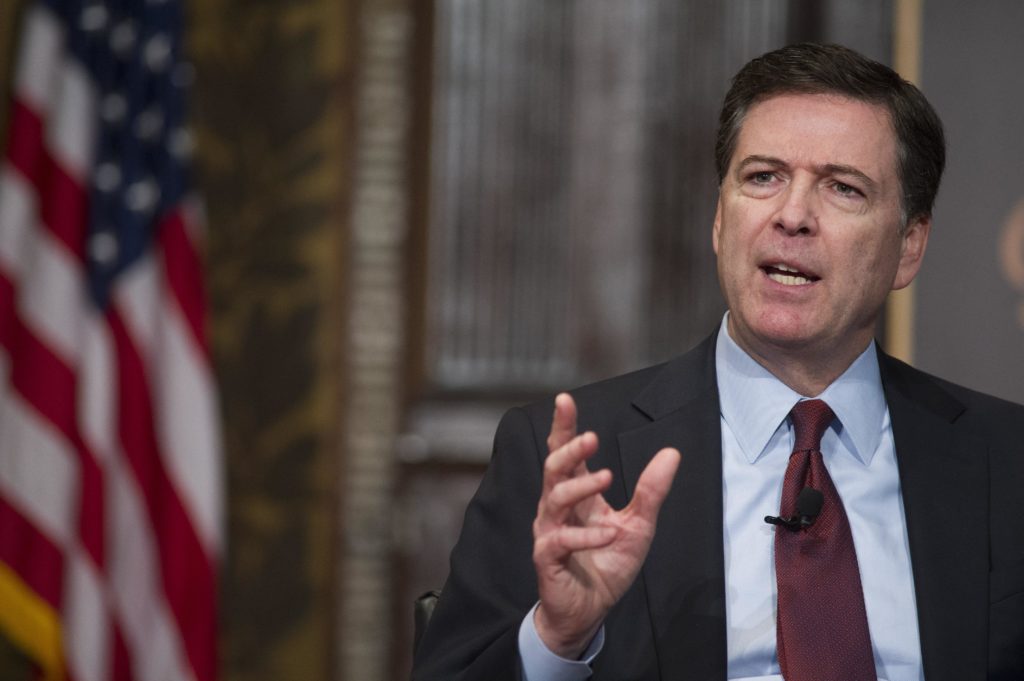
Chaos is President Donald Trump’s style, yet as long as the Republican delivers on health care, taxes and tapping a new FBI director as solid as his Supreme Court pick, GOP leaders say everything will be just fine. While Trump’s abrupt firing of FBI Director James Comey roiled Washington, Republicans who attended the national committee’s spring meeting outside San Diego this week defended the president’s actions and insisted that they would have little political impact on midterm elections next year. Even Trump’s Friday morning tweetstorm warning Comey that he had better hope there are no “tapes” of their private conversations and threatening to cancel White House media briefings failed to dent his support among several GOP leaders. Peter Goldberg, an Alaska committeeman, said Trump’s latest tweets about Comey are “just a distraction” and that reaction to the firing is like “a bee buzzing around your head. It’s going to go away. I think it’s going to disappear.” Goldberg, who grew up in New York, said he understood Trump’s style of governing. “Even during the campaign, some people might have thought of him as brash and I just thought of it as just an average New Yorker. It wasn’t bad, it’s just part of the culture where he was living.” Republicans said the issues that Trump campaigned on — repealing the Affordable Care Act, cutting taxes and boosting border security — would determine if the party keeps control of both houses of Congress. Trump addressed the crowd in a five-minute video, telling them their support will help Republicans keep control of the House next year and make gains in the Senate. “I’ll be going around to different states. I’ll be working hard for the people running for Congress and for the people running for the Senate. We could pick up a lot of seats, especially if it all keeps going like it’s going now,” the president said. Ron Nehring, a former committee member and former California Republican Party chairman, said Comey’s firing was far more important to journalists and Washington insiders than voters. “Every day that something unexpected comes up out of the White House, we see people freaking out and then outside of Washington it doesn’t really have that big of an impact,” he said. Dirk Haire, chairman of the Maryland Republican Party, said every president brings a new style. “President Trump’s style is chaos,” Haire said. “Would I personally like that? No, it would drive me nuts. That’s just the way he operates.” Among leading talk radio conservatives on Friday, criticism was directed at the news media for the use of anonymous sources on the story, not Trump. Laura Ingraham tweeted that the reporting was “false,” while Hugh Hewitt said Comey’s successor was what mattered. Hewitt did critique Trump’s suggestion that the White House cease holding briefings. Trump “needs more direct on-the-record” contact with the media, “not less,” Hewitt posted on Twitter. The harshest criticism came from conservative Erick Erickson, who described Trump as “self-immolating.” “The overwhelming majority of Trump voters will double down in their support of Trump,” Erickson wrote on his website Friday morning. “Many of us see this as unhinged, suspicious and headed toward impeachment-level.” At the RNC meeting, Kris Warner, a West Virginia committeeman, predicted that Comey’s successor will put to rest any voter misgivings about Trump’s handling of the FBI, holding up the president’s selection of Neil Gorsuch for a long-vacant seat on the Supreme Court as an example. “I expect nothing short of someone beyond reproach and (it) will be exactly what the country needs,” said Warner, a Trump delegate at last year’s party convention. “Look at his Supreme Court pick. Very impressed with that, and I would expect him to do the same with the FBI.” Party leaders said Trump was right to fire Comey, or at least that he had a right to do it. Kyle Hupfer, chairman of the Indiana Republican Party, said picking the FBI chief is a president’s prerogative, despite tradition that the post be held for 10 years regardless of who occupies the White House. He said backlash to Comey’s dismissal was “not resonating” with Indiana voters. David Bossie, a Maryland committeeman who was Trump’s deputy campaign manager during the final leg of last year’s race, conceded the news could have been better explained. “I think the White House communications shop needs to do a little better, and I think they’re going to get better at what they’re doing,” he said. “I think we had some mixed messages out there that didn’t help matters at all. But the president made the decision to fire Jim Comey. How that happened and the semantics of the timeline, people can debate over the next couple days.” On Thursday, about 300 protesters marched on the beach, chanting, “Hey, hey, ho, ho, Donald Trump has got to go!” They were kept a good distance from the iconic Hotel del Coronado, where some party members looked out from a patio bar. Republished with permission of The Associated Press.
