
Queen Elizabeth II, a monarch bound by duty, dies at 96
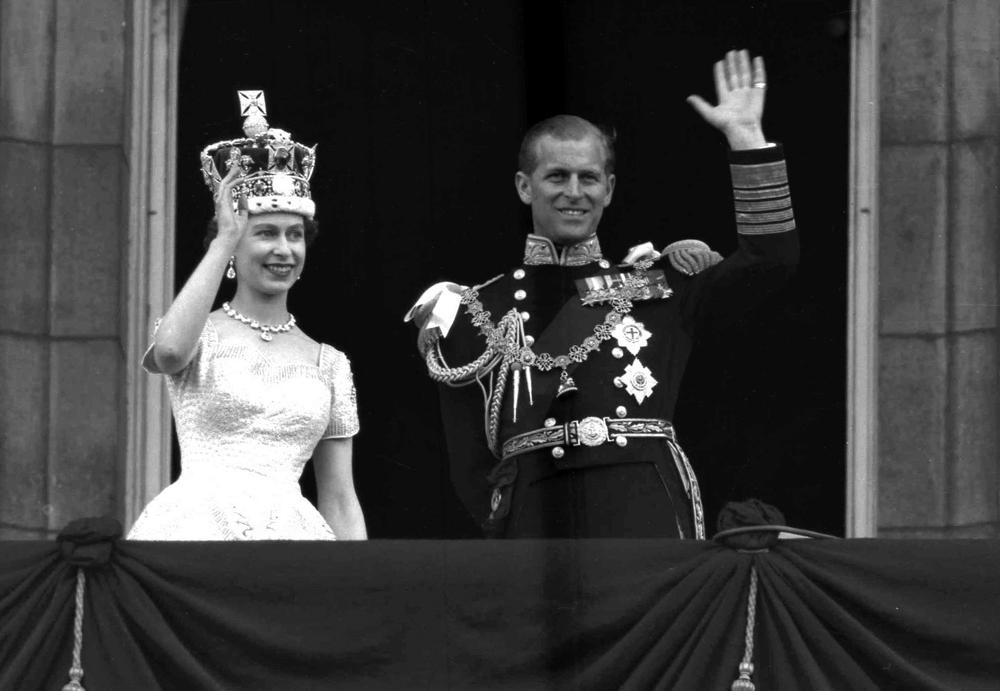
On her 21st birthday in 1947, Princess Elizabeth went on the radio and made a promise to Britain and its Commonwealth nations: She pledged that “my whole life, whether it be short or long, will be devoted to your service.” Over her very long life, Queen Elizabeth II fulfilled that vow. Through 15 prime ministers, from Winston Churchill to Liz Truss. Through Britain’s postwar deprivations, crippling labor unrest, and Brexit. Through the messy divorces, embarrassments, and scandals of her family. She endured through it all — a reassuring anchor in a fast-changing world. The longest-reigning monarch that Britain has ever known, Elizabeth died Thursday at 96 at Balmoral Castle, her beloved summer home in Scotland, after having steadied and modernized the royal institution through seven decades of huge social change. Her passing ends an era, the modern Elizabethan age. Her 73-year-old son, Charles, automatically became king upon her death. He will be known as King Charles III, although his coronation might not take place for months. Through countless public events in her 70 years as monarch, Elizabeth likely met more people than anyone in history. Her image — on stamps, coins, and banknotes — was among the most reproduced in the world. But her inner life and opinions remained mostly an enigma. The public saw only glimpses of her personality: her joy watching horse racing at Royal Ascot or being with her beloved Welsh corgi dogs. Yet Elizabeth had an intuitive bond with many of her subjects that seemed to strengthen over time, keeping a sense of perspective that served her well in most instances, said royal historian Robert Lacey. “A lot of it comes from her modesty, the fact that she’s very conscious that she’s not important, that she’s there to do a job, that it’s the institution that matters,” he said. She strongly felt the burden of her role as queen, though she was not destined for the crown from birth. Elizabeth Alexandra Mary Windsor was born in London on April 21, 1926, the first child of the Duke and Duchess of York. Her father’s elder brother, Prince Edward, was first in line for the throne, to be followed by any children he had. But in 1936, when she was 10, King Edward VIII abdicated to marry twice-divorced American Wallis Simpson, and Elizabeth’s father became King George VI. Her younger sister, Princess Margaret, recalled asking Elizabeth whether this meant that she would one day be queen. ”‘Yes, I suppose it does,’” Margaret quoted Elizabeth as saying. “She didn’t mention it again.” Like many of her generation, Elizabeth was shaped by World War II. She was barely in her teens when Britain went to war with Germany in 1939. While the king and queen stayed at Buckingham Palace during the Blitz and toured the bombed-out neighborhoods of London, Elizabeth and Margaret stayed for most of the war at Windsor Castle, west of the capital. Even there, 300 bombs fell in an adjacent park, and the princesses spent many nights in an underground shelter. Her first public broadcast, made in 1940 when she was 14, was a wartime message to children evacuated to the countryside or overseas. “We children at home are full of cheerfulness and courage,” she said with a blend of stoicism and hope that would echo throughout her reign. “We are trying to do all we can to help out gallant soldiers, sailors, and airmen. And we are trying, too, to bear our own share of the danger and sadness of war. We know, every one of us, that in the end, all will be well.” In 1945, after months of urging her parents to let her do something for the war effort, the heir to the throne became Second Subaltern Elizabeth Alexandra Mary Windsor in the Auxiliary Territorial Service. She enthusiastically learned how to drive and service heavy vehicles. On the night the war ended in Europe, May 8, 1945, she and Margaret managed to mingle, unrecognized, with celebrating crowds in London — “swept along on a tide of happiness and relief,” as she told the BBC decades later. She described it as “one of the most memorable nights of my life.” Two years later, at Westminster Abbey in November 1947, she married Royal Navy officer Philip Mountbatten, a prince of Greece and Denmark whom she had first met in 1939 when she was 13 and he 18. Postwar Britain was experiencing austerity and rationing, and so street decorations were limited, and no public holiday was declared. But the bride was allowed 100 extra ration coupons for her trousseau. The marriage lasted more than 73 years, until Philip’s death in 2021 at age 99. The first of their four children, Prince Charles, was born on November 14, 1948. He was followed by Princess Anne on August 15, 1950, Prince Andrew on February 19, 1960, and Prince Edward on March 10, 1964. Besides them, the queen is survived by eight grandchildren and 12 great-grandchildren. Elizabeth and Philip lived for a time in Malta, where he was stationed, and Elizabeth enjoyed an almost-normal life as a navy wife. Then in February 1952, George VI died in his sleep at age 56 after years of ill health. Elizabeth, on a visit to Kenya, was told she was now queen. “In a way, I didn’t have an apprenticeship,” Elizabeth told a BBC documentary in 1992 that gave a rare view into her emotions. “My father died much too young, and so it was all a very sudden kind of taking on and making the best job you can.” Her coronation took place more than a year later at Westminster Abbey, a grand spectacle viewed by millions through the new medium of television. Prime Minister Winston Churchill’s first reaction to the king’s death was to complain that the new queen was “only a child,” but he was won over within days and became an ardent admirer. “All the film people in the world, if they had scoured the globe, could
Joe Biden tests positive for COVID-19, has ‘very mild symptoms’
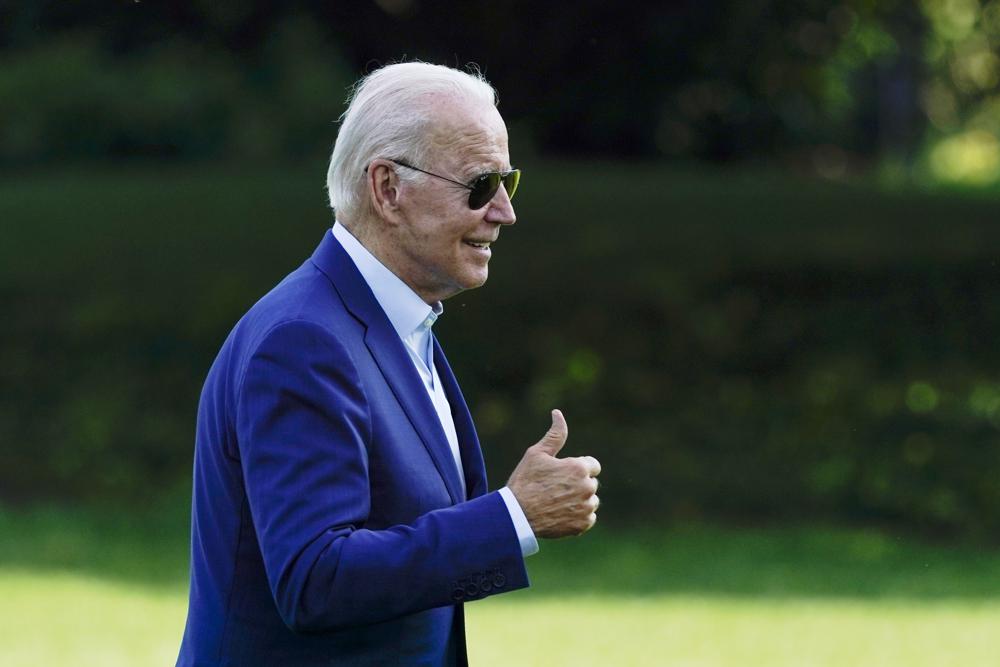
President Joe Biden tested positive for COVID-19 on Thursday and is experiencing “very mild symptoms,” the White House said, as new variants of the highly contagious virus are challenging the nation’s efforts to resume normalcy after two and a half years of pandemic disruptions. White House Press Secretary Karine Jean-Pierre said Biden has begun taking Paxlovid, an antiviral drug designed to reduce the severity of the disease. She said Biden has “very mild symptoms” and “will isolate at the White House while continuing to carry out all of his duties fully.” She said Biden has been in contact with members of the White House staff by phone and will participate in his planned meetings at the White House “via phone and Zoom from the residence.” The White House released a letter from Biden’s physician, Dr. Kevin O’Connor, that said the president has a runny nose and “fatigue, with an occasional dry cough, which started yesterday evening.” Biden, 79, is fully vaccinated, after getting two doses of the Pfizer coronavirus vaccine shortly before taking office, a first booster shot in September and an additional dose March 30. O’Connor wrote in his letter about the president’s treatment plan: “I anticipate that he will respond favorably” to Paxlovid “as most maximally protected patients do.” Jean-Pierre said Biden had last tested negative on Tuesday, and he will stay isolated until he tests negative again. Biden had planned to visit Pennsylvania on Thursday to talk about his crime prevention plans and attend a Democratic fundraiser, and then spend a long weekend in Delaware. His appearances and travel are canceled. First lady Jill Biden spoke to reporters as she arrived at a school in Detroit on Thursday, telling them she had just gotten off the phone with her husband. “He’s doing fine,” she said. “He’s feeling good.” The first lady, who was wearing a mask, said she tested negative earlier in the day. She will keep her full schedule in Michigan and Georgia on Thursday, though she will be following guidance from the Centers for Disease Control and Prevention on masking and distancing, said Michael LaRosa, her spokesperson. The president spent much of last week in Israel and Saudi Arabia. White House officials told reporters that Biden planned to minimize contact during the trip, yet as soon as he exited Air Force One on Wednesday, July 13, the president was fist-bumping, handshaking, and even seen in the occasional hug. Biden had a minimal public schedule after returning from Saudi Arabia late on Saturday night, attending church the next day, and appearing at a White House visit by Ukraine’s first lady Olena Zelenska on Tuesday. The president traveled to Massachusetts on Wednesday to promote efforts to combat climate change. Up to this point, Biden’s ability to avoid the virus seemed to defy the odds, even with the testing procedures in place for those expected to be in close contact with him. Prior waves of the virus swept through Washington’s political class, infecting Vice President Kamala Harris, Cabinet members, White House staffers, and lawmakers. Biden has increasingly stepped up his travel schedule and resumed holding large indoor events where not everyone is tested. A White House official said Harris tested negative for COVID-19. She was last with the president on Tuesday and spoke with him on the phone Thursday morning. Harris plans to remain masked on the guidance of the White House medical team. House Speaker Nancy Pelosi said she hoped that Biden’s positive test for the virus would cause more Americans to get vaccinated and boosted because “none of us is immune from it, including the president of the United States, and we really have to be careful.” Senate Republican Leader Mitch McConnell on Twitter wished the president “a speedy recovery.” Top White House officials in recent months have been matter-of-fact about the likelihood of the president getting COVID, a measure of how engrained the virus has become in society — and of its diminished threat for those who are up to date on their vaccinations and with access to treatments. When administered within five days of symptoms appearing, Paxlovid, produced by drugmaker Pfizer, has been proven to bring about a 90% reduction in hospitalizations and deaths among patients most likely to get severe disease. In an April 30 speech to more than 2,600 attendees at the White House Correspondents’ Association dinner, Biden acknowledged the risks of attending large events, but said it was worthwhile to attend. “I know there are questions about whether we should gather here tonight because of COVID,” he said. “Well, we’re here to show the country that we’re getting through this pandemic.” Biden is far from the first world leader — and not the first U.S. president — to get the coronavirus, which has infected British Prime Minister Boris Johnson, French President Emmanuel Macron, and more than a dozen other leaders and high-ranking officials globally. When Biden’s predecessor, President Donald Trump, contracted the disease in October 2020, it was a far different time. Vaccines were not available, and treatment options were limited and less advanced. After being diagnosed with COVID-19 at the White House, Trump was given an experimental antibody treatment and steroids after his blood oxygen levels fell dangerously low. He was hospitalized at Walter Reed National Military Medical Center for three days. After more than two years and over a million deaths in the U.S., the virus is still killing an average of 353 people a day in the U.S., according to the Centers for Disease Control and Prevention. The unvaccinated are at far greater risk, more than two times more likely to test positive and nine times more likely to die from the virus than those who have received at least a primary dose of the vaccines, according to the public health agency. The highly transmissible omicron variant is the dominant strain in the U.S., but scientists say it poses a lower risk for severe illness to those who are up to date on their vaccinations. Omicron’s BA.5 sub-strain, believed to be even more contagious, now
Fighting gas prices, U.S. to release 50 million barrels of oil

President Joe Biden on Tuesday ordered a record 50 million barrels of oil released from America’s strategic reserve, aiming to bring down gasoline and other costs, in coordination with other major energy-consuming nations including India, the United Kingdom, and China. The U.S. action is focused on helping Americans cope with higher fuel and other prices ahead of Thanksgiving and winter holiday travel. Gasoline prices are at about $3.40 a gallon, more than 50% higher than a year ago, according to the American Automobile Association. “While our combined actions will not solve the problems of high gas prices overnight, it will make a difference,” Biden promised in remarks at the White House. “It will take time, but before long, you should see the price of gas drop where you fill up your tank.” The government will begin to move barrels into the market in mid-to-late December. Gasoline usually responds at a lag to changes in oil prices, and administration officials suggested this is one of several steps toward ultimately bringing down costs. Oil prices had dropped in the days ahead of the announced withdrawals, a sign that investors were anticipating the moves that could bring a combined 70 million to 80 million barrels of oil onto global markets. But in trading after the announcement, prices shot up roughly 2% instead of falling. The market was expecting the news, and traders may have been underwhelmed when they saw the details, said Claudio Galimberti, senior vice president for oil markets at Rystad Energy. “The problem is that everybody knows that this measure is temporary,” Galimberti said. “So once it is stopped, then if demand continues to be above supply like it is right now, then you’re back to square one.” Shortly after the U.S. announcement, India said it would release 5 million barrels from its strategic reserves. The British government confirmed it will release up to 1.5 million barrels from its stockpile. Japan and South Korea are also participating, and U.S. officials said it’s the biggest coordinated release from global strategic reserves. British Prime Minister Boris Johnson’s spokesman, Max Blain, said it was “a sensible and measured step to support global markets” during the pandemic recovery. Blain added that the country’s companies will be authorized but not compelled to participate in the release. Despite all the optimistic statements, the actions by the U.S. and others risk counter moves by Gulf nations, especially Saudi Arabia, and by Russia. Saudi Arabia and other Gulf countries have made clear they intend to control supply to keep prices high for the time being. As word spread in recent days of a coming joint release from the U.S. and other countries’ reserves, there were warnings from OPEC interests that those countries may respond in turn, reneging on promises to increase supplies in coming months. Wyoming Sen. John Barrasso was among Republicans who criticized Biden’s announcement. The No. 3 Senate Republican said the underlying issue is restrictions on domestic production by the administration. “Begging OPEC and Russia to increase production and now using the Strategic Petroleum Reserve are desperate attempts to address a Biden-caused disaster,” Barrasso said. “They’re not substitutes for American energy production.” Biden has scrambled to reshape much of his economic agenda around the issue of inflation, saying that his recently passed $1 trillion infrastructure package will reduce price pressures by making it more efficient and cheaper to transport goods. Republican lawmakers have hammered the administration for inflation hitting a 31-year high in October. The consumer price index has soared 6.2% from a year ago — the biggest 12-month jump since 1990. The Strategic Petroleum Reserve is an emergency stockpile to preserve access to oil in case of natural disasters, national security issues, and other events. Maintained by the Energy Department, the reserves are stored in caverns created in salt domes along the Texas and Louisiana Gulf Coasts. There are roughly 605 million barrels of petroleum in the reserve. The Biden administration argues that it is the right tool to help ease the supply problem. Americans used an average of 20.7 million barrels a day during September, according to the Energy Information Administration. That means that the release equals about two-and-a-half days of additional supply. “Right now, I will do what needs to be done to reduce the price you pay at the pump,” Biden said at the White House. He said the administration also is looking into potential price gouging by gas companies squeezing customers while making money off the lowered oil costs. Energy Secretary Jennifer Granholm, too, said U.S. companies are part of the problem, keeping production below pre-pandemic levels in order to increase profits. The coronavirus pandemic roiled energy markets everywhere. As it bore down and economic activity sank in April of last year, energy demand collapsed, and oil futures prices turned negative. Energy traders did not want to get stuck with crude that they could not store. But as the economy recovered, production lagged, and prices jumped to a seven-year high in October. U.S. production has not recovered. Energy Information Administration figures indicate that domestic production is averaging roughly 11 million barrels daily, down from 12.8 million before the pandemic. Americans are feeling the squeeze. For Matt Hebard of Agoura Hills, California, it’s taking $80 to gas up his SUV. “Gas prices are definitely on everyone’s minds right now,” he said as he filled up at a station in his suburb northwest of Los Angeles. He hoped the president’s move has a good long-term effect. Sy Amber, meanwhile, was en route to Las Vegas from his California home. Unhappily spending more money filling up his car, he said he didn’t expect Biden’s action to work and didn’t agree with them. “I’m not happy with our president,” he said. Republicans in Congress are pointing to Biden’s efforts to minimize drilling and support renewable energy as a reason for the decreased production, though there are multiple market dynamics at play as fossil fuel prices are higher around the world. Biden and administration officials insist that tapping more oil from the
Joe Biden holds to Kabul August 31 deadline despite criticism
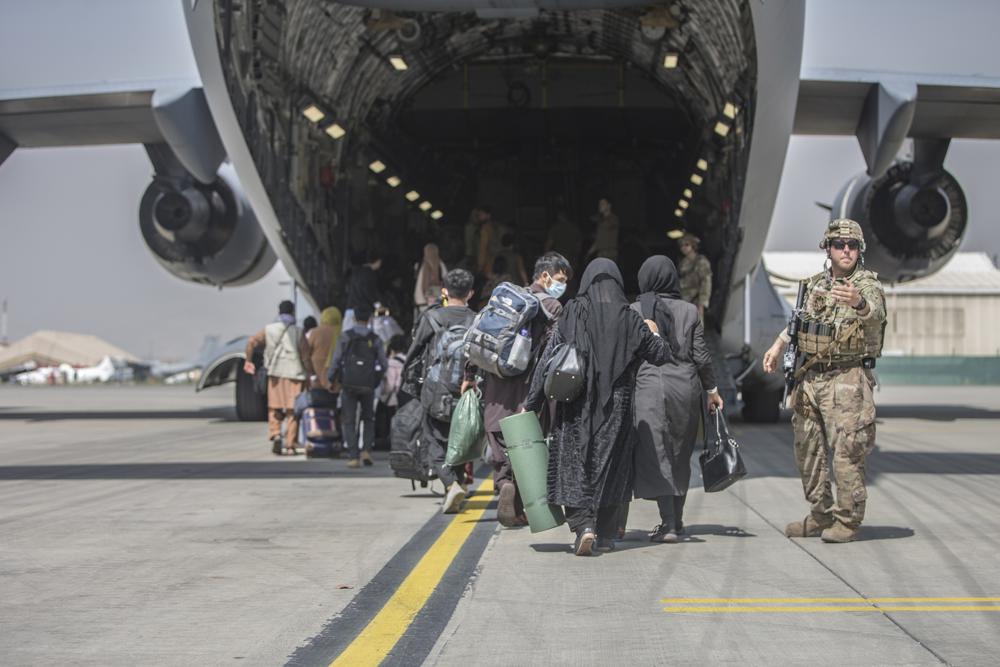
U.S. President Joe Biden declared Tuesday he is sticking to his August 31 deadline for completing a risky airlift of Americans, endangered Afghans, and others seeking to escape Taliban-controlled Afghanistan. The decision defies allied leaders who want to give the evacuation more time and opens Biden to criticism that he caved to Taliban deadline demands. “Every day we’re on the ground is another day that we know ISIS-K is seeking to target the airport and attack both us and allied forces and innocent civilians,” Biden said at the White House, referring to the Islamic State group’s Afghanistan affiliate, which is known for staging suicide attacks on civilians. He said the Taliban are cooperating and security is holding despite a number of violent incidents. “But it’s a tenuous situation,” he said, adding, “We run a serious risk of it breaking down as time goes on.” The United States in recent days has ramped up its airlift amid new reports of rights abuses that fuel concern about the fate of thousands of people who fear retribution from the Taliban and are trying to flee the country. The Pentagon said 21,600 people had been evacuated in the 24 hours that ended Tuesday morning, and Biden said an additional 12,000 had been flown out in the 12 hours that followed. Those include flights operated by the U.S. military as well as other charter flights. Biden said he had asked the Pentagon and State Department for evacuation contingency plans that would adjust the timeline for full withdrawal should that become necessary. Pentagon officials expressed confidence the airlift, which started on August 14, can get all Americans out by next Tuesday, the deadline Biden had set long before the Taliban completed their takeover. But unknown thousands of other foreign nationals remain in Afghanistan and are struggling to get out. The Taliban, who have wrested control of the country back nearly 20 years after being ousted in a U.S.-led invasion after the 9/11 attacks insist the airlift must end on August 31. Any decision by Biden to stay longer could reignite a war between the militants and the approximately 5,800 American troops who are executing the airlift at Kabul airport. In Kabul, Taliban spokesman Zabihullah Mujahid told a news conference the U.S. must stick to its self-imposed deadline, saying “after that, we won’t let Afghans be taken out” on evacuation flights. He also said the Taliban would bar Afghans from accessing roads to the airport while allowing foreigners to pass in order to prevent large crowds from massing. At the Pentagon, spokesman John Kirby said Aug. 31 leaves enough time to get all Americans out, but he was less specific about completing the evacuation of all at-risk Afghans. He said about 4,000 American passport holders and their family members had been evacuated from Kabul as of Tuesday. “We expect that number to grow in coming days,” Kirby said. With the full U.S. withdrawal looming, the Pentagon said several hundred U.S. troops have been withdrawn because they are no longer needed to complete the evacuation mission. Kirby said these are headquarters staff, maintenance personnel, and others. “It will have no impact on the mission at hand,” he said. It’s unclear how many Americans who want to leave are still in the country, but their status is a hot political topic for Biden. Some Republicans bristled Tuesday at the U.S. seeming to comply with a Taliban edict. “We need to have the top priority to tell the Taliban that we’re going to get all of our people out, regardless of what timeline was initially set,” said Rep. Steve Scalise of Louisiana. And Democratic Rep. Adam Schiff of California, chairman of the House Intelligence Committee, told reporters Monday that “it was hard for me to imagine” wrapping up the airlifts by the end of the month. One of the main refugee groups resettling Afghan evacuees in the United States said many people, including some American citizens, still were finding it impossible to get past Taliban checkpoints and crushing throngs outside the airport. “The United States cannot pat itself on the back for a job half-done,” said Krish O’Mara Vignarajah, president and CEO of Lutheran Immigration and Refugee Service. Biden decided in April that he was ending the U.S. war, which began in October 2001. Former President Donald Trump had earlier agreed in negotiations with the Taliban to end the war in May. However, Biden waited until the Taliban had swept to power this month, following the collapse of the U.S.-backed government and its army, to begin executing an airlift. Tragic scenes at the airport have transfixed the world. Afghans poured onto the tarmac last week and some clung to a U.S. military transport plane as it took off, later plunging to their deaths. At least seven people died that day, and another seven died Sunday in a panicked stampede. An Afghan soldier was killed Monday in a gunfight. British Prime Minister Boris Johnson said the Group of Seven nations will not recognize a Taliban government unless it guarantees people can leave the country if they wish, both before and after the August deadline. A day earlier, the director of the U.S. Central Intelligence Agency, William Burns, met with a top Taliban leader in Kabul. The extraordinary meeting reflected the gravity of the crisis and America’s need to coordinate with a Taliban group it has accused of gross human rights abuses. For now, the U.S. military coordinates all air traffic in and out of the Kabul airport, but the Taliban will take over thereafter the U.S. pullout. Meanwhile, a U.S. official said Burns, the CIA director, met with Taliban leader Mullah Abdul Ghani Baradar — an extraordinary moment for the U.S. spy agency, which for two decades targeted the Taliban in paramilitary operations. It was not clear what exactly they discussed. The CIA partnered with Pakistani forces to arrest Baradar in 2010, and he spent eight years in a Pakistani prison before the Trump administration persuaded Pakistan to release him in 2018
U.S. troops surge evacuations out of Kabul but threats persist
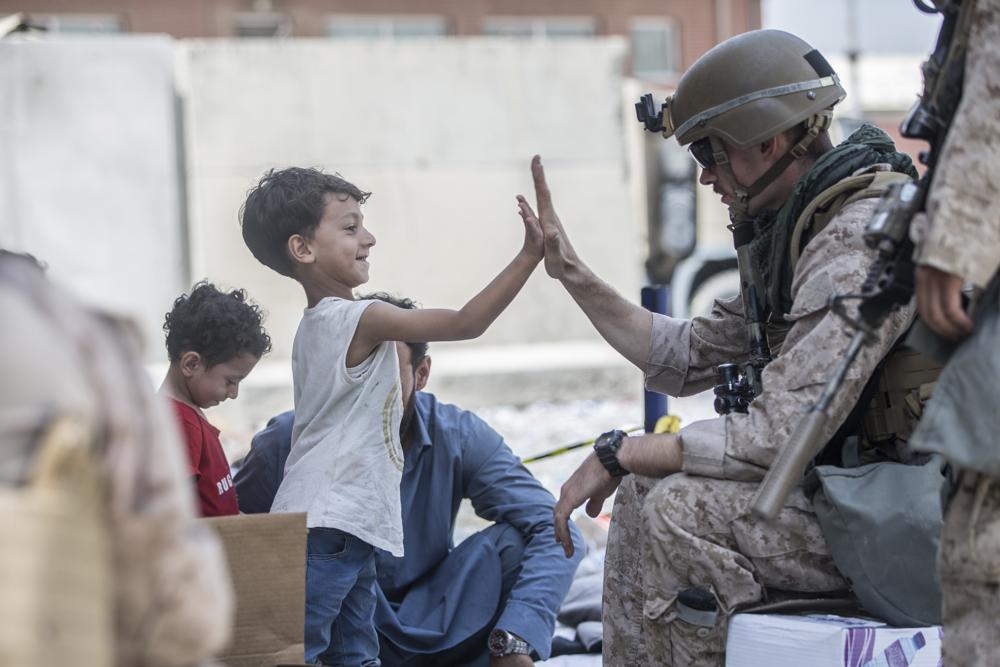
The U.S. military reported its biggest day of evacuation flights out of Afghanistan by far on Monday, but deadly violence that has blocked many desperate evacuees from entering Kabul’s airport persisted, and the Taliban signaled they might soon seek to shut down the airlifts. Twenty-eight U.S. military flights ferried about 10,400 people to safety out of Taliban-held Afghanistan over 24 hours that ended early Monday morning, and 15 C-17 flights over the next 12 hours brought out another 6,660, White House officials said. The chief Pentagon spokesman, John Kirby, said the faster pace of evacuation was due in part to coordination with Taliban commanders on getting evacuees into the airport. “Thus far, and going forward, it does require constant coordination and deconfliction with the Taliban,” Kirby said. “What we’ve seen is, this deconfliction has worked well in terms of allowing access and flow as well as reducing the overall size of the crowds just outside the airport.” With access still difficult, the U.S. military went beyond the airport to carry out another helicopter retrieval of Americans. U.S. officials said a military helicopter picked up 16 American citizens Monday and brought them onto the airfield for evacuation. This was at least the second such rescue mission beyond the airport; Kirby said that last Thursday, three Army helicopters picked up 169 Americans near a hotel just beyond the airport gate and flew them onto the airfield. President Joe Biden’s national security adviser, Jake Sullivan, said at the White House that talks with the Taliban are continuing as the administration looks for additional ways to safely move more Americans and others into the Kabul airport. “We are in talks with the Taliban on a daily basis through both political and security channels,” he said, adding that ultimately it will be Biden’s decision alone whether to continue military-led evacuation operations beyond Aug. 31. In a reminder of the urgency felt amid a dizzying array of security threats to the evacuation effort, the Pentagon posted a video of a laser near the airport targeting a U.S. Air Force C-17 aircraft and apparently attempting to disrupt the pilot during landing. After more than a week of evacuations plagued by major obstacles, including Taliban forces and crushing crowds that are making approaching the airport difficult and dangerous, the number of people flown out met — and exceeded — U.S. projections for the first time. The count was more than twice the 3,900 flown out in the previous 24 hours on U.S. military planes. Army Gen. Stephen Lyons, head of U.S. Transportation Command, which manages the military aircraft that are executing the Kabul airlift, told a Pentagon news conference that more than 200 planes are involved, including aerial refueling planes, and that arriving planes are spending less than an hour on the tarmac at Kabul before loading and taking off. He said the nonstop mission is taking a toll on aircrews. “They’re tired,” Lyons said of the crews. “They’re probably exhausted in some cases.” On a more positive note, Lyons said that in addition to the widely reported case of an Afghan woman giving birth aboard a U.S. evacuation aircraft, two other babies have been born in similar circumstances. He did not provide details. The Pentagon said it has added a fourth U.S. military base, in New Jersey, to three others — in Virginia, Texas, and Wisconsin — that are prepared to temporarily house arriving Afghans. Maj. Gen. Hank Williams, the Joint Staff deputy director for regional operations, told reporters there are now about 1,200 Afghans at those military bases. The four bases combined are capable of housing up to 25,000 evacuees, Kirby said. Afghan evacuees continued to arrive at Dulles International Airport outside of Washington. A bus carried some of the latest arrivals from Dulles airport to another site for what would be one of many processing stops before they reach new homes in the United States. Exhaustion clouded the faces of many of the adults. How does it feel to be here, a journalist asked one man. “We are safe,” he answered. An older woman sank with relief into an offered wheelchair, and a little girl carried by an older boy shaded her eyes to look curiously around. It was an interim stop for what had been a grueling struggle over days for many to get flights out of what is now Taliban-ruled Afghanistan. The scramble to evacuate left many arrivals carrying only a book bag or purse or a plastic shopping bag of belongings. Some arrived for their new lives entirely empty-handed. Biden said Sunday he would not rule out extending the evacuation beyond Aug. 31, the date he had set for completing the withdrawal of troops. And British Prime Minister Boris Johnson plans to press Biden for an extension to get out the maximum number of foreigners and Afghan allies possible. Biden is to face the U.S.’s G-7 allies in a virtual summit on Afghanistan Tuesday. Taliban spokesman Suhail Shaheen, in an interview with Sky News, said that Aug. 31 is a “red line” the U.S. must not cross and that extending the American presence would “provoke a reaction.” Since the Taliban seized the capital on August 15, completing a stunning rout of the U.S.-backed Afghan government and military, the U.S. has been carrying out the evacuation in coordination with the Taliban, who have held off on attacking under a 2020 withdrawal deal with the Trump administration. Monday’s warning signaled the Taliban could insist on shutting down the airlifts out of the Kabul airport in just over a week. Lawmakers, refugee groups, veterans’ organizations, and U.S. allies have said ending the evacuation then could strand countless Afghans and foreigners still hoping for flights out. Since August 14, the U.S. has evacuated and facilitated the evacuation of about 37,000 people. A firefight just outside the airport killed at least one Afghan soldier early Monday, German officials said. It was the latest in days of often-lethal turmoil outside the airport. People coming in hopes of escaping Taliban
Joe Biden opens overseas trip declaring ‘United States is back’

President Joe Biden opened the first overseas trip of his term Wednesday with a declaration that “the United States is back” as he seeks to reassert the nation on the world stage and steady European allies deeply shaken by his predecessor. Biden has set the stakes for his eight-day trip in sweeping terms, believing the West must publicly demonstrate it can compete economically with China as the world emerges from the coronavirus pandemic. It is an open repudiation of his predecessor, Donald Trump, who scorned alliances and withdrew from a global climate change agreement that Biden has since rejoined. The president’s first stop was a visit with U.S. troops and their families at Royal Air Force Mildenhall, where he laid out his mission for the trip. “We’re going to make it clear that the United States is back and democracies are standing together to tackle the toughest challenges and issues that matter the most to our future,” he said. “That we’re committed to leading with strength, defending our values, and delivering for our people.” The challenges awaiting Biden overseas were clear as the president, and the audience wore masks — a reminder of the pandemic that is still raging around much of the world even as its threat recedes within the United States. “We have to end COVID-19 not just at home — which we’re doing — but everywhere,” Biden said. Shortly before the president spoke, people briefed on the matter said the Biden administration had brokered an agreement with Pfizer to purchase 500 million COVID-19 vaccine doses to be donated to 92 lower-income countries and the African Union over the next year. National security adviser Jake Sullivan told reporters that Biden was committed to sharing vaccines because it was in the public health and strategic interests of the U.S. He added that Biden is aiming to show “that democracies are the countries that can best deliver solutions for people everywhere.” “As he said in his joint session (address), we were the ‘arsenal of democracy’ in World War II,” Sullivan said. “We’re going to be the ‘arsenal of vaccines’ over this next period to help end the pandemic.” Building toward his trip-ending summit with Russian President Vladimir Putin, Biden will aim to reassure European capitals that the United States can once again be counted on as a dependable partner to thwart Moscow’s aggression both on their eastern front and their internet battlefields. The trip will be far more about messaging than specific actions or deals. And the paramount priority for Biden is to convince the world that his Democratic administration is not just a fleeting deviation in the trajectory of an American foreign policy that many allies fear irrevocably drifted toward a more transactional outlook under Trump. “The trip, at its core, will advance the fundamental thrust of Joe Biden’s foreign policy,” Sullivan said, “to rally the world’s democracies to tackle the great challenges of our time.” Biden’s to-do list is ambitious. In their face-to-face sit-down in Geneva, Biden wants to privately pressure Putin to end myriad provocations, including cybersecurity attacks on American businesses by Russian-based hackers, the jailing of opposition leader Alexei Navalny and repeated overt and covert efforts by the Kremlin to interfere in U.S. elections. Biden is also looking to rally allies on their COVID-19 response and to urge them to coalesce around a strategy to check emerging economic and national security competitor China even as the U.S. expresses concern about Europe’s economic links to Moscow. Biden also wants to nudge outlying allies, including Australia, to make more aggressive commitments to the worldwide effort to curb global warming. The week-plus journey is a big moment for Biden, who traveled the world for decades as vice president and as chair of the Senate Foreign Relations Committee and has now stepped off Air Force One onto international soil as commander in chief. He will face world leaders still grappling with the virus and rattled by four years of Trump’s inward-looking foreign policy and moves that strained longtime alliances as the Republican former president made overtures to strongmen. The president first attends a summit of the Group of Seven leaders in the U.K. and then visits Brussels for a NATO summit and a meeting with the heads of the European Union. The trip comes at a moment when Europeans have diminished expectations for what they can expect of U.S. leadership on the foreign stage. Central and Eastern Europeans are desperately hoping to bind the U.S. more tightly to their security. Germany is looking to see the U.S. troop presence maintained there, so it doesn’t need to build up its own. France, meanwhile, has taken the tack that the U.S. can’t be trusted as it once was and that the European Union must pursue greater strategic autonomy going forward. “I think the concern is real that the Trumpian tendencies in the U.S. could return full bore in the midterms or in the next presidential election,” said Alexander Vershbow, a former U.S. diplomat and once deputy secretary general of NATO. The sequencing of the trip is deliberate: Biden consulting with Western European allies for much of a week as a show of unity before his summit with Putin. He holds a sitdown Thursday with British Prime Minister Boris Johnson a day ahead of the G-7 summit to be held above the craggy cliffs of Cornwall overlooking the Atlantic Ocean. The most tactile of politicians, Biden has grown frustrated by the diplomacy-via-Zoom dynamics of the pandemic and has relished the ability to again have face-to-face meetings that allow him to size up and connect with world leaders. While Biden himself is a veteran statesman, many of the world leaders he will see in England, including Johnson and French President Emmanuel Macron, took office after Biden left the vice presidency. Another, Germany’s Angela Merkel, will leave office later this year. There are several potential areas of tension. On climate change, the U.S. is aiming to regain its credibility after Trump pulled the country back from the fight against global warming. Biden could also feel pressure on
Donald Trump, first lady positive for virus; he has ‘mild symptoms’
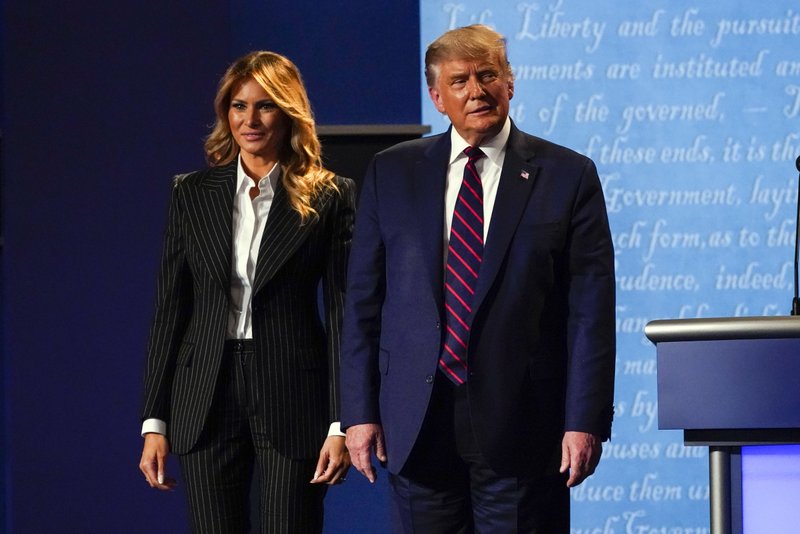
The White House physician said the president was expected to continue carrying out his duties “without disruption” while recovering.
Countries start thinking about easing up on restrictions

Deaths, hospitalizations and new infections are leveling off in places like Italy and Spain.
Donald Trump heads to Europe, says Vladimir Putin ‘easiest’ of his meetings
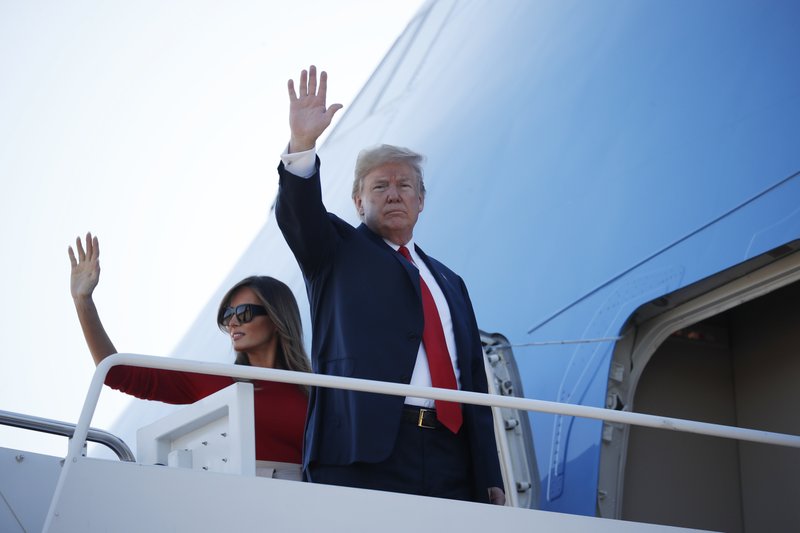
President Donald Trump launched a weeklong Europe trip Tuesday with harsh criticism for NATO allies and predicted the “easiest” leg of his journey would be his scheduled sit-down with Russian President Vladimir Putin. As he departed the White House for a four-nation European tour, Trump did little to reassure allies fretting over the risk of damage he could do to the 69-year-old trans-Atlantic mutual defense pact and his potential embrace of Putin during a summit in Helsinki. Trump said Tuesday he “can’t say right now” if Putin is a friend or foe, but called him a “competitor.” The U.S. intelligence community has concluded that Russia interfered in the 2016 election to boost Trump’s candidacy, and warns of further attempts at interference both in the 2018 midterms and in European elections. Speaking to reporters before leaving Washington for Brussels, where he is to attend the NATO summit, Trump criticized the pact, saying, “Frankly it helps them a lot more than it helps us.” Trump has been pressing NATO countries to fulfill their goal of spending 2 percent of their gross domestic products on defense by 2024. During his presidential campaign, he suggested he might only come to the defense of NATO nations that fulfilled their obligation. He continues to criticize NATO countries for not paying their fair share. From Belgium, Trump’s trip will also take him to London, where Prime Minister Theresa May’s government is in turmoil over her plans for exiting the European Union. European Council President Donald Tusk said on Tuesday in a message to Trump that “it is always worth knowing who is your strategic friend and who is your strategic problem.” Tusk recalled that the Europeans are spending more than Russia and as much as China on defense. NATO estimates that 15 members, or just over half, will meet the benchmark by 2024 based on current trends. “Getting ready to leave for Europe. First meeting — NATO. The U.S. is spending many times more than any other country in order to protect them,” Trump tweeted Tuesday morning, adding: “Not fair to the U.S. taxpayer. On top of that we lose $151 Billion on Trade with the European Union. Charge us big Tariffs (& Barriers)!” On Monday he’d tweeted the situation was “not fair, nor is it acceptable,” and insisted that NATO benefits Europe “far more than it does the U.S.” He added: “NATO countries must pay MORE, the United States must pay LESS. Very Unfair!” Trump, who has compared the sentiment that underpinned the Brexit vote to leave the EU to his own election, will be making his maiden presidential trip to Britain at a fraught time for May. Foreign Secretary Boris Johnson and Brexit Secretary David Davis resigned within hours of each other in protest of her plan. Trump said might meet with Johnson in the UK despite his resignation. Trump’s visit is expected to attract large protests in London and elsewhere in Britain. Trump’s weeklong trip to Europe will continue with a stop in Scotland before ending with a sit-down in Helsinki with Putin. He said that of the high-stakes meetings of his trip, “Putin may be the easiest of them all.” “I think that getting along with Russia, getting along with China, getting along with others is a good thing, not a bad thing,” he added. The meeting will be closely watched to see whether Trump will rebuke or embrace Putin, who has repeatedly denied the allegations of election meddling, in spite of evidence to the contrary. Republished with the permission of the Associated Press.
