
Gulf health 5 years after BP spill: Resilient yet scarred
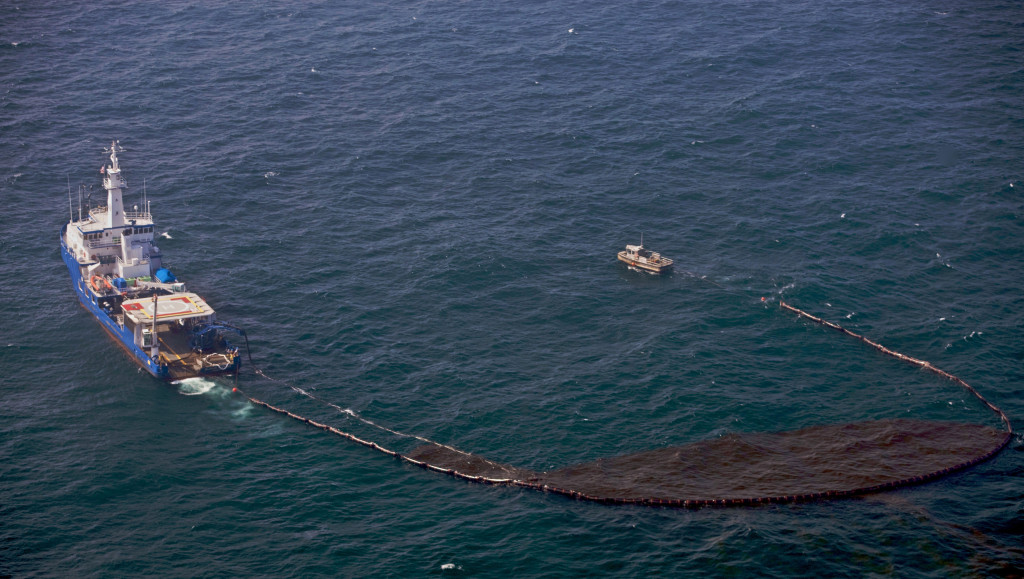
From above, five years after the BP well explosion, the Gulf of Mexico looks clean, green and whole again, teeming with life — a testament to the resilience of nature. But there’s more than surface shimmering blue and emerald to the aftermath of the Deepwater Horizon spill. And it’s not as pretty a picture — nor is it as clear. Federal data and numerous scientific studies show lingering problems. Splotches of oil still dot the seafloor and wads of tarry petroleum-smelling material hide in pockets in the marshes of Barataria Bay. Dolphin deaths have more than tripled. Nests of endangered Kemp’s Ridley sea turtles suddenly plummeted after the spill. Some fish have developed skin lesions along with oil in their internal organs. Deep sea coral are hurting. In some cases the connection to the BP spill is solid, in other cases it is harder to prove a direct causal link to the spill of millions of gallons of oil over 87 days. “Look, we put nature on a treadmill and I think it did very very well. We should consider ourselves lucky,” said Chris Reddy of the Woods Hole Oceanographic Institute. But then he said, “It’s the things that we don’t see that have been a concern.” To assess the health of the Gulf of Mexico, The Associated Press surveyed 26 marine scientists about two dozen aspects of the fragile ecosystem to see how the vital waterway has changed since before the April 2010 spill. On average, the researchers graded an 11 percent drop in the overall health of the Gulf of Mexico. The surveyed scientists on average said that before the spill, the Gulf was a 73 on a 0 to 100 scale. Now it’s a 65. In the survey, scientists report the biggest drops in rating the current health of oysters, dolphins, sea turtles, marshes, and the seafloor. The AP also interviewed more than two dozen other scientists. “The spill was — and continues to be — a disaster,” said Oregon State marine sciences professor Jane Lubchenco, who was the head of the National Oceanic and Atmospheric Administration during the spill. “The bottom line is that oil is nasty stuff. Yes, the Gulf is resilient, but it was hit pretty darn hard.” Lubchenco said some of her worst fears about dead zones or oil spreading farther didn’t materialize. But she added: “That’s not to say there is no impact.” BP put out a 40-page report in March, pronouncing the Gulf mostly recovered, noting that less than 2 percent of the water and seafloor sediment samples exceeded federal toxicity levels. “Data collected thus far shows that the environmental catastrophe that so many feared, perhaps understandably at the time, did not come to pass, and the Gulf is recovering faster than expected,” BP’s senior vice president and spokesman Geoff Morrell wrote in an email. “This is in large part due to the Gulf’s resilience, natural processes and the effectiveness of response and clean-up efforts mounted by BP under the direction of the federal government.” And in fact, there are experts who are surprised by how the Gulf has bounced back. Samantha Joye of the University of Georgia, who often paints a bleak picture of oil on the seafloor, recalled that in 2010 she dove in an area where the seafloor “was really hammered,” with no animals of any sort around. Then in 2014, she dove to the same place and it was quite different. “The fact that we saw living things on the bottom made me do a happy dance,” Joye said. “The system is absolutely resilient. Thank God for that. The biggest question is: Is it going back to the same point before the spill and that’s what we don’t know.” The federal government doesn’t think the Gulf is back. At least not yet. “Obviously the Gulf is not as healthy as it was,” NOAA chief scientist Richard Spinrad said. He ticks off how everything about the spill and its effects were large: the “massive kill-off” of coral, the dolphin deaths, the diseased fish, and problems with oil on the seafloor. There is no single, conclusive answer to how the Gulf of Mexico is doing, but there are many questions. Here are some of them: What happened to dolphins? Common bottlenose dolphins have been dying at a record rate in northern parts of the Gulf of Mexico since the BP spill, according to NOAA and other scientists who have published studies on the figures. From 2002 to 2009, the Gulf averaged 63 dolphin deaths a year. That rose to 125 in the seven months after the spill in 2010 and 335 in all of 2011, averaging more than 200 a year since April 2010. That’s the longest and largest dolphin die-off ever recorded in the Gulf. But the number of deaths has started to decline, said Stephanie Venn-Watson, a veterinary epidemiologist at the Marine Mammal Foundation and a lead author of studies on the dolphin mortality. She said there was a brief unrelated die-off in a different area of the Gulf before the spill, but afterward the dolphin deaths jumped in a way that “matched that of the timing, location and magnitude of the oil spill.” In its report on the Gulf five years after the spill, BP said necropsies of dolphins and “other information reveal there is no evidence to conclude that the Deepwater Horizon accident had an adverse impact on bottlenose dolphin populations.” What happened to turtles? The endangered Kemp’s Ridley sea turtle used to look like a success story for biologists. It was in deep trouble and on the endangered list, but a series of actions, such as the use of turtle excluder devices, had the population soaring and it was looking like the species soon would be upgraded to merely threatened, said Selina Saville Heppell, a professor at Oregon State University. Then, after the spill, the number of nests dropped 40 percent in one year in 2010. “We had never seen a drop that
