
Inquiry into teachers unions influence over school COVID closures ramps up
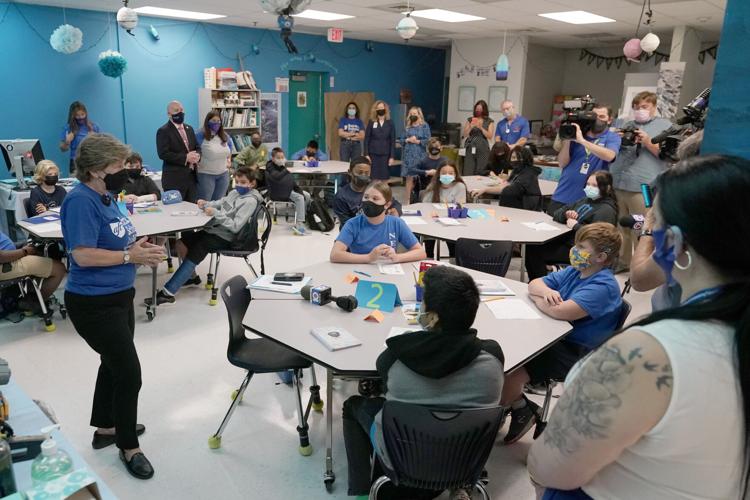
The U.S. House Committee tasked with reviewing the federal pandemic response is ramping up its investigation into what influence teacher’s unions had over federal rules that kept schools closed. Select Subcommittee on the Coronavirus Pandemic Chairman Brad Wenstrup, R-Ohio, sent a letter to U.S. Centers for Disease Control and Prevention Director Rochelle Walensky demanding all records and communications between her and American Federation of Teachers President Randi Weingarten. Critics note that teacher’s unions are significant political donors and raise concerns that those funds could have earned undue access to health policy at the expense of students. As The Center Square previously reported, federal election filings reveal that the American Federation of Teachers and its local affiliates doled out $19,903,532 in political donations in the 2020 election cycle, with almost all of those funds directed to Democrats and liberal groups. AFT donations in 2020 included at least $5,251,400 for the Democrats Senate Majority PAC and $4,600,000 for the Democratic House Majority PAC, according to filings and data compiled by The Center for Responsive Politics’ Open Secrets database. A GOP report released in March last year confirmed these findings and reported that teacher’s unions had “unprecedented access” to the federal officials in charge of recommendations for school reopenings and COVID policy. “Teachers’ unions, including AFT, donated more than $43 million to liberal groups and candidates during the 2020 election cycle,” the GOP report said. “The two largest unions – which both endorsed then-candidate Biden for President – have approximately 4.7 million members. [CDC scientist] Dr. [Henry] Walke’s testimony to the Select Subcommittee shows the Biden Administration rewarded their support with unprecedented access to the policymaking process for guidance on re-opening schools.” Weingarten pushed back on these claims during a Congressional in April with Wenstrup’s subcommittee. AFT argues they were not in favor of keeping schools closed, but for the reopening of schools safely. “If you have educators in your lives, you know that their priority is their students – to create a safe environment for all children and to prepare them for life, career, college, and citizenship,” Weingarten testified at the hearing.. “We know that kids learn best in person, so opening schools safely – even as the pandemic surged – guided the AFT‘s every action.” With conflicting accounts, Wenstrup is now pushing to get those written communications to show what was really said between AFT and federal health officials. Wenstrup pointed out that during that same hearing, lawmakers learned that Weingarten had a “direct telephone line” to Walensky. The latest research shows significant learning loss from students who missed class because of the pandemic. The Department of Education released data last fall showing that national test scores declined the most in decades largely as a result of learning loss from school closures. “Average scores for age 9 students in 2022 declined 5 points in reading and 7 points in mathematics compared to 2020,” the report said. “This is the largest average score decline in reading since 1990, and the first-ever score decline in mathematics. This Highlights report compares performance on the NAEP long-term trend reading and mathematics assessments for age 9 students from the winter of 2020 to results of long-term trend assessments in the winter of 2022.” Wenstrup says the CDC is largely not cooperating with the investigation. “The Department of Health and Human Services is continuing its pattern of obstructing Congress by apparently only producing documents already made publicly available via the FOIA,” the letter said. “As a reminder, FOIA does not apply to Congress. While negotiating your upcoming testimony, the Department, apparently on your behalf, wrote that the negotiation was ‘counterproductive to the [S]elect [S]ubcommittee’s broader dealings with the Department.’ The Department’s obstruction will not be tolerated.” Republished with the permission of The Center Square.
Robert Aderholt supports protecting pharmacists’ First Amendment rights regarding prescriptions for elective abortions
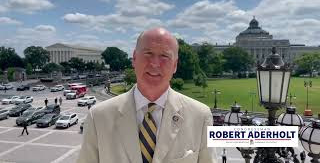
Congressman Robert Aderholt announced that he has become a co-sponsor of a bill to protect the First Amendment rights of pharmacists when choosing whether or not to fill prescriptions for elective abortions. The Pharmacist Conscience Protection Act H.R. 8820 was introduced by Rep. Earl L. “Buddy” Carter (R-Georgia), Diana Hashbarger (R-Tennessee), and Blake Moore (R-Utah). Reps. Carter and Harshbarger are both pharmacists. It is co-sponsored by 26 House Republicans. The legislation comes after the Department of Health and Human Services (HHS) issued guidance warning pharmacists that they could be in violation of federal civil rights laws if they do not fill such prescriptions. “Pharmacists should not be forced to surrender their First Amendment rights of religious freedom because of radical policies from the Biden Administration,” said Congressman Aderholt. “It’s unfortunate that we need conscience protections like these, but it’s the only way to keep the overbearing Biden Administration from forcing private citizens to violate strongly held convictions.” “Your first amendment rights don’t go away when you put on a white coat,” said Rep. Carter. “This legislation will ensure that pharmacists are able to make the medical decisions that are best for the health of the mother, the life of the child, and the integrity of their practice without threats from non-medically trained bureaucrats. Medical decisions should be made between doctors, pharmacists, and patients – not the federal government.” “I will not stand by and let the Biden administration use an extremist and unlawful agenda of taxpayer-funded abortions through birth to persecute pharmacists who have religious, moral, or conscience objections to the intentional killing of unborn children through abortion,” stated Rep. Harshbarger. “As a licensed pharmacist for more than 30 years, I have always followed the precept of first doing no harm. I will always stand up for the lives of unborn children and will always defend health practitioners who believe the same. Pharmacists and other health professionals should never be punished for their moral beliefs in protecting life, or be threatened or forced to facilitate abortions against such beliefs. I call on the Biden administration to immediately withdraw this outrageous assault on pharmacists’ conscience rights, and to stop treating the Constitution like its own political chew-toy!” “Conscience protections prevent discrimination and ensure Americans in the healthcare sector are not forced to violate their beliefs,” said Rep. Moore. “As the Biden Administration takes steps to undermine the conscience rights of pharmacists, I am proud to join Congressman Buddy Carter and Congresswoman Diana Harshbarger in introducing the Pharmacist Conscience Protection Act which would ensure pharmacists can refuse to provide abortion drugs without repercussion. Pharmacists, along with other medical and healthcare workers, should never be coerced into participating in abortions, and this bill is an important step in supporting medical professionals who have deep convictions about practicing life-affirming medicine.” The text reads in part, “In General.—Notwithstanding any other provision of law, the Federal Government, and any person or entity that receives Federal grants, contracts, or financial assistance, including any State or local government, may not penalize, treat adversely, retaliate against, or otherwise discriminate against a specified health care provider, or take any action that has such effect, on the basis that the specified health care provider does not or declines to store or fill a prescription, or make a referral, for a drug that is approved by the Food and Drug Administration to cause an abortion or that the specified health care provider in good faith believes may be used to cause an abortion.” Other co-sponsors are Reps. Chris Smith (R-NJ), Tracey Mann (R-KS), Doug Lamborn (R-CO), David McKinley (R-WV), Ken Buck (R-CO), Lance Gooden (R-TX), Jake Ellzey (R-TX), Kat Cammack (R-FL), Mary Miller (R-IL), Ralph Norman (R-SC), Bill Posey (R-FL), Greg Steube (R-FL), Troy Balderson (R-OH), Brian Babin (R-TX), Dan Webster (R-FL), Jeff Duncan (R-SC), Randy Weber (R-TX), Markwayne Mullin (R-OK), Brad Wenstrup (R-OH), Don Bacon (R-NE), Robert E. Latta (R-OH), and Andrew Clyde (R-GA). Aderholt is in his thirteenth term representing Alabama’s Fourth Congressional District. To connect with the author of this story, or to comment, email brandonmreporter@gmail.com.
Rep. Terri Sewell joins bipartisan bill to protect employer-provided worksite health clinics
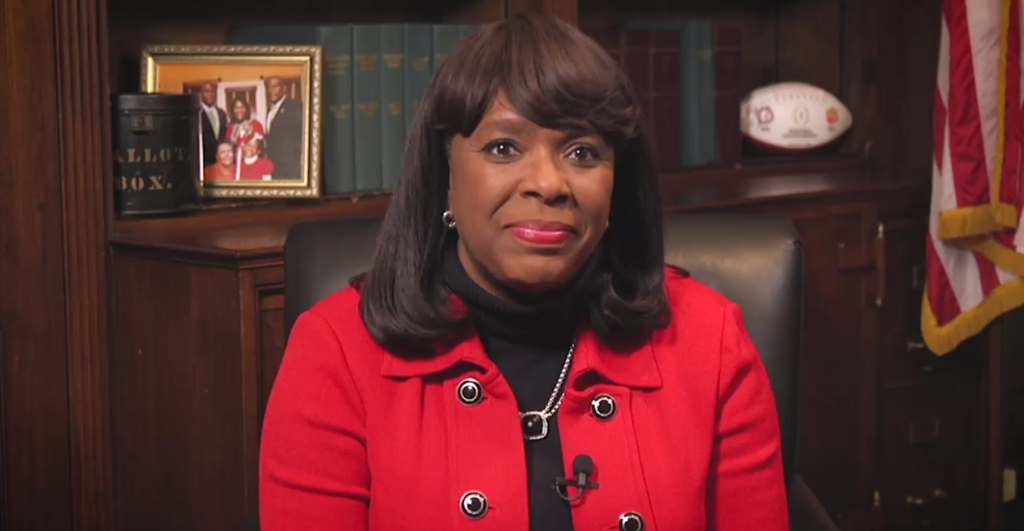
Last week Reps. Terri Sewell and Brad Wenstrup introduced bipartisan bill H.R. 7487, the Employee Access to Worksite Health Services Act. The bill would protect employees’ access to health care at their workplace health center by correcting a provision of the tax code that currently disincentivizes employers from offering worksite health clinics. Worksite health clinics are offered by many large employers and state and local governments. They play a critical role in the health and well-being of employees across the nation. In 2021, more than 60 percent of large companies offered worksite health clinics. “Workers in Alabama and across this nation rely on their employer’s worksite health clinics to access critical health care services. These clinics make our communities healthier and offer countless benefits to companies and the workers they employ,” stated Sewell. “We must ensure that our tax code rewards—not penalizes—employers for making these clinics available at the workplace. The Employee Access to Worksite Health Services Act is a commonsense bill that does just that. I’m proud to partner with Congressman Brad Wenstrup to introduce this bill and urge my colleagues on both sides of the aisle to give it their full support.” Wenstrup, lead Republican sponsor, argued that the bill will correct how the tax system currently disincentivizes employers from offering worksite health clinics. Under Internal Revenue Code Section 223, employees are prohibited from contributing pre-tax dollars to a Health Savings Account (HSA) if they also receive certain supplemental health benefits at no cost or under fair market value. Employers are then forced to limit the scope of services offered to HSA enrollees or deny them access enjoyed by other employees and their family members. Wenstrup stated, “Our communities here in Ohio and across the country rely on worksite health clinics to provide valuable resources which keep people healthier longer by providing interventions and preventative healthcare. Our tax system currently disincentivizes employers from offering worksite health clinics, and this bill corrects that. I’m happy to work with Congresswoman Terri Sewell, Congressman Mike Kelly, and Congressman Earl Blumenauer on this important legislation and I hope my colleagues will do the same; let’s keep America’s employees healthy.” The bill will amend IRC Section 223 to clarify that accessing services provided through a worksite health clinic does not render an individual ineligible to make pretax contributions to their HSA.
Jerry Carl supports bill to allow flexibility in spending COVID-19 funds
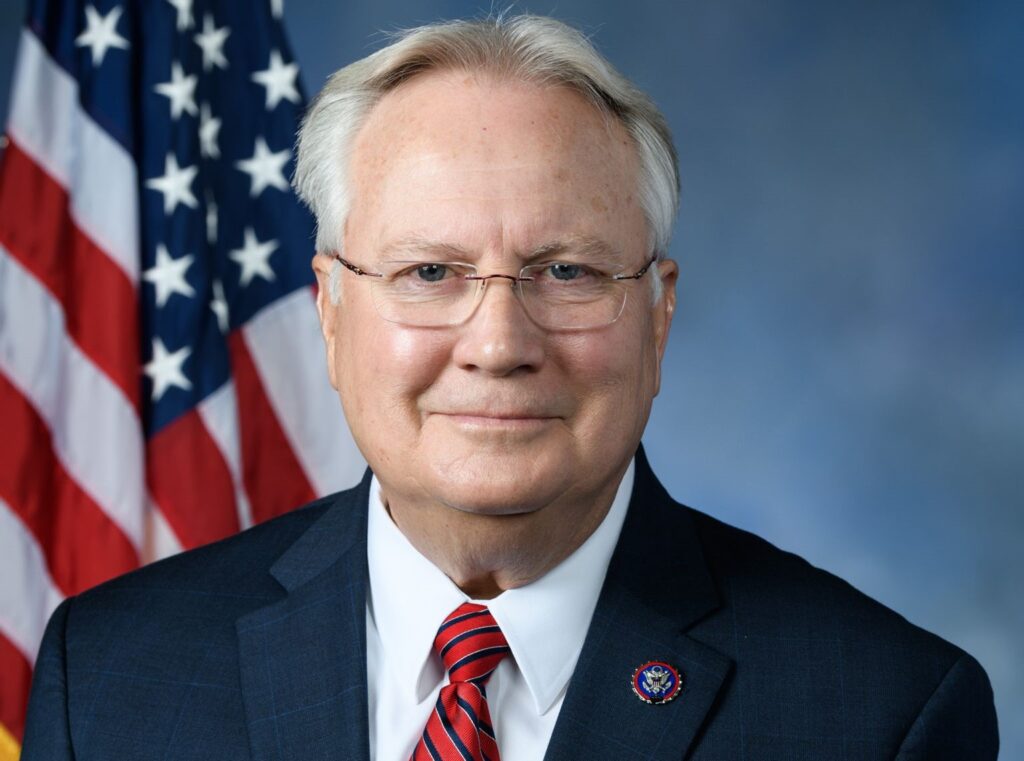
Congressman Jerry Carl announced he has co-sponsored a bipartisan bill to give state and local officials flexibility and time to spend the remainder of COVID-19 relief dollars. The State, Local, Tribal, and Territorial Fiscal Recovery, Infrastructure, and Disaster Relief Flexibility Act, introduced by Reps. Dusty Johnson and Carolyn Bourdeaux, aims to make various infrastructure investments eligible for payment with these funds. The legislation recently passed the U.S. Senate unanimously. Under the CARES Act, Congress did provide some flexibility for how COVID-19 funds could be spent, but the funds were not able to be used for infrastructure projects. This bill will give state and local officials additional flexibility and time to spend the remaining COVID-19 relief dollars responsibly. Carl supports the effort to add infrastructure spending as part of the COVID funding. Carl said in a statement, “South Alabama has a desperate need for investments in true infrastructure such as roads, bridges, ports, waterways, and broadband. As a former county commissioner, investing in our nation’s infrastructure is a top priority for me, so I’m proud to cosponsor this bipartisan bill to give states like Alabama the flexibility they need to spend unused COVID-19 relief dollars on critical investments in our nation’s infrastructure. “Unfortunately, Nancy Pelosi is holding the American people hostage by blocking this bill from being considered on the House floor. Despite passing the U.S. Senate unanimously and being introduced in the House by a large, bipartisan group, Nancy Pelosi is focused on raising our taxes, bankrupting America, and playing political games. It’s time to put the American people first and pass this bipartisan, commonsense bill.” South Dakota congressman Dusty Johnson posted on Twitter, “We need to cut the federal red tape. State governments need flexibility to administer remaining COVID-19 relief funds for critical infrastructure. Our bill would make that a reality & it’s already passed the Senate. Congress can get it done.” This legislation is cosponsored by Reps. Steve Scalise, Henry Cuellar, Rick Allen, Suzan DelBene, David Rouzer, Marilyn Strickland, Randy K. Weber, Jared Huffman, Steven Palazzo, Sanford D. Bishop, Jr., Andy Barr, Joseph Morelle, Dan Meuser, Albio Sires, Carlos A. Gimenez, Antonio Delgado, David B. McKinley, Kim Schrier, Peter Meijer, Darren Soto, Chris Pappas, Rick Crawford, Betty McCollum, William Timmons, Josh Gottheimer, Brad Wenstrup, Derek Kilmer, Don Young, and Tom O’Halleran.
GOP seeks to convince vaccine skeptics within its own ranks

When a group of Republican doctors in Congress released a video selling the safety of the coronavirus vaccine, their message wasn’t explicitly aimed at their conservative constituents but nonetheless had a clear political bent. Getting the shot is the best way to “end the government’s restrictions on our freedoms,” Rep. Larry Bucshon, an Indiana Republican and heart surgeon who donned a white lab coat and stethoscope when he spoke into the camera. The public service announcement was the latest effort from GOP leaders to shrink the vaccination gap between their party and Democrats. With vaccination rates lagging in red states, Republican leaders have stepped up efforts to persuade their supporters to get the shot, at times combating misinformation spread by some of their own. “Medicine and science and illness, that should not be political,” said Dr. Brad Wenstrup, a Republican congressman from Ohio and a podiatrist who has personally administered coronavirus vaccine shots both as an Army Reserve officer and as an ordinary doctor. “But it was an election year and it really was.” Wenstrup said both parties helped foment some skepticism, though increasingly vocal moves by other Republicans amount to acknowledgment that GOP vaccine hesitancy is a growing public health problem — and potentially a political one. “Things could easily spiral quickly if we don’t solve this red-state-blue-state issue,” said Kavita Patel, a physician, and health policy expert who worked in the Obama administration. Patel said life could return to normal in certain parts of the country while the pandemic continues to rage elsewhere — potentially even disrupting in-person voting in primaries ahead of next year’s midterm elections. “We could be sitting here in the winter-fall with an entirely different, scary version of the pandemic,” she said. “One driven by a combination of variants and people who didn’t want to get vaccinated.” It’s easy to spot potential trouble spots now — and the political pattern. Mississippi has the nation’s lowest vaccination rate, with less than 31% of its population receiving at least one anti-coronavirus shot. And the four states that proceed it in national rankings, Alabama, Louisiana, Idaho, and Wyoming, according to an Associated Press analysis of Centers for Disease Control and Prevention data. They all vote reliably Republican in presidential races. By contrast, the five states with the highest vaccination rates backed Democrat Joe Biden in November. New Hampshire leads the nation with 60% of its population receiving at least one dose, followed by Massachusetts, Vermont, and Connecticut. The fifth highest vaccination rate state, Maine, awarded three of its electoral votes to Joe Biden and one to former President Donald Trump. Republicans are more likely than Democrats to say they definitely or probably won’t get vaccinated, 44% versus 17%, according to a poll released in February from The Associated Press-NORC Center for Public Affairs. Hence this week’s video, where Texas Republican Rep. Michael Burgess, an obstetrician who reassured viewers that rather than rush the vaccine out in an unsafe fashion, federal officials “cut bureaucratic red tape, not corners. And they got the job done in record time.” The video also credited the Trump administration’s Operation Warp Speed with bringing the vaccine so quickly. Amid polling showing that Republican men were among the most likely vaccine holdouts, Senate Minority Leader Mitch McConnell said earlier this month, “I can say as a Republican man, as soon as it was my turn, I took the vaccine.” Even Trump, who was vaccinated privately while in office, suggested on Fox News Channel that he’d be willing to record a video urging vaccination. Doing so would be an about-face for Trump, who as president long said he’d be willing to take a vaccine but also relished politicizing the pandemic. He suggested that lockdowns recommended by his administration’s experts were governmental overreach, mocked then-candidate Biden for wearing a mask in public too frequently, and used racist terms like “China virus.” Not all Republican lawmakers feel the same sense of urgency to raise the vaccination rate, meanwhile. “The science tells us that vaccines are 95% effective. So if you have a vaccine, quite honestly, what do you care if your neighbor has one or not?” Wisconsin Republican Sen. Ron Johnson said during a recent interview with a conservative radio host. “I mean, what is it to you?” Between 70% and 85% of the population would need to be immune before the coronavirus is effectively contained, experts believe. The GOP’s top leaders may also have political incentives to appeal to those resistant to getting the shot. Joe Brettell, a GOP strategist in deep red Texas, said he expects Republican governors looking to raise their profiles will seize on vaccine-related debates, such as opposing “vaccine passports” that may eventually be required for travel, even as they implore their state’s people to get immunized. “I think that’s where smart governors are going to start asserting themselves,” he said, noting that some already have. Ideology also isn’t the only factor in vaccine hesitancy. Experts are also tracking a generational gap, with younger Americans believing that, even if they get the virus, it is unlikely to seriously sicken or kill them. Republican West Virginia Gov. Jim Justice even is offering $100 saving bonds to residents ages 16 to 35 who get or have gotten the shot — trying to reverse a trend that saw his conservative state become an early leader in vaccination rates only to have it slow since. Republican pollster Frank Luntz, who has been researching how best to convince vaccine skeptics, says he believes the effort is most effective when it avoids politics, with people hearing about the benefits of immunization from doctors, not politicians. He said many skeptics are persuaded to get the shot because it benefits their friends and family, not just themselves. “If it’s politicized, they will not reach herd immunity,” said Luntz, who said that means giving credit to both sides, praising the Trump administration for Operation Warp Speed and the Biden White House’s efficient and effective distribution of vaccines. Luntz argued that public health officials should be targeting
