
Fox, Dominion reach $787M settlement over election claims

Fox and Dominion Voting Systems reached a $787 million settlement Tuesday in the voting machine company’s defamation lawsuit, averting a trial in a case that exposed how the top-rated network chased viewers by promoting lies about the 2020 presidential election. “The truth matters. Lies have consequences,” Dominion lawyer Justin Nelson said in a news conference outside the courthouse after a judge announced the deal. Dominion had asked for $1.6 billion in arguing that Fox had damaged its reputation by helping peddle phony conspiracy theories about its equipment switching votes from former President Donald Trump to Democrat Joe Biden. Fox said the amount greatly overstated the value of the Colorado-based company. The resolution in Delaware Superior Court follows a recent ruling by Judge Eric Davis in which he allowed the case to go to trial while emphasizing it was “CRYSTAL clear” that none of the allegations about Dominion aired on Fox by Trump allies were true. In a statement issued shortly after the announcement, Fox News said the network acknowledged “the court’s rulings finding certain claims about Dominion to be false.” It did not respond to an inquiry asking for elaboration. Inquiries to Dominion and Fox Corp. were not immediately returned. Records released as part of the lawsuit showed how Fox hosts and executives did not believe the claims by Trump’s allies but aired them anyway, in part to win back viewers who were fleeing the network after it correctly called hotly contested Arizona for Democrat Joe Biden on election night. The settlement, if formally accepted by the judge, will end a case that has proven a major embarrassment for Fox News. If the case had gone to trial, it also would have presented one of the sternest tests to a libel standard that has protected media organizations for more than half a century. Several First Amendment experts had said Dominion’s case was among the strongest they had ever seen. Still, there was real doubt about whether Dominion would be able to prove to a jury that people in a decision-making capacity at Fox could be held responsible for the network’s airing of the falsehoods. Dominion accused Fox of defaming it by repeatedly airing, in the weeks after the 2020 presidential election, false allegations by Trump allies that its machines and the software they used had flipped votes to Biden — even as many at the network doubted the claims and disparaged those who were making them. The company sued both Fox News and its parent, Fox Corp., and said its business had been significantly damaged. During a deposition, Fox Corp. Chairman Rupert Murdoch, who founded the network, testified that he believed the 2020 election was fair and had not been stolen from Trump. “Fox knew the truth,” Dominion argued in court papers. “It knew the allegations against Dominion were ‘outlandish’ and ‘crazy’ and ‘ludicrous’ and ‘nuts.’ Yet it used the power and influence of its platform to promote that false story.” In his March 31 summary judgment ruling, Davis pointedly called out the news organization for airing falsehoods while noting how the bogus election claims persist, 2 1/2 years after Trump lost his bid for reelection. “The statements at issue were dramatically different than the truth,” Davis said in that ruling. “In fact, although it cannot be attributed directly to Fox’s statements, it is noteworthy that some Americans still believe the election was rigged.” In its defense, Fox said it was obligated to report on the most newsworthy of stories — a president claiming that he had been cheated out of reelection. “We never reported those to be true,” Fox lawyer Erin Murphy said. “All we ever did was provide viewers the true fact that these were allegations that were being made.” Fox said Dominion had argued that the network was obligated to suppress the allegations or denounce them as false. “Freedom of speech and of the press would be illusory if the prevailing side in a public controversy could sue the press for giving a forum to the losing side,” Fox said in court papers. In a 1964 case involving The New York Times, the U.S. Supreme Court limited the ability of public figures to sue for defamation. The court ruled that plaintiffs needed to prove that news outlets published or aired false material with “actual malice” — knowing such material was false or acting with a “reckless disregard” for whether or not it was true. That has provided news organizations with stout protection against libel judgments. Yet the nearly six-decade legal standard has come under attack by some conservatives in recent years, including Trump and Republican Gov. Ron DeSantis of Florida, who have argued for making it easier to win a libel case. Two Republican-nominated Supreme Court justices, Clarence Thomas and Neil Gorsuch, have publicly expressed interest in revisiting the protection. Dominion’s lawyers argued that Fox made a deliberate decision to repeatedly air the false claims to appeal to viewers. They allowed guests to falsely claim that the company had rigged the election, flipped large numbers of votes to Biden through a secret algorithm, was owned by a company founded in Venezuela to rig elections for Hugo Chavez, the late president, and bribed government officials. “What they did to get viewers back was start this new narrative that the election had been stolen and that Dominion was the thief,” Dominion lawyer Rodney Smolla said during a March hearing. A mountain of evidence — released in the form of deposition transcripts, internal memos, and emails from the time — was damaging to Fox, even if some of it was only tangentially related to the libel argument. Dominion has pointed to text and email messages in which Fox insiders discounted and sometimes overtly mocked the vote manipulation claims. One Fox Corp. vice president called them “MIND BLOWINGLY NUTS.” Much of the material showed a network effectively terrified of its audience after its election night declaration that Biden had won Arizona. The race call infuriated Trump and many viewers who
Hearing exposes TV viewers to blunt language, racial slurs
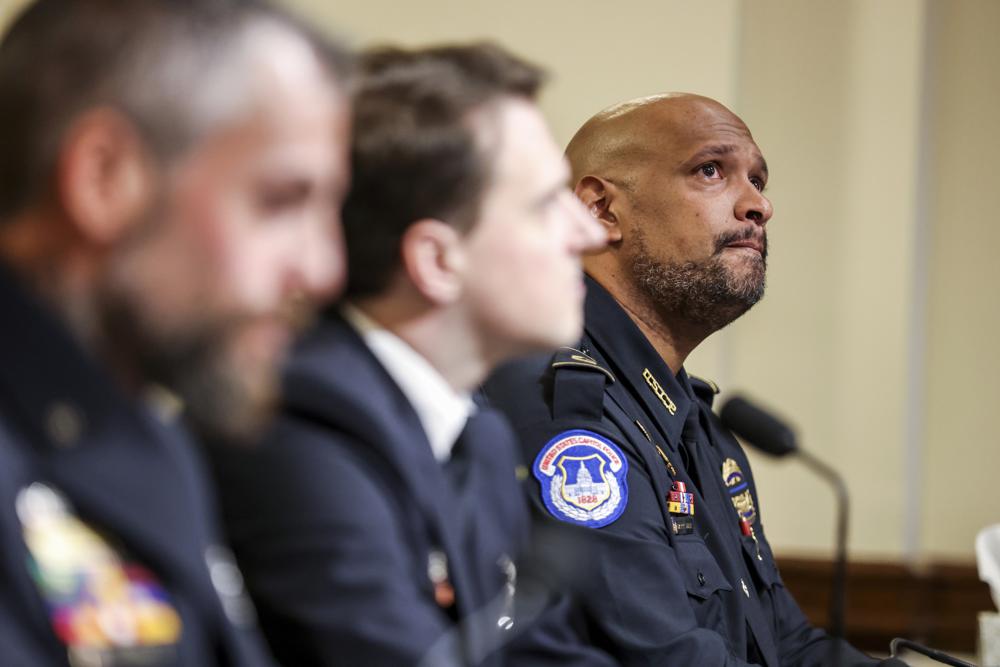
People who watched the first day of a House investigation into the Jan. 6 uprising at the U.S. Capitol on Tuesday were exposed to the sort of blunt language, including profanity and racial slurs, rarely heard on daytime television. The hearing featured emotional testimony from four police officers who defended the Capitol and video clips of violence and mayhem. It was shown live widely, but not uniformly, on several television networks. Capitol Police Officer Harry Dunn, who is Black, said one rioter cursed him and called him the n-word, a phrase that was repeated and even chanted at him. Dunn didn’t mask any language while describing it. Networks warned of graphic material in onscreen messages. In initial accounts of Dunn’s testimony, The Washington Post, The New York Times, and The Associated Press all mentioned the slur but did not spell it out. CNN’s website linked to a video with the headline, “Capitol police officer recounts rioters calling him the n-word.” The video itself, after warning of graphic language, used Dunn’s full quotes. Cable networks CNN, Fox News Channel, and MSNBC carried the hearing, lasting more than three hours, in full. ABC pre-empted daytime programming to air most of it but not CBS and NBC. Instead of compelling their local stations to carry it, those networks said it was optional. It wasn’t immediately clear how many CBS and NBC stations chose to air it, but those in the New York and Los Angeles markets did not. Television executives argue that consumers have many more options to see such events than they did years ago, including live streaming. “The fact is, people don’t go to broadcast television for live, breaking news the way they used to,” said Mark Lukasiewicz, who ran NBC News’ special events unit until 2017 and is now dean of the School of Communication at Hofstra University. Still, there’s no better way to catch a casual viewer’s attention and signal an event’s importance than broadcast television special reports. Some Republicans, like House Minority Leader Kevin McCarthy, have minimized the investigation as being partisan. So it was noteworthy that Fox News Channel, the favored destination for many Republican viewers, aired Tuesday’s testimony. While onscreen chyrons occasionally reminded viewers that the investigatory committee was “Pelosi-selected” and “Dem-led,” the network stuck with the hearing through the question-and-answer period until the end. Fox’s Bret Baier said the hearing was an “eye-opener” for anyone who considered Jan. 6 a non-violent protest. “You cannot watch this testimony and say that it’s not a big deal,” he said. Republished with the permission of the Associated Press.
Iowa a carnival of democracy for media — until it went sour

Unlike in past election cycles, Iowa seemed to sneak up on television viewers, despite nearly a year’s worth of debates and campaigning.
Fox announces date, team for Iowa debate

Fox News Channel says it will host the seventh Republican presidential debate, taking place next month in Des Moines, Iowa, ahead of that state’s caucuses. Fox said Monday that the two-hour debate on Jan. 28 will be anchored by Bret Baier, Megyn Kelly and Chris Wallace. That’s the same team that moderated the campaign’s first GOP debate in August, which drew a cable news record audience of 24 million people. The sixth debate will be shown on the Fox Business Network on Jan. 14. Criteria for participation will be announced later. The GOP field narrowed on Monday with Sen. Lindsey Graham‘s announcement that he was ending his campaign. Republished with permission of the Associated Press.
Ted Cruz clarifies immigration stance in renewed Southern offensive
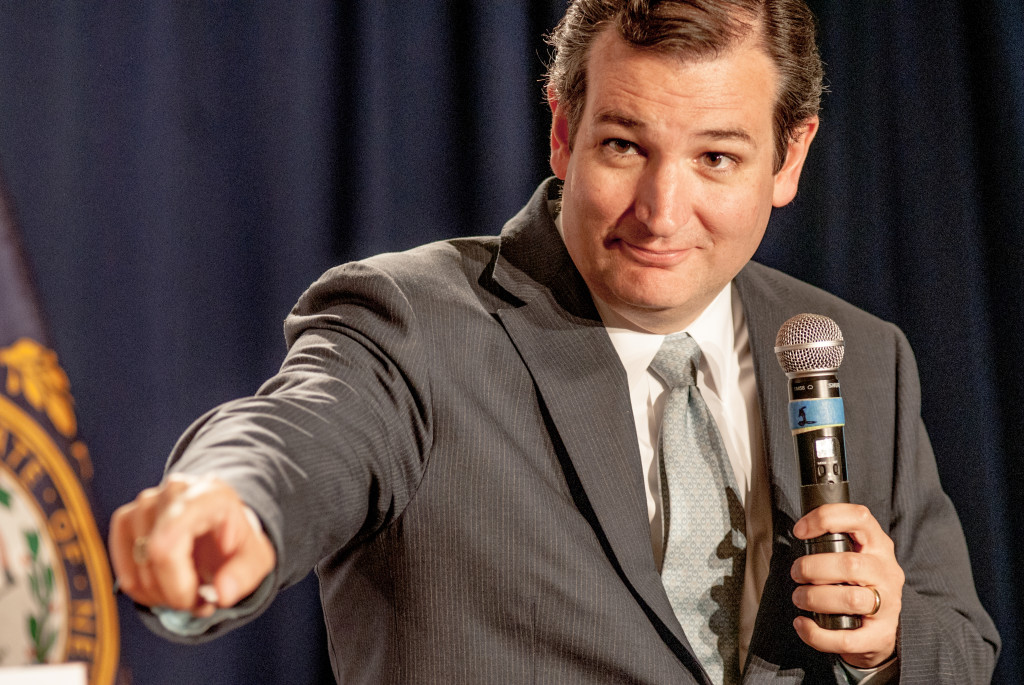
Ted Cruz, facing increased scrutiny as he rises in national polls, is taking to the campaign trail this week with a renewed effort to remind his base of just how deep a conservative he is. As reported by Katie Glueck in POLITICO, Cruz began a swing throughout the South this weekend, starting with a fiery speech in Alabama to more than 1,300 supporters. It was the start of a 12-day 12-city tour throughout the Southern states, an area where Cruz is thought to have the best organization of any candidate. Saturday’s performance focused on an attempt to backtrack comments Cruz made during last week’s Republican Party debate, insisting to the raucous crowd he “never” supported the legalization of undocumented immigrants, something at odds with comments he made during an attempted Senate immigration reform bill in 2013. “One of the things you’ve been hearing about is criticism of Ted and what he did with regard to the massive immigration bill they tried to ram through in 2013,” said Alabama Republican Sen. Jeff Sessions at the event. Sessions, one of the party’s leading immigration hard-liners, has been considered a potential Cabinet member in a Cruz administration. “Let me tell you, I was there every step of the way,” Sessions said. “Ted Cruz was on my side, he fought this legislation all the way through.” Cruz’s Alabama stump speech, made in what is considered one of the most conservative states in the country, had much of the conservative talking points he used elsewhere in the country, but seemed to resonate a little more with the crowd there than elsewhere. Glueck writes that many in the audience responded with cheers and shouts of “amen.” However, talking about immigration drew the loudest cheers, especially after Cruz had sparred with Marco Rubio over the issue during the most recent Republican Party debate. Cruz attempted to explain away his rhetoric in 2013 by saying it was all part of a larger plan to stop comprehensive immigration reform proposal the Gang of Eight — which included Rubio — tried to push through the Senate. Since then, Rubio and Cruz have been battling it out, with the Texas senator trying to portray his rival from Florida as a supporter of “amnesty” — a word frowned upon in Republican Party circles — as well as someone tied to liberal Democratic Sen. Chuck Schumer from New York. That led to Cruz, on defense from the Rubio campaign, having to explain intricate procedural matters and rhetoric that appears, at least at face value, contradictory. For his part, Rubio has been attempting to portray Cruz as “inconsistent” in his immigration stance. In addition, a New York Times story published Friday showed Cruz, as a domestic policy adviser for George W. Bush’s presidential campaign, taking a much more conciliatory tone than the hard-line stance he embraces today. If that narrative gains traction, it could hurt Cruz in the eyes of his conservative base. “My gut is, people see Ted Cruz as so far to the right, a really far-right conservative guy, and people see Rubio as conservative but a little more mainstream, more moderate, so when this immigration thing is thrown at both of them, it’s much more likely to stick to Rubio than to Cruz,” one Republican source told POLITICO. “Cruz had an awful interview with [Fox News’s] Bret Baier, but he’s going to fix that.” Nevertheless, Glueck says Cruz continues to wow Southern audiences with tailor-made stump speech lines such as: The “single biggest difference” between himself and his debate opponents is that “with me, when I tell you I’m going to do something, I’m going to do exactly what I said I’m going to do.” And the Southern crowd eats it up.
Ted Cruz bobs and weaves on immigration in Fox News interview
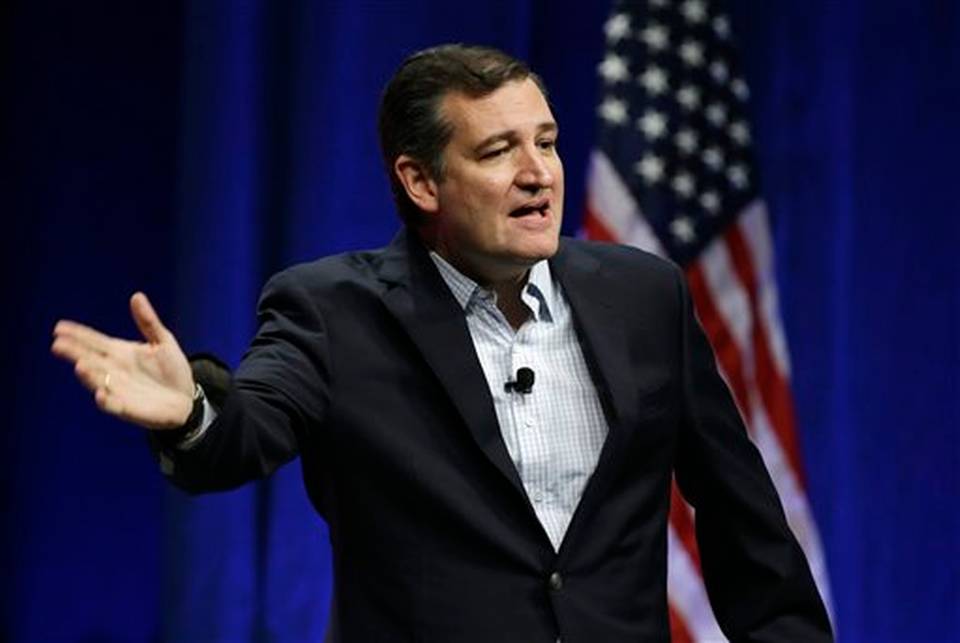
There’s little doubt Texas Sen. Ted Cruz has carved out a path as a legitimate threat to win the 2016 GOP presidential primary. But did he also advocate for a path for illegal immigrants to remain in the country? Fox New’s Bret Baier pushed Cruz on the issue in an interview Wednesday, and the smooth-talking Harvard Law School alum ended up sounding less assertive than his characteristic debate-champ aplomb. Baier called out Cruz – who scored points against Florida Sen. Marco Rubio in Tuesday’s debate by pillorying him for being soft on immigration – for appearing to offer an amendment on which he called for bipartisan agreement to allow undocumented workers to remain in the country. “I don’t want immigration reform to fail. I want immigration reform to pass,” said Cruz on the Senate floor in 2013. “And so I would urge people of good faith on both sides of the aisle, if the objective is to pass commonsense immigration reform that that secures the borders, that improves legal immigration, and that allows those who are here illegally to come in out of the shadows, then we should look for areas of bipartisan agreement and compromise to come together,” said Cruz, advocating for an amendment to a bill he now calls the “Rubio-Schumer amnesty bill.” Baier baited Cruz, saying his amendment would allow undocumented immigrants to remain in the country permanently, a position antithetical to Cruz’s hard-right stance in the 2016 race. “It wouldn’t have. What was happening there was the ‘Gang of Eight”s Rubio-Schumer amnesty bill, which was a massive amnesty bill,” said Cruz tentatively. “I was leading the fight against amnesty. That particular bill removed citizenship, that those here illegally shall be permanently ineligible for citizenship.” Baier pointed out Cruz did not say that at the time, citing quotes from news sources where Cruz said the amendment was a compromise that could increase the chances of the bill becoming law. “Of course I wanted the bill to pass, my amendment to pass,” Cruz, apparently shaken by the line of questioning. “What my amendment did was take citizenship off the table. It doesn’t mean that I supported the other aspects of the bill, which was terrible.” The exchange seemingly revealed a chink in the anti-immigration armor Cruz bears as he attacks Rubio. For his part, Rubio claims he and Cruz have very similar approached to immigration, a position that now seems more tenable.
Debate shatters Fox News ratings record, Donald Trump feels heat
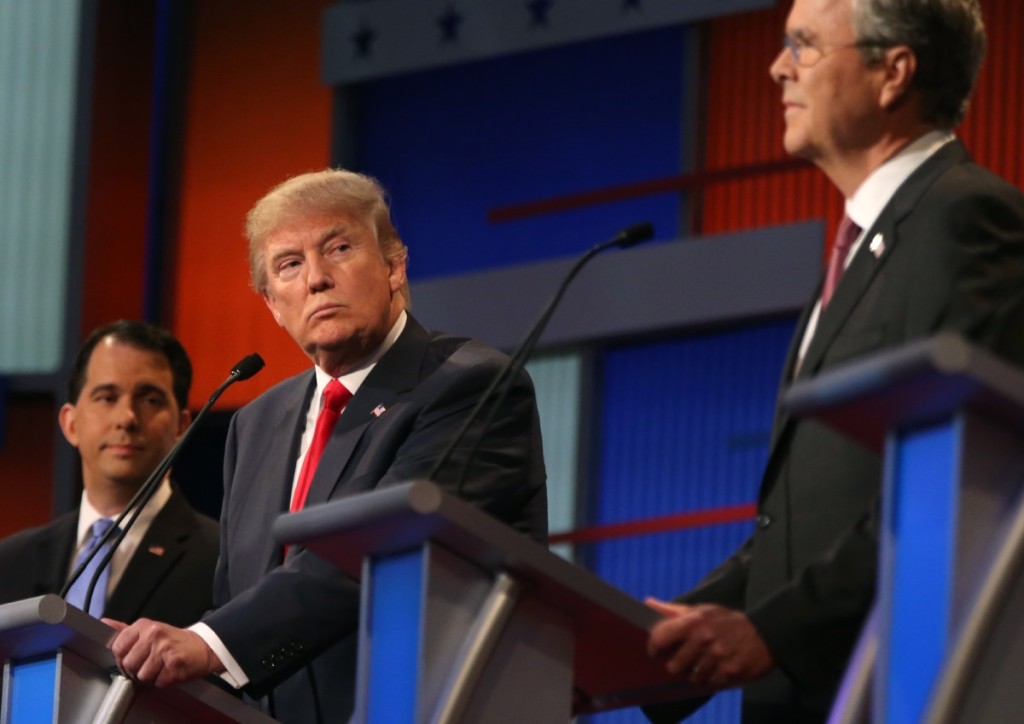
Donald Trump always boasted about his ratings for “Celebrity Apprentice.” Now he can say the same thing about his first presidential debate, even if he didn’t like the show very much. Thursday’s prime-time GOP candidates’ forum on Fox News Channel reached a stunning 24 million viewers, by far the largest audience ever for that network and any cable news event. The closest was the 1992 “Larry King Live” debate between Al Gore and Ross Perot on CNN, which was seen by 16.8 million people, the Nielsen company said. In fact, it stands as the most-watched television program of the summer so far, beating the last game of the NBA Finals and the women’s World Cup soccer finals, Nielsen said. The debate left front-runner Trump singed by the aggressive questioning of Fox’s moderator team of Bret Baier, Megyn Kelly and Chris Wallace. Trump tweeted out criticism of the moderators as “not very good or professional” and retweeted a message from a supporter who called Kelly a “bimbo.” Fox News Chairman Roger Ailes called his moderators “the best political team ever put on television.” Trump became the focus of Thursday’s forum right away, when Baier asked the 10 candidates onstage in Cleveland which of them would not pledge to support the eventual GOP nominee or run a third-party candidacy. Trump was the only one to raise his hand, leading opponent Rand Paul to criticize him. Kelly’s sharp first question noted that Trump had called women he didn’t like “fat pigs, dogs, slobs and disgusting animals.” When Trump suggested he had only insulted Rosie O’Donnell, Kelly corrected him and asked whether this represented the proper temperament for a president and left him vulnerable to charges that he is part of a war on women. Trump pointed to his lack of political correctness. “I’ve been very nice to you although I could probably not be based on the way you’ve treated me,” Trump told Kelly. “But I wouldn’t do that.” Wallace asked Trump two tough questions and, in a quick-moving format that allowed little time for followups, both times came back at Trump for not answering them. Wallace asked Trump to provide proof for his earlier statement that the Mexican government is sending criminals to the United States, and later questioned him on how he could be trusted to run the nation’s economy when his companies have declared bankruptcy four times. Baier asked Trump to reconcile his past support of single-payer health care with his opposition to President Obama‘s health plan, and what he felt he received in return for past political donations to Hillary Clinton and Nancy Pelosi. Kelly also pointed out Trump’s past support for Democrats and asked, “when did you become a Republican?” “I don’t think they like me very much,” Trump said. Later, Trump wrote on Twitter: “I really enjoyed the debate tonight even though the @foxnews trio, especially @megynkelly, was not very good or professional.” In another message, he wrote that Kelly “really bombed.” He retweeted several messages from others who criticized Fox, including one who wrote that “Fox viewers give low marks to bimbo @MegynKelly.” On Fox after the debate, Kelly noted that it “creates an awkward dynamic” to have Trump attack her after she has asked a tough question about what he has said and done to women. “I’m extremely proud of all of the moderators – they asked tough, important questions and did their job as journalists,” Ailes told POLITICO. “I think that was the best political debate team ever put on television. Their performance was outstanding.” Fox had attracted attention prior to the debate for deciding to include 10 of the 17 declared candidates in the prime-time debate. The other candidates competed in a forum that began at 5 p.m. ET to an audience of one-quarter the size. Still, even the earlier forum attracted a larger audience than all but five of 18 Republican debates televised during the 2012 election cycle. The most-watched GOP primary debate for the 2012 election, on ABC in December 2011, had 7.6 million people, Nielsen said. Fox attracted just under 12 million viewers for its 2012 Election Night coverage, its previous standard for biggest audience. Republished with permission of the Associated Press.
