
Joe Biden to allow eviction moratorium to expire Saturday
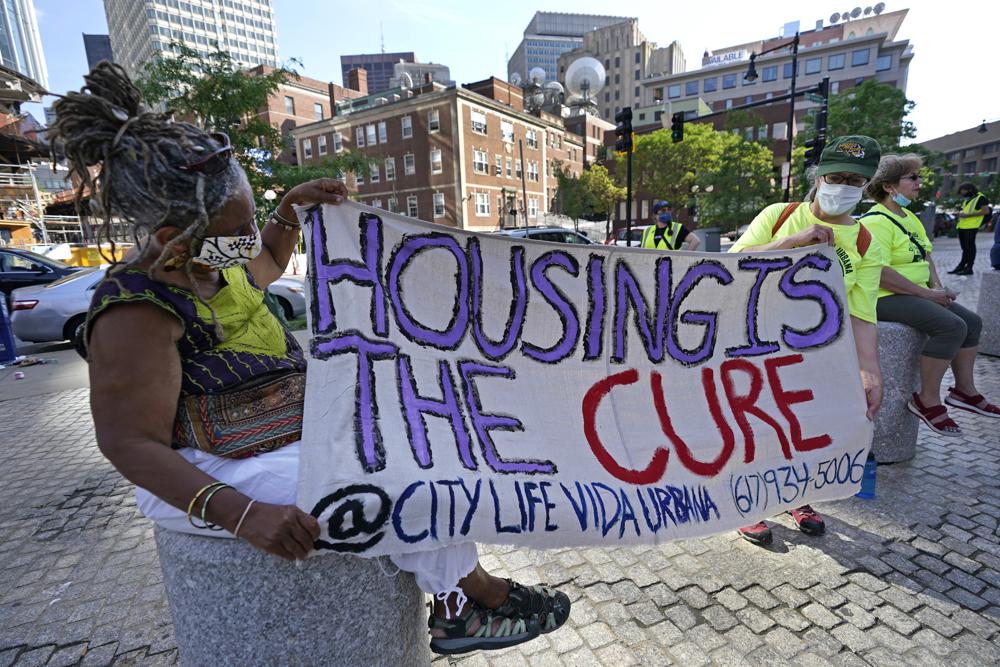
The Biden administration announced Thursday it will allow a nationwide ban on evictions to expire Saturday, arguing that its hands are tied after the Supreme Court signaled the moratorium would only be extended until the end of the month. The White House said President Joe Biden would have liked to extend the federal eviction moratorium due to spread of the highly contagious delta variant of the coronavirus. Instead, Biden called on “Congress to extend the eviction moratorium to protect such vulnerable renters and their families without delay.” “Given the recent spread of the delta variant, including among those Americans both most likely to face evictions and lacking vaccinations, President Biden would have strongly supported a decision by the CDC to further extend this eviction moratorium to protect renters at this moment of heightened vulnerability,” the White House said in a statement. “Unfortunately, the Supreme Court has made clear that this option is no longer available.” Aides to Senate Majority Leader Chuck Schumer and Sen. Sherrod Brown, the chairman of the Senate Committee on Banking, Housing and Urban Affairs, said the two are working on legislation to extend the moratorium. Democrats will try to pass a bill as soon as possible and are urging Republicans not to block it. In the House, a bill was introduced Thursday to extended the moratorium until the end of the year. But the prospect of a legislative solution remained unclear. The court mustered a bare 5-4 majority last month, to allow the eviction ban to continue through the end of July. One of those in the majority, Justice Brett Kavanaugh, made clear he would block any additional extensions unless there was “clear and specific congressional authorization.” By the end of March, 6.4 million American households were behind on their rent, according to the Department of Housing and Urban Development. As of July 5, roughly 3.6 million people in the U.S. said they faced eviction in the next two months, according to the U.S. Census Bureau’s Household Pulse Survey. Dr. Rochelle Walensky, director of the Centers for Disease Control and Prevention, said in June this would be the last time the moratorium would be extended when she set the deadline for July 31. It was initially put in place to prevent further spread of COVID-19 by people put out on the streets and into shelters. Housing advocates and some lawmakers have called for the moratorium to be extended due to the increase in coronavirus cases and the fact so little rental assistance has been distributed. Congress has allocated nearly $47 billion in assistance that is supposed to go to help tenants pay off months of back rent. But so far, only about $3 billion of the first tranche of $25 billion has been distributed through June by states and localities. Some states like New York have distributed almost nothing, while several have only approved a few million dollars. “The confluence of the surging delta variant with 6.5 million families behind on rent and at risk of eviction when the moratorium expires demands immediate action,” said Diane Yentel, executive director of the National Low Income Housing Coalition. “The public health necessity of extended protections for renters is obvious. If federal court cases made a broad extension impossible, the Biden administration should implement all possible alternatives, including a more limited moratorium on federally backed properties.” Gene Sperling, who is charged with overseeing the implementation of Biden’s $1.9 trillion coronavirus rescue package, said it was key that states and local authorities speed up the rental assistance distribution. “The message is that there are no excuses,” he told The Associated Press. “States and cities across the country have shown these programs can work, that they can get money out the door effectively and efficiently,” he continued. “The fact that some states and cities are showing they can do this efficiently and effectively makes clear that there is no reason that every state and city shouldn’t be accelerating their funds to landlords and tenants, particularly in light of the end of the CDC eviction moratorium.” The trouble getting rental assistance to those who need it has prompted the Biden administration to hold several events in the past month aimed at pressuring states and cities to increase their distribution, coax landlords to participate, and make it easier for tenants to get money directly. Associate Attorney General Vanita Gupta also has released an open letter to state courts around the country encouraging them to pursue measures that would keep eviction cases out of the courts. On Wednesday, the Consumer Financial Protection Bureau unveiled a tool that allows tenants to find information about rental assistance in their area. Despite these efforts, some Democratic lawmakers had demanded the administration extend the moratorium. “This pandemic is not behind us, and our federal housing policies should reflect that stark reality. With the United States facing the most severe eviction crisis in its history, our local and state governments still need more time to distribute critical rental assistance to help keep a roof over the heads of our constituents,” Democratic U.S. Reps. Cori Bush of Missouri, Jimmy Gomez of California, and Ayanna Pressley of Massachusetts said in a joint statement. But landlords, who have opposed the moratorium and challenged it repeatedly in court, were against any extension. They have argued the focus should be on speeding up the distribution of rental assistance. This week, the National Apartment Association and several others this week filed a federal lawsuit asking for $26 billion in damages due to the impact of the moratorium. “Any extension of the eviction moratorium equates to an unfunded government mandate that forces housing providers to deliver a costly service without compensation and saddles renters with insurmountable debt,” association president and CEO Bob Pinnegar said, adding that the current crisis highlights the need for more affordable housing. “Our nation faces an alarming housing affordability disaster on the horizon — it’s past time for the government to enact responsible and sustainable solutions that ultimately prioritize making both
Dan Sutter: The NCAA cartel is collapsing

The unanimous U.S. Supreme Court decision in NCAA v. Alston portends change for college sports. This case involves education-related benefits and is separate from cases about athletes’ “name, image, and likeness.” The NCAA’s 100-year effort to not pay student-athletes is close to ending. Justice Neil Gorsuch authored the opinion, but Justice Brett Kavanaugh’s concurring opinion has garnered more attention. Justice Kavanaugh wrote, “The NCAA’s business model would be flatly illegal in almost any other industry in America. … The NCAA is not above the law.” He seems to accept that the NCAA is a cartel expounded by economists like the late Robert Tollison of Clemson University. A cartel in economics is a group of businesses (or universities) acting to restrict competition. The best-known cartel is OPEC, which tries to keep the price of oil high to increase oil-producing nations’ profits. Businesses also benefit from paying less for labor. The amateur status of college athletes fixes compensation at the value of a scholarship and related benefits. The NCAA began by enforcing common rules for college football to reduce the level of violence. Once college football began earning significant revenues, schools offered inducements to top players. The NCAA barred such compensation of athletes, although Professor Tollison contended that it became an effective cartel only once it could discipline violators through probation. The NCAA cartel illustrates via contrast the normal operation of labor markets. Economics shows that businesses can afford to pay workers up to the value their work creates. Competition between businesses for workers bids wages up to this amount. Colleges are not-for-profit businesses, but the same principle of revenue creation should still apply. If top recruits are worth $1 million and one school refuses to pay this full value, others will lure its recruits by offering payment. NCAA punishment halts the normal competition for productive players. Sports often feature such cartel behavior. Leagues generate enormous revenues, making stars worth millions per year. Yet most players’ best alternative work option outside of sports might pay $50,000 a year. Teams can potentially keep salaries way below market levels by not bidding for players. Major league baseball accomplished this via the reserve clause until the advent of free agency. How will the looming pay-for-play affect college football? I see three relevant considerations. First, can colleges afford to pay players, given that many athletics programs lose money on paper? I suspect so. Colleges are not businesses delivering profits to owners, and athletic departments are not stand-alone entities. Economics predicts that non-profit organizations will convert excess revenue (the $100 million-plus top athletic departments generate annually) into excessive costs. Excessive costs can be trimmed to allow compensation. A second issue is competitive balance. Schools generating the most revenue will be able to pay more for players. Large market teams similarly threaten competitive balance in pro sports, and salary caps and revenue sharing try to maintain balance. The rules on compensation will determine the threat to competitive balance. Payments to players may well reduce Alabama’s current domination of college football. Not paying individual players allows the Crimson Tide, given the juggernaut Coach Nick Saban has created, to offer a great deal to many five-star recruits each year: a proven path to the NFL and likely a national championship. Rivals need to offer extra compensation to be as attractive to recruits as Alabama. The third issue involves sustaining fan interest. Many fans strongly prefer college to pro football despite the NFL’s higher skill level. Economists have no skill in psychoanalyzing consumers. I can offer an observation. Improved coaching, strength training, and nutrition allow players today to realize more of their athletic potential. This significant element of professionalization has not reduced interest in college sports. Competition drives efficiency in our economy. The NCAA cartel has restricted competition. As college sports ventures into unfamiliar territory, remember that competition usually makes us better off. Daniel Sutter is the Charles G. Koch Professor of Economics with the Manuel H. Johnson Center for Political Economy at Troy University and host of Econversations on TrojanVision. The opinions expressed in this column are the author’s and do not necessarily reflect the views of Troy University.
‘Obamacare’ survives: Supreme Court dismisses big challenge

The Supreme Court, though increasingly conservative in makeup, rejected the latest major Republican-led effort to kill the national health care law known as “Obamacare” on Thursday, preserving insurance coverage for millions of Americans. The justices, by a 7-2 vote, left the entire Affordable Care Act intact in ruling that Texas, other GOP-led states, and two individuals had no right to bring their lawsuit in federal court. The Biden administration says 31 million people have health insurance because of the law, which also survived two earlier challenges in the Supreme Court. The law’s major provisions include protections for people with existing health conditions, a range of no-cost preventive services, expansion of the Medicaid program that insures lower-income people, and access to health insurance markets offering subsidized plans. “The Affordable Care Act remains the law of the land,” President Joe Biden, said, celebrating the ruling. He called for building further on the law that was enacted in 2010 when he was vice president. Also left in place is the law’s now-toothless requirement that people have health insurance or pay a penalty. Congress rendered that provision irrelevant in 2017 when it reduced the penalty to zero. The elimination of the penalty had become the hook that Texas and other GOP-led states, as well as the Trump administration, used to attack the entire law. They argued that without the mandate, a pillar of the law when it was passed, the rest of the law should fall, too. And with a Supreme Court that includes three appointees of former President Donald Trump, opponents of “Obamacare” hoped a majority of the justices would finally kill the law they have been fighting for more than a decade. But the third major attack on the law at the Supreme Court ended the way the first two did, with a majority of the court rebuffing efforts to gut the law or get rid of it altogether. Trump’s appointees — Justices Amy Coney Barrett, Neil Gorsuch, and Brett Kavanaugh — split their votes. Kavanaugh and Barrett joined the majority. Gorsuch was in dissent, signing on to an opinion from Justice Samuel Alito. Justice Stephen Breyer wrote for the court that the states and people who filed a federal lawsuit “have failed to show that they have standing to attack as unconstitutional the Act’s minimum essential coverage provision.” In dissent, Alito wrote, “Today’s decision is the third installment in our epic Affordable Care Act trilogy, and it follows the same pattern as installments one and two. In all three episodes, with the Affordable Care Act facing a serious threat, the Court has pulled off an improbable rescue.” Alito was a dissenter in the two earlier cases in 2012 and 2015, as well. Like Alito, Justice Clarence Thomas was in dissent in the two earlier cases, but he joined Thursday’s majority, writing, “Although this Court has erred twice before in cases involving the Affordable Care Act, it does not err today.” Because it dismissed the case for the plaintiff’s lack of legal standing — the ability to sue — the court didn’t actually rule on whether the individual mandate is unconstitutional now that there is no penalty for forgoing insurance. Lower courts had struck down the mandate, in rulings that were wiped away by the Supreme Court decision. With the latest ruling, the Supreme Court reaffirmed that “the Affordable Care Act is here to stay,” former President Barack Obama said, adding his support to Biden’s call to expand the law. Texas Attorney General Ken Paxton pledged to continue the fight against “Obamacare,” which he called a “massive government takeover of health care.” But it’s not clear what Republicans can do, said Larry Levitt, an executive vice president for the nonprofit Kaiser Family Foundation, which studies health care. “Democrats are in charge and they have made reinvigorating and building on the ACA a key priority,” Levitt said. “Republicans don’t seem to have much enthusiasm for continuing to try to overturn the law.” Republicans have pressed their argument to invalidate the whole law even though congressional efforts to rip out the entire law “root and branch,” in Senate GOP leader Mitch McConnell’s words, have failed. The closest they came was in July 2017 when Arizona Sen. John McCain, who died the following year, delivered a dramatic thumbs-down vote to a repeal effort by fellow Republicans. Chief Justice John Roberts said during arguments in November that it seemed the law’s foes were asking the court to do work best left to the political branches of government. The court’s decision preserves benefits that have become part of the fabric of the nation’s health care system. Polls show that the law has grown in popularity as it has endured the heaviest assault. In December 2016, just before Obama left office and Trump swept in calling the ACA a “disaster,” 46% of Americans had an unfavorable view of the law, while 43% approved, according to the Kaiser Family Foundation tracking poll. Those ratings flipped, and by February of this year, 54% had a favorable view, while disapproval had fallen to 39% in the same ongoing poll. The health law is now undergoing an expansion under Biden, who sees it as the foundation for moving the U.S. to coverage for all. His giant COVID-19 relief bill significantly increased subsidies for private health plans offered through the ACA’s insurance markets, while also dangling higher federal payments before the dozen states that have declined the law’s Medicaid expansion. About 1.2 million people have signed up with HealthCare.gov since Biden reopened enrollment amid high levels of COVID cases earlier this year. Most of the people with insurance because of the law have it through Medicaid expansion or the health insurance markets that offer subsidized private plans. But its most popular benefit is protection for people with preexisting medical conditions. They cannot be turned down for coverage on account of health problems or charged a higher premium. While those covered under employer plans already had such protections, “Obamacare” guaranteed them for people buying
U.S. Supreme Court to take up major abortion rights challenge
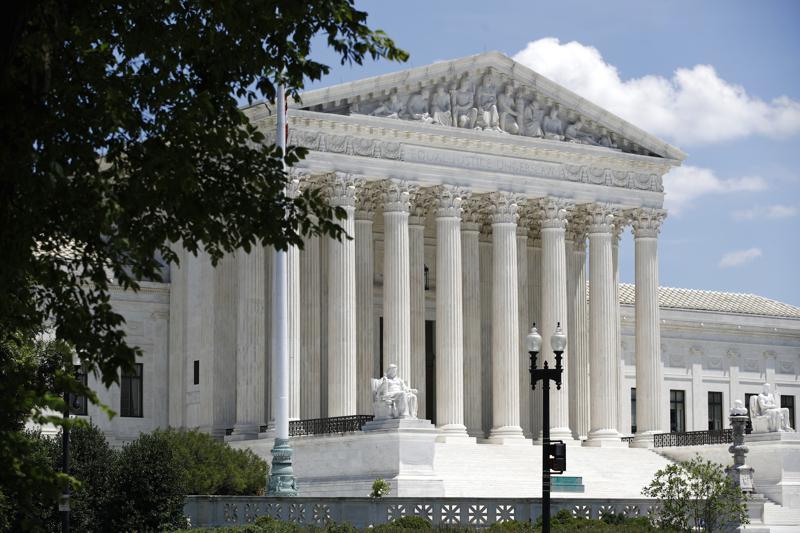
The Supreme Court agreed Monday to a showdown over abortion in a case that could dramatically alter nearly 50 years of rulings on abortion rights. With three justices appointed by President Donald Trump part of a 6-3 conservative majority, the court is taking on a case about whether states can ban abortions before a fetus can survive outside the womb. Mississippi, which is asking to be allowed to enforce an abortion ban after 15 weeks of pregnancy, is not asking the court to overrule the 1973 Roe v. Wade decision confirming a woman’s right to an abortion, or a decision 19 years later that reaffirmed it. But abortion-rights supporters said the case is a clear threat to abortion rights. “The court cannot uphold this law without overturning the principal protections of Roe v. Wade,” Nancy Northup, president and CEO of the Center for Reproductive Rights, said in a call with reporters. Even if the court does not explicitly overrule earlier cases, a decision favorable to the state could lay the groundwork for allowing even more restrictions on abortion, including state bans on abortion once a fetal heartbeat is detected, as early as six weeks. The case probably will be argued in the fall, with a decision likely in the spring of 2022 during the campaign for congressional midterm elections. Mississippi’s ban had been blocked by lower courts as inconsistent with Supreme Court precedent that protects a woman’s right to obtain an abortion before the fetus can survive outside her womb. “States may regulate abortion procedures prior to viability so long as they do not impose an undue burden on the woman’s right, but they may not ban abortions. The law at issue is a ban,” Judge Patrick Higginbotham of the 5th U.S. Circuit Court of Appeals wrote in affirming a lower-court ruling that invalidated the law. The Supreme Court had previously turned down state appeals over previability abortion bans. More than 90% of abortions take place in the first 13 weeks of a woman’s pregnancy, according to the Centers for Disease Control and Prevention. John Bursch, vice president of the anti-abortion Alliance Defending Freedom, said the high court has repeatedly held that states can regulate abortions later in pregnancy. Viability “has never been a legitimate way to determine a developing infant’s dignity or to decide anybody’s legal existence,” Bursch said. The justices had put off action on the case for several months. Justice Ruth Bader Ginsburg, an abortion-rights proponent, died just before the court’s new term began in October. Her replacement, Justice Amy Coney Barrett, is the most open opponent of abortion rights to join the court in decades. Barrett is one of three Trump appointees on the Supreme Court. The other two, Justices Neil Gorsuch and Brett Kavanaugh, voted in dissent last year to allow Louisiana to enforce restrictions on doctors that could have closed two of the state’s three abortion clinics. Chief Justice John Roberts, joined by Ginsburg and the other three liberal justices, said the restrictions were virtually identical to a Texas law the court struck down in 2016. But that majority no longer exists, even if Roberts, hardly an abortion rights supporter in his more than 15 years on the court, sides with the more liberal justices. White House press secretary Jen Psaki said the Biden administration backs legislation that would write the Roe decision into federal law, regardless of the outcome of the Supreme Court case. The legislation would put an end to state efforts to ban abortion, Northup said. The Mississippi law was enacted in 2018 but was blocked after a federal court challenge. The state’s only abortion clinic remains open. About 10% of its abortions are done after the 15th week, said Shannon Brewer, the clinic director at Jackson Women’s Health Organization. The case is separate from a fight over laws enacted by Mississippi and other states that would ban most abortions when a fetal heartbeat is detected. Mississippi also is among 11 states with a total abortion ban waiting to take effect if the Supreme Court overturns its Roe decision, according to NARAL Pro-Choice America. A central question in the case is about viability — whether a fetus can survive on its own at 15 weeks. The clinic presented evidence that viability is impossible at 15 weeks, and the appeals court said that the state “conceded that it had identified no medical evidence that a fetus would be viable at 15 weeks.” Viability occurs roughly at 24 weeks, the point at which babies are more likely to survive. But the state argues that viability is an arbitrary standard that doesn’t take sufficient account of the state’s interest in regulating abortion. The Mississippi law would allow exceptions to the 15-week ban in cases of medical emergency or severe fetal abnormality. Doctors found in violation of the ban would face mandatory suspension or revocation of their medical license. Republished with the permission of the Associated Press.
Alabama to allow spiritual advisor at inmate’s execution
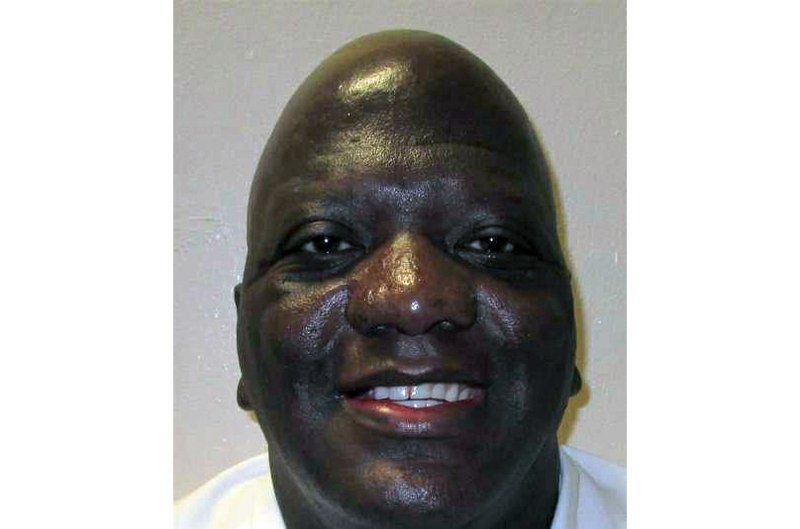
Alabama is amending its lethal injection procedures to allow a condemned inmate to have his spiritual advisor in the execution chamber, state lawyers wrote in a Thursday court filing. The move comes after the U.S. Supreme Court this month sided with Alabama inmate Willie B. Smith III who had sought to have his pastor in the chamber. Alabama, which had previously argued that only prison staff should be allowed in the chamber for security reason, canceled Smith’s execution. “In light of the Supreme Court’s decision in this matter, however, Defendant is in the process of amending the ADOC’s lethal injection protocol to permit a condemned inmate to have his spiritual advisor in the execution chamber,” lawyers with the Alabama attorney general’s office wrote in a court filing. A spokeswoman for the Alabama Department of Corrections did not immediately respond to an email seeking comment. The filing did not give additional details about the state’s plan, including how long the spiritual adviser can stay in the chamber and if they will be present when the execution begins. In past lethal injections, the state allowed a prison chaplain to remain in the chamber. Smith’s scheduled Feb. 11 execution was called off by Alabama officials after Supreme Court justices maintained an injunction issued by the 11th U.S. Circuit Court of Appeals, saying he could not be executed without his pastor present in chamber. “Alabama has not carried its burden of showing that the exclusion of all clergy members from the execution chamber is necessary to ensure prison security. So the State cannot now execute Smith without his pastor present, to ease what Smith calls the ‘transition between the worlds of the living and the dead,’” Justice Elena Kagan wrote in a writing joined by three other justices, including Amy Coney Barrett. The Alabama case was the latest in a series of legal fights over personal spiritual advisers at executions. Justice Brett Kavanaugh suggested in a dissent in the Smith case that states that want to avoid continuing litigation on the issue “should figure out a way to allow spiritual advisors into the execution room, as other states and the federal government have done.” The court in 2019 halted the execution of a Texas inmate who claimed his religious freedom would be violated if his Buddhist spiritual adviser was not allowed to be in the death chamber with him. In the past, Alabama routinely put a Christian prison chaplain, who was employed by the state, in the execution chamber to pray with an inmate if requested. The state stopped that practice after a Muslim inmate asked to have an imam present. The prison system, which did not have Muslim cleric on staff, said non-prison staff would not be allowed in the chamber. Republished with the permission of the Associated Press.
Religion and the death penalty collide at the Supreme Court
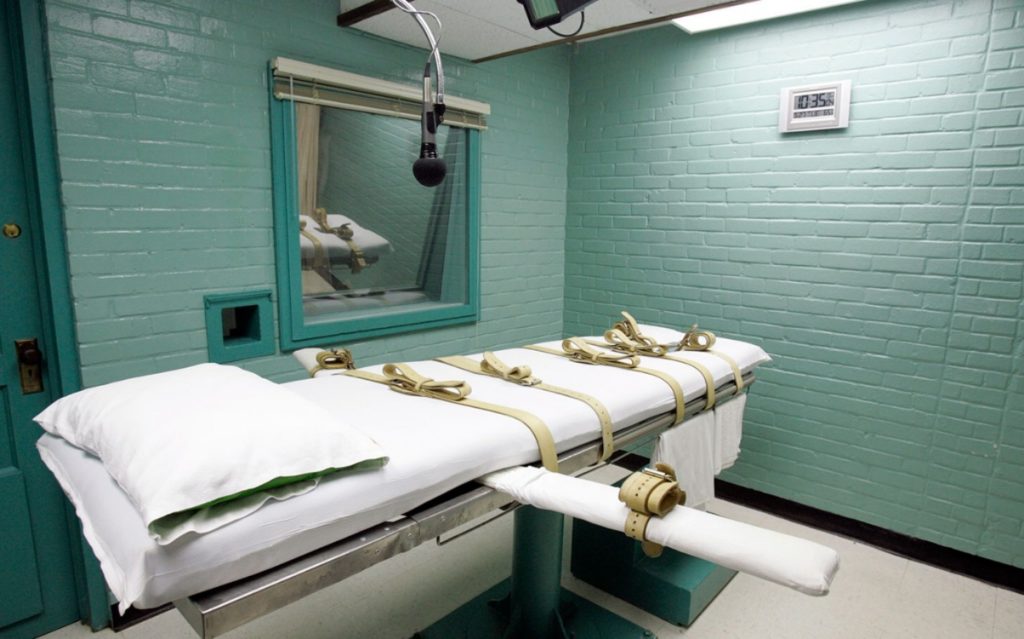
The Supreme Court is sending a message to states that want to continue to carry out the death penalty: Inmates must be allowed to have a spiritual adviser by their side as they are executed. The high court around midnight Thursday declined to let Alabama proceed with the lethal injection of Willie B. Smith III. Smith had objected to Alabama’s policy that his pastor would have had to observe his execution from an adjacent room rather than the death chamber itself. The order from the high court follows two years in which inmates saw some rare success in bringing challenges based on the issue of chaplains in the death chamber. This time, liberal and conservative members of the court normally in disagreement over death penalty issues found common ground not on the death penalty itself but on the issue of religious freedom and how the death penalty is carried out. Justice Brett Kavanaugh, one of three justices who said they would have let Smith’s execution go forward, said Alabama’s policy applies equally to all inmates and serves a state interest in ensuring safety and security. But he said it was apparent that his colleagues who disagreed were providing a path for states to follow. States that want to avoid months or years of litigation over the presence of spiritual advisers “should figure out a way to allow spiritual advisors into the execution room, as other States and the Federal Government have done,” he wrote in a dissent joined by Chief Justice John Roberts. Justice Clarence Thomas also would have allowed the execution of Smith, who was sentenced to die for the 1991 murder of 22-year-old Sharma Ruth Johnson in Birmingham. Alabama had up until 2019 allowed a Christian prison chaplain employed by the state to be physically present in the execution chamber if requested by the inmate, but the state changed its policy in response to two earlier Supreme Court cases. Robert Dunham, the executive director of the Death Penalty Information Center, says the court’s order will most clearly affect states in the Deep South that have active execution chambers. Dunham said most state execution protocols, which set who is present in the death chamber, do not mention spiritual advisers. For most of the modern history of the U.S. death penalty since the 1970s, spiritual advisers have not been present in execution chambers, he said. The federal government, which under President Donald Trump resumed federal executions following a 17-year hiatus and carried out 13 executions, allowed a spiritual adviser to be present in the death chamber. The Biden administration is still weighing how it will proceed in death penalty cases. The court’s order in Smith’s case contained only statements from Kavanaugh and Justice Elena Kagan. “Willie Smith is sentenced to death, and his last wish is to have his pastor with him as he dies,” Kagan wrote for herself and liberal justices Sonia Sotomayor and Stephen Breyer, as well as conservative Amy Coney Barrett. Kagan added: “Alabama has not carried its burden of showing that the exclusion of all clergy members from the execution chamber is necessary to ensure prison security.” Justice Neil Gorsuch and Justice Samuel Alito did not make public their views, but at least one or perhaps both of them must have voted with their liberal colleagues to keep Smith’s execution on hold. The court’s yearslong wrestling with the issue of chaplains in the death chamber began in 2019, when the justices declined to halt the execution of Alabama inmate Domineque Ray. Ray had objected that a Christian chaplain employed by the prison typically remained in the execution chamber during a lethal injection, but the state would not let his imam be present. The next month, however, the justices halted the execution of a Texas inmate, Patrick Murphy, who objected after Texas officials wouldn’t allow his Buddhist spiritual adviser in the death chamber. Kavanaugh wrote at the time that states have two choices: Allow all inmates to have a religious adviser of their choice in the execution room or allow that person only in an adjacent viewing room. In response, the Texas prison system changed its policy, allowing only prison security staff into the execution chamber. But in June, the high court kept Texas from executing Ruben Gutierrez after he objected to the new policy. Diana Verm, a lawyer at the Becket Fund for Religious Liberty, which had submitted briefs in two of the spiritual adviser cases, said it was unusual for the court with its conservative majority to halt executions. “You can tell from some of the opinions that the justices don’t like the last-minute nature of execution litigation, but this is an area where they are saying: ’Listen … religious liberty has to be a part of the process if it’s going to happen,” Verm said. Republished with the permission of the Associated Press.
Senate Republicans back Donald Trump as impeachment trial nears

Donald Trump’s defenders in the Senate on Sunday rallied around the former president before his impeachment trial, dismissing it as a waste of time and arguing that the former president’s fiery speech before the U.S. Capitol insurrection does not make him responsible for the violence of Jan. 6. “If being held accountable means being impeached by the House and being convicted by the Senate, the answer to that is no,” said Republican Sen. Roger Wicker of Mississippi, making clear his belief that Trump should and will be acquitted. Asked if Congress could consider other punishment, such as censure, Wicker said the Democratic-led House had that option earlier but rejected it in favor of impeaching him. “That ship has sailed,” he said. The Senate is set to launch the impeachment trial Tuesday to consider the charge that Trump’s fighting words to protesters at a Capitol rally, as well as weeks of falsehoods about a stolen and rigged presidential election, provoked a mob to storm the Capitol. Five people died as a result of the melee, including a police officer. Many senators including Senate Republican leader Mitch McConnell immediately denounced the violence and pointed a finger of blame at Trump. Following the riot, Wicker said Americans “will not stand for this kind of attack on the rule of law” and without naming names, said “we must prosecute” those who undermine democracy. But with Trump now gone from the presidency, Republicans have shown little political appetite to take further action, such as an impeachment conviction that could lead to barring him from running for future office. Those partisan divisions appear to be hardening ahead of Trump’s trial, a sign of his continuing grip on the GOP. On Sunday, Wicker described Trump’s impeachment trial as a “meaningless messaging partisan exercise.” When asked if Trump’s conduct should be more deserving of impeachment than President Bill Clinton’s, whom Wicker voted to impeach, he said: “I’m not conceding that the President Trump incited an insurrection.” Clinton’s impeachment, in 1998, was sparked by his false denial in a deposition of a sexual relationship with a White House intern. Republican Sen. Rand Paul of Kentucky dismissed Trump’s trial as a farce with “zero chance of conviction,” describing Trump’s words to protesters to “fight like hell” as Congress was voting to ratify Joe Biden’s presidential victory as “figurative” speech. “If we’re going to criminalize speech, and somehow impeach everybody who says, ‘Go fight to hear your voices heard,’ I mean really we ought to impeach Chuck Schumer then,” Paul said, referring to the now Democratic Senate majority leader and his criticisms of Justices Neil Gorsuch and Brett Kavanaugh. “He went to the Supreme Court, stood in front of the Supreme Court, and said specifically, ‘Hey Gorsuch, Hey Kavanaugh, you’ve unleashed a whirlwind. And you’re going to pay the price.’” Paul noted that Chief Justice John Roberts had declined to preside over this week’s impeachment proceeding because Trump was no longer president. Democratic Sen. Patrick Leahy of Vermont will preside over the trial as Senate president pro tempore. “It is a farce, it is unconstitutional. But more than anything it’s unwise, and going to divide the country,” Paul said. Last month, Paul forced a vote to set aside the trial as unconstitutional because Trump is no longer in office, which legal experts say is disputable. But the vote suggested the near impossibility in reaching a conviction in a Senate where Democrats hold 50 seats but a two-thirds vote — or 67 senators — would be needed to convict Trump. Forty-four Republican senators sided with Paul and voted to oppose holding an impeachment trial at all. Five Republican senators joined with Democrats to reject Paul’s motion: Mitt Romney of Utah, Ben Sasse of Nebraska, Susan Collins of Maine, Lisa Murkowski of Alaska, and Pat Toomey of Pennsylvania. Some Republicans have said the vote doesn’t “bind” them into voting a particular way on conviction, with Republican Sen. Bill Cassidy of Louisiana saying Sunday he would listen carefully to the evidence. But even Trump’s sharper GOP critics on Sunday acknowledged the widely expected outcome. “You did have 45 Republican senators vote to suggest that they didn’t think it was appropriate to conduct a trial, so you can infer how likely it is that those folks will vote to convict,” said Toomey, who has made clear he believes Trump committed “impeachable offenses.” “I still think the best outcome would have been for the president to resign” before he left office, he said. “Obviously he chose not to do that.” Republican Sen. Lindsey Graham of South Carolina, one of Trump’s ardent defenders, said he believes Trump’s actions were wrong and “he’s going to have a place in history for all of this,” but insisted it’s not the Senate’s job to judge. “It’s not a question of how the trial ends, it’s a question of when it ends,” Graham said. “Republicans are going to view this as an unconstitutional exercise, and the only question is, will they call witnesses, how long does the trial take? But the outcome is really not in doubt.” Wicker spoke on ABC’s “This Week,” Paul was on “Fox News Sunday,” Toomey appeared on CNN’s “State of the Union,” and Graham was on CBS’ “Face the Nation.” Republished with the permission of the Associated Press.
Steve Flowers: Donald Trump has a profound legacy in presidential history, especially if you are a conservative American
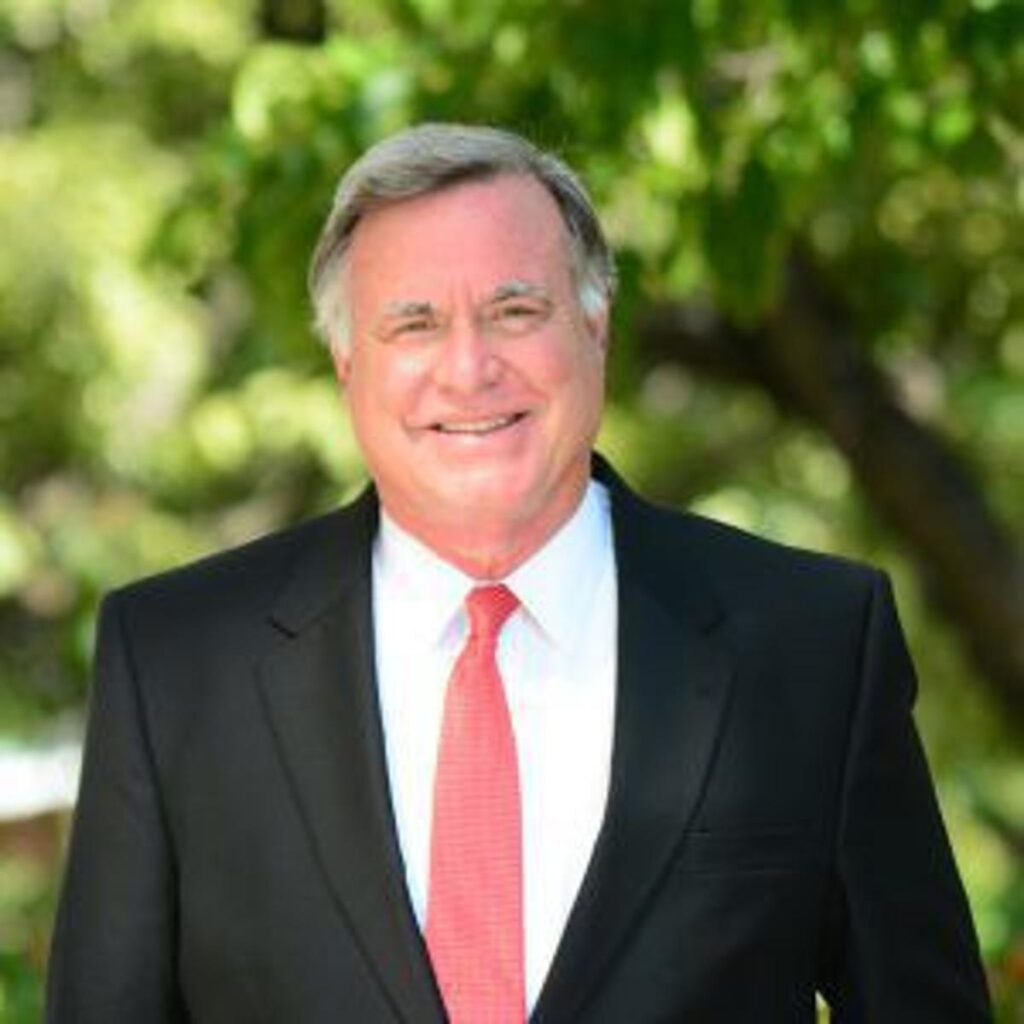
Presidential historians and most astute national political observers and chroniclers have concluded that the most profound legacy a president can achieve is the appointment of United States Supreme Court Justices. Presidents serve four-year terms. Justices serve for a lifetime. The Supreme Court of the United States is the ultimate final word on law and public policy in the United States. After they are appointed by the president and confirmed by the U.S. Senate, they are impregnable to political whims or influence. They are sovereign and omnipotent. They are treated royally and usually serve on the high tribunal for over two decades or more. Therefore, whether you like Donald J. Trump or not, he has a legacy. Most presidents are fortunate if they are able to name one justice to the court. Trump, over his four-year term, appointed and had confirmed three. If you are a conservative Republican, this feat by President Trump makes him one of the most bulwark conservative presidents in history. He has cemented his legacy forever and changed the judicial philosophy of the court for the next generation. Trump’s three appointments are not only well qualified, polished, distinguished, moderate conservatives, they are also young. Justice Neil Gorsuch is 53. He replaced Justice Anthony Kennedy who retired. Justice Brett Kavanaugh is 55. He replaced arch conservative Justice Antonin Scalia. The most consequential appointment by President Trump is the appointment and confirmation of Justice Amy Coney Barrett. She is only 48 and a solid conservative. Trump’s appointment of Judge Amy Barrett is truly historical. This appointment changed the entire ideology of the court to a solidly six-to-three conservative majority. Barrett’s appointment is the most pivotal block in Trump’s rebuilding of the Court. In the Gorsuch and Kavanaugh appointments, you replaced conservatives with conservatives. In Barrett, you are replacing a woman with a woman, but more importantly, you are replacing one of the most liberal justices in history with potentially one of the most conservative. In addition, at 48 Barrett will preside for the next three decades as will probably Gorsuch and Kavanaugh. Along with these three conservative justices to the Supreme Court, President Donald Trump has been able to appoint nearly 300 federal judges to the lower federal courts throughout America. Trump could not have accomplished this generational change of the court without the advice and consent of a Republican majority United States Senate. The Republican conservative stamp is also indelibly planted on the federal courts in Alabama. Senator Richard Shelby, in congruence with the Trump administration, has completely reshaped Alabama’s federal judiciary with very young, extremely qualified, conservative judges. Speaking of our United States Senators, our Senior Senator Richard Shelby was granted the omnipotent power to select all of our new, young, conservative judges throughout all of our districts – southern, middle and northern – not only because of his power, prestige and seniority but also because he was our only Republican senator. Our Junior U.S. Senate Seat has been held by a national liberal Democrat Doug Jones for the past three years. During his tenure, he toed the Democratic Senate line and wore that hat as the pawn and clone of the Democratic leadership in the Senate. Chuck Schumer told Jones to vote against Judges Brett Kavanaugh and Amy Barrett only because they were conservative Republican appointees. His refusal to even meet with Justice Amy Barrett showed a total lack of class and southern civility and gentlemanly manners. It was also revealed to me that he was angling to appease his liberal Democratic brethren in order to be Joe Biden’s Attorney General. Yes, folks, you heard me right. Do not be surprised if Doug Jones is not the next Attorney General of the United State in the Biden Administration. The bottom line is if you are a conservative American, Donald J. Trump has a profound legacy in presidential history with three conservative appointments to the United States Supreme Court. Steve Flowers is Alabama’s leading political columnist. His weekly column appears in over 60 Alabama newspapers. He served 16 years in the state legislature. Steve may be reached at www.steveflowers.us.
Bradley Byrne: A timely victory for the right to freely exercise our faith
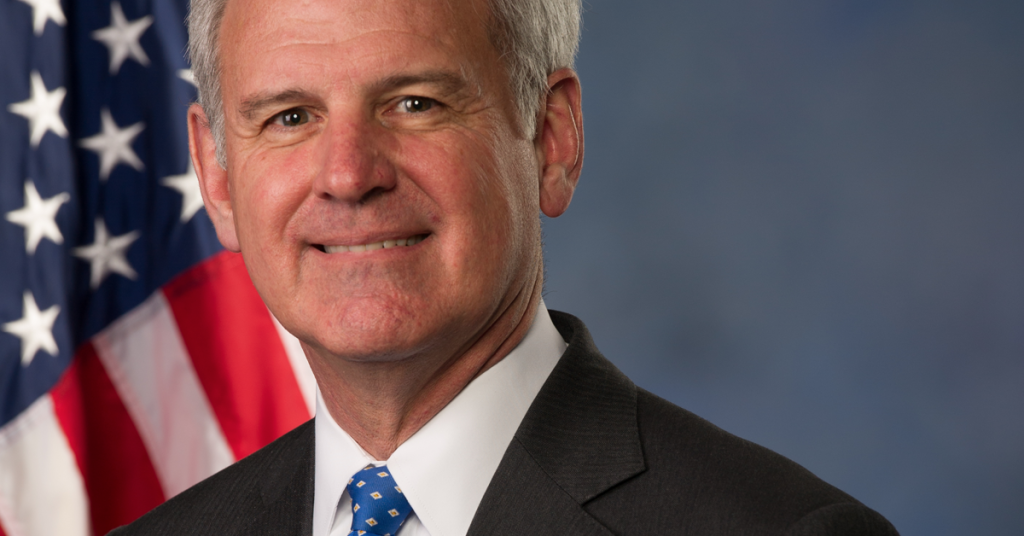
On the Wednesday night before Thanksgiving, the U.S. Supreme Court issued a ruling, which is a very positive signal for the rights of people of faith to freely exercise that faith. New York Governor Andrew Cuomo had issued a “Cluster Initiative” which used color-coded restrictions on large gatherings in certain parts of New York City. These restrictions were challenged in court by the Catholic Diocese of Brooklyn and Jewish synagogues as an invalid restriction on citizens’ rights under the Free Exercise Clause of the First Amendment to the Constitution. The Supreme Court issued an injunction against applying Governor Cuomo’s order to gatherings at houses of worship. Justice Neil Gorsuch wrote a scathing concurring opinion in which he said, “there is no world in which the Constitution tolerates color-coded executive edicts that reopen liquor stores and bike shops but shutters churches, synagogues and mosques.” Much of the press focused on the fact that this was the first case in which Justice Amy Coney Barrett’s vote was necessary to achieve a majority because Chief Justice John Roberts joined with the dissenters as he believed the ruling was premature. His decision was unsurprising as he had voted with the liberals on the Court against acting on earlier COVID restrictions. It was also in keeping with his preference to avoid judicial intervention in matters which he doesn’t consider to be procedurally ripe. I have great respect for Justice Roberts but disagree with his decision in this case and am glad the majority saw fit to issue the injunction. When President Donald Trump nominated Justice Brett Kavanaugh, and Justice Barrett, liberals and their news media allies howled that these new justices’ presence on the Court would provide the votes to strike down the Affordable Care Act and reverse Roe v. Wade. I never bought that line, and it appears from oral arguments in the Affordable Care Act case presently before the Court that there is not a majority to do the former. I did believe that these two new justices, along with other Republican nominated justices, would take a much broader view of the Free Exercise Clause and a much narrower view of the statutory authorization for government regulation. This new case confirms that the Court has indeed adopted an expanded application of the Free Exercise Clause. Why is this so timely and so important? America’s cultural elites have adopted a hostility to faith, people of faith, and people acting out their faith. They used to be willing to let people do as they pleased in their houses of worship while jumping at the chance to criticize and restrict them if they actually attempted to exercise their beliefs outside of worship. Governor Cuomo’s order, and those of many other Democrat governors and mayors, demonstrate that the elites now want to regulate what happens inside houses of worship. The First Amendment, like the other nine amendments in the Bill of Rights, was passed by the First Congress in 1789, and the states ratified them in 1791. Passage of these amendments was demanded by several of the states in the ratification conventions on the original Constitution. These amendments comprise fundamental law, conferring primary rights on the people of this nation. As to religion, the First Amendment states, “Congress shall make no law respecting the establishment of religion, or prohibiting the free exercise thereof.” It was applied to state and local governments in the 20th century by courts invoking the Fourteenth Amendment. The first clause, known as the Establishment Clause, was intended as a prohibition on a government established church as the Church of England was at the time of the Revolution and is today. That clause has been expanded judicially to prohibit any government action favoring a particular religious view. Until recently, the Free Exercise Clause has been rarely invoked. But actions by state and local governments in more recent times to control people of faith in their efforts to live out their faith have made the Free Exercise Clause a new judicial battleground, and this new majority on the Supreme Court has arrived just in time to deliver last week’s important opinion. I predict more decisions in the future, applying the clause to inappropriate government action. Note the use of the word “exercise.” It denotes action and not just belief. That First Congress was acutely aware of the limitations on worship and action by the British government on behalf of the Church of England. Indeed, many of their ancestors fled to America to escape government dictates on religion. They also knew the ugly history of the Puritan Protectorate government in 17th century England which tried to limit all sorts of conduct – even celebrating Christmas. Congress and the ratifying states made it clear in the Free Exercise Clause that government in this country has no such power. As I have seen in the Congresses I have served in over the last several years, many members have lost that understanding. Indeed, they have attempted to repeal the Religious Freedom Restoration Act, which passed with near unanimity in the 1990s. They see religious rights as secondary, not primary. Governor Cuomo and his Democrat colleagues in statehouses and mayors’ offices around the U.S. do too. Now, the new majority on the Supreme Court has stepped up to stop the slide away from religious freedom. It’s about time, and I trust they will continue to do so. Congressman Bradley Byrne currently represents Alabama’s 1st congressional district.
Susan Collins votes against Amy Coney Barrett, heads home to save Senate job
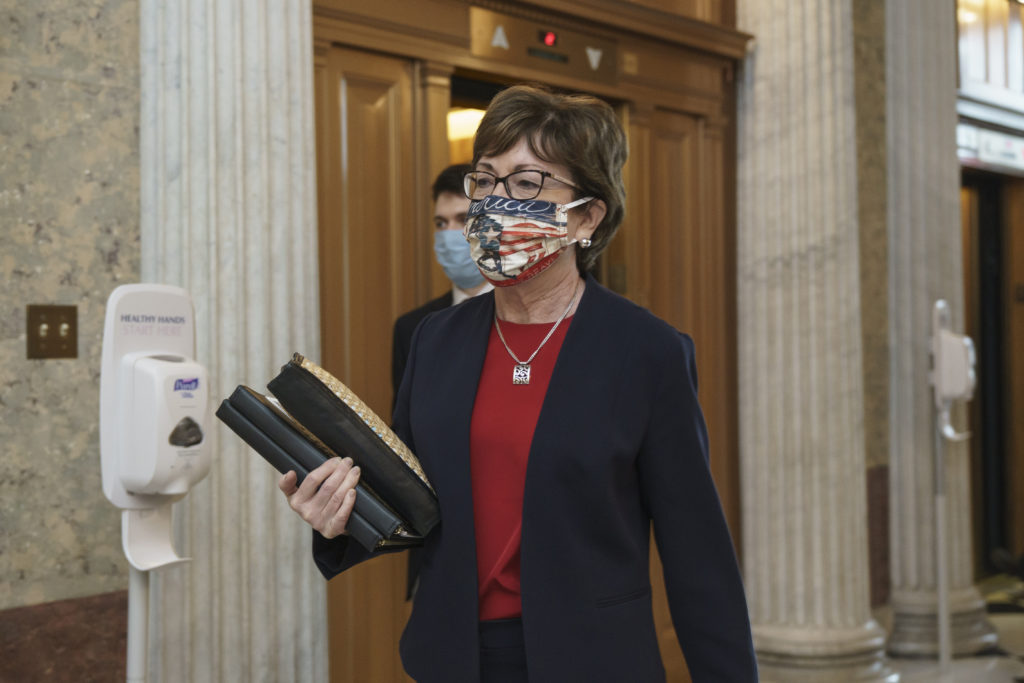
When Republican Sen. Susan Collins had to vote on a Supreme Court justice in 2018, she deliberated under the spotlight for weeks, building suspense that ended with a dramatic floor speech. When she announced her support for President Donald Trump’s nominee, she triggered an onslaught of Democratic anger. On Monday, Collins cast her vote against Trump’s pick without any speech and quickly headed home to Maine to try to save her political career. Collins’ contrasting moves on the Supreme Court nominations of Brett Kavanaugh and Amy Coney Barrett underscore the difficulty for a senator trying to find middle ground in an election in which the battle lines appear starker than ever. Her vote in favor of Kavanaugh rallied Democrats against her and angered some moderate supporters, while her vote against Barrett may not do much to win them back. Throughout the campaign, the four-term senator has had to fight off accusations that her years in Washington have changed her and that she puts Trump, Senate Majority Leader Mitch McConnell, and the GOP over the interests of regular Mainers. “I was taught to give back to my community, to serve others, and to act with integrity. That’s what I’ve always done,” Collins told The Associated Press. “I certainly have not changed.” But Maine and American politics are changing. The state known for its fierce independent spirit as much as its lighthouses and lobsters is becoming less so, and Democrats, not independents, now comprise the biggest voting bloc. Throw in a well-funded opponent, along with a polarizing president, and the last Republican member of Congress from New England finds herself battling for her political survival. Collins’ Democratic rival, Sara Gideon, the speaker of the Maine House, called the senator’s vote against Barrett “nothing more than a political calculation.” Collins’ spokesperson fired back by accusing Gideon of making “a craven political calculation seven months ago when she shut down the Legislature to focus on her campaign.” Polls show an extremely close race despite more than $120 million allocated for ads by the candidates and their allies. And the money is still pouring into the race, one of a handful that could decide which party controls the Senate. Losing the fundraising battle, Collins is focusing on her message that she’s an experienced, bipartisan senator who’s in line to become chair of the appropriations committee, which directs all federal spending. That would be in stark contrast, she said, to a “rookie” senator. Gideon is using the latest battle over a Supreme Court nominee to remind voters that Collins backed most of Trump’s judicial nominees, resulting in a rightward shift in the judiciary. She’s also attacking Collins’ vote for Trump’s tax cuts that she says favored the rich over working-class Mainers. Gideon said for all of Collins’ talk about seniority, she doesn’t have much influence in her caucus, as demonstrated in her inability to stop the vote on Barrett. Collins, who has never missed a vote, said she voted against Barrett out of fairness to Democrats, who were denied an election-year vote on then-President Barack Obama’s nominee in 2016. “It doesn’t seem like her seniority has much influence in her caucus, or that ability to bring things home for Mainers,” Gideon said. Collins easily won her last election, and it was just a couple of years ago that the senator was cheered when Cyndi Lauper welcomed her on stage during a concert on the Bangor riverfront, a year before the Kavanaugh vote galvanized Democrats. “This woman is a hero. And she’s my hero. And she’s a Republican,” Lauper told the crowd as she walked Collins to the center of the stage. Lauper praised her for her work with LGBTQ homeless youth. But things have changed since then. The Human Rights Campaign, which had endorsed Collins in three previous elections, now endorses Gideon. The Planned Parenthood Action Fund, which was neutral in Collins’ 2014 race, is backing Gideon. Collins, 67, insists she’s the same centrist who’s willing to work with members of either party. She also points to the millions she’s brought home for Maine, including Bath Iron Works and Portsmouth Naval Shipyard, and her Paycheck Protection Program that helped more than 250,000 Mainers during the coronavirus pandemic. “Susan Collins is exactly the same person she was when she was first elected. Certainly, the national discourse has changed tremendously,” said Kevin Raye, former chief of staff for retired Republican Sen. Olympia Snowe. On the campaign trail, Gideon, 48, is known for her socially distanced “Supper with Sara” events held under a tent. Collins, meanwhile, has been on a bus tour across the state. Jeff Corey, president of Days Jewelers, met Collins during a visit to Waterville and said Collins’ experience, pragmatism, and bipartisanship make her the best candidate to serve the interests of Mainers. “Look, the American people right now are looking for collaboration with our leaders, finding common ground and getting things done,” he said, noting that the Lugar Center at Georgetown University has ranked Collins as the most bipartisan senator. Among Democrats, Collins doesn’t get much credit for standing up to Trump, even though she has been critical of his handling of the pandemic, his attempt to strike down the Affordable Care Act, the diversion of funding for the border wall, and the removal of protesters from Lafayette Square for a photo op. Critics say she hasn’t been forceful enough in her denunciations of Trump. Collins has declined to say whom she’ll vote for on Election Day. She wrote in a candidate in 2016 rather than vote for Trump. James Bennett, a former Republican who’s supporting Gideon, said it’s time for a change. “I’d thought of her as being an independent thinker until the last four years. She’s not thinking for herself. She’s just following the party line,” said Bennett, a retired defense contractor from Camden. The race will be decided by ranked choice voting, providing a new layer of uncertainty. Under the election system, voters will get to rank all four candidates —
Tommy Tuberville: Doug Jones does disservice to Alabamians with his opposition to Judge Amy Coney Barrett

By Coach Tommy Tuberville My father, Charles, served in the U.S. Army, so I often heard the joke about the young recruit who was participating in his first military parade, looked around at his fellow soldiers, and smugly thought, “I’m the only one who’s marching in step.” That story sums up the way that Doug Jones has approached his job in Washington. Rather than representing the conservative beliefs and values of the millions of Alabamians he swore an oath to serve, Jones has, instead, voted the liberal, left-wing convictions that make up his core. As the hearings for Judge Amy Coney Barrett’s nomination to the U.S. Supreme Court begin, Jones has once again turned his back on his constituents and pledged to vote against her confirmation. Jones would not even extend the traditional courtesy of meeting with Judge Barrett and letting her outline her judicial philosophy. When it comes to giving fair consideration to President Donald Trump’s Supreme Court nominee, Doug Jones is a lost ball in high cotton. But that comes as no surprise. Jones voted against the confirmation of Justice Brett Kavanaugh and said he would have opposed Neil Gorsuch if he had been in the Senate at the time. Democrat Doug even voted twice to remove Donald J. Trump from office. Since becoming our placeholder senator, Doug Jones has opposed everything most Alabamians support and supported everything most Alabamians oppose. While liberal jurists manufacture law from the bench based upon the trending cultural touchstones of the day, Judge Barrett understands that her job is to interpret the Constitution as our founding father’s intended – a doctrine known as “Originalism” that she learned while clerking for Justice Antonin Scalia, a conservative icon who passed away far too soon. Her confirmation to the court will open the door to overturning the abomination known as Roe v. Wade, a decision that has no foundation in constitutional principles and invented from thin air a right to abortion that appears nowhere in our nation’s governing document. Judge Barrett’s record also indicates that she stands ready to protect our Second Amendment gun rights, preserve religious freedoms, shield conservative speech from the liberals who wish to silence it, and defend the basic liberties that make our nation the envy of freedom-loving people across the globe. Several liberal legal scholars who know Judge Barrett, her abilities, and her temperament have publicly supported her confirmation to the court despite their opposition to her conservative views and philosophy. They stand willing to put the good of the court and the needs of their country ahead of their own political beliefs. Yet Doug Jones refuses to even consider Judge Barrett. Despite the fact that he was elected to represent the deepest red of the nation’s Republican states, Jones has allied himself with fringe liberals like Nancy Pelosi, Chuck Schumer, Bernie Sanders, Alexandria Ocasio-Cortez, and Ilhan Omar. During President Trump’s last State of the Union Address, Jones joined the most liberal elements in Congress and sat on his hands throughout the speech, even when a Tuskegee Airman was promoted to Brigadier General and a veteran from Montgomery, Alabama was honored before the international audience. Unwilling to limit the false, negative attacks from his Senate campaign to my candidacy, Jones has spent thousands of dollars airing television ads that dishonestly accuse President Trump of disrespecting military veterans, a group that every Alabamian knows our commander-in-chief holds in the highest esteem. And despite the fact that Donald Trump carried Alabama with 62% of the vote in 2016, every action taken by Jones has indicated he believes that Hillary Clinton won the state. Perhaps it is the influence of the Hollywood and New York donors that funnel millions into his campaign war chest, or maybe it is his own deeply liberal philosophy that causes Doug Jones to demonstrate such disdain toward Alabama’s traditional values and tightly-woven moral fabric. Doug Jones’s refusal to represent their desires of Alabamians and support the confirmation of Judge Barrett to the high court tells you all you need to know about how he views us. Like the young recruit I mentioned at the beginning of this column, Jones thinks we are the ones who are out of step while he awkwardly marches forward to his own liberal cadence. On November 3, Alabamians have the opportunity to correct that mistake. Tommy Tuberville is a retired football coach. He lives in Auburn with his wife and is running against Democrat Doug Jones for U.S. Senate.
Donald Trump picks conservative Amy Coney Barrett for Supreme Court
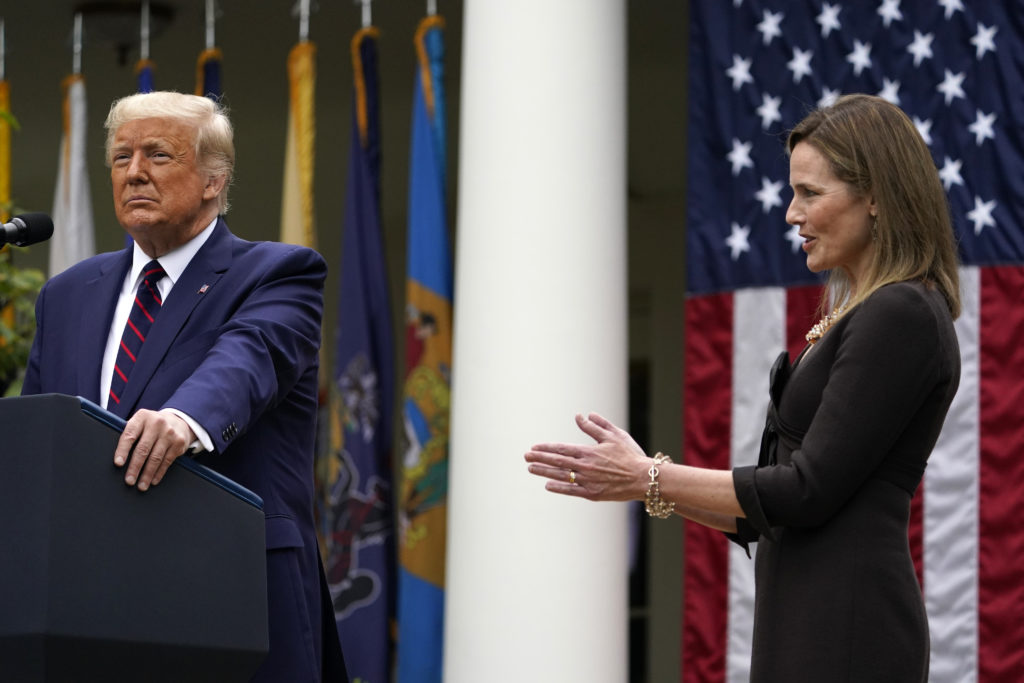
President Donald Trump nominated Judge Amy Coney Barrett to the Supreme Court on Saturday, capping a dramatic reshaping of the federal judiciary that will resonate for a generation and that he hopes will provide a needed boost to his reelection effort. Republican senators are already lining up for a swift confirmation of Barrett ahead of the Nov. 3 election, as they aim to lock in conservative gains in the federal judiciary before a potential transition of power. Trump, meanwhile, is hoping the nomination will serve to galvanize his supporters as he looks to fend off Democrat Joe Biden. Trump hailed Barrett as “a woman of remarkable intellect and character,” saying he had studied her record closely before making the pick. “I looked and I studied, and you are very eminently qualified,” he said as Barrett stood next to him in the Rose Garden. An ideological heir to the late conservative Justice Antonin Scalia, Barrett would fill the seat vacated after the Sept. 18 death of liberal icon Ruth Bader Ginsberg, in what would be the sharpest ideological swing since Clarence Thomas replaced Justice Thurgood Marshall nearly three decades ago. She would be the sixth justice on the nine-member court to be appointed by a Republican president, and the third of Trump’s first term in office. For Trump, whose 2016 victory hinged in large part on reluctant support from conservative and white evangelicals on the promise of filling Scalia’s seat with a conservative, the latest nomination in some ways brings his first term full circle. Even before Ginsburg’s death, Trump was running on having confirmed in excess of 200 federal judges, fulfilling a generational aim of conservative legal activists. “This is my third such nomination after Justice Neil Gorsuch and Justice Brett Kavanaugh, and it is a very proud moment indeed,” Trump said in the Rose Garden. Trump joked that the confirmation process ahead “should be easy” and “extremely non-controversial,” though it is likely to be anything. No court nominee has been considered so close to a presidential election before, with early voting already underway. He encouraged Democrats to take up her nomination swiftly and to “refrain from personal and partisan attacks.” In 2016, Republicans blocked President Barack Obama’s nomination of Merrick Garland to the Supreme Court to fill the election-year vacancy, saying voters should have a say in the lifetime appointment. Senate Republicans say they will move ahead, arguing the circumstances are different now that the White House and Senate are controlled by the same party. Senate Majority Leader Mitch McConnell said the Senate will vote “in the weeks ahead” on Barrett’s confirmation, adding that Trump “could not have made a better decision” in nominating the appellate court judge. The announcement came before Ginsburg was buried beside her husband next week at Arlington National Cemetery. On Friday, she was the first woman to lie in state at the Capitol, and mourners flocked to the Supreme Court for two days before that to pay respects. The set design, with large American flags hung between the Rose Garden colonnades, appeared to be modeled on the way the White House was decorated when President Bill Clinton named Ginsburg as his nominee in 1993. Barrett said she was “truly humbled” by the nomination, adding that she would be “mindful of who came before me.” She praised Ginsburg upon accepting the nomination, saying, “She has won the admiration of women across the country and indeed all across the world.” Within hours of Ginsburg’s death, Trump made clear he would nominate a woman for the seat, and later volunteered he was considering five candidates. But Barrett was the early favorite, and the only one to meet with Trump. Barrett has been a judge since 2017 when Trump nominated her to the Chicago-based 7th U.S. Circuit Court of Appeals. But as a longtime University of Notre Dame law professor, she had already established herself as a reliable conservative in the mold of Scalia, for whom she clerked in the late 1990s. She would be the only justice on the current court not to have received her law degree from an Ivy League school. The eight current justices all attended either Harvard or Yale. The staunch conservative had become known to Trump in large part after her bitter 2017 appeals court confirmation included allegations that Democrats were attacking her Catholic faith. The president also interviewed her in 2018 for the vacancy created by the retirement of Justice Anthony Kennedy, but Trump ultimately chose Brett Kavanaugh. Trump and his political allies are itching for another fight over Barrett’s faith, seeing it as a political windfall that would backfire on Democrats. Catholic voters in Pennsylvania, in particular, are viewed as a pivotal demographic in the swing state that Biden, also Catholic, is trying to recapture. While Democrats appear powerless to stop Barrett’s confirmation in the GOP-controlled Senate, they are seeking to use the process to weaken Trump’s reelection chances. Barrett’s nomination could become a reckoning over abortion, an issue that has divided many Americans so bitterly for almost half a century. The idea of overturning or gutting Roe v. Wade, the landmark 1973 decision that legalized abortion, has animated activists in both parties for decades. Now, with the seemingly decisive shift in the court’s ideological makeup, Democrats hope their voters will turn out in droves because of their frustration with the Barrett pick. Trump has also increasingly embraced the high court — which he will have had an outsize hand in reshaping -– as an insurance policy in a close election. Increases in mail, absentee, and early voting brought about by the coronavirus pandemic have already led to a flurry of election litigation, and both Trump and Biden have assembled armies of lawyers to continue the fight once vote-counting begins. Trump has been open about tying his push to name a third justice to the court to a potentially drawn-out court fight to determine who will be sworn in on Jan. 20, 2021. “I think this
