
Angry Brett Kavanaugh denies Christine Blasey Ford accusation, sees ‘disgrace’
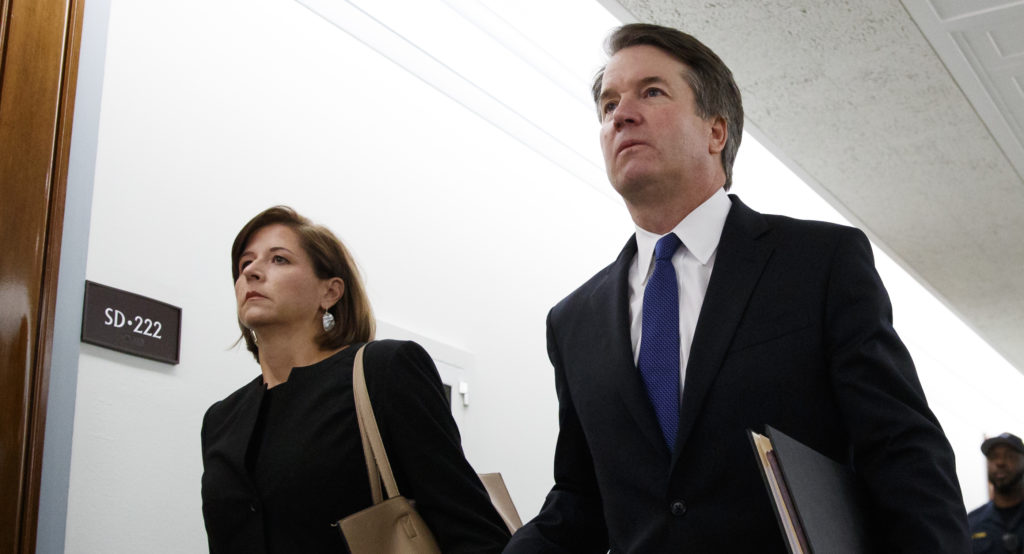
Emotionally battling to rescue his Supreme Court nomination, a beleaguered Brett Kavanaugh fought back Thursday against allegations that he’d sexually assaulted Christine Blasey Ford when both were high school students, telling Congress that allegations by her and others have “totally and permanently destroyed” his family and his reputation. In a loud voice, the conservative jurist told the Senate Judiciary Committee that his confirmation process had become “a national disgrace.” “You have replaced ‘advice and consent’ with ‘search and destroy,’” he said. Kavanaugh denied Ford’s allegation that he’d trapped her on a bed in a locked room during a gathering of friends when they were teenagers, saying, “I have never done this to her or to anyone.” With his support among Senate Republicans in question, he also said he would not step side. “You may defeat me in the final vote, but you’ll never get me to quit, never.” Behind him in the audience, his wife, Ashley, sat looking stricken. He himself was close to tears when he mentioned his mother and daughter and, later, his father. Republished with permission from the Associated Press.
Bradley Byrne says Brett Kavanaugh confirmation has ‘turned into a circus,’ should vote tomorrow
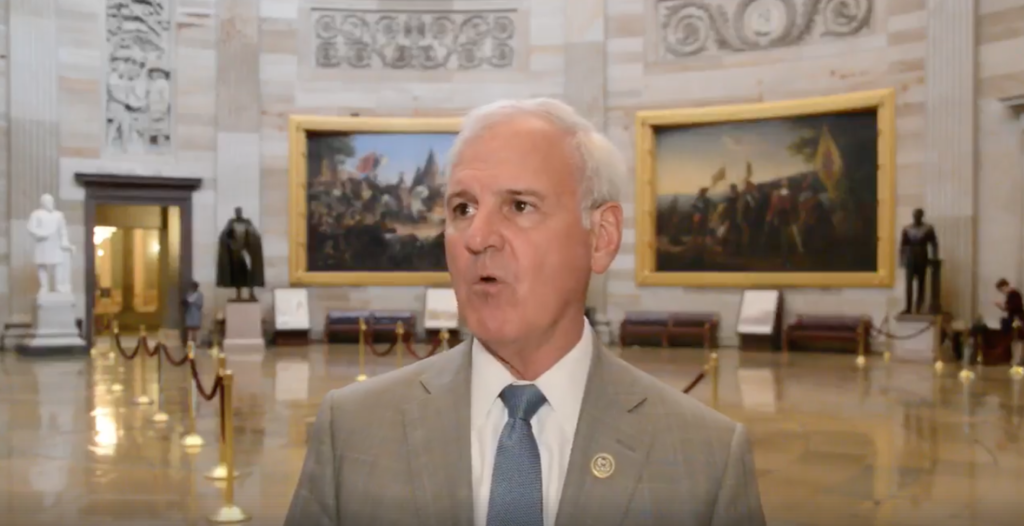
Accusations of sexual misconduct against President Donald Trump‘s Supreme Court nominee Brett Kavanaugh have dominated the news cycle for over a week, leaving his once sure confirmation hanging in the balance. Ahead of Thursday’s Senate Judiciary Committee hearing, where the committee will hear from both Kavanaugh and his accuser, Christine Blasey Ford, Alabama 1st District U.S. Rep. Bradley Byrne said the entire situation has “turned into a circus” urging the Senate to vote and confirm Kavanaugh confirmed this week. “I was recently asked my thoughts on the Judge Kavanaugh confirmation fight. I think the whole thing has turned into a circus. They need to hold the hearing today, hold the vote tomorrow, and get Judge Kavanaugh confirmed,” Byrne posted along with a video on Facebook. Watch the video below:
High drama as Brett Kavanaugh, Christine Blasey Ford hearing underway
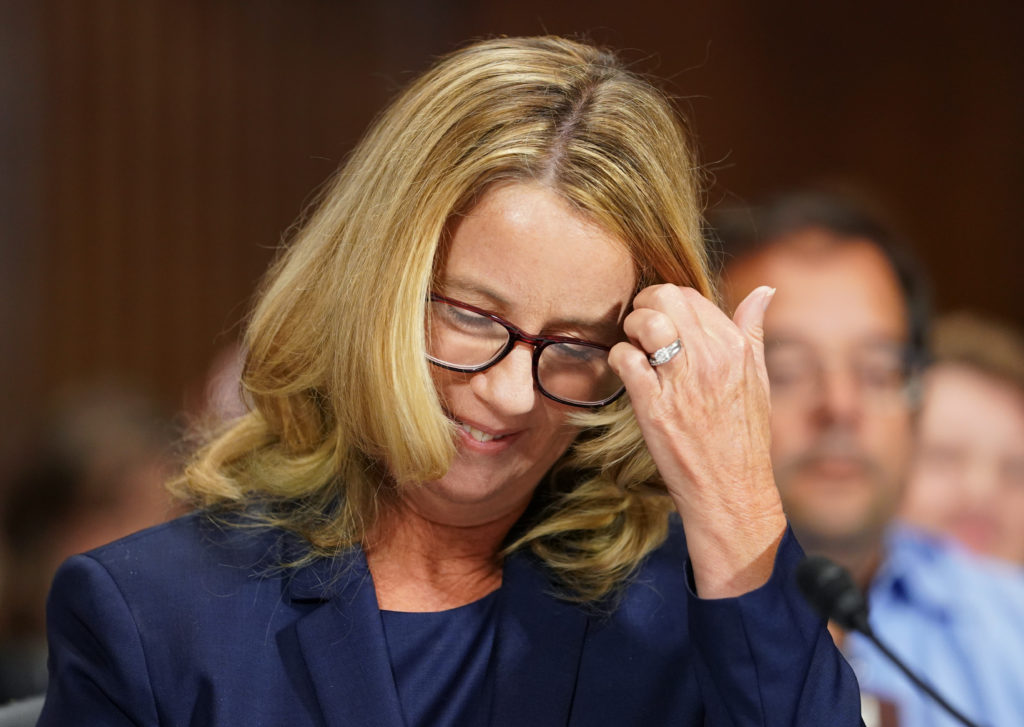
In a clash along a polarized nation’s political and cultural fault lines, the Senate Judiciary Committee began its historic hearing Thursday in which Brett Kavanaugh hoped to salvage his Supreme Court nomination by fending off allegations by Christine Blasey Ford that he’d molested her when both were in high school. Ford sat impassively at the witness table as committee chairman Chuck Grassley of Iowa began his opening remarks, defending the Republicans’ handling of the confirmation proceedings so far. Kavanaugh and Ford were the only witnesses invited to testify before the panel of 11 Republicans — all men — and 10 Democrats. But the conservative jurist is facing allegations of sexual misconduct from other women as well, forcing Republican leaders to struggle to keep support for him from eroding. The committee was to hear first from Christine Blasey Ford, a California psychology professor who accuses him of attempting to rape her when they were teens. Republicans have derided Ford’s allegation as part of a smear campaign and a Democratic plot to sink Kavanaugh’s nomination. But after more allegations have emerged, some GOP senators have allowed that much is riding on his performance. Even President Donald Trump, who nominated Kavanaugh and fiercely defends him, said he was “open to changing my mind.” “I want to watch, I want to see,” he said at a news conference Wednesday in New York. Kavanaugh, a federal appeals court judge who has long been eyed for the Supreme Court, has repeatedly denied all the allegations, saying he’d never heard of the latest accuser and calling her accusations “ridiculous and from the Twilight Zone.” His teetering grasp on winning confirmation was evident when Sen. Susan Collins, R-Maine, expressed concern, in a private meeting with senators Wednesday, about the third accuser, according to a person with knowledge of the gathering. Republicans control the Senate 51-49 and can lose only one vote for Kavanaugh to prevail if all Democrats vote “no.” Collins is among the few senators who’ve not made clear how they’ll vote. Collins walked into that meeting carrying a copy of Julie Swetnick‘s signed declaration, which included new accusations of sexual misconduct against Kavanaugh and his high school friend Mark Judge. Collins said senators should hear from Judge. After being told Judge has said he doesn’t want to appear before the committee, Collins reminded her colleagues that the Senate has subpoena power, according to a person who was not authorized to discuss the matter publicly and spoke on condition of anonymity. The hearing was the first time the country saw the 51-year-old Ford beyond the grainy photo that has been flashed on television in the 10 days since she came forward with her contention. In testimony released beforehand, she said she was appearing only because she felt it was her duty, was frankly “terrified” and has been the target of vile harassment and even death threats. “It is not my responsibility to determine whether Mr. Kavanaugh deserves to sit on the Supreme Court,” she was to tell the senators. “My responsibility is to tell the truth.” Republicans are pushing to seat Kavanaugh before the November midterms, when Senate control could fall to the Democrats and a replacement Trump nominee could have even greater difficulty. Kavanaugh’s ascendance to the high court could help lock in a conservative majority for a generation, shaping dozens of rulings on abortion, regulation, the environment and more. Republicans also risk rejection by female voters in November if they are seen as not fully respecting women and their allegations. In a sworn statement, Swetnick said she witnessed Kavanaugh “consistently engage in excessive drinking and inappropriate contact of a sexual nature with women in the early 1980s.” Her attorney, Michael Avenatti, who also represents a porn actress who is suing Trump, provided her sworn declaration to the Judiciary panel. Meanwhile, the lawyer for Deborah Ramirez, who says Kavanaugh exposed himself to her at a party when they attended Yale University, raised her profile in a round of television interviews. Moments before committee chairman Grassley gaveled his panel into session, Ramirez tweeted her support for Ford: “They want us to feel alone and isolated but I’m there wrapping my arms around you and I hope you feel the people of this nation wrapping their arms around all of us.” Republicans largely expressed confidence in Kavanaugh, emerging from a closed-door lunch with Vice President Mike Pence Wednesday to say the nominee remained on track for confirmation. Senate Majority Leader Mitch McConnell, R-Ky., has said all week that Republicans will turn to a committee vote on Kavanaugh after the hearing. They hope for a roll call by the full Senate early next week with the aim of getting him on the court as its new term begins. Yet Collins’ unease was not the only suggestions of creeping doubt among Republicans. Asked whether there were signs of Republicans wavering in their support of Kavanaugh in their lunch, Sen. John Thune, the third-ranking Republican, paused briefly before saying “no.” In the hearing, Democrats planned to ask Kavanaugh if he’d be willing to undergo FBI questioning about the various claims — a request Republicans oppose — and press him about his drinking and behavior as a teenager. Questions for Ford were expected to be aimed at giving her a chance to explain herself. Republicans have hired an outside attorney, Phoenix prosecutor Rachel Mitchell, to handle much of their questioning. Thus, they will avoid having their all-male contingent interrogating Ford about the details of what she describes as a harrowing assault. Democratic questioners will include two senators widely seen as potential presidential candidates in 2020: Kamala Harris of California and Cory Booker of New Jersey, who aggressively challenged Kavanaugh during the judge’s earlier confirmation hearing. Ford planned to tell the committee that, one night in the summer of 1982, a drunken Kavanaugh forced her down on a bed, “groped me and tried to take off my clothes,” then clamped his hand over her mouth when she tried to scream before she
Democratic leadership expects Doug Jones ‘firmly in the no column’ on Brett Kavanaugh confirmation
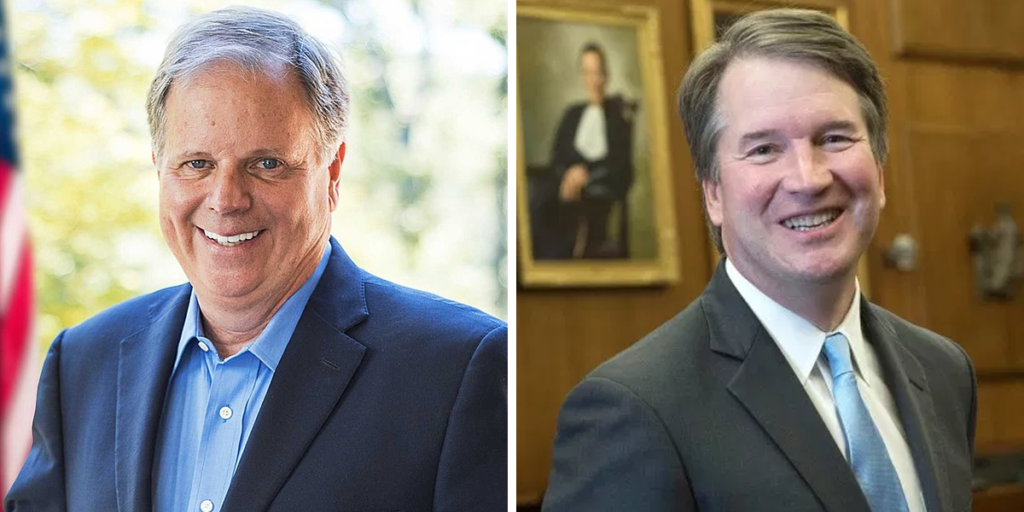
Despite remaining publicly undecided, Democratic leadership expects Alabama’s newest U.S. Sen. Doug Jones “to be firmly in the ‘no’ column” in terms of whether or not he’ll vote in favor of confirming U.S. Supreme Court nominee Brett Kavanaugh, according to a Tuesday report by POLITICO. Last week Jones tweeted that the Senate ought to “hit the pause button” on vote to confirm Kavanaugh following accusations that Kavanaugh sexually assaulting a women during their teenage years. Christine Blasey Ford, a psychology professor in Northern California, said Kavanaugh tried to “attack [her]and remove [her]clothing” during a party when both of them were high school students in Maryland in the early 80s. Jones tweeted, “We cannot rush to move forward under this cloud.” Since that time two more women have made accusations against Kavanaugh. He continues to call the allegations “completely false.” Jones defeated Republican Roy Moore in a Senate special election in December after bombshell by the Washington Post had multiple women on record accusing him of sexual misconduct.
Make-or-break Senate hearing day for Brett Kavanaugh, accuser
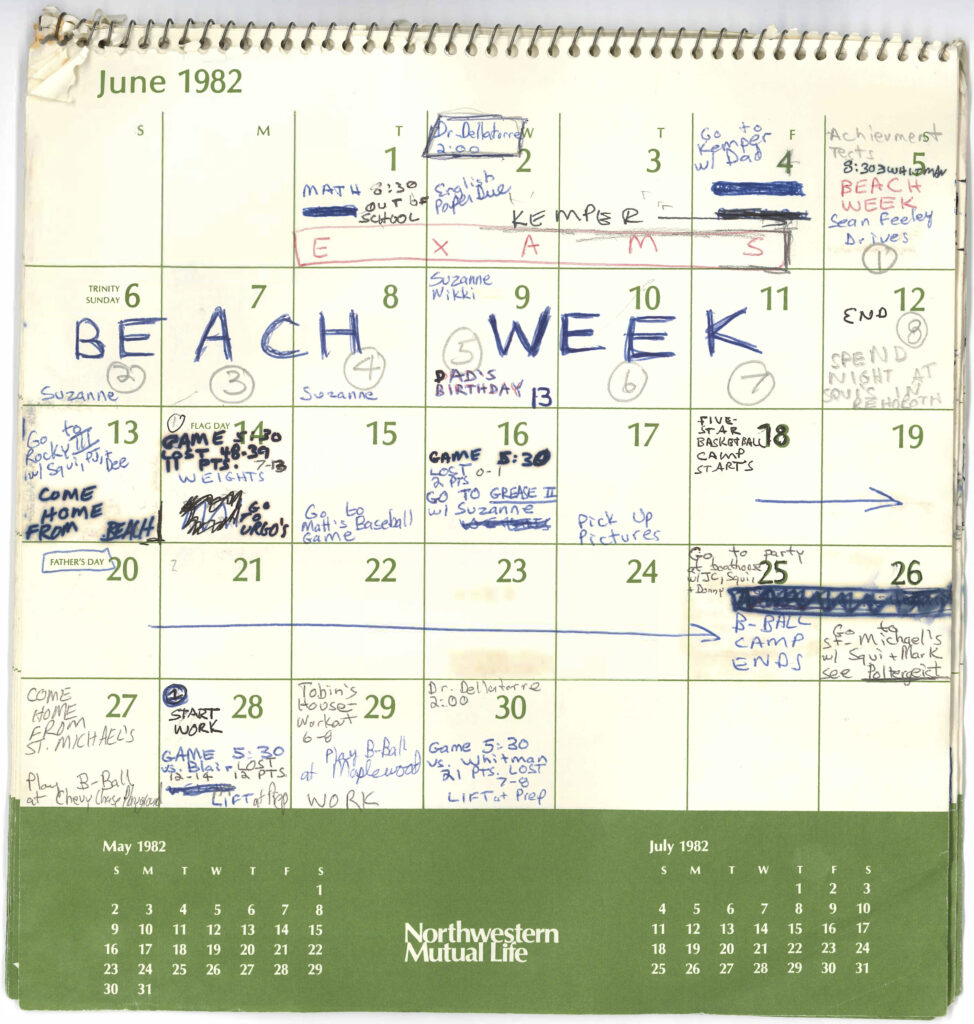
With high drama in the making, Supreme Court nominee Brett Kavanaugh emphatically fended off new accusations of sexual misconduct Wednesday and headed into a charged public Senate hearing that could determine whether Republicans can salvage his nomination and enshrine a high court conservative majority. The Senate Judiciary Committee — 11 Republicans, all men, and 10 Democrats — was to hear from just two witnesses on Thursday: Kavanaugh, a federal appeals court judge who has long been eyed for the Supreme Court, and Christine Blasey Ford, a California psychology professor who accuses him of attempting to rape her when they were teens. Republicans have derided her allegation as part of a smear campaign and a Democratic plot to sink Kavanaugh’s nomination. But after more allegations have emerged, some GOP senators have allowed that much is riding on Kavanaugh’s performance. Even President Donald Trump, who nominated Kavanaugh and fiercely defends him, said he was “open to changing my mind.” “I want to watch, I want to see,” he said at a news conference in New York. Kavanaugh himself has repeatedly denied all the allegations, saying he’d never even heard of the latest accuser and calling her accusations “ridiculous and from the Twilight Zone.” The hearing will be the first time the country sees and hears from the 51-year-old Ford beyond the grainy photo that has been flashed on television in the 10 days since she came forward with her contention. In testimony released in advance of the hearing, she said she was appearing only because she felt it was her duty, was frankly “terrified” and has been the target of vile harassment and even death threats. “It is not my responsibility to determine whether Mr. Kavanaugh deserves to sit on the Supreme Court,” she was to tell the senators. “My responsibility is to tell the truth.” The stakes for both political parties — and the country — are high. Republicans are pushing to seat Kavanaugh before the November midterms, when Senate control could fall to the Democrats and a replacement Trump nominee could have even greater difficulty. Kavanaugh’s ascendance to the high court could help lock in a conservative majority for a generation, shaping dozens of rulings on abortion, regulation, the environment and more. But Republicans also risk rejection by female voters in November if they are seen as not fully respecting women and their allegations. In the hours before the hearing, Republicans were rocked by the new accusation from a third woman, Julie Swetnick. In a sworn statement, she said she witnessed Kavanaugh “consistently engage in excessive drinking and inappropriate contact of a sexual nature with women in the early 1980s.” Her attorney, Michael Avenatti, who also represents a porn actress who is suing Trump, provided her sworn declaration to the Judiciary Committee. Meanwhile, the lawyer for Deborah Ramirez, who says Kavanaugh exposed himself to her at a party when they attended Yale University, raised her profile in a round of television interviews. Transcripts of private interviews with committee investigators, released late Wednesday, show they also asked Kavanaugh about two other previously undisclosed accusations received by Senate offices. One came in an anonymous letter sent to Sen. Cory Gardner‘s office describing an incident in a bar in 1998, when Kavanaugh was working for the independent counsel investigating President Bill Clinton. The other accused Kavanaugh of sexual misconduct in college. Kavanaugh denied them both. Republicans largely expressed confidence in Kavanaugh ahead of the hearing, emerging from a closed-door lunch with Vice President Mike Pence to say the nominee remains on track for confirmation. Senate Majority Leader Mitch McConnell all week has said Republicans will turn to a committee vote on Kavanaugh after the hearing. They hope for a roll call by the full Senate — where they have a scant 51-49 majority — early next week with the aim of getting him on the court as its new term begins. But at least a hint of doubt has crept in. Asked whether there were signs of Republicans wavering in their support of Kavanaugh in their lunch, Sen. John Thune, the third-ranking Republican, paused briefly before saying “no.” In the hearing, Democrats plan to ask Kavanaugh if he’d be willing to undergo FBI questioning about the various claims — a request Republicans oppose— and press him about his drinking and behavior as a teenager. One goal is to emphasize inconsistencies in his statements so far and make him appear nervous, said a Democratic aide who described the plan on condition of anonymity because he wasn’t authorized to discuss it publicly. Questions for Ford will be aimed at giving her a chance to explain herself. That includes describing why it took her so long to publicly discuss the alleged incident and how it’s affected her life, the aide said Ford will testify first at the hearing, which starts at 10 a.m. and at her request is being held in a small, wood-paneled hearing room that seats only a few dozen spectators. Republicans have hired an outside attorney, Phoenix prosecutor Rachel Mitchell, to handle much of their questioning. Thus, they will avoid having their all-male contingent interrogating Ford about the details of what she describes as a harrowing assault. Democratic questioners will include two senators widely seen as potential presidential candidates in 2020: Kamala Harris of California and Cory Booker of New Jersey, who aggressively challenged Kavanaugh during the judge’s earlier confirmation hearing. Ford plans to tell the committee that, one night in the summer of 1982, a drunken Kavanaugh forced her down on a bed, “groped me and tried to take off my clothes,” then clamped his hand over her mouth when she tried to scream before she was able to escape. “I believed he was going to rape me,” she will say, according to her prepared testimony. Kavanaugh is being challenged on multiple fronts by his accusers, former classmates and college friends. They say the good-guy image he projects in public bears little relation to the hard-partying behavior they witnessed when he
Christine Blasey Ford’s lawyers submit 4 statements backing up assault story
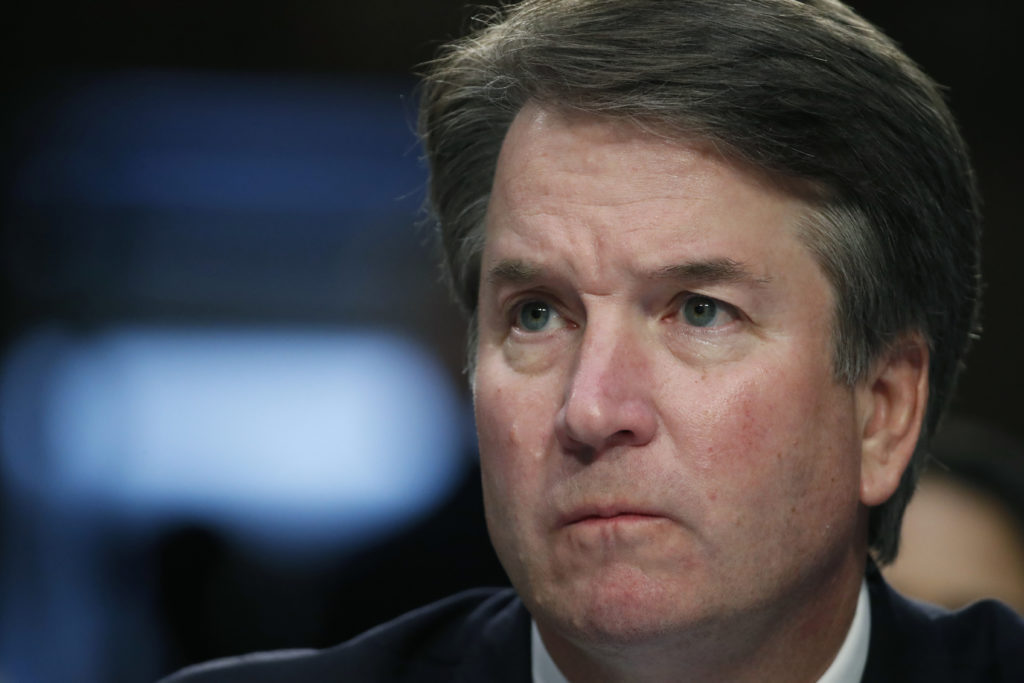
Christine Blasey Ford‘s lawyers said Wednesday they have given the Senate sworn affidavits from four people who say she told them well before Brett Kavanaugh‘s Supreme Court nomination that she had been sexually assaulted when she was much younger. And according to all four, she either named Kavanaugh as the assailant or described the attacker as a “federal judge.” At the U.N., meanwhile, President Donald Trump said on the eve of the Senate Judiciary Committee hearing with Kavanaugh and Ford that Republicans have been “nice” and “respectful” in their treatment of Ford. He described his nominee as “a real gem” and said he probably would have pushed for faster confirmation rather than waiting for Ford’s testimony. In one of the affidavits, family friend Keith Koegler said he wrote to Ford in a June 29 email, “I remember you telling me about him, but I don’t remember his name,” family friend Keith Koegler wrote to Ford in a June 29 email, according to his statement. “Do you mind telling me so I can read about him?” “Brett Kavanaugh,” Ford responded by email, according to Koegler, her son’s baseball team coach. Trump nominated Kavanaugh, 53, to the high court on July 9. Kavanaugh staunchly denies ever sexually assaulting anyone, and his allies have questioned the credibility of Ford and a second accuser based in part on what they say is a lack of corroboration. Trump has dismissed both accusations as a “Democratic con job.” The affidavits signed Monday and Tuesday of this week could give more weight to Ford’s story on the eve of her testimony — and Kavanaugh’s expected denial — before the Senate Judiciary Committee on Thursday. Republicans are concerned that, win or lose, the battle over Kavanaugh’s nomination is further animating women already inclined to vote against Trump’s party in November’s elections in which control of the next Congress is at stake. Hanging in the balance is Trump’s chance to swing the high court more firmly to the right for a generation. Despite Majority Leader Mitch McConnell’s forecast that Republicans will win, Kavanaugh’s fate remains uncertain in a chamber where Republicans have a scant 51-49 majority. Ford, 51, went public with her story in The Washington Post recently, saying Kavanaugh had pinned her down, tried to remove her clothes and clamped a hand over her mouth at a party when both were in high school. She got away when a second male in the room jumped on the bed and sent all three tumbling, she says. According to the affidavits, Ford revealed the assault in varying levels of detail between 2002 and Koegler’s email in June. Her husband, Russell Ford, stated that he became aware around the time the couple wed in 2002 that his wife had “any experience with sexual assault,” but she provided no details at the time. In 2012 during a couples therapy session, he says, she revealed that in high school she had been “trapped in a room and physically restrained by one boy who was molesting her while another boy watched.” He says she named the attacker as Kavanaugh. The subject came up again when Trump was considering his first Supreme Court nominee, who ended up being Justice Neil Gorsuch. Before the selection, Ford had told her husband that she was afraid the president might nominate Kavanaugh. The matter came up again when Justice Anthony Kennedy announced his retirement and Trump had a second seat to fill. In a third affidavit, Adela Gildo-Mazzon, a friend of more than a decade, said Ford first told her about the assault in June, 2013. The two met at a Mountain View, California, restaurant, where Ford arrived “visibly upset.” “Christine told me she … had been thinking about an assault she experienced when she was much younger,” Gildo-Mazzon’s statement says, adding that she has a receipt from the meal. “She said that she had been almost raped by someone who was now a federal judge.” Neighbor Rebecca White said she was walking her dog in 2017 when she ran into Ford, who said she had seen White’s social media post describing her own experience with sexual assault. “She then told me that when she was a young teen, she had been sexually assaulted by an older teen,” White recalled in the document. “I remember her saying that her assailant was now a federal judge.” The documents are likely to be central in the momentous hearing on Thursday in Washington. Committee Chairman Chuck Grassley said Arizona prosecutor Rachel Mitchell will be brought in to handle questioning of Kavanaugh and Ford. Mitchell comes from the Maricopa County Attorney’s Office in Phoenix, where she is the chief of the Special Victims Division, which covers sex crimes and family violence. Hoping the hearing will yield no new surprises, the Judiciary Committee scheduled its own vote on Kavanaugh for Friday, and Republican leaders laid plans that could keep the full Senate in session over the weekend and produce a final showdown roll call soon after — close to the Oct. 1 start of the high court’s new term. Meanwhile, the Republicans were still assessing what Kavanaugh’s Monday interview on the Fox News Channel — an unusual appearance for a Supreme Court nominee — indicates about how he would do in Thursday’s hearing. During the interview, Kavanaugh denied sexually assaulting anyone. He also denied the account of a second woman, Deborah Ramirez, who told The New Yorker magazine that Kavanaugh caused her to touch his penis at a party when both were Yale freshmen. Some in the White House expressed relief that Kavanaugh, 53, presented a positive image to counter the allegations. Yet he appeared shaky at times. And there remained concern among aides and Trump himself about how Kavanaugh would hold up facing far fiercer questioning from Senate Democrats, according to a White House official not authorized to speak publicly. The affidavits are not the first challenges to Kavanaugh’s denials. James Roche, a Yale graduate who says he was Kavanaugh’s roommate in
With newfound aggressiveness, GOP ramps up Brett Kavanaugh fight
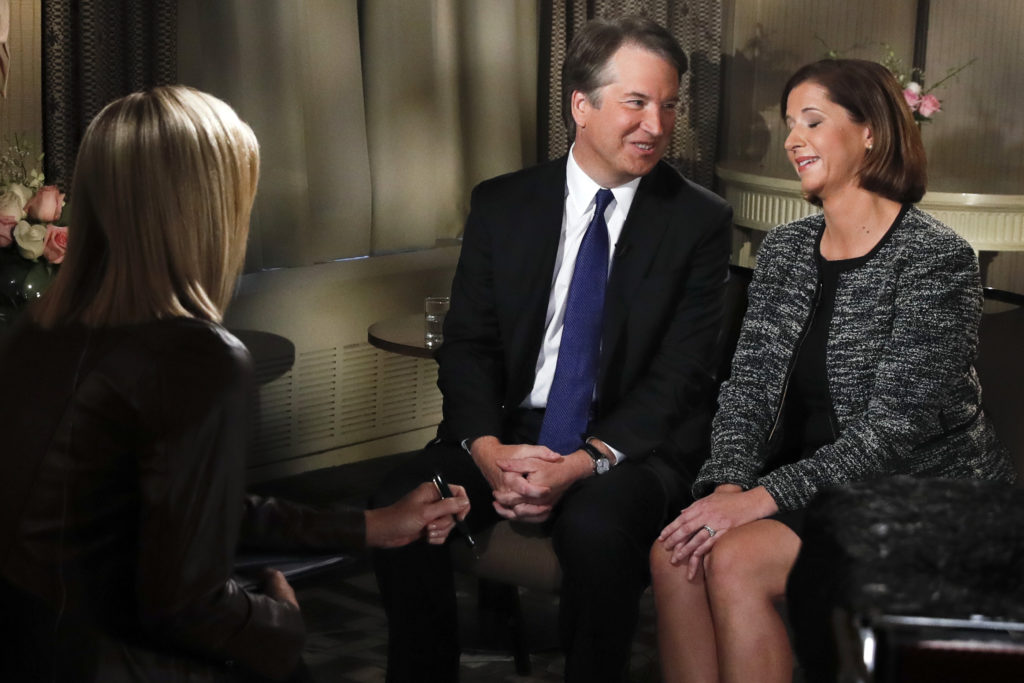
Brett Kavanaugh says he won’t let “false accusations drive me out of this process” as he, President Donald Trump and top Republicans mount an aggressive drive to rally the public and GOP senators behind his shaky Supreme Court nomination. Trump and Republican leaders accused Democrats on Monday of a smear campaign by using accusations by two women of sexual misconduct by Kavanaugh in the 1980s to try scuttling his Senate confirmation. There were no immediate indications that the emergence of a second accuser had fatally wounded Kavanaugh’s prospects, but the nominee took the unusual step of defending himself in a television interview that underscored the GOP’s new-found combativeness. Kavanaugh, 53, said on the conservative-friendly Fox News Channel that he wasn’t questioning that his initial accuser, psychology professor Christine Blasey Ford, may have been sexually assaulted in her life. But he added, “What I know is I’ve never sexually assaulted anyone,” a remarkable assertion for a nominee to the nation’s highest court. Kavanaugh’s TV appearance came three days before a crucial Senate Judiciary Committee hearing at which he and his chief accuser, Christine Blasey Ford, were slated to testify. That session loomed as a do-or-die wild card for Kavanaugh in which a split-second facial expression, a tear or a choice of words could prove decisive. On Monday, Trump called the accusations among “the single most unfair, unjust things to happen to a candidate for anything.” Senate Majority Leader Mitch McConnell, R-Ky., angrily accused Democrats of slinging “all the mud they could manufacture” and promised a full Senate vote soon, but specified no date. Senate Democratic leader Chuck Schumer of New York retorted that if McConnell believed the allegations were a smear, “why don’t you call for an FBI investigation?” He accused Republicans of “a rush job to avoid the truth.” The similar wording and arguments that Republicans used suggested a concerted effort to undermine the women’s claims and portray an image of unity among GOP senators while pressing toward a confirmation vote. Despite the forceful rhetoric by Kavanaugh and his GOP supporters, it remained unclear how three moderate Republicans — Sens. Susan Collins of Maine, Arizona’s Jeff Flake and Alaska’s Lisa Murkowski — would react to the latest accusation. With the GOP’s Senate control hanging on a razor-thin 51-49 margin, defections by any two Republican senators would seal his fate if all Democrats vote “no.” Collins said she remained undecided about Kavanaugh, a judge on the District of Columbia Circuit Court of Appeals. Proceeding with Kavanaugh seems to give Republicans their best shot at filling the Supreme Court vacancy — and giving the court an increasingly conservative tilt — before November’s elections, when GOP Senate control is in play. Even if Republicans lose their Senate majority, they could still have time to confirm a nominee in a lame-duck session, but the GOP hasn’t indicated that is under consideration. Delaying Kavanaugh’s confirmation could allow time for doubts about him to take root or any fresh accusations to emerge. Pushing forward with Kavanaugh has its own risks, besides an embarrassing defeat for Trump and the GOP. His nomination and the claims of sexual misconduct have stirred up women and liberal voters whose antipathy to Republicans has already been heightened by Trump’s policies and his own fraught history of alleged sexual transgressions. During the Fox interview, Kavanaugh said that while there were high school parties with beer and he wasn’t perfect, “I’m a good person. I’ve led a good life.” He said he’d never done anything like the episodes his accusers have described and said he didn’t have sexual intercourse until “many years” after high school. “I’m not going to let false accusations drive me out of this process. I have faith in God and I have faith in the fairness of the American people,” he said. On Sunday, The New Yorker magazine reported that Deborah Ramirez described a 1980s, alcohol-heavy Yale dormitory party at which she said Kavanaugh exposed himself, placed his penis in her face and caused her to touch it without her consent. Ford has said Kavanaugh tried removing her clothes and covered her mouth to prevent screams after he pinned her on a bed during a high school party. White House press secretary Sarah Huckabee Sanders said Tuesday “we would be open” to having Ramirez testify before the same Judiciary Committee hearing at which Ford and Kavanaugh are scheduled to appear Thursday. There has been no indication that GOP Chairman Chuck Grassley is considering that. With increasing intensity, Republicans have attacked the credibility of Ford’s and now Ramirez’ accounts. They note that neither the accusers nor news organizations have found people willing to provide corroboration, even though both women have named people who they said were present at the alleged incidents. Ramirez, who told The New Yorker that she’d been drinking at the time, was initially reluctant to speak publicly “partly because her memories contained gaps,” the magazine said. After “six days of carefully assessing her memories and consulting with her attorney,” she felt confident enough to go public, the report said. Dozens of people protesting Kavanaugh were arrested outside Collins’ Capitol Hill office. Away from Washington, there were walkouts in support of Ford and Ramirez by dozens of liberal groups in a campaign promoted on Twitter under the hashtag #BelieveSurvivors. Also jumping into the fray was the attorney who represents porn actress Stormy Daniels in her legal fight with Trump. Lawyer Michael Avenatti said he was representing a woman with information about high school-era parties attended by Kavanaugh and urged the Senate to investigate. Republished with permission from the Associated Press.
Yes, I can support sexual assault victims and believe Brett Kavanaugh should be confirmed
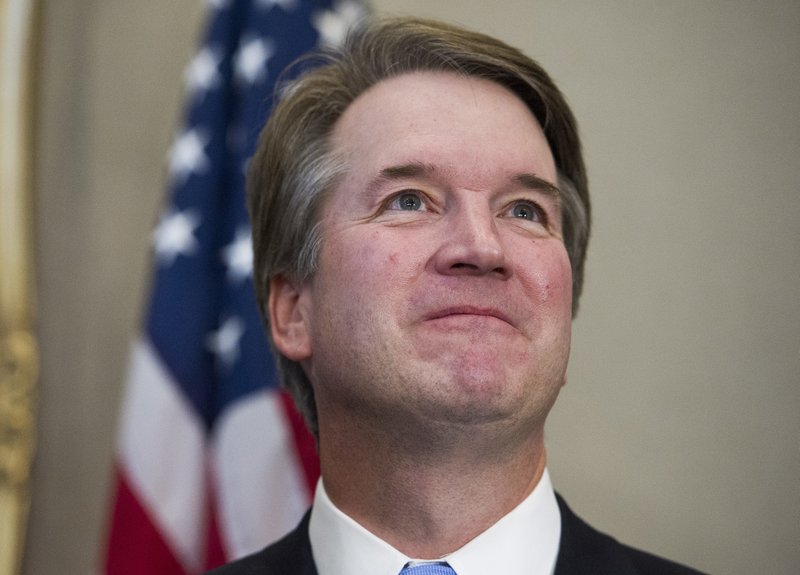
A week ago today, I wrote about the trap that liberals are trying catch conservatives in: Either you believe the unsubstantiated sexual assault allegations against Supreme Court nominee Brett Kavanaugh lock, stock and barrel without questions, or you are anti-feminist. You are pro-sexual assault. You are heartless, unkind, unsympathetic, the character assaults against you are relentless. In recent days, those cries have gotten stronger and louder. Which is why I want to go on record saying those who want to stand up for truth, justice and fairness need to stand by Brett Kavanaugh and not be bullied or shamed themselves. There has been zero, let me repeat that: ZERO, substantiating evidence to back-up any claim of misconduct, whereas there are mountains of reasons to have questions and doubts. Including, but not limited to, statements from everybody involved in Kavanaugh’s life during that period of time and since. There are questions in the consistency, or more importantly the inconsistency, of the statements that the accuser has made both then and now. One must also question the way that this has all played out as political theatre orchestrated by the Democrats in the Senate. These are the same people who have spent millions of dollars and weeks trying to keep the Kavanaugh nomination off the floor for a vote because of their opposition to his experience and policy positions as a Constitutionalist. When they couldn’t de-rail his nomination based on the merits of his record, they are now counting on these allegations to be his ultimate undoing. I stand with Kavanaugh. That doesn’t mean I don’t support victims of sexual assault because I have and I always will. I stand for a country in which people are not bullied and intimidated for their political beliefs. I stand and ask for fairness and justice when discussing important life changing issues such as accusations such as these. I stand for a world in which honorable men and women don’t need to worry about having their life’s work tarnished by those who disagree with them. It is an important time in our country with a lot of critical decisions facing the court. The senate needs to confirm Brett Kavanaugh to the Supreme Court, and to do it in a timely manner. I hope people get wise to weaponization of sexual assault, which has been normalized as of late, and recognize that there are some who would use a false accusation as a tool in their arsenal meant to destroy the reputation and opportunities of good people they simply disagree with. I hope as a Alabama resident our U.S. Senator Doug Jones confirms Kavanaugh and doesn’t allow himself to be bullied into opposition.
New accusation rocks Brett Kavanaugh nomination; Donald Trump stands firm
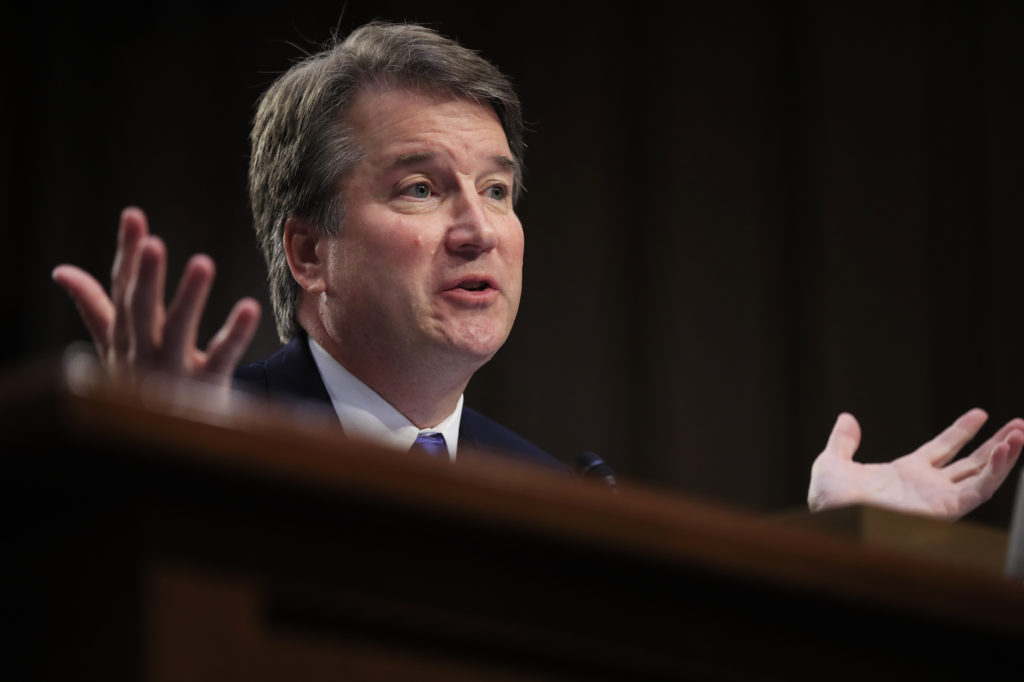
President Donald Trump staunchly defended his embattled Supreme Court nominee against a new allegation of sexual misconduct Monday, calling the accusations against Judge Brett Kavanaugh “totally political.” The president spoke a day after a second allegation emerged against Kavanaugh, a development that further imperiled his nomination to the Supreme Court, forced the White House and Senate Republicans onto the defensive and fueled calls from Democrats to postpone further action on his confirmation. Trump, at the United Nations for his second General Assembly meeting, called the allegations unfair and unsubstantiated, made by accusers who come “out of the woodwork.” He also questioned the political motivations of the attorneys representing the women, saying “you should look into the lawyers doing the representation.” On Kavanaugh, Trump stressed: “I am with him all the way.” The new accusation landed late Sunday in a report from The New Yorker, just a few hours after negotiators had reached an agreement to hold an extraordinary public hearing Thursday for Kavanaugh and Christine Blasey Ford, who accuses him of sexually assaulting her at a party when they were teenagers. Kavanaugh denies the accusation. Presidential counselor Kellyanne Conway told CBS on Monday that the accusations against Kavanaugh sound like “a vast left-wing conspiracy,” using rhetoric that echoed Hillary Clinton‘s 1998 description of allegations that her husband, President Bill Clinton, had had affairs. Trump is suggesting the timing of the New Yorker article is further evidence of what he has been saying privately for days: that the Democrats and media are conspiring to undermine his pick. The second claim against Kavanaugh dates to the 1983-84 academic year, which was his first at Yale University. Deborah Ramirez described the incident after being contacted by The New Yorker magazine. She recalled that Kavanaugh exposed himself at a drunken dormitory party, thrust his penis in her face, and caused her to touch it without her consent as she pushed him away. In a statement provided by the White House, Kavanaugh said the event “did not happen” and that the allegation was “a smear, plain and simple.” However, Sen. Dianne Feinstein of California, the ranking Democrat on the Judiciary Committee, called for the “immediate postponement” of any further action on Kavanaugh’s nomination. Republicans on the Senate Judiciary Committee said they would investigate Ramirez’s accusation. Taylor Foy, a Judiciary spokesman, complained that Democrats “actively withheld information” from the Republicans. He said they appear “more interested in a political takedown” than a bipartisan process. The New Yorker said it contacted Ramirez after learning of a possible incident with Kavanaugh. It said that the allegation came to the attention of Democratic senators through a civil rights lawyer. The Democrats then began investigating. Ramirez was reluctant at first to speak publicly “partly because her memories contained gaps because she had been drinking at the time of the alleged incident,” The New Yorker reported. After “six days of carefully assessing her memories and consulting with her attorney, Ramirez said that she felt confident enough of her recollections” to speak publicly, the report said. The Associated Press tried reaching Ramirez at her home in Boulder, Colorado. She posted a sign on her front door, indicating she would have no comment. Joining the maelstrom, Michael Avenatti, the attorney representing porn actress Stormy Daniels in her legal fight with Trump, claimed to represent a woman with information about high school-era parties attended by Kavanaugh and urged the Senate to investigate. Avenatti told the AP that he will disclose his client’s identity in the coming days and that she is prepared to testify before the committee, as well as provide names of corroborating witnesses. A White House official not authorized to speak publicly questioned the accusations coming from Avenatti’s client, saying that the presence of the high-profile attorney — who has publicly taken on Trump and is weighing a 2020 Democratic presidential bid — makes the proceedings a “circus.” The accusation from Ramirez raises the stakes further for a dramatic showdown Thursday, as Kavanaugh and Ford testify in public about an incident she characterizes as attempted rape — and that he says simply never happened. Kavanaugh’s nomination hangs precariously. A handful of senators in both parties remain undecided on his nomination. Defections among Republicans would likely block his path to the Supreme Court. The White House is approaching Ford’s potential testimony with trepidation, nervous that an emotional appearance might not just damage Kavanaugh’s chances but could further energize female voters to turn out against Republicans in November. Still, the White House and Republicans have cast doubt on Ford’s allegations. The Judiciary panel said it had talked to three other people whom Ford has told The Washington Post were at the party where the alleged assault took place — Mark Judge, Patrick J. Smyth and Leland Ingham Keyser. All three told investigators that they had no recollection of the evening in question, the committee said. The Post reported Sunday that Keyser said in a brief interview at her home that she still believes Ford, even if she doesn’t remember the party. Kavanaugh plans to turn over to the committee personal calendars from the summer of 1982. Those calendars, he says, don’t show a party consistent with Ford’s description of the gathering in which she says he attacked her, The New York Times reported Sunday. The calendars list basketball games, movie outings, football workouts, college interviews and a few parties with names of friends other than those identified by Ford, according to the Times. A person working on Kavanaugh’s confirmation backed up the Times account of the calendars to the AP. The person spoke on the condition of anonymity to discuss the matter. Even before the latest turns, the carefully negotiated hearing at the Senate Judiciary Committee with Kavanaugh and Ford carried echoes of the Anita Hill hearings in 1991. Then, like now, another Republican president had selected a Supreme Court nominee, now-Justice Clarence Thomas, facing accusations of sexual harassment. Senate Judiciary Committee Chairman Chuck Grassley, R-Iowa, wrangled with Ford’s lawyers for the past
Evangelicals push Senate Republicans to confirm Brett Kavanaugh
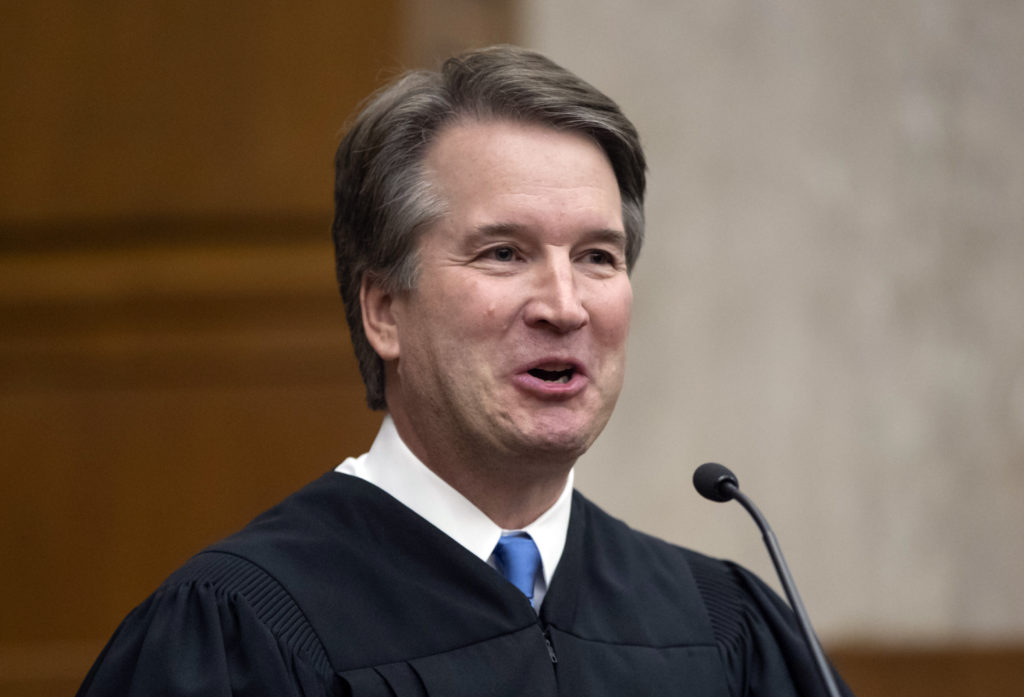
Evangelical activists want Republican leaders to act more forcefully to send Brett Kavanaugh to the Supreme Court, expressing skepticism about the decades-old allegations of sexual assault levied against the federal judge. The political flashpoint is playing out only weeks before midterm elections in which conservative voters will be critical to the GOP drive to maintain control of Congress. Kavanaugh’s nomination was a prime topic Friday at the annual Values Voter summit as Senate Majority Leader Mitch McConnell, faith leaders and others vowed that President Donald Trump‘s nominee would win confirmation. Family Research Council President Tony Perkins, the organizer of the conference, said Republicans needed to “move much more aggressively,” contending the Senate had been “very accommodating” to California college professor Christine Blasey Ford, who has accused Kavanaugh of sexual assault more than 30 years ago when they were teenagers. Kavanaugh has denied the allegations and offered to testify under oath to the committee. Republicans and Ford were negotiating Friday on whether Ford will testify next week before the Senate Judiciary Committee. Gary Bauer, the president of American Values and a former policy aide to President Ronald Reagan, told the summit that he was praying for Ford but cast doubt over the allegations. To make his point, he re-enacted what a conversation might be like between Ford and law enforcement. “If you walked into a police station, or an FBI agent, if you walked in anywhere and said ‘I want to report a sexual assault.’ ‘Yes, ma’am.’ ‘When did this happen?’ ’36 years ago.’ ‘Excuse me?’ ’36 years ago. Yes.’ ‘Do you have any eyewitnesses?’ ‘Well, there are two eyewitnesses but they both deny it happened,’” Bauer said, drawing laughter from the audience. “‘Where did it happen?’ ‘It was at a house but I don’t know whose house.’ ‘How did you get there?’ ‘I don’t know how I got there.’ ‘How did you get home?’ ‘I don’t know how I got home.’” McConnell was quick to reassure the crowd of core Republican supporters. “In the very near future, Judge Kavanaugh will be on the United States Supreme Court,” the Kentucky Republican said. “Keep the faith, don’t get rattled by all of this. We’re going to plow right through it and do our jobs.” Bauer added that he doesn’t know Ford. “I don’t know her values but what she’s saying is unproven and I would argue it’s unprovable,” Bauer said. “There’s reasons why most laws and most crimes have statutes of limitation. Because a week after a crime, it is difficult to reconstruct what happened. Thirty-six years later? Now look, we can’t prove what she said. But there is something we can prove and that is Judge Kavanaugh’s character.” Perkins said McConnell had been methodical in attempting to win Kavanaugh’s confirmation “but you’ve got to look at what he’s working with. He’s working with some Republicans who look like they grew up on a boneless chicken ranch. They don’t really have much backbone and when it comes to the pressure, they hide.” Perkins said Senate Republicans should allow Ford to speak. “If she says, ‘I can’t do it this day,’ and they give her another day, ‘I can’t do it.’ Look, move forward. The American people deserve a vote as well. Their voice needs to be heard in this process.” Evangelical leaders said if Kavanaugh failed to win confirmation, that could drive up turnout among Republican voters in November, when the party is defending its House majority and a narrow edge in the Senate. But a collapse of the nomination also would direct finger-pointing at Senate leaders and derail a top priority for Trump, who is seeking to cement a conservative imprint on the court for decades. Michele Bachmann, a former Minnesota congresswoman and 2012 Republican presidential candidate, said the 36-year-old allegations against Kavanaugh had “come out of nowhere and I think the Senate has bent over backwards to take this woman’s allegations seriously and to give her a hearing.” “She’s been back-peddling, her allegations have actually been falling apart, they haven’t gotten stronger,” Bachmann said in an interview, adding: “We’re probably going to hear her make allegations and he will deny them. Then it’s really up to the senators to vote. That’s what this is about.” “This whole rollout of this fight against Brett Kavanaugh has been nothing but Kabuki theater and really a disaster on the part of the Democrats,” Bachmann said. “From the very first day when all of their paid people came in and were screaming throughout this hearing. This had nothing to do with order and decorum and getting to the truth.” Republished with permission from the Associated Press.
For Brett Kavanaugh, path forward could be like Clarence Thomas’
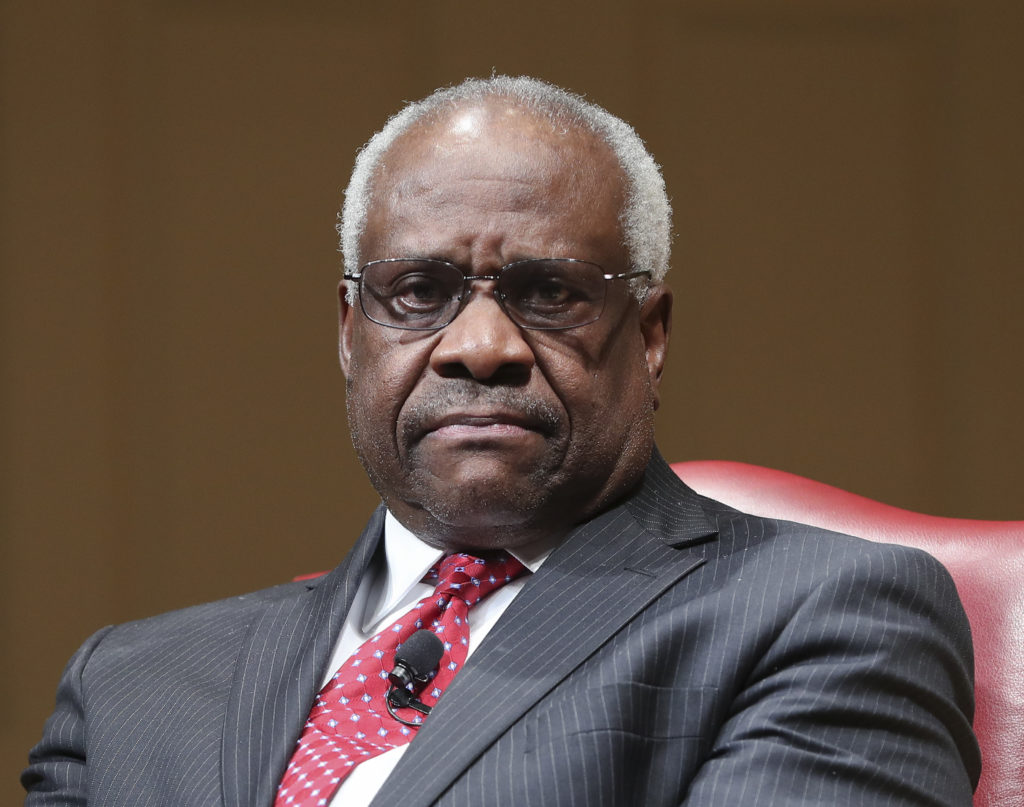
When Clarence Thomas arrived at the Supreme Court in 1991 after a bruising confirmation hearing in which his former employee Anita Hill accused him of sexual harassment, fellow justice Byron White said something that stuck with him. “It doesn’t matter how you got here. All that matters now is what you do here,” Thomas recounted in his 2007 memoir, “My Grandfather’s Son.” That view could be tested again if lawmakers confirm Supreme Court nominee Brett Kavanaugh, who’s facing allegations by California college professor Christine Blasey Ford that he sexually assaulted her when they were in high school. Kavanaugh, who like Thomas has denied the allegation against him, is scheduled to appear before lawmakers at a hearing Monday, with the outcome of his nomination uncertain. If Kavanaugh does become a justice, court watchers will be looking to see whether his smooth-turned-tumultuous confirmation affects him on the bench and whether having two justices who faced allegations about their treatment of women alters the public’s perception of the court, particularly on future rulings about abortion and gender discrimination. Thomas’ high-profile public showdown with Hill came to define his confirmation process, which he has called a “nightmare” and which Hill has called a “bane which I have worked hard to transform into a blessing.” Those who have studied or know Thomas say his confirmation didn’t change the kind of justice he has become. He is now 70 and the most conservative member of the court. But some observers suggest that — rightly or wrongly — it affected his public and private reception, particularly in his early years as a justice. Ralph A. Rossum, professor of government at Claremont McKenna College and the author of a 2013 book about Thomas’ legal philosophy, said Thomas’ “long and withering” confirmation didn’t make him any less willing to write unpopular opinions or interpret the Constitution as he sees it. “What it didn’t do is influence him on the bench,” said Rossum, who pointed to a dissent Thomas wrote shortly after joining the court, a case where only he and Justice Antonin Scalia would have ruled against an inmate beaten in prison. But Rossum said Thomas’ confirmation experience did seemingly make him “more gun-shy to be in public.” “I think he was always a private man, and it made him even more of a private man,” Rossum said. Law schools, generally only too happy to have justices speak at their events, also seemed to shun Thomas initially, Rossum said. It took a year and a half after he joined the court for him to give his first public speech. Since then, he has sometimes drawn protests when he makes appearances, but those are largely prompted by his conservative judicial philosophy. Hill’s allegations do resurface periodically, such as in 2010, when Thomas’ wife put them back in the news by leaving a telephone message for Hill suggesting she consider apologizing. Or, in the last year, as stories about the #MeToo movement have referenced Thomas. Former Missouri Sen. John Danforth, a longtime friend of Thomas’ who guided his confirmation, wrote in a 1994 book about the confirmation process that Thomas “has thought of the charge of sexual harassment as ‘a stain that won’t come off.’” But Thomas wasn’t changed by “the ordeal” he went through, Danforth said in a telephone interview. “He’s just the same, and he’s really a happy person, too,” he said. Danforth said Thomas “rose from the dead” after being confirmed. At a swearing-in ceremony at the White House ahead of joining the court, Thomas talked about moving on. “Today, now, it is a time to move forward, a time to look for what is good in others, what is good in our country,” he said. But not everyone believes that Thomas was able to move on so quickly. The hearings made him a recognizable face where before, as a judge, he enjoyed walking anonymously to lunch with his clerks, legal analyst Jeffrey Toobin wrote in his book “The Nine.” After his confirmation, Thomas stopped driving his black Corvette to work because the car was too recognizable, Toobin has written. And for years, Thomas purportedly kept in his desk a list of the roll-call vote on his confirmation. As for Thomas’ colleagues, they were cordial but not overly welcoming, Toobin wrote. Thomas, for his part, has denied that his reception was anything less than friendly, writing that all his colleagues treated him with the “utmost kindness and consideration.” But the confirmation process tainted how he felt about becoming a justice at the time. Thomas declined an invitation from the White House to watch as senators voted on his confirmation, and he was taking a hot bath when his wife told him he’d been confirmed 52-48. His response, according to his memoir: “Whoop-dee damn-doo.” Republished with permission from the Associated Press.
Donald Trump abandons restraint, calls out Brett Kavanaugh’s accuser
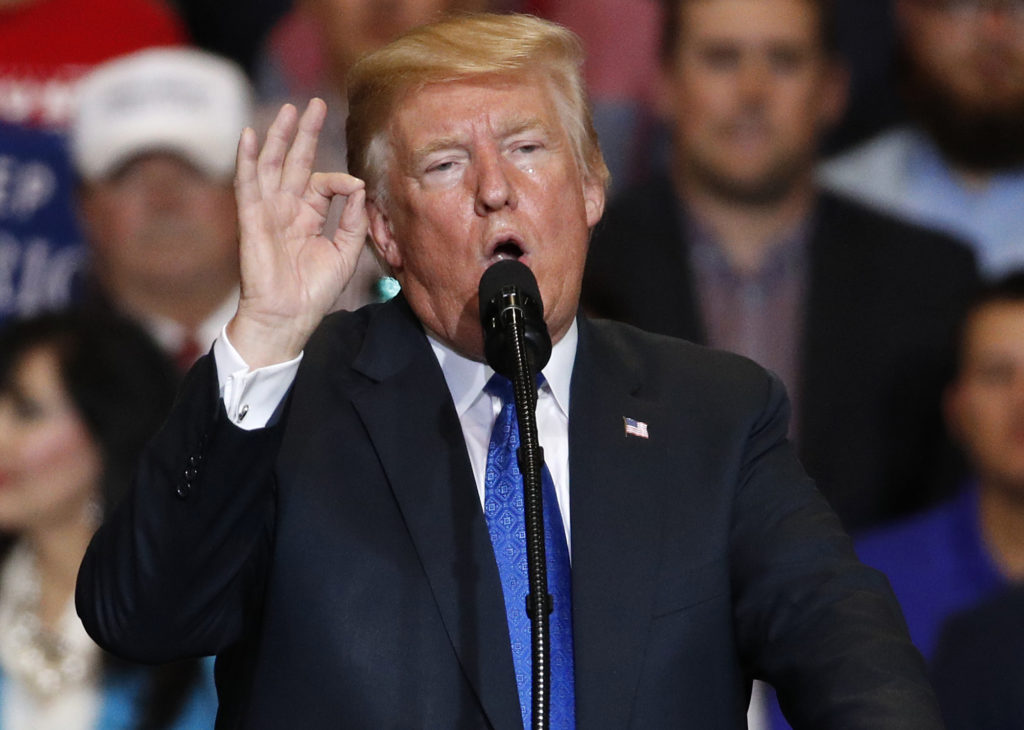
President Donald Trump challenged the woman accusing his Supreme Court nominee of sexual assault by name Friday, saying that if the alleged attack was that “bad” then she would have filed charges. Abandoning his previous restraint, Trump tweeted: “I have no doubt that, if the attack on Dr. Ford was as bad as she says, charges would have been immediately filed with local Law Enforcement Authorities by either her or her loving parents. I ask that she bring those filings forward so that we can learn date, time, and place!” The president previously had avoided naming Christine Blasey Ford or casting doubt on her account. Ford alleges Judge Brett Kavanaugh sexually assaulted her more than 30 years ago when they were teenagers. Kavanaugh has denied the allegations. The accusation has jarred the 53-year-old conservative jurist’s prospects for winning confirmation, which until Ford’s emergence last week had seemed all but certain. It has also bloomed into a broader clash over whether women alleging abuse are taken seriously by men and how both political parties address such claims with the advent of the #MeToo movement — a theme that could echo in this November’s elections for control of Congress. Trump’s apparent shift in strategy comes as Ford’s lawyers are negotiating with the Senate Judiciary Committee on the terms of her possible testimony next week, raising the prospect of a dramatic Senate showdown over Ford’s accusation. In another tweet, Trump, who is in Las Vegas for various events, wrote: “Judge Brett Kavanaugh is a fine man, with an impeccable reputation, who is under assault by radical left wing politicians who don’t want to know the answers, they just want to destroy and delay. Facts don’t matter. I go through this with them every single day in D.C.” On Thursday, Ford lawyers told the Judiciary Committee that her preference is to testify to the panel next Thursday. She doesn’t want Kavanaugh in the same room, her attorney told the panel’s staff in a 30-minute call that also touched on security concerns and others issues, according to a Senate aide. That aide wasn’t authorized to discuss the matter publicly and spoke on condition of anonymity. Ford is willing to tell her story — but only if agreement can be reached on “terms that are fair and which ensure her safety,” the attorney said. She said Ford needs time to make sure her family is secure, prepare her testimony and travel to Washington. No decisions were reached, the aide said. In addition to security, expected to be provided by Capitol Police, Ford has asked for press coverage of her testimony to be the same as for Kavanaugh. Reporters had assigned seating and were kept separated from the nominee, who was whisked to and from the room. Ford’s attorney said Ford would like to testify first, but that might be complicated because Kavanaugh has already agreed to Monday’s scheduled hearing. The discussions have revived the possibility that the panel will hold an electrifying campaign-season hearing at which both Ford and Kavanaugh can give their versions of what did or didn’t happen at a party in the 1980s. Kavanaugh, now a judge on the powerful U.S. Court of Appeals for the District of Columbia Circuit, has repeatedly denied Ford’s allegation. Ford has told the pane she would prefer the committee not use outside counsel to question her because that would make it seem too much like a trial, the attorney told the panel. All of the Republicans on the panel are men, and the committee is known to be concerned about the optics of having questions from the GOP side come only from men. Republished with permission from the Associated Press.
