
Alabama’s roads, bridges receive $7 million for much needed repairs
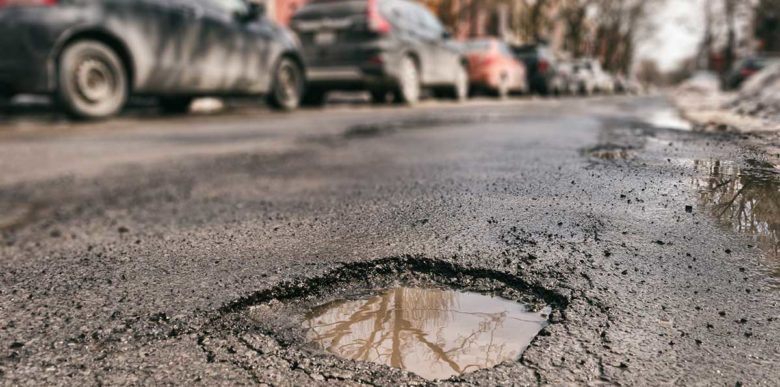
Governor Kay Ivey and the Alabama Department of Transportation (ALDOT) on Thursday announced $7 million in funding is being awarded to cities and counties across the state for various local road and bridge projects. Made available through the Annual Grant Program, a new program created under the Rebuild Alabama Act that established the gas tax, the funding will support 31 projects. “An investment in our roads and bridges is an investment in the future of Alabama. These $7 million in funds will go a long way in helping communities across the state address various road and bridge projects,” Ivey said. “I am proud to see the continuing positive ramifications from the Rebuild Alabama Act. Soon, every Alabama citizen will feel the benefits from this additional investment in our infrastructure.” $7 million in awards is part of a larger $10 million that has been set aside under the Rebuild Alabama Act for local road and bridge projects this year. A second award cycle is expected later this year to award the remaining $3 million
Steve Flowers: Infrastructure program should be priority 1
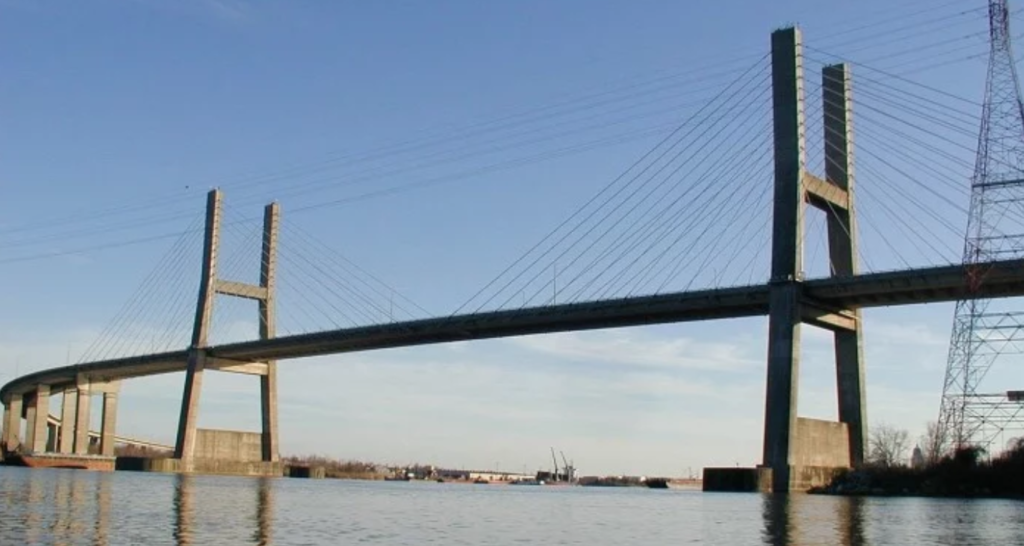
As the new quadrennium crests in Alabama government, everybody looks toward a new beginning. There is a new fresh four years ahead for the newly elected leaders. They are overwhelmingly Republican. The Governor is Republican and all of the accompanying constitutional officeholders are members of the GOP. More importantly, the State Legislature, both the House and the Senate are Republicans. In fact, over two-thirds of each chamber are Republican. It is a supermajority. The cards are lining up for these leaders to leave a legacy. That legacy could and should be to rebuild Alabama’s roads and bridges. The optimum word is infrastructure. Folks know that it is time. Alabamians see the needs everyday as they drive to work. The staunchest and most conservative people I know throughout the state tell me, adamantly, that they are flat ready to pay more in gasoline tax to fix their roads. The hue and cry arises from rural folks whose roads are impassable from large potholes. Birmingham’s roads are deplorable. Suburban commuters who have to travel highway 280 in Jefferson and Shelby counties are exasperated. Indeed, commuters in the state from all of our largest metro areas are acutely aware of the horrendous log jams they experience every day. The country folks have figured out that it would be cheaper to pay more for gasoline than it is to pay for having their frontends aligned and tires balanced every few weeks from hitting holes in their roads. A good many of the rural bridges in the state have been condemned and are hazardous for heavy trucks and school buses to travel. The Alabama Department of Transportation (ALDOT) has an unprecedented number of unmet repairs and expansions. A spokesman for ALDOT says there are $10 billion of identified capacity projects and needs. Some big-ticket items on the ALDOT list include a new Interstate 10 and bridge and Bayway widening project in Mobile and Baldwin Counties, the completion of the Birmingham northern beltline, the Montgomery Outer Loop, and additional lanes along the interstate in Huntsville. Speaking of Huntsville, they are poised to be one of the fastest growing areas of the entire nation over the next decade. It is imperative that their infrastructure needs are met to keep pace with their expansion. Toyota-Mazda is set to build their largest plant in the Huntsville-Madison metro area. They were assured that roads would be built to accommodate their location and expansion. Alabama, like most states, relies on gasoline taxes to pay for their roads and bridges. It has been 26 years since our gas tax was raised. The last time that Alabama had an increase in our fuel tax was 1992. That state increase was just ahead of the last federal gas tax increase enacted by Congress. President Donald Trump pledged while running and again after his election in 2016 to advance a massive infrastructure program, the largest in U.S. history. He signaled support for increasing the federal gasoline tax to pay for this American infrastructure initiative. This rebuilding of America infrastructure is one of the bipartisan issues that both Democrats and Republicans are espousing. It is a certainty that states will have to come up with matching dollars to get the federal money. Indeed, 28 states have raised or reformed their taxes since 2013 in anticipation of a federal tax increase which they will have to match. This is the one issue in which both parties in Washington can come to an agreement. We in Alabama are not ahead of the curve, but we are poised to maybe come to grips with this issue. A gasoline tax increase to fund infrastructure needs will be the paramount issue of 2019. My guess is that it will happen this year. Governor Kay Ivey, shortly after taking office, said she “supported an increase in the state gasoline tax to fix state roadways.” House Speaker, Mac McCutcheon, of Huntsville, has trumpeted the need for a road program for years. Most of his Republican colleagues in the House ran for reelection without having to take a vow that they would not raise any new revenue or taxes. The stars are aligned for Alabama to act. The time is now. The timing is good. We will probably never have the Chairman of the United States Senate Appropriations Committee as our Senior Senator ever again. Senator Richard Shelby will make sure that we get our fair share of the federal money. However, we must have the basic revenue to draw down the federal funds. See you next week. ••• Steve Flowers is Alabama’s leading political columnist. His weekly column appears in more than60 Alabama newspapers. He served 16 years in the state legislature. Steve may be reached at www.steveflowers.us.
Walt Maddox unveils infrastructure plan for Alabama’s crumbling roads, bridges
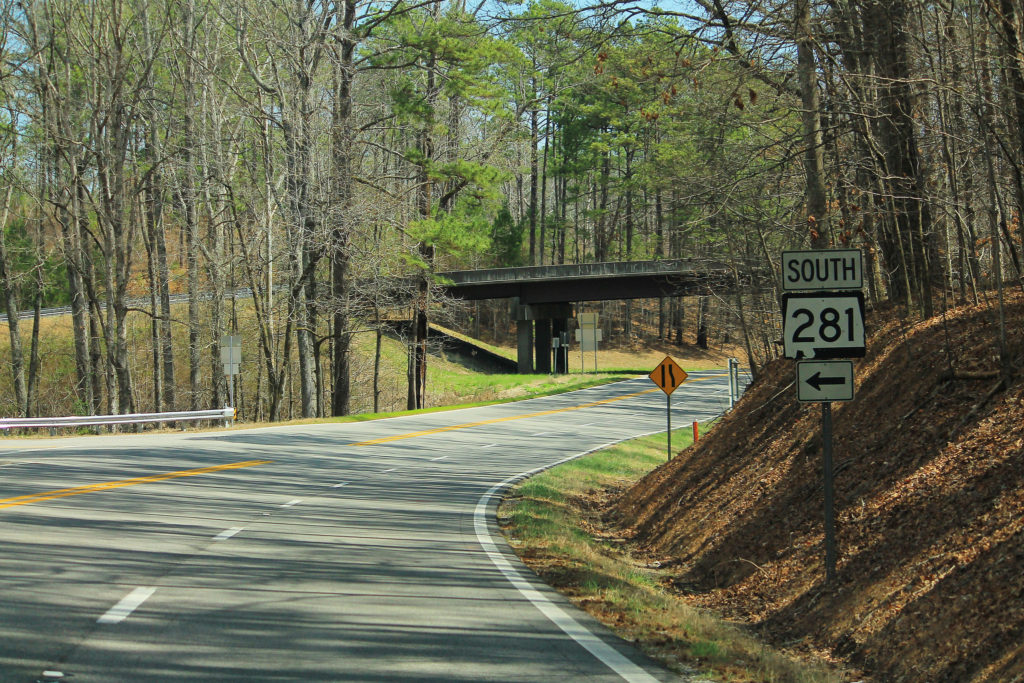
Tuscaloosa Mayor and gubernatorial hopeful, Democrat Walt Maddox unveiled his strategic plan for rebuilding the state’s infrastructure on Wednesday. “Roads and bridges carry much more than just families in cars and cargo in trucks, they are the pathways for the economic engines that support job and wage growth,” Maddox said on his website. “Unfortunately, Alabama bridges receive a grade of C- from the American Society of Civil Engineers, and our roads earn a dismal D+. These embarrassing grades mean that 20% of Alabama’s bridges are in urgent need of improvement and our roads rate as ‘poor & at risk.’” According to Maddox, every Alabama driver pays over $320 per year in extra vehicle operating costs due to deficient roads. And the average household loses $3,400 per year in economic opportunities due to our deteriorating transportation infrastructure, a number expected to grow to more than $5,000 annually by 2025. “Corporate executives rank highway accessibility as the number two factor in site selection. Manufacturing plants, industrial facilities, and large commercial operations simply won’t locate in areas that have poor roads and bridges because it puts their businesses at risk,” Maddox explained. “Almost one million full-time jobs in Alabama’s key industries, such as tourism, trucking, retail sales, agriculture, and manufacturing, are completely dependent on the transportation network. For every dollar invested in roads and bridges, we see a return on investment of $5.20 in reduced maintenance costs, fewer delays, lower fuel consumption, improved safety, and reduced emissions. When we add the economic benefit of more jobs, increased wages, and reduced road replacement costs in the future, that benefit jumps to as high as $14 returned for each dollar spent.” Which is why he’s called for investment in a plan created by the Alliance for Alabama’s Infrastructure — a grassroots advocacy coalition that promotes financially-responsible investment in Alabama’s roads and infrastructure — to fix Alabama’s “crumbling roads and bridges.” “The Alliance for Alabama’s Infrastructure has long advocated for addressing this crisis by identifying financially responsible investments, reforms, and long-term solutions. Their common sense approach to facing the truth and acting on the facts provides a blueprint to get Alabama out of the potholes we’ve dug for ourselves,” said Maddox. “I support the Alliance’s plan to address Alabama’s critical infrastructure needs. That means we have to face the truth about Alabama’s infrastructure funding, but a vast majority of Alabamians, when educated about the facts, agree that the Alliance for Alabama’s Infrastructure plan will pay dividends to the entire state.” Alabama currently has one of the lowest gas taxes in the country, but the state also has some of the worst roads in the country. “You get what you pay for,” explained Chip Hill, Maddox’s Communications Director. He says Maddox supports a gas tax to support funding infrastructure needs; “Walt supports the Alliance for Alabama Infrastructure/BCA plan, which echoes the findings of a 2015 PARCA study that a 12 cent per gallon increase is the most practical route to fixing our infrastructure issues.” But Maddox believes the gas tax will only be a viable short-term solution as “it is irresponsible to fund highway projects with a revenue source that will be evaporating in the years ahead as vehicles become less dependent on gasoline and other fossil fuels.” Which is why he says the state “must research ways to maintain revenues as the use of hybrid and electric vehicles expands.” Maddox says in order to be transparent as governor, he will post every dollar invested in road and bridge improvements online. He also intends to present an infrastructure plan identifying specific projects in advance of all legislative sessions in which appropriations will be made, so the Alabamians know where and how their money is being spent. “Fixing our crumbling roads and bridges is unquestionably a critical need for Alabama. If we are going to march strongly forward through this 21st century economy, we must leverage every asset to bring more jobs and make our roadways safer. The foundation for improving Alabama is a transportation system that is a source of pride instead of shame, and under my administration we will take this critical step forward,” Maddox concluded.
Setting an example other states can follow: Foley Beach Bridge is working.
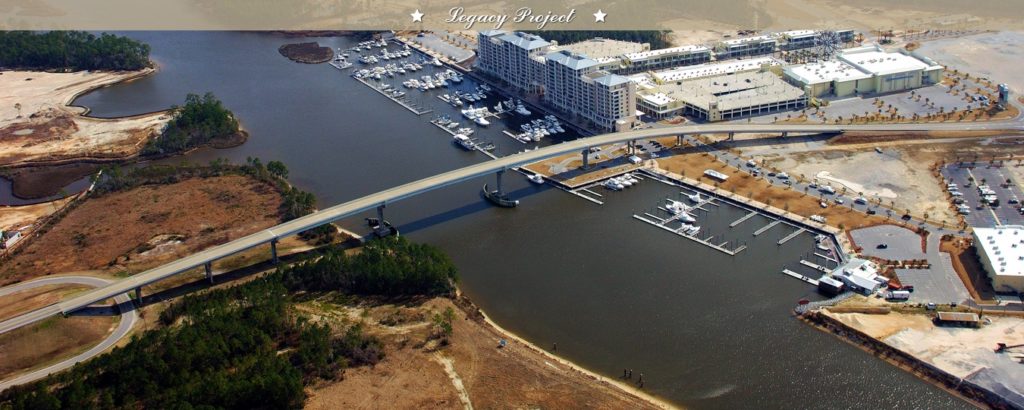
Small government voters and elected officials throughout the nation, but especially here in our ultra-conservative state, are constantly touting smaller government and innovative public-private partnerships as the often untapped solution to most of our fundamental problems. Why invest in big government, taxpayer funded solutions when there are industries who can do the job usually faster, cheaper and more efficiently? We’re in a state of emergency with our nation’s infrastructure — of that there’s no doubt. To remedy this state’s across the nation have begun passing gas tax increases. But not in Alabama. Here, the Alabama Legislature has clung hard to it red-state ideals and avoided tax hikes, instead seeking alternative solutions including finding ways to maximize federal dollars and partner with companies interested in investing in the Yellowhammer State. Such is the case with the Foley Beach Express Bridge to Orange Beach. There, the state brought in American Roads LLC to build and operate a toll bridge as an alternative to Highway 59. The toll is intended to save travelers time and money. Rather than sitting in congested traffic and waiting for over 25 stop lights on the highway, the Foley Beach Express allows drivers to cruise to the beach, all the while bringing in much-needed funds for local infrastructure improvement. After a year of debate of both impractical and costly solutions, such a building a pricey third bridge to help ease congestion, local officials have settled on widening the existing Foley Beach Express bridge with a third lane that will be reversible depending on traffic needs. As reported by Al.Com, among the solutions offered by American Roads is their initiative “Beach Express, GO!”, which included lowering tolls throughout the summer, and even “lift” the tolls during peak congestion times around concerts and widely attended events. These being among the first steps in a comprehensive plan to work with the state and community to provide the safest and most efficient service to those headed to or from the beach this summer and beyond. “After Labor Day, we will start construction for the improvements, including adding a third, reversible lane on the bridge to accommodate two lanes of traffic in one direction, as well as widening the toll plaza and part of the southbound Foley Beach Express by the plaza. Electronic trolling will further help by eliminating the need to stop for toll payment,” Neal Belitsky, chief executive officer of American Roads, told local TV station Fox 10. This solution provides another look at the way that local partnerships are suppose to work. Without threats and bullying and big government solutions but instead a rational and deliberative process — to allow the private sector continue to manage the problem. The new lane will provide all the benefits that another bridge would, and rather than forcing taxpayers statewide to fund a solution, only the people who use the bridge will pay for it via the tolls. Nevertheless, some in government continue to privately advocate for a public, non-tolled, bridge to the coast. Which begs the question? Why? Why in a state with a perennial budget shortfall, do we have any state officials think a statewide taxpayer solution is the way to go? The new lane should be the answer. In fact, it is the answer. The debate should stop here. Alabama is on the forefront of showing the rest of the country that private public partnerships can and do work. Let’s let that be the bottom line.
