
Amazon second HQ bid ignites frenzy from Bethlehem to Birmingham
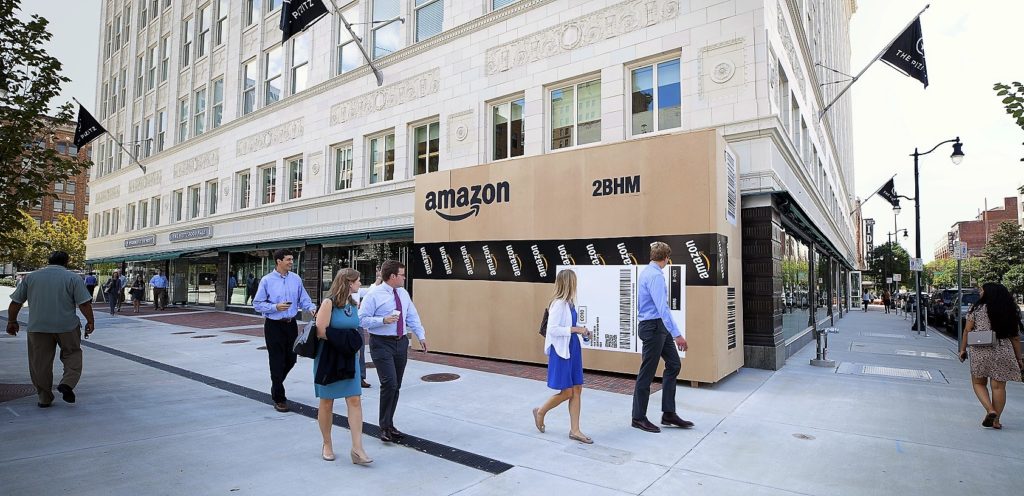
Don Cunningham was in a meeting in his Bethlehem, Pennsylvania, office when a colleague texted: “Amazon is looking for a new location. Let’s get it.” This wasn’t just any new location, but a second headquarters. As CEO of the Lehigh Valley Economic Development Corp., a state-funded agency that lures businesses to the region, Cunningham huddled with his staff to read Amazon’s criteria. They recognized they had shortcomings. Their region is smaller than Amazon wants, it doesn’t have a major airport, and while it does have colleges, they aren’t major research institutions. But Cunningham felt the Lehigh Valley could sell its affordable cost of living and proximity to major cities like New York and Philadelphia, both about an hour away. “We’re a little shy on some of these things, but we’ve got some things going for us so let’s give it a shot,” Cunningham said. When Amazon announced it was inviting proposals for a second HQ – a corporate investment of $5 billion and 50,000 jobs – it set off a frenzy among governors, mayors and bureaucrats around the country. As with Powerball, the large stakes lead to less rational behavior – all that matters is the jackpot. High paying tech jobs can permanently transform a region and raise the political prospects of the leader who helped seal the deal. Amazon’s come-one-come-all approach plays into the boosterish politics of economic development, where officials must balance their public enthusiasm with a more private reality: There’s a limit to how much time, money and hope they should spend on a long-shot bid. They have to play Amazon’s game, but worry they’re getting played. “It is a little bit sadistic,” said Alex Pearlstein, a vice president at Market Street Services, which helps regions develop strategies to be competitive in bids like these. But he understands political pressure on officials to apply. “You never want to say never,” he said. “Maybe a city that isn’t on their radar will just blow them away.” Pearlstein points to his hometown, Birmingham, which created a hashtag, #BringAtoB with its own website, and erected a massive Amazon shipping box in front a new hip food hall to announce the city’s bid. “They are spending some serious resources on this,” Pearlstein said. “If Birmingham gets it, I mean, I think that would be the shock of the century.” Giant Amazon boxes are used to get the company’s attention and promote Birmingham for its second headquartersfrom Alabama NewsCenter on Vimeo. Ford Wiles, chief creative officer at Big Communications, came up with the #BringAtoB campaign and said, “When I think about Amazon and how disruptive they have been, it seems like – why wouldn’t they pick the choice that not everybody is expecting?” In addition to giant boxes at multiple locations, Birmingham has installed giant versions of Amazon’s own dash buttons. But instead of re-ordering products from Amazon.com when pushed, the buttons send tweets with the #BringAtoB hashtag and trumpet another cool fact about the Magic City. Giant Amazon dash buttons aim to lure the company’s second headquarters to Birmingham from Alabama NewsCenteron Vimeo. It’s not possible to tally how much officials nationwide are spending on PR stunts, strategy advice and glossy proposal packages because many economic development groups are nonprofit organizations not subject to public record laws, but the total will climb well into the millions. Initial bids are due Oct. 19, and many places have hired big names. To get help with its effort, Virginia is paying consultant McKinsey & Co. $1 million, according to the Virginian-Pilot. Pittsburgh hired Boston Consulting Group to help. Their fee maxes out at $248,000. And the Kansas City Area Development Council, a nonprofit economic development group, is working with suburban demographer Joel Kotkin and urbanist Richard Florida, even though Florida didn’t list Kansas City in his earlier tweets of his “top three” picks (Toronto, Chicago, D.C.), his “second tier” (Dallas, Atlanta, Twin Cities, Denver, Boston, Philadelphia), his “sleepers” (Detroit, Pittsburgh, Austin, Nashville), or places that “deserve more attention” (New York City, Los Angeles) for the headquarters. Tim Cowden, CEO of KCADC, said they hired Kotkin and Florida for their research, “not for their tweets.” He said in the proposal process, the two experts are learning a lot about the region’s collaborative ways, which “will benefit us long past any Amazon decision.” Amazon doesn’t appear to be discouraging long-shot bids. Virginia Gov. Terry McAuliffe told a local radio station that while cities in D.C. suburbs “clearly” fit Amazon’s criteria, the mayors of Virginia Beach and Richmond, which are smaller and don’t have the mass transit Amazon says it prefers, asked him about applying too. McAuliffe said he personally told Amazon, “‘They have other assets.’ And [Amazon] said, ‘Please have them bid.’” And officials from Vallejo, a formerly bankrupt city of 120,000 that’s an hour ferry ride north of San Francisco, told the local paper that Amazon called the city back within hours of their initial email about the search and said it’s “interested in exploring the opportunity in Vallejo.” Will Morat, who works in Vallejo’s economic development office, said the city’s signed a nondisclosure agreement with Amazon. He doesn’t see Vallejo as a long shot, and even if Amazon doesn’t pick it for the HQ, Morat said the process has helped the city promote sites that are available for other projects. “There is no lose here for Vallejo,” he said. “We are going to find something that will fit.” Amazon, through a spokesman, declined to comment. “Amazon has been brilliant in making this a public response,” said Liz Cahill, chief marketing officer for Colorado Office of Economic Development & International Trade. “They are kind of setting it up for anybody.” She said as a marketer, she understands why longshots apply. “It’s a great way to draft off this public interest and get your place noticed,” she said. And underdogs do occasionally win projects, Cuneo said, adding “Tupelo, Mississippi, surprised a lot of folks when Toyota picked it” for an assembly plant in 2007. But an assembly plant is no headquarters. Cuneo, who now consults for companies looking for sites
Russell Hooks: World class and innovative healthcare may be Birmingham’s key to Amazon’s new HQ
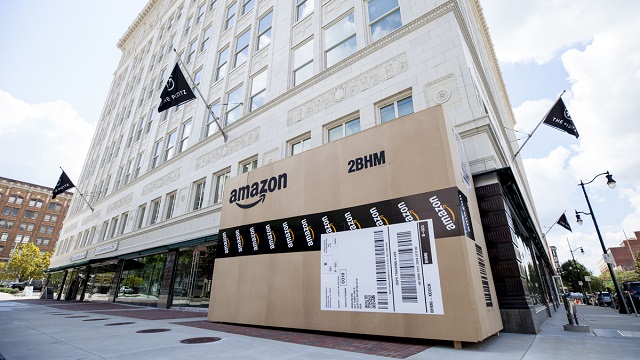
It would be nice to look back and say “I called it!,” to say that this may be one of the most important posts that I’ve published. Bloggers often hope for that elusive post that goes viral and puts them on the national stage. All of this would be awesome, but not for personal recognition. It would be awesome because if any of these things happen, it means that there’s a good chance that Amazon chose to make Birmingham, AL its next home. Last week Amazon sent municipalities all across America into a frenzy when they announced plans to build a second headquarters that would create 50,000 jobs and could, as Business Insider puts it, “detonate a gentrification prosperity bomb.” What city wouldn’t want this opportunity?! It’s more than a shot in the arm for a local economy, it would be an entirely new economy dropped into the middle of one lucky municipality. Remember the Golden Ticket madness at the beginning of Charlie and the Chocolate Factory? That’s what this is. An entire country scrambling to find something that will act as its Golden Ticket. For almost three years, we have used Happenin’s in the ‘Ham to provide “a better view of Birmingham” and to promote our city. I almost wrote a post called “13 Reasons Why…Amazon Should call Birmingham Home,” (super original, right?) and while I could drone on about all the wonderful reasons that Birmingham would be a great choice (the recent renaissance, our southern charm, being the “biggest small town in America”), these are all just fringe benefits for a company as gargantuan as Amazon. No, our Golden Ticket, our Ace in the Hole, is the UAB Health System. When the smoke stopped billowing from the steel plants in the 1970’s, it seemed like Birmingham might have lost its magic. What would fill the void left by the steel industry? It must have felt like the city was on life support, waiting for someone to pull the plug. Thankfully, UAB was there to revive the economy. As of today, the UAB Health System has a $5 billion economic impact on our area, employs 23k workers, was ranked a Top 25 Best Employer in the US by Forbes, and is the 3rd largest public hospital in America. So, why would the UAB Health System, along with other local hospitals, make Birmingham appealing to Amazon? This is where I take a leap and go with my gut, but hear me out. Amazon started out of Jeff Bezos‘s regret for not jumping on board the dotcom boom earlier. He referred to it as his “regret minimization framework.” Simply put, he was going to minimize the chance on missing out on the next big thing. They started selling books then moved to retail. On just about any day you can pull up a new article about how retailers are still reeling from being blindsided, and in denial, about the rapid success and acceptance of online shopping. Recently, Amazon shocked the world by purchasing Whole Foods, and is already turning the grocery industry on its head. The next logical step for them would be to tap into the fastest growing industry out there, healthcare! This sector added 35k jobs per month in 2016, but now providers are looking for ways to maximize efficiencies in cost and care. If there’s one thing Amazon excels at it’s efficiency and cost cutting. Virtual Care and Telemedicine are already being explored as practical ways to deliver care while minimizing costs. Amazon could dominate this frontier faster than you can say, “Alexa, refill my prescription.” Just read the “key takeaways” in this article about the 2017 Global HealthCare Sector Outlook. It fits right into what Amazon is doing in the retail industry. By locating their second headquarters in Birmingham, Amazon would have the perfect place to implement and test ways it can make its entry into the healthcare sector. Despite what the haters are saying, Birmingham DOES meet the basic requirements laid out by Amazon. It is listed as a potential location by The Washington Post, which is owned by (Guess Who?!) Jeff Bezos! Don’t get me wrong, we are by no means at the top of the list, but that doesn’t mean we shouldn’t do everything in our power to create a defining moment for our city and for the state of Alabama. Grabbing the attention of Jeff Bezos and Amazon will take a group effort of both city and state leadership, local entrepreneurs, and the private sector. (I’m looking at you, Alabama Power , Blue Cross Blue Shield, and Regions.) We weren’t even being considered by Mercedes when they sought to build their M-Class production plant, but it just celebrated its 20th anniversary! When Amber and I started Happenin’s in the ‘Ham I drew inspiration from one of Birmingham’s most famous citizens, Capt. Charles Linn. Yep, as in Linn Park. If you walk to the hilltop in Oak Hill Cemetery you will find his mausoleum. Upon it is a plaque that bears the inscription: “When the population was less than 4,000, Linn prophesied: ‘Bury me on the high promontory overlooking the city of Birmingham, in which you men profess to have so little faith, so that I may walk out on Judgement Day and view the greatest industrial city in the entire south.’ A promise fulfilled yet only begun.” The keys to the mausoleum, locked from the inside, are still entombed with him. Let’s have a little faith, Birmingham. The promise of our city has only just begun. #AMZNtoBHM Russell Hooks is the c-founder of Happenin’s in the ‘Ham! with his wife Amber. This opinion piece was republished with his permission. According to their website, Happenin’s in the ‘Ham! is dedicated to sharing the great events and activities you can enjoy around Birmingham! Check them out.
