
Joe Biden takes the helm, appeals for unity to take on crises
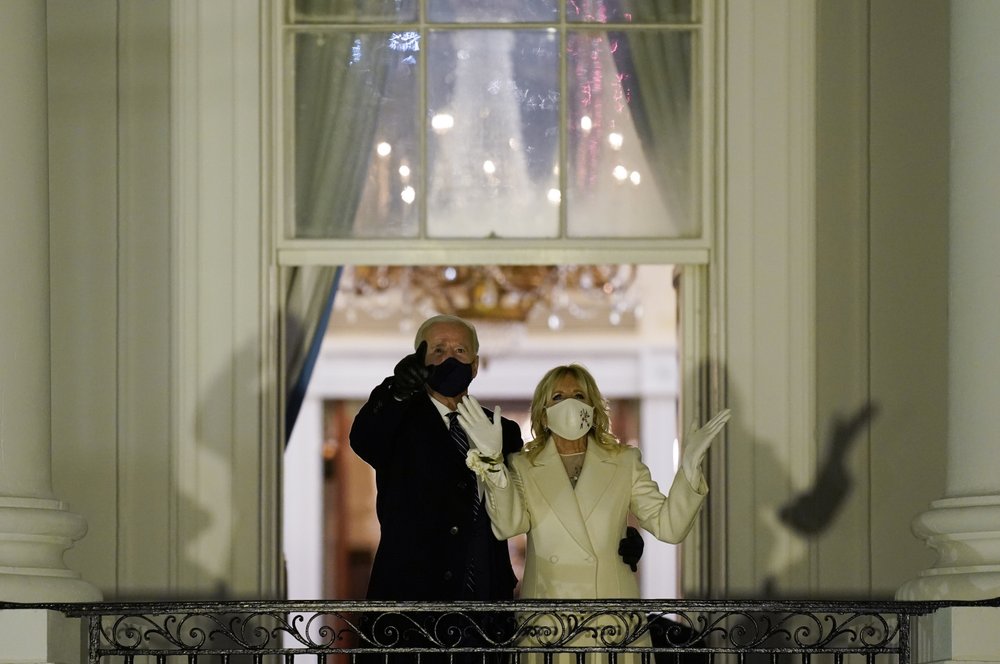
Joe Biden was sworn in as the 46th president of the United States, declaring that “democracy has prevailed” and summoning American resilience and unity to confront the deeply divided nation’s historic confluence of crises. Denouncing a national “uncivil war,” Biden took the oath Wednesday at a U.S. Capitol that had been battered by an insurrectionist siege just two weeks earlier. Then, taking his place in the White House Oval Office, he plunged into a stack of executive actions that began to undo the heart of his polarizing predecessor ’s agenda on matters from the deadly pandemic to climate change. At the Capitol, with America’s tradition of peaceful transfers of power never appearing more fragile, the ceremony unfolded within a circle of security forces evocative of a war zone and devoid of crowds because of the coronavirus pandemic. Instead, Biden gazed out on a cold Washington morning dotted with snow flurries to see over 200,000 American flags planted on the National Mall to symbolize those who could not attend in person. “The will of the people has been heard, and the will of the people has been heeded. We’ve learned again that democracy is precious and democracy is fragile. At this hour, my friends, democracy has prevailed,” Biden declared in his speech. “This is America’s day. This is democracy’s day. A day of history and hope, of renewal and resolve.” History was made at his side, as Kamala Harris became the first woman to be vice president. The former U.S. senator from California is also the first Black person and the first person of South Asian descent elected to the vice presidency and the highest-ranking woman ever to serve in the U.S. government. Biden never mentioned his predecessor, who defied tradition and left town ahead of the ceremony, but his speech was an implicit rebuke of Donald Trump. The new president denounced “lies told for power and for profit” and was blunt about the challenges ahead. Central among them: the surging virus that has claimed more than 400,000 lives in the United States, as well as economic strains and a national reckoning over race. “We have much to do in this winter of peril, and significant possibilities. Much to repair, much to restore, much to heal, much to build and much to gain,” Biden said. “Few people in our nation’s history have been more challenged, or found a time more challenging or difficult than the time we’re in now.” Biden was eager to go big early, with an ambitious first 100 days including a push to speed up the distribution of COVID-19 vaccinations to anxious Americans and pass a $1.9 trillion economic relief package. It included a blitz of executive orders on matters that don’t require congressional approval — a mix of substantive and symbolic steps to unwind the Trump years. His actions included re-entry into the Paris Climate Accords and a mandate for wearing masks on federal property. “There’s no time to start like today,” a masked Biden said. in the Oval Office. Then he swore in hundreds of aides — virtually — telling them, “You’re my possibilities.” The absence of Biden’s predecessor from the inaugural ceremony underscored the national rift to be healed. But a bipartisan trio of former presidents — Bill Clinton, George W. Bush, and Barack Obama — were there to witness the transfer of power. Trump, awaiting his second impeachment trial, was at his Florida resort by the time the swearing-in took place. Biden, in his third run for the presidency, staked his candidacy less on any distinctive political ideology than on galvanizing a broad coalition of voters around the notion that Trump posed an existential threat to American democracy. Four years after Trump’s “American Carnage” speech painted a dark portrait of national decay, Biden warned that the fabric of the nation’s democracy was tearing but could be repaired. “I know the forces that divide us are deep and they are real. But I also know they are not new. Our history has been a constant struggle between the American ideal that we are all created equal and the harsh, ugly reality that racism, nativism, fear, demonization have long torn us apart,” Biden said. “This is our historic moment of crisis and challenge, and unity is the path forward and we must meet this moment as the United States of America.” Swearing the oath with his hand on a five-inch-thick Bible that has been in his family for 128 years, Biden came to office with a well of empathy and resolve born by personal tragedy as well as a depth of experience forged from more than four decades in Washington. At age 78, he is the oldest president inaugurated. Both he, Harris, and their spouses walked the last short part of the route to the White House after an abridged parade. Biden then strode into the Oval Office, a room he knew well as vice president, for the first time as commander in chief. At the Capitol earlier, Biden, like all those in attendance, wore a face mask except when speaking. Tens of thousands of National Guard troops were on the streets to provide security precisely two weeks after a violent mob of Trump supporters, incited by the Republican president, stormed the building in an attempt to prevent the certification of Biden’s victory. “Here we stand, just days after a riotous mob thought they could use violence to silence the will of the people,” Biden said. “To stop the work of our democracy. To drive us from this sacred ground. It did not happen. It will never happen. Not today, not tomorrow. Not ever. Not ever.” The tense atmosphere evoked the 1861 inauguration of Abraham Lincoln, who was secretly transported to Washington to avoid assassins on the eve of the Civil War, or Franklin Roosevelt’s inaugural in 1945, when he opted for a small, secure ceremony at the White House in the waning months of World War II. But Washington all but deserted downtown and in its federal
Joe Biden takes the helm as president facing pandemic, divisions
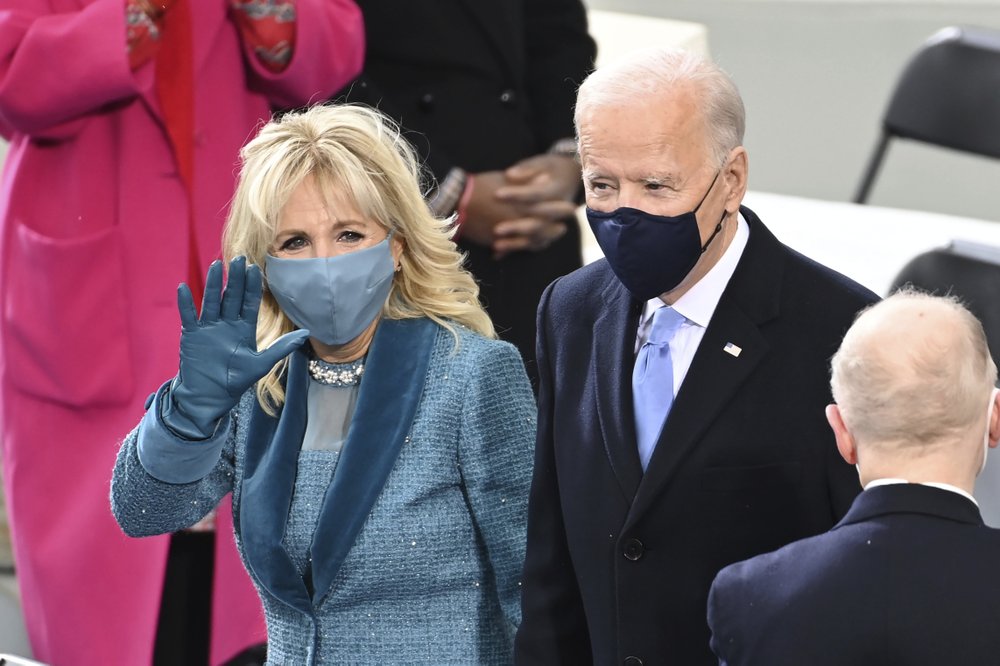
Joe Biden became the 46th President of the United States on Wednesday, swearing the oath of office just before noon to take the helm of a deeply divided nation while inheriting a confluence of crises arguably greater than any faced by his predecessors. Biden’s inauguration came at a time of national tumult and uncertainty, a ceremony of resilience as the hallowed American democratic rite unfurled at a U.S. Capitol battered by an insurrectionist siege just two weeks ago. On a chilly Washington day dotted with snow flurries, a bipartisan trio of ex-presidents along with the elite of nation’s government gathered, ensuring the quadrennial ceremony persevered, even though it was encircled by security forces evocative of a war zone and devoid of crowds because of the coronavirus pandemic. Stay home, Americans were exhorted, to prevent further spread of a surging virus that has claimed more than 400,000 lives in the United States. Biden looked out over a capital city dotted with empty storefronts that attest to the pandemic’s deep economic toll and where summer protests laid bare the nation’s renewed reckoning on racial injustice. And he was not applauded by his predecessor. Flouting tradition, Donald Trump departed Washington on Wednesday morning ahead of the inauguration rather than accompany his successor to the Capitol. Though three other former presidents — Bill Clinton, George W. Bush, and Barack Obama — gathered to watch the ceremonial transfer of power, Trump, awaiting his second impeachment trial, instead flew to Florida after stoking grievance among his supporters with the lie that Biden’s win was illegitimate. Biden, in his third run for the presidency, staked his candidacy less on any distinctive political ideology than on galvanizing a broad coalition of voters around the notion that Trump posed an existential threat to American democracy. On his first day, Biden will take a series of executive actions — on the pandemic, climate, immigration, and more — to undo the heart of Trump’s agenda at a moment with the bonds of the republic strained. “Biden will face a series of urgent, burning crises like we have not seen before, and they all have to be solved at once. It is very hard to find a parallel in history,” said presidential historian Michael Beschloss. “I think we have been through a near-death experience as a democracy. Americans who will watch the new president be sworn in are now acutely aware of how fragile our democracy is and how much it needs to be protected.” Biden will come to office with a well of empathy and resolve born by personal tragedy as well as a depth of experience forged from more than four decades in Washington. At age 78, he was the oldest president inaugurated. More history was made at his side, as Kamala Harris became the first woman to be vice president. The former U.S. senator from California is also the first Black person and the first person of South Asian descent elected to the vice presidency and will become the highest-ranking woman ever to serve in government. The two will be sworn in during an inauguration ceremony with few parallels in history. Tens of thousands of troops are on the streets to provide security precisely two weeks after a violent mob of Trump supporters, incited by the Republican president, stormed the Capitol in an attempt to prevent the certification of Biden’s victory. The tense atmosphere evoked the 1861 inauguration of Abraham Lincoln, who was secretly transported to Washington to avoid assassins on the eve of the Civil War, or Franklin D. Roosevelt’s inaugural in 1945, when he opted for a small, secure ceremony at the White House in the waning months of World War II. The day began with a reach across the aisle after four years of bitter partisan battles under Trump. At Biden’s invitation, congressional leaders from both parties bowed their heads in prayer in the socially distanced service just a few blocks from the White House. Once at the Capitol, Biden will be administered the oath by Chief Justice John Roberts; Harris will be sworn in by Justice Sonia Sotomayor, the first Latina member of the Supreme Court. Vice President Mike Pence, standing in for Trump, was sitting nearby as Lady Gaga, holding a gold microphone, sang the National Anthem accompanied by the U.S. Marine Corps band. The theme of Biden’s approximately 30-minute speech will be “America United,” and aides said it would be a call to set aside differences during a moment of national trial. Biden will then oversee a “Pass in Review,” a military tradition that honors the peaceful transfer of power to a new commander in chief. Then, Biden, Harris, and their spouses will be joined by that bipartisan trio of former presidents to lay a wreath at the Tomb of the Unknown Soldier at Arlington National Ceremony. Later, Biden will join the end of a slimmed-down inaugural parade as he moves into the White House. Because of the pandemic, much of this year’s parade will be a virtual affair featuring performances from around the nation. Full Coverage: Biden’s inauguration In the evening, in lieu of the traditional glitzy balls that welcome a new president to Washington, Biden will take part in a televised concert that also marks the return of A-list celebrities to the White House orbit after they largely eschewed Trump. Among those in the lineup: Bruce Springsteen, Justin Timberlake, and Lin-Manuel Miranda. “I protested 45’s inauguration, and I wanted to be here when he left,” said Raelyn Maxwell of Park City, Utah. ”And I wanted to celebrate the new president.” She brought a bouquet of roses she hoped to toss to Harris and some champagne to toast the occasion. Trump is the first president in more than a century to skip the inauguration of his successor. In a cold wind, Marine One took off from the White House and soared above a deserted capital city to his own farewell celebration at nearby Joint Base Andrews. There, he boarded Air Force One for the final time as president for the flight to his Florida estate. “I will
Donald Trump’s inauguration set to test nation’s readiness to heal
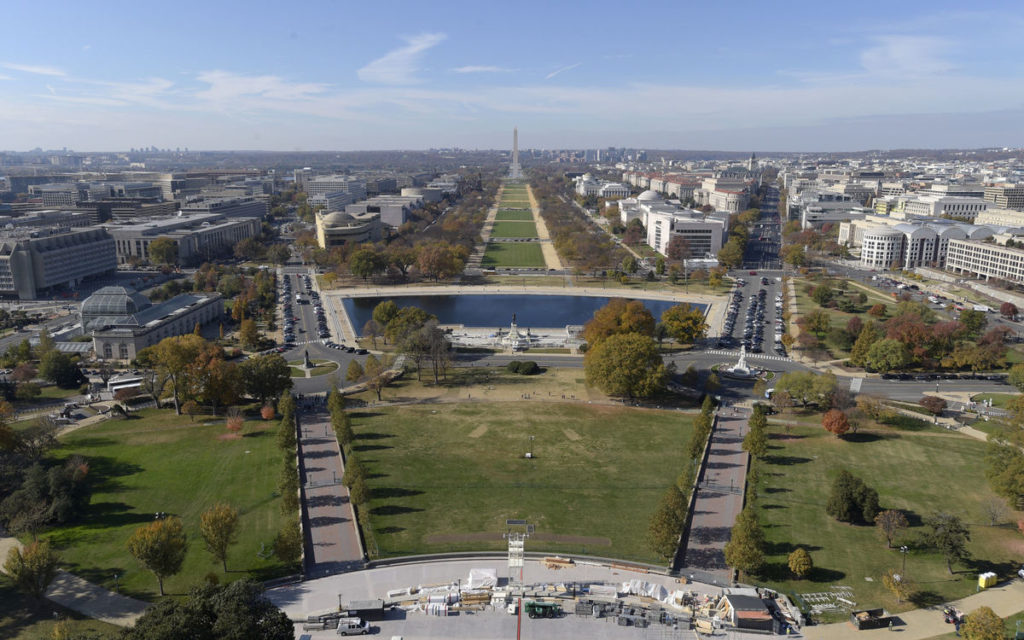
One thing you can count on during inauguration season in Washington: People of all stripes will find a reason to show up — whether it’s to celebrate or commiserate. There are parties and protests to attend, stars to gawk at, receptions to be worked, deals to be done, drinks to be consumed. Less than two months out from Inauguration Day, there’s a different dynamic surrounding the planning for Donald Trump‘s swearing-in than the unbridled enthusiasm that swirled around the installation of the first black president in 2008. Crowd expectations are down. Fewer A-list celebrities are likely to descend. Hotels still have rooms to be rented. But congressional offices are maxing out on ticket requests for the Jan. 20 swearing-in. Trump’s inaugural committee is wooing big donors with candlelight dinners, exclusive luncheons and premier access to balls. Interest groups are lining up sideline events. And among those still mourning Hillary Clinton‘s loss, there is plenty of counter-programming afoot, including plans for a giant women’s march aimed at sending a defiant message to the incoming president. Before the election, District of Columbia planners set an early estimate of 800,000-900,000 people for this year’s inauguration and they haven’t revised that number yet, according to Christopher Geldart, director of D.C.’s Department of Homeland Security and Emergency Management. But there’s scant expectation of replicating the 1.8 million people who descended on Washington for Barack Obama‘s first inaugural. Nor will Hollywood turn out as it did for Obama, whose two inaugurals attracted the likes of Beyonce, Bruce Springsteen, Usher, Jamie Foxx, Jay-Z, Oprah Winfrey and many more A-listers. “More than any election we’ve seen in a very long time, the Hollywood community was really behind Hillary, and a lot of people put their reputations on the line,” says longtime Hollywood publicist Howard Bragman. “Clearly those are people who are going to be taking their Xanax and Valium that day and staying in bed with the covers over them.” But Bragman said there still will be Republican-leaning celebrities who turn out for Trump — and a larger contingent of Hollywood types who show up for counter events like the women’s march planned for the day after Trump’s inauguration. While demand for hotel rooms and other venues is slower than at this point four and eight years ago, hoteliers remain “guardedly optimistic,” according to Elliott Ferguson, president of Destination DC, the city’s tourism bureau. Some hotels that set up four-day-minimum inaugural packages are rethinking that model, hoping to capture more business from those headed to Washington for the women’s march. Hotels are noticing “more rooms being picked up on Saturday than on Friday,” Ferguson says, suggesting strong interest in the march, whose organizers hope to draw 200,000 people to the city. Be advised: The president-elect’s own Trump International Hotel is sold out. Still available: For $2.5 million, the J.W. Marriott is offering a package that includes four presidential suites, 325 guest rooms, a craft bourbon barrel tasting reception, special inauguration menus, and a private viewing party on the terrace overlooking the parade route, among other amenities. There are always more affordable options through rental network Airbnb, which says local bookings for inauguration weekend spiked by 80 percent during the week after the election. Airbnb host Jade Moore, a video editor and Democrat, doubled her prices to $200 a night for inauguration weekend and says she’s booked both Trump supporters and women marchers for her Anacostia home. Before her inaugural guests arrive, she’ll be removing the toilet paper bearing Trump’s photo and the sign in her bathroom that invites people to “take a dump on Trump.” “I’m sure we’ll all get along,” says Moore, hopefully. “We don’t even have to bring up politics.” Not all hosts are that dispassionate. Another local Airbnb host, who asked that her name not be used to avoid getting in trouble for violating the company’s nondiscrimination policy, says she declined to accept a rental request that looked like it came from a Trump supporter and did accept a request that came from women planning to attend the march. Interest groups, too, are adapting in different ways. The Creative Coalition, a bipartisan advocacy group for the arts, has been holding inaugural balls for the past 20 years that typically attract top talent and celebrities. Coalition CEO Robin Bronk says interest in the ball remains strong and she expects it to feature top names once again. “It’s an event that hopefully will be part of the healing of the nation,” Bronk says. Plus, she adds, “I would venture to say a lot of business gets done at our ball.” The Human Rights Campaign, a gay rights organization that threw an “equality ball” eight years ago, this year is focused on making sure its members get involved in demonstrations, marches and other events on inauguration weekend and throughout the year, says spokeswoman Sarah McBride. The Latino Victory Project, which four years ago helped mount a huge Kennedy Center gala featuring Eva Longoria, George Lopez and other top Latino entertainers, this time is putting together events that put the Trump administration on notice that Latinos will fight “his hateful rhetoric and policies,” says project president Cristobal Alex. “I wouldn’t call it a party,” Alex said of this year’s yet-to-be-announced events. “What I would call it is a moment to learn” from the last election. Republished with permission of The Associated Press.
