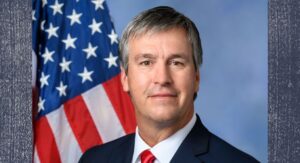
House committee approves cigarette tax, other revenue bills

An Alabama budget committee has approved a cigarette tax increase and other revenue bills as lawmakers try to fill a budget shortfall. The House Ways and Means Committee voted 8-6 for a 25-cent-per-pack cigarette tax increase. The increase would raise $66 million annually. The committee also voted for bills to raise the car rental tax from 1.5 to 2 percent; increase the car title fee from $15 to $28; and adjusts the business privilege tax so smaller businesses pay less and larger ones pay more. Lawmakers for months have been at a stalemate over a projected $200 million general fund shortfall. The committee action was the first sign of budding agreement. However, the proposals face difficult floor and Senate votes ahead. The House could vote on the tax bills Thursday. Republished with permission of the Associated Press.
Lottery talk renews in upcoming special session

Some legislators anticipate renewed debate over a state lottery in the upcoming special session but are also uncertain if the idea has much of a chance. Lawmakers convene Tuesday evening to begin a special session on a state budget shortfall. Several legislators say they expect bills calling for a statewide vote on a lottery to be introduced. Gov. Robert Bentley said Friday that he thought that there was more public support for an Alabama lottery than establishing casinos. However, the governor says he is uncertain if there are enough votes to get any gambling bill through the Alabama Legislature. Alabama voters would have to approve the idea of establishing a state lottery. Republished with permission of The Associated Press.
Robert Bentley details call for second Special Session of 2015
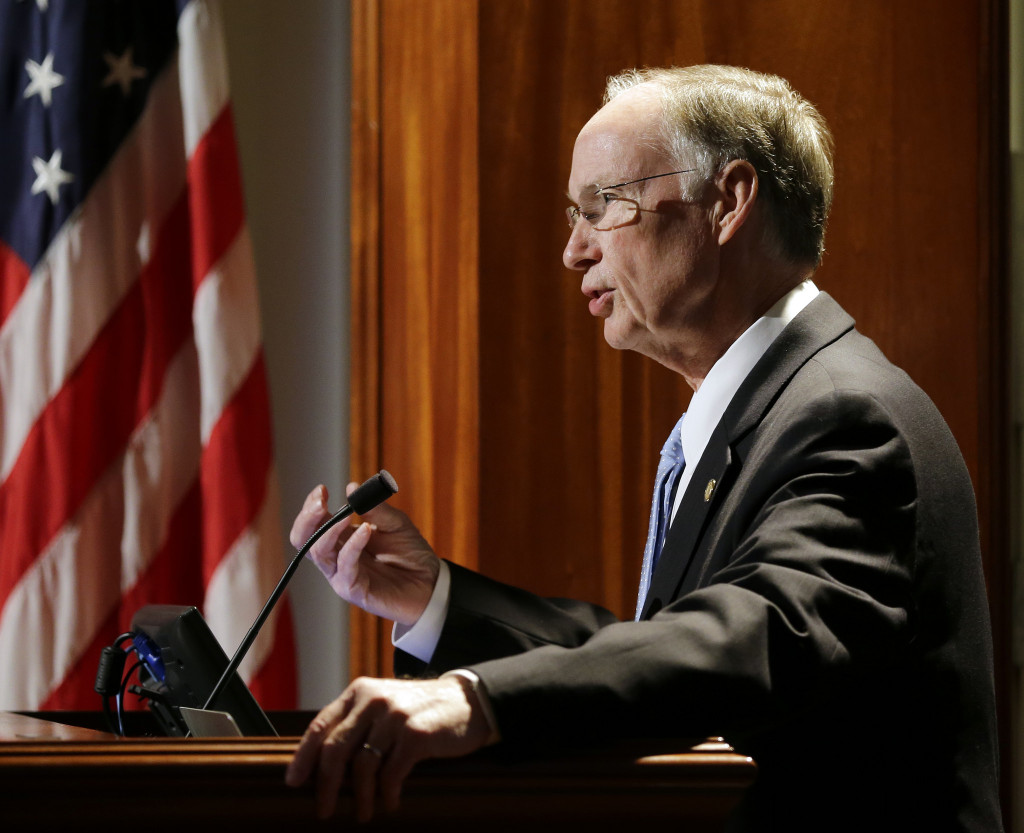
The office of newly beleaguered Gov. Robert Bentley on Thursday afternoon released the details of the call for the upcoming Special Session. Lawmakers will reconvene in Montgomery for the third time this year due to a failure to pass a budget for the next fiscal year. According to a release from the Bentley’s office, the following “reform” measures – i.e. ways of freeing up necessary revenue without raising taxes – are on the table: Transfer use tax revenue from the Education Trust Fund to the General Fund Un-earmark certain state taxes Amend the Education Trust Fund Rolling Reserve Act. Also included in the Session’s “call,” which defines the scope of what can be debated during the session, are the following proposals that would raise revenue in order to account for a looming budget shortfall: Amend the Business Privilege Tax Increase the Cigarette Tax Amend the individual income tax deduction for Federal Insurance Contributions Act (FICA) Any other revenue measures that provide revenue for the General Fund. House Speaker Mike Hubbard responded to the parameters of the call as follows: “We will certainly consider at least some of the bills in Gov. Bentley’s call and various members have their own proposals they will likely bring forward, as well,” said Hubbard in a release. “The House and Senate leadership have worked closely together in good faith, and I’m hopeful that both houses will come together on a common ground solution before the final gavel falls.” The Session is set to convene at 5:00 p.m. on Tuesday, September 8.
Robert Bentley: Cuts are a ‘true crisis’ for the state
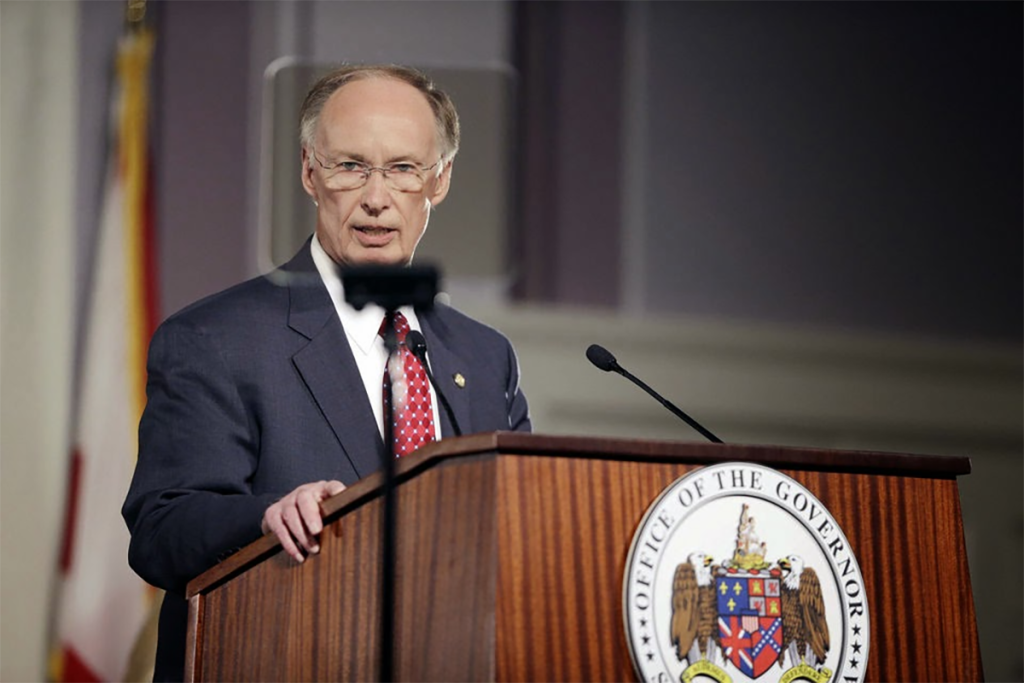
Gov. Robert Bentley is continuing the tough talk as he tries to ramp up support for tax increases ahead of a second special session on the budget. The governor said in a Wednesday speech that the state will face a “true crisis” if budget cuts go into effect. The governor said funding cuts to Medicaid, mental health and law enforcement will harm all Alabamians. Bentley said if state parks close because of cuts that he might put up signs naming the lawmakers responsible. The governor is trying to convince legislators to approve $300 million in taxes to fill a projected budget shortfall. A special session ended this month without a budget agreement. The governor said he will call a second special session in early September. Republished with permission of The Associated Press.
Lawmakers strive for agreement on budget shortfall
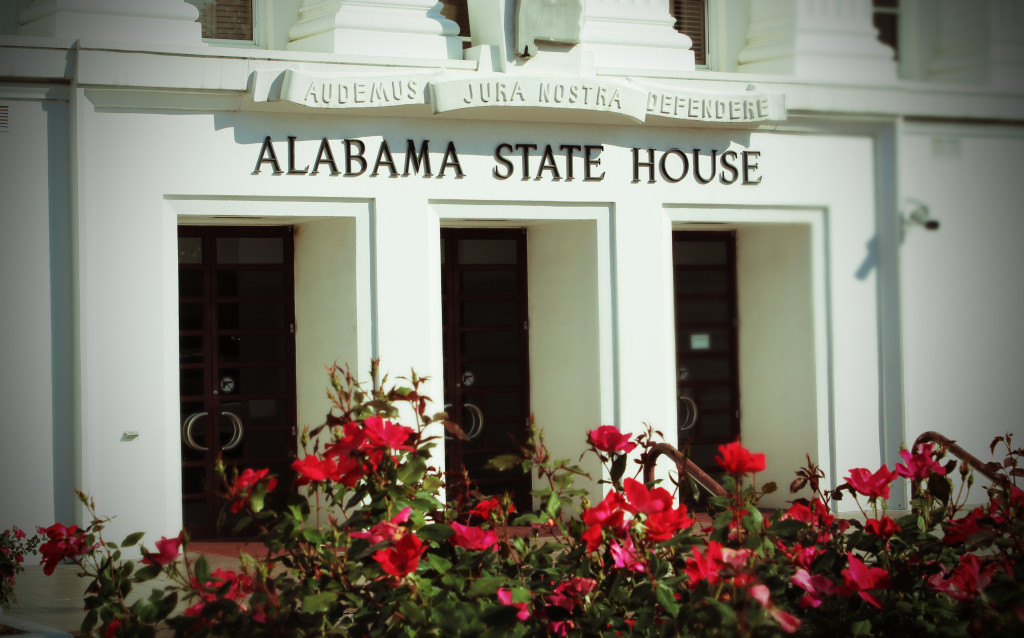
Alabama legislators return to Montgomery on Monday looking for something that eluded them for the last several months: Agreement. The new fiscal year is less than two months away and legislators have yet to settle on a way to handle a projected $200 million shortfall in the general fund budget. Lawmakers on Monday will resume a special session after taking a three-week break to try to hammer out a consensus. Gov Robert Bentley is asking lawmakers to approve $302 million in taxes to avoid deep cuts to state services. Senate President Pro Tem Del Marsh said senators were not “warm” to the idea of large tax increases. Republican senators, he said, are proposing their own plan that includes $275 million in revenue. “The bottom line is we have a plan that will work,” Marsh, R-Anniston, said. The proposals include an adjustment to the business privilege tax, a shift of use in tax money from the state’s separate education budget, agreed upon Medicaid tax on pharmacies and other healthcare providers to help fund the state’s Medicaid program. Marsh would not disclose all of the proposals until they were reviewed by House members. “We’re just to the point that we have to get a budget done that we believe is workable,” House Speaker Mike Hubbard, R-Auburn, said. Hubbard said House Republicans this week looked at a menu of options to get more money to the general fund. Bentley has proposed a pared-down tax package after failing to persuade lawmakers to approve more than $500 million in taxes in the regular session. However, some of the governor’s ideas appear to again be getting the cold shoulder from lawmakers. The largest money maker of the governor’s proposals is to end the ability of taxpayers to claim a state income tax deduction for federal Social Security taxes paid. The change would raise $182 million. Alabama is only one of four states that allow the deduction and it would only affect people who itemize their tax deductions. The governor has also suggested a possible soft drink tax if lawmakers do not want to change the deduction. Legislative leaders said they saw little support for either of those. “It clearly doesn’t have the votes in the Senate so I think that one was taken off. The soft drink tax is off the table,” Hubbard said Bentley has said he will call lawmakers back into a second special session if lawmakers fail to find an acceptable solution. Marsh has introduced gambling legislation to create multiple casinos and a state lottery. The Senate leader said he would like to see that debated this session if there is time after the budget votes. Funding cuts, or even level funding, could jeopardize the state’s ongoing efforts at Medicaid and prison reform. State Health Officer Don Williamson said the state’s Medicaid program needs an increase to continue the work of shifting Medicaid to a managed care system, something Medicaid officials hope will save money in the long run. “Basically level funding ends the three years of work of transformation,” Williamson said. Corrections Commissioner Jeff Dunn said level funding would delay building improvements designed to boost prison safety and a 5 percent funding cut would raise crowding to well over twice prison capacity. “The department would be forced to close prisons and move those displaced inmates into already significantly overcrowded facilities,” Dunn said. Republished with permission of the Associated Press.
Katherine G. Robertson, Caleb Crosby: Gaming a bad idea for Alabama

We have known for months that a deal was in the works to expand gambling operations in Alabama either through a lottery, a tribal compact, or privately run casinos. Such a move under Republican leadership is disheartening, but not surprising. Any chance at a money grab, be it through tax increases or gambling, is far easier than taking a scalpel to the drivers of the current budget shortfall. The General Fund woes present a very real challenge for our leaders, but the public is being fed a number of false choices as to how the problem must be solved. We should not be forced to choose which revenue generator is the least offensive. There are still plenty of good ideas and even bills on the table that would help the state do what the private sector does — scale back spending in a down year. The appeal of easy money through gambling is the idea that those tough decisions can be sidestepped, but not without repercussions. The Policy Institute’s position on using either of these tactics to generate money for the state has been well- publicized throughout our 25-year history. The success of lotteries and gambling, of course, depends upon the participation of the poor and vulnerable. The state then becomes addicted to such funding streams, politicians actually desire more, and more individuals and families recklessly spend their money that way. Calls to further expand gambling will become incessant and government will be expanded right along with it. Simultaneously, Alabama’s leaders will become owned by gaming entities whose power and influence is made possible via money lost by our state’s gamblers. Because of saturated gaming markets, the only people visiting Alabama’s casinos will be Alabamians, especially its poorest. Then local economies will be left to bear the brunt of this bad decision by state leaders. While casino gaming is being advertised as a job creator, the jobs that typically come with gambling tend to be low-wage positions that, because of falling demand, are short-lived. In the past year alone, two casinos in Mississippi have closed. In Atlantic City, N.J., four casinos have closed or will close soon, including its newest one, the $2.4 billion Revel. Thousands of workers in both states who thought that gambling would be their ticket to success have been laid off. The irony in all of this is that 20 other states face budget shortfalls. Most of their shortfalls are substantially larger than ours. Guess how many of the “shortfall states” have lotteries? All but one of them. Guess how many have casinos? 14 of them. Unless a state’s spending problems are fixed — most of which are related to Medicaid, prisons, and public pensions — new revenues can’t keep pace with the rising costs of these services or programs. For instance, Alabama’s share of Medicaid costs has doubled in the past 10 years and shows no signs of slowing down. As a result, the state’s need for more of your money through one mechanism or another will never cease to be necessary. API has proposed or supported a number of ideas that, if implemented, would help fill the budget gap. We’ve researched and recommended various cost-saving reforms to our public pensions, Medicaid prescription reform, eliminating vacant positions within state government, privatizing ABC and bidding out various nonessential government services, exploring tax amnesty to generate revenue already owed to the state, and bringing health insurance premiums of state employees more in balance with those of private-sector workers. Some of those ideas are making their way through the Legislature and some are not. All of them would be challenging to pass — they are all disfavored by one group or another — but none of them exploit the poor. Using the excuse of a budget shortfall to pave the way for more gambling is irresponsible. The effects of it would plague our state long past the political careers of those leading the charge. ••• Caleb Crosby is president and CEO and Katherine Robertson is vice president for the Alabama Policy Institute, a nonprofit research and education organization dedicated to the preservation of free markets, limited government, and strong families. If you would like to speak with the authors, please email communications@alabamapolicy.org or call (205) 870-9900. Note: This column is a copyrighted feature distributed free of charge by the Alabama Policy Institute (API). Permission to reprint in whole or in part is hereby granted, provided the author(s) and API are properly cited.