
Georgia lawmakers kick off special session to redraw districts
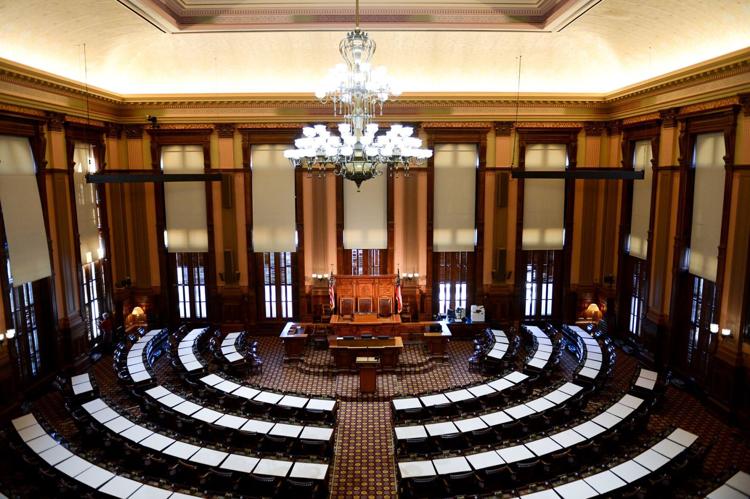
Georgia lawmakers kicked off a special session Wednesday to redraw congressional and state legislative maps. Following U.S. District Judge Steve C. Jones’ ruling that maps state lawmakers previously approved violated the Voting Rights Act of 1965, Georgia Gov. Brian Kemp, a Republican, called the special session. Jones set a Dec. 8 deadline for lawmakers to redraw congressional and state legislative maps. “The reason we gather here again today, at additional taxpayer expense, is because when the General Assembly met in 2021, Republicans passed legislative and congressional maps that discriminated against minority voters,” state Sen. Harold Jones II, D-Augusta, said during a Wednesday morning news conference. Georgia Democrats have expressed concerns about proposed maps Republicans have released and have offered versions of maps they say comply with Jones’ order for lawmakers to consider. “I’m hoping that the judge is watching us and looking at our plan and knowing that it is the best plan,” state Sen. Gloria Butler, D-Stone Mountain, said during a Wednesday morning news conference. “I would be over the moon if the judge could recommend the Senate Democratic Caucus plan.” On the eve of lawmakers’ return to the Gold Dome, the plaintiffs who sued Georgia over its congressional and state legislative district maps have voiced concerns about a proposed state Senate district map. In a letter to the Georgia House and Senate Reapportionment & Redistricting Committees, their lawyers outlined their legal concerns and gave legislators alternate state House and Senate maps they say comply with Jones’ Oct. 26 order. “In sum: the Committee Plan operates a shell game, in which Black voters in the vote dilution area identified by the Court gain no new opportunities, and districts that the Court specifically struck down remain intact,” the lawyers said in a letter to the committees. In his ruling, Jones indicated the remedy includes an additional majority-Black congressional district, two additional majority-Black state Senate districts, and five additional majority-Black state House districts. The proposed state House map that state Rep. Rob Leverett, R-Elberton, chairman of the House Committee on Reapportionment and Redistricting, released would pit state Reps. Beth Camp, R-Concord, and David Knight, R-Griffin, against one another. “While we do not agree with the ruling and an appeal to a high court has been filed, the Georgia General Assembly must take action to comply with the deadline to complete the maps, or the maps will be drawn by the court,” the lawmakers said in a joint statement. During a Senate Reapportionment & Redistricting Committee hearing, state Sen. Bo Hatchett, R-Cornelia, said the new maps had to comply with the Voting Rights Act, Jones’ order, and “traditional redistricting principles.” “We met with Senate members whose districts would be impacted on both sides of the aisle,” Hatchett said. “It was eye-opening to me. Every member that we met with had the same request: keep my district exactly the way it is — I like the way my district is drawn. “We have the judge’s order on one hand telling us we’ve got to redraw these and then members, on the other hand, saying keep my district the same,” Hatchett added. “So, it was a challenge, but in response to those conversations, in response to the judge’s order and our traditional principles, we believe we drew a map that affected as few districts as possible.” Among the first matters for state senators on Wednesday was passing Senate Resolution 4EX denouncing the Oct. 7 Hamas attack on Israel and voicing support for Israel and the Jewish people. In a release, Lt. Governor Burt Jones, a Republican, called on lawmakers to pass House Bill 30, which would define antisemitism and require state agencies to “consider antisemitism as evidence of discriminatory intent for any criminal or noncriminal law or policy.” Republished with the permission of The Center Square.
House Republicans launch inquiry into Georgia official behind Donald Trump indictment
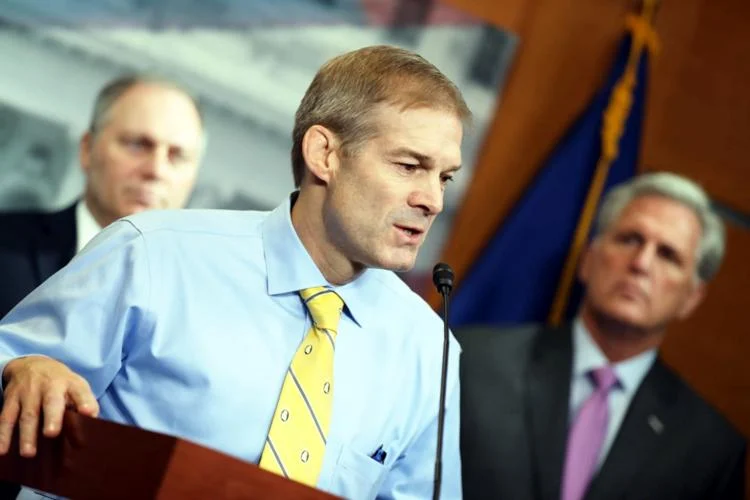
Republicans on the House Judiciary Committee launched an investigation Thursday into whether the Department of Justice coordinated with the Fulton County District Attorney’s Office in Georgia on the fourth indictment of former President Donald Trump. House Judiciary Chair Jim Jordan, R-Ohio, sent a letter to Fulton County District Attorney Fani Willis demanding all records of communication with the DOJ to determine whether it was “politically motivated.” “Turning first to the question of motivation, it is noteworthy that just four days before this indictment, you launched a new campaign fundraising website that highlighted your investigation into President Trump,” the letter said. “Additionally, the forewoman of the special grand jury you convened to investigate President Trump earlier this year bragged during an unusual media tour about her excitement at the prospect of subpoenaing President Trump and getting to swear him in.” The investigation comes the same day Trump is expected to turn himself in to the Georgia jail for processing. “Last week, the Fulton County Superior Court’s Clerk publicly released a list of criminal charges against President Trump reportedly hours before the vote of the grand jury,” the letter said. “A Fulton County court has disqualified you from targeting current Georgia Lieutenant Governor Burt Jones as part of your probe on the grounds that you actively supported and held fundraising events for his Democratic opponent. And unlike officials in other jurisdictions, Fulton County officials ‘have suggested [they] will process [the former President] as [a] typical criminal defendant[], requiring mug shots and possibly even cash bond.’” Notably, IRS whistleblowers recently testified that the DOJ interfered to protect the president’s son, Hunter Biden, in the legal investigation into his alleged tax, gun, and other crimes. Republicans kicked off a similar investigation into New York District Attorney Alvin Bragg after brought his charges against Trump. Bragg has a long history of anti-Trump comments and even ran for election on the promise to prosecute Trump. Trump faces 91 total charges across indictments in New York, Florida, Washington, D.C., and now Georgia. Those charges are related either to Trump’s handling of classified documents, his alleged payments to Stormy Daniels, or his alleged work to overturn the 2020 election results. The Georgia indictment features 41 charges against 19 of Trump’s alleged co-conspirators. Trump has blasted all the indictments, calling them a political effort against the Republican frontrunner. Trump currently holds a wide lead over his primary challengers, most of whom promised at Wednesday’s debate to still support him for president even if he is convicted. “THE INDICTMENTS AGAINST ME SHOULD BE VIEWED AS A CAMPAIGN CONTRIBUTION TO CROOKED JOE BIDEN AND HIS RADICAL LEFT THUGS,” Trump wrote on social media Wednesday. “THIS WILL BE THEIR UPDATED FORM OF CHEATING & ELECTION INTERFERENCE. REMEMBER, THESE ARE BIDEN INDICTMENTS, PURE & SIMPLE!” Republished with the permission of The Center Square.
