
Sen. Cam Ward’s DUI arrest sparks supportive reactions, a few questions
Shelby County Sheriff’s office is confirming that State Senator Cam Ward was arrested Wednesday on a driving under the influence charge. Few details about the incident are known, but Ward’s mugshot is available on the Shelby County Sheriff’s Office inmate listing page under his full legal name Robert Cameron Ward. Ward is among the most active members of the Legislature on social media. His latest tweet was earlier Wednesday: Enjoyed visiting with Bibb Career Academy this afternoon and working with them on tech improvements… https://t.co/xsbKt2mAYW — Cam Ward (@SenCamWard) July 1, 2015 When the news broke, Brian Rell, chief of staff to U.S. Rep. Robert Aderholt’s tweeted: We all make mistakes; it is what we do after making them that counts. @SenCamWard is no different. He has done good things and will do more — brian rell (@brianrell) July 2, 2015 According to WSFA, Senate Majority Leader Greg Reed released a statement Wednesday: “Senator Ward made a mistake. We encourage him to seek help and will be there for emotional and spiritual support.” Beyond the general specifics of the arrest, there are many questions that will clearly be coming as details emerge and others that will take some time to play out: How, if at all, will this affect his Judiciary Committee chairmanship? How, if at all, will this affect all of his efforts on prison reform including his recent appointment by Gov. Robert Bentley. It looks like we will have to wait until Thursday for some basic answers: .@ShelbyCountySO says @SenCamWard will not be released from jail until tomorrow. Still have not heard back from @AlabasterPolice. — Jamie Ostroff (@JamieWIAT) July 2, 2015
Robert Bentley signs open meetings provisions into law
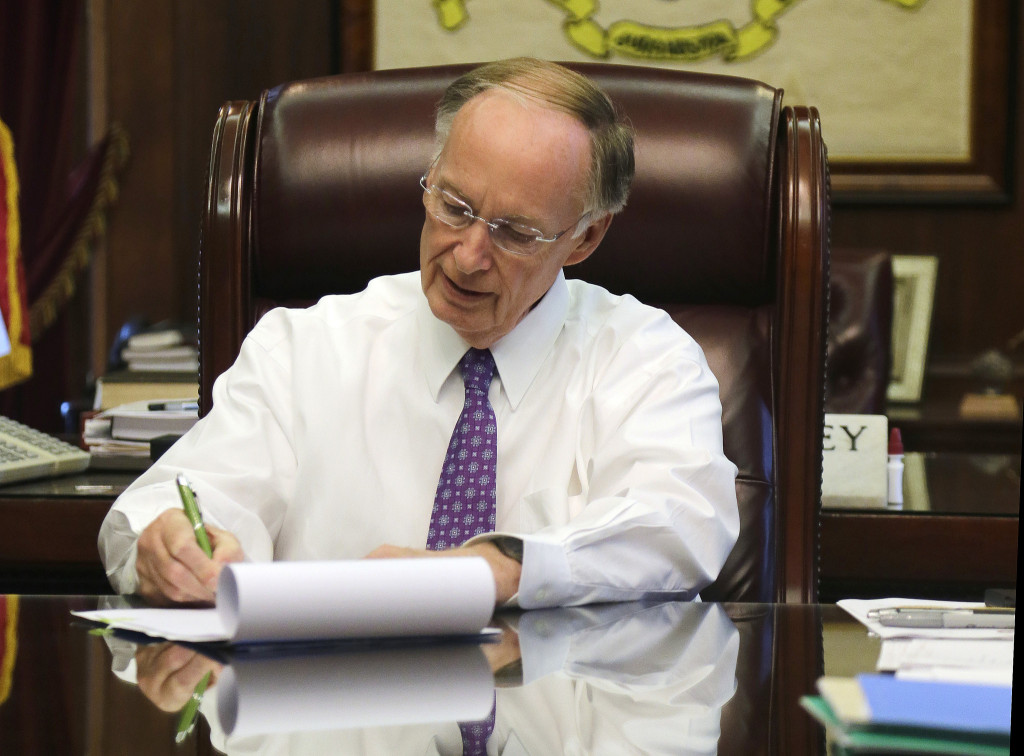
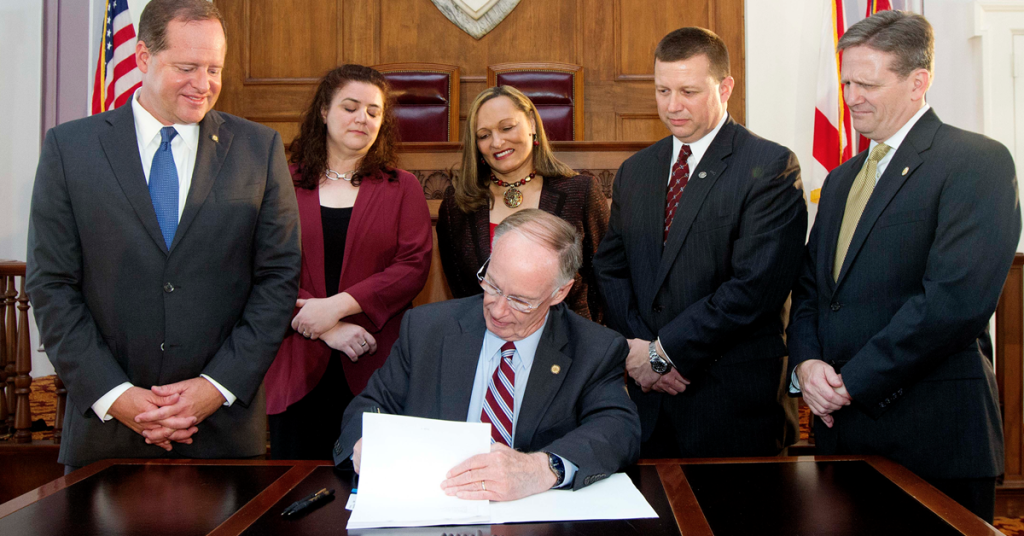
Gov. Robert Bentley on Tuesday held a ceremonial signing for a new open-government law intended to build upon the state’s Open Meetings Act by clarifying and strengthening key provisions based on the experience of the law in practice since it went into effect in 2005. “Transparency promotes government accountability, and as elected officials, we are held to a higher standard for our decisions,” Bentley said in a statement. “It is important that our state’s open meetings law allows the public to see and be involved in government decisions. I supported this bill last year, and I am proud to see the Alabama Legislature pass this important piece of legislation this year.” According to a staff analysis cited by the governor’s office, the new law amends the Open Meetings Act by altering the following three provisions: (1) It expressly states that meetings in small groups without proper notice to discuss issues that will come before the full body is not permitted. There are times when government business requires closed-door meetings, and the current law provides for those situations. (2) Clarifies that Alabama citizens have a right to bring an action against a governmental body if they believe the body has violated the law, and any penalties assessed are payable to the plaintiff. (3) The legislation reflects that the Alabama Constitution requires the Alabama Legislature to meet with its doors open to the public unless a vote is taken in public that secrecy is required in certain circumstances. The law comes amid concerns in neighboring Georgia and across the South stemming from widespread legislative membership in quasi-legislative groups like the American Legislative Exchange Council. Florida — which prides itself on its good-government “Sunshine Law” — also recently had a kerfuffle involving a closed-door meeting and an enterprising reporter attempting to listen in through the door. House rules there require that meetings between more than two members of the Legislature must be open to the public if they are “agreeing to take formal legislative action on pending legislation or amendments.” Bentley was joined in his optimism by the House and Senate co-sponsors of the new law, Sen. Cam Ward and Rep. Randy Davis. Government should be open, transparent, accountable, and its business done before the people,” said Ward in a statement. “We have now strengthened the original intent of the Open Meetings law by forbidding members of a government board from holding secret meetings to collude on issues that should be discussed in the open. The people’s business should be done in the light of public oversight.” “The Open Meetings Act ensures that meetings of our public officials are accessible and that everyday citizens can engage in the process,” Davis added. “I’m proud to have sponsored this important bill that is truly for the people of Alabama.”
Lawmakers grant final approval to Right to Try bill

Alabama lawmakers granted final passage Thursday to a bill that would allow physicians to prescribe terminally ill patients promising, but unapproved medical treatments. House Bill 463, known as the Right to Try Act, passed the House of Representatives by a vote of 97-0. The bill says that doctors caring for people with terminal illnesses can prescribe medications that the Food and Drug Administration has deemed promising, but not yet ready for mass consumption. Thursday’s vote makes Alabama one of at least 12 states that have passed right to try legislation this year. House Bill 463 and Senate Bill 357 were inspired by 9-year old Gabe Griffin of Shelby County. At age 3, Gabe was diagnosed with Duchenne, one of nine types of Muscular Dystrophy. The disease causes generalized weakness and muscle wasting that increases over time and with muscle activity. Not only is the disease incurable, according to the Muscular Dystrophy Association, boys with Duchenne typically did not survive beyond their teens. Two Alabama lawmakers, Sen. Cam Ward and House health committee chair Rep. April Weaver, agreed to sponsor legislation that would help Gabe and other terminal patients work with their doctors to access medication in the earliest stages of FDA approval. Ward’s bill has already passed the Senate. When he introduced the Senate version of the bill, Ward said in a prepared statement: “Terminal patients should have a right to try, and as a father and an elected official I believe we should do everything we can to help remove unnecessary bureaucratic red tape from the process so that doctors and terminally ill patients can determine the best course of action in each individual situation.” The initial barriers, according to Gabe’s father, Scott Griffin, came from the Food and Drug Administration when the family tried to gain accelerated access to experimental treatments for Gabe. In a recent interview with Alabama Today, Griffin recalled one of his conversations with FDA administrators. “The first argument was that the patient population of one of the studies was too small: just 12 kids. Then they said the results in the study may have been just the natural difference in the disease … They said, ‘Well we have the best drug approval process in the world’ and ‘You have to understand that we have to worry about long-term side effects.’ And I said to them, ‘Explain to me what a long-term side effect is to a child who is going to die.’” The Food and Drug Administration has acknowledged that the accelerated approval process can be daunting for patients and medical providers. In a statement on the FDA website, assistant commissioner Peter Lurie M.D. said that although approvals can happen within days – or even hours – of a finished application, the process has given them cause for concern. “It called for 26 separate types of information and seven attachments,” Lurie wrote. “In fact, it was originally designed for manufacturers seeking to begin human testing, not for physicians seeking use by single patients.” According to Lurie, those concerns are what drove the FDA to announce a new streamlined process to allow patients access to experimental drugs. The FDA website says that the new forms “will be used for requesting the medications, and is designed to greatly simplify and accelerate the process by which a physician can request that FDA permit the use of an experimental — so-called ‘investigational’ — drug or biological product while it’s still being tested to establish its safety and effectiveness.” However, the forms are still going through the administrative rulemaking process and not yet available to the public. The official website gave no indication on when the final guidelines would be available for patients or providers. For the Griffins, the FDA roadblocks helped fuel their decision to lobby Alabama lawmakers. “We believe those drugs could save him, but we can’t get them because they’re not FDA approved,” Griffin said. “And after years of petitioning the FDA, we decided to take our fight to the state level.” The Griffins aren’t alone. According to the National Conference of State Legislatures, a growing number of states are considering legislation to work around those barriers and help patients gain access to experimental drugs. Thursday’s vote makes Alabama one of 12 states that have passed right to try bills so far this year. The NCSL reports that lawmakers in at least 36 states proposed “right to try” measures in 2015.
Stripped-down budget passes major hurdle in state Senate
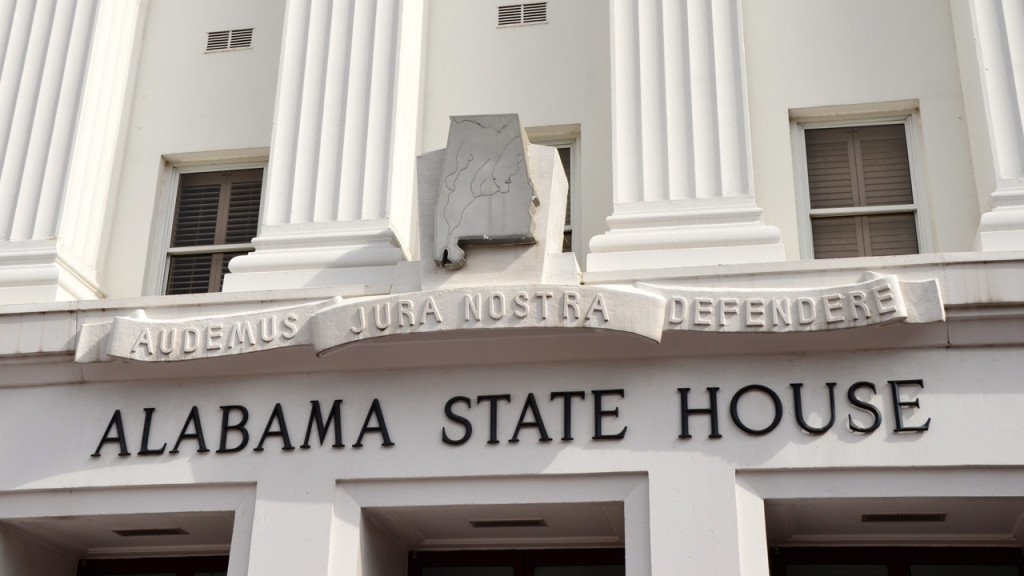
The Senate budget panel passed a bare-bones budget on Wednesday, despite a grim picture painted by the heads of Alabama’s public health and safety agencies. At a public hearing held by the Senate Finance and Taxation Budget Committee on Wednesday, state officials described the deep cuts in services and personnel they would be forced to implement under House Bill 135. Despite those concerns, lawmakers gave the budget proposal a favorable report by a vote of 13-0, moving the stripped-down budget closer to reality. Jeff Dunn, commissioner of the Department of Corrections, said the budget would force his department to close two major facilities and gut the community corrections and supervisory re-entry programs. Dunn said that the closures would force 5,400 inmates back into the department’s custody, bringing the occupancy rate as high as 225 percent. “I think the environment you create in the system (with these budget cuts) is a heightened security risk that is untenable,” Dunn said. “If you include another 5,400 inmates, you put the men and women who serve daily in greater risk. Inmate-on-inmate violence will increase, inmate-on-staff violence will increase, and I think we’re setting ourselves up for an even worse situation than we currently have now.” Sen. Cam Ward expressed concern that the budget cuts would translate to “rolling out the red carpet” for a federal takeover of the state prison system. Alabama’s prisons are already the most overcrowded in the nation, a situation that forced the state to take on a massive prison reform initiative signed into law last week. Ward has said that those reforms would not be derailed under the proposed budget constraints. Alabama’s mental health commissioner added that a 5 percent cut in his agency’s budget — a loss of about $5 million — translates to a loss in case management and therapy services for about 100,000 people. “Several years ago, I could have absorbed 4 or 5 percent (cut), but now there’s no fat left to cut,” Commissioner Jim Reddoch said. “I can assure you that these people will end up among the ranks of the homeless and incarcerated. These are people whose whole life depends on receiving these services.” With unanimous approval from the Senate committee, Chairman Arthur Orr said HB 135 will move to the floor for a second reading on Thursday and a full vote next week. Orr added that, with this timing, he hopes to see bills to increase revenue materialize before the Senate votes on the budget proposal.
Plan for earmark-free state budget passes Senate panel
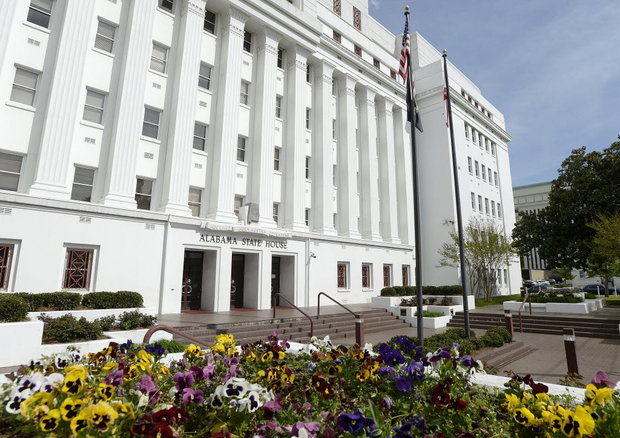
A bill by Sen. Gerald Dial to unify the Alabama general fund and education budgets moved forward in the Senate Tuesday, as the finance and taxation committee gave a favorable report to Senate Bill 502. The proposal would allow voters to decide whether to establish a single state budget and remove any recommendations or limits on how funds within that budget should be spent. During the committee meeting Tuesday, Dial said that without the practice of earmarking, or placing limits on how funds are spent within the budget, Alabama lawmakers might have a different set of funding decisions to make this session. “I’ve heard it said that one of the problems we’ve got in this state is that we’ve got earmarking,” Dial said. “We’ve got almost $3 billion in Heritage Trust Fund. Just think what we could do (with that money). Without earmarks, there’s enough funding in this state to fund government for more than five or 10 years.” With just five days left in the regular session, lawmakers may run out of time to pass SB 502 this year. However, House Speaker Mike Hubbard has already announced plans to form a Commission on Earmarking and Budget Reform to study the state budget process, including earmarking, appropriations, spending oversight, and the fact that Alabama is one of only three states with two separate budgets. In a prepared statement issued Monday, Hubbard said the commission will make recommendations “to provide much-needed flexibility in the budgeting process.” That commission is expected to issue its findings before the start of the 2016 legislative session.
Governor signs prison reform into law

In a ceremony at the state Capitol on Thursday, Gov. Robert Bentley signed into law a long-awaited plan to reform Alabama prisons. Senate Bill 67 passed the Legislature this month by a vote of 100-5 in the House of Representatives and by unanimous vote in the Senate. The governor said the “overhaul” of the prison system under SB 67 was the result of a yearlong study of corrections policy by lawmakers and practitioners. “This is a historic day,” Bentley said. “This legislation changes community supervision to reduce the number of people returning to incarceration, … diverts low-level property and drug offenders away from prison, and it requires supervision for anyone leaving prison. Senate Bill 67 makes the parole process more clear and efficient while observing the board’s discretion. And finally, it expands electronic notification to inform victims of all prison releases.” According to documents provided by the governor’s office, SB 67 is projected to reduce Alabama’s prison population by 30 percent — or 4,243 people — by 2021. The governor credited the reforms in the bill to the work of the Prison Reform Task Force and a comprehensive study of the state’s criminal justice system to reduce prison crowding and increase public safety. Sen. Cam Ward, who chairs the task force, said that the bill represented a “rare” coalition of support for reform. “When we started the session there was a 10 percent chance of this bill passing,” Ward said. “Any time you can have groups like the Southern Poverty Law Center, ACLU, Alabama Policy Institute, and Republicans working on the same page together, that tells you we have the capacity as a state to work together to solve problems.” Ward also addressed concerns that the sweeping reforms outlined in the plan could be in jeopardy because of the stripped-down general fund budget recently passed by House lawmakers. “I know that’s been a big question,” he said. “I assure you, the funding will be there to get these reforms under way.” The bill is scheduled to take effect on Jan.30.
This week in the Alabama legislature: May 19-21
What happened in the Alabama legislature this week? Plenty. On Tuesday, the House passed a general fund budget to the Senate for approval. House Bill 135 assumes no new sources of revenue for the state and just $1.64 billion available to spend from the general fund, an 11 percent decrease from 2014. Gov. Robert Bentley has already vowed to veto the barebones budget, calling it “unworkable” and “irresponsible.” House lawmakers also passed funding bills for the Children First Trust Fund (House Bill 129) and the Coalition Against Domestic Violence (House Bill 134). Thursday was another a big day at the statehouse, as the House passed the $6 billion education budget on Thursday. Rep. Bill Poole, chair of the education committee said the goal of Senate Bill 179 was to shore up funding to classrooms. The budget includes a $13 million increase for textbooks and more than $10 million for the Alabama’s nationally-acclaimed Pre-K program. The Senate passed a bill that would make it legal to keep a loaded gun in an automobile without a concealed carry permit. Senate Bill 14 also says that simply carrying a firearm should not be considered “disorderly conduct.” Alabama’s two partisan presidential primaries will now be held on March 1, 2016 as part of an “SEC Primary” that includes Tennessee and Georgia. Senate Bill 240, sponsored by Sen. Quinton Ross, passed the Senate on Thursday. Ross had previously called the measure an “an economic stimulus bill” because of the expected increased attention Alabama will receive during the 2016 cycle. Finally, Gov. Bentley signed a comprehensive set of prison reforms into law. He called the legislation an “overhaul” more than a year in the making. Sen. Cam Ward brushed away concerns that the reform bill, estimated to cost around $26 million, would be crippled by the budget cuts in the House general fund budget. Here are a few more of the week’s highlights: Sen. Jabo Waggoner’s Alabama Dog Tethering and Outdoor Shelter Act passed out of the Senate Judiciary. Animal activists say that cruelty protections rarely get attention from legislators and, with the 2015 legislative session drawing to a close, Senate Bill 468 might be their last chance to pass legislation against animal cruelty this year. Sen. Del Marsh brought a bill to offer employment protections for the LGBT community before the Senate governmental affairs committee. Senate Bill 482 would ban state officials from discriminating against employees based on sexuality and gender expression, in addition to of race, ethnicity, or religion. The bill was carried over after lawmakers expressed concerns that stakeholders had no chance to offer input on the proposal. A public hearing has not yet been scheduled. The House financial services committee declined to vote on a 36 percent cap and tighter regulations of subprime loans that use cars and other assets as collateral. House Bill 400 would have required title lending companies to be licensed by the state and adhere to state-level restrictions on the charges, interest, and fees associated with title loans. The House Education Policy Committee voted to remove the Alabama State Board of Education from the process of choosing a charter school commission. Rep. Terri Collins said that she filed House Bill 664 because of concerns that the BOE would not have a new commission in place by the June 1 deadline.
Prison reform, privacy bills awaiting governor

Though the Alabama Legislature has yet to send general fund or education budgets to Gov. Robert Bentley for signature, statewide prison reform and privacy bills are among the pieces of legislation awaiting the governor’s signature. Physicians practicing in Alabama will soon see changes in licensing and fee guidelines under two measures that passed out of the statehouse this week. Senate Bill 125 eases the process of licensing physicians in multiple states and Senate Bill 167 lowers the fees that physicians pay to provide pain management services. Sen. Rodger Smitherman’s Right of Publicity Act went to the Alabama governor this week. Senate Bill 197 establishes the right to exercise commercial control over a person’s likeness and attributes of their personal identity. Last week, the Legislature sent a comprehensive plan to reduce crowding in state prisons to Bentley for signature. The governor has yet to sign Senate Bill 67, which was championed by sponsor Sen. Cam Ward and members of the Prison Reform Task Force. However, according to Rep. Steve Clouse, those reforms would not be funded under the austere budget under consideration by House members.
New law reverses controversial “innovator liability” high court ruling
Manufacturers of brand-name products cannot be held liable for the effects of generic versions they don’t make or sell, according to a law signed by Gov. Robert Bentley last week. Senate Bill 80 reverses a controversial product liability ruling from the Alabama Supreme Court. In Weeks v. Wyeth, the court ruled brand-name drug makers could be held liable for copycat versions of their products. The plaintiffs in Weeks sustained injuries due to long-term use of a generic version of the drug Reglan. Though Wyeth Pharmaceuticals neither made nor sold the version of Reglan that the plaintiffs ingested, the Alabama Supreme Court said that the company was responsible for its effects. At the time of the ruling, The Wall Street Journal editorial board criticized the court’s “bad judgment,” warning that it “contradicts the overwhelming trend in federal and state courts on innovator liability.” AL.com covered the original ruling and quoted Justice Michael Bolin’s opinion that the court’s decision was limited to the pharmaceutical industry: “Nothing in this opinion suggests that a plaintiff can sue Black & Decker for injuries caused by a power tool manufactured by Skil based on labeling or otherwise,” Bolin wrote. However, in a national report on court imbalances, the American Tort Reform Foundation called the Alabama court’s decision “irresponsible” and claimed it would “effectively force innovating companies to act as insurers for their generic competitors’ products by diverting vast sums from research and development and spending them instead on litigation.” The House and Senate passed companion legislation by an overwhelming margin: by respective votes of 88-7 and 32-9. Sen. Cam Ward sponsored Senate Bill 80; in an interview with The Associated Press, he said it would benefit not only pharmaceutical companies but all manufacturers in the state. Rep. Jack Williams, chair of the House Commerce and Small Business Committee, sponsored House Bill 110 and said, “This State Supreme Court ruling threatens Alabama’s ability to compete with other states in recruiting manufacturers in the automobile industry, the aerospace industry, the pharmaceutical industry and just about any other you can imagine.” Williams saidd, “When a company invents a product, it should not be liable if a third party replicates the product and is later sued by a consumer as a result.” The new law will go into effect this year.
Alabama Statehouse week in review: May 5-7
Just 10 days left in the regular session, folks. That’s assuming, of course, that Gov. Robert Bentley doesn’t have to make good on his pledge to call a Special Session if his budget proposals don’t go through. In case you missed it, here are some of the headlines that came from the statehouse this week: •Sen. Del Marsh unveiled his legislation to create a lottery and allow class three gaming in Alabama racetracks. In a press conference on Monday, he urged Gov. Bentley to “Let the people decide” on his gaming proposal before pushing forward his plan to increase taxes. •House Republicans quickly followed Sen. Marsh’s announcement with a budget plan that includes a compact with the Poarch Band of Creek Indians, as recommended in Marsh’s plan. •On Wednesday, House Republicans quickly approved a slate of tax increases mentioned in their budget plan. Most of the measured passed out of the House on Thursday, with exception of two proposals to cut state employee pay. •After heated debate last week, the House sent a bill to impose membership, term, and compensation limits on the Birmingham Water Works Board to the governor. •A new board will oversee Alabama’s two-year colleges, thanks to a bill sent to Gov. Bentley this week. Legislators said a board made up of industry and business leaders would help focus the colleges’ mission of worker training and workforce development. •Sen. Cam Ward ended the week by getting his comprehensive prison reform bill through the House. Senate Bill 67 passed with a 100-5 vote; the Senate quickly concurred on the House version, then sent it to Bentley for signature on Thursday evening.
Prison overhaul wins final passage, goes to Gov. Robert Bentley
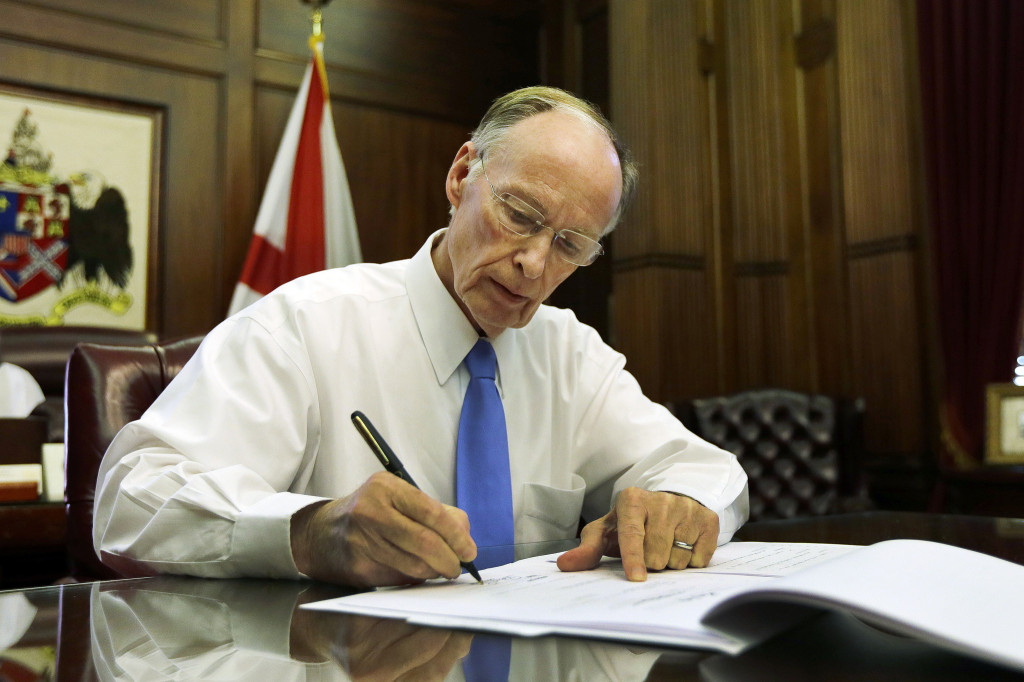
The Legislature on Thursday gave final approval to sweeping changes to sentencing and probation standards in an effort to relieve severe overcrowding in state prisons. Alabama prisons house nearly twice the number of inmates they were originally designed to hold, a crowding level that has been called both dangerous and one that puts the state in danger of federal intervention. “Public safety is first and foremost. It always has been. The system we’ve got right now does not work,” said bill sponsor Sen. Cam Ward, an Alabaster Republican. The approved legislation seeks to gradually reduce crowding during the next five years by steering low-level offenders away from prison with the creation of a new Class D felony category and making changes to probation and supervision to try to reduce recidivism. “It is going to allow us to have real systemic reforms over a five- or six-year period. It won’t happen immediately, but your Legislature is finally doing something right in regards to prisons. If we do nothing, you can guarantee this: The federal government or federal officers will do it for us, and we should be ashamed as elected officials that we allowed that to happen,” Ward said. The House of Representatives passed the bill on a 100-5 vote. The state Senate voted 27-0 to go along with House changes. Go.v Robert Bentley said he plans to sign the bill after a legal review. “Today’s passage of SB 67 is a historic day for Alabama as we take a significant step forward to address reform of Alabama’s criminal justice system,” Bentley said. The House also approved a related bill to steer $60 million for the construction of 1,500 to 2,000 new prison beds. That bill now moves to the Alabama Senate. The two bills are designed to bring prison populations down to 137 percent capacity in the next five years, Ward said. That’s a crowding level that federal courts have found acceptable when crowding lawsuits have been brought in other states. The Alabama prison system was placed in federal receivership in the 1970’s which led to a court-ordered release of inmates. The state prison system has been in an unfavorable spotlight again in recent years over overcrowding, low staffing levels and violence. The U.S. Department of Justice is investigating conditions at the state’s only prison for women after accusing the state of failing to protect inmates from sexual abuse and harassment. State inmates sued the state last year over medical care. Four inmates were killed during a 14-month period at St. Clair Correctional Facility in Springville. The facility was placed on lock-down last month because of a riot. The legislation was the product of a prison reform task force and crafted in conjunction with the Council of State Governments. Senators applauded Ward after passage of the bill he had worked on for the past year, balancing agreements with prosecutors, victims’ advocates and others. The bill would also: Provide for hiring more than 100 new probation officers. Currently probate and parole officer have caseloads of 200 people each. The hiring would take caseloads down to less than 100 each. The bill comes at an estimated annual price of $23 million, with much of the cost increase coming from hiring additional probation officers, Ward said. Mandate that people who commit technical parole violations, such as failing to show up for a drug test, would get a three-day stint in jail. The legislation won praise from a group that often criticizes bills moving in the Alabama Legislature. “The passage of this legislation shows that Alabama acknowledges there is a serious over-incarceration problem in our prisons and that it is dedicated to fixing it,” Susan Watson, executive director of the American Civil Liberties Union of Alabama, said. The conservative-leaning Alabama Policy Institute also praised the passage. “The work isn’t over, but we have now taken a significant step towards solving a problem that has been decades in the making,” API Vice President Katherine Robertson said. Republished with permission of The Associated Press.
#Hope4Gabe family excited to see “Right to Try” Act move closer to finish line

One family’s winding journey to secure medicine they hope could save their son’s life is several steps closer to the finish line. A group of Alabama lawmakers voted Wednesday in favor of House Bill 463, also known as the Right to Try Act. The bill says that doctors caring for people with terminal illnesses can prescribe medications that the Food and Drug Administration has deemed promising, but not yet ready for mass consumption. The Griffin family and their son, Gabe, are at the center of the legislation. Scott Griffin and his wife Traci live in Birmingham with their four children: Turner, age 14; Cooper, age 11; and 9-year-old twins, Gabe and Addie. In an interview with Alabama Today, Griffin said he and his wife had suspected since the twins were babies that Gabe wasn’t developing as quickly as his sister. “When you have a twin right beside him and she’s hitting all her benchmarks, and he’s not, it becomes a little evident that something’s not right,” Griffin said. “Our doctors kept saying, ‘Nothing’s wrong. He’s just a boy twin and they’re slower to develop.’ So we just kind of dismissed it. But something didn’t seem right.” The Griffin’s neighbor was the first to suggest that Gabe might need to be tested for muscular dystrophy. An occupational therapist, she sometimes babysat the kids and noticed subtle differences in Gabe’s attempts to stand and walk. She told the Griffins about Duchenne Muscular Dystrophy and recommended that 3-year-old Gabe see a doctor. Duchenne is one of nine types of Muscular Dystrophy. It causes generalized weakness and muscle wasting that increases over time and with muscle activity. The disease primarily effects boys and shows up between ages 3 and 5. According to the Muscular Dystrophy Association, boys with Duchenne typically did not survive beyond their teens. But advances in medical treatments and care have increased their life expectancy: “Survival into the early 30s is becoming more common and there are cases of men living into their 40s and 50s.” Scott Griffin says those medical advances could save Gabe’s life. “He’s 9 now. The typical progression of the disease is that by 10 or 12, they’re wheelchair bound. And then, between 17-20, they usually die.” He says that’s why the family started looking into cutting-edge therapies to slow – or even reverse – the degeneration of Gabe’s muscles. However, the drugs that the Griffins and their doctors feel would help Gabe are still going through the FDA approval process. “We believe those drugs could save him, but we can’t get them because they’re not FDA approved,” said Griffin. “And after years of petitioning the FDA, we decided to take our fight to the state level.” The Griffins started a foundation called Hope for Gabe (H4G) to raise awareness about Duchenne. They also enlisted the help of Michael Staley, former chief of staff to U.S. Congressman Spencer Bachus and current lobbyist at Birmingham law firm Waller Landsen Dortch and Davis, to educate legislators about the proposed law. Two lawmakers, Sen. Cam Ward and health committee chair Rep. April Weaver, agreed to sponsor legislation that would allow doctors to prescribe medication in the earliest stages of FDA approval to terminally ill patients. Sen. Ward’s bill has already passed the Senate. Today, Rep. Weaver’s legislation received a favorable report from the health committee and can move to the House floor for open debate. “Right to Try is the right thing to do,” Weaver said just after the committee vote. “I’m a mother and a nurse with more than 20 years in health care. I believe that anything that we can do to help doctors and terminal patients work together on their plan of care and remove barriers to treatment that might be beneficial is just the right thing to do.” Griffin said that the timing of the legislation is critical to securing medical treatment for Gabe. “Getting him these drugs now means that we can stop the disease before he needs a wheelchair or breathing tubes. They could even turn his condition around.” For Gabe, passing the Right to Try Act means being able to “ride a bike, run, and climb stairs like everybody else.” He said that he’s also looking forward to excelling in his favorite subject in school: physical education. Weaver said she hopes to see the bill head to the House floor by late next week.
