
Medical cannabis group begins drafting bill
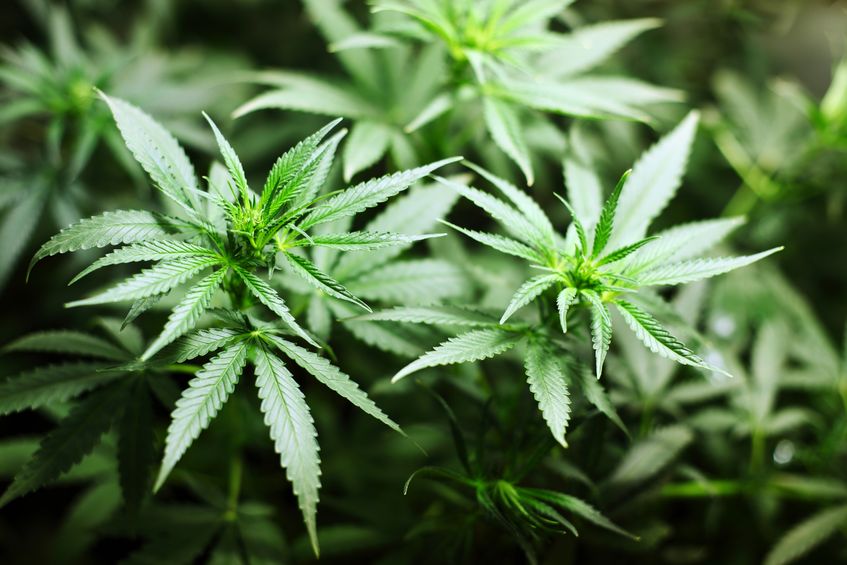
An Alabama commission considering laws about medical marijuana met at the State House to discuss the draft of a medical marijuana bill that’ll be introduced to the Legislature next year. News outlets report the Medical Marijuana Study Commission met Thursday, the last time they’ll meet before the Dec. 1 filing deadline. Sen. Tim Melson, and commission chair, asked commission members to study the proposal and make any recommended changes. Melson championed a medical marijuana bill last spring. It went through the Alabama Senate but stalled at the House. The bill would create a Medical Cannabis Commission to manage issuing medical cannabis cards to patients. The bill would empower the commission to add or remove qualifying conditions based on scientific evidence.
Alabama regulators warn investors about jumping on the cannabis bandwagon
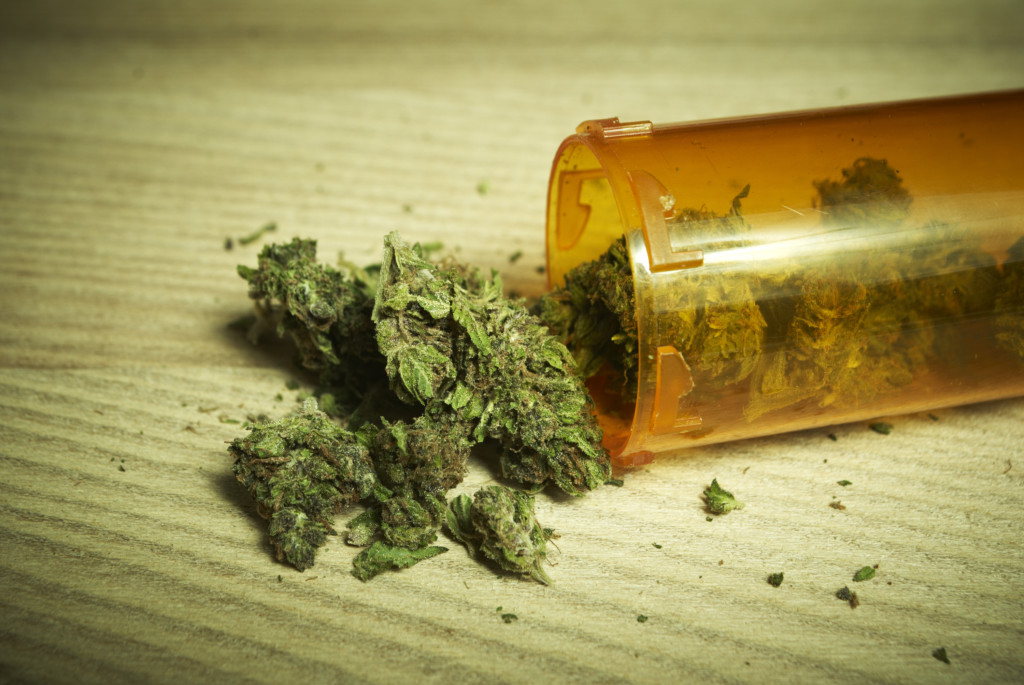
The Alabama Securities Commission is cautioning investors about schemes and risks associated with marijuana-related investments. Investments in marijuana business ventures are becoming more prevalent and are receiving increased media coverage. Scammers frequently use the latest “hot product” on the market to drive up interest and lure investors to get in on the “ground floor” of the next huge investment opportunity to convince investors to hand over money for risky or outright fraudulent marijuana ventures. Common marijuana investment schemes: Reverse Merger Scam: The marijuana company’s promoters buy the stock of a publicly traded company that has no assets or current operations. The promoters use the public listing to create a false sense of security surrounding the marijuana business, and unscrupulous brokers collect commissions selling the stock to investors. Pump & Dump Schemes: A “Pump & Dump” scheme occurs when scammers use misinformation or tout an investment to pump up the price of a security and then dump their shares when the price gets high enough to turn a profit, leaving innocent investors holding with potentially substantial losses. Crowdfunding Schemes: Marijuana-related companies may try to use new crowdfunding rules to raise capital from a broad base of investors using the internet. Even without any fraudulent intent from promoters, these investments tend to be in risky, undercapitalized start-ups. Jurisdiction-Specific Illegal Marijuana Schemes: Scammers may make promises about insider information concerning a new law or regulation that will legalize marijuana in a jurisdiction where it is currently prohibited. Investors may be encouraged to “get in now,” buying low and making huge profits when a new law or regulation is enacted. In reality, there may not be any new laws or regulations pending, allowing the scammers to take the money and run. Given the rapidly changing laws concerning marijuana, even an investment in a legitimate marijuana business may have extra risk.
Carly’s Law study at UAB finds medical marijuana oil helps epilepsy patients
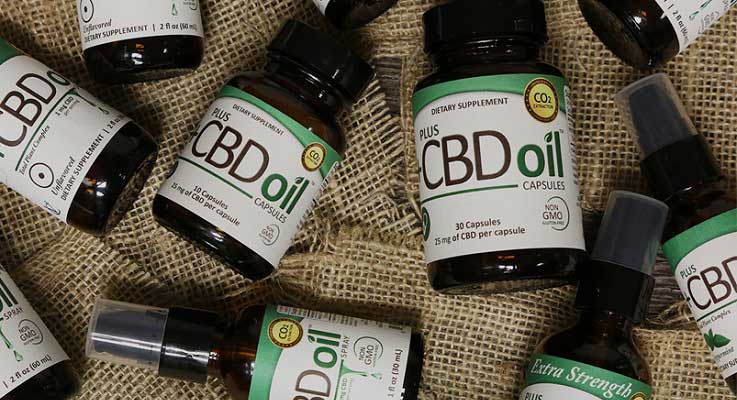
It’s official: cannabidiol, or CBD oil, oil derived from marijuana plants, helps reduce the number of seizures in patients with treatment-resistant epilepsy. That’s according to findings by the University of Alabama at Birmingham (UAB) released earlier this month. CBD oil, which contains little of the “high-inducing” chemical THC, came into the Alabama lexicon with the passage of “Carly’s Law,” in 2014 after piece of legislation provided the UAB Epilepsy Center and Children’s of Alabama the ability to conduct clinical trials of cannabidiol, a component of cannabis. Starting in 2015, UAB launched the landmark study, which focused on 132 patients, 72 children and 60 adults, with intractable epilepsy who did not respond to traditional therapies. “The study analyzed data from the 132 patients at baseline and at visits at 12, 24 and 48 weeks. Seizure frequency decreased from a mean of 144 seizures every two weeks at baseline to 52 seizures over two weeks at 12 weeks into the study. The reduction remained stable through the 48-week study period,” wrote Bob Shepard at UAB. “This is a highly significant reduction in the number of seizures that the majority of patients experienced, nearly a two-thirds reduction across the entire study population,” said Martina Bebin, M.D., professor in the Department of Neurology in the School of Medicine and principal investigator of the pediatric arm of the study. “Some patients experienced an even greater reduction of seizure frequency.” The investigators also noted parallel decreases in both seizure severity and seizure frequency, indicating that, for many patients, use of CBD oil led to both fewer and less intense seizures. UAB research makes national impact Thanks in part to the research coming out of UAB, on June 25, the U.S. Food and Drug Administration (FDA) approved Epidiolex® for seizures associated with two rare and severe forms of epilepsy, Lennox-Gastaut syndrome and Dravet syndrome, marking the first FDA approval of a purified drug derived from cannabis. “This approval serves as a reminder that advancing sound development programs that properly evaluate active ingredients contained in marijuana can lead to important medical therapies. And, the FDA is committed to this kind of careful scientific research and drug development,” said FDA Commissioner Scott Gottlieb, M.D. “Controlled clinical trials testing the safety and efficacy of a drug, along with careful review through the FDA’s drug approval process, is the most appropriate way to bring marijuana-derived treatments to patients. Because of the adequate and well-controlled clinical studies that supported this approval, prescribers can have confidence in the drug’s uniform strength and consistent delivery that support appropriate dosing needed for treating patients with these complex and serious epilepsy syndromes.”
Birmingham pro-stoner group organizing largest public smoke-out ever
It’s certainly not the sort of protest you typically hear about — a group in Birmingham is calling on local stoners to show up for what they’re hoping will be the largest “smoke-out” ever. Organized by the Decriminalize Bham Action Committee, the smoke-out is calling on marijuana smokers to publicly light up their joints in an effort to start a conversation with Birmingham Mayor Randall Woodfin about decriminalizing cannabis in the Magic City. Scheduled for Tuesday, July 17 the smoke-out will take place at a yet-to-be-named location. “Each year, thousands of innocent men and women are arrested and incarcerated for low level cannabis possession,” posted local activist Carlos Chaverst Jr., one of the event’s organizers on Facebook. “We are asking Birmingham Mayor Randall Woodfin to join other cities across the country by decriminalizing cannabis within the Birmingham city limits.” According to a video Chaverst Jr. posted on Facebook, he’s in talks with the mayor’s office about the issue. He also said he’s personally texted the mayor about the event, but has not heard back. Chaverst Jr. says decriminalizing cannabis will help reduce the number of non-violent offenders in jails. “[Decriminalizing cannabis] will reduce the number of non-violent offenders, keep our jails and prisons from overcrowding and increases stability within the local economy,” he added. Watch Chaverst Jr. talk about the event below:
Cannabis industry reacts to Jeff Sessions’ confirmation hearing

Under U.S. law, marijuana possession and distribution remains illegal, but even after Attorney General-nominee Sen. Jeff Sessions‘ first the day of Senate confirmation hearings some still question how the senator would enforce that law if confirmed. Vermont-Democrat Sen. Patrick Leahy pressed Sessions about the conflict between federal and state marijuana laws, as some 65 million Americans now live in states that authorize adult recreational use. “I believe your own state of Alabama permits the use of a derivative of marijuana known as CBD oil, legal in Alabama, illegal under federal law,” said Leahy. “If you are confirmed as the nation’s chief law enforcement official, and you know that we have very, very limited federal resources — in fact, we spend about a third of our budget now just to keep the prisons open because of mandatory minimums and whatnot — would you use our federal resources to investigate and prosecute sick people who are using marijuana in accordance with their state laws, even though it might violate federal law?” “I won’t commit to never enforcing federal law,” said Sessions. “But, absolutely, it’s a problem of resources for the federal government. In response to Republican Sen. Mike Lee from Utah, Sessions added, “It’s not so much the attorney general’s job to decide what laws to enforce. We should do our job and enforce laws effectively as we’re able.” Sessions’ remarks garnered mixed reviews among marijuana legalization proponents, among them Nate Bradley, Executive Director of the California Cannabis Industry Association (CCIA) “Despite Session’s comments about enforcing federal laws, we expect the Trump Administration will make good on its commitment to states’ rights,” Bradley said. “Just this morning, when asked about medical cannabis, the administration’s Press Secretary reaffirmed that Trump’s entire cabinet, including Sessions, will be “implementing a Trump agenda,” and that Senator Sessions is “well aware of that.” Isaac Dietrich, CEO of MassRoots, worried about Sessions’ stance from another angle — jobs. ”If Senator Sessions goes after the regulated cannabis industry, he will destroy tens of thousands of jobs, shut down hundreds of small businesses and take away millions of dollars from our schools,” Dietrich explained. “Hopefully the Trump Administration supports states’ rights on cannabis legalization, despite Senator Sessions’ personal views.” Erik Altieri, the executive director of the National Organization for the Reform of Marijuana Laws (NORML) believes, Sessions’ comments were troubling. “After finally being put on the spot and questioned on the issue, we are no closer to clarity in regards to Sessions’ plans for how to treat state marijuana laws than we were yesterday,” Altieri said in a statement. “If anything, his comments are a cause for concern and can be interpreted as leaving the door open for enforcing federal law in legalized states. If Sessions wants to be an attorney general for all Americans, he must bring his views in line with the majority of the population and support allowing states to set their own marijuana policies without fear of federal intervention.”
Marijuana advocacy group moves to block Jeff Sessions’ AG Nomination
Despite the fact marijuana remains illegal on the federal level, following Election Day, 65 million Americans now live in states that authorize adult recreational use. Which is precisely why the marijuana industry is uneasy over the notion of Alabama Sen. Jeff Sessions being confirmed as the United States’ next Attorney General — as leader of the Justice Department, the outspoken marijuana-opponent would have the power to force marijuana-friendly states into compliance with federal law. “We need grown-ups in charge in Washington to say marijuana is not the kind of thing that ought to be legalized, it ought not to be minimized, that it’s in fact a very real danger,” Sessions said at a Senate hearing in April. As Sessions confirmation hearings are poised to begin next week, the DCMJ, the group that spearheaded the successful campaign to legalize marijuana in the District of Colombia, on Tuesday kicked off an effort to urge the Senate to stop Sessions from becoming the next AG in order to protect the burgeoning industry. “We have come to assume Senator Sessions will overturn the will of more than 70% of the voters in the District of Columbia that voted for full legalization if made Attorney General,” said DCMJ co-founders Adam Eidinger and Nikolas Schiller in a letter to the Senate. “He will be empowered to ignore the 60% of Americans, who support legal cannabis or the more than 80% of U.S. citizens, who support the legalizing cannabis for medical purposes.” The letter continued, “The facts are that a legal cannabis industry: provides tens of thousands of jobs to hardworking, law-abiding citizens; stops unjust laws that disproportionately impact minorities; furnishes access to life-changing treatments for critically ill patients; empowers responsible small business owners over criminal dealers and cartels; generates valuable economic development, jobs, and provides much needed revenues for strapped state budgets.” The DCMJ and other drug reform advocates can’t be certain of Sessions’ agenda as AG until the confirmation hearing begins Tuesday. Nevertheless they’re prepared to fight if necessary. “We will use all practical means to fight the threat Sessions poses to overturn the will of the voters, ignore science and medical professionals and put black market marijuana back in the hands of international organized crime rings,” Eidinger said.
Lab test confirms prosecutor’s staff given pot brownies
A laboratory test has confirmed that a batch of brownies given to an Alabama prosecutor’s staff contained marijuana. Two people who work for Baldwin County District Attorney Hallie Dixon got sick this month after eating brownies at the office. Dixon says a temporary court reporter gave her staff the treats. WKRG-TV reports Dixon now says a lab test found THC, an intoxicating chemical found in marijuana, in the brownies. Dixon says she doesn’t know if anyone can be charged for the pot brownies. She’s asked a district attorney from another county to look at the case. The Alabama Bureau of Investigation has not released the name of the court reporter. Republished with permission from The Associated Press.
