
Lone lawmaker crusades against the death penalty in Alabama
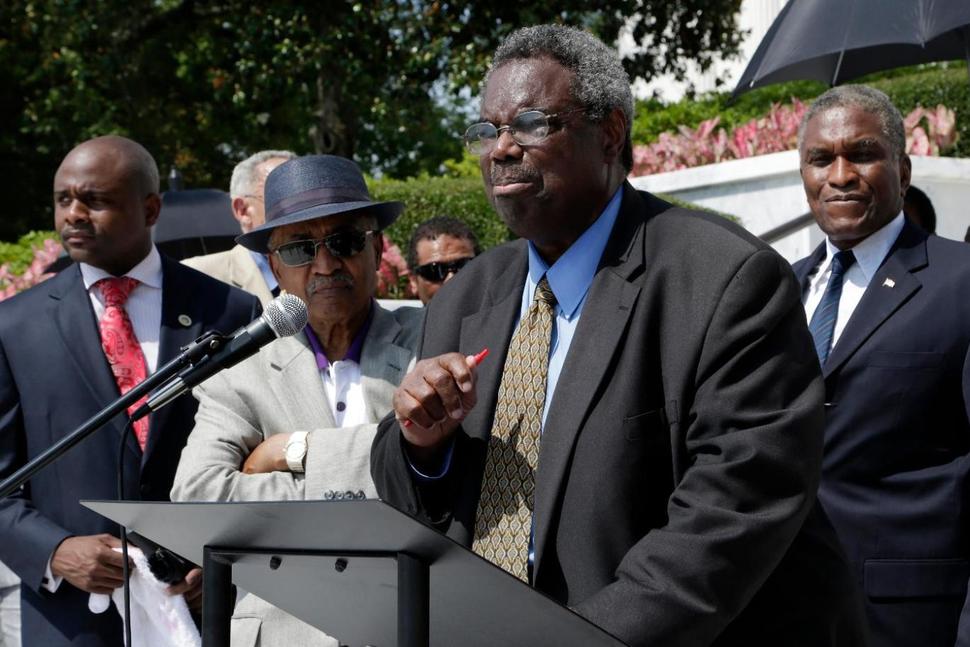
Hank Sanders closed his eyes, pressed his hand to his forehead and tried to recall the first time he petitioned the state of Alabama to abolish the death penalty. Was it 2000? Or maybe 1998, shortly after the American Bar Association called for a moratorium on capital punishment? The 74-year-old senator from Selma couldn’t say for sure, so he asked his secretary to dig into the files. For nearly two decades, Sanders has introduced bills to end Alabama’s ability to take a person’s life — an unsuccessful endeavor in a state that has defied national trends away from capital punishment and still houses one of the country’s largest death row populations. Sanders is undeterred, arguing that the death penalty unfairly targets poor African-Americans. Again this year, as he has since 2000, he put forward legislation to stop executions in the Deep South state. “You don’t fight whether you’ll win or not,” Sanders said in his Montgomery statehouse office. “You fight based on whether you think your position is right.” If past years are an indication, his legislation will again die in committee. Years ago, Sanders thought he could win support for a three-year pause on executions. When that failed for 12 straight years, he began calling for a full repeal. “It’s a lonely fight,” said Sanders, a Democrat in the state Senate since 1983. An Alabama native, he grew up in a three-room house, the second of 13 children in a rural town during the racial segregation of Jim Crow. The African-American lawmaker has dedicated much of his career to civil rights. He organized voter registration drives and walked in 1965 with Dr. Martin Luther King Jr. in the Selma-to-Montgomery march that preceded the Voting Rights Act. The private law firm he co-founded doggedly pursued civil rights cases and won more than $1 billion for black farmers who alleged discrimination by the U.S. Department of Agriculture. Sanders said opposing capital punishment is yet another attempt to bring justice to Alabama. “It’s an extension of my fight for civil rights,” he said. Alabama’s 183 death row inmates make that the fourth largest U.S. grouping of prisoners awaiting execution. More than half are black, though African-Americans make up about a quarter of the state’s population. People who study capital punishment say its more frequent application to minorities is linked to racial prejudice. “It is inseparable of historical discussion of race, slavery, lynching, Jim Crow,” said Robert Dunham, executive director of the nonprofit Death Penalty Information Center, which opposes capital punishment. Nationally, the number of yearly executions has dropped dramatically over a quarter century, partly due to difficulty securing lethal injection drugs and waning public support, according to the center. Last year, 20 inmates were put to death, the lowest figure since 1991. Annual death sentencing rates are also down nearly 90 percent since 2000. Thirty-one states still allow capital punishment, but 10 states account for about 80 percent of the country’s total death row population. California, with the largest death row population by far at 749 inmates, has executed only 13 prisoners since 1976, figures from the Death Penalty Information Center show. Alabama has used capital punishment 58 times over the same period. Sanders said the drop in executions is positive, but he holds out hope for a U.S. Supreme Court ruling outlawing the punishment. Death penalty advocates say it deters crime and is less costly than life imprisonment. Both sides bicker over conflicting studies on whether it depresses homicide rates. “At the end of the day, whether you go with Timothy McVeigh or Dylann Roof, the only way you’re going to deter people from committing those heinous acts is to have a death penalty,” said Republican state Sen. Trip Pittman. He referred to McVeigh, the Oklahoma City bomber executed in 2001, and Roof, recently sentenced to die for a South Carolina church shooting massacre. People personally affected by vicious crimes said Sanders’ attempts to repeal the only punishment that will bring them closure are doing justice a disservice. “I don’t understand why people have all this compassion for these people on death row,” said Janette Grantham, executive director of the advocacy group Victims of Crime and Leniency. Her brother, a county sheriff, was murdered in 1979 by a man later handed a life sentence. Sanders’ efforts would make sense in a perfect world, she said, but “it’s not a fantasy world to me to want fairness and justice.” Though Sanders’ crusade has never gotten far, he insists many lawmakers quietly agree capital punishment should be ended but fear losing votes: “There have been other politicians who have said to me, privately, ‘You’re right, but I can’t touch that.’” Republished with permission of The Associated Press
Supreme Court rejects appeal from death row inmate
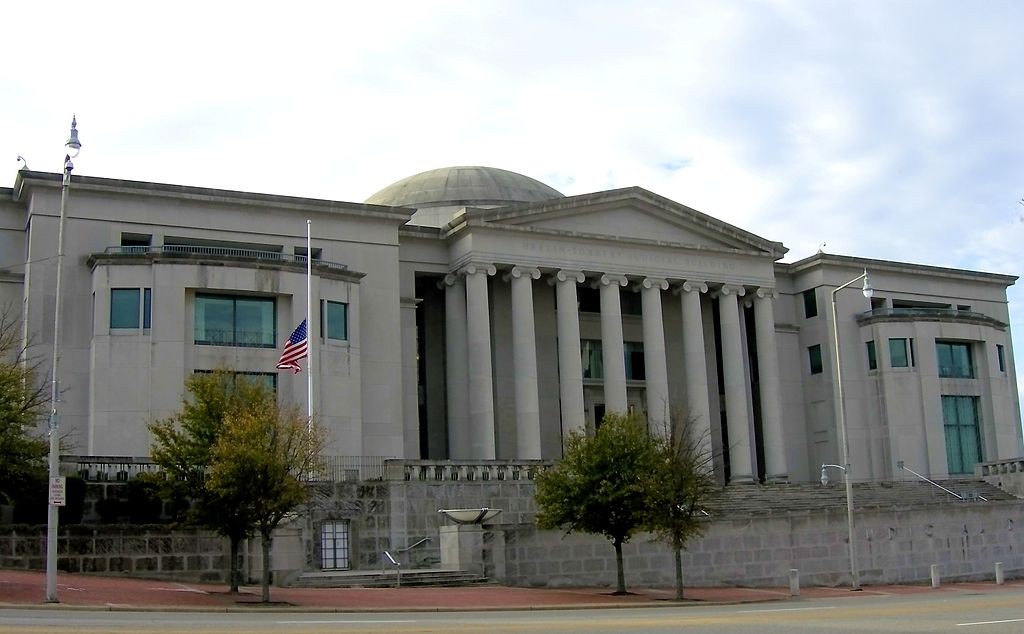
The Alabama Supreme Court is refusing to intervene in the case of an Alabama man who is facing execution for throwing four children off a bridge to their deaths. The justices did not comment Monday in rejecting an appeal from Lam Luong. He argued that pretrial publicity prevented him from having a fair trial. Luong was sentenced to death in 2009 for driving the four children to the Dauphin Island Bridge in Mobile County and throwing them into the Mississippi Sound about 100 feet below. Three of the four children were Luong’s and the other was his wife’s from a previous relationship. The Alabama Supreme Court reinstated his convictions in the four deaths after a lower court had ruled in Luong’s favor. Republished with permission of the Associated Press.
U.S. Supreme Court refuses to hear case challenging Alabama death penalty
In a victory for supporters of the state’s capital punishment regime, the U.S. Supreme Court on Monday refused to take up the case of a convicted murderer who sought to challenge Alabama’s death penalty law. The high court refused to issue a petition for certiorari in the case of , essentially denying the case has the proper legal standing to be heard. The move is an especially significant win for advocates of Alabama’s death penalty because it has recently received jurisprudential scrutiny related to a case in Florida, which State Attorney General Luther Strange welcomed the move by justices in a statement Monday afternoon. “The Supreme Court’s decision to deny this petition establishes, yet again, that Alabama capital sentencing system is constitutional,” said Strange, a Republican who supports capital punishment. “As I have previously explained, the Court’s decision about Florida law in Hurst has no bearing on the constitutionality of Alabama’s materially different capital sentencing system.” “It is time for criminal defense lawyers to stop making specious arguments and for public officials to recognize that Alabama’s capital sentencing is constitutional under current U.S. Supreme Court precedent,” added Strange. Shanklin was convicted of capital murder and the lesser charge of attempted murder, which a jury ruled he committed during a violent armed robbery in 2009 in Cordova. A jury in Walker County Circuit Court recommended that Shanklin be sentenced to life without parole. But the judge – using the provision at issue in the Florida and Alabama cases – circumvented the jury’s decision and sentenced Shanklin to death because of his long criminal history and the aggravated nature of his crime.
Judge rules Alabama death penalty mechanism unconstitutional
An Alabama judge threw out the state’s system for imposing the death penalty the same day Florida lawmakers passed a bill to revamp a similar sentencing mechanism. Jefferson County Circuit Judge Tracie Todd sided Thursday with defense attorneys who had cited a recent U.S. Supreme Court decision that Florida’s law was unconstitutional. Juries recommend sentences in Alabama and Florida death penalty cases, but judges have the final decision. The Florida Legislature on Thursday passed a bill that would overhaul that state’s law. Prosecutors argued Alabama’s law was different in key aspects, but Todd disagreed. Todd’s decision bars prosecutors from seeking the death penalty against four men charged in three slayings. Alabama Attorney General Luther Strange says his office is reviewing Todd’s order and expects to file an appeal. Republished with permission of the Associated Press.
