
House Republicans in eleventh-hour attempt for immigration accord

Fractured House Republicans huddled privately Thursday as leaders tried pushing them toward consensus on immigration, racing the clock and trying to defuse a civil war within the party that threatens their effort to keep control of the chamber in November’s elections. But even as they gathered in a Capitol basement meeting room, there were no indications that a deal mending the party’s chasm over immigration was at hand and no definitive details of where middle ground might be. If leaders fail to find a solution, that would give momentum to moderates seeking to stage election-year votes in just three weeks on the issue, a showdown that leaders want to head off. Both conservative and moderate lawmakers, the two factions at odds over the issue, said they didn’t know what to expect as they entered the session. “I don’t know. That’s why I’m on time here, for once,” joked Rep. Leonard Lance, R-N.J., a moderate who’s joined the leadership-opposed rebellion aimed at forcing immigration votes. GOP lawmakers emerged from the office of Speaker Paul Ryan, R-Wis., on Wednesday saying he would present the rank and file with broad ideas for resolving a dispute that has split Republicans for years, damaging the party with Hispanic and moderate voters. “There’s some loose consensus right now,” said Rep. Carlos Curbelo, R-Fla., a leader of centrists threatening to force votes if they can’t strike a deal with conservatives. He said leaders would unveil “an outline of a potential bill,” while conservative leader Rep. Mark Meadows, R-N.C., said Ryan would present “concepts.” Curbelo, Rep. Jeff Denham, R-Calif., and other moderates need just two more GOP signatures on a petition to require immigration votes, assuming all Democrats sign on. If Thursday’s meeting doesn’t produce an accord, the moderates could reach that threshold quickly. The major hang-up in GOP talks has been how, as the moderates have demanded, to offer a chance for citizenship to young “Dreamer” immigrants brought to the U.S. illegally as children. Conservatives have opposed creating a special pathway for them to become citizens, calling it amnesty. “We’ve got the rule of law in this country, and nobody gets special consideration,” said Rep. Scott Perry, R-Pa., a member of the conservative House Freedom Caucus. Rep. Mark Walker, R-N.C., said a large group of conservatives he leads has discussed providing a pathway to citizenship to Dreamers in exchange for giving President Donald Trump nearly all the $25 billion he wants to build his proposed wall with Mexico. In addition, the conservatives want to end a lottery that grants visas to countries with few immigrants to the U.S. and curb the relatives who can be brought over by immigrants, Walker said. Democrats and at least some moderates would likely oppose such measures, giving it little chance of surviving in the more centrist Senate. Walker said the more Dreamers who’d be given an opportunity for citizenship, the tighter curbs on family-based migration would be. Roughly 700,000 people are protected under the Deferred Action for Childhood Arrivals program, or DACA, an Obama-era policy that Trump has halted. But by some estimates, 1 million or more other people qualify for that program but haven’t applied. The moderates’ petition would force House votes on four immigration bills, ranging from a liberal one helping Dreamers win citizenship to a conservative version curbing legal immigration. GOP leaders and conservatives say the votes the moderates would force would probably produce legislation that is too liberal, with all Democrats joining a handful of Republicans to push it through the House. Senate Republicans would block such a measure, and Trump would veto it if it went that far. But such an outcome could alienate conservative voters, damaging GOP chances for holding the House. Because of those divisions, averting the issue completely unless an agreement is reached has been the GOP leadership’s preference all year, until their hand was forced by moderates wielding the rarely used petition process. Republished with the permission of the Associated Press.
Immigration fight, tension on tariffs await Congress’ return
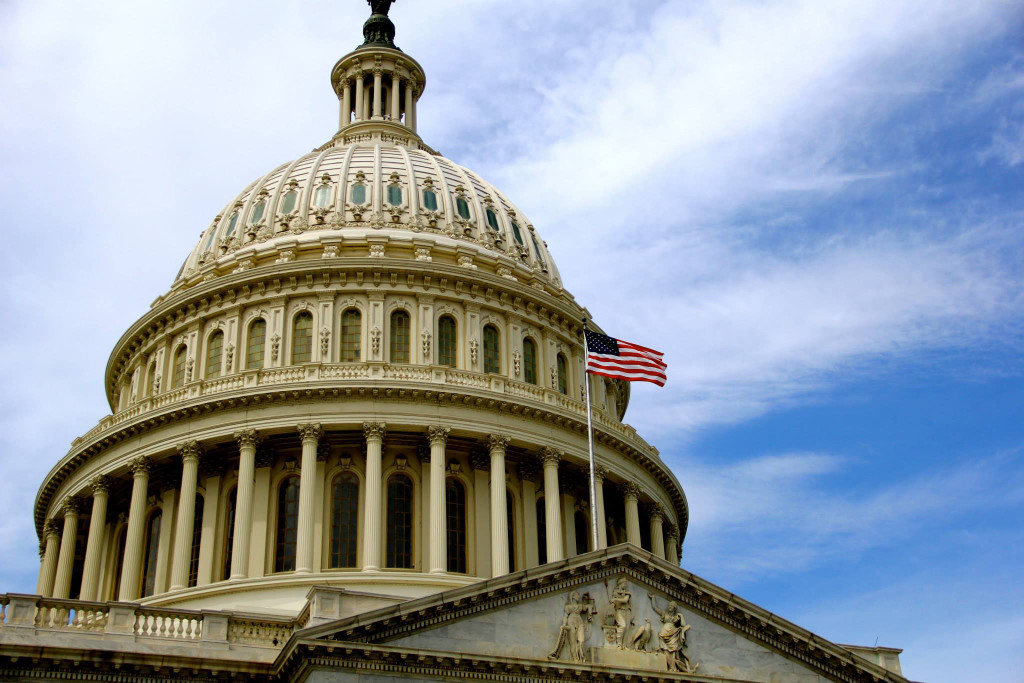
This was supposed to be the quiet time on Capitol Hill, but Congress returns to work Monday facing a showdown in the House over immigration while Senate Republicans are trying to stop an all-out trade war after President Donald Trump’s decision to impose import tariffs on close U.S. allies. Tensions are running particularly high as Senate Majority Leader Mitch McConnell is threatening to cancel the traditional August recess as he fights Democratic opposition to GOP priorities in a show of busy-work before the midterm election. It’s shaping up to be far from the typical summer slowdown when legislating usually makes way for campaigning. “Another summer, another heavy work load,” tweeted Sen. Chuck Grassley, R-Iowa, as he pushed to confirm nominations. “NOW is the time to vote on Fridays (even wknds!).” The Senate often is not in session on Fridays. Congress faces a few should-do items in the weeks ahead. Topping the agenda is passage of the annual defense bill, which includes pay raises for the troops. It has already cleared the House. The Senate could begin consideration of its defense bill this week. But the Senate version carries a warning to Trump with a trade provision to block any White House plan to lift penalties on the China-based telecommunications company ZTE, which faces trade law violations over selling sensitive technologies to U.S. adversaries. Trump’s moves on trade are expected to consume conversations among Senate Republicans this week. They’re worried about a wider trade war spiking prices for home-state businesses and consumers if Trump imposes steel and aluminum tariffs, as planned, on imports from Canada, Mexico and the European Union. Republicans will be making the case to the administration that the tariffs could dampen the economic gains from the GOP tax cuts and sour the mood among voters as lawmakers are campaigning to protect the Republican majority in Congress. Some Republicans are also hoping Trump simply changes his mind and doesn’t follow through with it. But aides said others may be signing on to a bill from Sen. Mike Lee, R-Utah, that would subject all trade actions by the executive branch, including tariffs, to congressional approval. Rep. Will Hurd, R-Texas, said he would support a similar move in the House. “Congress has shared our responsibility when it comes to trade with the executive branch over the last couple of decades, and I think that’s something that we need to re-evaluate,” he told CBS’ “Face the Nation.” Meanwhile, House Republicans face a self-imposed deadline Thursday for resolving an immigration standoff between GOP centrists who are forcing a vote on legislation to protect young immigrants who were brought to the country illegally as children and conservatives who want stricter immigration enforcement with money for Trump’s border wall. The centrists want to provide a way for the young immigrants to become permanent residents, which can lead to citizenship. Conservatives are opposed to creating a new pathway to staying in the U.S. permanently, equating it with granting amnesty to lawbreakers. Speaker Paul Ryan, R-Wis., and Majority Leader Kevin McCarthy, R-Calif., are trying to craft a Republican-led bill as a compromise between the factions, but it’s difficult. House leaders plan a two-hour private meeting of GOP lawmakers Thursday morning to hash out whether talks among the party’s factions have produced an immigration compromise that can win broad support. Underscoring the sensitivity of the session, staff is to be excluded. They’re trying to prevent the moderates from joining with Democrats to pass the “Dreamer” protections, which polls suggest are popular, but which would be a setback for GOP leaders and expose the majority to complaints from the conservative base. Without a deal, the moderates say they’ll push ahead with enough signatures on a so-called discharge petition to force the vote over the leadership’s objections. Hurd said moderates have the votes already, but are “engaged in conversations to figure out … is there another path. I don’t believe that there is.” Rep. Carlos Curbelo, R-Fla., said in an interview last week that he saw a 50-50 chance of those talks succeeding. He warned that if they didn’t bear fruit, he and his supporters “fully expect” to continue pushing their petition. Curbelo said the young immigrants must “be guaranteed a future in our country, meaning they cannot be exposed to deportation.” He said, “They must have permanent status immediately and they must have the option of a bridge into the legal immigration system,” meaning a pathway to citizenship. The moderates’ effort has won the backing of GOP Sen. John McCain, fighting brain cancer back home in Arizona, who tweeted on Saturday: “Congress can’t ignore this critical issue — and the many lives it impacts — any longer.” Starting Monday in the Senate, McConnell has teed up votes on three nominees to serve as federal district court judges, including the first Hispanic lawyer whom Trump nominated for the bench, Fernando Rodriguez Jr. of Texas. The selections are expected to receive bipartisan support, though more contentious votes are expected in coming weeks. Republicans have made it a top priority to get Trump’s nominees on the bench, to the alarm of Democrats, who say Republicans are working to stack the federal judiciary with young ideologues who will shape it for decades to come. Republished with the permission of the Associated Press.
Donald Trump draws rebuke for ‘animal’ remark at immigration talk
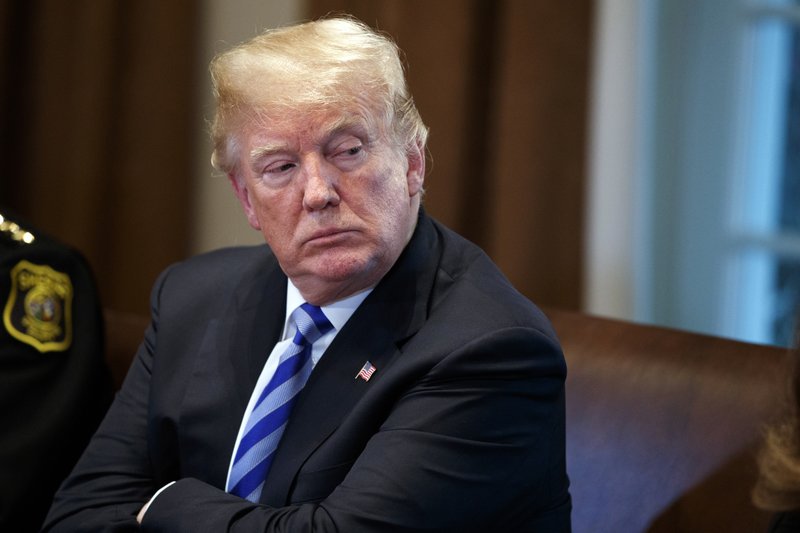
While railing against California for its so-called sanctuary immigration policies, President Donald Trump referred to some people who cross the border illegally as “animals” — drawing a sharp rebuke from Democratic leaders for the harsh rhetoric. Trump’s remark at a meeting with local leaders was in response to a comment about MS-13 gang members. “We have people coming into the country, or trying to come in — and we’re stopping a lot of them,” Trump said during the immigration roundtable after Fresno County Sheriff Margaret Mims complained about state restrictions that limit cooperation with federal immigration authorities. “You wouldn’t believe how bad these people are. These aren’t people. These are animals.” Trump has repeatedly referred to members of the violent street gang as “animals” in speeches, rallies and at White House events. He has also used the term to describe terrorists and school shooters. Senate Minority Leader Chuck Schumer, D-N.Y., responded on Twitter to the president, saying, “When all of our great-great-grandparents came to America they weren’t ‘animals,’ and these people aren’t either.” And House Minority leader Nancy Pelosi said, “Every day that you think you’ve seen it all, along comes another manifestation of why their policies are so inhumane.” Trump was joined at the Wednesday White House meeting by mayors, sheriffs and other local leaders from California who oppose the state’s immigration policies and who applauded his administration’s hard-line efforts. “This is your Republican resistance right here against what they’re doing in California,” said Assemblywoman Melissa Melendez, coopting a term used by Democrats opposed to Trump’s presidency. She, like others, said the president and his policies were far more popular in the state than people realize. They were criticizing legislation Gov. Jerry Brown signed into law last year that bars police from asking people about their immigration status or helping federal agents with immigration enforcement. Jail officials can transfer inmates to federal immigration authorities if they have been convicted of one of about 800 crimes, mostly felonies, but not for minor offenses. Brown insists the legislation, which took effect Jan. 1, doesn’t prevent federal immigration officials from doing their jobs. But the Trump administration has sued to reverse it, calling the policies unconstitutional and dangerous. Some counties, including San Diego and Orange, have voted to support the lawsuit or have passed their own anti-sanctuary resolutions. Republicans see backlash to the law as a potentially galvanizing issue during the midterm elections, especially with Trump’s anti-immigrant base. And Trump has held numerous events in recent months during which he’s drawn attention to California’s policies. During the session, Trump thanked the officials, saying they had “bravely resisted California’s deadly and unconstitutional sanctuary state laws.” He claimed those laws are forcing “the release of illegal immigrant criminals, drug dealers, gang members and violent predators into your communities” and providing “safe harbor to some of the most vicious and violent offenders on earth.” Brown responded on Twitter, writing that Trump “is lying on immigration, lying about crime and lying about the laws of CA.” The Democratic governor added: “Flying in a dozen Republican politicians to flatter him and praise his reckless policies changes nothing. We, the citizens of the fifth largest economy in the world, are not impressed.” The discussion comes as the Trump administration is under fire for a new policy that is expected to increase the number of children separated from their parents when families cross the border illegally. Trump, in his remarks, wrongly blamed Democrats for forcing his administration’s hand. “I know what you’re going through right now with families is very tough,” he told Homeland Security Secretary Kirstjen Nielsen, “but those are the bad laws that the Democrats gave us. We have to break up families … because of the Democrats. It’s terrible.” But no law “the Democrats gave us” mandates the separation of children from their parents at the border. The administration is using protocols described in a 2008 law designed to combat child trafficking that gave special protections to Central American children at the border. While the bill was authored by Democratic Sen. Dianne Feinstein, it unanimously passed both houses of Congress and was signed by Republican President George W. Bush as one of his last acts in office. Nielsen on Tuesday defended the practice, telling a Senate committee that removing children from parents facing criminal charges happens “in the United States every day.” The event also came as top House Republicans worked to head off an attempt by party moderates to force roll calls on four immigration bills. Republican leaders privately warned GOP lawmakers Wednesday that such a drive could damage the party’s prospects in the fall’s congressional elections by dispiriting conservative voters, according to people at the closed-door meeting. The House leaders fear the winning legislation would be a compromise bill backed solidly by Democrats but opposed by most Republicans, an outcome that could anger conservatives, according to Rep. Jeff Denham, R-Calif., a leader of the effort to force the immigration votes. House Majority Leader Kevin McCarthy, R-Calif., issued the warning, said a second person who was in the room and spoke on condition of anonymity to describe the private conversation. Asked about his remarks, McCarthy said his objection to the procedure was that it would in effect “turn the floor over” to Democrats. House Speaker Paul Ryan said the petition would be “a big mistake” that would “disunify our majority.” He said the leaders were “working with the administration.” The moderates said later Wednesday that House leaders were trying to end the immigration standoff and that they could soon see a specific proposal on how to do that. “We’re willing to see what this looks like,” said Rep. Carlos Curbelo, R-Fla., a leader of the lawmakers trying to force the House to address the issue. Conservatives had their own session with party leaders and also suggested there had been movement, but offered no specifics. Many of the legislators demanding action face potentially competitive re-election races in congressional districts with large numbers of Hispanic, suburban
Scarce targets curb Dem hopes for House gains, despite Donald Trump

In a taste of ads to come, House Democrats have run national TV spots in which actors recount Donald Trump‘s derogatory remarks about immigrants, women and veterans and one asks, “How can Republican members of Congress support that?” The commercials, by the Democratic Congressional Campaign Committee, underscore the party’s hopes for an Election Day bumper crop of new House seats, fueled by the GOP presidential candidate’s disparaging verbal assaults and poor showing in most polls. Outnumbered by Republicans 247-188 – and with two vacancies in districts they’re certain to win – Democrats seem likely to bolster their ranks in November. Yet gaining the 30 seats needed to capture a House majority appears elusive. DAUNTING FIGURES Of the House’s 435 seats, only around 40 from California to Maine seem clearly up for grabs, though that could change. Redistricting, along with Democrats’ tendency to be concentrated in urban and coastal areas, has given both parties’ incumbents such sturdy protection that on Election Day 2014, just 13 of 388 lawmakers seeking re-election lost. Of the 435 House members elected, 377 won by a decisive 10 percentage points or more or were unopposed. Democrats would have to sweep 35 of the 40 competitive contests and lose only five for a 30-seat pickup, a significant challenge. In the 17 presidential election years since World War II, a party has gained 30 House seats just three times, most recently in 1980. Democrats’ predictions have been tempered. Rep. Ben Ray Lujan, D-N.M., who heads House Democrats’ campaign committee, says, “Democrats are on offense and we’ll pick up seats.” OTHER HURDLES Democrats failed to recruit strong candidates in districts where they might have competed. The Democratic challenger against well-financed freshman Rep. Tom MacArthur in central New Jersey, Frederick LaVergne, has reported $600 cash on hand. The party has had problems fielding candidates in the Philadelphia suburbs, eastern Ohio, central Illinois and west of Detroit. “They haven’t put seats in play they needed to put in play,” said Rep. Steve Stivers, R-Ohio, a top member of the National Republican Congressional Committee. Democrats want to pry Republicans out of suburban districts where TV advertising is often expensive, especially with a competitive presidential or Senate race in the state. A week of commercials can cost hundreds of thousands of dollars in Denver; Orlando, Florida; and Las Vegas, and can be prohibitively expensive for House candidates in New York, Los Angeles and Chicago. In addition, Democrats seem certain to lose a newly redrawn district in north Florida and face challenges keeping seats around Omaha, Nebraska; Sacramento and California’s central coast; and Florida’s Palm Beach. GOP DANGER SIGNS Republicans hold about three in four battleground House seats, leaving them more at risk. Nevada, Maine and Minnesota are places where the GOP faces tough defensive fights. Thanks to strong off-year elections in 2010 and 2014, the GOP’s 247 seats are its high-water mark since Herbert Hoover’s presidency 86 years ago. The party holds districts in New York, New Hampshire and Iowa that it will struggle to retain this presidential election year, when Democratic turnout should increase. While 26 House Republicans were elected in 2014 in districts that backed President Barack Obama in 2012, just five Democrats serve in districts carried by 2012 GOP presidential nominee Mitt Romney. That means more Republicans are at a disadvantage. Among them, Rep. Robert Dold is clinging to a Chicago-area district that gave Obama 58 percent of its vote, more than in any other Republican-held seat. TRUMP FACTOR Trump is unpopular among women, minorities and college-educated voters. This spells trouble for Republicans representing suburbs and districts with many Hispanic voters, and many candidates have criticized his remarks, though few have abandoned him outright. Freshman GOP Rep. Carlos Curbelo is fighting to survive in a South Florida district that is two-thirds Hispanic. He’s said he won’t support Trump and has run a Spanish-language radio ad in which former Florida Gov. Jeb Bush says, “I know Carlos and I know he will continue representing us with integrity in Washington.” Republican Rep. Mike Coffman, whose suburban Denver district is one-fifth Hispanic, says of Trump in one spot, “Honestly, I don’t care for him much.” Trump’s problems with crucial voters and Democratic nominee Hillary Clinton‘s modest but distinct advantage in most polls have emboldened Democrats to hunt for additional GOP seats. They’ve already spent against conservative Rep. Scott Garrett in New Jersey suburbs of New York City and have hopes of grabbing seats around Minneapolis, Orlando and central New York. They envision benefiting from diminished voter turnout by Republican moderates appalled at Trump and conservatives who distrust him. “Our biggest concern is turnout,” but it’s also a problem for Democrats, said Mike Shields, top aide for the Congressional Leadership Fund and the American Action Network, which back House GOP candidates. COUNTER-CURRENTS Republicans argue that Clinton poses problems, too. Polls find much dislike for her, too, and Republicans are hoping for lower turnout by young liberals who preferred Vermont Sen. Bernie Sanders, Clinton’s Democratic presidential rival, and by blacks no longer drawn to vote by Obama. Should Trump’s defeat appear inevitable, House Republicans could cast themselves as a brake on a Clinton administration. So far they’ve used that sparingly. One GOP fundraising email signed by House Speaker Paul Ryan, R-Wis., says, “I worry about what will happen if Hillary Clinton is elected president.” Republished with permission of the Associated Press.
Mo Brooks leads U.S. House GOP to strip immigration language from defense bill
U.S. House conservatives on Thursday voted down a nonbinding provision aimed at helping young immigrants without permanent legal status enlist in the military, angering some fellow Republicans and handing Democrats a political issue heading into an election year. The vote was 221-202 to remove the measure from Congress’ annual defense policy bill. Some 20 Republicans voted “no” but couldn’t overcome conservatives who threatened to oppose the overall bill if they didn’t get their way. “This Congress should support and represent Americans by voting to stop military service opportunities from being taken from struggling American families in order to give them to illegal aliens,” GOP Rep. Mo Brooks of Alabama, who led the fight, argued on the House floor ahead of the vote. The handful of Republicans on the other side of the issue struggled to round up votes. Their job was made harder because Democrats had already decided to vote against the defense bill for unrelated budgetary issues, giving Brooks and his supporters leverage to bring down the bill if they didn’t prevail. “This is a mistake,” said Rep. Carlos Curbelo, a freshman Republican from Florida. “It sends the wrong message to the country. I assure you that the overwhelming majority of Americans are for allowing young people who were raised in this country, who love this country and want to serve it, to have that opportunity.” Democrats wasted no time in jumping on an issue that could help them mobilize Latino voters heading into a presidential election year. House Democratic leader Nancy Pelosi of California and her top lieutenants held a news conference to denounce Republicans over the issue, and presidential candidate Hillary Rodham Clinton also got in on the action. She issued a prepared statement from her political director, Amanda Renteria, saying: “If these courageous young men and women want to serve, they should be honored and celebrated, not discriminated against.” The debate revived the simmering partisan dispute over executive actions President Barack Obama took this past fall to defer deportations for millions of immigrants in this country illegally, including expanding protections for those, known as Dreamers, who arrived in the United States as young children. Many Republicans argued that supporting the provision included in the defense bill would have validated the actions Obama took, which have been challenged in court and are on hold pending a ruling by the 5th U.S. Circuit Court of Appeals. “The House should not take action to legitimize the president’s unconstitutional overreach,” said House Judiciary Chairman Bob Goodlatte, a Virginia Republican. Other Republicans argued that the $612 billion defense policy bill, which covers a multitude of military issues, was not the place for a debate on immigration. The measure by Democratic Rep. Ruben Gallego of Arizona would have expressed the House’s view that the Pentagon should study whether military enlistment should be opened to Dreamers. It was added to the defense bill during a marathon committee session last month, with the support of six Republicans. But several Republicans asserted Thursday that it shouldn’t have been included in the first place, suggesting that perhaps it only was because the debate occurred so late at night and people were not fully focusing. “It went for 18 hours, late in the process one of our members offered an amendment to insert the immigration issue into this bill, it was unfortunate and it was inappropriate,” said Alabama Rep. Bradley Byrne. Gallego disputed that argument, saying his amendment was offered about 10:30 p.m., which he asserted was not overly late. Republished with permission from The Associated Press.
