
William Barr appoints special counsel in Russia probe investigation

Attorney General William Barr has given extra protection to the prosecutor he appointed to investigate the origins of the Trump-Russia probe, granting him authority to complete the work without being easily fired. Barr told The Associated Press on Tuesday that he had appointed U.S. Attorney John Durham as a special counsel in October under the same federal regulations that governed special counsel Robert Mueller in the original Russia probe. He said Durham’s investigation has been narrowing to focus more on the conduct of FBI agents who worked on the Russia investigation, known by the code name of Crossfire Hurricane. Under the regulations, a special counsel can be fired only by the attorney general and for specific reasons such as misconduct, dereliction of duty, or conflict of interest. An attorney general must document such reasons in writing. The FBI in July 2016, began investigating whether the Trump campaign was coordinating with Russia to sway the outcome of the presidential election. That probe was inherited nearly a year later by special counsel Mueller, who ultimately did not find enough evidence to charge Donald Trump or any of his associates with conspiring with Russia. The early months of the investigation, when agents obtained secret surveillance warrants targeting a former Trump campaign aide, have long been scrutinized by the president and other critics of the probe who say the FBI made significant errors. An inspector general report last year backed up that criticism but did not find evidence that mistakes in the surveillance applications and other problems with the probe were driven by partisan bias. Barr decided “the best thing to do would be to appoint them under the same regulation that covered Bob Mueller, to provide Durham and his team some assurance that they’d be able to complete their work regardless of the outcome of the election,” he said Tuesday. President-elect Joe Biden’s transition team didn’t immediately comment on the appointment. The current investigation, a criminal probe, had begun very broadly but has since “narrowed considerably” and now “really is focused on the activities of the Crossfire Hurricane investigation within the FBI,” Barr said. He said he expects Durham would detail whether any additional prosecutions will be brought and make public a report of the investigation’s findings. Durham’s investigation has resulted in one prosecution so far: a guilty plea by a former FBI lawyer who admitted altering an email. In an Oct. 19 order, obtained by The Associated Press, Barr says Durham is authorized “to investigate whether any federal official, employee or any person or entity violated the law in connection with the intelligence, counter-intelligence or law enforcement activities” directed at the 2016 presidential campaigns, anyone associated with the campaigns or the Trump administration. House Judiciary Committee Chairman Jerrold Nadler, D-N.Y., said the appointment erodes trust in the Justice Department, and he questioned how it was allowed under the special counsel rules. “And we should not lose sight of the larger picture: in the waning days of the Trump administration, the attorney general has once again used the powers of his office to settle old scores for the president,” Nadler said. The special counsel rules say the appointed person should be outside of government, but Barr pointed to specific provisions in his memo that would allow him to go around that rule. A senior Justice Department official told the AP that although the order details that it is “including but not limited to Crossfire Hurricane and the investigation of Special Counsel Robert S. Mueller III,” the Durham probe has not expanded. The official said that line specifically relates to FBI personnel who worked on the Russia investigation before the May 2017 appointment of Mueller, a critical area of scrutiny for the Justice Department inspector general, which identified a series of errors and omissions in surveillance applications targeting former Trump campaign aide Carter Page. The focus on the FBI, rather than the CIA and the intelligence community, suggests that Durham may have moved past some of the more incendiary claims that Trump supporters had hoped would yield allegations of misconduct or even crimes — namely, the question of how intelligence agencies reached their conclusion that Russia had interfered in the 2016 election. Republicans lauded the appointment. Senate Judiciary Chairman Lindsey Graham said it was “obvious the system failed,” and he concurred with the appointment of a special counsel to continue the investigation. Republished with the permission of the Associated Press.
Where did Donald Trump’s claim of an FBI mole come from?

President Donald Trump and his supporters are circulating an explosive theory: The FBI, they say, may have planted a mole, or “spy,” inside the 2016 campaign to bring him down. The unverified allegation has lit up conservative media and earned space on Trump’s Twitter feed just as special counsel Robert Mueller enters his second year in the Russia probe. But where did the allegation come from? The AP takes a look at what we know so far and how Trump has used similar claims in the past to try to discredit the Russia investigation. The ‘Wiretap’ Trump and his supporters have long floated the idea of an opposing “deep state” at the Justice Department and the FBI, including allegations that President Barack Obama ordered wiretaps on his phones during the election. The Justice Department denied such a wiretap, and House intelligence committee Chairman Devin Nunes, an ardent Trump supporter, later confirmed that an Obama-ordered wiretap never existed. But like many conspiracy theories, it appeared to grow out of a less sensational truth: U.S. surveillance on foreign officials — a common practice in the world of spycraft — likely picked up what’s called “incidental” communications with Americans in Trump’s orbit. That included former national security adviser Michael Flynn’s discussions with Russia’s ambassador to the U.S. during the presidential transition. The Mole At issue now isn’t a wiretap, but the identity of a top-secret FBI informant who allegedly helped investigators on the Russia probe. Trump and his lawyer, Rudy Giuliani, say they suspect the FBI planted someone inside the campaign as a setup. “Reports are there was indeed at least one FBI representative implanted, for political purposes, into my campaign for president,” Trump tweeted early Friday. “It took place very early on, and long before the phony Russia Hoax became a ‘hot’ Fake News story. If true – all time biggest political scandal!” This claim actually isn’t new for Trump supporters either. But it seemed to find new life after news reports confirmed the existence of a confidential source in the Russia investigation. The conservative National Review suggested the puzzle pieces all point toward a mole, attracting Trump’s attention. “If so, this is bigger than Watergate!” Trump tweeted. What We Know Last August, Glenn Simpson of Fusion GPS, who compiled opposition research on Trump, told a Senate panel that former British spy Christopher Steele relied on an “internal Trump campaign source” to compile his now-famous Trump dossier. A person familiar with Simpson’s testimony told the AP at the time that he did not mean to suggest the FBI had a direct source of information from within the Trump campaign. Then last week, The Washington Post reported on the existence of a U.S. citizen who had provided intelligence to the CIA and FBI in the Russia probe. The source had become of particular interest to Nunes, whose committee was quick to dismiss any allegations of collusion between Trump associates and Russia. According to the Post, the Justice Department clashed with Nunes and refused his request for specific details on the person. On Wednesday, The New York Times seemed to lend credence to the idea by reporting that “at least one government informant” met several times with former Trump campaign advisers George Papadopoulos and Carter Page. On Friday, the Times expanded its description, saying the informant is an American academic who teaches in Britain and was sent by the FBI to talk to Papadopoulos and Page because they were suspected of having “suspicious contacts” linked to Russia. What We Don’t Know A person who provides information to investigators wasn’t necessarily planted by authorities. The person could have been someone already working with Trump’s campaign before they agreed to provide information. Or it could be someone who wasn’t affiliated with the campaign and just interacted with people around it. The FBI and Mueller have been extraordinarily tight-lipped about the investigation, providing few public clues to what sources they are relying on or where the probe is headed. Trump and his lawyer, Giuliani, acknowledge they don’t have the answers either. But that hasn’t stopped them from floating the mole theory as a way of undercutting Mueller’s work as an attempt by liberals to bring down the president. Giuliani said in a Friday interview on CNN’s “New Day” that he doesn’t know for sure what happened — and the president doesn’t either. But “for a long time, we’ve been told that there’s been some kind of infiltration,” he said. Republished with the permission of the Associated Press.
Donald Trump boasts of hiring only the best, but picks haunt him

President Donald Trump likes to boast that he hires only the best people. But his personnel choices keep coming back to haunt him. One of the people Trump hired for the White House was working as a foreign agent while advising him during the election. His campaign chairman caught the Justice Department’s attention for similarly surreptitious work. And a third campaign adviser was reportedly surveilled by the FBI as part of an investigation into whether or not he was a Russian spy. The tales of Michael Flynn, Paul Manafort and Carter Page — none of whom still work for Trump — have created a steady drip of allegations that have clouded Trump’s early presidency and raised persistent questions about his judgment. At worst, Trump’s personnel picks appear to have left his campaign — and perhaps his White House — vulnerable to the influence of foreign powers. At best, they expose the long-term implications of his understaffed and inexperienced campaign organization and undermine his promises to surround himself with top-notch talent. “Vetting new hires is standard procedure for presidential campaigns for exactly this reason,” said Alex Conant, who advised Sen. Marco Rubio‘s 2016 presidential campaign. “Every employee is also a potential liability on a presidential campaign.” During the campaign, Trump said he hired “top, top people” and would fill his administration “with only the best and most serious people.” Yet Manafort, Flynn and Page have indeed become political liabilities for Trump that he can’t shake in the White House. All three are being scrutinized as part of the FBI and congressional investigations into whether Trump associates helped Russia meddle in the 2016 election. The president has denied any nefarious ties to Russia and says he has no knowledge that his advisers were working with Moscow during the election. The president’s culpability appears greatest with Flynn, a retired U.S. Army lieutenant general who traveled with Trump frequently during the campaign and was tapped as national security adviser after the election. Flynn had been lobbying for a company with ties to Turkey during the 2016 election and even wrote an editorial on behalf of his client that was published on Election Day. “No one expects them to do the equivalent of an FBI background check, but a simple Google search could have solved a lot of these problems,” Dan Pfeiffer, who served as senior adviser to President Barack Obama, said of Trump’s team. After Trump’s victory, Flynn’s lawyers alerted the transition team that he may have to register as a lobbying for a foreign entity, according to a person with knowledge of those discussions. The White House hired him anyway. After the inauguration, Flynn’s lawyers told the White House counsel’s office that the national security adviser would indeed have to move forward with that filing. Flynn was fired in February after the White House said he misled Vice President Mike Pence and other top officials about his conversations with Russia’s ambassador to the United States. Lobbying for foreign interests is legal and lucrative. Both Republican and Democratic operatives offer their services to overseas clients. But the Justice Department requires Americans working on behalf of foreign interests to register, disclosing the nature of their work, the foreigners they dealt with and the amount of money they made. Willful failure to register for foreign lobbying work can carry up to a five-year prison sentence, but the Justice Department rarely brings criminal charges and instead urges violators to register. On Wednesday, a spokesman for former Trump campaign chairman Manafort said that he, too, under pressure from the Justice Department, would formally file for prior foreign lobbying. Manafort’s work for political interests in Ukraine occurred before he was hired as Trump’s campaign chairman, spokesman Jason Maloni said, though the U.S. government raised questions about his activities after he was hired by Trump. Manafort was pushed out of Trump’s campaign in August after The Associated Press reported that his consulting firm had orchestrated a covert Washington lobbying operation on behalf of Ukraine’s ruling political party without disclosing that work to the U.S. government. The White House did not respond to questions Wednesday about when Trump learned about Manafort’s foreign lobbying work and his discussions with the U.S. government about registering as a foreign agent. The questions surrounding Page are perhaps the most serious. On Tuesday, The Washington Post reported that the Justice Department obtained a highly secretive warrant to monitor his communications because there was reason to believe he was working as a Russian spy. In March, Trump personally announced Page as part of a newly minted foreign policy advisory team. But as questions began swirling about Page’s ties to Russia, the campaign started moving away from the little-known investment banker. Trump has since said he has no relationship with him. The New York Times reported Wednesday that the Justice Department only obtained the warrant after the campaign distanced itself from Page. In an interview Thursday with ABC’s “Good Morning America,” Page described his affiliation with the Trump campaign as having served as “an informal member of a committee which was put together — a team of individuals who were looking at various foreign policy issues.” Chris Ashby, a Republican elections lawyer, said that while it’s easy to blame Trump for missing red flags about his campaign advisers, it’s not always possible to dig up details that potential hires aren’t willing to disclose on their own. “In the ideal world, you could rely on paid background checks, but you’d have to have the money and the time,” Ashby said. “The farther down the ranks you go and certainly when you reach the ranks of unpaid advisers, that becomes impractical.” Republished with permission of The Associated Press.
Who’s who: Trump aides, associates drawing attention
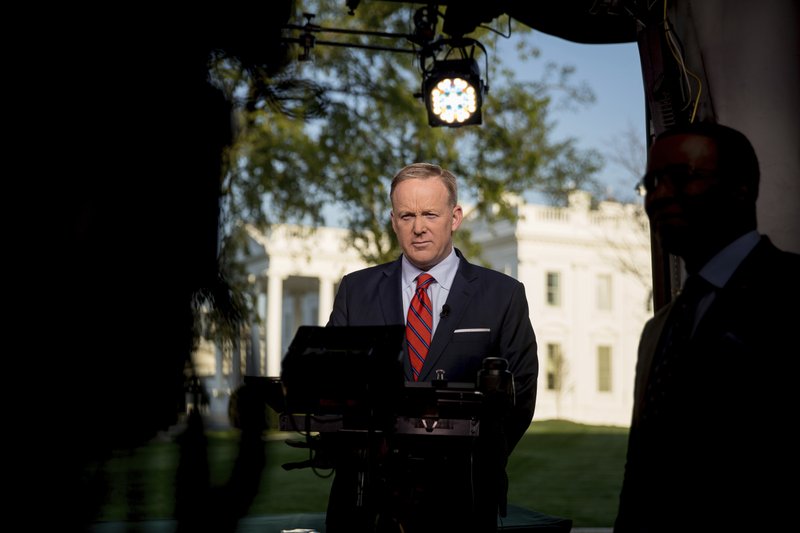
A number of President Donald Trump‘s top and former aides have received unwanted attention in recent days as they struggle with internal divisions, poorly worded comments and investigation revelations. Here’s a rundown of who’s who for those trying to keep track: STEPHEN BANNON Trump’s chief strategist and senior counselor has been the target of the left since he formally joined Trump’s campaign, thanks to the far-right views of the website he used to run, Breitbart News. In an interview with the New York Post this week, Trump appeared to distance himself from Bannon, the chief architect of several major administration policies, including Trump’s stalled travel bans. In the interview, Trump downplayed Bannon’s role in his campaign, claiming that his chief strategist was not involved “until very late.” That’s despite the fact that Bannon took over as the campaign’s CEO in August of last year. Trump’s early months in office have been filled with infighting between his aides. “Steve is a good guy,” Trump told the Post, but cautioned that if the infighting doesn’t stop, he’ll intervene. It was a rare public warning shot heard across Washington. ___ SEAN SPICER The White House press secretary is one of the most visible faces of Trump’s administration. His daily on-camera briefings have become must-see-TV for large swaths of the nation, and he has been repeatedly parodied on shows like “Saturday Night Live.” But Spicer has spent the last 24 hours on an apology tour, after he claimed that Adolf Hitler “didn’t even sink to using chemical weapons.” Critics noted the remark ignored Hitler’s use of gas chambers to exterminate Jews during the Holocaust. The comment marked the second time in as many days that Spicer appeared to struggle to articulate the president’s foreign policy at a critical time. The day before, he suggested that the use of barrel bombs by Syrian President Bashar Assad‘s government might lead to further military action. A White House spokesman later walked back the comment, saying the U.S. position hadn’t changed. Spicer has called his comments about the Holocaust “inappropriate and insensitive.” ___ PAUL MANAFORT Trump’s former campaign chairman’s foreign consulting work has become a headache for the White House. A Manafort spokesman said Wednesday Manafort would be registering as a foreign lobbyist. The spokesman says Manafort’s lobbying work was not conducted on behalf of the Russian government and began before Manafort started working with the Trump campaign. It’s unclear whether Trump was aware that Manafort was in talks with the government about registering before he hired him. Before taking over Trump’s campaign last May, Manafort worked for a slew of foreign clients, including a pro-Russian political party in Ukraine and Russian billionaire Oleg Deripaska. In 2005, he proposed an ambitious plan to promote the interests of “the Putin government” and undermine anti-Russian opposition across former Soviet republics, the Associated Press has reported. The AP also reported Wednesday that at least $1.2 million in payments listed in a handwritten ledger in Ukraine as paid to Manafort were received by his U.S. consulting firm. Manafort has denied any wrongdoing and the White House has tried to downplay Trump’s connections to Manafort, wrongly stating that he played only a “limited role” in Trump’s campaign. ___ CARTER PAGE Page was a little-known critic of the U.S policy toward Russia when he was tapped by Trump to serve as one of a handful of foreign policy advisers. It remains unclear how exactly the two met and what Page’s role actually entailed. But Page is now known to be the focus of a federal investigation of Trump’s campaign ties to Russia. The FBI obtained a secret court order last summer to monitor Page’s communications because the government had reason to believe Page was acting as a Russian agent, The Washington Post reported Tuesday. Page also met with a Russian intelligence operative in 2013 and provided him documents about the energy industry, according to court documents from a 2015 prosecution alleging a Cold War-style spy ring in New York. Page was not accused of wrongdoing related to the case and said in a statement that he shared “basic immaterial information” and publicly available research documents. A former Merrill Lynch investment banker, Page worked out of the company’s Moscow office for three years. He now runs Global Energy Capital, a firm described as focused on energy sectors in emerging markets. ___ MICHAEL FLYNN Trump’s former national security adviser, Flynn was ousted in February for misleading Vice President Mike Pence about the nature his communications with Russian ambassador Sergey Kislyak, the White House said. Flynn was interviewed by the FBI in the early days of the Trump administration about the conversations and his ties to Russia are currently under investigation. He and his firm also recently registered with the Justice Department as foreign agents for lobbying work conducted on behalf of a company owned by a Turkish businessman. A staunch early Trump supporter, Flynn is a retired United States Army lieutenant general and was the former director of the Defense Intelligence Agency. Republished with permission of The Associated Press.
