
Wes Allen wins GOP nomination for Secretary of State, Dem gubernatorial nominations set
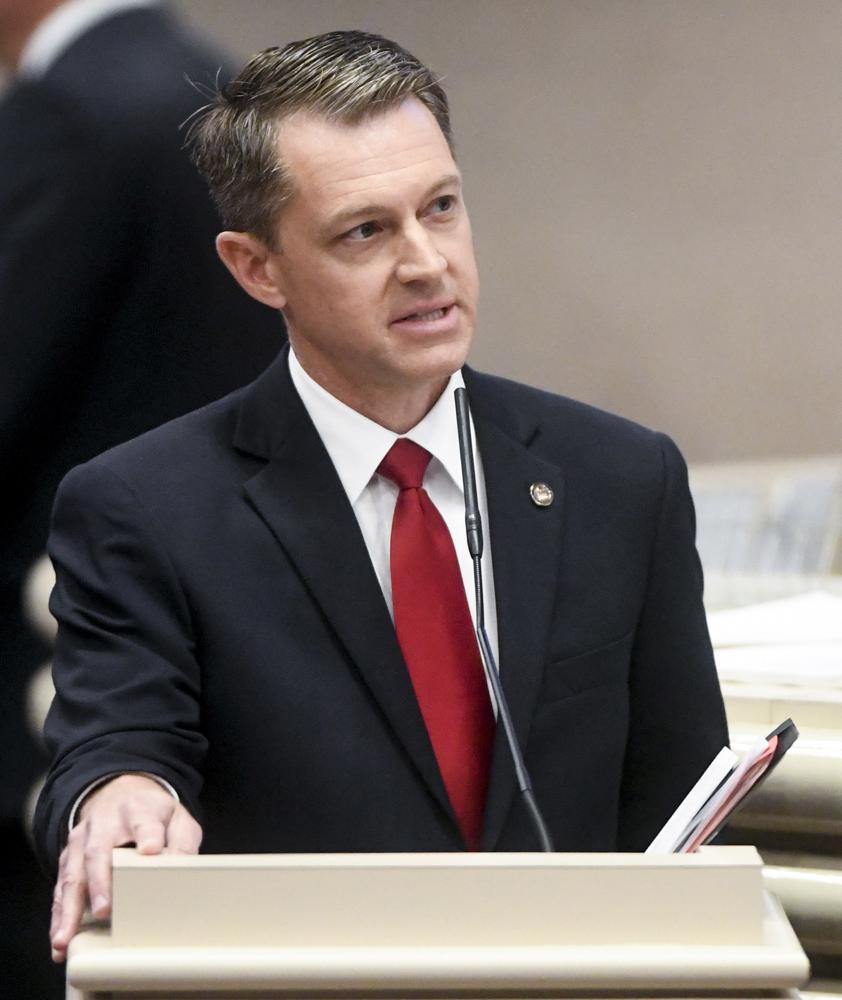
Voters selected the Republican nominee for Alabama’s top election official in the runoff Tuesday, and the general election race for governor was set as Democratic voters picked their gubernatorial nominee. Three other statewide races plus a U.S. House nomination also were on the ballot. Here is a look at the races: SECRETARY OF STATE State Rep. Wes Allen won the Republican nomination for secretary of state on Tuesday in contest that featured both candidates promoting the need to tighten election security in harmony with former President Donald Trump’s false claims that he lost the 2020 presidential race because of fraud. Allen defeated outgoing State Auditor Jim Zeigler and will face Democrat Pamela J. Laffitte, an Air Force veteran and corrections supervisor in Mobile County, in the general election to become Alabama’s top election official. Zeigler received the most votes among four candidates in the primary election in May, but Allen overcame the deficit. Allen, from Troy, previously served as probate judge in Pike County. Citing the potential for fraud, he opposed early voting and no-excuse absentee balloting and sponsored a law that barred “curbside” voting meant in part to make it easier for people with disabilities to cast a ballot. During the campaign, Zeigler dubbed himself a “watchman” against ballot fraud, so-called “ballot harvesting” and voting by mail. Trump has blamed all those and more for his loss to Democratic President Joe Biden, and many GOP voters believe him despite a lack of evidence. The current secretary of state, Republican John Merrill, couldn’t run again because of term limits, and the GOP nominee will be a heavy favorite to win in November. GOVERNOR Yolanda Rochelle Flowers defeated state Sen. Malika Sanders Fortier in the Democratic race for governor to become the first Black person to win a major party’s gubernatorial nomination in Alabama. Flowers, a career educator from Birmingham, narrowly led a six-person field in the May primary. In what will be the state’s first all-female gubernatorial race, she will be a decided underdog against Gov. Kay Ivey, who vanquished eight challengers to win the GOP primary without a runoff. Almost four times as many people voted in the Republican primary as the Democratic primary in May, and Republicans hold every statewide office. Flowers ran on a platform of “reconstructing” Alabama by rebuilding its economy and systems for education, health care, and criminal justice. Among other things, she advocated for a state lottery and a state minimum wage of $15. Fortier, a state lawmaker from Selma, campaigned on the theme of building the biblical “beloved community” promoted by the Rev. Martin Luther King Jr. by improving the state’s economy, schools, and health care. She is the daughter of former state Sen. Hank Sanders and attorney Faya Rose Toure. STATE AUDITOR Andrew Sorrell claimed the GOP nomination for state auditor by defeating Stan Cooke, a win that was tantamount to election since there’s no Democratic contender for the office. Sorrell, a state representative from Colbert County who led balloting in the May primary, tried to make election security a prime issue, saying a strong auditor is needed to appoint county registrars who will keep voter rolls clean. Cooke, a pastor from the Jefferson County town of Kimberly, claimed Alabama is at a crossroads where it could remain a conservative state or come under the control of liberal Democrats. Echoing Trump’s false claims of election theft, he highlighted the auditor’s role in appointing county election officials who can prevent Democrats from stealing elections. The current auditor, Republican Jim Zeigler, was barred from seeking another term. U.S. HOUSE Madison County Commission chair Dale Strong won the only runoff among the state’s seven U.S. House seats, claiming the Republican nomination for an open position in north Alabama’s 5th District. Strong defeated Casey Wardynski, a former Huntsville school superintendent. Strong handily led a six-candidate field with about 45% of the primary vote in May but couldn’t avoid a runoff. Strong will face Democrat Kathy Warner-Stanton of Decatur in the mostly Republican Tennessee Valley district in November. The seat was given up by U.S. Rep. Mo Brooks, who lost a runoff race with former business lobby leader Katie Britt for the seat being vacated by U.S. Sen. Richard Shelby. ALABAMA PUBLIC SERVICE COMMISSION Two Republican incumbents on the Alabama Public Service Commission faced challenges to keep their jobs on the utility-regulating board, and at least one won. Chip Beeker, a former Greene County commissioner first elected to the PSC in 2014, defeated Robert L. McCollum to win the GOP nomination for Place 2. Beeker portrayed himself as an opponent of Democratic environmental policies, while McCollum, a small business owner from Tallapoosa County, argued the commission is too close to Alabama Power Co. Jeremy Oden, a former state legislator from Cullman seeking his third term on the three-member commission, cast himself as a conservative bulwark against liberal environmental policies. He received the most votes in May in a four-way race for the Place 1 seat that saw attorney Brent Woodall, a PSC staffer, and Republican activist, come in second. No Democrat qualified for either position, making a victory in the Republican runoff tantamount to election. Republished with the permission of The Associated Press.
A look at nominations for five statewide offices
The party nominations for five statewide offices, including secretary of state on the Republican side and governor on the Democratic ticket are on the ballot in Tuesday’s primary runoff election in Alabama. The GOP nomination for a lone congressional seat also will be decided. Here is a look at the races: SECRETARY OF STATE With many Republican voters embracing former President Donald Trump’s false claims that fraud cost him the 2020 presidential election, the two remaining GOP candidates to become Alabama’s top elections official, secretary of state, campaigned on themes of tightening election security. Jim Zeigler, who was barred from seeking another four years as state auditor because of term limits, dubbed himself a “watchman” against ballot fraud, so-called “ballot harvesting,” and voting by mail. Trump has blamed all those and more for his loss to Democratic President Joe Biden, and many GOP voters believe him despite a lack of evidence. Rep. Wes Allen is a state representative from Troy who previously served as probate judge in Pike County. Citing the potential for fraud, he opposes early voting and no-excuse absentee balloting and sponsored a law that barred “curbside” voting meant in part to make it easier for people with disabilities to cast a ballot. The Republican nominee will face Democrat Pamela J. Laffitte, an Air Force veteran and corrections supervisor in Mobile County, in November. The current secretary of state, Republican John Merrill, couldn’t run again because of term limits. GOVERNOR Either Yolanda Rochelle Flowers or state Sen. Malika Sanders Fortier will become the first Black person to win a major party’s gubernatorial nomination in Alabama in the Democratic runoff for governor. Flowers, a career educator from Birmingham, narrowly led a six-person field in the May primary. She ran on a platform of “reconstructing” Alabama by rebuilding its economy and systems for education, health care, and criminal justice. Among other things, she has advocated for a state lottery and a state minimum wage of $15. Fortier, a state lawmaker from Selma, campaigned on the theme of building the biblical “beloved community” promoted by the Rev. Martin Luther King Jr. by improving the state’s economy, schools, and health care. She is the daughter of former state Sen. Hank Sanders and attorney Faya Rose Toure. The eventual winner face Gov. Kay Ivey, who vanquished eight challengers to win the GOP primary without a runoff. Nearly four times as many people voted in the Republican primary as the Democratic primary in May, and Republicans hold every statewide office. STATE AUDITOR Stan Cooke and Andrew Sorrell are vying for the Republican nomination to succeed Zeigler as state auditor. Cooke, a pastor from the Jefferson County town of Kimberly, claims Alabama is at a crossroads where it could remain a conservative state or come under the control of liberal Democrats. Echoing former President Donald Trump’s false claims of election theft, he is highlighting the auditor’s role in appointing county election officials who can prevent Democrats from stealing elections. Sorrell, a state representative from Colbert County who led balloting in the May primary, also tried to make election security a prime issue, saying a strong auditor is needed to appoint county registrars who will keep voter rolls clean. The eventual nominee will not have a Democratic opponent in the fall. U.S. HOUSE North Alabama’s 5th District features the only runoff for one of the state’s seven U.S. House seats. In the Tennessee Valley region, Madison County Commission chair Dale Strong and Casey Wardynski, a former Huntsville school superintendent, advanced to a runoff from a field of six candidates in May. Strong led easily with about 45% of the vote but couldn’t avoid a runoff. The winner will face Democrat Kathy Warner-Stanton of Decatur. The 5th District seat is being given up by U.S. Rep. Mo Brooks, who is in a runoff with former business lobby leader Katie Britt for the seat being vacated by U.S. Sen. Richard Shelby. ALABAMA PUBLIC SERVICE COMMISSION Two Republican incumbents on the Alabama Public Service Commission face runoff challenges to keep their jobs on the utility-regulating board. Jeremy Oden, a former state legislator from Cullman seeking his third term on the three-member commission, cast himself as a conservative bulwark against liberal environmental policies. He received the most votes in May in a four-way race for the Place 1 seat that saw attorney Brent Woodall, a PSC staffer, and Republican activist, come in second. First elected to the PSC in 2014, former Greene County Commissioner Chip Beeker also portrayed himself as an opponent of Democratic environmental policies in his campaign to retain the Place 2 seat. Beeker, who led the primary vote, is opposed by Robert L. McCollum, a small business owner from Tallapoosa County who contends the commission is too close to Alabama Power Co. No Democrat qualified for either position, making a victory in the Republican runoff tantamount to election.
“Scumbag.” Casey Wardynski accuses Dale Strong of crossing a line during congressional debate
Tuesday evening’s debate between U.S. Senate candidates Dale Strong and Casey Wardynski turned tense after ethical comments were made pertaining to Wardynski’s resignation as Huntsville superintendent in 2016. The two candidates are vying for the seat being vacated by Mo Brooks. The two were combative, which has been apparent in their T.V. ads throughout the race and showed itself during the debate on WHNT News 19. Yellowhammer News confirmed with multiple sources that after the debate, a heated exchange occurred between Strong and Karen Wardynski, Casey Wardynski’s wife. According to the sources, Mrs. Wardynski approached Strong while the candidates were exiting the debate stage and told Strong, “I’m coming after you. I’m going to get you.” Strong responded to Mrs. Wardynski, “OK, no-bid contract.” The exchange came from questions raised about Dr. Wardynski’s sudden resignation as superintendent of Huntsville City Schools in September 2016. Wardynski said he resigned because his relationship with then-Karen Lee, who was CEO of Pinnacle Schools, which did business with Huntsville Schools. Wardynski claimed that he didn’t want any ethical issues to occur because of their relationship and so he resigned. Wardynski said he was in a relationship with Lee in July, and by September, he knew he should resign. Wardynski stated, “I thought I should resign since I supervised her. It would create an ethical challenge that I didn’t want to have. They said, ‘No, no stay.’ On the 13th of September, my attorney wrote a letter and hand-carried it and never got an answer. So on the 15th, one month in, I resigned because I thought it would create an ethical problem.” All of Wardynski’s comments during the debate mirror his comments from AL.com at the time of his resignation in 2016. Wardynski stated, “I have talked to ethics attorneys, and I shared with responsible authorities with the school system when I felt that it was an issue.” The next question in the debate pertained to Critical Race Theory (CRT) being taught in schools. Wardynski said he supported the banning of CRT and that he had helped President Donald Trump remove CRT from the Army. Wardynski stated, “As far as school systems go, I was superintendent up until 2016, and I don’t recall anybody ever hearing of Critical Race Theory until 2020 when we saw the riots. That’s when it came on my radar in the Army.” Strong responded, arguing that CRT had, in fact, been in Huntsville schools back in 2015 and argued that there is evidence to prove it. “Parents, they saw it. Teacher in-service: they saw it. It says Critical Race Theory in 2015. Not only that, Common Core, my opponent supported that.” Strong continued, “Talk to the teachers; some 800 of them that were relieved of their jobs that did a lot less than what he did with this Pinnacle contract where he was getting personal sexual gratification from that contract. I think that the record is clear. He supported CRT, he supported Common Core, and he also supported that the dollar shouldn’t follow the child whenever we had failing schools, and that’s where I believe there’s a big difference.” Wardynski was allowed to respond to Strong’s comments and called the remarks “lies.” Wardynski reiterated that CRT wasn’t in Huntsville schools in 2015. Later in the debate, when asked about attack ads during campaigns, Wardynski said, “Ask this guy because he’s the one who did it first.” “He accused me of taking sexual favors from somebody to do work. You know, that’s a scumbag in my book,” Wardynski said of Strong. “This fellow has never served his country under the uniform or under the flag. I’ve got three kids serving around the world. They get to listen to this garbage. They don’t appreciate it.” Wardynski continued, “This is the kind of garbage you get out of a 26-year career politician who lives in the gutter. He works for people who date on Ashley Madison, and I don’t. I come from service, from a place where the motto is ‘duty, honor, country.’ I left the school system because it was the thing to do that was ethical, and he turns that into sex. That’s where his mind goes. That’s not what we need in Washington D.C.” Strong responded, “I stand behind my record.” He also argued that his attack ads came from accusations that he didn’t support Donald Trump.
Alabama congressional races to feature one runoff in June

Control of Alabama’s seven-member congressional delegation likely will remain firmly in Republican hands, but not without a contest. Two GOP candidates are in a runoff for the open District 5 seat in north Alabama, and three Republican incumbents and the only Democratic member face opposition in November. All the incumbents will be heavy favorites to return to Washington. Neither District 1 Republican Rep. Jerry Carl of Mobile nor Rep. Gary Palmer of Hoover in District 6 had any opposition, meaning each will get another two-year term. Here is a look at the races in the state’s remaining five congressional districts: DISTRICT 2 First-term GOP Rep. Barry Moore of Enterprise did not have any primary opposition and will face Democrat Phyllis Harvey-Hall in November. Harvey-Hall, a teacher and community volunteer, defeated newcomer Vimal Patel in Tuesday’s election in heavily Republican southeast Alabama. DISTRICT 3 Republican Rep. Mike Rogers of Saks, who was first elected 20 years ago, easily defeated Michael Joiner of Pell City for the GOP nomination in east-central Alabama. Rogers will face Democrat Lin Veasey in the fall. DISTRICT 4 Democrat Rick Neighbors, a veteran and longtime apparel worker from Phil Campbell, defeated Rhonda Gore for the chance to go up against GOP Rep. Robert Aderholt, a 12-term incumbent from Haleyville. Solidly Republican, District 4 covers most of northwest Alabama. DISTRICT 5 The lone runoff in Alabama’s congressional races will occur in north Alabama’s 5th District, where Republican Rep. Mo Brooks gave up the seat to run for Senate. Madison County Commission chair Dale Strong and Casey Wardynski, a former Huntsville school superintendent, advanced to a runoff that will be held June 21. The winner will face Democrat Kathy Warner-Stanton of Decatur, who defeated Charlie Thompson in the primary. DISTRICT 7 Rep. Terri Sewell of Selma, the only Democrat in the state delegation, did not have any primary opposition and will face Republican nominee Beatrice Nichols of Moundville in November. The sprawling district includes the Black Belt of west Alabama plus parts of Birmingham and Montgomery. Republished with the permission of The Associated Press.
Dale Strong, Casey Wardynski in Alabama House runoff
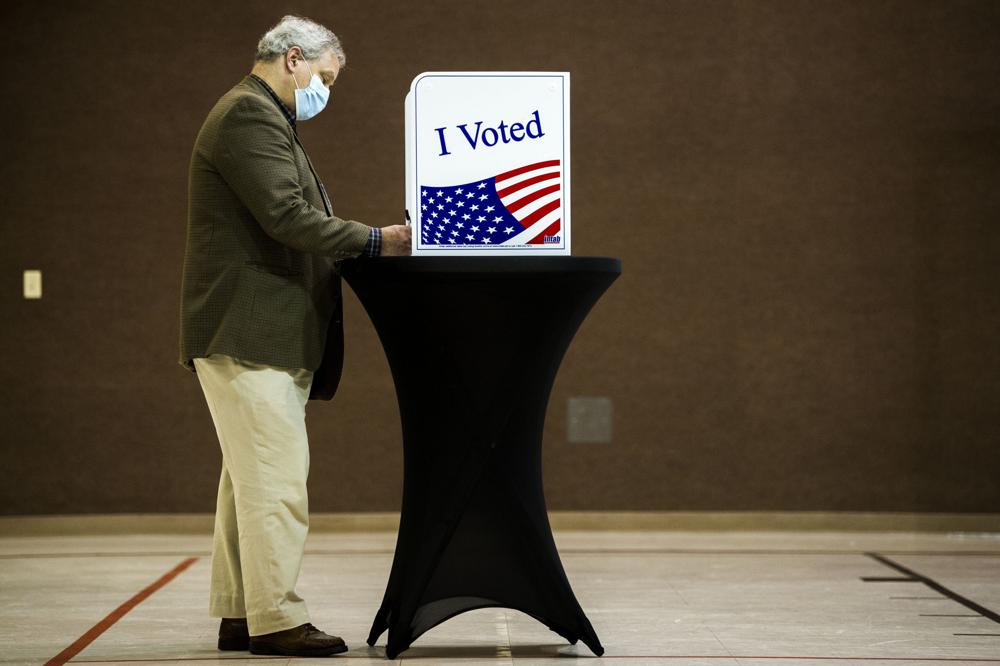
County official Dale Strong and former Huntsville school Superintendent Casey Wardynski have advanced to a runoff in the Republican primary for the congressional seat given up by U.S. Rep. Mo Brooks in Alabama. Both ran on issues that are reliably popular among Alabama Republicans: support for gun rights, opposition to abortion and support for former President Donald Trump and his policies. Brooks gave up the position to run for the seat being vacated by Republican Sen. Richard Shelby. The winner of the June 21 runoff will face the Democratic nominee in the reliably Republican district in November. Republished with the permission of The Associated Press.
Casey Wardynski: Education must focus on children’s needs

Education must focus on children’s needs, and parents must have the discretion to place their children in the educational environment that best prepares their children for life and work. Such discretion entails creating a school choice system in which educational dollars follow students. We have now reached a point at which we can no longer expect that public education will act in the best interest of public-school students and according to the values of their families and communities. Our experience with public education during the COVID19 pandemic and, more recently, as a vehicle for imposing toxic belief systems on students and communities demands a new approach to educating rising generations. During the COVID19 pandemic, public schools suspended regular in-person instruction for a year or longer. At the same time, private, parochial, and home schools continued with in-person instruction. As public-school students attempted to learn via Zoom and other remote learning options, parents gained new insights into untoward content and teaching methods that had crept into their children’s classrooms. Armed with new insights into instruction and teaching methods they reject and alarmed by months of interrupted learning, parents now seek greater control over their children’s education and learning. Parents also reject the Biden Administration’s attempts to create un-American belief systems, and antithetical to values parents seek to instill in their children. For example, Joe Biden’s Department of Education sought to bring the instruction in the 1619 Project to K-12 schools. By offering grants to school systems, leftists at the Department of Education sought to introduce this racist version of America’s founding into K-12 classrooms. Parents can soon expect that Biden’s Departments of Justice (DOJ) and Education (ED) will seek to resurrect Barack Obama’s 2016 gender-identify agenda in public schools. As they did in May of 2016, leftists at these agencies will seek to force compliance from public schools by threatening them with the loss of federal funding for the school nutrition programs, special needs students, low-income students, and teacher development if they do not afford students facilities and programs according to their gender identity. In May 2016, I rejected the mandate from Obama’s DOJ and ED to afford students with facilities and programs according to their gender identity. When a transgender male student sought to use girls’ facilities and then took a picture in a girls’ restroom, I expelled him and set the stage to fight Obama’s agenda in federal court. Less than a year later, President Donald Trump’s DOJ and ED rescinded Obama’s attempt to use his interpretation of Title IX of the Education Amendments of 1972 to inject his transgender agenda into schools. I was unwilling to bow to DOJ and ED mandates that would make Huntsville City Schools a vehicle for subjugating the values of families, destroying girls’ sports, and invading the privacy of male and female students in locker rooms and restrooms. Today, I am running for Congress to defeat the leftist agenda that is destroying our country. I am running to eliminate the U.S. Department of Education, stop the leftist agenda, and fight the National Education Association (NEA) as I fought the Alabama Education Association (AEA) while I was Superintendent from 2011 to 2016. In the summer of 2021, the NEA vowed to “fight back” against those opposed to teaching critical race theory (CRT) in schools and reiterated its support of the controversial “1619 Project.” These theories and their advocates in teacher’s unions that claim there is no objective truth and that math is racist are harmful to our nation and our children. As Superintendent, I fought the AEA to improve teaching. I recommended the removal or suspension of over 100 teachers and principals who failed their students. I implemented a semi-annual review of teaching in every classroom in grades 3-12. These changes had a strongly positive impact on student learning. Huntsville City Schools went from 9 failing schools and no Blue Ribbon Schools to one failing school and nine Blue Ribbon Schools. By 2015 it was the only school system in America to be named a National Cyber Center of Excellence. Graduation rates rose from 66 percent to 88 percent, while college enrollments increased and student remediation in college fell by 40 percent. Today, leaders, whether they’re the Superintendent of a school system or a congressman, must ensure that future generations appreciate the history, values, and institutions that make America exceptional. Affecting the types of change that invigorated education in Huntsville City Schools and that can undo the damage being done in Washington requires a committed change agent. This change agent must have the experience, knowledge, and grit to join other tough conservatives to end federal overreach and reckless spending and return functions such as education to states and locales. On May 24, voters in Northern Alabama can vote for such a change agent. Based on my experience in education, the military, national government, economics, health care, and small business, I believe I’m that person, and I am asking for your vote. Casey Wardynski is running for Alabama’s 5th Congressional District.
Anti-Trump posts from Casey Wardynski’s campaign manager resurface; call into question GOP loyalty
The battle for the 5th Congressional seat being vacated by Mo Brooks has become more heated as the Republican primary comes to a close. With it comes more questions and evidence of which candidates are loyal to the principles of the Alabama GOP and President Donald Trump. The primary candidates for the seat are John Roberts, Paul Sanford, Dale Strong, and Casey Wardynski. Wardynski’s decision to hire a decidedly anti-Trump campaign manager, his stance supporting Common Core, and his voting record have led some of his detractors to question Wardynski’s judgment. Chad Niblett, Wardynski’s campaign manager, is under fire for old social media posts that show anti-Trump views while Wardynski himself has a checkered past with Alabama GOP stances on hot button issues like Common Core. Another issue that has raised the question of Wardynski’s allegiance to the ALGOP is his decision to hire Niblett as his campaign manager. While Niblett also has experience with Rep. Jerry Carl’s campaign in the past, he also has quite a history of anti-Trump rhetoric. In one post, Niblett admitted to not voting for Judge Roy Moore in 2017. In that tweet, he also makes clear that he believes Trump’s accusers in allegations that Trump himself has claimed to be “false.” Niblett wrote on Twitter, “Also, the allegations against Moore were only one reason that I didn’t vote for him. I think it should be clear that I believe Trump’s accusers. I should have listened to them before, but I didn’t. I will in 2020.” While all of these Twitter posts have since been deleted from Niblett’s page, the screenshots provided to Alabama Today show a pattern of disparaging remarks about Trump. In 2019, Niblett commented to Kamala Harris via Twitter, stating, “Just wish the last administration would have. At least Trump has taken some steps. I can’t stand his orange a**, but your party hasn’t done anything either.” The only political undertaking of Wardynski prior to this campaign was when he sparred with The Alabama State Legislature in 2013 and argued about repealing mandatory Common Core standards. In 2013, while Wardynski was the Huntsville City School Superintendent, he strongly opposed SB 190, or the Alabama Accountability Act. Wardynski is on record stating, “None of this debate about moving away from Common Core makes any sense to me.” Wardynski went on to elaborate that, “Common Core Standards spell what we think children need to be able to master to be college and career ready.” Casey Wardynski argued that Alabama schools should look to guidance for curriculum standards in states such as Massachusetts and Vermont. Paul Sanford was one legislator that spearheaded the Alabama Accountability Act in 2013, and has concerns about his stance on Common Core and his on voting record, which shows he has rarely voted in a primary. “It comes as no surprise that Common Core Casey has been misleading the people of North Alabama to get their votes,” Sanford commented. “I spent years fighting him when I served the area as State Senator both at the state level with Common Core and at the local level when parents and teachers came to me with issues caused by his dictatorial style of leadership as Superintendent. Now, he wants to pretend he has been a dedicated Trump-supporter since the beginning, yet he didn’t even show up to vote in the 2016 or 2020 Republican Primary Elections — or any primaries since 2014 at that,” Sanford continued. “Given he has refused to vote in multiple elections, what makes us think he will actually vote for our conservative values in Congress. I think the people of District 5 deserve a representative that tells the truth, actively cares about our conservative values, and will show up both at the polls and on the floor for votes. It is clear some candidates will lie and mislead people about anything to win an election and I think it’s an absolute shame,” he concluded. A copy of Wardynski’s voting record below shows he has only voted in a Primary Election once in 2014. Colin Sudduth, campaign manager for Dale Strong, believes Wardynski’s record speaks for itself. “There is no record of Casey Wardynski ever attending a Republican meeting or supporting Conservative causes before he decided to run for office,” Sudduth commented. “In fact, Wardynski is best known for opposing Republican efforts to stop the Obama Common Core Standards in Alabama. Wardynski talks a lot about Trump, but he surrounds himself with people that have attacked President Trump personally and supported the fake Mueller investigation. Dale Strong was one of Donald Trump’s biggest supporters from day one, and that continues today. Wardynski couldn’t have supported Trump because there is no record he even voted in the 2016 Presidential Primary.” Here are additional examples of Niblett’s prior Twitter posts.
Steve Flowers: Congressional lines and Congressmen will remain the same
For several years leading up to the 2010 Census count, the national projections were that Alabama would lose one of our seven congressional districts and drop to six. When the count was taken, we surprised ourselves and the nation and kept our seven seats in the United States Congress. Therefore, the legislature’s task in drawing our seven congressional districts was relatively easy. Except for some tweaking here and there due to growth in Madison, Limestone, Lee, Shelby, and especially Baldwin counties, and the loss of population in the Black Belt, our congressional district lines were kept basically the same as they have been for the past few decades. We essentially have six of our seven districts that are safe Republican seats. We have one dedicated majority minority African American Democratic Congressional District. That Democratic seat is held by Congresswoman Terri Sewell. She has been in that seat for over a decade and has become a respected leader in the Democratic House leadership. The Democrats are in the majority, which makes her a powerful member of the House. However, most political experts and polling indicate that this year’s election will bring a swing of 30 or more Republican seat pickups or takeovers, thus making the Republicans the majority party. This will be beneficial for Alabama since six of our seven seats are held by Republicans. It will be particularly beneficial to folks in the fourth district, who have Robert Aderholt (R-Haleyville) as their Congressman. Aderholt is the most senior member of our delegation and is the ranking Republican on the House Appropriation Committee. Congressman Mike Rogers (R-Anniston) is also gaining ground in seniority. He is a ranking member of the Armed Services Committee. Congressman Gary Palmer (R-Jefferson) represents the suburban areas of metro-Jefferson, Hoover, and Shelby. It is considered one of the most Republican House districts in America. We have two freshmen Republican Congressmen who are finishing their first two years in the House. Jerry Carl (R-Mobile) represents the coastal first district of basically Mobile and Baldwin Counties. He has taken to Congress like a duck to water. Barry Moore (R-Enterprise) represents the second district made up of the Wiregrass and the fast-growing Pike Road area of Montgomery, as well as the populous counties of Autauga and Elmore. All six of the aforementioned incumbents will be reelected without opposition. The only excitement in Congressional politics in the Heart of Dixie will play out in the fifth district. This Huntsville-Tennessee Valley seat is currently held by Mo Brooks, who has opted to run for the U.S. Senate, thus leaving a seldom seen open congressional seat contest. There are six Republicans vying for this open fifth district seat. The contestants are Dale Strong, Paul Sanford, Casey Wardynski, Harrison Wright, Andy Blalock, and John Roberts. Madison County Commission Chairman Dale Strong appears to be the strongest candidate. He is far outdistancing the field in polling and fundraising. Some say that he could eclipse the field without a runoff. The most ardent challengers will be former State Senator Paul Sanford and former Huntsville City School Superintendent Casey Wardynski. Dr. Wardynski has done a good job fundraising. There will be a large turnout in this congressional race. In fact, this Huntsville-Madison-Limestone Tennessee Valley area of the state will more than likely have the largest percentage turnout in the state. Not only is there an open congressional seat, but Mo Brooks is the local candidate for the open U.S. Senate Seat, and popular, incumbent Republican state school board member, Wayne Reynolds, will also be on the ballot with token opposition. In addition, the only hotly contested Republican State Senate race between Tom Butler and Bill Holtzclaw is in the Madison-Limestone area. There are also three open hotly contested State House races, including filling the seats of Speaker Mac McCutcheon and veteran House member Howard Sanderford. There is also a hotly contested open sheriff’s race in Limestone County. Furthermore, the phantom candidate for the U.S. Senate, Mike Durant, claims Huntsville as his home. All of these ingredients are a recipe for a larger turnout in the Tennessee Valley than the rest of the state on May 24. The Congressional lines and six of seven congressmen will remain the same for this 2022 election cycle. However, hold the phone. The federal courts could change that for 2024. See you next week. Steve Flowers is Alabama’s leading political columnist. His weekly column appears in over 60 Alabama newspapers. Steve served 16 years in the state legislature. Steve may be reached at: www.steveflowers.us.
Ohio Rep. Jim Jordan endorses Casey Wardynski for Alabama’s 5th Congressional District race
Ohio Republican Congressman Jim Jordan announced his endorsement of Republican Casey Wardynski in Alabama’s 5th Congressional District race. Jordan, who was elected to Congress in 2006, has been a leading conservative figure within the House Republican Caucus. He helped found and was elected by his colleagues to chair the House Freedom Caucus. As a budget committee member, he offered more spending cuts than any other Member of Congress. Before serving as a principal official in the Donald Trump Administration, Wardynski served a thirty-year career in the U.S. Army. During his military career, he received the Distinguished Service Medal, the Legion of Merit, and four Meritorious Service Medals. Jordan praised Wardynski and his military career, stating in a press release, “Casey Wardynski is a battle-tested conservative with a record of taking on the swamp. As Assistant Secretary of the Army, Casey helped President Trump build the wall, stop Critical Race Theory at West Point, and root out waste. He is just the kind of fighter we need in Congress to take on Biden and the radical Left.” Wardynski expressed thanks and admiration for Rep. Jordan, calling him a conservative ‘stalwart’ and thanking him for the endorsement. “If you’ve seen Congressman Jordan in one of the many House Judiciary Committee hearings, you know he’s a true conservative patriot,” said Wardynski. “He has done a phenomenal job taking on Russiagate hoaxers, and I’m honored that he has decided to endorse my campaign for Congress. Aside from being the ranking member on Judiciary, he’s a conservative stalwart who holds the Biden Administration in check. I look forward to working with him to continue the Trump Agenda, stop the reckless ways of DC, and put an end to the crazy woke culture Biden and the far left are pushing on our nation.” The primary election is on May 24, 2022. Wardynski is one of six Republicans looking to replace U.S. Rep. Mo Brooks. The other candidates are Kevin Blalock, John Roberts, Paul Sanford, Dale Strong, and Harrison Wright.
Former lawmaker Paul Sanford announces candidacy to replace Mo Brooks
Former state lawmaker Paul Sanford announce he will seek the Republican nomination for Alabama’s congressional 5th District. The Huntsville native and former restaurant owner served two terms in the State Senate and left because he firmly believes in term limits. “Almost thirteen years ago, I stood inside my family’s fourth-generation business, Gibson’s Bar-B-Q, and announced my intention to run for the Alabama Senate. I firmly believe that our Constitution did not intend for elected officials to stay in office forever, and after serving in the Senate for nine and a half years, I recognized that it was time to honor my stance on term limits,” Sanford stated. He added, “After four years of watching idly by on the sidelines, my family and I have decided it is the right time for me to re-enter the fight for our Freedoms. Today, I am asking the people of North Alabama for their support and to grant me the honor of representing the citizens and businesses of the 5th District as your next Representative in Congress.” The Republican Primary is on May 24 and there are already several candidates vying to replace Congressman Mo Brooks. Madison County Commission President Dale Strong, former Huntsville School Superintendent Casey Wardynski, educator Andy Blalock and former Chamber of Commerce official John Roberts are already in the race. Sanford said to Yellowhammer News, “In a crowded Republican Primary it is always hard to separate yourself as a candidate. People need to know I have nine and a half years of legislative experience in the Alabama Senate fighting for conservative principles and the people of Alabama,” Sanford told Yellowhammer News. “So that makes me the only candidate that has sponsored, drafted, amended, passed, or stopped legislation that impacts their lives. Which means I have a proven and tested conservative record that they may depend upon.” “It is time that we send hard-working individuals like you and me to Washington D.C. in order to make the right decisions and get our country back on track,” Sanford told supporters at an announcement in Huntsville.
