GOP debate fact check: Jeb Bush did not bend in opposition to casino gambling
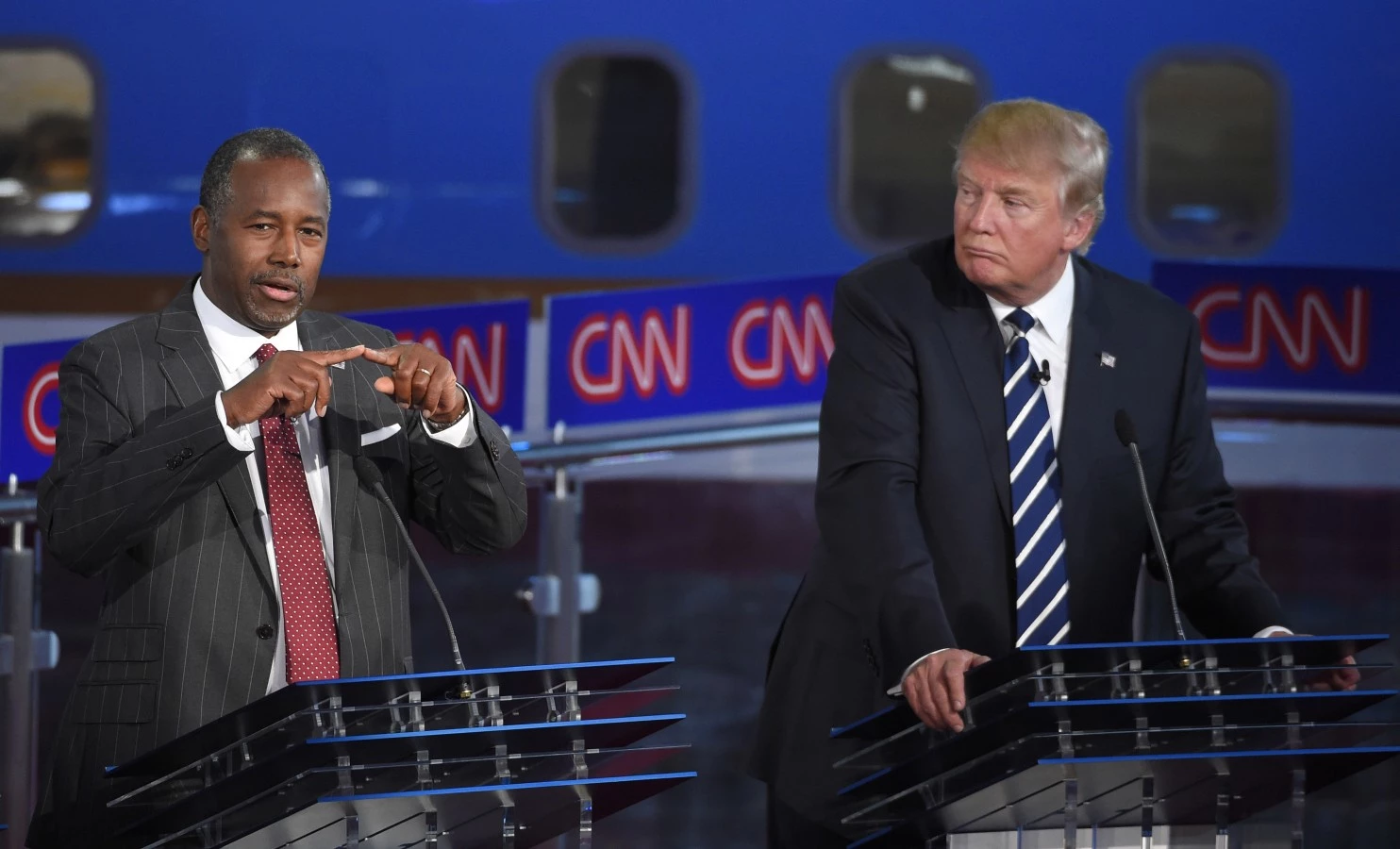
Viewers of the second Republican presidential debate heard inflated claims about Planned Parenthood abortion practices and the risks of vaccines, as well as a dubious assertion by Donald Trump that he wasn’t interested in establishing casinos in Florida back in Jeb Bush‘s days as a candidate for governor. Some of the claims in the debate Wednesday night and how they compare with the facts: TRUMP: “I’m in favor of vaccines, do them over a longer period of time, same amount, but just in little sections and I think you’re going to see a big impact on autism.” THE FACTS: Medical researchers have debunked claims that vaccines given to children can lead to autism and developmental disorders. The Institute of Medicine, part of the National Academy of Sciences, says vaccines are not free from adverse effects, “but most are very rare or very mild.” A study that drew a connection between autism and vaccines was retracted in 2010. For all of that, Trump asserted that a child of one of his employees “went to have the vaccine and came back and a week later got a tremendous fever, got very, very sick, now is autistic.” With those remarks, Trump waded into subject matter that had scalded a few others on the stage. In February, Paul said he’d heard of “many tragic cases of walking, talking normal children who wound up with profound mental disorders after vaccines.” But he quickly backed down under criticism from pediatric experts and others, and endorsed vaccines. New Jersey Gov. Chris Christie, too, clarified that he supported the measles vaccine after appearing to question it. — BUSH: “The one guy that had some special interests that I know of that tried to get me to change my views on something – that was generous and gave me money – was Donald Trump. He wanted casino gambling in Florida.” TRUMP: “I didn’t. … Totally false….” BUSH: “I’m not going to be bought by anybody.” TRUMP: “I promise if I wanted it, I would have gotten it.” THE FACTS: Trump’s hopes of expanding casino operations in Florida in the mid-1990s were well known at the time. Trump employed a prominent lobbyist to represent his gambling interests in Florida. And news reports from that time show he hosted a fundraiser to help Bush’s campaign for governor and donated $50,000 to the Florida Republican Party during that campaign. Bush did not bend in his opposition to casino gambling. It is not clear whether Trump approached Bush directly on the casino matter, but his interest in the enterprise is a matter of record. — TEXAS SEN. TED CRUZ: “On these videos, Planned Parenthood also essentially confesses to multiple felonies. It is a felony with 10 years’ jail term to sell the body parts of unborn children for profit. That’s what these videos show Planned Parenthood doing.” THE FACTS: The Center for Medical Progress released five videos showing furtively recorded conversations with Planned Parenthood officials, recorded by people posing as representatives of a fictitious private company that buys fetal tissue for researchers. In the videos, Planned Parenthood officials discuss how they obtain tissue from aborted fetuses for research, how they decide how much to charge and how it’s possible to alter the procedure to enhance the chances of recovering the organs being sought. But the officials also repeatedly say they are only allowed by law to recover costs, not to make a profit. The videos don’t unambiguously show otherwise. — CHRIS CHRISTIE: “In New Jersey, we have medical marijuana laws, which I’ve supported and implemented.” THE FACTS: Christie has gone slow in implementing New Jersey’s medical marijuana law, which was signed before he took office, and has argued it is little more than “a front for legalization.” Medical marijuana in New Jersey is tightly restricted and state lawmakers said Christie’s administration has placed “arbitrary and unnecessary” restrictions on the program. Patients and doctors, for instance, must register with the state and pay a $200 fee apiece. Only patients suffering from one of six conditions, including terminal cancer, multiple sclerosis and muscular dystrophy, may apply. — TRUMP: “In Wisconsin, you’re losing $2.2 billion right now. … I would do so much better than that.” WISCONSIN GOV. SCOTT WALKER: “Mr. Trump, you’re using the talking points of the Democrats. … We balanced a budget.” THE FACTS: Trump’s figures are way out of date. Wisconsin, like many states, is required by law to balance its budgets. Last year, the Legislature’s budget-watchers projected that a $1 billion surplus would accrue by June of this year. Walker and his GOP-run legislature later passed a series of tax cuts. But state revenues slowed and by November the projected surplus had turned into a $2.2 billion projected shortfall. After making a series of budget cuts to compensate, Walker in July signed a budget that was balanced, as the law requires. — TRUMP: “I want to build a wall, a wall that works. So important, and it’s a big part of it.” BEN CARSON: “I was down in Arizona a few weeks ago at the border. I mean, the fences that were there were not manned, and those are the kind of fences when I was a kid that would barely slow us down. So, I don’t see any purpose in having that.” THE FACTS: The expectation that a fence all along the border with Mexico could stop illegal crossings is not borne out by the fencing that’s already been built – about 700 miles of it. But neither is that fence as porous as Carson suggests. The reality is somewhere in between. Maintaining the existing multibillion-dollar fencing has been a time-consuming task for Border Patrol agents, who routinely patrol the fence line looking for holes or other damage. It was never designed, or expected, to block all illicit traffic from coming across the border, but instead to act as a deterrent and slow those who try crossing on foot. Even so, a fence section that appears unmanned is not
Pat Dye, Charles McCrary to head pro-gambling group

The push to expand gambling in Alabama is gaining some prominent supporters. Former Auburn University football coach Pat Dye and former Alabama Power Co. President Charles McCrary say they will lead a foundation to legalize a state lottery and allow casinos at the state’s four dog tracks. The two attended a news conference in Montgomery on Thursday to announce the formation of the new Alabama Jobs Foundation. The group says a gambling expansion could create 11,000 jobs and add $400 million to state revenues. The Legislature killed a gambling proposal recently, but Dye and McCrary say they support the legislation by Senate Pro Tem Del Marsh. Dye says a lottery and casinos could solve the state’s fiscal problems. The foundation is raising money and recruiting additional leaders. Republished with permission of The Associated Press.
Poarch Creek Indians: We have a ‘better approach’ to Alabama gambling
Alabama’s only federally recognized tribe is urging state officeholders to explore a compact with the tribe as state legislators talk about gambling as a revenue source. Robert McGhee, the tribe’s governmental relations for the Poarch Band of Creek Indians, said the tribe feels it has a “better approach” than a proposal to put casinos at four state dog tracks. McGhee said casinos at the dog tracks would change the landscape of Alabama for not a significant amount of money. The Poarch Creeks operate casinos with electronic bingo games, which resemble slot machines, in Atmore, Wetumpka and Montgomery. McGhee said the tribe would like the exclusive right to run casinos in the state. The tribe has also expressed interest in getting a north Alabama site. Republished with permission of The Associated Press.