
GOP lawmakers urge Joe Biden to meet with them on virus relief
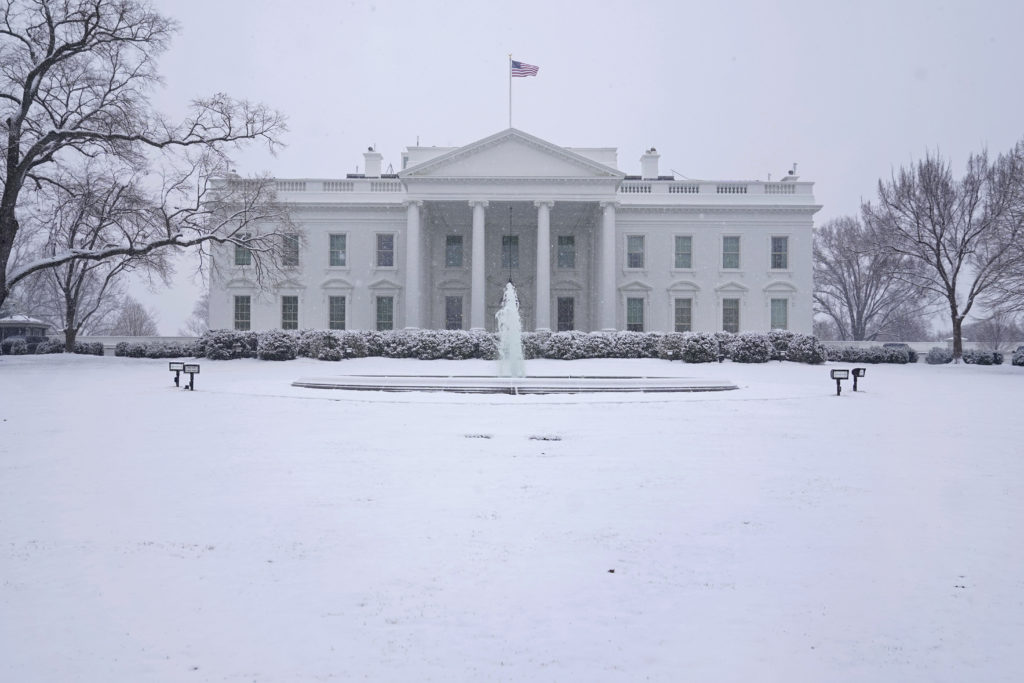
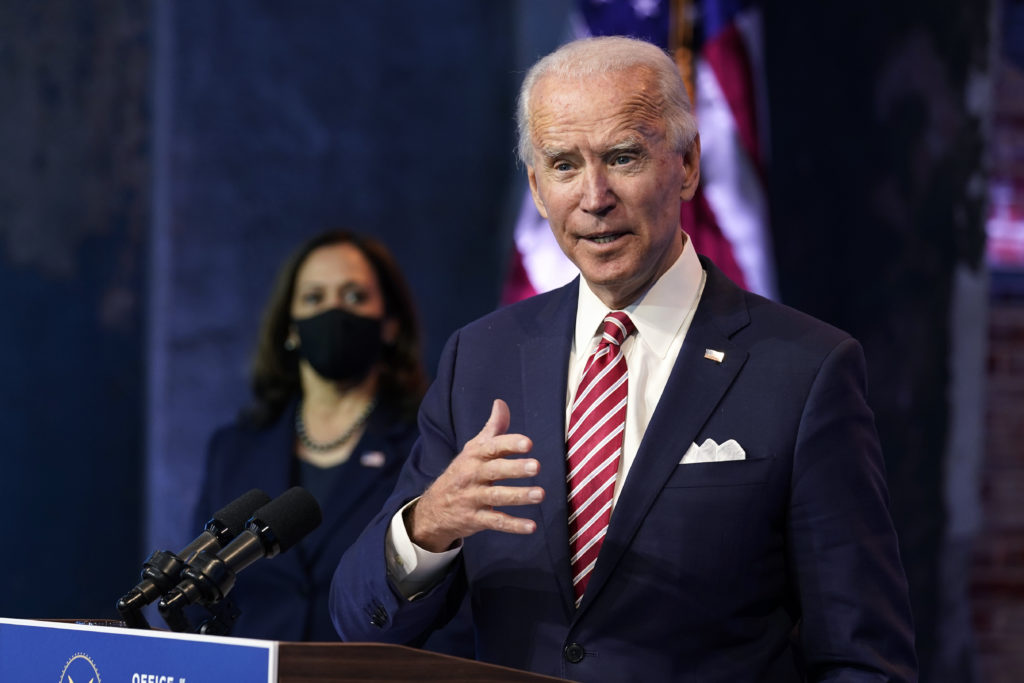
Ten Republican senators on Sunday proposed spending about one-third of what President Joe Biden is seeking in coronavirus aid and urged him to negotiate rather than try to ram through his $1.9 trillion package solely on Democratic votes. In challenging Biden to fulfill his pledge of unity, the group said in a letter that their counterproposal will include $160 billion for vaccines, testing, treatment, and personal protective equipment and will call for more targeted relief than Biden’s plan to issue $1,400 stimulus checks for most Americans. Winning the support of 10 Republicans would be significant for Biden in the 50-50 Senate where Vice President Kamala Harris is the tie-breaker. If all Democrats were to back an eventual compromise bill, the legislation would reach the 60-vote threshold necessary to overcome potential blocking efforts and pass under regular Senate procedures. “In the spirit of bipartisanship and unity, we have developed a COVID-19 relief framework that builds on prior COVID assistance laws, all of which passed with bipartisan support,” the Republican senators wrote. “Our proposal reflects many of your stated priorities, and with your support, we believe that this plan could be approved quickly by Congress with bipartisan support.” The plea for Biden to give bipartisan negotiations more time comes as the president has shown signs of impatience as the more liberal wing of his party considers passing the relief package through a process known as budget reconciliation. That would allow the bill to advance with only the backing of his Democratic majority. The Republicans did not provide many details of their proposal. One of the signatories, Louisiana Sen. Bill Cassidy, said that it would cost about $600 billion. “If you can’t find bipartisan compromise on COVID-19, I don’t know where you can find it,” said Ohio Sen. Rob Portman, who also signed the letter. The other GOP senators are Susan Collins of Maine, Lisa Murkowski of Alaska, Mitt Romney of Utah, Shelley Moore Capito of West Virginia, Todd Young of Indiana, Jerry Moran of Kansas, Mike Rounds of South Dakota, and Thom Tillis of North Carolina. Brian Deese, the top White House economic adviser who is leading the administration’s outreach to Congress, said administration officials were reviewing the letter. He did not immediately commit to a Biden meeting with the lawmakers. But Cedric Richmond, a senior Biden adviser, said the president “is very willing to meet with anyone to advance the agenda.” When asked about the senators’ plan, Richmond said, “this is about seriousness of purpose.” Deese indicated the White House could be open to negotiating on further limiting who would receive stimulus checks. Portman suggested the checks should go to individuals who make no more than $50,000 per year and families capped at $100,000 per year. Under the Biden plan, families with incomes up to $300,000 could receive some stimulus money. “That is certainly a place that we’re willing to sit down and think about, are there ways to make the entire package more effective?” Deese said. As a candidate, Biden predicted his decades in the Senate and his eight years as Barack Obama’s vice president gave him credibility as a deal-maker and would help him bring Republicans and Democrats to consensus on the most important matters facing the country. But less than two weeks into his presidency, Biden showed frustration with the pace of negotiations at a time when the economy exhibited further evidence of wear from the pandemic. Last week, 847,000 Americans applied for unemployment benefits, a sign that layoffs remain high as the coronavirus pandemic continues to rage. “I support passing COVID relief with support from Republicans if we can get it. But the COVID relief has to pass — no ifs, ands or buts,” Biden said on Friday. In the letter, the Republican lawmakers reminded Biden that in his inaugural address, he proclaimed that the challenges facing the nation require “the most elusive of things in a democracy: Unity.” Cassidy separately criticized the current Biden plan as “chock-full of handouts and payoffs to Democratic constituency groups.” “You want the patina of bipartisanship … so that’s not unity,” Cassidy said. Jared Bernstein, a member of the White House Council of Economic Advisers, said Biden remains willing to negotiate but that officials needed to see more details from Republicans. At the same time, Bernstein pressed the administration’s argument that doing too little to stimulate the economy could have enormous impact on the economy in the near- and long-term. “Look, the American people really couldn’t care less about budget process, whether it’s regular order, bipartisanship, whether it’s filibuster, whether it’s reconciliation,” Bernstein said. “They need relief, and they need it now.” Portman and Deese were on CNN’s “State of the Union,” and Deese also was interviewed on NBC’s “Meet the Press.” Cassidy and Bernstein appeared on ”Fox News Sunday” and Richmond was on CBS’ “Face the Nation.” Republished with the permission of the Associated Press.
In historic pick, Joe Biden taps Deb Haaland as interior secretary
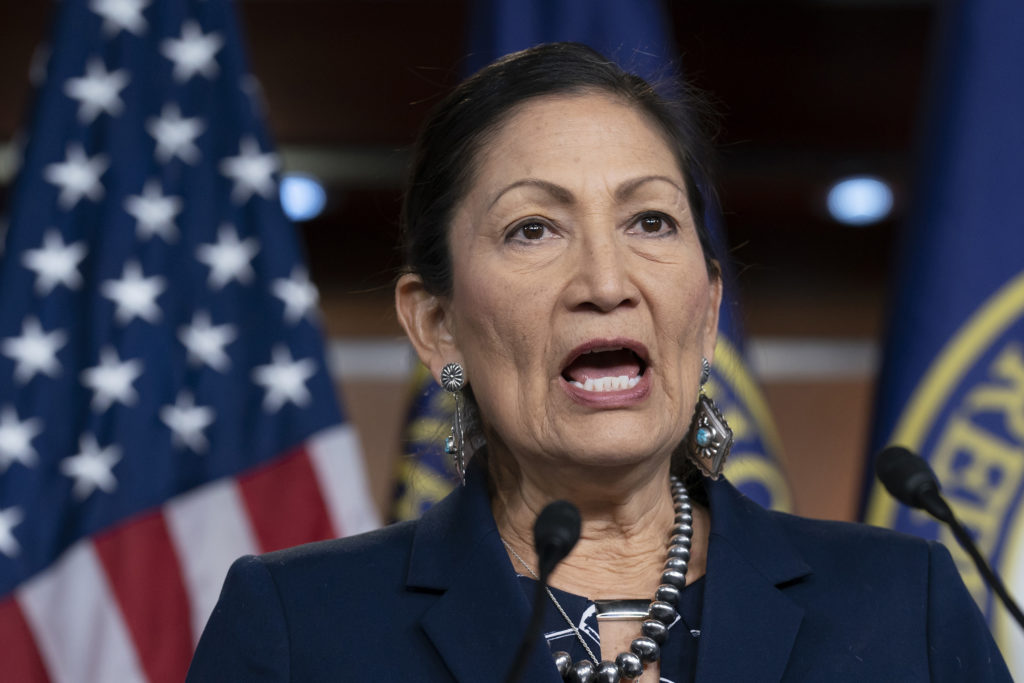
President-elect Joe Biden selected New Mexico Rep. Deb Haaland as his nominee for interior secretary on Thursday, a historic pick that would make her the first Native American to lead the powerful federal agency that has wielded influence over the nation’s tribes for generations. Tribal leaders and activists around the country, along with many Democratic figures, cheered Haaland’s selection after urging Biden for weeks to choose her to lead the Department of Interior. They stood behind her candidacy even when concerns that Democrats might risk their majority in the House if Haaland yielded her seat in Congress appeared to threaten her nomination. With Haaland’s nomination, Indigenous people will for the first time in their lifetimes see a Native American at the table where the highest decisions are made — and so will everyone else, said OJ Semans, a Rosebud Sioux vote activist who was in Georgia on Thursday helping get out the Native vote for two Senate runoffs. “It’s made people aware that Indians still exist,” he said. Haaland, 60, is a member of the Pueblo of Laguna and, as she likes to say, a 35th-generation resident of New Mexico. The role of interior secretary would put her in charge of an agency that has tremendous sway not only over the nearly 600 federally recognized tribes, but also over much of the nation’s vast public lands, waterways, wildlife, national parks, and mineral wealth. Haaland tweeted after the news was made public that “growing up in my mother’s Pueblo household made me fierce. “I’ll be fierce for all of us, our planet, and all of our protected land,” she pledged. Biden plans to introduce Haaland — and other picks for his Cabinet — at an event Saturday in Wilmington, Delaware. Her selection breaks a 245-year record of non-Native officials, mostly male, serving as the top federal official over American Indian affairs. The federal government often worked to dispossess Native Americans of their land and, until recently, to assimilate them into white culture. “You’ve got to understand — you’re taking Interior full circle,” said Arizona Rep. Raul Grijalva, chair of the House Natural Resources Committee and a champion of Haaland for the job. “For years, its legacy was the disenfranchisement of the Native people of this country, of displacement, of cultural genocide.” With Haaland’s nomination, “that in itself is a huge message,” Grijalva said. Navajo Nation President Jonathan Nez called it “truly a historic and unprecedented day for all Indigenous people.” “I am SO ELATED,” the head of progressive Democrats’ Sunrise Movement, Varshini Prakash, tweeted. “This will be the first time an Indigenous person – and a badass climate champion woman at that – will hold any presidential cabinet position. Congratulations to @JoeBiden for making history.″ Get-out-the-vote activists believe their efforts, and the Native vote, helped flip Arizona in particular for Biden and secure the presidency. “There’s a feeling something is changing,” said Ashley Nicole McCray, a member of the Absentee Kiowa tribe of Oklahoma and of an indigenous environmental coalition. “Finally, we’ve come to this point where Indigenous sentiment is no longer being silenced.” But Biden’s pick could further deplete, at least temporarily, the narrow majority Democrats maintain in the House. Biden has already selected several lawmakers from the chamber, including Louisiana Rep. Cedric Richmond and Ohio Rep. Marcia Fudge, to serve in his administration. Some on Biden’s transition team had expressed concerns about dipping further into the already thinned Democratic House majority for another senior administration posting. But Biden decided that the barrier-breaking aspect of her nomination and her experience as vice chair of the House Committee on Natural Resources made her the right pick for the moment. The president-elect has been methodically filling the posts in his Cabinet, adding North Carolina environmental official Michael Regan as his nominee to lead the Environmental Protection Agency. Biden introduced former South Bend, Indiana, mayor Pete Buttigieg earlier this week as his transportation secretary and announced Thursday that former Michigan Gov. Jennifer Granholm was his nominee for energy secretary. In a statement Thursday night, Biden said he had assembled a “brilliant, tested, trailblazing team” that “will be ready on day one to confront the existential threat of climate change.” “They share my belief that we have no time to waste to confront the climate crisis, protect our air and drinking water, and deliver justice to communities that have long shouldered the burdens of environmental harms,” the president-elect said. House Speaker Nancy Pelosi made it clear Wednesday that Biden had her blessing to choose Haaland, saying she would make an “excellent choice” as interior secretary. South Carolina Rep. James Clyburn, the No. 3 Democrat in the House and a close Biden ally, also supported Haaland for the job. Haaland is one of the first two Native American women in the House. She told The Associated Press before her nomination that see the difference her position in Congress made for ordinary Native Americans who came to her with business before the federal government. “They felt comfortable just launching into the issues they wanted,” Haaland told the AP in an interview before her appointment. They would say, for example, “Oh, we don’t have to explain tribal sovereignty to you,” meaning tribes’ constitutionally guaranteed status as independent nations. Haaland previously worked as head of New Mexico’s Democratic Party, as tribal administrator, and as an administrator for an organization providing services for adults with developmental disabilities. Born to a Marine veteran father and a Navy veteran mother, Haaland describes herself as a single mother who sometimes had to rely on food stamps. She says she is still paying off student loans after college and law school for herself and college for her daughter. New Mexico Sen. Tom Udall, who is retiring after 22 years in Congress and was initially considered the front-runner for interior secretary, congratulated Haaland on her selection, calling it “momentous and well-earned.’’ Previously, the highest-ranking administration official known to have Native American heritage was Charles Curtis, who served as Herbert Hoover’s vice president and whose mother was one-quarter Kaw tribe.
Biden adds Obama administration veterans to top staff
President-elect Joe Biden is adding four Obama-Biden administration veterans to his top ranks as he continues to build out his White House team. Cathy Russell, who was Jill Biden’s chief of staff during the Obama administration, will serve as director of the White House Office of Presidential Personnel, evaluating applicants for administration roles. Louisa Terrell, who served as a legislative adviser to the president in the Obama administration and worked as deputy chief of staff for Biden in the Senate, will be director of the White House Office of Legislative Affairs. Terrell has already been engaged in Capitol Hill outreach as part of Biden’s transition team. Carlos Elizondo, who was social secretary for Jill Biden during the Obama administration, will reprise his role and serve as social secretary for the incoming first lady. And Mala Adiga will serve as her policy director. Her role hints at what Biden may focus on as first lady — Adiga previously worked as a director for higher education and military families at the Biden Foundation and also advised Jill Biden on policy during the Obama administration. The announcements come just a few days after Biden unveiled his first major round of top White House staff, including the appointment of his current campaign manager, Jen O’Malley Dillon, to serve as deputy chief of staff, and campaign co-chair Rep. Cedric Richmond as director of the White House Office of Public Engagement. Late last week, he announced that longtime aide Ron Klain will serve as his chief of staff. While the new hires give a sense of the White House that Biden is beginning to build, he has yet to appoint someone to fill the role of COVID-19 coordinator, which Klain announced this week, or name individuals for key communications roles. His team has thousands more staff-level roles to fill when it takes over the administration in January, and they’re currently reviewing applications and reaching out to potential candidates for key roles. Biden has indicated he plans to make and announce some of his Cabinet picks around Thanksgiving, and he said Thursday he’s already made his decision for treasury secretary. Republished with the permission of the Associated Press.
Joe Biden filling top White House team with campaign veterans
President-elect Joe Biden announced a raft of top White House staff positions on Tuesday, drawing from the senior ranks of his campaign and some of his closest confidants to fill out an increasingly diverse White House leadership team. Biden confirmed that former campaign manager Jen O’Malley Dillon will serve as deputy chief of staff, while campaign co-chair Louisiana Rep. Cedric Richmond and campaign adviser Steve Ricchetti will hold senior roles in the new administration. Richmond will leave his Louisiana congressional seat to fill the White House job. The president-elect also announced that Mike Donilon, a longtime Biden confidant, will serve as a senior adviser; Dana Remus, the campaign’s current general counsel, will be counsel to the president; Julie Chavez Rodriguez, one of Biden’s deputy campaign managers, will serve as director of the White House Office of Intergovernmental Affairs; and Annie Tomasini, Biden’s current traveling chief of staff, will serve as the director of Oval Office operations. Anthony Bernal, who served as Jill Biden’s chief of staff on the campaign, will serve as a senior adviser to her, and Julissa Reynoso Pantaleon, a former Obama ambassador to Uruguay, will be her chief of staff. The new hires represent an initial wave of what will ultimately be hundreds of new White House aides hired in the coming weeks as Biden builds out an administration to execute his governing vision. The Democrat will be inaugurated Jan. 20. Late last week, Biden tapped former senior campaign adviser Ron Klain to serve as his chief of staff. The latest round reflects Biden’s stated commitment to diversity in his staff — the team includes four people of color and five women. “America faces great challenges, and they bring diverse perspectives and a shared commitment to tackling these challenges and emerging on the other side a stronger, more united nation,” Biden said in a statement. O’Malley Dillon, 44, was the first woman to manage a successful Democratic presidential campaign. She is a veteran political operative who worked on both of Barack Obama’s White House bids. Rodriguez, granddaughter of the late farmworker union leader César Chávez, was national political director on Sen. Kamala Harris’ 2016 presidential team before coming to the Biden campaign and served in the Obama administration. Richmond, a 47-year-old African American, will be a senior adviser to the president and director of the White House Office of Public Engagement, the role Valerie Jarrett filled in the Obama administration. He’s expected to engage with Congress and focus on the Black community and other minority groups. Richmond formally announced that he was taking the position at a news conference at a regional airport in eastern New Orleans, not far from his home. He said he will step down from his congressional post in January. Richmond said he believes having Biden’s ear in a West Wing office will enable him to help Louisiana and other Southern states with similar problems, including poverty, poor health outcomes, and ineffective education. “This new role will allow me to offer advice to the president when he wants it — maybe sometimes when he doesn’t want it,” Richmond said. A former chair of the Congressional Black Caucus, Richmond was among Biden’s earliest high-profile supporters and served as his campaign co-chair. Richetti, Donilon, Tomasini, and Bernal all have long-standing relationships with the Biden family. Ricchetti was Biden’s chief of staff during Obama’s second term, while Donilon has advised him in various roles since 1981, and Tomasini served in communications roles for Biden when he was still a senator. Bernal worked for Jill Biden during the 2008 Obama-Biden campaign and in various roles for her during both terms of the Obama administration. Less clear is the shape of Biden’s Cabinet, which will be subject to Senate confirmation. Since winning the election earlier this month, the president-elect has been hunkered down with Vice President-elect Harris near his home in Delaware preparing for the business of governing. Biden will begin rolling out his higher-profile Cabinet picks in the coming weeks. Republished with the permission of the Associated Press.
Bernie Sanders faces tough decisions as path to nomination narrows
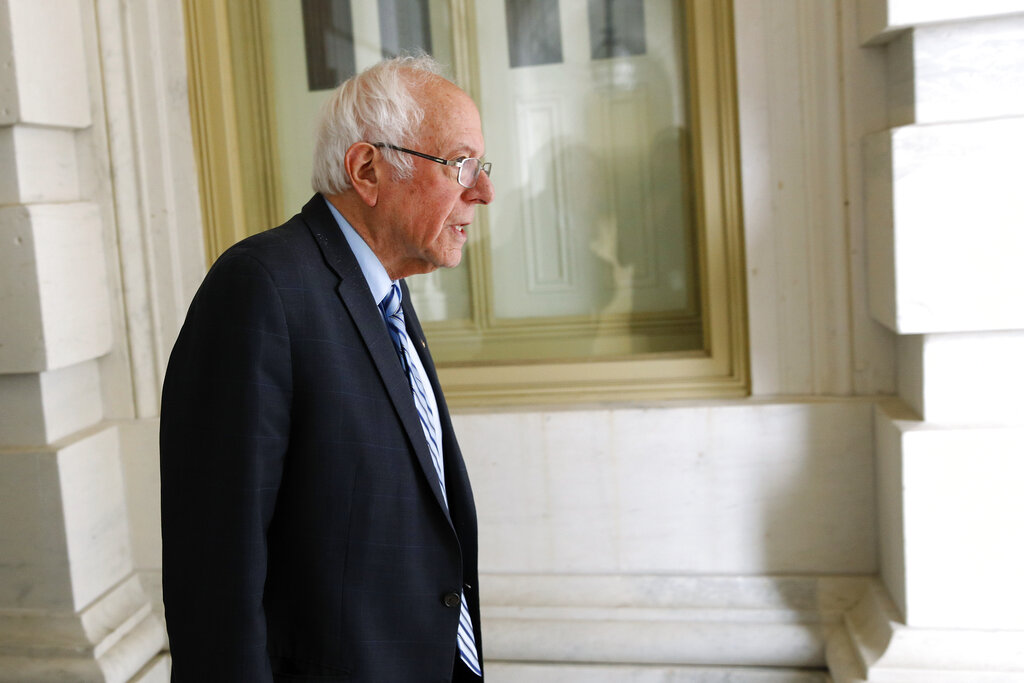
Bernie Sanders faced the grim calculation on Wednesday that he has virtually no chance of clinching the Democratic nomination.
How the coronavirus is upending American politics
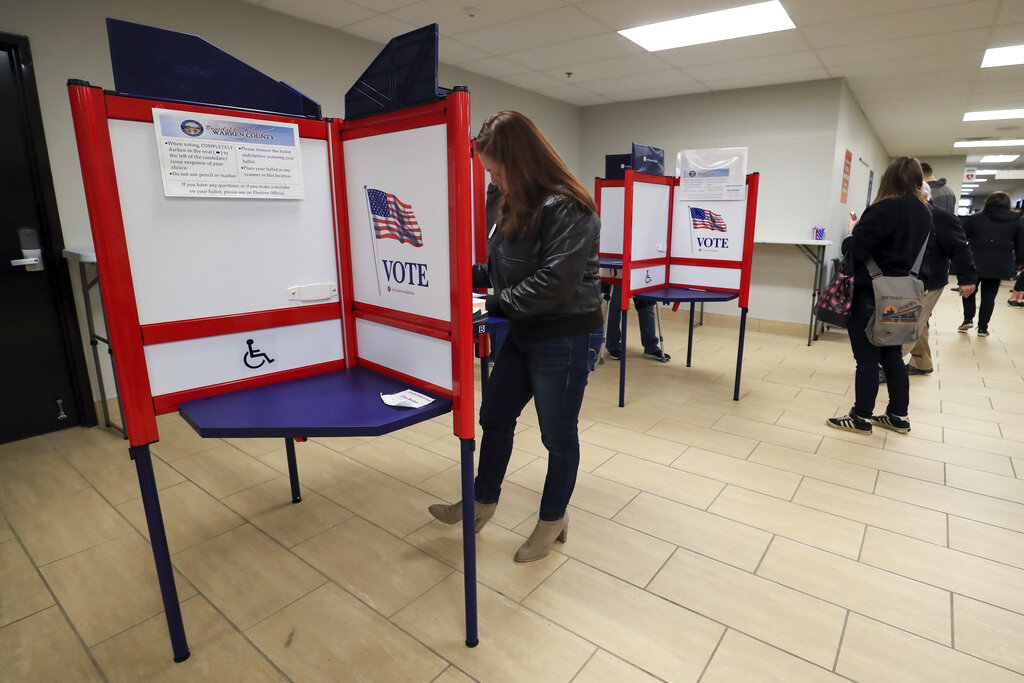
The rapidly shifting developments amounted to a kind of chaos rarely seen in an election season.
Bernie Sanders refocusing his campaign after Joe Biden’s super Tuesday
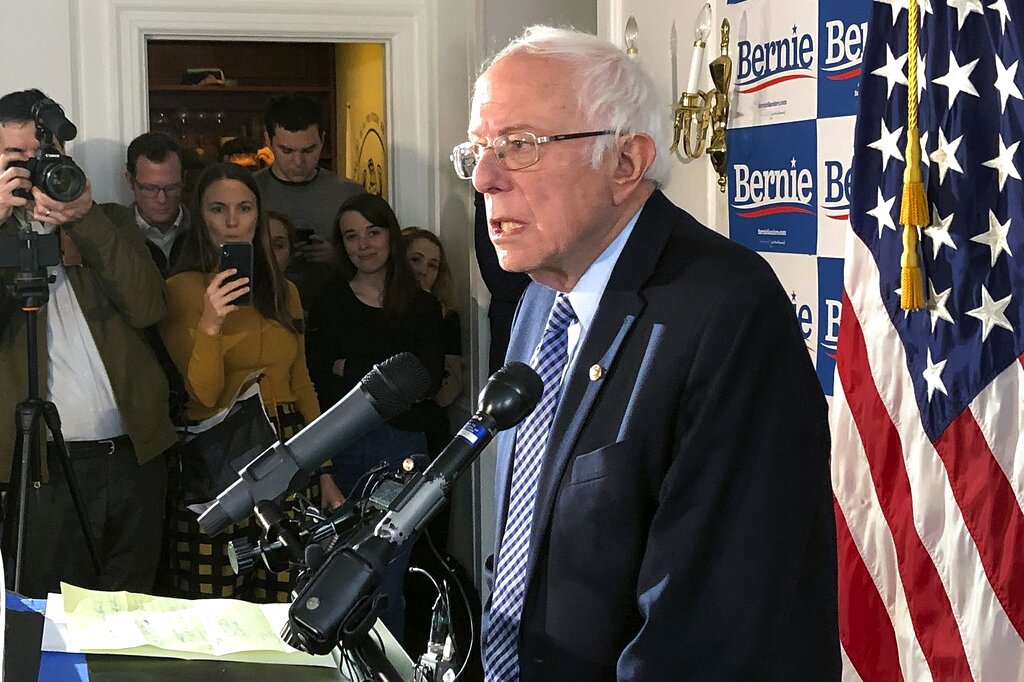
Bernie Sanders declared himself “neck and neck” with Joe Biden as he faced reporters in his home state of Vermont.
Louisiana Congressman apologizes for crude joke about Kellyanne Conway
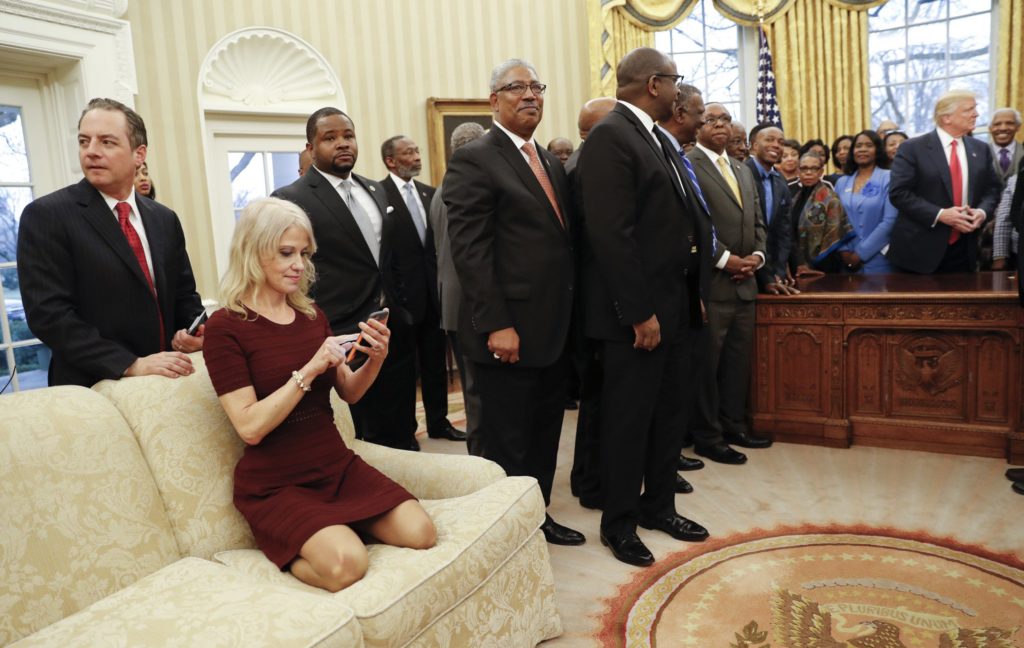
A Louisiana congressman has apologized for making a crude joke about White House adviser Kellyanne Conway. Democrat Cedric Richmond made the joke during a comedy routine at last week’s annual Washington Press Club Foundation congressional dinner. Citing the picture of Conway kneeling on a couch in the Oval Office, Richmond said Conway looked “kind of familiar there in that position.” The joke fell flat as the room full of journalists, congressional staffers and politicians audibly groaned. Richmond initially defended the joke, saying his use of the word “familiar” simply meant that Conway looked too comfortable. But Sunday night he issued a statement apologizing for the joke. “After a discussion with people I know and trust I understand the way my remarks have been received by many,” said Richmond. “I have consistently been a champion for women and women’s issues, and because of that the last thing I would want to ever do is utter words that would hurt or demean them. I apologize to Kellyanne Conway and everyone who has found my comments to be offensive.” It was unclear whether Richmond reached out to Conway or simply issued a statement. Richmond is in his fourth term representing New Orleans and Baton Rouge. He is also chairman of the Congressional Black Caucus. The congressional dinner is a light-hearted affair in which journalists and politicians mingle. Usually a Republican and a Democratic member of Congress take a stab at delivering a stand-up comedy routine. Some are funny while others bomb miserably. The Republican comedian at this year’s dinner was Sen. Tim Scott of South Carolina. He first mentioned Conway’s picture during his stand-up routine. “Has anyone seen the controversy around Kellyanne Conway and the couch in the Oval Office?” Scott said. “Come on, people. You remember the ’90s. That couch has had a whole lot of worse things. Come on now.” Scott was apparently referring to President Bill Clinton’s Oval Office affair with a White House intern. Richmond’s joke about Conway appeared to be off the cuff. “Tim, you kind of opened the door. I really just want to know what was going on there, because, you know, I won’t tell anybody,” Richmond said. “And you can just explain to me that circumstance — because she really looked kind of familiar in that position there. Don’t answer — and I don’t want you to refer back to the 1990s.” Republished with permission of The Associated Press.
Hillary Clinton aims to reset campaign with focus on black voters
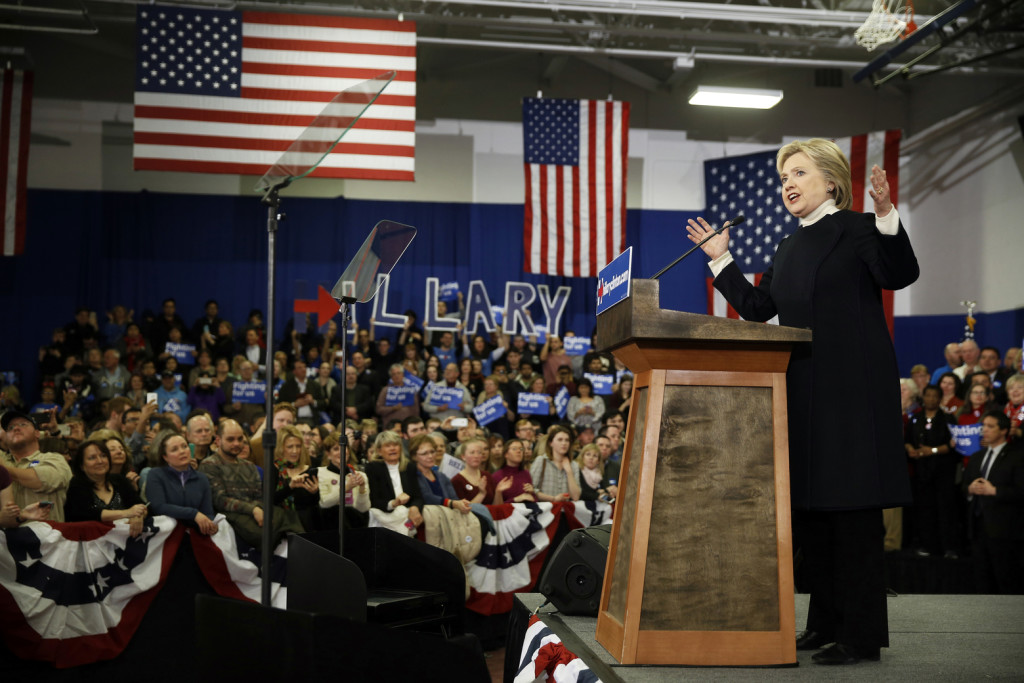
After an overwhelming loss in New Hampshire, Hillary Clinton is staking a campaign comeback on her ability to woo black and Latino voters, placing outreach to those communities at the center of her strategy to retool her 2016 bid. The 22-point loss to rival Bernie Sanders in this week’s primary heightened concerns among Democrats that Clinton’s message is failing to win over both women and young voters — two key parts of the coalition that twice elected Barack Obama to the White House. The New Hampshire defeat, along with Clinton’s razor-thin win in the leadoff Iowa caucuses, raised the stakes for Clinton to rally minority voters — another pillar of the Obama coalition — in the contests coming up in Nevada and South Carolina. As the contest fans out across the country, Clinton’s campaign is casting her as a stalwart advocate for racial justice, tracing back to her days working for the Children’s Defense Fund in the 1970s. She will tie her future even closer to Obama, a deeply beloved figure among black Americans. Clinton also plans to intensify her focus on issues of importance to minority voters, such as immigration, civil rights and gun control, dispatching African-American supporters to make her case and launching a flurry of attacks to undermine any credibility Sanders may be building within the black community. Focus-group surveys conducted by Clinton’s campaign with undecided black voters in Charleston found that the former secretary of state has retained a high degree of trust with African-Americans, even as her numbers on trust and honesty have declined overall, according to Clinton aides. While the voters were open to Sanders and liked his economic message, their views shifted after hearing about his plans to replace the Affordable Care Act with a single-payer health care system and his past opposition to gun control measures, the aides said. “One candidate voted to give immunity to the gun manufacturers and opposed the Brady bill. … I can’t get past that,” said Rep. Cedric Richmond, D-La., on Thursday as the Congressional Black Caucus’ political action committee endorsed Clinton. While Clinton still holds a big lead among party insiders known as superdelegates, who can support the candidate of their choice, the first two contests made clear that Sanders has undermined her once dominant position as the nomination favorite. Her aides believe the next two contests and the primaries that follow in March, where minority voters make up a larger slice of the electorate than in overwhelmingly white Iowa and New Hampshire, could essentially decide the race. She already has a head start with black voters. An NBC News/Wall Street Journal/Marist Poll in late January showed African-American voters said they preferred Clinton to Sanders, 74 percent to 17 percent Since New Hampshire, Clinton has launched a full-scale press, unveiling endorsements from top African-American leaders. At the CBC event on Thursday, Georgia Rep. John Lewis, a civil rights icon, said he would travel to South Carolina this weekend to campaign for her. Clinton’s team will also be rolling out the support of 119 black legislators in the March voting states. And she’ll be endorsed by faith leaders in Flint, Michigan, adding to the 28 ministers and 50 black mayors who’ve already expressed support. Meanwhile, Clinton supporters are targeting Sanders’ record on issues like racial equality and criminal justice, even playing down his early support for the civil rights movement as a college student who joined the 1963 March on Washington. “Thousands of people walked on Washington. What are the real policy issues or legislation that he has presented?” said Dr. Hazel Dukes, president of the NAACP’s New York State Conference. On Friday, Clinton will head to rural Bamberg County, South Carolina, a poor, majority-black area, to hold a town hall on racial and economic disparities. She’s holding a Monday campaign event in Riviera Beach, Florida, a majority African-American city, before meeting with civil rights leaders on Tuesday and holding a campaign event with the mother of Sandra Bland, the Chicago-area woman whose death in a Texas jail cell has become a rallying cry for criminal justice reform. Former President Bill Clinton is being dispatched to Memphis, Atlanta and Florence, South Carolina, and the Clintons’ daughter, Chelsea, is heading to Flint, where the crisis over water has become a symbol of racial and economic inequality. Sanders’ campaign plans to promote his personal story, arguing that his early work as a college civil rights activist and his message of economic equality will help diversify his support. On Wednesday, he held a heavily publicized breakfast with civil rights activist Al Sharpton in Harlem, and Ta-Nehisi Coates, an influential writer on racial issues, said he would vote for Sanders. But his team also acknowledges that his constituency may be far stronger in states with less diverse Democratic electorates, like Oklahoma, Minnesota, and Massachusetts — all states where they launched new ads on Wednesday. “Bernie Sanders has an incredibly powerful story to tell,” said adviser Tad Devine. “His fight for equality and civil rights, his fight against inequality and economic injustice is very, very powerful. It’s going to resonate with the African-American community.” Republished with permission of the Associated Press.
